
- Private Funding for University Research: Can It Offset NSF?
- NSF's grant funding decline, by the numbers
- A separate, government-wide funding cut is also underway
- Impact of federal research cuts on students: who faces the most risk
- Can private funding for university research replace federal grants?
- What students should check before joining an industry-funded project
Private Funding for University Research: Can It Offset NSF?
A researcher was told by the National Science Foundation that two pending grant proposals would be funded in spring 2025. The money never arrived. Without it, the lab could not train the 10 to 12 undergraduate research assistants who normally handled data collection, and progress on multiple studies stalled, according to a university account included in a report from the Association of American Universities.
AAU's report describes several other disruptions at member campuses, including delayed renewals, delayed disbursements, and paused projects. That raises the question this article examines: can private funding for university research, mainly corporate and industry-sponsored projects, make up the difference? The available figures do not show business-funded university research growing by an amount comparable to federal support, a comparison laid out below.
NSF's grant funding decline, by the numbers
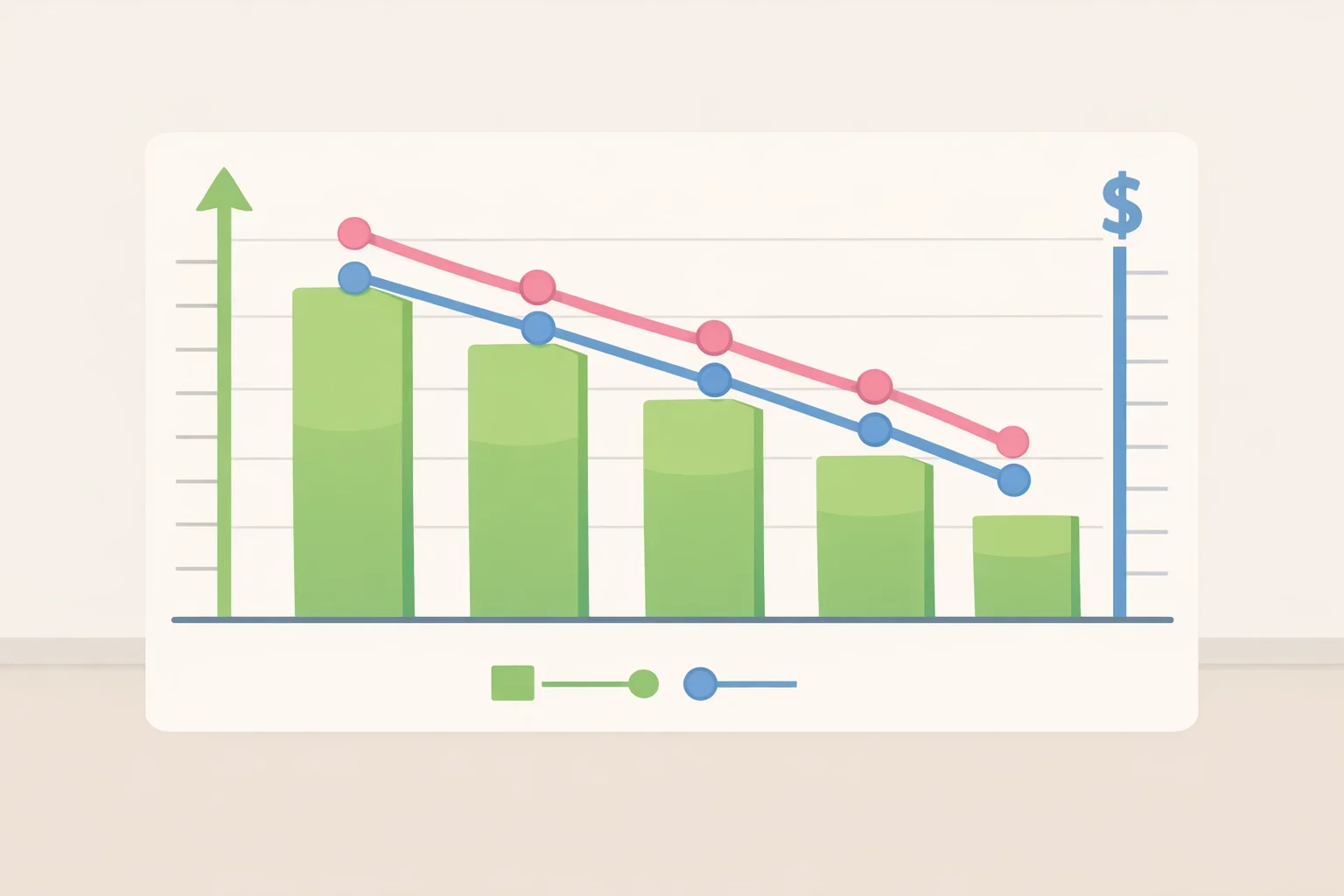
NSF has issued only 2,179 grants so far in fiscal year 2026, which started in October 2025, according to AAU, which cited tracking by Grant Witness, a project that monitors disruptions across federal science agencies. That is far below the 3,744 grants NSF had issued at the same point in fiscal year 2025, and well under the 5,865 average for the same period from 2021 through 2024.
Dollars tell a similar story. NSF had obligated $2.2 billion as of July 5, compared with $2.7 billion at the same point last year and a four-year average of $3.4 billion, according to Grant Witness data cited by AAU. Congress appropriated $8.75 billion to NSF for this fiscal year expecting the agency to put those dollars to work quickly, AAU reported, describing NSF as on pace for its worst year in more than half a century.
The slowdown extends past new awards. One university official, not identified by name in AAU's report, said the average wait time for the school's NSF proposals still in review has reached 207 days, and that proposals actually selected for funding are now waiting 395 days. Some campuses report going without renewals for grants they had previously won, and researchers say disbursements are also lagging because federal agencies have lost staff who used to process awards, AAU reported.
Universities used to lean on internal "bridge funding" to cover researchers during gaps like these, but many AAU member campuses say those reserves are running low, according to AAU. As a result, AAU reported, some universities have already cut staff, reduced graduate enrollment, or paused research projects.
AAU's report also includes concerns from early-career faculty, described without names. "Fears about future funding and the potential career impacts are widespread among early-career faculty," one university official said. "The most visible impacts are for NSF CAREER awards, with one termination that came soon after the award started and others getting budget cuts. We have also lost outstanding faculty to European institutions and industry." AAU's report does not say how many student assistantships or training roles were attached to those affected awards, only that the awards themselves were cut or reduced.
A separate, government-wide funding cut is also underway
The NSF figures describe one agency's pace this fiscal year. A separate measure, tracked across all federal agencies by the National Center for Science and Engineering Statistics, shows university research funding cuts extending further back. Federal science-and-engineering obligations to higher education fell 4.3% in nominal dollars in FY2024, from $49.0 billion to $46.9 billion, according to NCSES, which published the figures earlier this summer. Adjusted for inflation, the decline was steeper: obligations fell 6.8% in constant dollars, from $40.1 billion in FY2023 to $37.4 billion in FY2024, NCSES reported.
Fellowships, traineeships, and training grants, a category intended to support development of the scientific workforce, fell 13.9% from FY2023 to FY2024, from $2.5 billion to $2.1 billion, according to NCSES. NSF's own numbers cut against a uniform story here: the agency awarded a record 2,599 Graduate Research Fellowships in FY2026, up from 1,500 the year before, according to AAU. Losses inside federal funding are not spread evenly, even within a single agency.
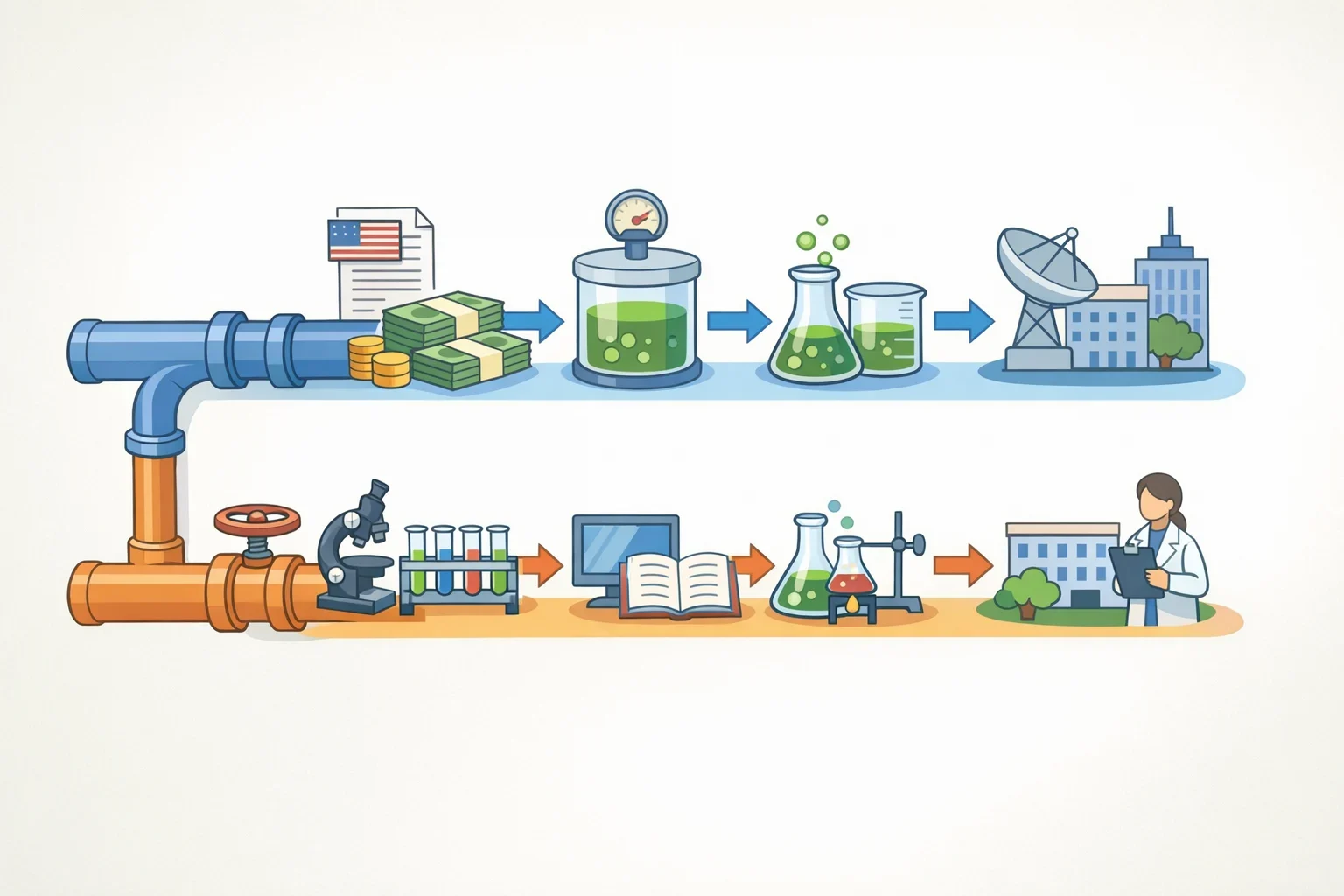
These obligation figures are a separate measure from university R&D expenditure data, which grew 8.1% in FY2024 to $117.7 billion, with federally funded R&D reaching more than $64 billion, or 55% of the total, according to NCSES, reporting earlier this year. Obligations record money federal agencies committed; expenditures record money universities reported actually spending, often from awards made in earlier years. A current NSF slowdown and a higher FY2024 spending total aren't necessarily contradictory. They capture different stages of the funding pipeline.
Impact of federal research cuts on students: who faces the most risk
The available datasets measure awards, obligations, expenditures, fields, and institutions, not individual student jobs or stipends. The data can identify funding patterns, but not individual student outcomes.
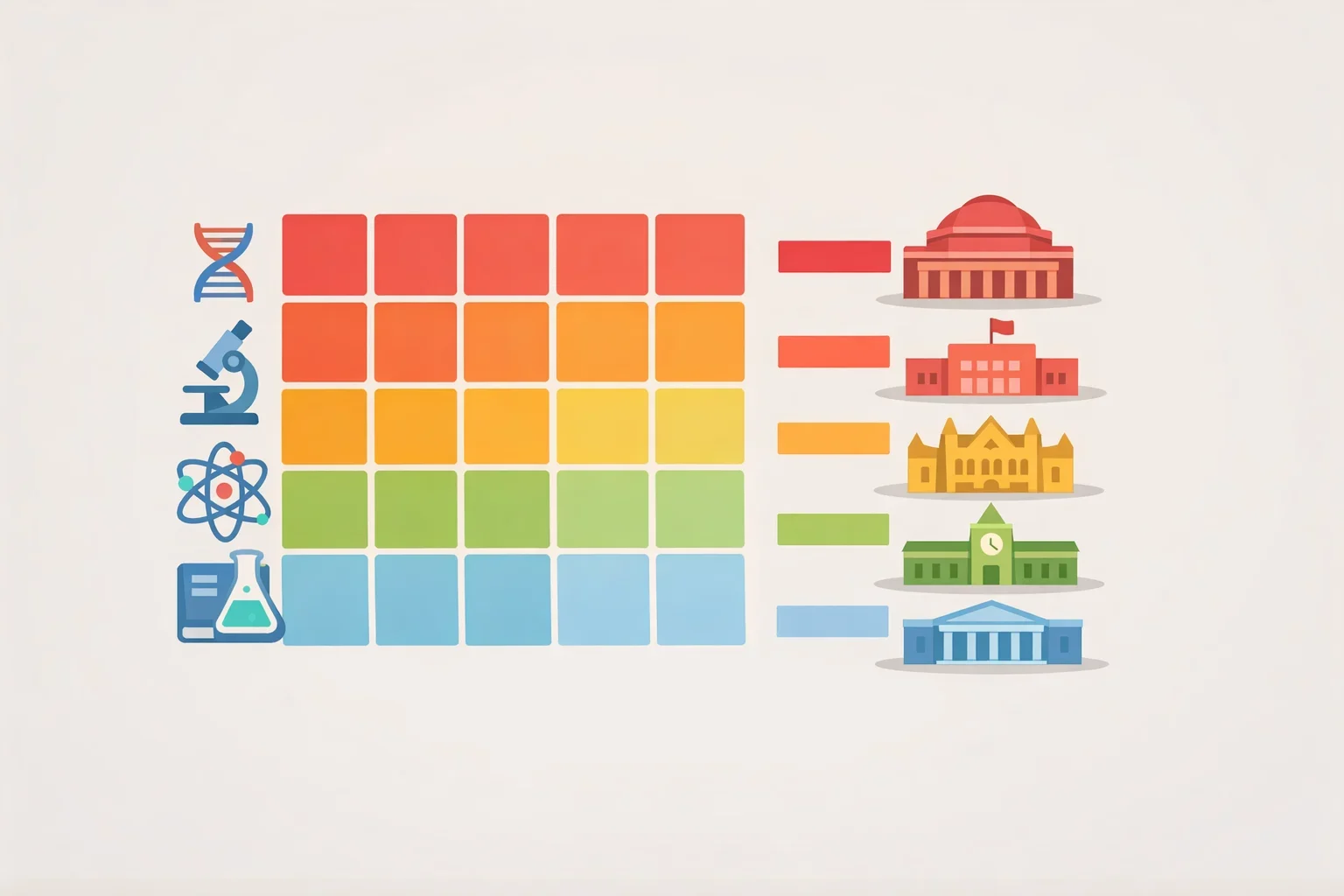
Field-level data show a pattern worth noting. Geosciences, computer and information sciences, and physical sciences were each about 67% federally funded in 2023, while the social sciences drew 67% of their funding from nonfederal sources, according to NCSES. Students in those fields may face greater exposure if their lab or position depends on federal awards.
Federal research money is also concentrated by institution. The top 100 research institutions received 79.5% of all federal science-and-engineering funding to higher education in FY2024, while the remaining 1,025 recipient institutions split the rest, according to NCSES. The figures show where federal support is concentrated, but they do not show whether a particular campus can absorb a delayed award. The same dataset complicates a simple version of that argument: the remaining 1,025 institutions received 41.4% of federal fellowship, traineeship, and training-grant funding, a notably larger share than their 20.5% cut of total federal support. Concentration of overall federal funding and concentration of the funding that supports student training aren't the same measurement.
The effect depends on whether a student is paid hourly, supported by a project budget, or covered by a fellowship. Each arrangement carries a different level of risk depending on the funding source behind it.
Can private funding for university research replace federal grants?
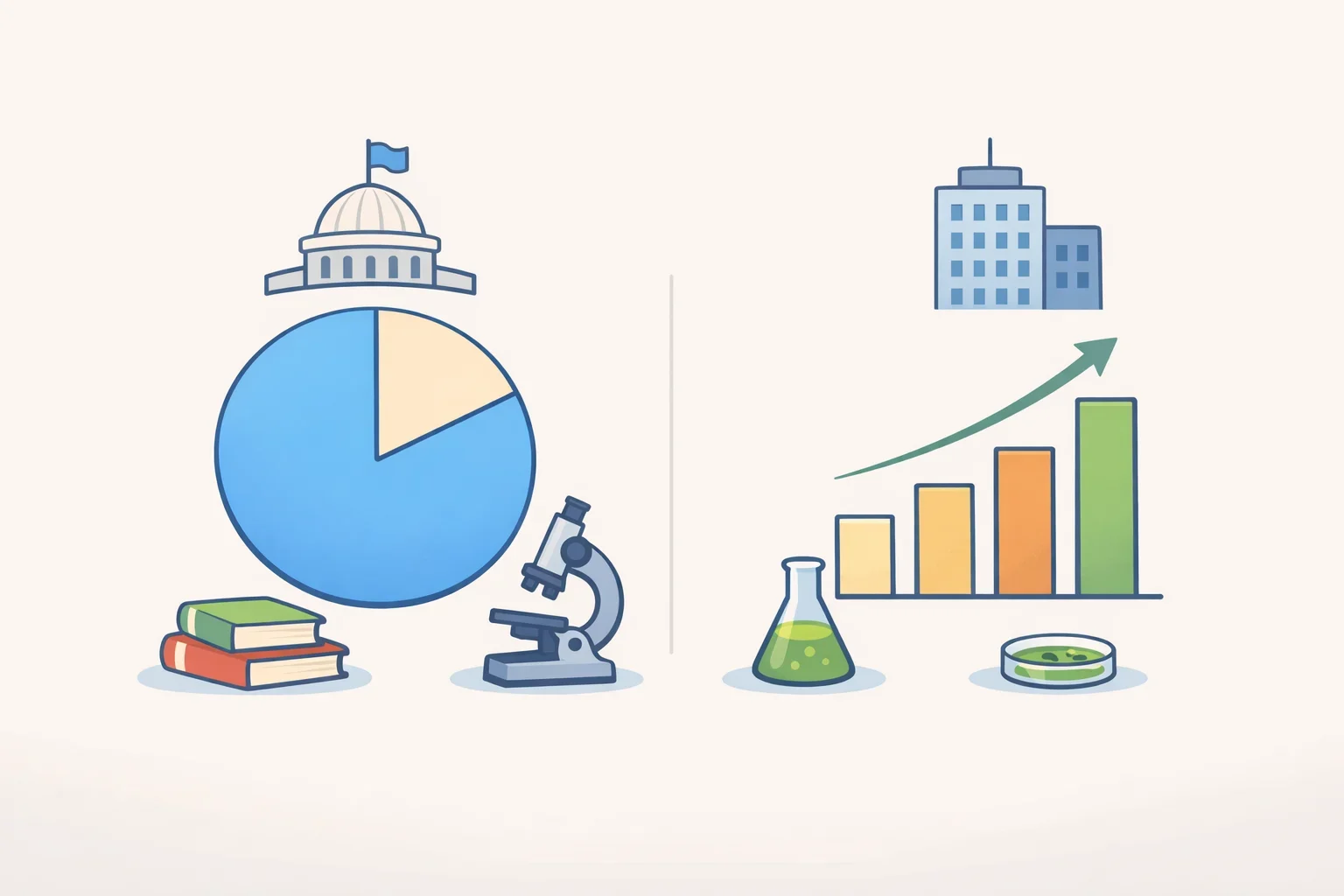
Federal money remains, by a wide margin, the backbone of academic research. It funded 55% of the $117.7 billion universities spent on research and development in FY2024, more than $64 billion, according to NCSES.
Business funding, the category with the most usable data on private funding for university research, made up only about 5% to 6% of academic R&D as of 2023, according to NCSES. Business-funded university R&D expenditures grew by just $131 million in FY2024, against that $117.7 billion total. The two figures measure different things: the 5% to 6% share describes business's portion of academic R&D spending in 2023, while the $131 million increase describes the year-over-year change in business-funded university R&D expenditures in FY2024.
Nationally, businesses fund about 75% of all U.S. research and development, but most of that money supports work businesses perform inside their own walls rather than research at universities. Ninety-nine percent of business R&D funding went toward R&D performed by businesses themselves, according to NCSES. Industry dollars exist in large volume nationally, but the overwhelming majority supports R&D performed by businesses themselves rather than R&D performed by universities or other sectors.
The cited national data also don't break out philanthropic foundation funding as its own category, so this reporting focuses on corporate and industry-sponsored research, where the numbers more directly apply. Students should ask their department or sponsored-research office directly whether foundation or gift funding plays a role locally, since federal statistics don't settle that question either way.
Comparing the 55% federal share to a $131 million annual increase in business funding shows industry sponsorship is not growing at a pace that would offset a national pullback in federal funding. It may still help specific labs, particularly in applied or commercially relevant fields, even where it isn't reshaping the overall picture.
What students should check before joining an industry-funded project
Universities and businesses tend to fund different kinds of work. University research skews toward basic, long-horizon science, which made up 63% of academic R&D spending in 2023, according to NCSES. Nationally, the business sector's estimated share of basic-research funding grew from 21% to 35% between 2012 and 2023, while the federal government's share fell from 52% to 41%, according to NCSES. That national shift doesn't set expectations for any single lab's sponsor, but businesses' share of basic-research funding across all sectors has grown over the past decade while the federal government's share has fallen.
Industry sponsorship agreements can include confidentiality provisions and, in closer research partnerships, a stipulation requiring the sponsor to be notified before results are published. A current UNC Asheville policy page describes a University of North Carolina system policy, adopted in 1987, that allows sponsors to protect proprietary information through confidentiality agreements but states that no agreement may interfere with a graduate student's thesis or dissertation publication or defense. That's one institution's safeguard, not a universal rule. Publication timelines, intellectual-property terms, and confidentiality provisions vary by university and by individual agreement.
The questions differ by role:
- Hourly or project-based undergraduate and master's researchers can ask their principal investigator or lab manager whether the position's funding is confirmed through the end of the next academic term or project, regardless of which sponsor is paying for it.
- Doctoral students on multi-year stipends or fellowships can ask their graduate program director whether the funding source is changing and, if so, whether new terms affect their degree timeline.
- Graduate students whose thesis or dissertation depends on sponsor-controlled data can ask their PI or the university's sponsored-research office who owns the results, whether the sponsor requires notification before publication or presentation, and whether funding is confirmed through their expected completion date.
A delayed grant or a move to industry sponsorship does not by itself show that a student's position will end. Students can confirm the situation with their PI, graduate program director, or sponsored-research office by asking which award currently pays the position, whether funding is confirmed through the next term or degree milestone, and whether any publication or confidentiality terms apply.