
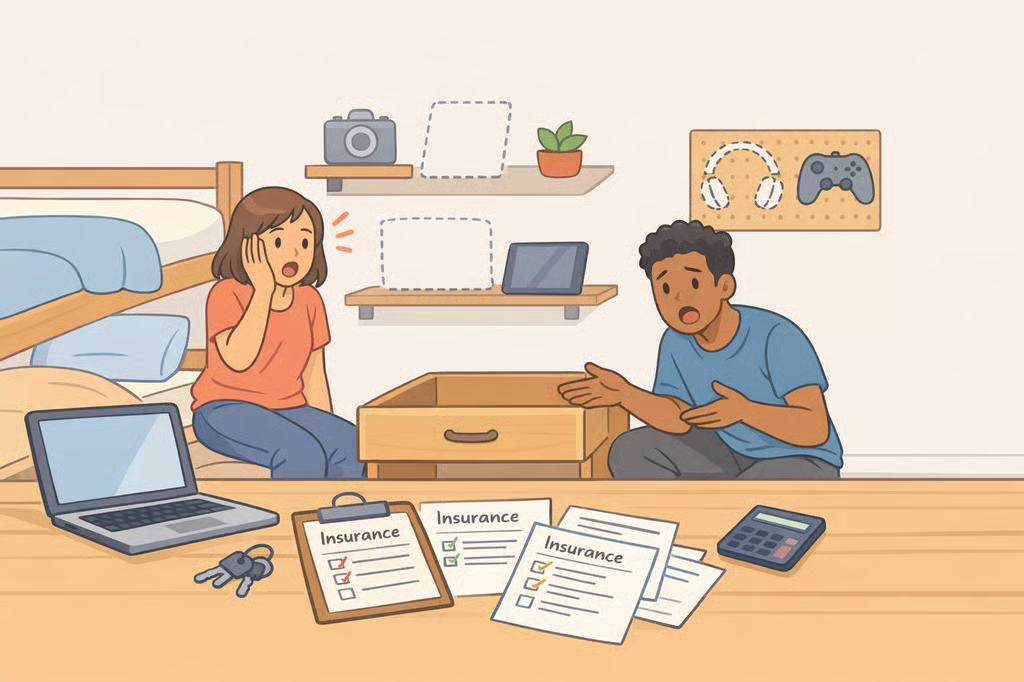
A laptop, bicycle, smartwatch, clothes and other college essentials can add up to thousands of dollars. Yet students may assume the school, landlord or a parent’s insurance automatically covers those belongings.
That is not always true. A school’s, landlord’s or property management company’s insurance generally does not cover a student’s personal belongings, according to the National Association of Insurance Commissioners (NAIC). Students in dorms may already have some protection through a parent’s homeowners or renters policy, while those living off campus are more likely to need their own coverage.
Does a parent’s insurance cover students at college?
Students under 26 living on campus may have personal-property coverage through a parent’s homeowners or renters policy. But limits and exclusions vary, so families should confirm exactly what follows the student to school.
That matters for expensive belongings such as laptops, bicycles, golf clubs, skis, cameras and other sports gear. The Insurance Information Institute notes that expensive sports equipment may be subject to dollar limits and may require additional coverage.
Age and student status can also affect eligibility. Graduate students, older students and anyone whose living arrangement has changed should ask the insurer whether the family policy still applies.
Before buying a separate policy, confirm the student’s address, personal-property limit, any sublimits for valuable items and whether liability coverage follows them.
Renting off campus changes the coverage question
Students renting an apartment or house should not assume a family policy provides the same protection at a separately leased address. Some landlords and property managers also require renters insurance under the lease.
A landlord’s policy generally protects the building and the landlord’s property, not the tenant’s belongings.
Roommates should also confirm who is actually insured. One roommate having a policy does not necessarily mean everyone in the apartment is covered. Separate policies can be simpler because each tenant has their own limits and deductible.
What renters insurance actually covers
A standard renters policy generally includes:
- Personal property: Helps repair or replace belongings after covered losses such as theft or fire.
- Liability: May help cover certain costs if the policyholder is legally responsible for injuring someone or damaging another person’s property.
- Additional living expenses: Can help pay added temporary housing costs if a covered loss makes the residence uninhabitable.
Some policies also cover belongings away from home, which can matter for laptops, bicycles and sports gear. Off-premises limits vary, so students should check the policy rather than assume the same coverage applies everywhere.
The deductible matters, too. A $150 pair of stolen headphones would not result in a property payment if the applicable deductible were $500.
Students may also choose between actual cash value and replacement cost coverage. Actual cash value accounts for depreciation, while replacement cost coverage generally reimburses the cost of replacing covered property with a comparable new item, subject to policy terms and limits.
How much does renters insurance cost for college students?
A 2026 MoneyGeek analysis of college renters insurance found that most students in its research would pay about $10 to $20 per month for a standard policy.
Actual premiums vary by location, insurer, coverage limits, deductible and claims history. Students who carry their own auto insurance may also qualify for a multipolicy discount.
Price should not be the only consideration. A cheaper policy may be poor value if the deductible is too high or valuable belongings exceed its limits.
Check these before move-in
Start with an inventory. Photograph valuable belongings, estimate replacement costs and save receipts or serial numbers for expensive electronics, bicycles and sports equipment.
For an off-campus lease, check:
- Whether renters insurance is required
- Whether the lease sets a minimum liability limit
- When proof of insurance is due
- Whether each roommate needs separate coverage
When speaking with an insurer, ask:
- Does the policy cover this address?
- What is the personal-property limit?
- Are valuable items subject to lower sublimits?
- Is coverage based on actual cash value or replacement cost?
- What is the deductible?
- Are bicycles or sports equipment subject to separate limits?
- What coverage applies away from home?
Verify coverage before move-in
Students in dorms may already have enough protection through a family policy, but they should confirm the limits before bringing valuable belongings to campus. Students living off campus should check both their lease and any existing family coverage.
Start with what would be difficult to replace out of pocket, then fill any meaningful gaps before move-in. It is far easier to understand a policy before a theft, fire or other covered loss turns the question into an expensive one.