
Pentagon orders universities to review foreign partnerships
The Pentagon has ordered 30 U.S. universities to review their academic, financial, and research ties with foreign entities, mostly Chinese universities and military training institutions, the Department of Defense announced Monday, according to AP and Stars and Stripes. The schools have until Aug. 31 to report their findings; missing that deadline could cost them eligibility for future federal research grants, according to UPI.
The directive is addressed to universities, not students. Nothing in the available reporting describes new requirements for individual students; no source mentions changes to enrollment, financial aid, visa status, or specific coursework.
The Pentagon's public statement didn't name the 30 universities (Stars and Stripes). A U.S. official who wasn't authorized to discuss internal matters told AP that Harvard, MIT, and Johns Hopkins are among the schools involved (AP). Fox News, citing a separate unidentified official, published a longer list that includes Georgetown, MIT, UC Berkeley, UC San Diego, UT Austin, Emory, and Harvard, according to Stars and Stripes.
Neither list traces back to a Pentagon document. If a student wants to know whether their own school is affected, waiting for the university itself to confirm it beats relying on an anonymously sourced list.
Pentagon university foreign partnership audit: what the review covers
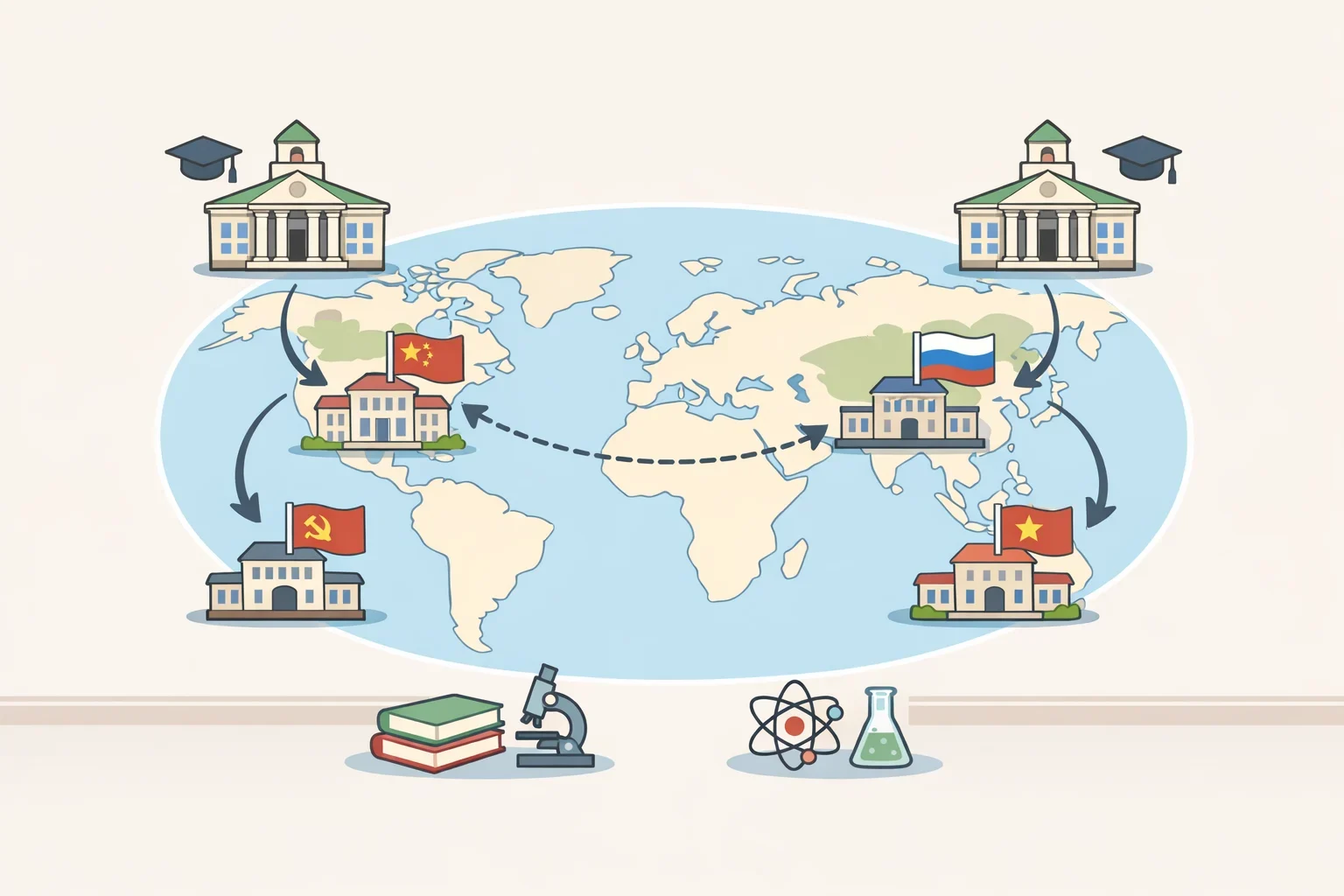
The schools named in the directive must review ties to institutions on the Pentagon's Section 1286 list, updated last month to identify 130 academic and research institutions in China, Russia, and Iran (Stars and Stripes). The government says these institutions have engaged in activities that raise the risk of federally funded research being misappropriated or exposed to foreign interference, not that misappropriation has already happened (Stars and Stripes).
The review also reaches organizations tied to rebranded Confucius Institutes, the Chinese government-supported language and cultural programs many U.S. universities closed under earlier federal scrutiny, though officials say some continued under different names or structures (Stars and Stripes).
To keep future federal funding, universities must determine whether sensitive or export-controlled research has been exposed through these ties and fix any problems, which can include canceling what the Pentagon calls "problematic partnerships" (UPI). The directive doesn't spell out every arrangement covered, such as labs, exchange agreements, conferences, or shared campus facilities, and it doesn't say whether canceling a flagged partnership is mandatory in every case.
A few boundaries matter here. The order applies to the 30 universities under review, not every U.S. college. It covers institutional ties connected to Section 1286 institutions and rebranded Confucius Institute programs specifically, and nothing in the reporting establishes whether any particular student exchange, language course, lab, or grant gets swept into that review.
Why the audit is happening now
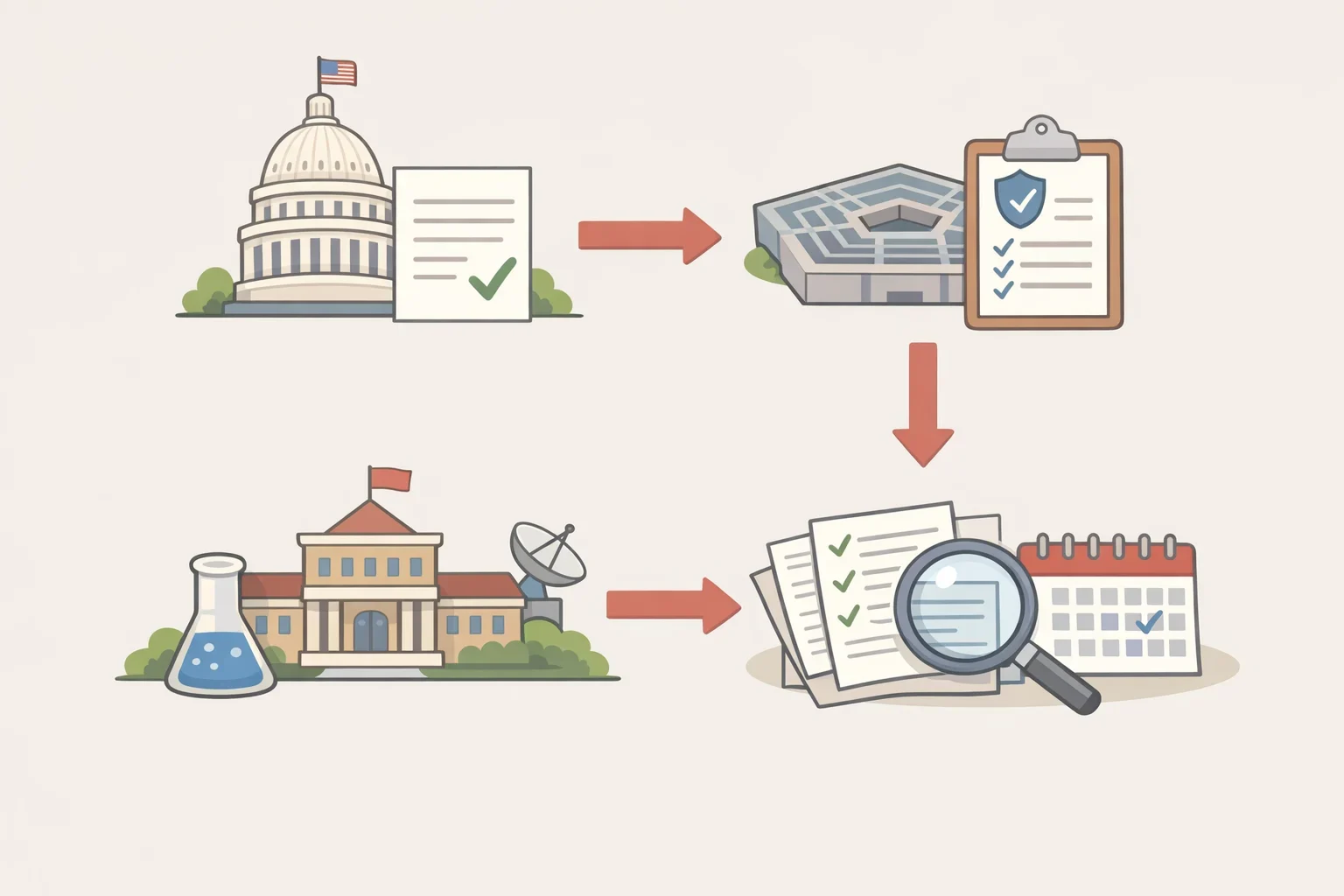
The order follows the fiscal year 2025 National Defense Authorization Act, which Congress passed in December 2024 and which requires the Pentagon to review samples of Defense-funded research grants each year for compliance with research-security policy (UPI). It also follows last month's update to the Section 1286 list.
Federal scrutiny of foreign research ties has concentrated heavily on China. Of 657 allegations of improper foreign influence investigated by the National Institutes of Health as of November 2024, 570 involved China, according to a Government Accountability Office report cited by Stars and Stripes. Those figures describe allegations under investigation, not confirmed findings of wrongdoing.
Pentagon officials frame the audit as protecting taxpayer-funded research from theft and exploitation. "The Department of War has zero tolerance for academic partnerships that compromise our national security," said Emil Michael, under secretary of Defense for Research and Engineering, according to UPI. "Department of War" is a secondary name President Trump authorized for the agency last year; its statutory name remains the Department of Defense (Stars and Stripes).
How this compares with existing research-security rules
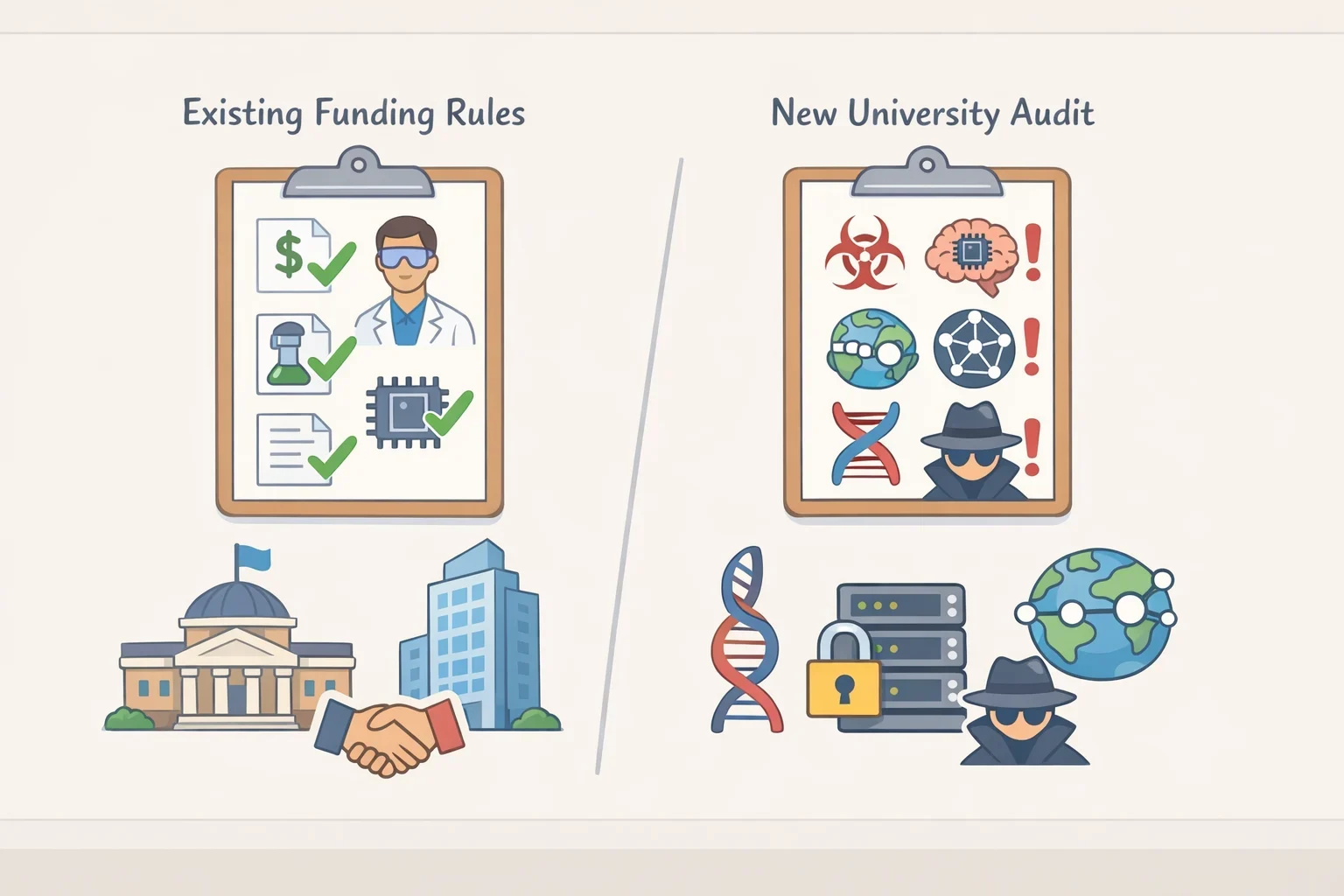
This week's order builds on disclosure rules that already existed. Senior personnel named on a proposed federally funded research project must disclose foreign affiliations, employment, and funding sources as part of their grant application. That requirement applies to senior personnel on proposed research, not graduate students broadly, and it predates this audit (The Regulatory Review).
A broader legislative proposal debated earlier this year would have gone much further, reaching nearly any university agreement with a Chinese institution, including study-abroad and language programs. Faculty at 210 institutions objected that it could be enforced unfairly against researchers of Chinese descent, and the bill was ultimately removed from the budget law (The Regulatory Review). That debate concerned a different bill than this week's audit, but it explains why questions about scope keep resurfacing every time the Pentagon issues a new directive.
Students trying to figure out whether a rule applies to them should ask specifically which policy is in play: a standing federal disclosure requirement, the Section 1286 list, or a proposal that never became law. These carry different consequences, and different university offices handle each one.
What students can check now
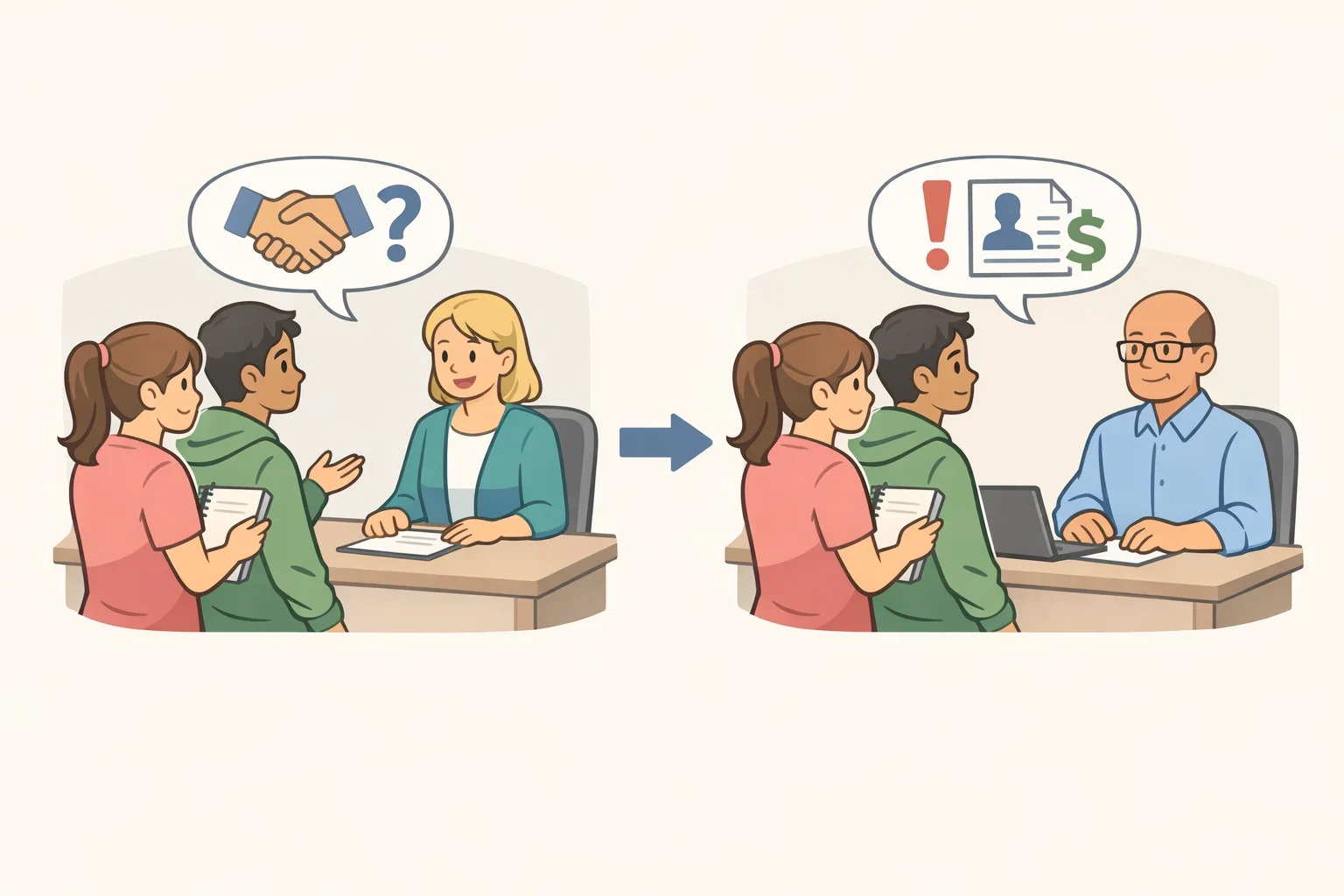
- Students in an exchange, study-abroad, or language program can ask their program office whether the partner institution appears on the Section 1286 list or has ties to a Confucius Institute program.
- Research assistants can raise the same question with a principal investigator or department research office, focused on a lab's funding sources and collaborators.
- Students holding federally funded research grants or fellowships can contact their school's research compliance or sponsored-programs office about whether disclosure requirements have changed.
Students with questions about a specific lab or program should go to the relevant university office directly rather than guess based on a news list. Nothing in the available reporting establishes a student deadline or a change in individual enrollment, aid, or visa status.
What comes next is the Aug. 31 reporting deadline itself, along with any university statements confirming whether a school was named in the directive and which partnerships, if any, get flagged for termination. Those confirmations, not media-sourced lists, are what will settle the open questions this article can't answer yet. Until then, check with the program office, principal investigator, or compliance office tied to your own work, not a headline naming someone else's school.