
Washington Leadership Academy Artificial Intelligence Model
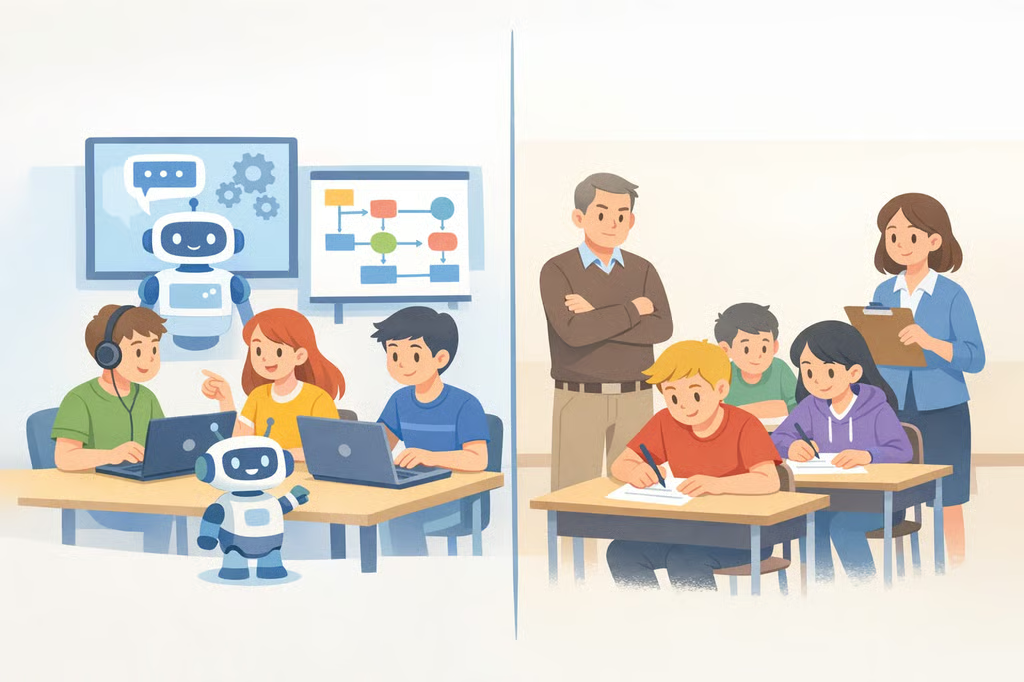
On a Friday morning in early March, about 100 students at Washington Leadership Academy, a public charter high school in Washington, D.C., filled the assembly hall for a "Hackathon," spending the day building AI chatbots meant to solve real-world problems (Education Next). Down the hall, in the same building, AP Government teacher Giani Clarkson was giving a test with nothing but paper and pen, and requiring students to present projects without a single screen (Education Next). That contradiction, AI everywhere in one classroom and banned outright in another, sits at the center of Washington Leadership Academy's artificial intelligence program, and it's worth understanding before any school tries to copy the model.
WLA's approach breaks into three parts: an assignment-by-assignment permission system that spells out when AI is allowed, AI tools built specifically to make students explain their reasoning instead of skipping it, and protected human-only zones where no AI is permitted at all. None of this proves that AI raises test scores or graduation rates at WLA. The most substantive independent account available, a case study from FutureEd, describes the school as an early adopter facing open questions, not a validated model (FutureEd, three months ago). What WLA offers is a structural example, a way of thinking through governance and instructional design that a teacher or administrator can study and adapt selectively, rather than adopt wholesale.
WLA started responding to generative AI almost immediately. Within days of ChatGPT's public release in November 2022, then-executive director Stacy Kane met with school leadership and told them to test the tools themselves and think through what the technology meant for students (Education Next). That head start matters because most schools are still catching up. Nationally, the share of high schoolers who say they use AI for homework climbed to 63% by late last year, up from 49% just months earlier (Education Next). FutureEd frames WLA, which serves predominantly Black, Brown, and low-income students, as a case worth watching precisely because under-resourced schools risk falling further behind without clearer policy guidance (FutureEd, three months ago).
This article is written mainly for teachers and administrators deciding how to set their own classroom AI rules. Parents and students will find a shorter, role-specific checklist near the end. Throughout, watch for the line between what WLA has actually built and what remains untested. Borrowing WLA's rubric is a different decision than assuming it works everywhere, and that second claim isn't backed by outcome data yet.
Washington Leadership Academy AI education rules: when AI is allowed
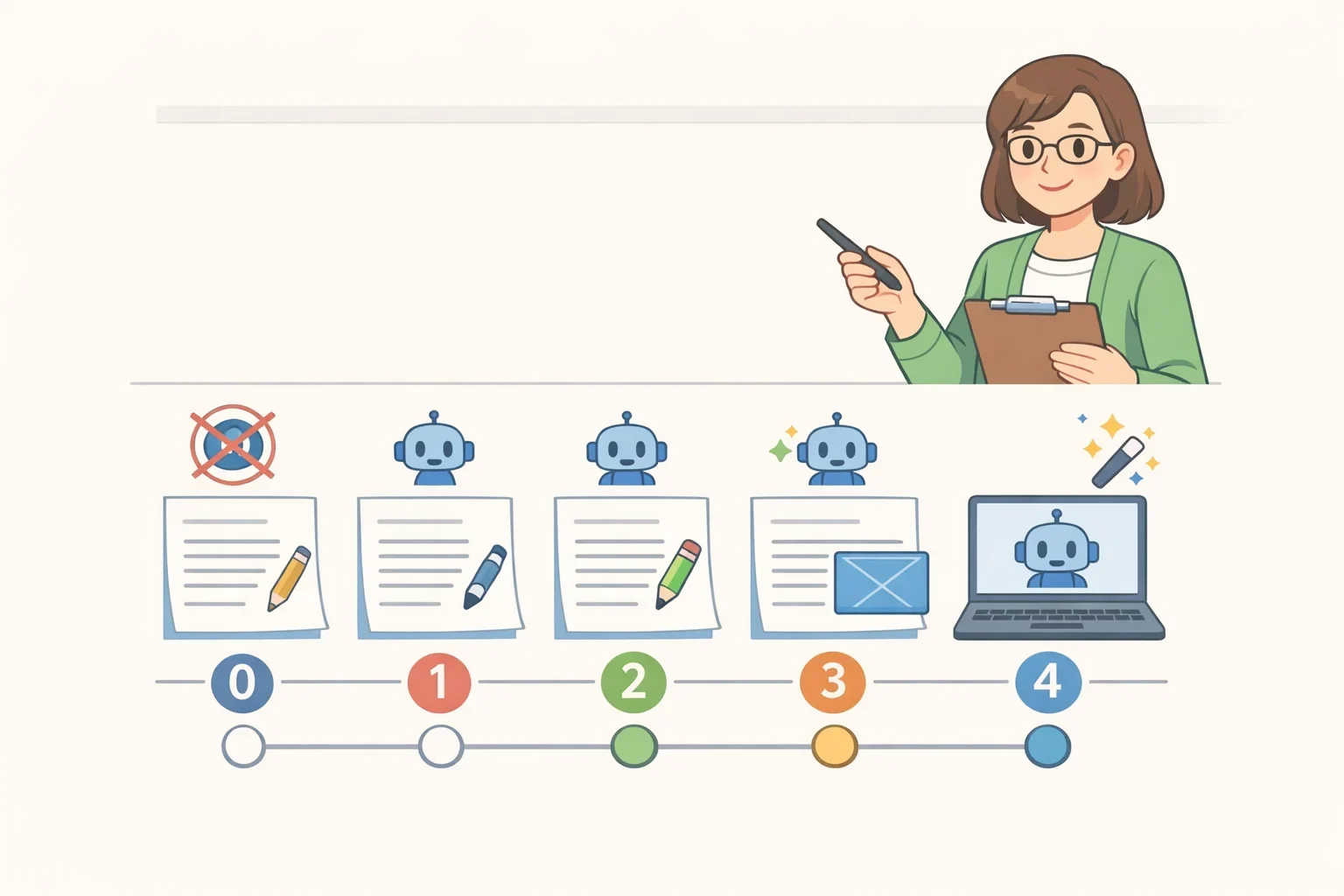
Before AI enters a WLA classroom, every freshman takes a required computer science course, taught by teacher Adrienne Lockhart, that introduces core concepts in AI and machine learning (Education Next). After that, teachers decide how to deploy AI in their own classrooms, guided by a schoolwide rubric that rates each assignment from 0, meaning no AI use, to 4, meaning unlimited use (Education Next). In one class, students got 30 minutes to build a full advertising campaign with as much AI help as they wanted, a level-four assignment (Education Next).
That rubric isn't a policy sitting unused in a binder. In a survey conducted early last year, 85% of WLA teachers said they used AI professionally, and more than 80% used it daily or weekly (Education Next). A rubric only means something if the people applying it actually use the technology themselves, and that adoption rate suggests WLA's staff does.
The permission system also extends past individual classrooms. In a yearlong AI and EdTech Coaching Framework described in WLA's own account last year, the school set three goals: piloting tools such as MagicSchool and Wayground, embedding AI literacy across subjects rather than confining it to computer science, and training students as "AI Ambassadors" (DC Charter School Alliance, last year). That same account said students would present their own AI projects and contribute to a schoolwide AI Playbook by June, and separately listed a public event, Pathways to Progress: AI & Tech at WLA, for November 18 (DC Charter School Alliance, last year). Both dates have since passed. A school weighing whether to model a program on WLA's timeline should check the school's current site rather than assume either milestone landed exactly as planned.
Whether the rubric has actually changed how students think about AI is a separate question from whether teachers follow it. In a survey last fall, two-thirds of WLA students said they'd picked up practical skills like crafting prompts and evaluating AI output, but 70% also said AI could be both helpful and harmful to their schoolwork (Education Next). Read together, those numbers suggest that clear rules don't erase student ambivalence about the tools. They just give it a structure to operate inside.
A department building a similar system doesn't need WLA's full infrastructure to start. Drafting a simple allowed-or-not-allowed line for each assignment, before attempting a full 0-4 scale, is a reasonable first move, paired with a clear answer to who is responsible for making sure teachers actually apply it.
Tools built to require reasoning, not shortcuts
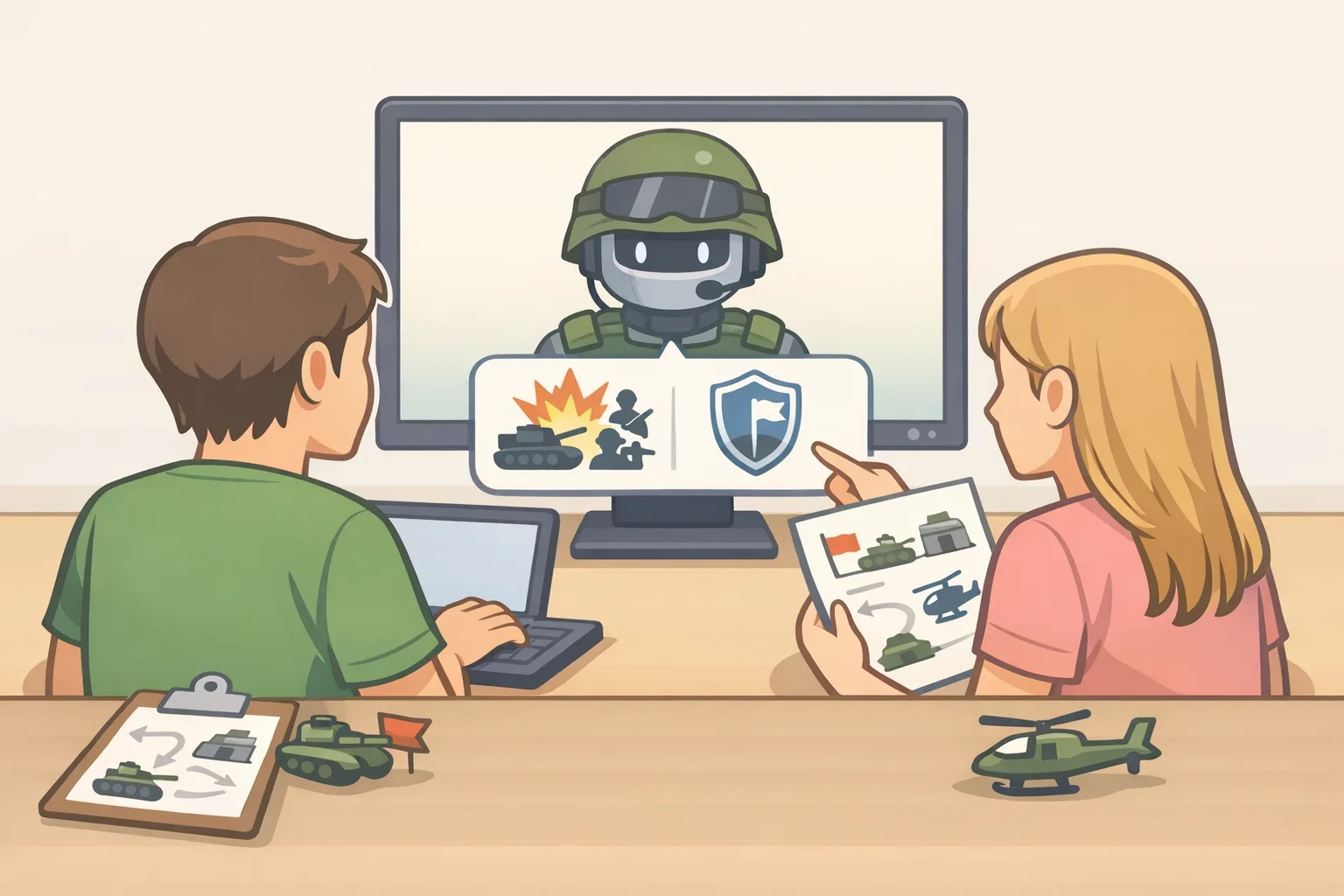
In AP Government, students design a country's resources to resist a fictional invasion, then submit their setup to a chatbot running a three-year simulated war. The bot reveals only the outcome, not its reasoning, so students have to work out cause and effect themselves (Education Next). "It's not good enough to just tell them, 'This is how it happened,'" Clarkson said. "They have to see it in real time and kick the tires themselves" (Education Next).
WLA's math instructional coach, Niyesha Coleman, built similar friction into a chatbot for practice problems. It sometimes states a wrong answer on purpose, and students have to defend their own reasoning against it rather than simply accept whatever the bot says (Education Next).
In AP Psychology, after a curriculum overhaul left teachers with few practice materials to assign, a chatbot now gives students immediate feedback on practice questions and flags struggling students to their teacher (Education Next). WLA reports the system more than doubled scores on those practice questions, though sample size, baseline scores, and how long the improvement lasted aren't published in the available reporting, so the figure is best read as a self-reported classroom result rather than an independently verified outcome (Education Next).
The strongest outside evidence on whether this design choice matters comes from a review published five months ago, in which Stanford researchers examined 14 studies on AI use in schools. Students who used AI often improved in math, writing, economics, and physics, but those gains frequently disappeared once AI access was removed. Tools built with guardrails, meaning hints instead of direct answers, showed more promise for durable learning than open-ended chatbots that hand over the answer (Education Next, reporting on the Stanford review).
Before assigning any AI tool for skill practice, it's worth checking whether it can be configured to withhold direct answers. A tool that explains everything up front is a different classroom instrument than one that only hints, and the research so far leans toward the second kind for anything meant to stick after the tool is taken away.
Where WLA draws the line: human-only work and misuse
Some assessments at WLA use no technology at all. "Test day, it's paper and pen," Clarkson said, and his students present projects the same way: "It's just you and the rest of the class" (Education Next).
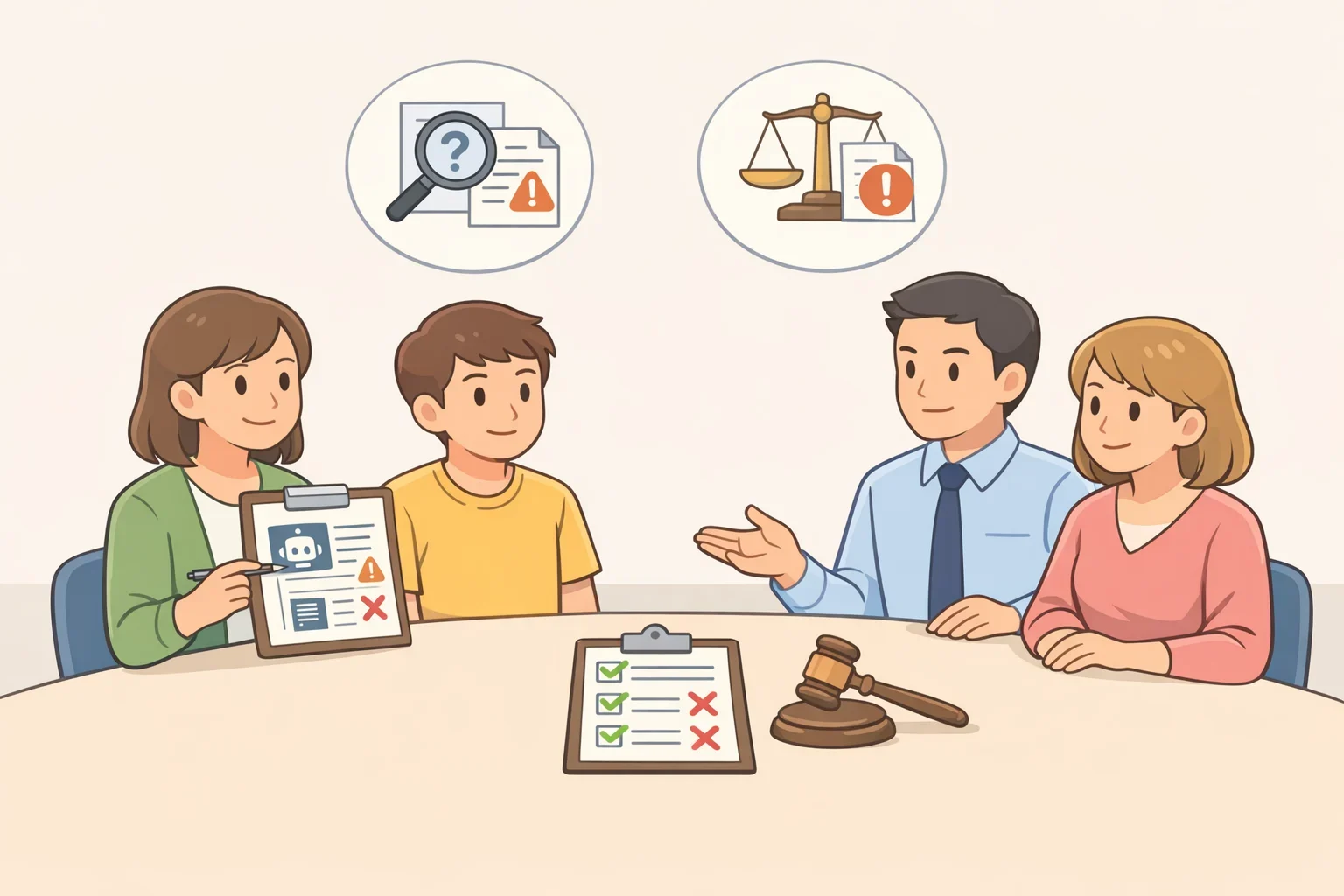
When misuse is suspected, WLA treats it as a conversation rather than an automatic penalty. Students meet with a teacher, an administrator, and a parent to discuss what happened and why, and school leaders decide consequences case by case, ranging from redoing an assignment to suspension or, rarely, expulsion (Education Next). The available reporting doesn't establish how consistently that process is applied across cases, or how students themselves view its fairness.
That boundary matters because the national numbers aren't small. Nearly 60% of teens say classmates use chatbots to cheat "very often" or "somewhat often," according to Pew Research Center data cited in the same reporting (Education Next).
Wisconsin's Department of Public Instruction has formalized a more transferable version of this idea, though it isn't something WLA is documented as using directly; it's a useful comparison for a school building its own version. Wisconsin recommends labeling individual tasks Human-Only, AI-Assist, or AI-Optional, requiring students to disclose any AI use and verify sources, and, notably, warning schools against relying on AI detectors as the sole evidence of misconduct. Instead, the guidance points schools toward drafts, oral checks, and process reviews (Wisconsin DPI, last year). The same guidance includes a tool-vetting checklist for administrators that flags accessibility features, such as screen-reader compatibility and captioning, as something to confirm before adopting any AI tool schoolwide (Wisconsin DPI, last year).
A school doesn't need WLA's full setup to adopt this boundary. Labeling a handful of high-stakes assignments human-only, and pairing any integrity concern with a draft review or short oral check instead of a detector score alone, is a low-cost step any department can take this semester.
What the evidence does and doesn't show
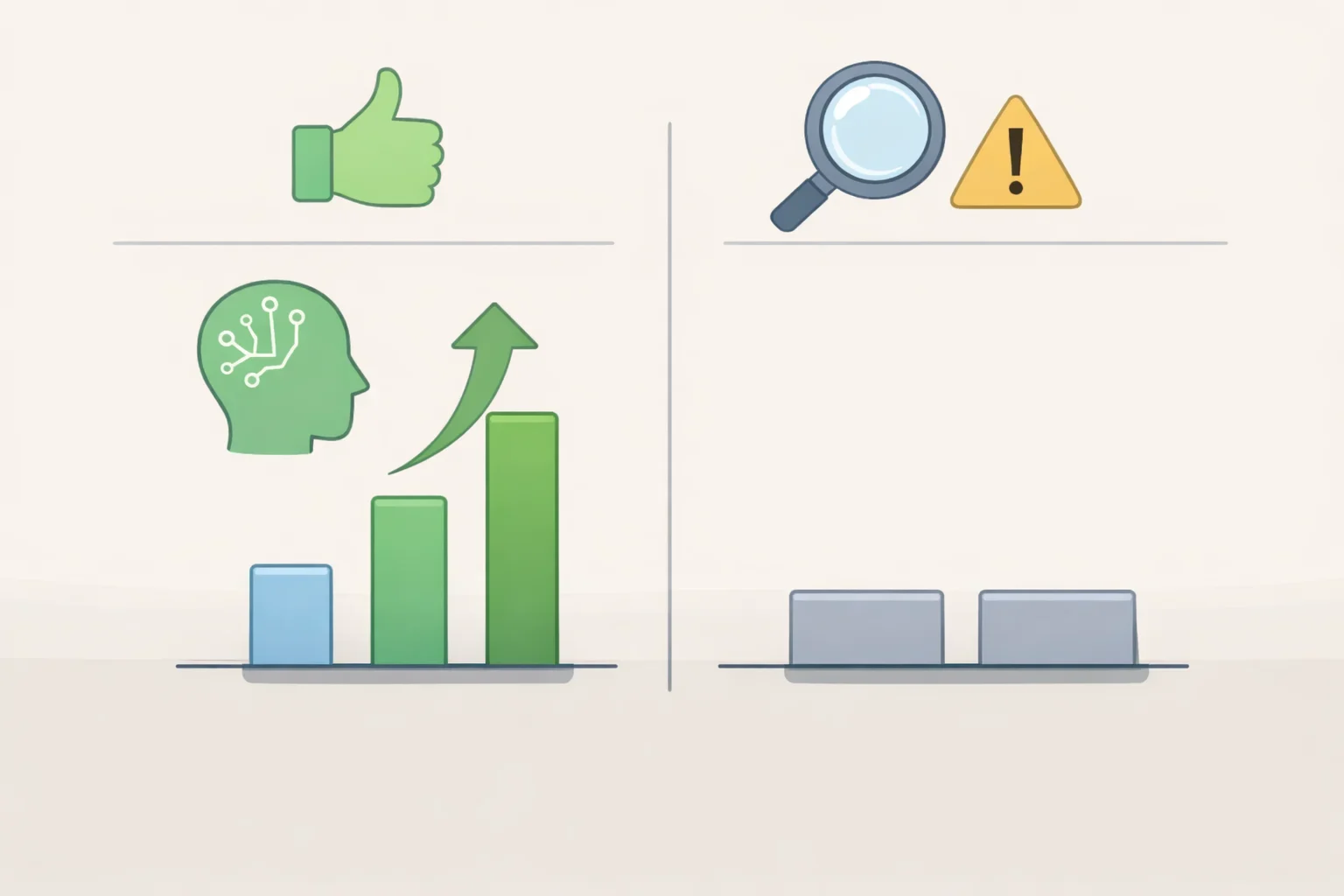
FutureEd's case study, built on classroom observation and interviews with educators and students, remains the most substantive independent account of WLA's program, and even that report frames the school as an early adopter facing open questions rather than a proven model. It also warns that without stronger policy guidance, students in under-resourced schools risk falling further behind in the AI era (FutureEd, three months ago).
The sources reviewed for this article do not report externally audited data on WLA's test scores, graduation rates, or college outcomes tied to its AI program. The practice-score gains in AP Psychology come from WLA's own reporting. Separately, a national survey found that roughly 3 in 10 teachers reduced grading and planning time by up to 11%, or about six hours a week, by using AI during the 2024-25 school year, a figure describing teachers broadly rather than a documented WLA-wide measurement (Education Next). Clarkson's own example, that AI lets him produce a weekly newsletter for the parents of his 86 students that he'd otherwise have no time to write, is a personal account, not a schoolwide metric (Education Next).
Federal guidance issued last year confirmed that federal education grant funds can support what the U.S. Department of Education calls "responsible" AI integration, and the guidance stresses privacy protections along with parent and teacher engagement in how schools deploy the tools (U.S. Department of Education, last year). That's a funding and policy allowance, not evidence that AI integration improves learning outcomes.
California's state guidance, last reviewed two months ago, calls for AI literacy instruction to start as early as elementary school and span every subject, not just computer science, and it raises the environmental costs of AI systems directly, including energy and water use that fall unevenly across communities (California Department of Education, two months ago). That broader lens, cost and equity beyond the classroom, isn't something the available WLA reporting addresses.
Student data privacy remains unresolved at the federal level regardless of what any single school does. FERPA, the primary federal law governing student data, was last updated more than a decade ago and predates generative AI entirely (Education Next).
Treat WLA's program as a structural example: a rubric, a required literacy course, protected human-only work, not as proof of an achievement gain. A school citing WLA to justify a new AI policy should be able to name specifically which piece it's borrowing, the rules, the tools, or the boundaries, since each rests on different kinds of evidence.
A checklist by role
- Teachers: Set an explicit AI-use level for each assignment, even a simple allowed-or-not-allowed distinction before building anything as detailed as a 0-4 scale. Decide which assessments stay human-only, and if an integrity concern comes up, pair it with a draft review or a short oral conversation rather than relying on an AI detector score alone (Wisconsin DPI).
- Administrators: Confirm which AI tools are vetted for student data privacy and accessibility before adopting anything schoolwide, and build in real training time. WLA's teachers spent the 2024-25 school year in repeated professional development sessions on specific tools, not a single rollout day (Education Next).
- Parents and students: Ask directly which assignments are human-only, whether personal or identifying information can be entered into any classroom AI tool, and whether a written AI-use policy exists at all. California's guidance is specific on this point: personal student information should only go into closed AI systems, never open ones (California Department of Education).
If a school or district doesn't have a written AI-use policy yet, that gap, not the technology itself, is the first thing to raise with a principal, department chair, or ed-tech coordinator. Bring one specific question to that conversation: what is this school's version of WLA's 0-4 rubric, and who is responsible for deciding it?