

- MERIT Act legacy admissions ban explained: key facts
- Could Congress ban legacy admissions through federal funding?
- What is confirmed about the MERIT Act, and what isn't
- Legacy and donor preferences are different problems
- What past legacy bans show about fairness and diversity
- What a ban would not do on its own
- A four-part check for any college's legacy or donor policy
MERIT Act legacy admissions ban explained: key facts
A federal proposal called the MERIT Act would strip legacy and donor admissions preferences from private colleges that accept federal funding, according to a legal analysis published by Boston College Law School last year. This article lays out what the proposed MERIT Act legacy admissions ban could target, and what's still unconfirmed.
Could Congress ban legacy admissions? Right now, the idea exists only in legal scholarship. The research behind this article turned up no bill number, sponsor, or official congressional text for this measure, so there's no way yet to confirm where it stands.
A separate Vanderbilt University policy brief published earlier this year takes on a narrower, already-tested question: what actually happened at seven colleges and states that dropped legacy preferences on their own, without any federal mandate. The two sources answer different parts of the same story, and this article keeps them separate rather than folding them into one confirmed outcome.
For applicants, the real question is whether a specific college is bound by an enacted law or has simply made its own policy choice. That's a school-by-school check, and the sections below walk through it.
Could Congress ban legacy admissions through federal funding?

The MERIT Act, as described in the Boston College Law School note, wouldn't simply order colleges to stop favoring alumni children and donor families. It describes a ban on both legacy and donor preferences enforced through funding conditions, specifically the federal student loan money that flows into private institutions.
The note argues the reach could be broad because most private colleges accept federal funding, according to Boston College Law School. That's the note's own reading of the proposal's potential scope, not an independent count of how many schools currently use legacy or donor preferences.
Colleges would likely push back. The note lays out two possible legal challenges: that admissions decisions count as protected expressive association under the First Amendment, and that conditioning existing student loan funding on ending these preferences reaches beyond what the Spending Clause allows Congress to do, given how much money is at stake, according to Boston College Law School. The note's own conclusion is that careful drafting could survive both challenges. That's a legal scholar's analysis, not a court ruling or an enacted statute.
What is confirmed about the MERIT Act, and what isn't
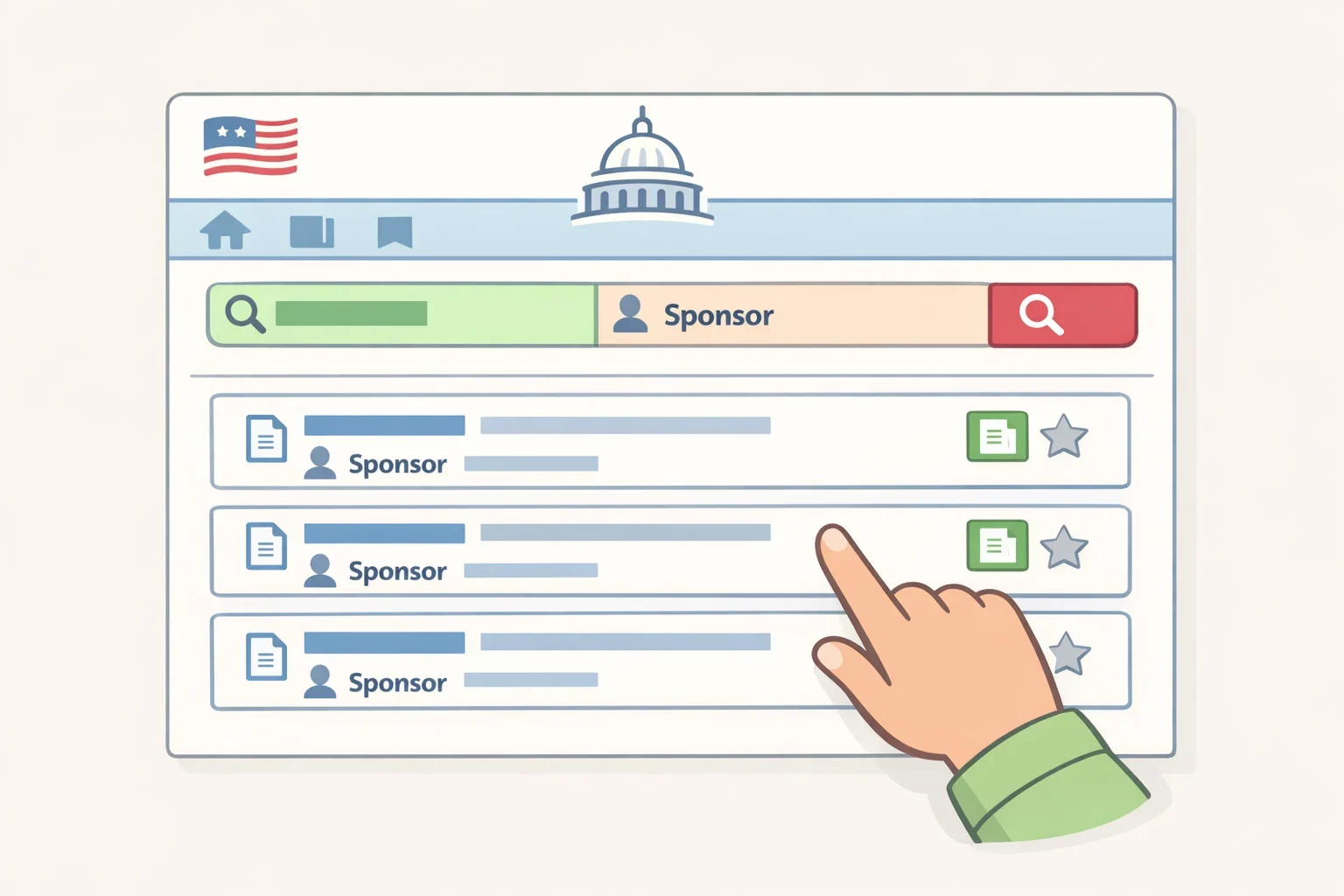
The Boston College Law School note describes the MERIT Act as pending. But nothing in the research turned up a bill number, sponsor, or official congressional text confirming that status. That gap doesn't mean the proposal was withdrawn or never introduced. It means the version available right now lives in legal scholarship, not in a piece of legislation anyone can track.
Anyone checking whether this proposal touches a specific college should search Congress.gov directly for a bill number and sponsor before assuming it applies to any school on their list. If nothing turns up under "MERIT Act," treat the idea as a described policy proposal, not pending law.
Legacy and donor preferences are different problems
The debate over college donor preferences and legacy admissions bundles two related but distinct practices. Legacy preference gives an admissions edge to alumni children. Donor preference gives an edge tied to family financial contributions. The Boston College note treats combining both under one federal condition as part of what sets the MERIT Act apart from state-level efforts already on the books, according to Boston College Law School.
The Vanderbilt research covers only half of that picture. Its seven case studies examine colleges and states that ended legacy preference specifically. Many state policies ban legacy consideration while still allowing donor preference, and most carry no sanctions or other enforcement mechanism, Vanderbilt researchers found.
That leaves a gap worth naming directly. Evidence on legacy-only bans can shape expectations about part of the MERIT Act, but it says nothing about what would happen if donor preferences were eliminated too. No comparable research on donor-preference bans turned up anywhere in the sources reviewed here. Ending legacy preference doesn't mean donor preference has also ended; a policy has to name both to accomplish that.
What past legacy bans show about fairness and diversity
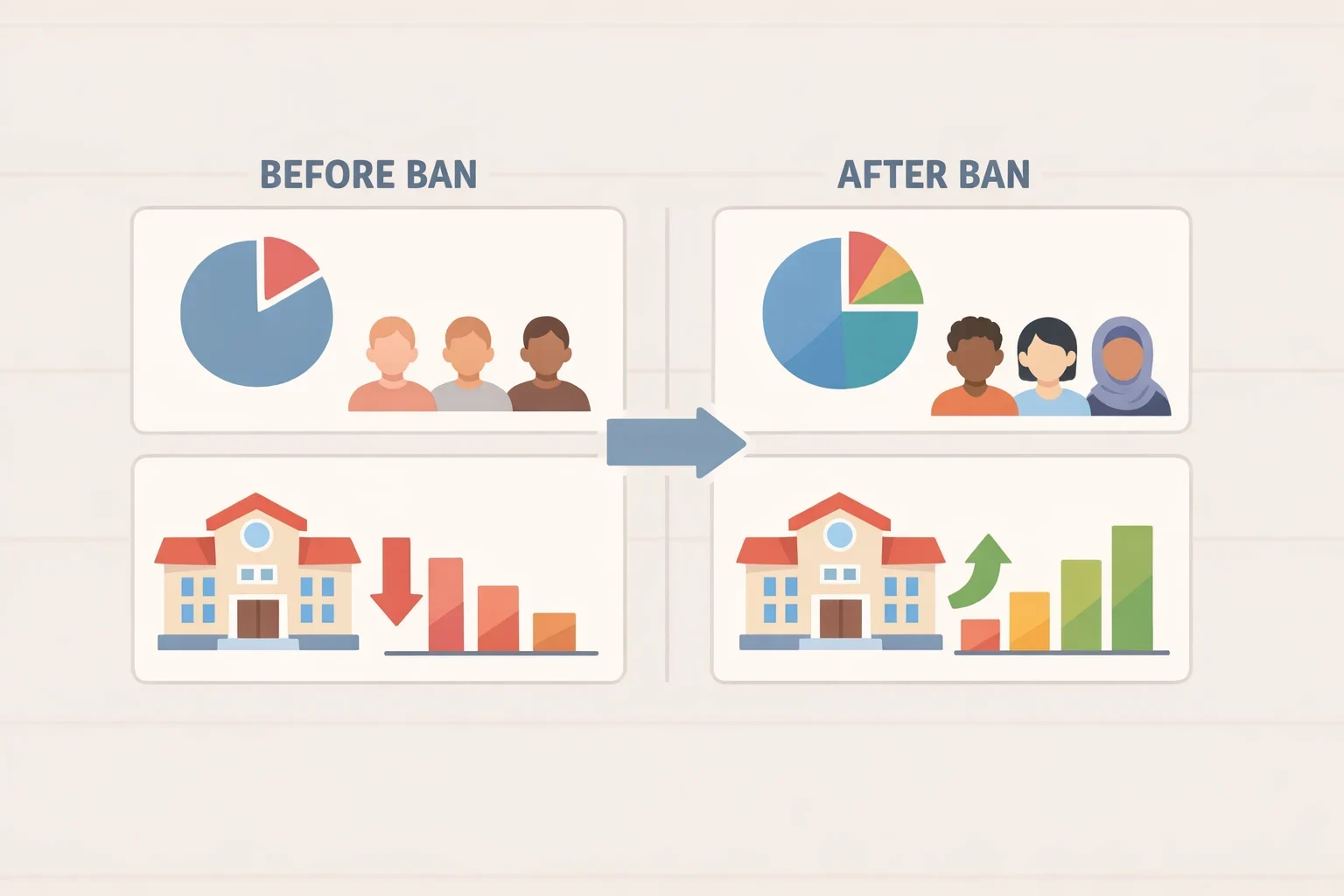
Vanderbilt researchers Brent Evans, an associate professor of public policy and higher education, and Cody Christensen, a doctoral student in higher education leadership and policy, studied seven places that banned legacy preference: Amherst College, Johns Hopkins University, Texas A&M University, the University of California system, the University of Georgia, the University of Pittsburgh, and the state of Colorado. Colorado is the only legislative case in the group; the rest were institutional decisions, which limits how confidently the results can predict what one federal statute would do nationwide.
"Legacy bans may increase perceptions of equity and fairness," Evans said, but "it's not clear that they consistently lead to increases in student diversity," according to Vanderbilt University.
Legal context shaped what happened at each school. At the University of California and University of Georgia, both in states that had already restricted race-based affirmative action, campus diversity barely moved after their legacy bans, in part because those restrictions already barred admissions offices from weighing race, Vanderbilt researchers reported. Johns Hopkins tells a different story. After its ban took effect in 2014-15, the university saw gains in Black, Hispanic, and Asian enrollment. Neither Johns Hopkins nor Maryland had restricted affirmative action before the Supreme Court's ruling, a different policy backdrop than UC or Georgia had going in.
Selectivity and companion policies mattered too. Texas A&M's diversity gains after its 2004-05 ban lined up with the state's Top 10 Percent rule, which guarantees admission to students who graduate in the top 10 percent of their high school class; researchers say that rule most likely drove much of the shift. Colorado's ban, the only legislative one in the group, showed little effect on diversity at the state's public colleges, possibly because many already had high admission rates where legacy status carried limited weight to begin with.
Racial and economic diversity didn't move together. Only Texas A&M and the University of Pittsburgh, which receives roughly 32,000 applications for 4,000 seats, saw increases in enrollment from low-income students after their bans. At the other schools studied, displaced legacy applicants were often replaced by other high-income applicants rather than lower-income ones, according to Vanderbilt's brief.
What a ban would not do on its own
Removing a formal admissions advantage isn't the same as building the systems that decide who actually enrolls once that advantage is gone. Vanderbilt's researchers recommend that any legacy ban apply consistently to public and private institutions alike and include real sanctions, since most state policies described in the brief carry no enforcement mechanism, according to Vanderbilt University.
They point to specific practices tied to enrollment diversity that operate independently of any legacy or donor ban: expanded recruitment in underrepresented communities, need-based financial aid, guaranteed-tuition programs, and mentorship initiatives. A school that stops weighing legacy status hasn't automatically ended every advantage tied to family connections. If a policy stays silent on donor preference, that preference likely continues no matter what the legacy rule says.
A four-part check for any college's legacy or donor policy

Run this checklist against a school's published admissions policy or applicable state law before assuming anything about how it handles legacy or donor status:
- Coverage. Is the college private, public, or subject to a state law that names it specifically? Check the school's official admissions policy page and any relevant state statute, not federal law, since no confirmed MERIT Act record exists yet.
- Legacy vs. donor. Does the policy name both practices, or only legacy preference? Many state policies exempt donor preference entirely, according to Vanderbilt University.
- Enforcement. Does the policy include a compliance or sanction mechanism, or is it voluntary with no stated consequence? Check the state regulation text for legislative bans, or the institution's own disclosure for a campus-level decision.
- Timing. Does the policy take effect before the applicant's entering class? Bans have started at very different times, including Johns Hopkins in 2014-15 and Pitt in 2020-21.
A published policy often names a factor without saying how much weight it carries, so an admissions office may confirm that it considers alumni ties without explaining how much that consideration matters. A useful written question to send: "Does this college consider alumni relationships or family donations in admissions, and does any published policy on that apply to my entering class?"
Before application deadlines close, check the college's published policy and any relevant state law, send that written question to the admissions office, and keep the answer on file. If the MERIT Act's status changes, a Congress.gov search under its name is still the fastest way to confirm whether it has become an actual bill affecting federal funding.