

- Home-Based Child Care Provider Shortage: What Data Show
- Who counts as a listed home-based provider?
- What the home-based child care workforce data can and cannot show
- Revenue is associated with persistence, but it is not a paycheck
- Why the replacement question remains unanswered
- Before entering the field, verify these local conditions
- What prospective providers can reasonably conclude
Home-Based Child Care Provider Shortage: What Data Show
For someone considering a career change, a home-based child care business can look both practical and uncertain. The work may offer a way to serve families from a home setting, but the available research raises a harder question: is there a reliable pipeline of new providers to sustain this part of the child care system?
The evidence does not establish a current home-based child care provider shortage, a mass retirement wave, or a workforce in which most providers are over 50. It does show that the supply of family child care programs has declined for roughly two decades, while providers with more experience and higher reported child care revenue were more likely to remain on administrative lists over time. The research also leaves major questions unanswered about who is entering the field.
That distinction matters for career changers, early childhood education students, parents considering self-employment, and advisers helping someone evaluate this path. National data can describe broad patterns. They cannot tell a prospective provider whether the numbers will work in a particular home, neighborhood, or state.
Who counts as a listed home-based provider?
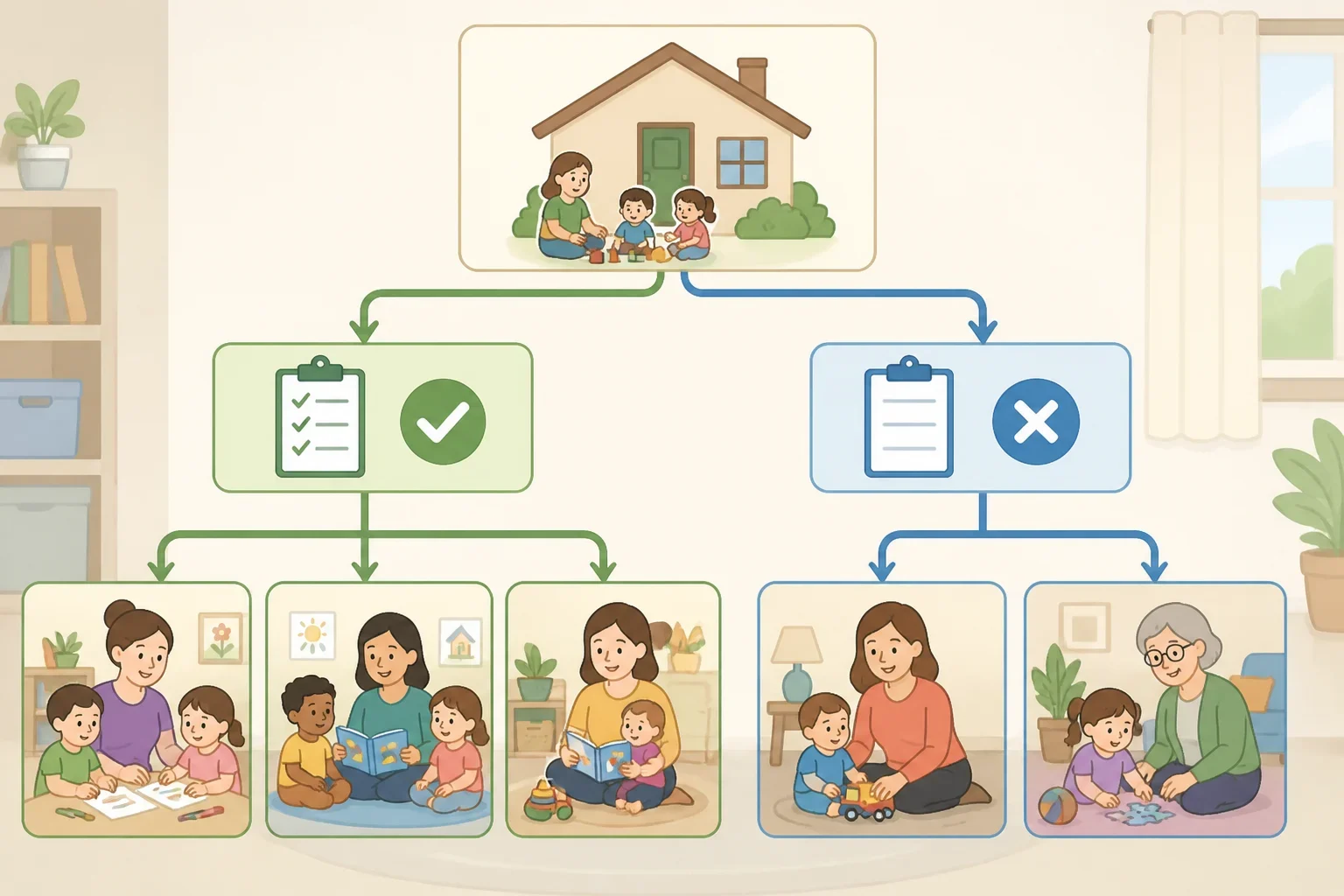
One ACF/OPRE report estimates that approximately 91,000 providers cared for at least one young child in a home-based child care setting in 2019 and were formally “listed” by state or local child care and early education agencies (ACF/OPRE). A listed provider, in this research, is someone appearing in those administrative systems.
That definition is narrower than the entire home-based child care workforce. The figure does not automatically include every person caring for children in a home, including people who are unlisted, license-exempt, or providing informal care. The ACF/OPRE studies describe the listed population, not every possible form of home-based care.
The research is built mainly on the 2019 National Survey of Early Care and Education Home-Based Provider Survey, a cross-sectional survey covering all 50 states and the District of Columbia (ACF/OPRE). Because the survey reflects 2019 conditions, it should not be treated as a current census of providers or as a direct measure of the workforce in October 2026.
A separate overview from the McCormick Institute describes family child care professionals as an essential part of the child care landscape while citing a decline in family child care programs over roughly two decades (McCormick Institute). That long-term decline is important context, but it does not by itself identify the cause or prove that a new shortage exists everywhere.
What the home-based child care workforce data can and cannot show
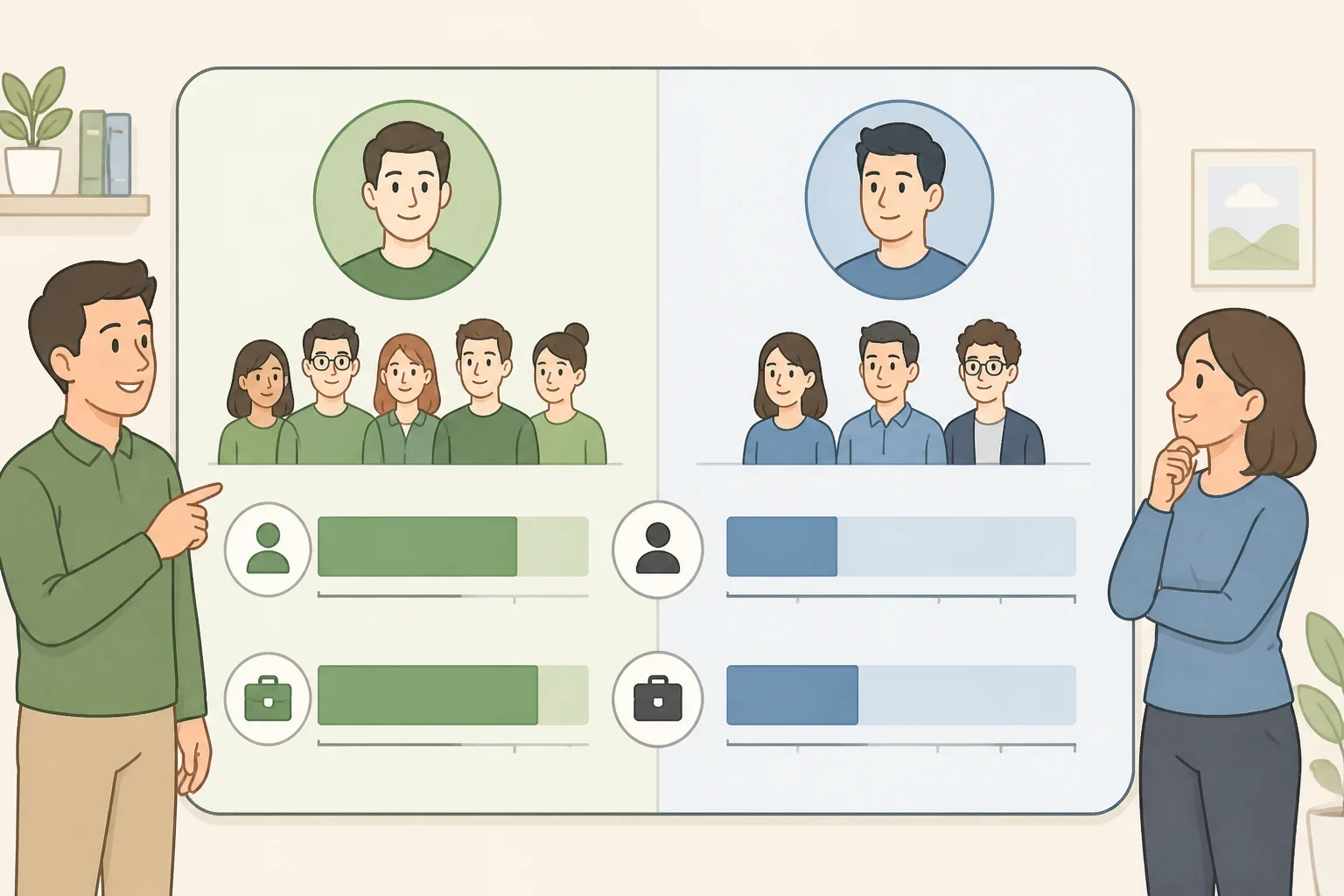
The strongest comparison in the research follows providers from the 2012 survey and checks whether they could still be found on compiled administrative lists in 2018. Those who could be found are called “stayers.” Those who could not be found are called “leavers.”
“Leaver” does not necessarily mean the person stopped providing all child care. It means the provider was not found on the administrative lists used for the comparison. A person may have changed arrangements, moved into another form of care, left the listed system, or stopped providing care. The data do not settle which explanation applies in each case.
Within that limited definition, the comparison shows several differences. Stayers averaged 48.7 years old, while leavers averaged 46.1 years old, a difference of about 2.5 years (ACF/OPRE). Among stayers, 71% reported more than 10 years of experience, compared with 56% of leavers (ACF/OPRE).
The figures point toward an association between persistence and experience. They do not show that age or experience caused a provider to remain listed. They also do not show that older providers are preparing to retire or that younger providers are failing to enter the field.
After other characteristics were taken into account, provider age, years of experience, and 2012 child care revenue remained statistically significant predictors of provider attrition (ACF/OPRE). That finding strengthens the case for looking at more than one condition. It does not identify a single dominant cause of leaving, and it does not measure a current family child care provider shortage.
The studies also cannot provide:
- A representative age breakdown for the full home-based child care workforce today
- The number of people currently planning to retire
- The number of new providers entering the field
- The number completing required training or licensing steps
- The timing or size of any future replacement workforce
Those gaps change the question a prospective provider should ask. Instead of assuming that an aging child care provider population guarantees an open market, examine whether the local business conditions support a sustainable operation.
Revenue is associated with persistence, but it is not a paycheck
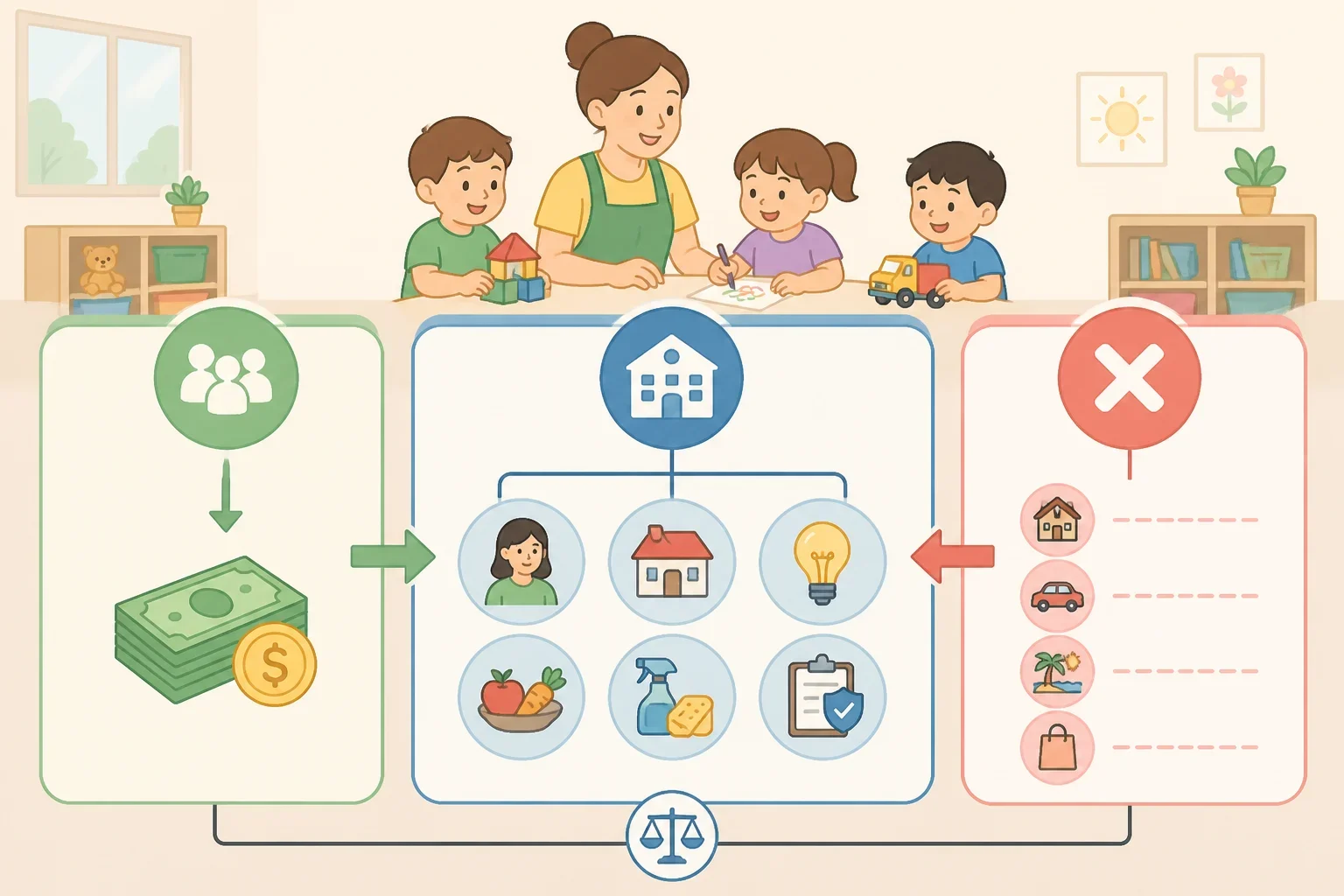
Money is one of the clearest practical issues in the research. Providers who remained listed reported about $35,400 in annual child care revenue in 2012, compared with approximately $21,100 among those later classified as leavers (ACF/OPRE).
This is an association, not a promised income level. It also refers to revenue, not take-home pay or profit. Revenue does not account for expenses such as food, equipment, insurance, facility changes, taxes, unpaid administrative time, or the portion of a home used for care. A prospective provider should not use the reported $35,400 figure as a salary estimate.
The finding is still useful. It suggests that financial conditions are relevant when evaluating why some listed providers remained in the system and others did not. If revenue is too low relative to operating costs and the provider’s required time, remaining in the field may be difficult. That is a reasonable issue to investigate, not a conclusion that the national figures predict one person’s outcome.
The ACF/OPRE policy research also found that financial reasons, including low wages, were reported most often among reasons providers left the child care and early education workforce. Difficulties complying with regulations and requirements contributed for some providers, but less often (ACF/OPRE).
This does not make regulation an enemy of home-based care. Safety rules serve a clear purpose, and the same research shows broad engagement with them. Approximately nine in ten listed providers reported receiving an inspection or attending health and safety training in the prior year (ACF/OPRE). Virtually all agreed that background checks are important for children’s health and well-being, although some reported discomfort or business hardships connected with those checks (ACF/OPRE).
The more careful interpretation is that providers may accept the purpose of safety requirements while still finding the process costly, time-consuming, or difficult to manage. Increases in state health and safety regulations between 2012 and 2019, particularly the addition of mandatory background checks, were associated with a lower percentage of listed providers receiving subsidy funding (ACF/OPRE). The study identifies a correlation, not proof that regulation caused the change.
Subsidies are another factor worth understanding. In the 2019 survey, approximately one-third of listed providers reported receiving subsidy funding, and one in four reported that they were not aware of subsidies (ACF/OPRE). Those figures do not describe current providers, but they show why a new provider should ask directly about public payment systems rather than assume the options are obvious or automatic.
The research also found that about two in five listed providers reported participating in a quality rating and improvement system, commonly called QRIS (ACF/OPRE). Participation was higher in states that required some or all providers to participate. This is another example of a program whose meaning depends on local rules, eligibility, and expectations.
Why the replacement question remains unanswered
The phrase “replace the workforce” suggests that researchers know how many providers are leaving and how many new people are preparing to enter. These studies do not provide that complete accounting.
The ACF/OPRE survey describes listed providers in 2019 and compares list status between 2012 and 2018. It does not count current entrants, track every training completion, identify each provider’s retirement plan, or establish a representative current age profile for all home-based care providers (ACF/OPRE).
That limitation is especially important when interpreting the age figures. Stayers were older than leavers on average, but the difference was 2.5 years, and both groups came from a defined listed-provider comparison (ACF/OPRE). The result does not support a claim that most providers are over 50 or that a large retirement wave is imminent.
The long-term decline in family child care supply does support a broader concern. A field can lose programs over many years without the available data showing exactly why each program closed or whether enough new providers are entering. Possible explanations need to be tested rather than assumed. Financial viability, administrative demands, local demand, access to subsidies, and the appeal of the work to new entrants may all deserve attention, but the supplied research does not rank them as the single explanation.
For someone considering entry, the useful question is narrower: can the local rules, available enrollment, payment sources, and operating costs fit together in a workable plan?
Before entering the field, verify these local conditions

National averages cannot answer that question. A state child care licensing agency and a local Child Care Resource and Referral office, or CCR&R, can explain the rules and programs that apply to a particular location.
Ask for written information about the following:
- The operating category. Ask whether the planned setting would be treated as a licensed family child care home, a group home, a registered home, or another category. Request the allowable number and ages of children, including how the provider’s own children may count if that applies under local rules.
- The difference between approval types. Ask what licensing, registration, subsidy participation, and private-pay enrollment each mean in that jurisdiction. These are not interchangeable questions. A provider may need one approval to operate legally, another step to accept subsidized families, and a separate enrollment plan for families paying privately.
- The startup budget. Request a list of required background checks, training, equipment, inspections, facility changes, insurance, and application fees. Ask which costs are one time and which recur annually.
- The enrollment limit. Compare the maximum permitted enrollment with a realistic enrollment target. A legal capacity limit is not the same as a promise that every slot will be filled.
- Payment sources. Ask whether a new provider can accept subsidized families immediately or whether approval takes additional time. Request the applicable reimbursement rates, payment schedule, attendance rules, and documentation requirements.
- Private-pay rates. Ask the CCR&R office or other local resource to help identify typical private-pay rates in the intended service area. Compare those rates with subsidy reimbursement, but do not assume either figure represents profit.
- Training and background-check timing. Confirm how long each step usually takes, what it costs, and whether every adult in the home must complete some requirements.
- Local demand. Ask whether the area has documented requests for specific age groups, open slots, or waitlists. A general statement that child care is needed is less useful than information about the ages and schedules families are seeking.
- Ongoing support. Ask whether the area offers business coaching, quality-improvement assistance, substitute-care resources, or help understanding subsidy paperwork. Verify eligibility rather than assuming a program is available to every new provider.
The questions should be taken to the agency that controls the relevant decision. A CCR&R office may help with local demand and referrals, while the licensing agency can explain legal operating requirements. A subsidy office may be the right contact for reimbursement and participation rules.
The final step is a written comparison. Create one column for expected revenue under several enrollment scenarios and another for startup and monthly operating costs. Include conservative assumptions for unfilled slots, time spent on administrative work, recurring training, insurance, food, equipment replacement, taxes, and other expenses that apply to the planned setting. The research does not supply those local amounts, so they must be verified rather than borrowed from national averages.
What prospective providers can reasonably conclude
The evidence documents a declining family child care supply over roughly two decades and an association between remaining listed and factors such as age, experience, and reported revenue. It does not establish a current shortage, identify a mass retirement wave, or show who will enter the field next.
That uncertainty is not a reason to dismiss home-based child care. It is a reason to evaluate the path carefully. Before spending money, contact the state licensing agency and local CCR&R office, clarify the operating category and capacity, confirm subsidy and private-pay options, collect startup and recurring costs, and ask for local demand information. Then compare the numbers in writing.
That process will not guarantee a viable business. It will answer a more useful question: whether the specific home-based child care opportunity under consideration is clear enough, supported enough, and financially workable enough to investigate further.