
- How AI Will Change the Future of Education and Work
- What does “messy work” mean?
- Job survival is not the same as job availability
- What skills should students build?
- AI and the future of schooling: what teaching shows us
- The AI impact on future jobs may start with entry-level work
- What students, families, and educators can do now
How AI Will Change the Future of Education and Work
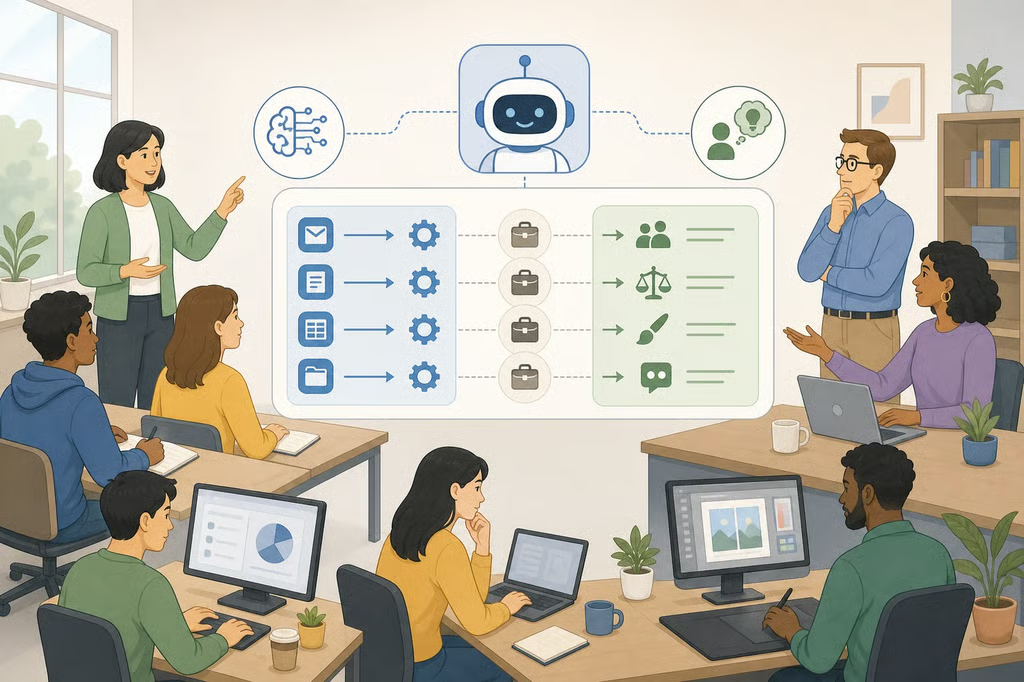
Students are often told to prepare for either jobs AI will replace or jobs AI cannot replace. A better question sits between those extremes: Which parts of a job can be separated and automated, and which require judgment, trust, accountability, or a response to unpredictable people?
That question offers a more useful way to think about how AI will change the future of education and work. It applies to students choosing courses, educators planning instruction, families discussing careers, and adults considering a new field. The “messy jobs” framework does not provide a list of permanently safe occupations. It provides a way to examine the work inside a job, including the parts that may change first and the parts that still require a person to take responsibility.
The framework comes from Messy Jobs: The Work That AI Cannot Reach by economists Luis Garicano, Jin Li, and Yanhui Wu. The book’s contribution, according to a City Journal review published two months ago, is less a prediction than a model for understanding how jobs are put together. A review in Education Next published today connects that model directly to schools and the preparation of future workers.
What does “messy work” mean?
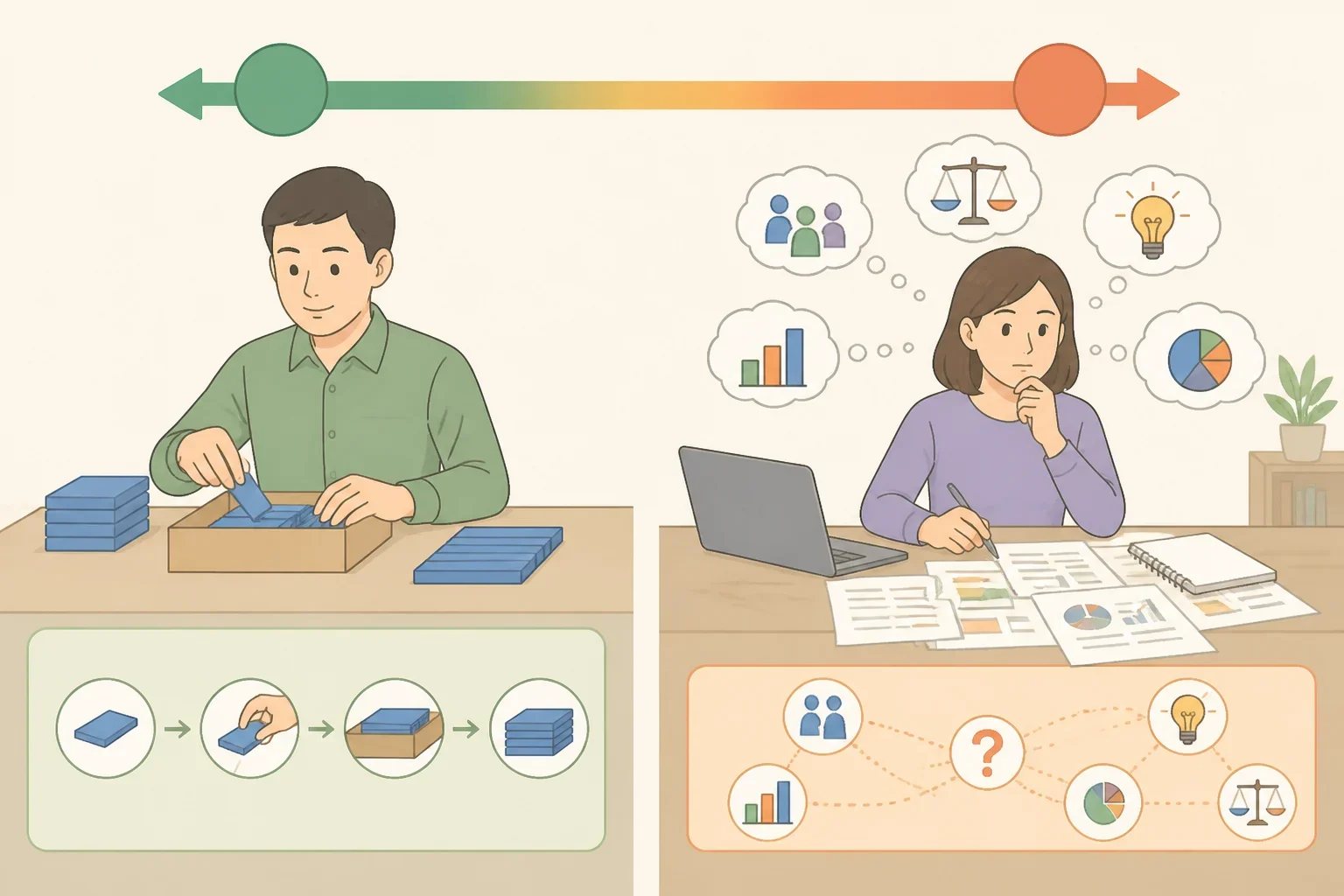
The book’s framework places knowledge work on a spectrum of “messiness.” At one end is a defined task, such as helping a client file a tax form. At the other is a bundle of complex tasks that are difficult to specify in advance and hard to separate into independent pieces, according to Education Next.
That distinction matters because AI does not encounter every part of a job in the same way. A routine task with a clear input and output may be easier to automate. A job that also involves competing interests, changing circumstances, difficult conversations, and decisions someone must own is harder to divide into “AI work” and “human work.”
The deciding issue is the cost of separating those tasks. When separation is inexpensive, AI can take over the routine component and the human role may become narrower. A travel agent’s booking function, for example, can be detached relatively easily from other parts of the service. When separation is costly, the human may continue providing the whole service. An accountant may reconcile ledgers, but also interpret tax law, advise a client, sign an audit, and carry legal exposure, as City Journal explains.
This is why “messy” should not be confused with disorganized or unskilled. The mess may come from the work’s human demands. Meetings, negotiation, problem-solving, customer relationships, organizational politics, and conflict can be difficult to predict and difficult to hand over to a machine without someone supervising the result.
The framework also fits the task-level picture in the International Labour Organization’s analysis published last year. The ILO found that 24% of jobs worldwide show some degree of exposure to generative AI. That figure describes the potential for some current tasks to be performed with the technology. It is not a forecast that 24% of occupations will disappear, nor does it mean that every worker in an exposed occupation will lose a job.
For students, the planning question changes. Instead of asking, “Which job title is AI-proof?” ask:
- Which tasks in this field are routine and separable?
- Where do judgment, accountability, physical presence, or trust matter?
- What happens when the situation does not match the standard example?
- Does the work require someone to explain a decision and accept responsibility for it?
Those questions are more durable than a list of “future-proof” careers. They also leave room for uncertainty, which is necessary because adoption choices and workplace organization will shape the result.
Job survival is not the same as job availability
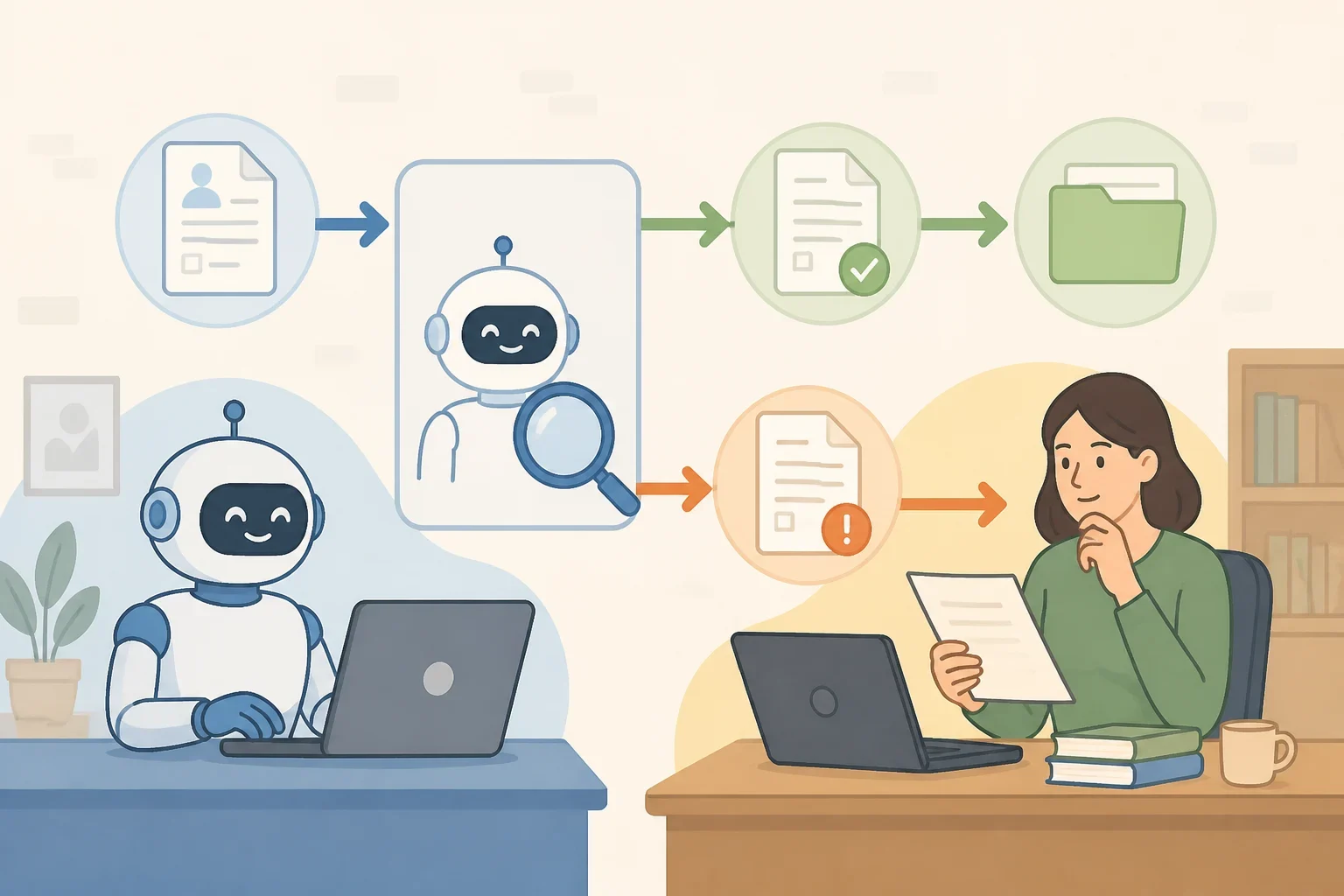
The reassuring reading of Messy Jobs is that many occupations may remain because their tasks cannot be cleanly separated. But an occupation can survive while employing fewer people. That distinction is the strongest caution raised by City Journal.
The review describes a scenario in which AI handles routine compliance screening and sends difficult cases to human workers. The compliance operation in that hypothetical may need 30 people instead of 500. This is an illustration, not an observed labor-market outcome, but it makes the concern concrete: the question is not only whether accountants, lawyers, designers, or compliance specialists still exist. It is also how many people a firm needs to perform the remaining human portion of the work.
That concern affects students entering professional fields. Many white-collar professions have used an apprenticeship model. Consulting firms, law firms, and hospitals can charge more for junior workers’ labor than they pay those workers, then use part of that financial value to train them for senior roles. If AI performs many junior-level tasks as well as or better than junior employees, firms may struggle to charge enough for that work and may find it harder to afford the traditional training model, according to Education Next.
This does not mean entry-level work will vanish everywhere. It does mean that students should examine how a field teaches beginners. A promising course or career plan should not focus only on the final job title. It should also ask:
- What supervised practice helps a beginner develop expertise?
- Which tasks will a new worker be trusted to perform?
- Will a student learn to check AI outputs, or only be expected to accept them?
- Does the field offer internships, clinical practice, projects, apprenticeships, or another form of work-based learning where available?
The ILO’s research adds another limit to sweeping predictions. Its exposure measure shows potential transformation, not a fixed outcome. Whether an occupation changes, shrinks, or remains broadly intact depends partly on whether employers adopt the technology and whether workers receive opportunities to learn alongside it, according to ILO.
What skills should students build?
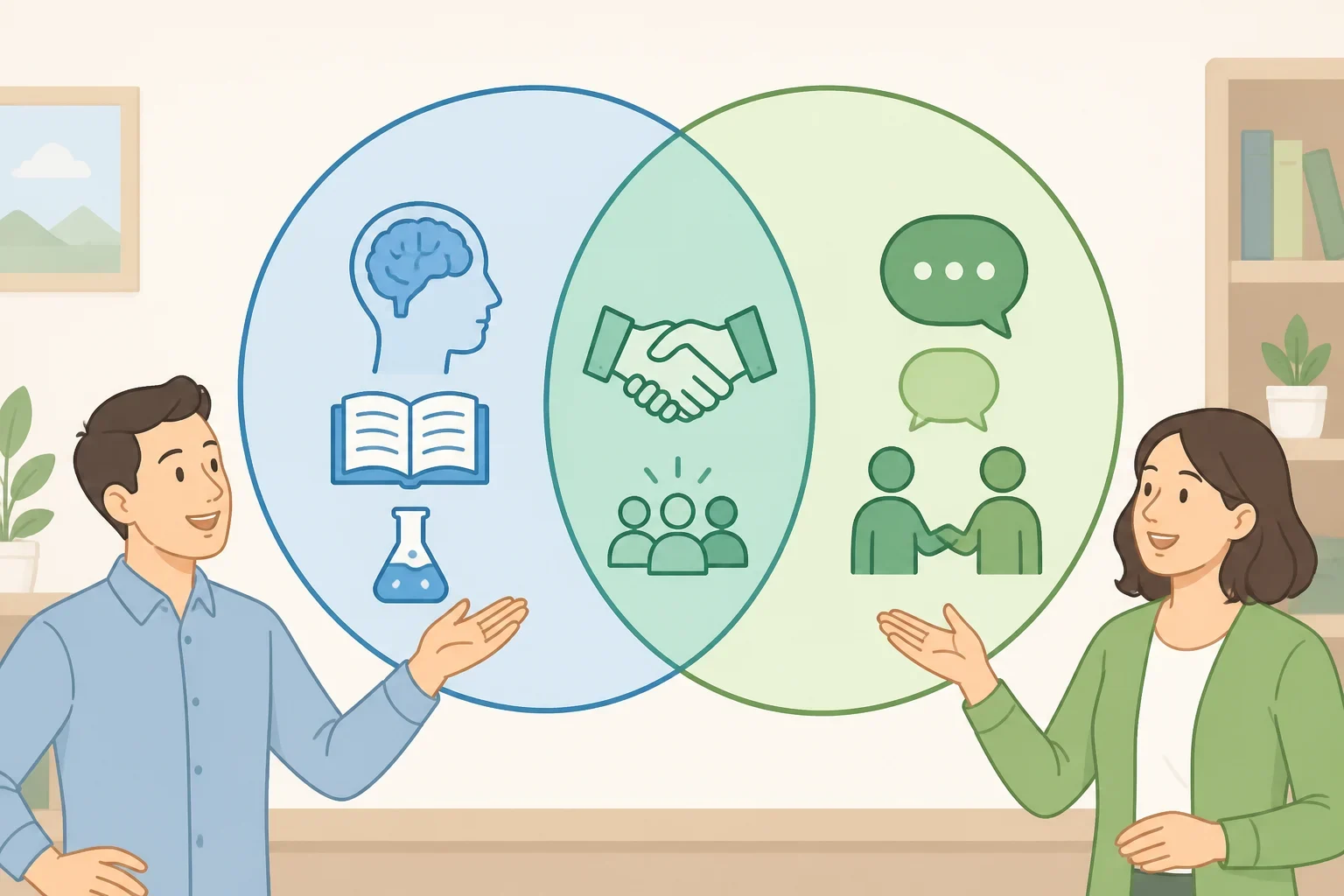
Historical labor data offers a narrower claim than “the labor market rewards every kind of people skill.” Research by Harvard economist David Deming, cited by Education Next, tracked American occupations in the 1980s, 1990s, and 2000s. Occupations with high demands for both cognitive and social skills grew by roughly 12 percentage points over three decades, while cognitively demanding occupations with low social interaction declined by about 3 percentage points.
The finding supports a combination, not a choice between academic knowledge and communication. Students need subject knowledge to recognize a weak explanation, identify a misleading result, and understand when a generated answer does not fit the problem. They also need practice explaining ideas, coordinating with others, handling disagreement, and making decisions when the instructions are incomplete.
A Fordham Institute commentary published last week makes this caution directly. Interpersonal ability is not a substitute for expertise. Using AI well, especially spotting errors or poor judgments, requires enough knowledge to evaluate what the system produces.
That has implications for course selection. A student interested in health care, for example, should not treat communication as a replacement for science. A student interested in software, law, design, or business should not assume that technical knowledge is enough on its own. The useful combination is depth in something plus repeated practice applying that knowledge with other people.
The same combination matters beyond employment. The Fordham commentary notes that cognitive capacity and people skills also support competent citizenship. Students who can evaluate information, explain a position, listen to disagreement, and revise a conclusion are preparing for more than a workplace.
AI and the future of schooling: what teaching shows us
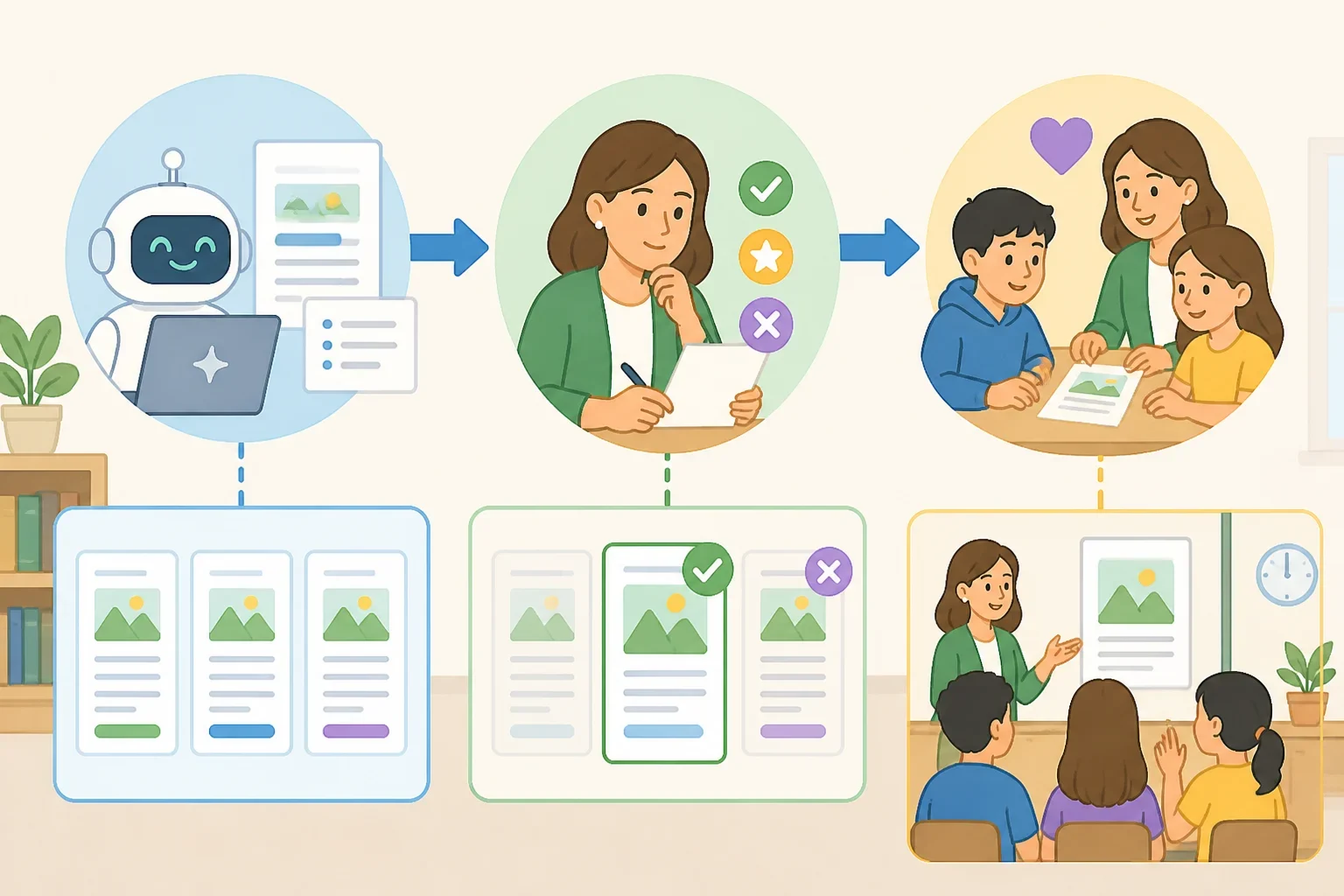
Teaching is a useful case study because it includes routine preparation alongside judgment, relationships, and responsibility for individual learners. A teacher might use AI to generate draft lesson materials or sort routine feedback. That does not decide whether the explanation addresses a student’s misconception, fits the class’s language needs, supports an accommodation, or gives a discouraged student a reason to keep trying. This is an illustration of the framework, not a finding that every teacher currently uses AI in this way.
A systematic review of 42 empirical studies found three broad changes in teachers’ work: some repetitive and highly structured tasks were replaced, judgment-intensive and regulatory responsibilities were reinforced, and new duties emerged around AI governance and students’ digital literacy, according to the OSF preprint published last year.
The review also found that teacher-AI collaboration generally followed a division of labor based on each side’s strengths and remained primarily human-centered rather than AI-led. In practical terms, that suggests a teacher’s work may shift toward reviewing, adapting, explaining, and deciding, even when a tool helps with an earlier step.
The evidence has limits. The review included studies published from November 2022 through December 2024, and the final set contained 38 journal articles and four conference proceedings. It is a preprint, not a finalized peer-reviewed study, so readers should be cautious about applying its conclusions to mature, education-specific tools or to every classroom.
The review’s suggestions for teacher education should also be labeled as suggestions, not existing certification requirements. The authors identify prompt engineering, AI ethics, and affective regulation as possible areas for future models of teacher competence. Schools and teacher-preparation programs can consider those areas as they develop guidance, but the preprint does not establish a universal standard that every teacher must meet.
The motivation problem remains another reason teaching may resist full automation. A Fordham Institute commentary argues that AI may assist instruction without solving the human work of helping students learn, grow, and persist. A system may produce an explanation. A teacher still has to judge whether a particular student is ready to use it.
The AI impact on future jobs may start with entry-level work
Students also need to understand the uneven distribution of AI’s effects. The ILO reports that clerical occupations remain the most exposed, including data-entry clerks, typists, accounting and bookkeeping clerks, and administrative secretaries. It also reports increased exposure since 2023 in professional and technical roles such as financial analysts, web and multimedia developers, application programmers, and investment advisers.
In high-income countries, nearly 10% of women’s employment is in occupations with the highest automation potential, compared with 3.5% of men’s employment. The corresponding figures in 2023 were 7.8% and 2.9%, respectively, according to ILO. These figures describe exposure, not guaranteed displacement, but they show why broad statements about “the worker” can hide important differences.
There is also a student-facing risk inside school: outsourcing the thinking before learning has taken place. A quarter of high school students admitted using AI to cheat on assignments or tests in a Fordham Institute survey, as reported by Education Next today. A student who avoids practicing analysis may later have difficulty checking an AI system’s analysis at work.
Policies matter here, and they should be checked rather than guessed. The ILO reported last year that more than two-thirds of surveyed workers in Poland had received no guidance on using AI tools, while 2.1% said their workplace had clear boundaries for prohibited uses. That example does not establish the policy situation in every country, school, or employer. It does show why learners should ask for the applicable rule before using AI for an assignment, internship, or job.
What students, families, and educators can do now
A practical review of a course or career can begin with five steps:
- Map the tasks. List the routine, separable work as well as the unpredictable work.
- Look for human responsibility. Identify where judgment, trust, physical presence, conflict management, or accountability matter.
- Check the entry path. Find out how beginners receive supervised practice and feedback.
- Build both sides of the skill set. Develop subject knowledge through coursework, then practice communication and coordination through labs, projects, debate, clinical practice, internships, or work-based learning where available.
- Confirm the AI rules. Ask the teacher, school, district, program, or employer what uses are allowed, restricted, or prohibited.
Educators can apply the same checklist to instruction. Which preparation tasks can be assisted without weakening teacher review? Which decisions require knowledge of a student and the classroom? What opportunities will students have to explain their reasoning without handing the entire task to a tool?
The clearest conclusion is also the most modest. The “messy jobs” framework suggests that AI will transform tasks before it eliminates every occupation, but job survival does not guarantee equal access to jobs or enough entry-level positions for everyone who wants to enter a field. Students should prepare for both sides of that reality by developing expertise, practicing judgment with other people, and learning the rules for responsible AI use before they need those habits at work.