

What Project Follow Through does, and doesn't, tell us about teaching kids to read
A decades-old reading study can help parents and educators ask better questions about reading instruction today, but it cannot choose a curriculum by itself. Project Follow Through reported stronger basic-skills results for Engelmann’s Direct Instruction model than for the other models it compared. It did not isolate phonics, test every form of explicit teaching, or settle the broader reading debate.
That distinction matters to K–12 teachers, reading specialists, parents, and teacher-preparation students. Follow Through is most useful as a historical case study in how research, curriculum design, and classroom implementation interact. Its findings are less useful as a shortcut for deciding whether one current program works.
Public attention to these questions grew through Sold a Story, an APM Reports podcast hosted by Emily Hanford. The series examined reading instruction that encouraged children to draw on context, pictures, or other cues when identifying unfamiliar words, and connected those practices to materials associated with Fountas & Pinnell and Lucy Calkins. APM Reports also explored how teacher training and curriculum adoption helped spread particular approaches.
The practical question is straightforward: What does a child learn to do when a word is unfamiliar? Project Follow Through does not provide a complete answer, but its history can help families and educators ask that question more precisely.
What Project Follow Through tested

Project Follow Through began in 1967 as a federally funded effort in schools serving low-income students. It is commonly described as the largest educational experiment funded by the federal government. Rather than comparing only phonics with a non-phonics approach, it examined multiple instructional “sponsor” models across communities and tracked outcomes into the mid-1970s, according to the ERIC digital library.
The evaluation, conducted by Abt Associates for the U.S. Office of Education, examined three broad areas:
- Basic academic skills, including reading and mathematics
- Cognitive-conceptual skills
- Affective measures, such as self-esteem
The original evaluation reported that Direct Instruction scored highest among the models compared on basic skills. It also reported stronger results for Direct Instruction on some cognitive and affective measures, according to the Abt Associates findings archived through ERIC.
In this context, “Direct Instruction,” with capital letters, refers to Engelmann’s specific model. It does not mean every lesson in which a teacher explains something directly. The model tested in Follow Through used explicit, teacher-led lessons, scripted materials, systematic phonics, frequent practice, and regular assessment, according to the historical description in the ERIC digital library.
Systematic phonics means teaching letter-sound relationships in a planned, cumulative sequence.
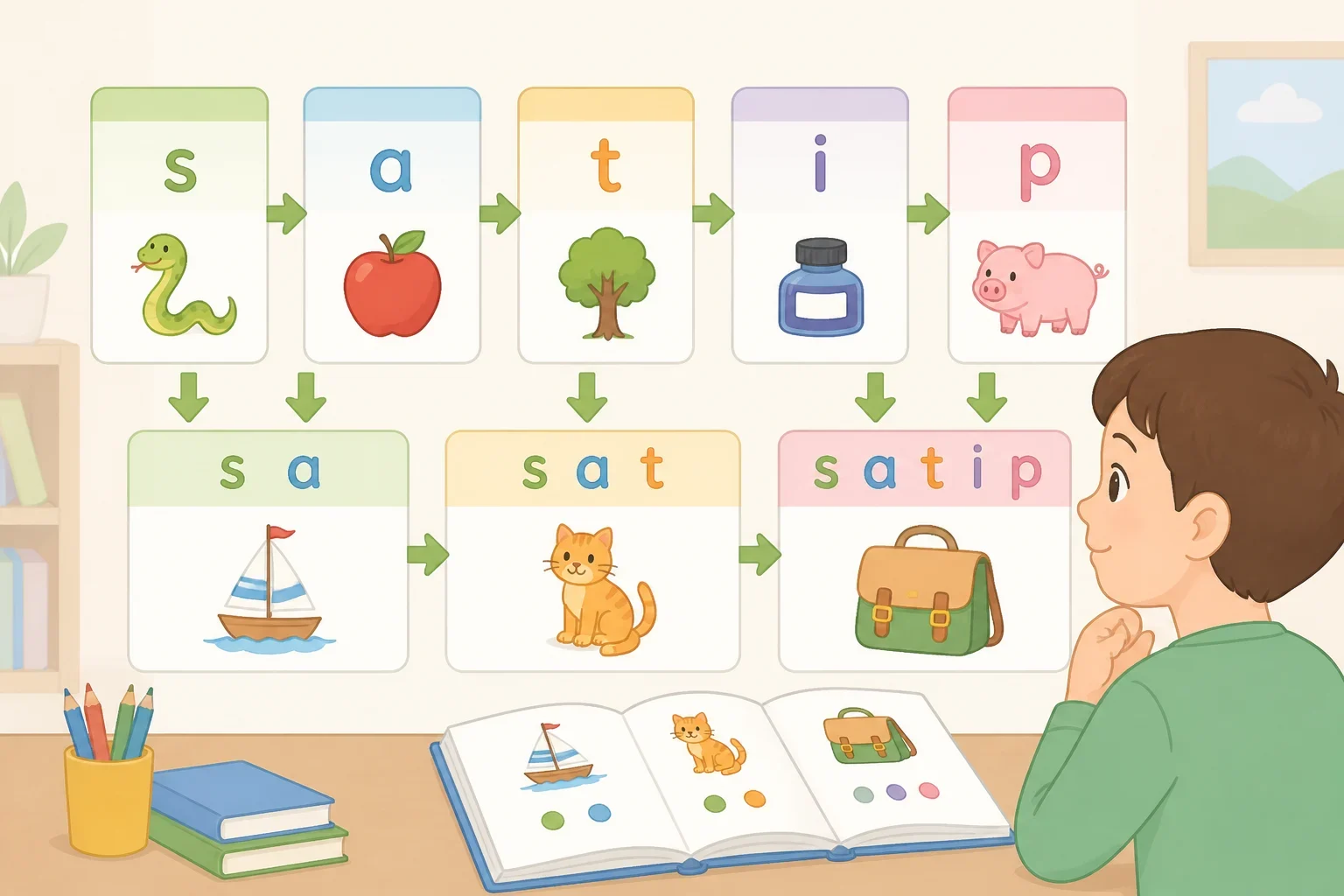
Students learn patterns progressively and use them to decode unfamiliar words. That is different from treating phonics as an occasional activity or asking students to identify a word mainly through its picture, context, or first letter.
The study’s central limitation is built into its design. Follow Through tested complete instructional packages, not phonics instruction in isolation. A package includes many elements at once: lesson design, teacher directions, practice opportunities, materials, assessment, and training. If one package produces stronger results, the evaluation cannot show that one ingredient alone caused the difference.
Think of it like comparing several complete meal plans rather than changing one food at a time. The results may show that one plan worked better under the study’s conditions. They do not show whether the difference came from one ingredient, the schedule, the preparation, or the combination.
That qualification should remain attached whenever the Follow Through findings are summarized. The original evaluation supports a claim about the Direct Instruction package as tested. It does not establish that phonics alone explains every difference or that every later program using explicit instruction will produce the same result.
The terms readers need to separate

Several terms in this debate refer to different things:
- Direct Instruction is Engelmann’s named, scripted instructional model tested in Follow Through.
- Direct instruction, in lowercase, is a general description of explicit, teacher-led teaching.
- Systematic phonics is a planned approach to teaching letter-sound relationships and decoding.
- A commercial curriculum is a set of materials, lessons, and guidance used by a school or teacher.
These categories can overlap, but they are not interchangeable. A teacher can use explicit, systematic phonics without using Engelmann’s scripted Direct Instruction program. A curriculum can call itself phonics-based while also asking students to use pictures or context to identify unfamiliar words.
The label alone does not tell a family what happens during a reading lesson.
Cueing, the practice examined in Sold a Story, refers here to using information beyond a word’s letter patterns to help identify it. That may include pictures, sentence meaning, context, or the first letter, according to APM Reports. The practical issue is how the strategy is used.
Context can help a reader understand a sentence or confirm meaning after decoding. That is different from prompting a beginning reader to guess a word from a picture instead of working through its letters and sound patterns.
This distinction does not mean that comprehension, vocabulary, fluency, or discussion are unimportant. Reading instruction includes all of those areas. The narrower question is how students are taught to identify words they do not recognize.
The National Reading Panel report, released in 2000 after a congressional request, reviewed research on reading instruction and reported benefits from systematic phonics instruction for beginning readers, including students having difficulty learning to read. The report is available through the National Institute of Child Health and Human Development.
That conclusion supports asking whether a classroom teaches phonics systematically. It does not identify one commercial curriculum or answer every question about classroom practice.
Why Follow Through did not settle the debate
The original findings were influential, but researchers disputed how confidently they could be interpreted. A critique by Ernest House, Gene Glass, Leslie McLean, and Decker Walker argued that the sites were not randomly assigned, that implementation varied among classrooms using the same model, and that the statistical comparisons may have overstated differences between models. The critique, titled “No Simple Answer: A Critique of the Follow Through Evaluation,” appears through the Harvard Educational Review.
Random assignment matters because it helps researchers distinguish the effects of an intervention from preexisting differences among schools, students, and communities. Without it, other characteristics may contribute to different outcomes.
Implementation creates another problem. A model may be described consistently in a report but carried out differently from one classroom to another. Teachers may receive different training, use materials with different levels of consistency, or adapt lessons to local circumstances. Those differences make it harder to determine whether the results reflect the model as designed or the model as used.
Sponsors also disputed how outcomes were measured and reported. Advocates for some approaches argued that the evaluation favored certain kinds of learning and did not represent all of their goals. The research community did not reach a complete resolution of those disputes, according to the critique and the historical record available through ERIC.
Professional preference shaped the later history as well. Reporting by APM Reports describes how whole-language and later balanced-literacy approaches influenced teacher preparation, literacy research, and curriculum use in the decades after Follow Through.
That history does not prove that educators simply ignored a settled answer. It points to a more complicated process involving research interpretation, professional values, training, curriculum selection, and classroom conditions. A study can produce a meaningful result and still leave room for disagreement about design, measurement, and application.
The safest interpretation is narrow: Follow Through reported stronger outcomes for one complete instructional model, while later critics challenged the study’s design and interpretation. That is meaningful evidence. It is not a final verdict on every reading method.
How to evaluate reading instruction now
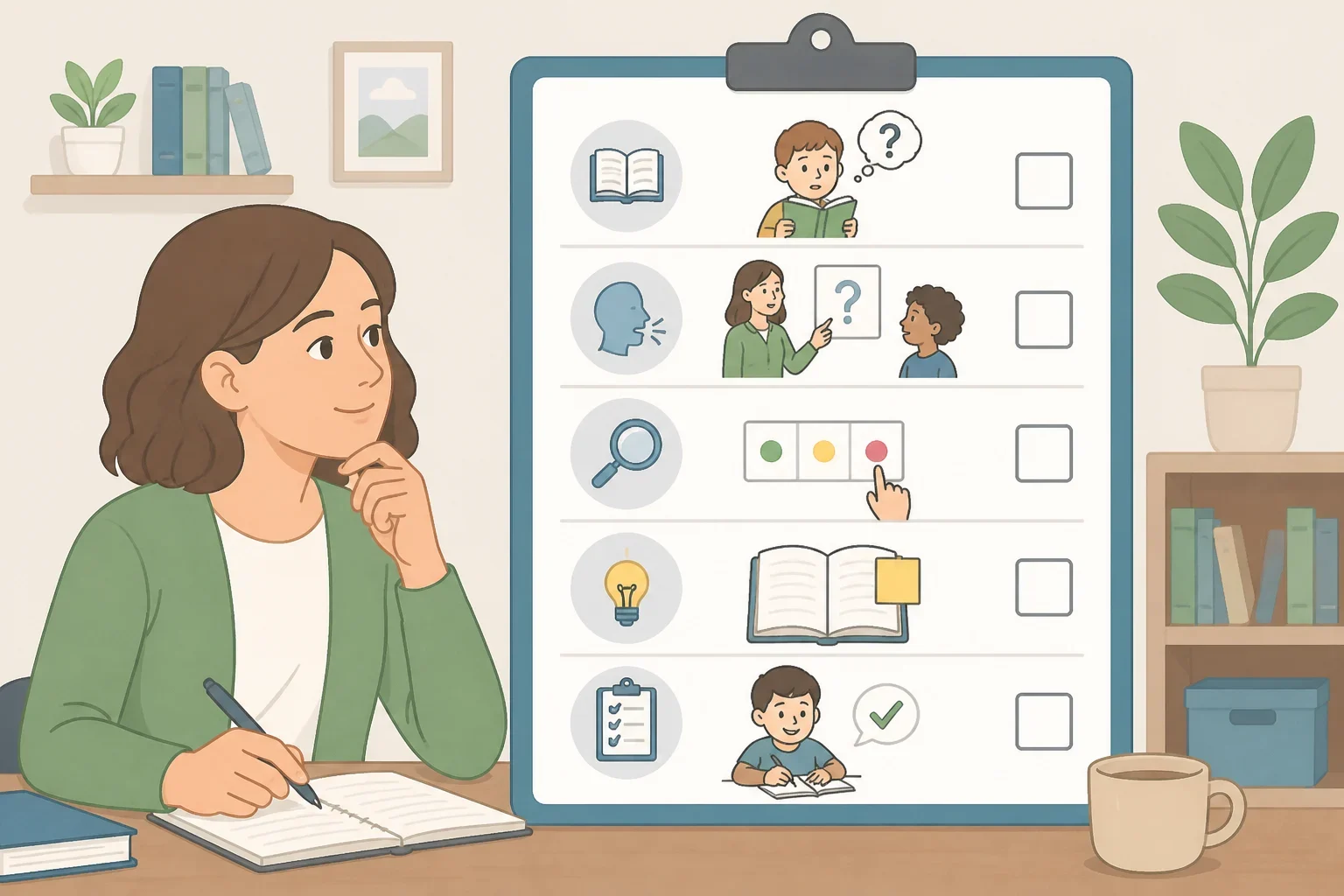
A parent or educator does not need to begin with a program label. Start with the student task.
Ask whether the program has a planned sequence for teaching letter-sound relationships. Then ask how that sequence appears in daily lessons and how previously taught patterns are reviewed. A scope and sequence on paper is useful, but it does not show whether students receive enough practice or whether teachers use it consistently.
Questions for a teacher or reading specialist may include:
- Which letter-sound patterns are students learning now?
- How are new patterns introduced?
- How are earlier patterns reviewed?
- When a student does not know a word, what strategy is taught first?
- Is the student prompted to work through the word’s letters and sound patterns?
- Is the student prompted to use a picture, context, or first-letter guess?
- What assessment shows that the student can decode unfamiliar words?
- Are reading-level or comprehension results being used alongside word-reading information?
The answers should be interpreted carefully. If a school has a phonics scope and sequence, ask to see how teachers use it over time. If classroom instruction includes context, ask whether students first decode the word’s letter patterns or are being encouraged to guess. If a program reports strong comprehension or reading-level results, ask how it separately measures students’ ability to read unfamiliar words.
School, district, and state policy should also be checked separately. States have adopted different policies related to evidence-based reading instruction, and requirements and implementation can vary by state and district, according to Education Week’s state policy tracking. That tracker is from 2022, so it should not be treated as a complete account of policy in October 2026. Families and educators should verify current requirements with the relevant state education agency and ask the school how those requirements affect materials, training, and assessments.
Teacher-preparation students can apply the same approach to their coursework. Review the required classes on phonics, decoding, reading development, and literacy methods. Ask the program coordinator:
- Which instructional models are covered?
- Which research reports are assigned?
- How is systematic phonics taught in the coursework?
- How are word identification, comprehension, and vocabulary distinguished?
- Which parts of the program reflect state requirements, and which are program recommendations?
It is also useful to ask what accreditation covers and then review the literacy coursework separately. Accreditation and curriculum alignment are not the same question. A student comparing programs should examine course descriptions, syllabi, required texts, and placement expectations before making an enrollment or teaching decision.
What this history supports
Project Follow Through supports a limited but important conclusion. The original evaluation reported stronger basic-skills outcomes for Engelmann’s Direct Instruction package than for the other models it compared. That package included systematic phonics along with explicit teaching, scripted lessons, practice, assessment, and other features documented in the ERIC digital library.
The study does not show that phonics alone produced the result. It also does not remove the methodological concerns raised by the critique in the Harvard Educational Review. Read together, the evaluation and its criticism provide contested historical evidence, not a settled answer to every current reading question.
The later issues described in Sold a Story are best treated as an example of how research, training, curriculum choices, and classroom practice can diverge, not as proof that one old study explains all modern instruction. The useful next step is more concrete.
Ask how an unfamiliar word is taught. Look for a planned phonics sequence, observe how students practice it, and ask what assessment shows they can decode words they have not seen before. Teacher-preparation students should compare required literacy coursework with current guidance from their state education agency and ask program staff to explain what the coursework requires students to learn and practice.