
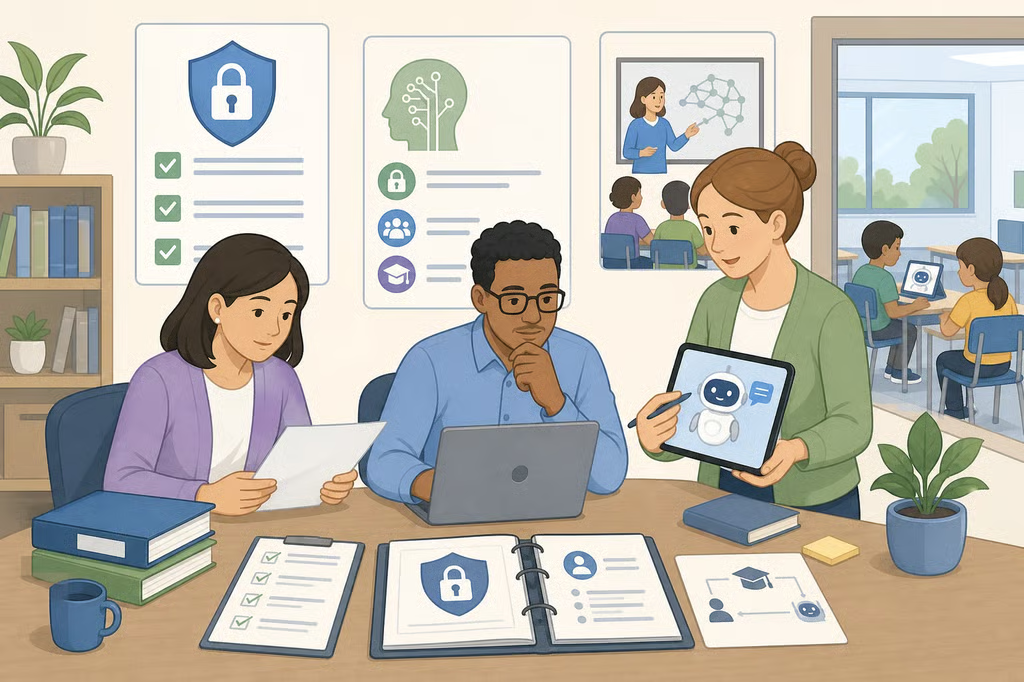
AI regulation in schools: fund evidence, training, and security
Schools are being told to choose education technology with proven results and review whether it improves learning. Yet an August review from the Institute of Education Sciences found no studies on AI and student outcomes in the What Works Clearinghouse. A broader review identified only 20 rigorous studies with causal evidence about AI’s effects on education, and most of that research took place in postsecondary settings, with less evidence in high school and far less in middle and elementary schools, IES reported in August.
That gap matters to educators, district leaders, students, and families trying to understand responsible AI use in education. A school AI policy cannot be genuinely evidence-based when the evidence is still so limited. Congress should not select one chatbot for every classroom or write a national AI curriculum. It should fund the shared evaluation, educator training, and cybersecurity work that districts cannot build on their own.
Guidance, regulation, funding, and standards are different things. The federal government can set expectations and support infrastructure while states, districts, and teachers decide how a tool fits a particular grade level, subject, assignment, or community.
Why AI regulation in schools needs shared evidence

The Department of Education’s guidance from August encourages states and districts to prioritize instructional value, independent evidence, transparent data use, strong implementation, and regular reviews of effectiveness. Schools should change course when a product does not improve learning. The basic test is sensible: technology should solve a defined learning problem, not simply place an engaging screen in front of students, the Department said in August.
Carrying out that test is the difficult part. Consider a small district evaluating an AI tutoring tool. Its leaders would need to ask:
- Which students and grade levels does it serve?
- What learning problem is it meant to solve?
- What evidence supports the vendor’s claims?
- What role does the teacher play?
- How much training will staff need?
- What data does the tool use, and how is that data handled?
- Does the tool support accessibility?
- What happens when a pilot ends?
A district can make a careful purchasing decision. It cannot reasonably conduct a rigorous research program for every product on the market. Procurement depends on research infrastructure that most districts cannot build alone.
The capacity problem extends to professional learning. A September 2025 SETDA report found that AI had become the top state education technology priority, surpassing cybersecurity. The report also identified professional learning about the safe and effective use of AI as both a major focus and an unmet need among state education agency respondents.
Without shared support, school AI policy will vary according to local capacity. One district may have staff who can test a tool, train teachers, and monitor results. Another may adopt a product because it sounds promising, then discover that teachers lack time or clear guidance. Students are left with inconsistent expectations and technology that may complete work without strengthening understanding.
The design matters more than the label
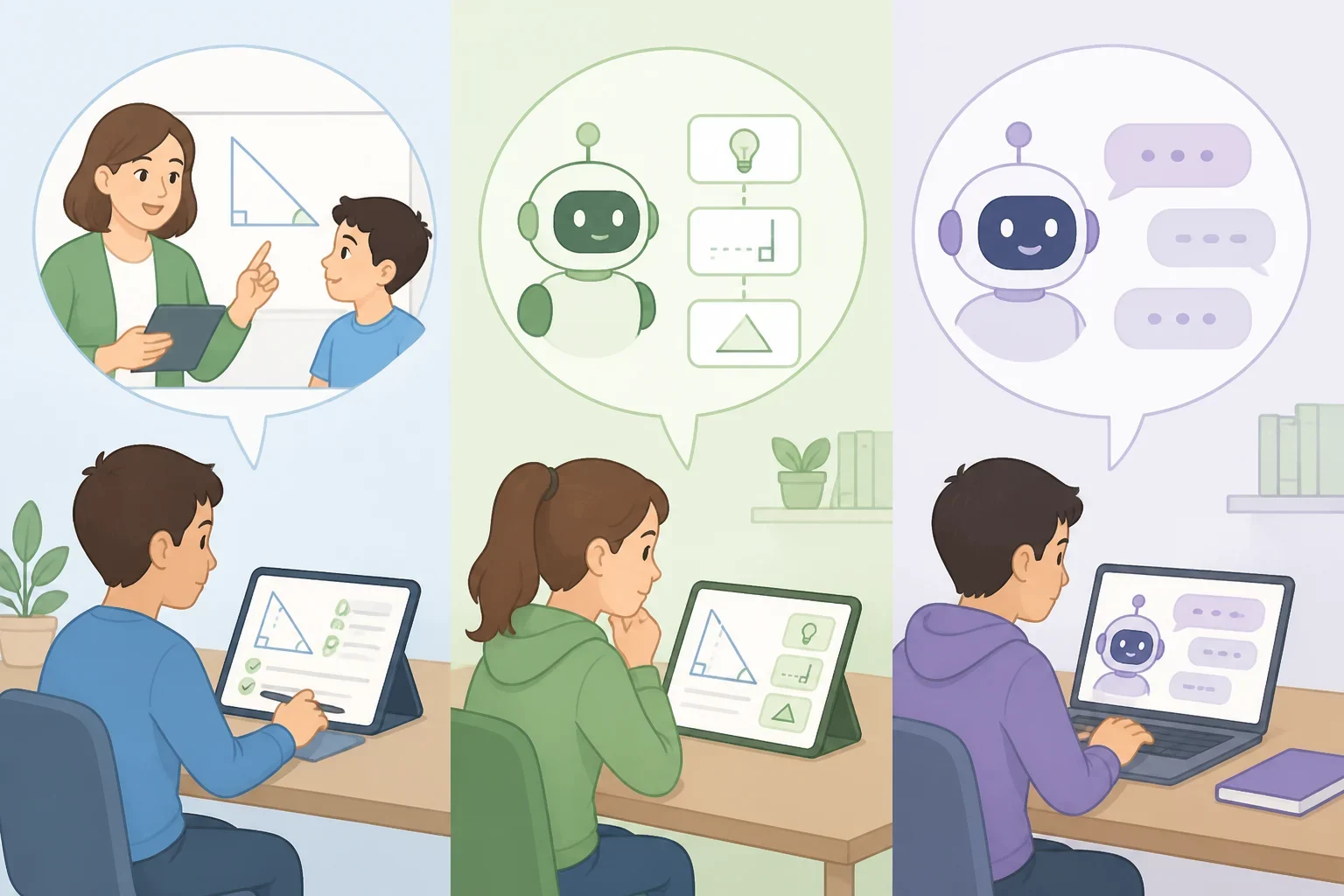
AI should not be treated as one educational category. The emerging evidence points to different outcomes depending on how a tool is designed and used, IES reported in August.
Teacher-mediated tutoring is among the more promising uses. In the studies reviewed by IES, AI supported tutors in real time or operated within close human supervision. Students using some supervised AI tutoring systems performed as well as or better than students working with human tutors alone. That finding is encouraging, but it does not establish broad effectiveness across products, subjects, or grade levels.
Hint-based student tools show a more limited possibility. Tutoring-specific chatbots that offered hints and step-by-step reasoning, rather than giving away answers, produced exam performance comparable to traditional study methods. AI also appeared more effective when paired with familiar practices such as note-taking than when used by itself. Tools that prompt students to explain, revise, and try again are more consistent with learning than tools that simply produce a finished response.
General-purpose chatbots raise a different concern. Students using tools such as ChatGPT or Claude while learning or studying were more likely to show lower exam performance, shallower learning processes, and weaker recall, even when they believed the tools were helpful, IES reported in August. When a system performs the information processing and problem-solving students need to practice, convenience can come at the expense of learning.
Access alone is not a solution, either. Giving students access to an AI tool improved homework performance but did not improve exam scores, according to the same review, IES found in August.
Student use is already moving faster than many school policies. In a March report based on a December 2025 survey of 1,214 young people ages 12 to 29, RAND found that increasing shares of middle schoolers, high schoolers, and college students had used AI for homework during 2025. Those students also reported substantial uncertainty about how AI rules applied to schoolwork.
The organizing principle for AI governance in K-12 education should be design and supervision. Does a tool ask useful questions, provide feedback, and preserve productive struggle? Does a teacher remain responsible for instructional decisions? Or does the system make it easier for students to skip the thinking?
Blanket approval and blanket prohibition both miss that distinction.
Three things Congress should fund
Fund independent evaluations
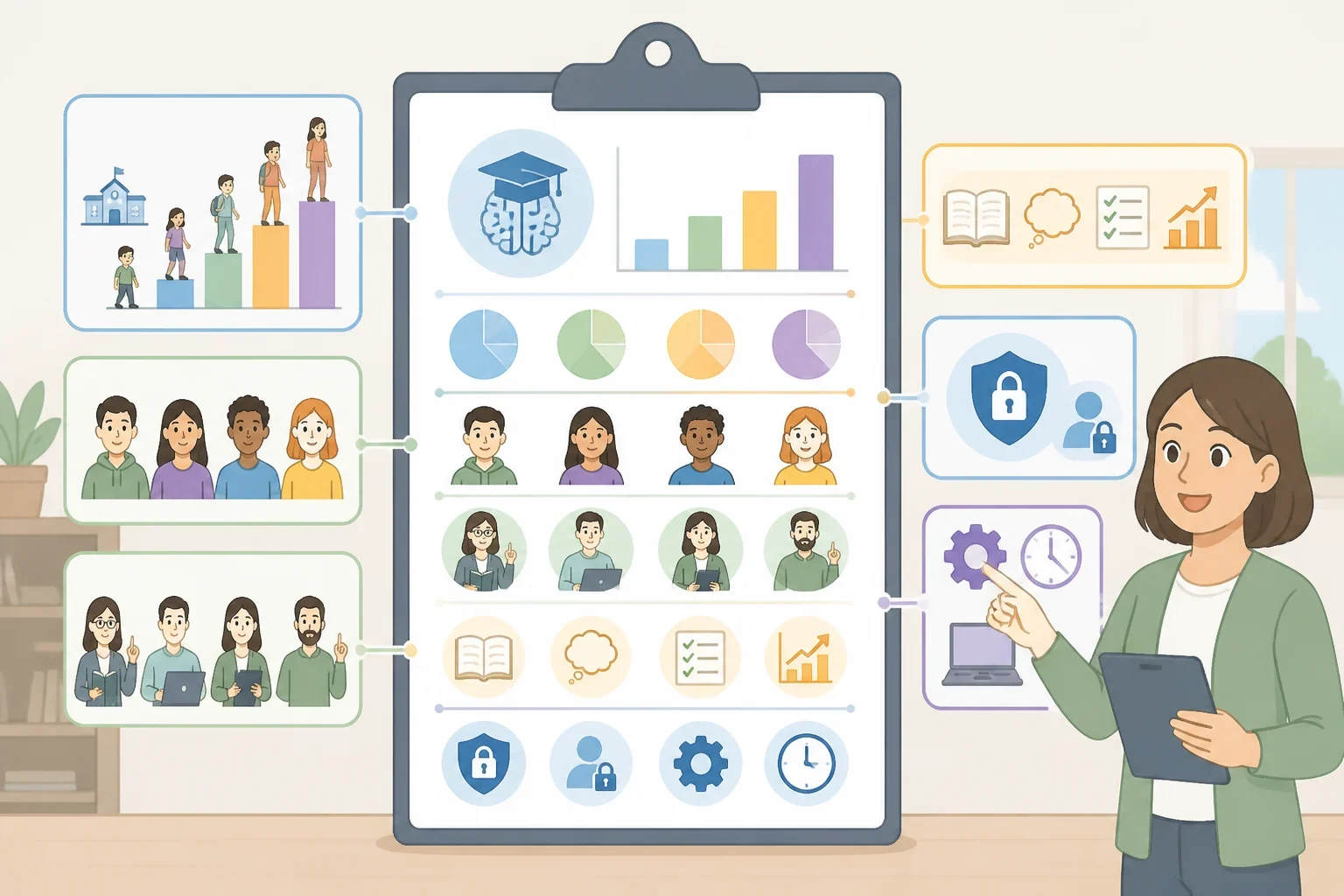
Congress should establish or expand a federally supported evaluation program for AI used in schools. The work could build on the evidence-review function associated with the What Works Clearinghouse, but it should account for rapidly changing tools and should not turn a positive study into a nationwide purchasing recommendation.
Independent evaluations should report results in ways local decision-makers can use. Studies should identify the grade levels and student groups included, describe the teacher’s role, measure learning outcomes rather than engagement alone, and examine accessibility, privacy, training, and teacher workload.
The goal is not to declare one product the winner. It is to give a district better information before it spends scarce funds or places a tool in front of students. A shared evidence base would also show where research is missing, particularly in elementary and middle school settings.
Sustain educator training
The Department’s July 2025 guidance explains that existing formula and discretionary grant funds may support responsible AI integration, including AI-based instructional materials, high-impact tutoring, college and career navigation, and professional development, the Department said last year.
That is a useful starting point, but Congress should make support durable rather than leaving it dependent on changing administrative priorities or short-term initiatives. Teachers need time to examine how a tool works, test its limitations, design assignments that keep students thinking, and explain allowed and prohibited uses to students and families. A one-time presentation is not enough.
Funding should support state and district professional learning while preserving local decisions about curriculum and classroom routines. An elementary reading teacher and a seventh-grade science teacher may need very different guidance. Shared examples, templates, and training opportunities can reduce duplication without forcing both teachers into the same instructional model.
The funding problem is already visible. Only 6% of state education technology leaders surveyed by SETDA said they had plans to continue funding initiatives previously supported with federal stimulus dollars, compared with 27% the prior year. The comparison does not measure AI programs alone, but it shows how quickly technology efforts can lose support when temporary funding ends.
Update cybersecurity and privacy infrastructure
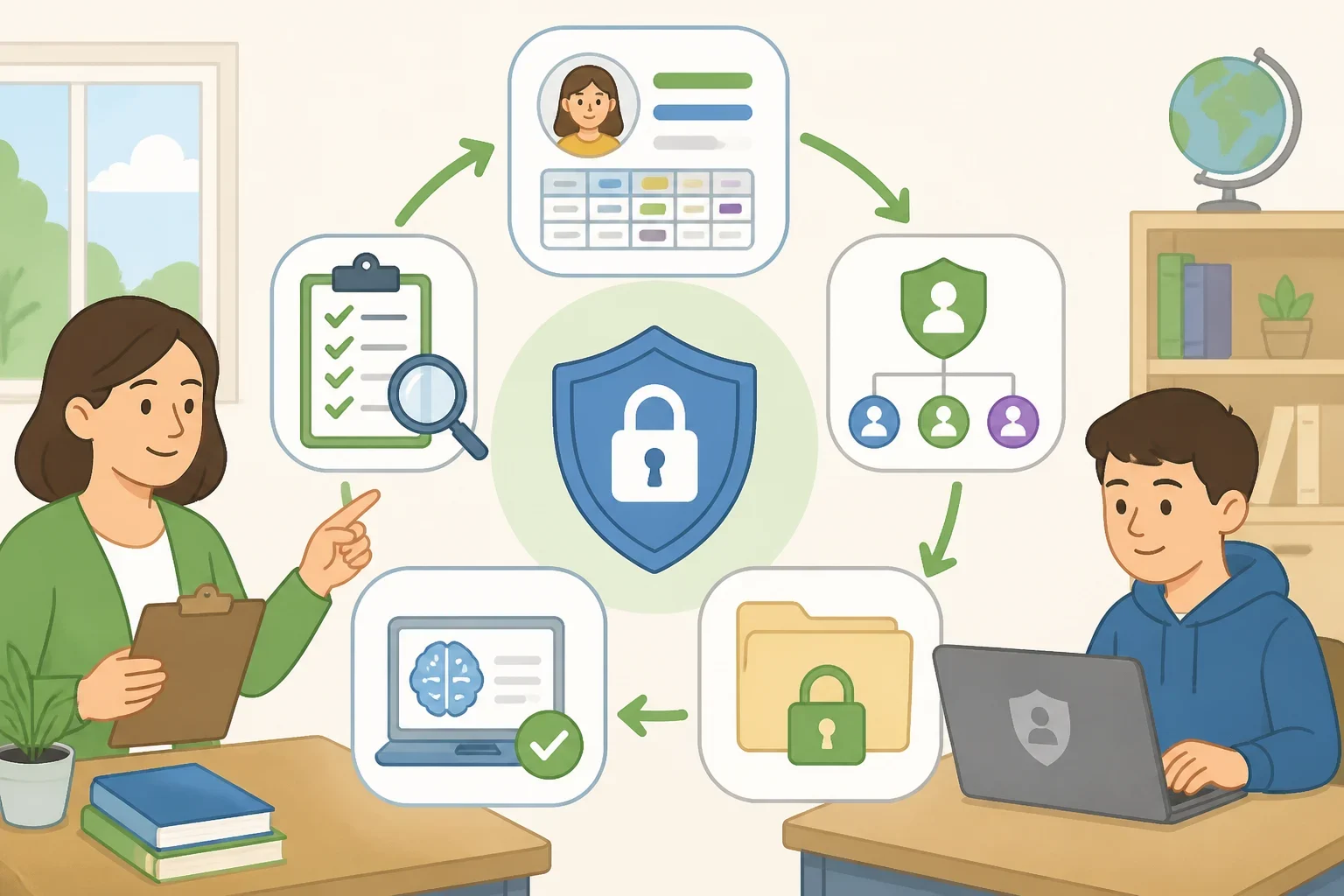
AI adoption should not move faster than a school’s ability to protect student information and technology systems. Privacy review belongs in evaluation and purchasing, not at the end of the process. Districts need a consistent way to ask what information a tool uses, how it is protected, who can access it, and how the district will end the arrangement.
This is not a new weakness. A GAO report from 2021 found that the Department of Education’s plan for addressing risks to schools dated to 2010 and needed an update. Schools publicly reported 62 ransomware incidents in 2019, compared with 11 in 2018, according to the report. Information in the report also describes Department actions and cybersecurity recommendations released with CISA through 2023.
Congress should fund updated, sector-specific guidance and security capacity for schools. That recommendation does not mean every AI tool creates the same risk. It means districts should not be asked to evaluate new data practices on top of an unresolved cybersecurity problem.
Local control still belongs in the plan
States and districts should continue writing local guidance. IES recommends regularly updating local policies as AI changes, and local educators are better positioned to decide how a tool fits a particular subject, age group, assignment, or community.
Local flexibility does not require every district to solve the evidence problem alone. A federally funded evaluation resource can inform local decisions without dictating which product a teacher selects. Federal support can set expectations for independent research, transparency, accessibility, and security without prescribing daily classroom practice.
The boundary should be clear: Congress should fund capacity, not mandate a national classroom tool. A positive evaluation should help a district ask better questions, not compel a purchase. A security standard should identify protections to verify, not erase local responsibility.
What educators and district leaders should check now
Until stronger evidence is available, schools evaluating an AI tool should use the Department’s five screening questions, the Department advised in August:
- What learning problem does it solve?
- When should it be used?
- For whom should it be used?
- For how long should it be used?
- What evidence demonstrates that it improves student learning?
The review should also examine the evidence behind vendor claims, data-use terms, accessibility, the teacher’s role, and the plan for reassessing the tool. Educators should verify district and state rules before using AI for student work, and district leaders should explain those rules plainly to families and students.
Federal AI guidance gives schools a direction, but it cannot supply the studies, training, or security systems needed to follow that direction. Congress should fund those missing pieces. That would not put Washington in charge of every classroom. It would give local educators a stronger foundation for decisions that protect student thinking, teacher judgment, and limited school resources.