
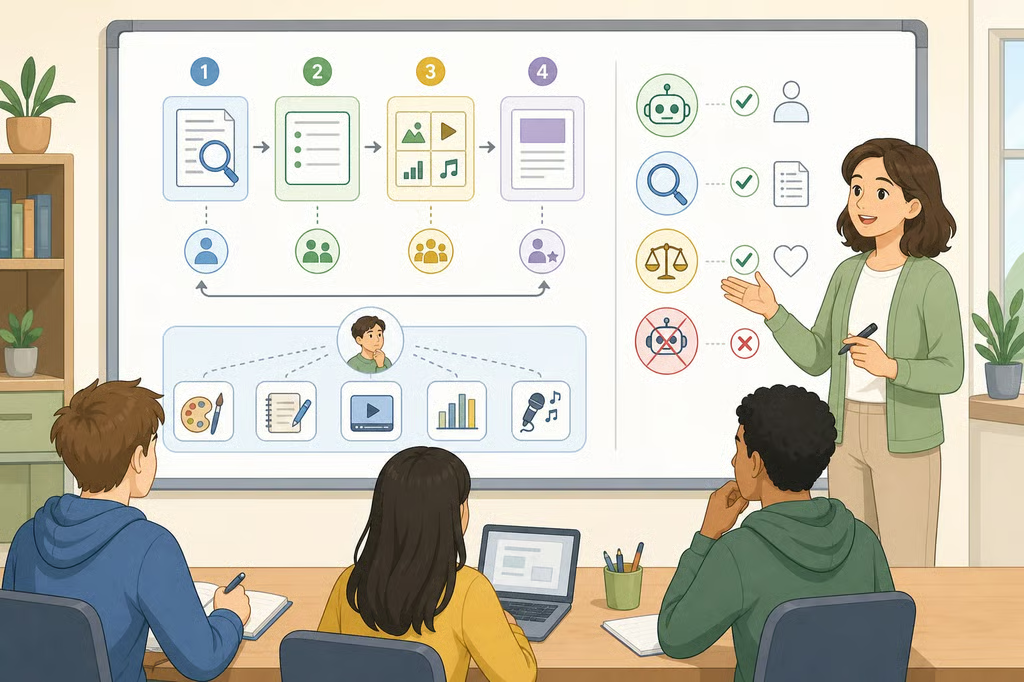
Assignment design guide: Checkpoints, choice, AI rules
Teachers deciding how to respond to generative AI have two broad options: look harder for suspicious final drafts, or change what assignments ask students to do. Assignment design is the more useful starting point.
That does not mean a teacher must ignore questionable work. It means a detector score should not carry the full burden of deciding whether learning took place. A finished product rarely shows how a student chose an idea, evaluated evidence, revised a claim, or solved a problem. Assignments that make some of that thinking visible give teachers better information to work with.
The practical argument is narrow: assignments built around meaningful challenge, student decisions, and visible process may leave fewer opportunities for undisclosed AI-generated text to replace the student’s work. That is a design judgment, not a guarantee. Clear, assignment-specific AI rules still matter.
The issue is not whether every use of AI is wrong. AI-generated text might mean prohibited final writing, undisclosed assistance, or an allowed tool used for brainstorming or feedback. Those uses are different. Students need to know which one applies before they begin.
What “hard fun” offers teachers
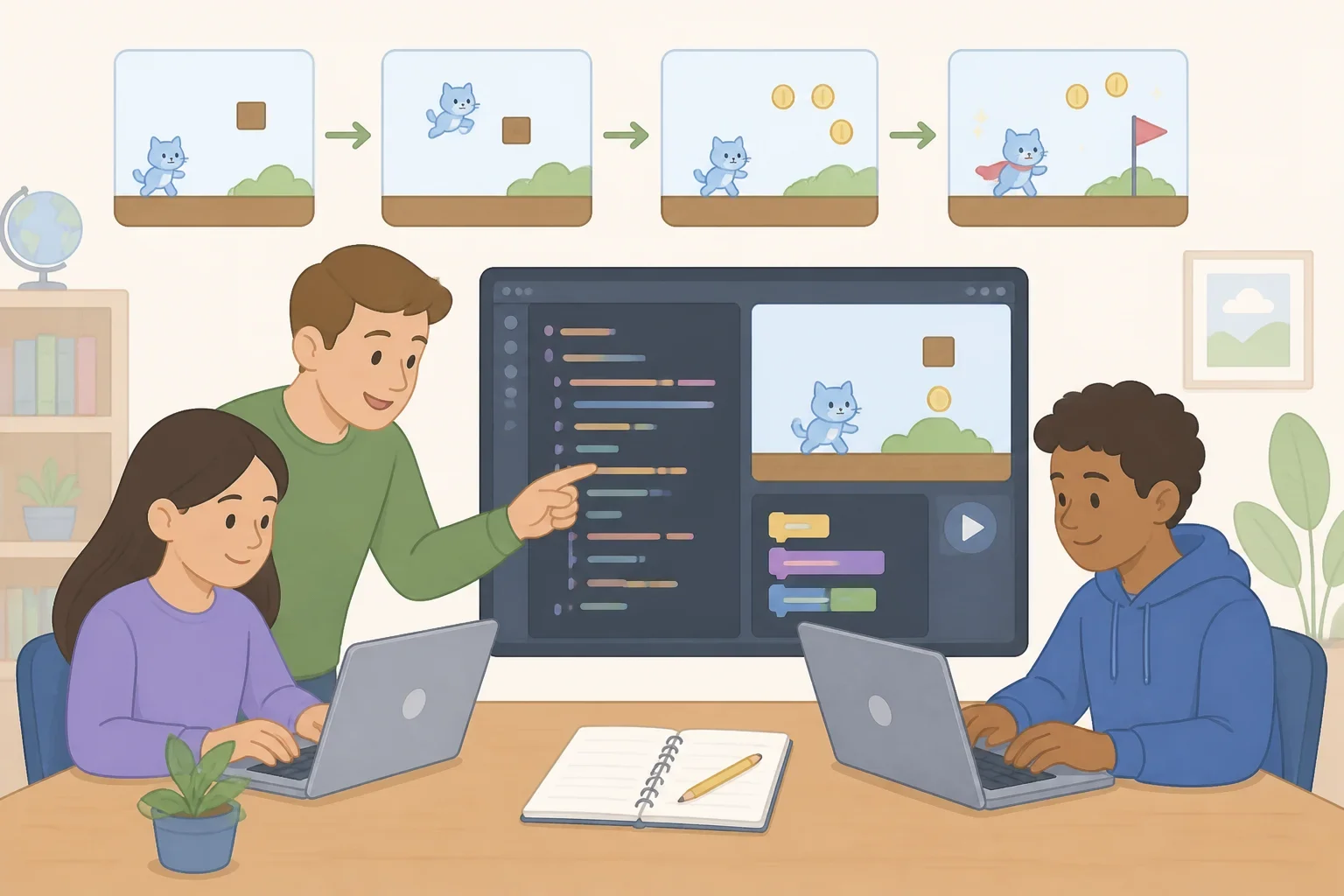
Long before generative AI entered classrooms, education researcher Seymour Papert used “hard fun” to describe work that is challenging but engaging enough for learners to keep pursuing it. In his 1996 essay, his example involved Logo programming, where students could build, revise, solve problems, and work toward projects they had some ownership over (Papert).
The useful lesson is not simply that schoolwork should be harder. Papert’s idea combines challenge with ownership and relevance. A student who is making meaningful decisions has more thinking to do than a student who only has to produce a finished response to a generic prompt.
That distinction matters when teachers design assignments in which AI tools are available. Adding an outline, checkpoint, or in-class writing may make an assignment more visible, but those steps do not automatically make it engaging. A process-heavy task can still feel disconnected from a student’s interests or questions.
Papert’s idea is a standard for meaningful learning, not proof that engaging assignments prevent misconduct. It may not fit every learning objective, age group, accessibility need, or required assessment format. Choice and a public audience should remain options, not universal requirements.
For teachers and curriculum designers, the questions are practical:
- What thinking is the assignment supposed to show?
- Where can students make a meaningful decision?
- Who is the intended audience?
- Which part of the process should the teacher see?
- What AI use, if any, fits the learning goal?
A well-designed task may reduce the appeal of handing the entire job to a tool, but it does not remove access to that tool. Clear boundaries still matter.
Why the final draft is not enough
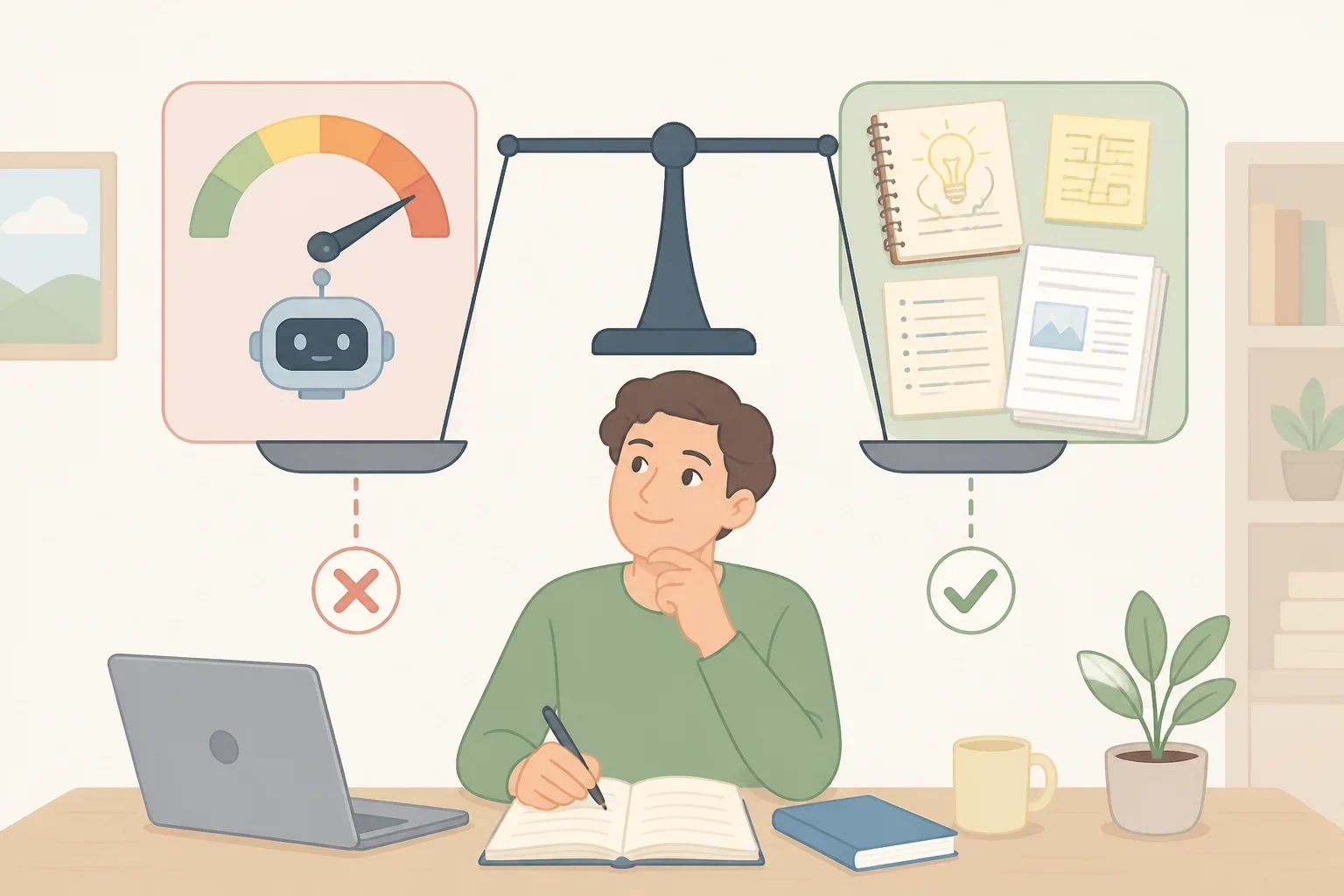
A polished final response can conceal the most important parts of an assignment. It may not show how a student narrowed a topic, selected sources, tested an interpretation, responded to feedback, or changed a weak paragraph.
That gap is a problem even when AI is not involved. A final product alone gives teachers limited evidence about the learning process. When a teacher has a question about the work, planning notes, source annotations, drafts, and a brief conversation can provide useful context without turning the classroom into an investigation.
The goal is not to create paperwork for its own sake. A checkpoint should match the skill being assessed. If the goal is source evaluation, an annotated source may be useful. If the goal is organization, an outline may be enough. If the goal is revision, a short explanation of changes may provide better evidence than another full draft.
This approach also avoids treating every unusual sentence as proof of wrongdoing. The assignment can ask students to show their thinking before the final submission, where that thinking is easier to discuss and support.
That leaves a practical question: how can a teacher redesign one assignment without rebuilding an entire course?
A four-move framework for AI assignments
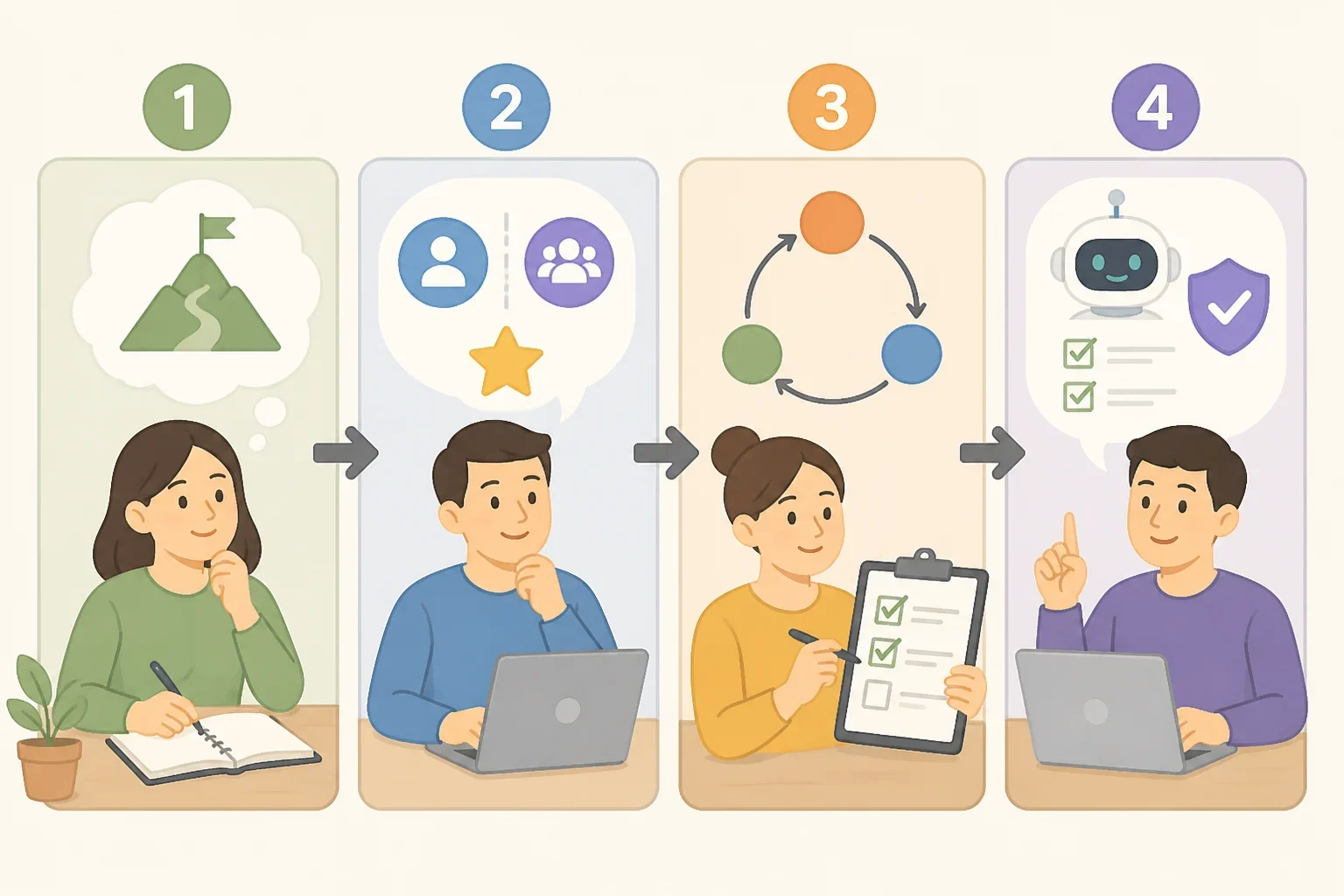
Start with one upcoming assignment and make four decisions.
- Name the learning goal. Identify the skill or knowledge the work should demonstrate. It might be historical reasoning, source evaluation, argument, evidence use, organization, or revision.
- Add meaningful choice or a defined audience. Let students select a question, example, person, or event when that choice supports the objective. A real audience can also give the writing a clearer purpose.
- Build in one process checkpoint. Collect a proposal, outline, source annotation, planning note, brief conference, or revision explanation. Choose the checkpoint that best matches the learning goal.
- State the AI rule for each stage. Tell students what is prohibited, what is allowed, and what must be disclosed.
Consider a generic prompt asking students to write a five-paragraph essay about a historical event. The final paper may show some writing skill, but it may reveal little about how students chose evidence or developed their interpretation.
A redesigned version could be a local-history inquiry project. Students choose a person or event connected to the community, submit a one-page proposal, annotate two sources, discuss their progress briefly with the teacher, and submit a final draft with an AI-use disclosure.
The prompt could include language such as:
- Prohibited: Do not submit AI-generated text as your own final writing.
- Allowed: You may use an approved tool to brainstorm possible questions, but your research, interpretation, and sentences must be your own.
- Disclosed: If you use an AI tool, name it, describe what you used it for, and identify the stage of the assignment when you used it.
That example is not a universal policy. A teacher assessing independent drafting may prohibit AI assistance at every stage. A teacher assessing revision may permit limited feedback while requiring students to make and explain the changes themselves. School, district, department, course, accessibility, and assessment policies may set additional limits.
The process should reveal learning, not merely create more paperwork. A teacher can ask students to submit one planning note instead of several drafts, or hold a short conference with a small group rather than every student. The right checkpoint is the one that gives useful evidence without crowding out instruction.
Write rules students can actually use
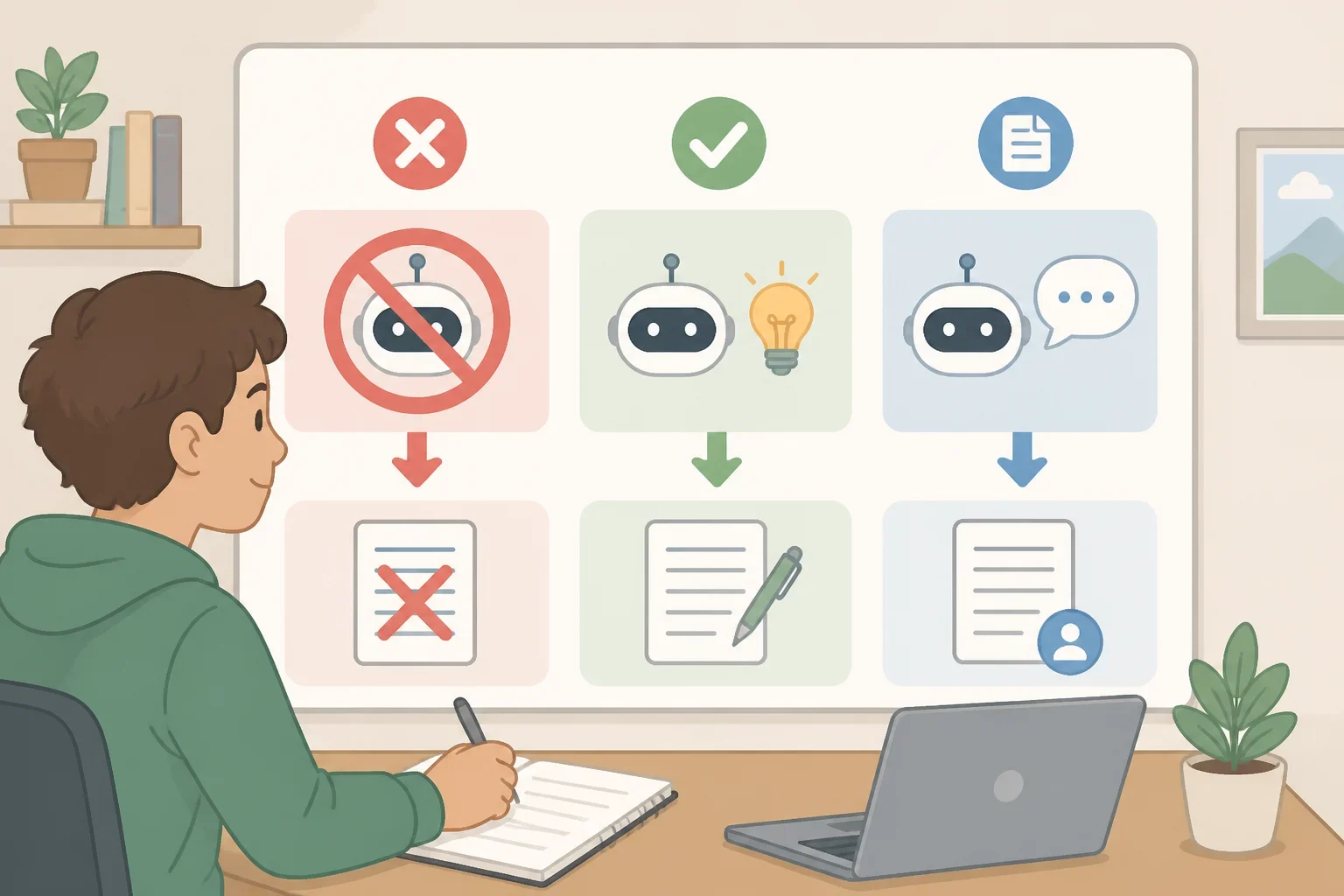
A blanket ban may be appropriate for some assignments, particularly when the purpose is to assess independent drafting or problem-solving. It does not answer every question students may have about tools, feedback, drafting, or revision. A short rule attached to each prompt is easier to apply.
The rule should answer three questions:
- What may not be used?
- What assistance is permitted?
- What must be disclosed?
A teacher might write:
For this assignment, do not use AI to generate sentences, paragraphs, or a final response. You may use an approved tool for brainstorming only. If you use one, include the tool’s name, your purpose, and the stage of use in a brief disclosure.
The wording should change when the learning goal changes. A brainstorming allowance may make sense for a topic-selection task but not for an assignment assessing independent idea generation. A grammar tool may be acceptable in a revision exercise but not when the assignment is measuring a student’s unaided command of sentence structure.
Teachers should check the current school or district policy before publishing the prompt. A classroom rule should support broader guidance, not contradict it. If the policy is unclear, the teacher can identify the question that needs an answer before students begin: whether the tool is allowed, for which stage, and what disclosure is required.
A short note for parents
Parents can support the process without trying to determine whether a final paper “looks AI-written.” A useful question is, “What stages does the teacher expect to see?” The answer might involve a proposal, outline, draft, source notes, or reflection.
Parents can also ask the teacher, “What kind of help is allowed on this assignment, and does the student need to disclose it?” That keeps responsibility with the student and teacher while helping families clarify expectations before submission. Parents can encourage planning and honest disclosure without taking over the writing.
Use this prompt checklist next
Assignment design cannot solve every problem created by generative AI. It can give teachers more evidence of learning than a finished product alone and make expectations easier for students to follow.
For the next assignment, fill in:
- Learning goal: What should the student demonstrate?
- Student choice or audience: What decision or readership gives the work purpose?
- Checkpoint: What part of the thinking will the teacher see?
- Prohibited AI use: What may not be generated or submitted?
- Allowed AI use: What assistance, if any, fits the objective?
- Required disclosure: What tool and purpose must the student report?
Then compare the wording with the current school or district policy. If the assignment asks students to show thinking, practice a skill, and explain their process, the teacher has a stronger basis for supporting learning than a final draft alone. Detection may prompt a conversation, but assignment design should do more of the teaching and assessment work.