
- Who Qualifies for Uncapped Federal Student Loans in 2026
- Who qualifies for uncapped federal student loans under the legacy exception?
- Federal student loan changes 2026: what new borrowers can receive
- Two things that can still limit borrowing
- Parent PLUS loan borrowing limits: what's confirmed and what isn't
- What to check before you borrow
Who Qualifies for Uncapped Federal Student Loans in 2026
Who qualifies for uncapped federal student loans after the July 2026 changes? Some graduate students enrolled before July 1, 2026 can still borrow on their program's original terms, but only if they meet three specific conditions the Education Department laid out this spring, according to ED's fact sheet.
Here, "uncapped" refers to the pre-change borrowing terms tied to a specific graduate program, not to every federal loan type or to an unlimited amount a school is required to certify. A qualifying borrower keeps the terms they had when they entered the program; that's different from a guarantee of unlimited money.
The old Grad PLUS program, in place since 2006, let graduate students borrow up to the full cost of attendance with no aggregate or lifetime limit, per ED. The final rule, effective July 1, 2026, ended new Grad PLUS lending and replaced it with fixed annual and lifetime caps. ED says the change is meant to curb tuition growth by ending unlimited borrowing, according to its April announcement; whether it actually slows tuition growth remains to be seen, and this article treats that as the Department's stated intent, not a confirmed result.
This piece focuses on graduate borrowers. Undergraduate Direct Loan limits are unchanged, ED confirms, and Parent PLUS borrowers face a separate, less settled set of questions covered further down.
Who qualifies for uncapped federal student loans under the legacy exception?
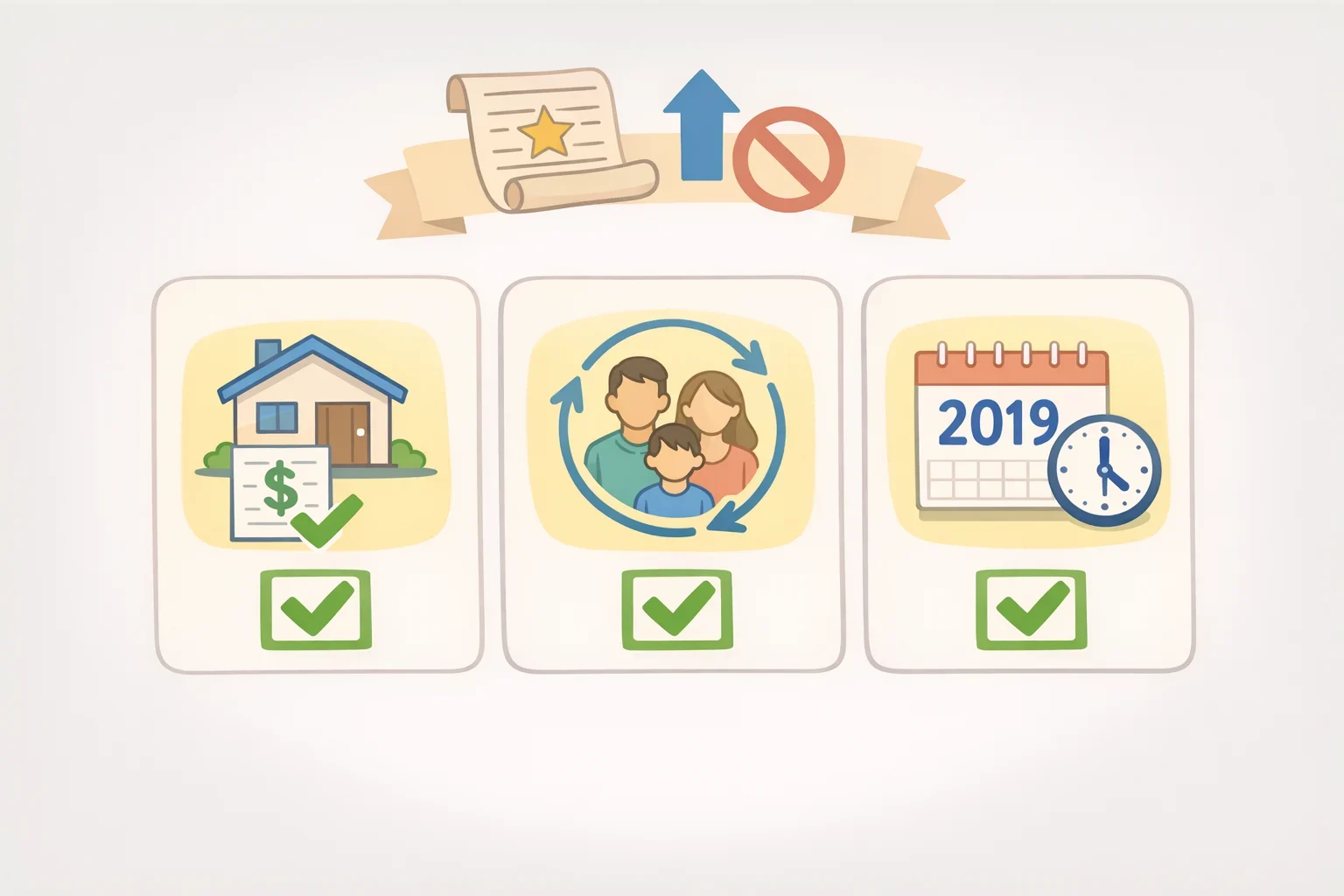
ED's fact sheet lays out three conditions for keeping pre-cap borrowing terms on a current graduate program.
Enrollment before the cutoff. The exception applies only to students already enrolled in a graduate program before July 1, 2026, per ED.
A loan already disbursed for that program. The student must have received a federal loan for that same program before the cutoff. UT Austin's financial aid office notes that a first loan disbursed on or after July 1, 2026 places a student under the new limits, regardless of when they first enrolled.
Continuous enrollment in the same program. Borrowers who cease enrollment or withdraw lose the exception and move to the new annual and aggregate limits, ED's fact sheet states. Starting a different program also triggers the new rules, per UT Austin.
A student who clears all three keeps loan access on the terms they had when they entered the program, until they graduate, per the fact sheet. Eligibility is set by federal law and applied automatically; a student can't select, waive, or decline it, UT Austin's guidance confirms.
The sources reviewed here describe this exception specifically for borrowers in graduate programs. If a program is classified as a professional program, its financial aid office is the right place to confirm whether the same exception applies, since that isn't spelled out in the federal materials examined for this article.
Here's how the timing plays out:
Situation Outcome Enrolled and borrowed for the same program before July 1, 2026, with no break in enrollment May qualify for the interim exception Enrolled before July 1, 2026, but the first loan for that program was disbursed on or after that date New limits apply, according to UT Austin Withdrew or ceased enrollment, then returned Loses the interim exception, per ED's fact sheet Took an approved leave, transferred, or moved from a master's into a doctoral program Not resolved by the sources reviewed here; get a written determination from the financial aid office
Withdrawing isn't a gray area. ED's fact sheet is direct on that point. The uncertainty sits with leaves of absence, transfers, and degree-track changes, where the federal language doesn't say how a school should classify the switch.
None of this touches loans a student already holds. Existing balances keep their original terms no matter what happens with future enrollment, UT Austin notes. The three-part test governs only what a student can borrow going forward.
Federal student loan changes 2026: what new borrowers can receive
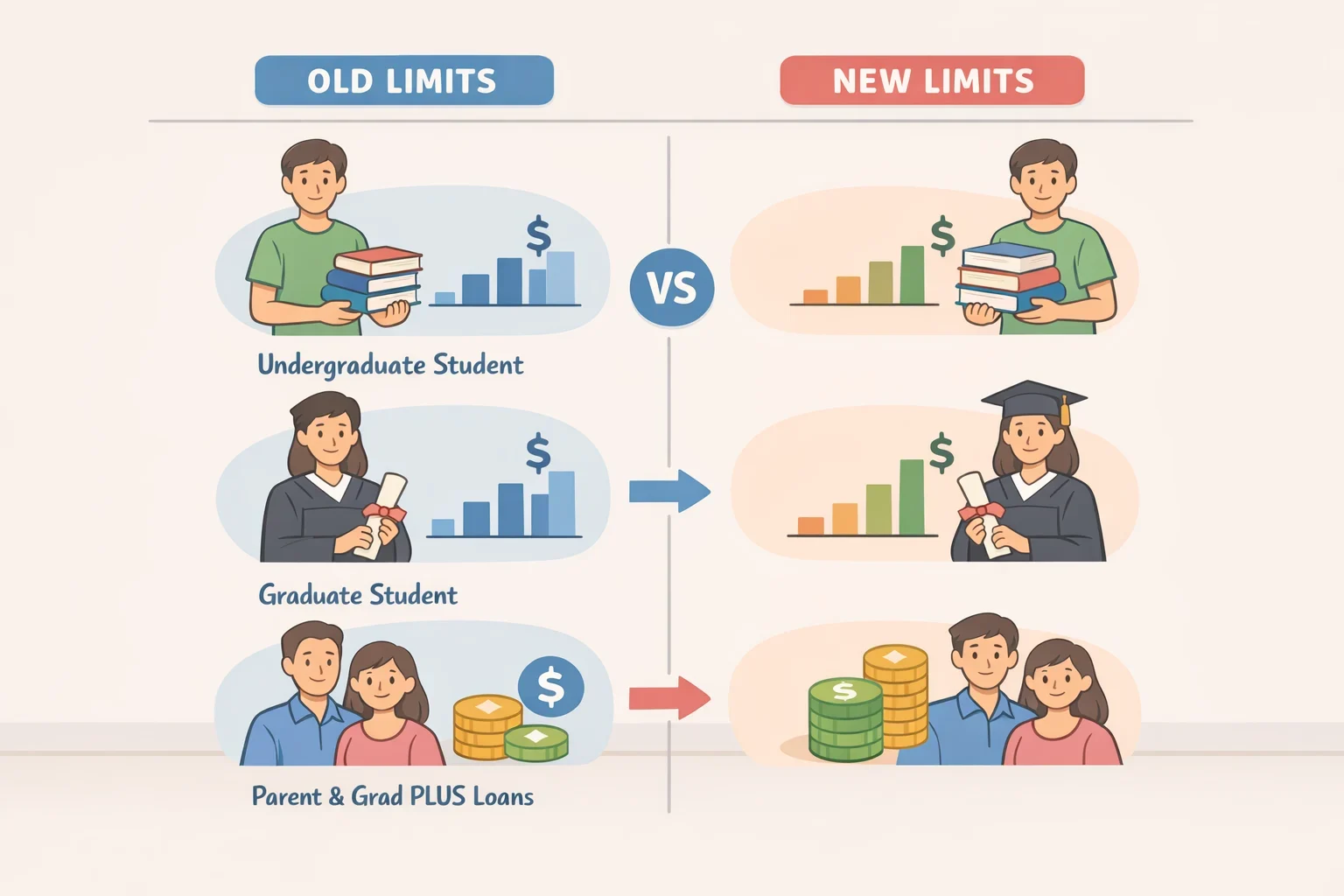
Students whose first loan for a program is disbursed on or after July 1, 2026 fall under fixed limits: $20,500 per year for graduate students and $50,000 per year for professional students, with aggregate caps of $100,000 and $200,000 respectively, according to the Federal Register.
A separate $257,500 lifetime aggregate cap applies to most borrowers who receive loans on or after that date. Grad PLUS balances held by grandfathered borrowers stay governed by the pre-Act limits for the duration of the interim exception, ED's fact sheet explains.
Only certain programs get the higher $50,000/$200,000 professional-student limits. The Department's definition covers 38 specific six-digit CIP codes, representing about 12.9% of graduate borrowers by ED's own count, per the Federal Register. Anyone entering a new graduate or professional program should ask the financial aid office directly whether their program's classification qualifies, rather than assuming the higher figure based on the program's name or reputation.
Undergraduate Direct Loan limits haven't changed under this rule, ED confirms.
Two things that can still limit borrowing
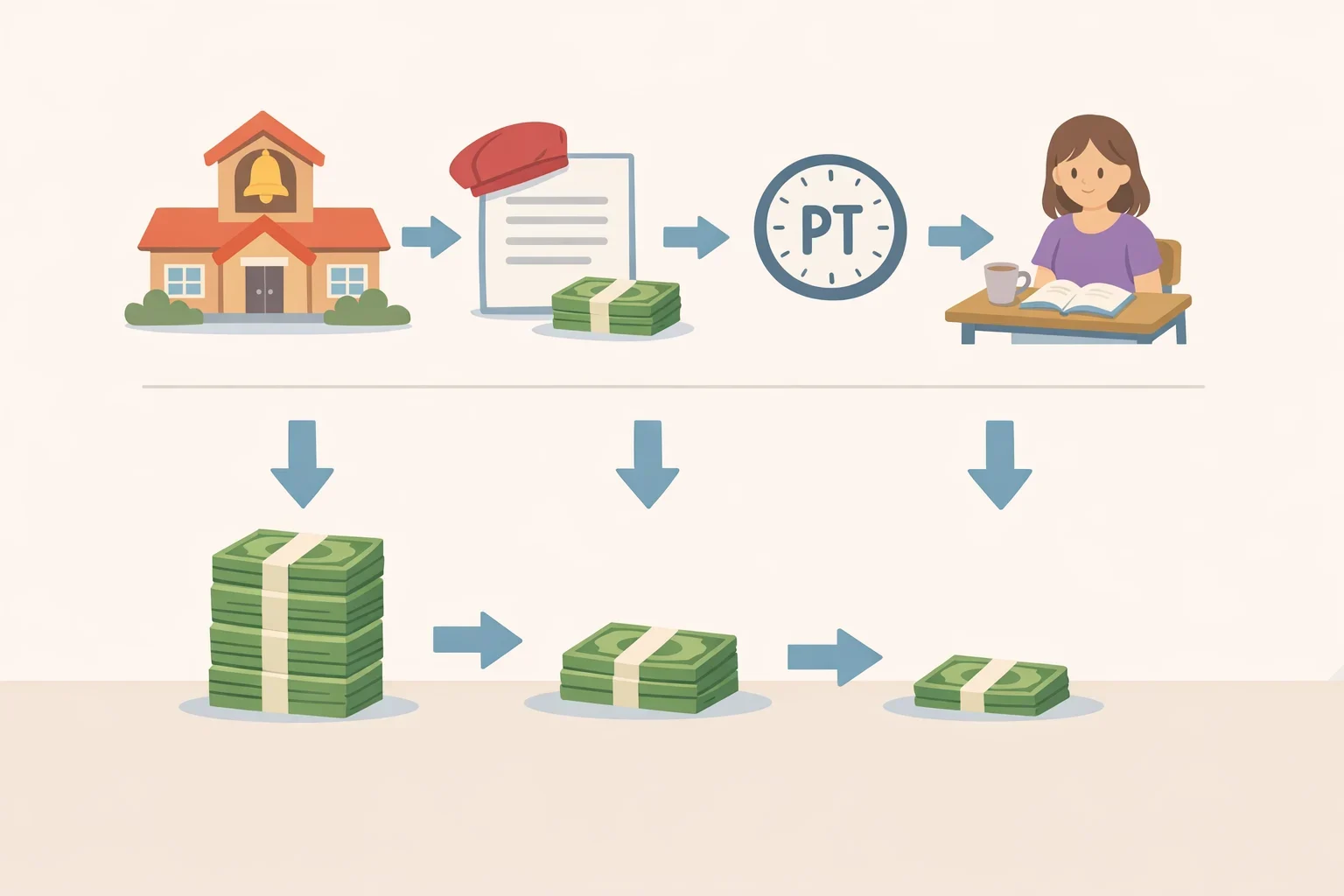
Meeting all three grandfathering conditions doesn't guarantee unlimited borrowing at every school. Two other factors can narrow the amount a grandfathered student actually receives.
Schools have the authority to set their own programmatic loan caps below the federal maximum, a provision meant to prevent overborrowing in programs with lower earnings or higher default rates, according to ED's April announcement. A program's financial aid office can confirm whether it has adopted a lower cap.
Separately, the rule reduces annual loan amounts for students enrolled less than full time, though the Federal Register text doesn't spell out a reduction formula. Part-time, working, and returning graduate students should ask their financial aid office how that reduction applies to their enrollment status rather than assume the full annual limit.
The final amount may also depend on a school's programmatic cap and a student's enrollment status, so borrowers should ask the financial aid office what it will actually certify before counting on a specific number.
Parent PLUS loan borrowing limits: what's confirmed and what isn't
For enrollment periods beginning on or after July 1, 2026, total Parent PLUS borrowing is capped at $20,000 per year and $65,000 lifetime per dependent student, combining every parent's borrowing for that student, according to the Federal Register.
That's separate from the $257,500 lifetime aggregate cap that applies to a borrower's own federal loans. Parent PLUS loans taken out for a dependent undergraduate are excluded from that parent's own $257,500 limit, the Federal Register and ED's fact sheet both confirm. In plain terms: the $20,000/$65,000 caps track the child's undergraduate enrollment, while the $257,500 cap tracks the parent's own borrowing history and doesn't count Parent PLUS debt taken out for someone else against it.
Here's where the picture gets less clear. UT Austin's financial aid guidance states that parents who qualify for legacy rules may continue borrowing with no annual or lifetime cap at all. That's institutional guidance from one university, not confirmation of a nationwide parent-side exception. The federal fact sheet and Federal Register excerpts reviewed for this article describe the interim exception in detail for graduate-program borrowers but don't spell out an equivalent provision for Parent PLUS.
Parents financing a dependent undergraduate's education shouldn't assume uncapped borrowing applies to them without written confirmation from the student's financial aid office. This is the one spot where a school's published guidance goes further than the primary federal sources reviewed here, and it needs verification before any borrowing decision.
What to check before you borrow

Before finalizing enrollment or borrowing plans, ask a financial aid office to confirm four things in writing:
- The program's official name and CIP classification.
- The disbursement date of the first federal loan received for the current program.
- Whether a planned leave of absence, transfer, or degree-track change would count as ceasing enrollment or starting a new program.
- The maximum amount the school will certify, including any programmatic cap set below the federal maximum.
Existing loan balances keep their original terms no matter how those questions get answered. A student, or a parent weighing Parent PLUS borrowing, gets the clearest picture by asking the financial aid office for these four points directly rather than assuming borrowing will work the way it did before July 1, 2026.