

- Did the new vaccine order change school vaccine requirements?
- What the order actually asks states to do
- New vaccine order and school immunization requirements: who can actually act
- What counts as a real change to a school requirement
- How school vaccine requirements by state can differ
- What to check before an enrollment deadline
Did the new vaccine order change school vaccine requirements?
Families searching for a straight answer to whether the new vaccine order changed school vaccine requirements can stop guessing: it didn't, at least not on its own. The executive action signed last week asks states to review a new set of federal childhood vaccine recommendations and consider updating their own school-entry laws, but it does not rewrite any state's statute or create a new school requirement by itself, according to the White House.
States and local jurisdictions set vaccination requirements for school attendance, a point the order itself acknowledges. CDC reporting confirms the same pattern: states and localities determine attendance rules, exemption categories, grace periods, and provisional enrollment for students still completing a vaccine series.
Whether any state changes its rules because of this order is still an open question. The sources checked for this article, official pages from Massachusetts, Wisconsin, and Colorado, plus CDC's national data, don't document a state change tied specifically to the order. That's a narrow review, not a nationwide survey, so families should confirm with their own state directly rather than assume the requirement moved, or that it stayed put.
What the order actually asks states to do
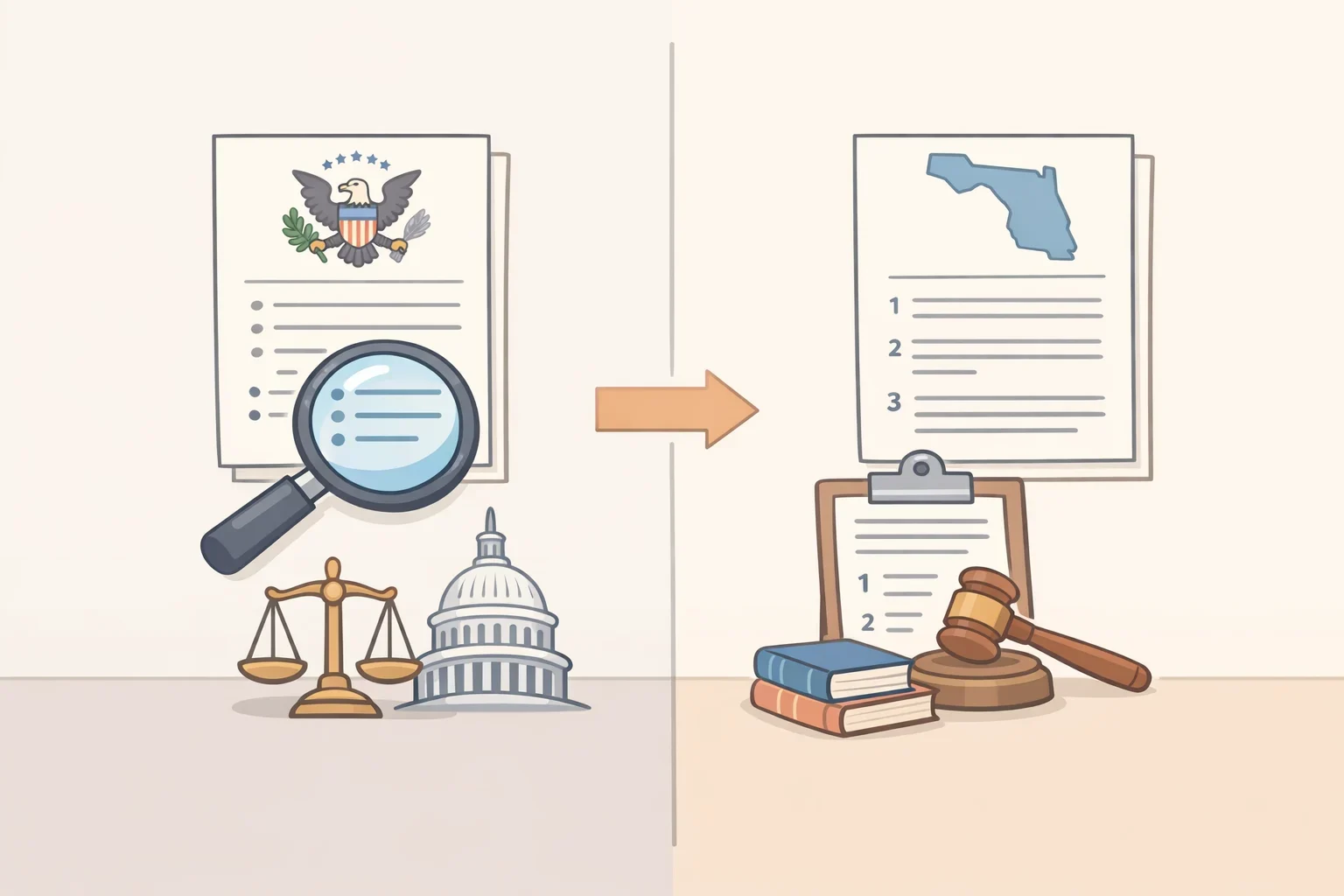
The order, dated Aug. 10, 2026, advises states and territories to review the administration's "Gold Standard Childhood Vaccine Recommendations" and consider updating laws or regulations tied to school enrollment and attendance, citing a scientific assessment and what the administration describes as best practices from peer countries, according to the White House. It sets no deadline for states to act, and it doesn't specify a change to any state's required vaccine list.
Part of the reasoning is worth noting. The order cites an assessment concluding that most peer nations reach high childhood vaccination rates through public trust and education rather than legal mandates, per the White House. That's the administration's rationale for asking states to reconsider their approach. It isn't proof that any state has acted on it yet.
A federal recommendation and a state legal requirement aren't the same thing. A recommendation, whether from the CDC's Advisory Committee on Immunization Practices or this new administration policy, describes what health officials suggest. A requirement is the specific list of vaccines a state has written into law or regulation as a condition of attending school. The order asks states to review the federal recommendations; whether any state's requirement changes as a result is a separate decision left entirely to that state.
New vaccine order and school immunization requirements: who can actually act
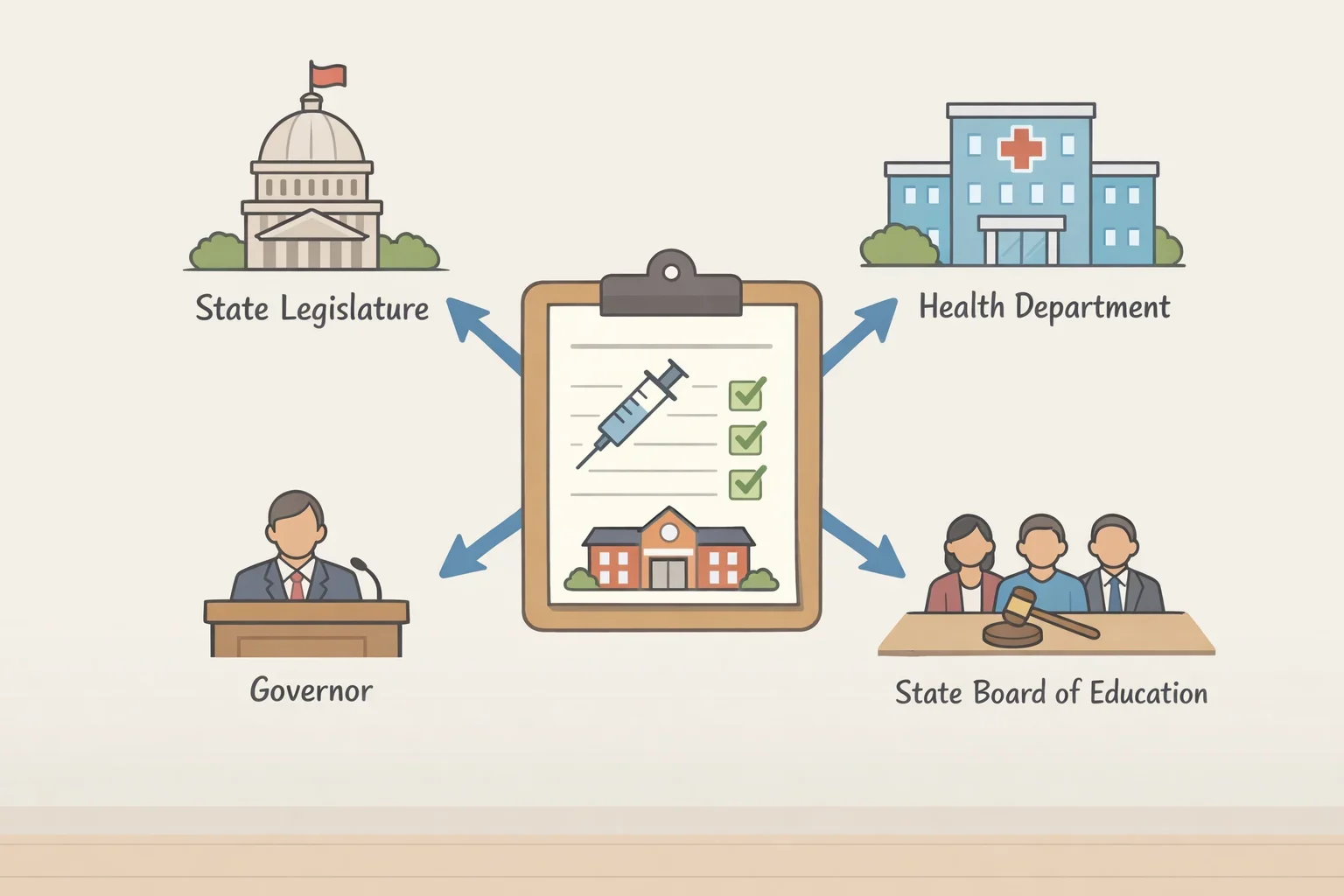
Because the order is advisory, any real change to what a child needs for school still requires action by a state body, and which body holds that authority differs by state. Massachusetts's K-12 immunization rules run through a specific state regulation, 105 CMR 220.000, per the Massachusetts Department of Public Health. Colorado's school vaccine requirements follow a rule set by the state's Board of Health, under 6 CCR 1009-2, according to the Colorado Department of Public Health and Environment. Wisconsin publishes its requirements through its own Department of Health Services.
A legislature could pass a bill. A health department or board of health could adopt a new regulation. An education agency could revise a school-entry chart. None of that has happened yet in response to this specific order, based on the sources checked for this article, though individual states could move at different speeds once their reviews wrap up.
Colorado's health department made a related point last year, months before this order existed: earlier updates to federal vaccine recommendations didn't change what Colorado requires, because the state's rules run through the Board of Health, not the CDC, according to CDPHE. That statement doesn't predict what Colorado will do with this new order. It does show a pattern of states treating federal recommendation changes as separate from their own legal requirements.
What counts as a real change to a school requirement
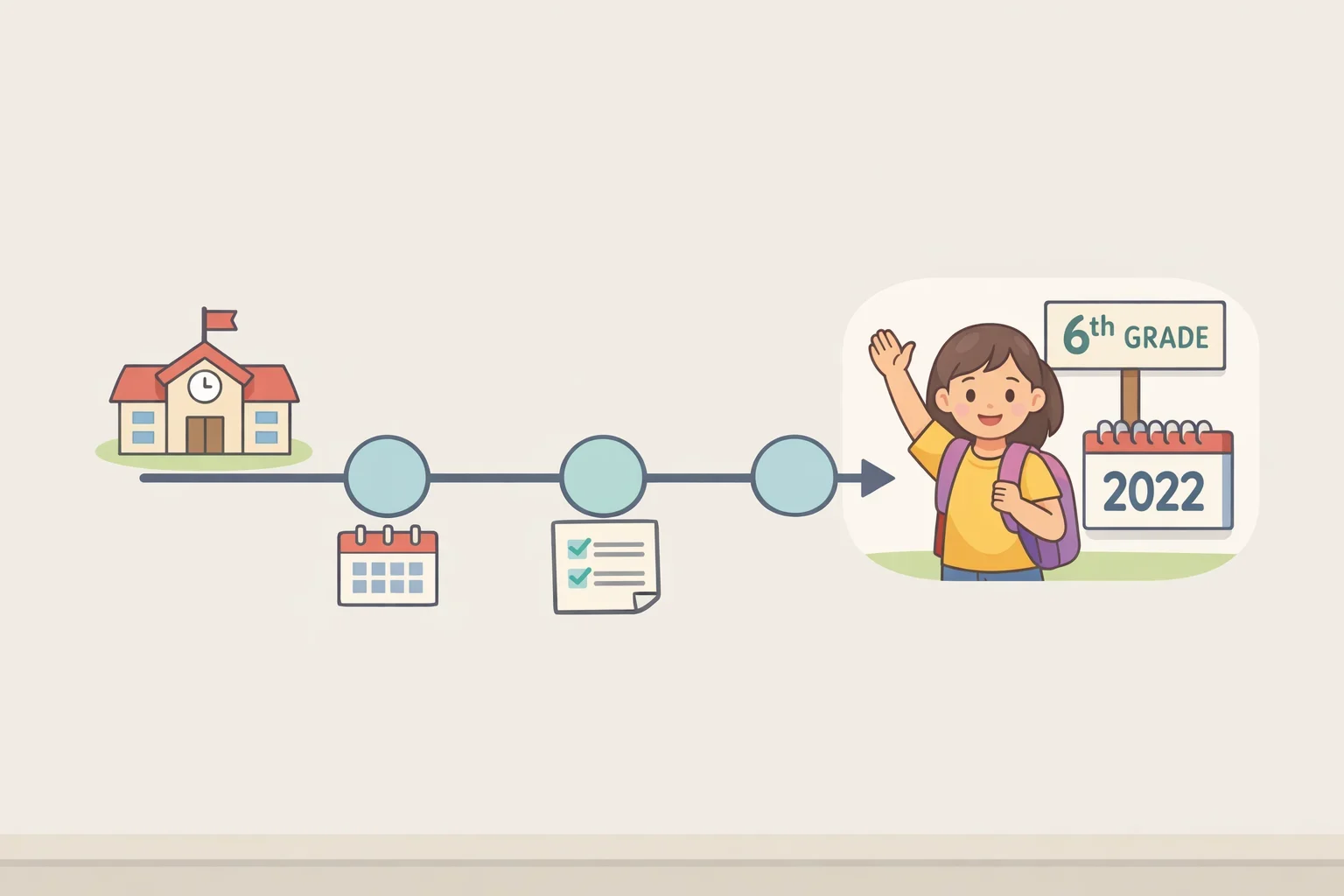
Three separate things are in play: the federal recommendations named in the order, a state's legally enforceable school-entry requirement, and a school or district's process for collecting records. A change to the first doesn't automatically produce a change to the second or third.
The order itself won't be the place a state requirement change shows up. Look instead for a state law, an amended health department regulation, a formal board of health vote, or a revised state immunization chart with a published effective date for a coming school year.
Wisconsin's own history shows what a documented change looks like. The state added a seventh-grade meningococcal (MenACWY) vaccine requirement, plus a booster for eligible 12th graders, with those rules taking effect at the start of the 2024-25 school year, roughly two years before the federal order existed, according to the Wisconsin Department of Health Services. That change came from Wisconsin's own regulatory process, aligning the state closer to CDC Advisory Committee recommendations, not from a federal executive order. Any future announcement worth acting on should follow the same pattern: a state body making the change, a specific vaccine or documentation rule, the grades it covers, and the school year it takes effect.
How school vaccine requirements by state can differ
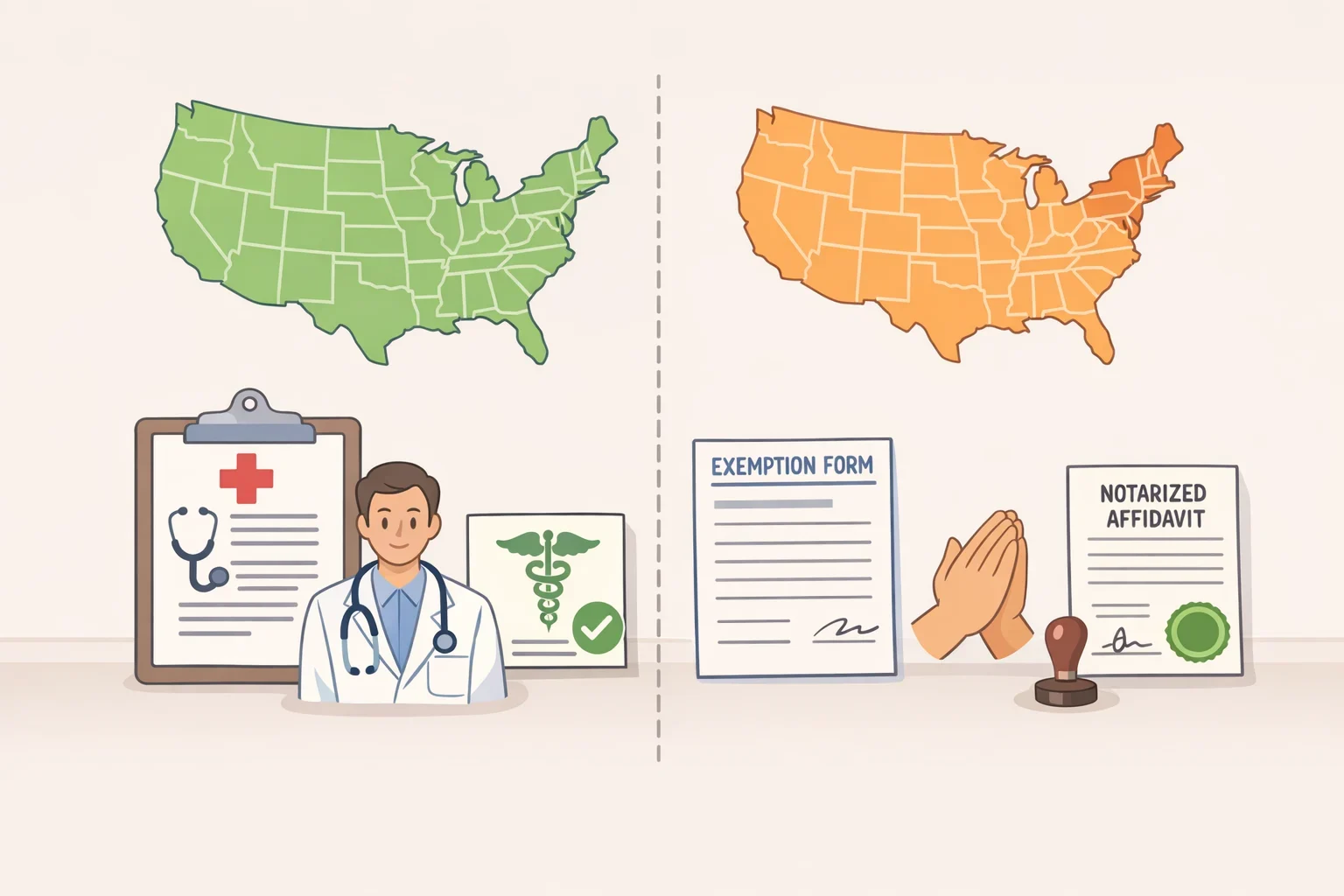
Even states with similar vaccine lists handle documentation and exemptions differently, independent of anything happening at the federal level. Wisconsin's chickenpox rule illustrates this well. A parent's report of chickenpox illness no longer qualifies for a varicella vaccine exemption; the state now requires a diagnosis from a qualified health care provider, meaning a physician, doctor of osteopathic medicine, nurse practitioner, or physician assistant, according to Wisconsin DHS. Massachusetts handles this differently: its guidance accepts a clinician's interpretation of a parent or guardian's description of chickenpox as a "reliable history" that satisfies the requirement, per Massachusetts DPH. That's Massachusetts's own standard, and it wouldn't necessarily carry over to Wisconsin or any other state.
Exemption renewal rules vary too. Massachusetts requires medical exemptions to be renewed every year at the start of the school year and recommends the same practice for religious exemptions, according to Massachusetts DPH. Other states set their own renewal schedules, so this detail needs checking against each state's own page rather than assuming Massachusetts's pattern applies everywhere.
Provisional enrollment, which lets a student attend school while still completing a vaccine series, is another area where states diverge sharply. Among the 31 states that reported this measure for the 2023-24 school year, provisional or grace-period attendance ranged from 0.3% in Delaware to 8.0% in Arkansas, according to CDC reporting. That same data shows the backdrop against which this policy debate is unfolding: national kindergarten vaccination coverage fell below 93% in the 2023-24 school year for the fourth year in a row, while the exemption rate climbed to 3.3%, the highest ever recorded, rising in 41 jurisdictions and topping 5% in 14 of them, per CDC reporting. Those figures describe public health outcomes and reporting, not legal requirements, but they explain why school immunization policy is drawing this level of attention right now.
What to check before an enrollment deadline
State agencies publish the requirement itself, and enforcement happens locally even though the state sets the rule, according to Massachusetts DPH. That means families typically work with two sources: the state page for the actual requirement, and the school or district for how and when to submit proof, since submission steps and paperwork deadlines can vary by school.
A state's official K-12 immunization page should list which vaccines apply at a child's grade, what counts as acceptable documentation, and which exemption categories the state permits, including any renewal schedule. A school or district can confirm the submission process, the local deadline, and whether provisional enrollment is available for a student mid-series.
If records are incomplete, ask a child's clinician about an individual catch-up schedule, since missed-dose timing depends on the vaccine and the child's age. If a family is weighing an exemption, the state's page, not a school flyer, is the source that shows what the paperwork requires and how often it needs renewal.
Before enrollment paperwork is due, pull up the state health department's current K-12 immunization page, confirm the requirement for the child's actual grade this year, and contact the school directly to verify submission method and local deadlines. That two-step check answers the requirement question for a specific child, whatever happens next with the federal order.