
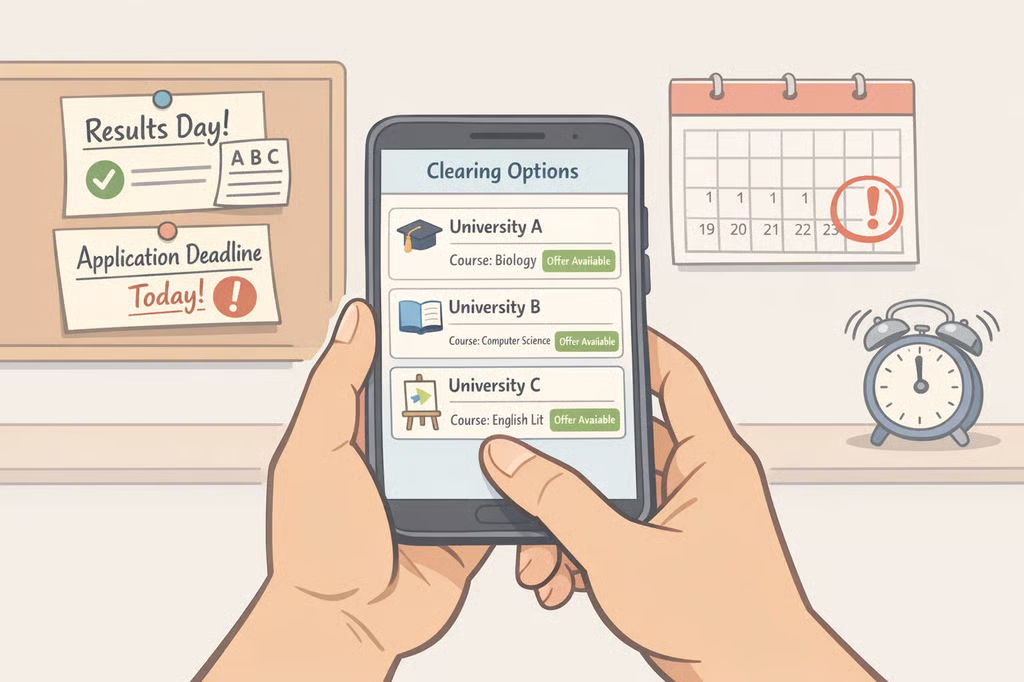
UCAS Clearing after A-Level Results: What to Check
A-level results were issued on 13 August, alongside results for many other level 3 qualifications, according to Ofqual. UCAS Clearing after A-Level results is one route for applicants who do not hold an offer and for those who meet UCAS's other eligibility conditions. Whether that applies to a given student depends on offer status, not on how the grades themselves landed.
In England, 320,505 students at 2,835 schools and colleges received A-level results on results day, according to Ofqual data. That figure covers schools and colleges in England only. UCAS Clearing itself runs across the whole UK, so the count describes results volume in England, not who is eligible for Clearing more broadly.
UCAS Clearing runs from 2 July to 19 October 2026, according to UCAS. It's available to applicants who do not hold an offer and who meet UCAS's other conditions, not only to students who missed their grades. Results issued on results day are also provisional and may still change after a review or appeal, a separate process not covered here, per Ofqual.
This piece covers how to read a UCAS Hub status, what changes depending on whether a student missed, met, or beat an offer, how a Clearing application actually works, and what to do if none of the available options look right.
UCAS Clearing after A-Level results: how your status affects your next step
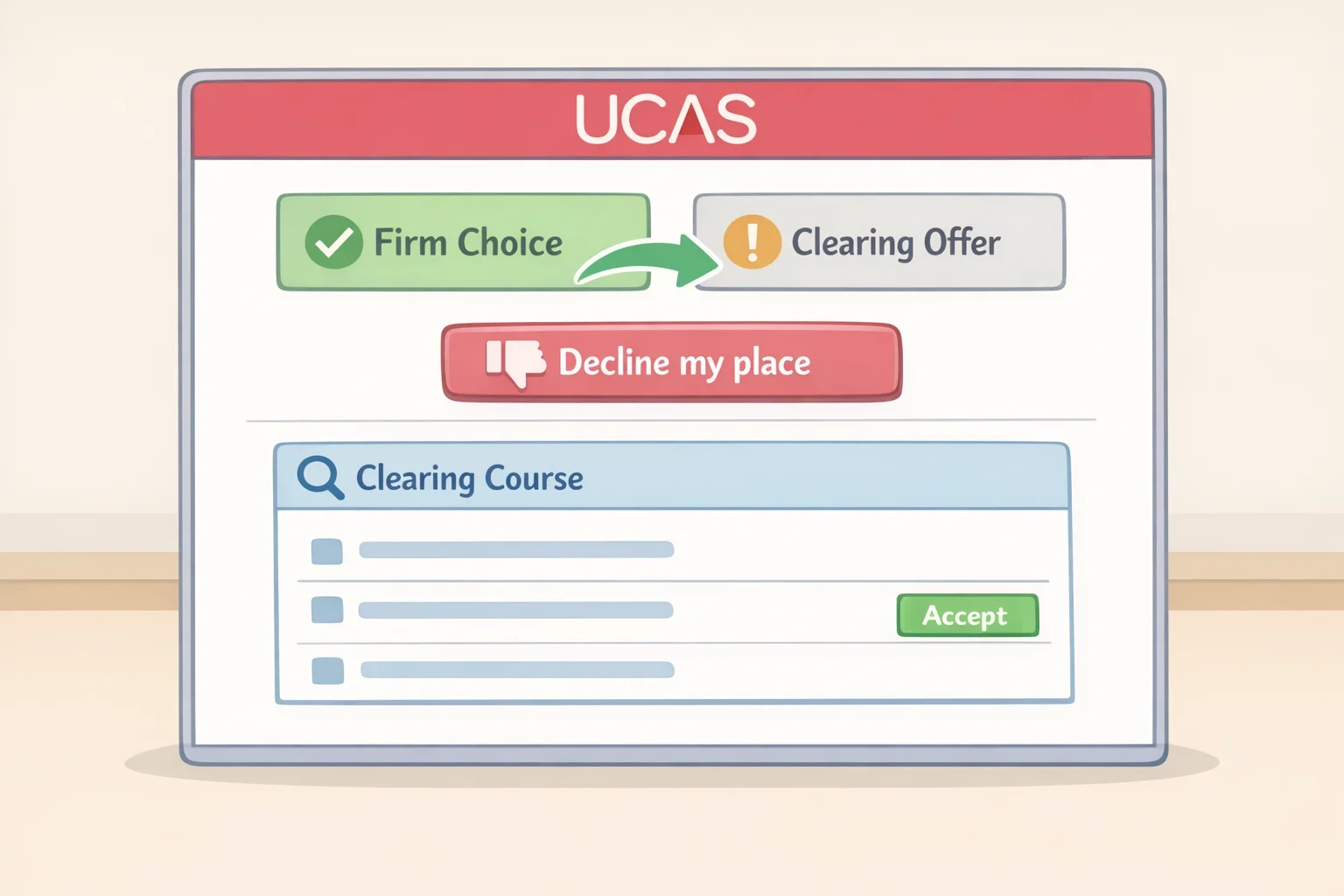
Eligibility for Clearing comes down to offer status, not grades alone. According to UCAS, a student is eligible if they applied after 30 June, hold no offer they want to accept, didn't meet the conditions attached to an offer, or already declined their firm place using the "decline my place" button in their application.
A firm choice is the offer a student has accepted as a first preference. An insurance choice is a backup offer, usually with different grade requirements, accepted as a second preference alongside it. Both stay live until results confirm what happens to each one, which is why checking both matters more than remembering what either offer letter said months ago.
Logging into UCAS Hub and checking the status shown for both the firm and insurance choices is the most reliable way to work out which of the three situations below applies, rather than guessing from memory. If the status shown is unclear, contacting UCAS or the university directly before doing anything else is the better move.
UCAS Clearing if you miss your offer
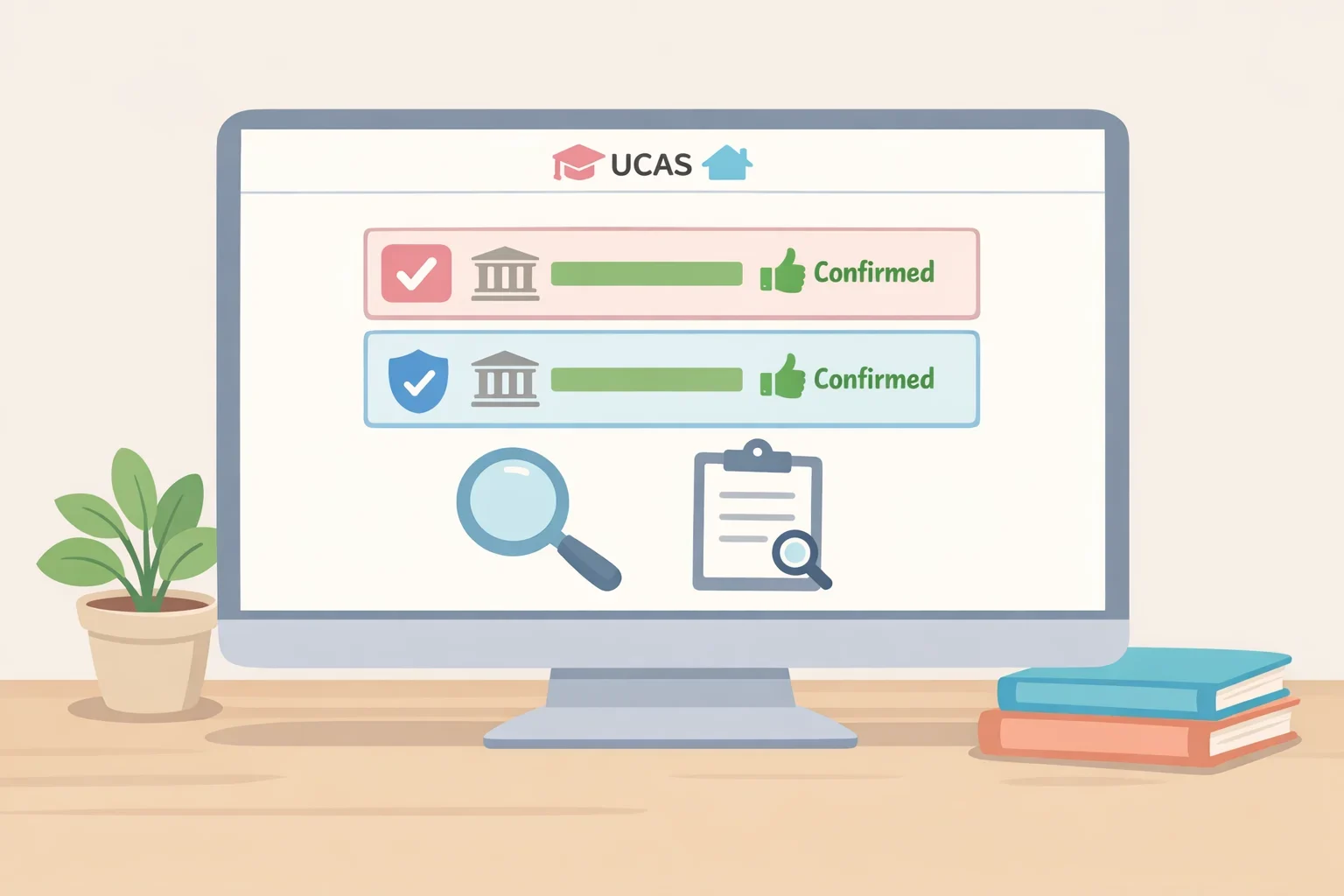
Missing the conditions on a firm offer doesn't automatically put a student into Clearing. The insurance choice is a separate decision, and it may still confirm a place even after the firm choice falls through.
Checking the insurance status in Hub before searching Clearing vacancies avoids a wasted step. A student only becomes Clearing-eligible once neither offer, firm or insurance, is one they hold or want to accept, according to UCAS.
Some universities do admit students who narrowly miss published grades. How far a course is willing to flex on its stated requirements isn't advertised in advance and varies by provider, according to a HEPI analysis published in June. That's one reason a missed grade on paper doesn't always mean a missed place in practice, though it's not something to plan around before a university confirms it.
Once both firm and insurance outcomes are clear, contacting whichever institution's status is unresolved is the next step, rather than assuming it's the firm choice by default.
What happens if you meet your university offer
If results meet the conditions on a firm offer but Hub still shows it as conditional or unresolved, contacting the university directly is the way to find out what's outstanding.
Clearing only becomes relevant here for a student who meets the offer but deliberately wants a different course. Declining a firm place through the "decline my place" option in the application is what makes that switch possible, according to UCAS.
Because that step changes an application's status, checking with the university about what a Clearing move actually involves before declining anything is worth doing. UCAS's published guidance doesn't address whether a declined place can be reinstated, so that's a question for the provider, not an assumption to make either way.
What happens if you exceed your university offer
Exceeding an offer doesn't appear, by itself, in UCAS's published Clearing guidance as a reason to enter Clearing. A confirmed place stays in place unless a student actively declines it, according to UCAS. Trading that place for a different course through Clearing is entirely optional.
A HEPI analysis published in June looked at "academic match," a measure of the gap between a student's actual grades and the median grades of their course's cohort. It's a proxy for course fit based on available grade data, not a full measure of how well a course suits a student, and the analysis describes patterns across groups rather than predictions for any individual applicant.
Tracking applicants by socioeconomic background from firm to insurance to Clearing, the analysis found that students from the most disadvantaged backgrounds tend to overmatch their firm choice by around a fifth of a grade, then shift sharply to undermatch by roughly three-tenths of a grade once they reach Clearing. Students from the most advantaged backgrounds track flatter through firm and insurance, and are the only group in the analysis to improve their match at the Clearing stage. Those figures describe a research measure applied across many students, not a grade change any one student should expect to see in their own results.
Before declining a confirmed place, comparing course content and entry requirements against the original offer is worth doing, along with checking accommodation availability at the new provider and working out travel, relocation, and total cost differences. Confirming that any new offer is an actual offer with a stated deadline, not just an encouraging phone call, matters just as much.
If none of the available Clearing options look like a genuine improvement, a confirmed place isn't the only alternative. Staying put, taking a gap year, reapplying next cycle, or considering an apprenticeship or part-time study are all legitimate options. Accepting a Clearing place simply because it's available isn't automatically the better move.
Applying through UCAS Clearing, step by step
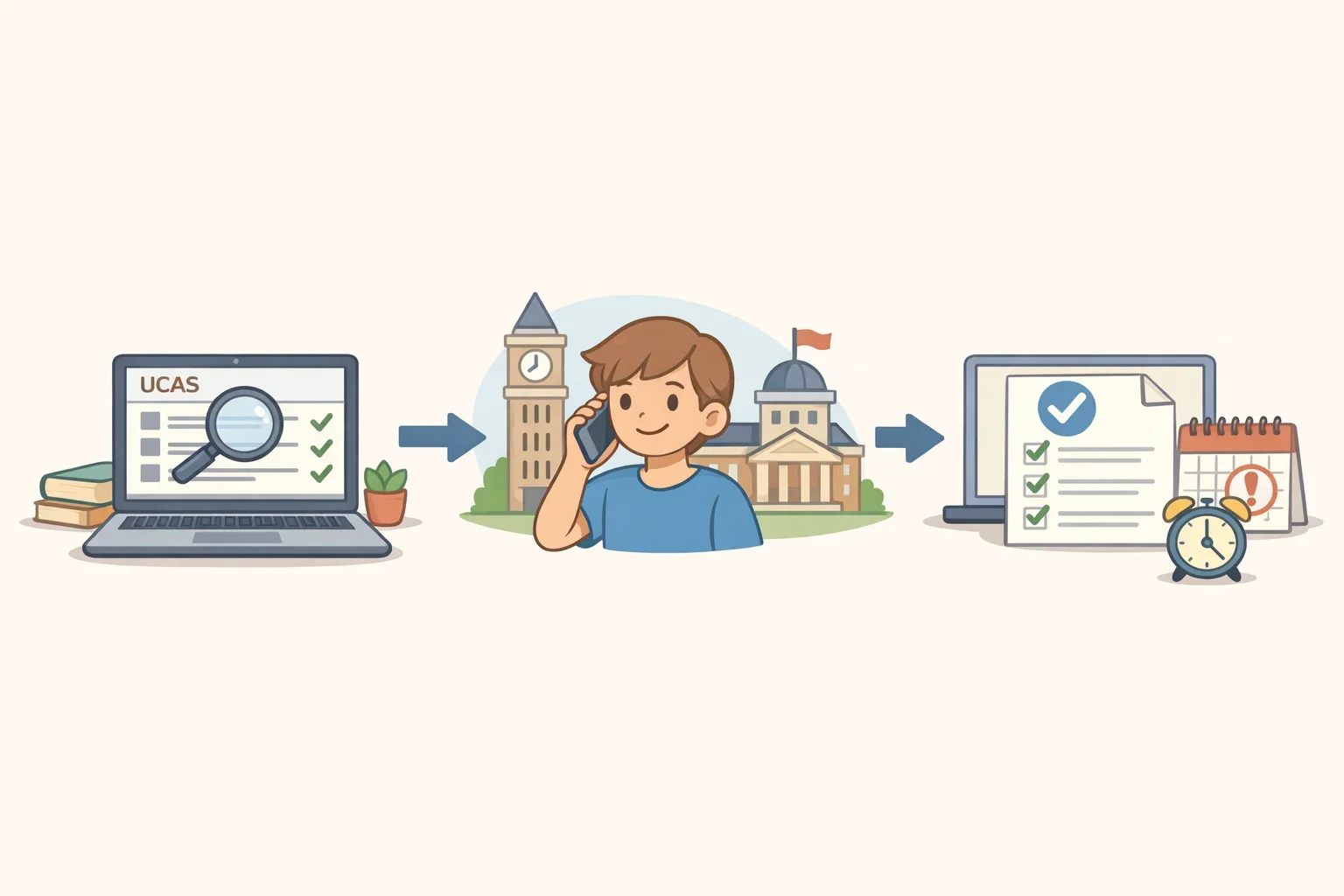
For a student who is Clearing-eligible, the process follows a few steps, according to UCAS:
- Search live vacancies using the UCAS search tool, available from 2 July 2026.
- Call the university before adding anything to an application, to confirm entry requirements and check vacancies still exist.
- If offered a place and it's wanted, add it as a Clearing choice by the deadline given on the call.
- Only one Clearing choice can be added at a time. If it isn't confirmed, another can be added.
Before calling, it helps to have a short list of exactly what needs confirming: whether the place is still available, whether the specific subjects and grades achieved meet the requirements, whether any conditions are attached to the offer, what the deadline is to add it as a Clearing choice, and whether accommodation or student finance will be affected. These details can differ by course and provider, so confirming them directly is something to check every time, even for a familiar-sounding course.
A verbal indication from an admissions team during that call is not the same as a place. The offer becomes real only once it's added as a Clearing choice in the UCAS application and confirmed by the deadline given on the phone.
UCAS also runs a tool called "My matches," which surfaces up to 50 possible courses based on the original application and lets applicants register interest. If a course still has vacancies and the applicant meets its entry requirements, the university may call, according to UCAS. That "may" matters: it's a discovery tool, not a guaranteed offer, so continuing to search vacancies and call providers directly makes more sense than waiting for a call to come in.
If your course or provider changes, update student finance
A Clearing move that changes the course or provider carries one more practical step. Anyone whose university or college choice changes should update their student finance application to match, according to Student Finance England guidance.
What to do next
Three steps cover most of what matters this week. Check both the firm and insurance status in UCAS Hub before assuming either result. Confirm any Clearing offer by phone, including its exact deadline, before treating it as settled. Then, if the course or provider actually changes, update the student finance application to match it.