
- Texas School District Classroom Screen Time Limits: HB 1481
- What Texas school district classroom screen time limits does HB 1481 set?
- What HB 1481 doesn't set: classroom technology use limits
- Where TEA recommends numeric screen-time targets for early-childhood programs
- What the research says about classroom screen time
- How to check your district's device and technology policies
Texas School District Classroom Screen Time Limits: HB 1481
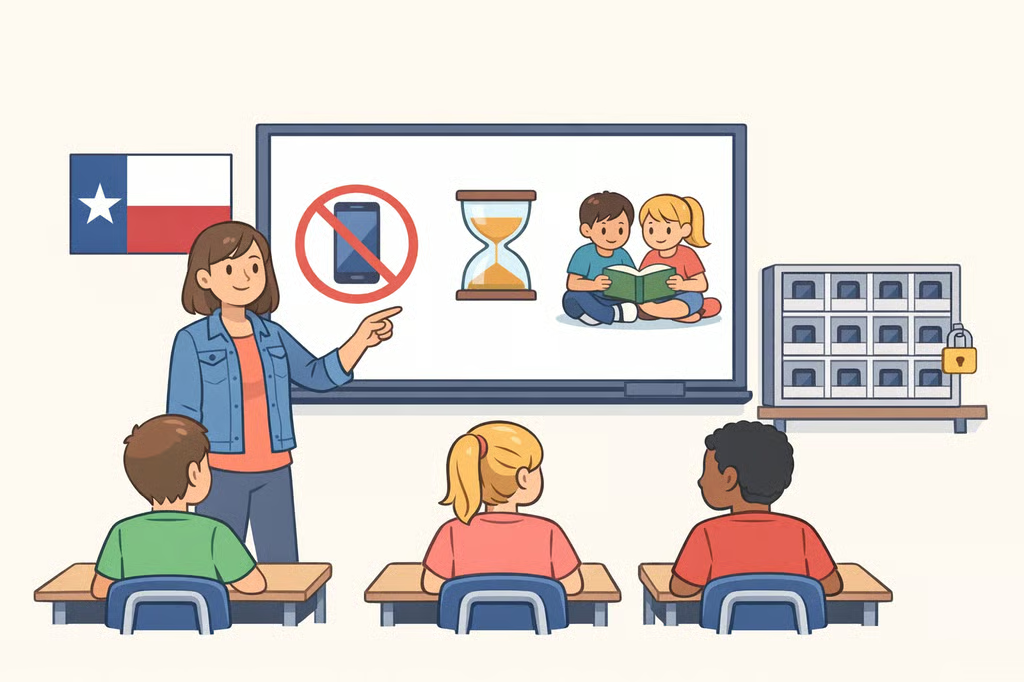
House Bill 1481 requires every Texas school system to restrict personal phones, tablets, and smartwatches during the school day. It does not set Texas school district classroom screen time limits for the laptops, tablets, or smartboards a teacher uses to run a lesson, a separate question covered by different, non-binding guidance from the Texas Education Agency (TEA, about a year ago).
School systems were required to adopt written HB 1481 policies no later than September 18, 2025 (TEA, about a year ago). That deadline marked the required policy-adoption date for personal-device rules; it says nothing about how a classroom handles instructional technology. TEA has separately published non-mandatory guidance for early-childhood classrooms that does include numeric screen-time targets. The two documents address different questions and carry different legal weight, and reading them as one policy can lead to wrong assumptions about what a specific classroom actually has to follow.
What Texas school district classroom screen time limits does HB 1481 set?
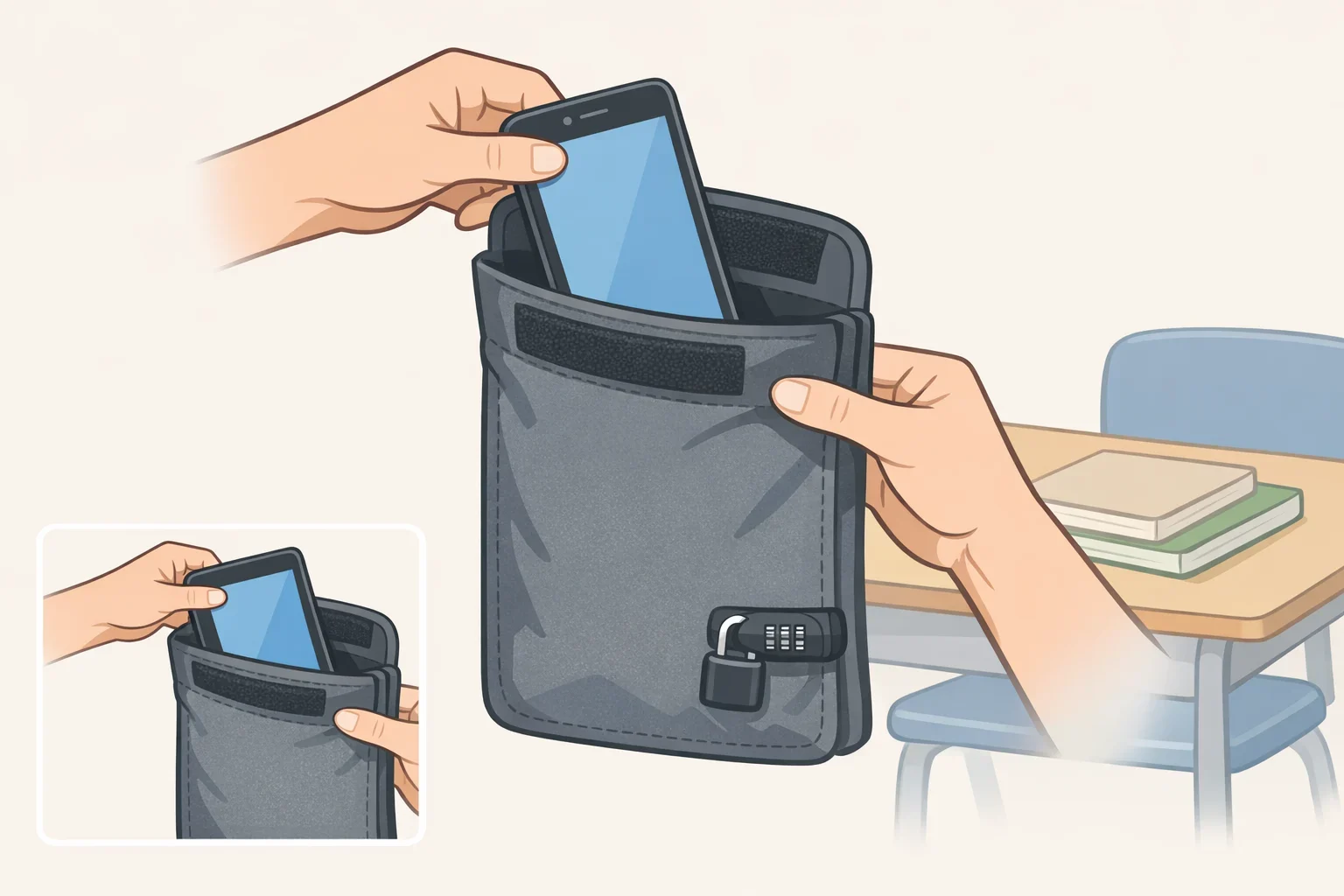
House Bill 1481, passed during Texas's 89th Legislative Session, took effect June 20, 2025, and required all school systems, including charter schools, to adopt a policy prohibiting student use of personal communication devices on school property during the school day (TEA, about a year ago). The law defines those devices broadly: cellphones, tablets, smartwatches, and anything else capable of digital or telecommunication use (TEA, about a year ago).
School systems may comply in either of two ways: bar personal devices from campus outright, or require students to store them securely, in pouches, lockers, or cabinets, during the school day (TEA, about a year ago). Local policies must spell out discipline for violations, and schools may confiscate a device, though they must send a parent or guardian written notice at least 90 days before disposing of anything left unclaimed (TEA, about a year ago).
The law carves out specific exceptions. Students may use a personal device when required under an IEP, a Section 504 plan, or a similar plan; when a qualified physician has authorized use for a documented medical need; or when a legal health or safety requirement, or the school's own safety protocol, calls for it (TEA, about a year ago). TEA received $20 million in state grant funding to help school systems cover secure storage purchases and the infrastructure needed to enforce the ban (TEA, about a year ago).
Nowhere in that text does the law set a numerical cap on instructional screen use. That's a gap in the statute, not evidence that no such rule exists anywhere at the local level.
What HB 1481 doesn't set: classroom technology use limits
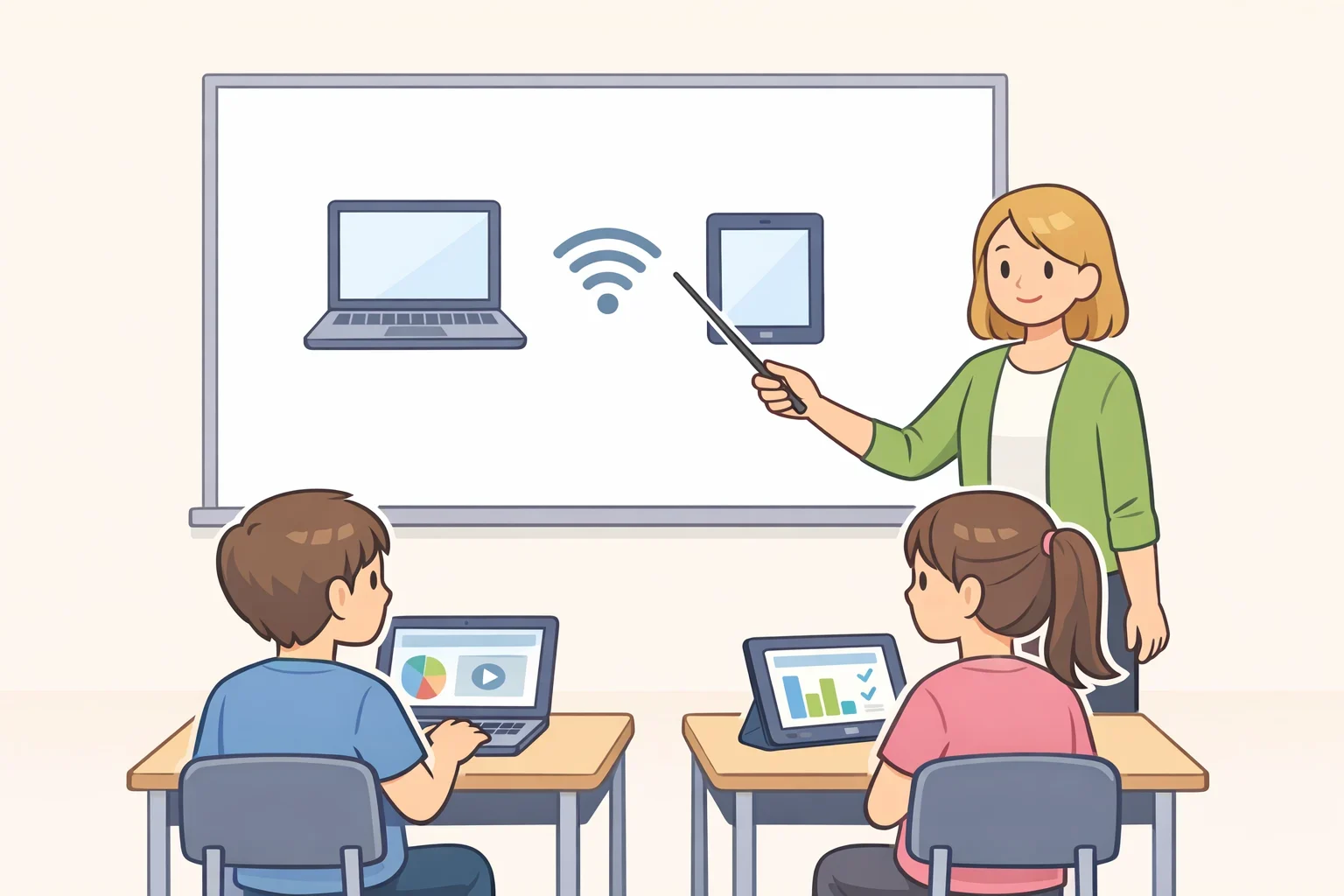
The law's definition of "personal communication device" specifically excludes any electronic device a district or charter school provides to a student (TEA, about a year ago). That exclusion covers school-issued laptops and tablets. Families should check whether a district or campus has adopted a separate policy for instructional technology; HB 1481 itself does not establish that limit.
A Syracuse University education professor says the more useful question isn't how many minutes a screen stays on, but how students are using it. Active use, through creative production and collaborative problem-solving, produces meaningfully better outcomes than passive use, like watching video or playing repetitive games, and technology can also support fine motor skills, language development, social-emotional learning, and school readiness, benefits described as especially valuable for students with disabilities, students from disadvantaged backgrounds, and language learners, provided an adult is present to guide the activity and connect it to real life (Syracuse University Today, about seven weeks ago).
The debate over classroom screens has also drawn national attention outside Texas. The American Federation of Teachers recently proposed a 10-point plan that includes banning classroom screens for students through second grade (Syracuse University Today, about seven weeks ago). That's a policy recommendation from a national teachers' union, not a Texas statute or TEA guidance, so it doesn't change what any Texas classroom currently has to do.
Where TEA recommends numeric screen-time targets for early-childhood programs
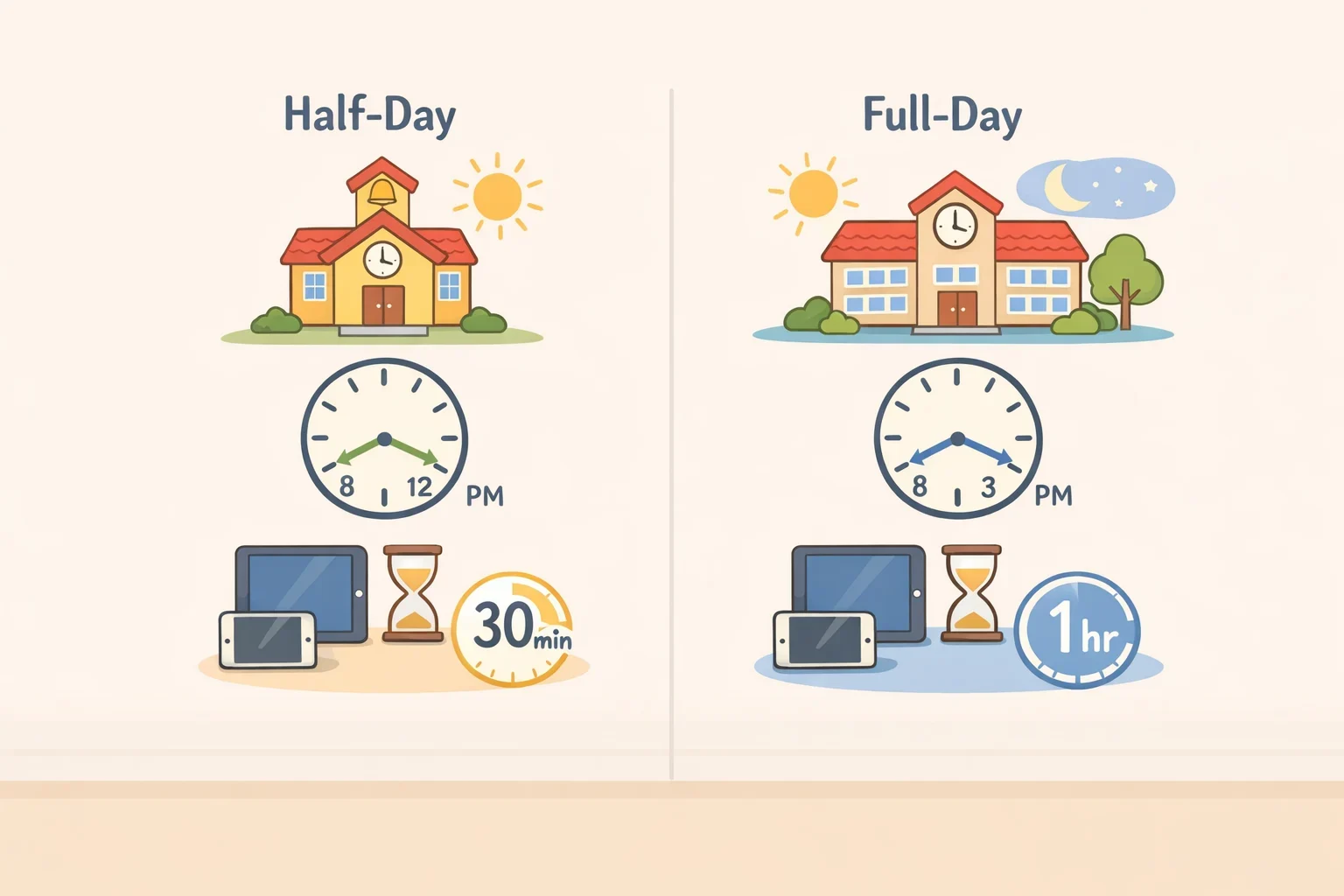
TEA has published separate, non-binding guidance for early-childhood and kindergarten programs that does set numeric benchmarks, unlike HB 1481. It recommends less than 30 minutes of screen time in half-day programs and less than one hour in full-day programs, citing 2012 research, alongside the American Academy of Pediatrics' 2016 recommendation of no more than one hour daily of high-quality programming for children older than two (TEA Technology Guidance for Administrators, over two years ago).
The guidance recommends limiting teacher-led digital activities during whole-group time in favor of manipulatives, interactive wall displays, or modeled music and movement, and it recommends that books be read directly by adults and children rather than delivered mainly through a screen (TEA Technology Guidance for Kindergarten, over two years ago).
These benchmarks apply to early-childhood and kindergarten programs specifically, not to elementary school broadly. Districts may establish their own local approach to those benchmarks; the supplied TEA material does not make these statewide requirements, and none of this guidance connects to HB 1481's personal-device rule.
What the research says about classroom screen time
HB 1481 governs whether a student can carry a personal phone or tablet on campus. It says nothing about how instructional technology affects learning outcomes, a separate question that two research reviews have examined, though neither evaluated Texas policy directly.
A systematic review of 18 studies covering more than 11,000 primary school students found a small but statistically significant positive effect from mobile-device literacy and numeracy interventions, with a Cohen's d of 0.24 (PubMed systematic review, just over two years ago). The review's authors flagged five of those 18 studies as high risk of bias and 13 with some risk concerns, and they cautioned against generalizing the findings broadly (PubMed systematic review, just over two years ago).
A separate meta-analysis of 34 school-based interventions for students ages 6 to 19 found those programs cut problematic digital-technology use by a large margin immediately after the intervention, an effect size of d = 1.47, while reducing total screen time by a much smaller margin, d = 0.15 (PubMed meta-analysis, just over a year ago). In plain terms, the interventions changed how students used technology far more than they changed how much time students spent on it.
Neither study evaluated HB 1481 or any Texas district's instructional-technology policy. Both address broader school-based interventions rather than Texas policy, which makes them useful for framing expectations rather than predicting outcomes in a specific classroom.
The same Syracuse professor points out that school-technology debates often treat classrooms as sealed off from the rest of a child's life, when screen exposure actually spans home, community, and peer environments that no single school rule can control (Syracuse University Today, about seven weeks ago).
How to check your district's device and technology policies
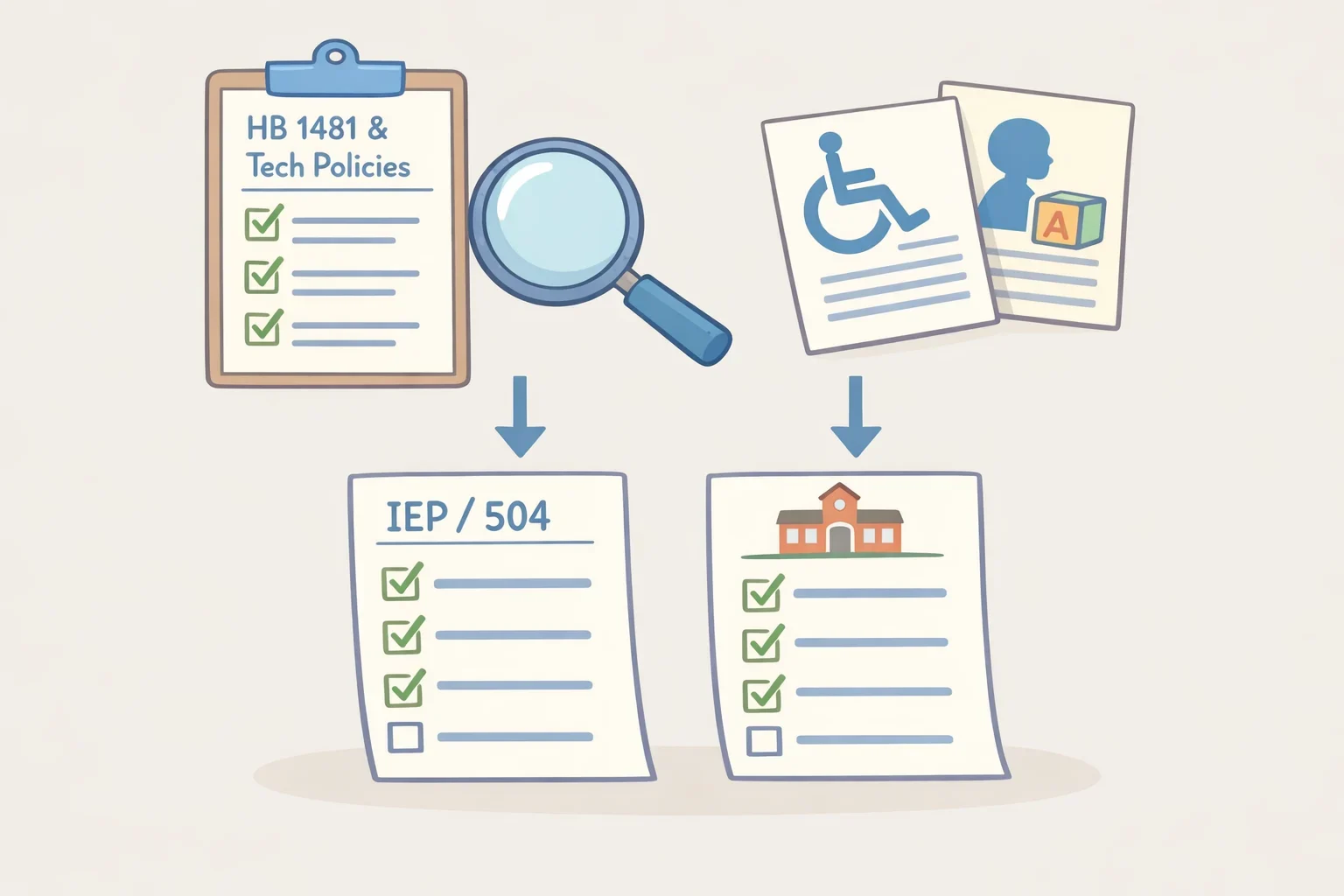
HB 1481 policy language varies from district to district, even though the core requirements are the same statewide. Districts may set separate rules for personal devices and instructional technology, so reading the specific policy matters more than assuming the two rules match.
A district's adopted HB 1481 policy may be posted on the district website or available through the campus office; that's also the place to confirm how a documented IEP, Section 504 plan, or physician-authorized medical need applies to a specific student.
Parents of children in early-childhood or kindergarten programs can ask whether the campus follows TEA's recommended benchmarks or has set its own local target. That's a program-level question, not a statewide student screen time policy in Texas.
Start with the district's written HB 1481 policy, adopted no later than September 18, 2025. If a child is in an early-childhood or kindergarten program, follow up with the campus about whether it applies TEA's recommended screen-time benchmarks locally.