
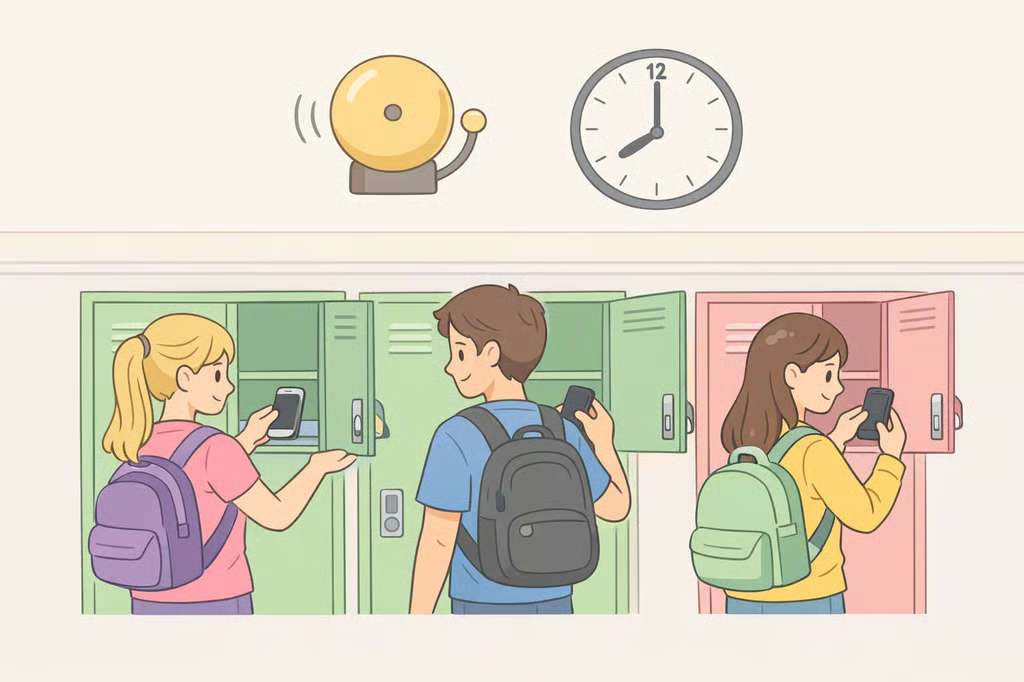
How to adjust to a school phone ban: what students need
More than three in four U.S. schools had already restricted nonacademic cellphone use as of 2022, according to a Massachusetts state toolkit. NYC Public Schools adopted a stricter version of that approach beginning with the 2025-26 school year: a full-day, bell-to-bell restriction that requires students to store personal devices from the first bell to the last, under Chancellor's Regulation A-413.
For students and families figuring out how to adjust to a school phone ban, the details that matter most aren't in the headlines. They're in the fine print: how a school handles emergencies, what happens if a student needs a phone for a medical device or an IEP, and what discipline actually looks like when a rule gets broken. Those answers vary by school.
A Florida student-level study published last October found that phone bans led to a short-term jump in suspensions, concentrated among Black students, before test scores improved the following year, according to the Annenberg Institute at Brown University. The findings suggest academic gains can coexist with short-term disciplinary costs, which is exactly why implementation and support matter for any school rolling out a ban, per the Annenberg Institute. Here's what to check in your own school's policy, and what to do if it hasn't answered these questions yet.
What school phone bans actually restrict right now
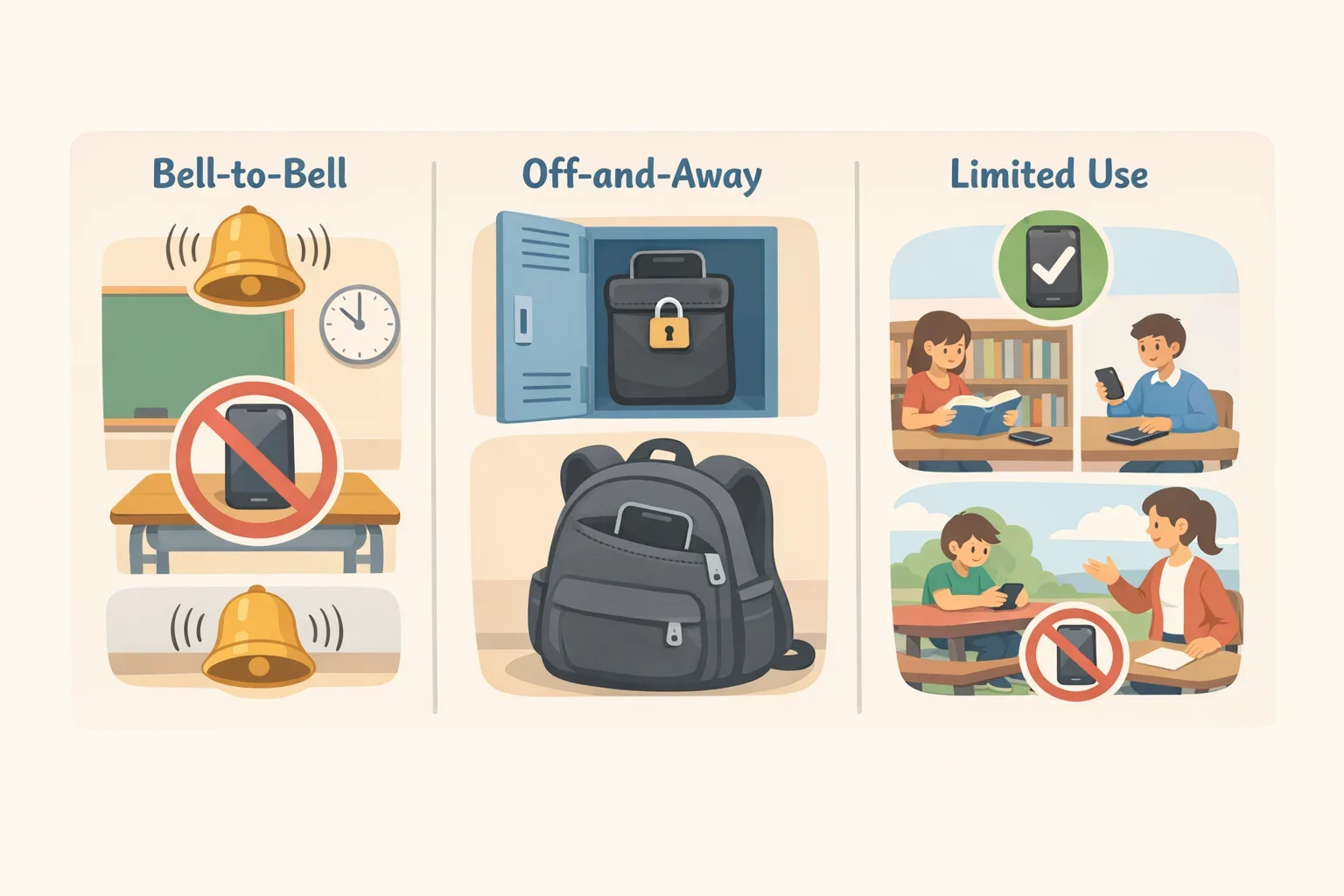
There's no single national rule. "Phone ban" describes at least three different models, and knowing which one your school uses changes what you can realistically plan around.
The Massachusetts toolkit lays out three common models: bell-to-bell, where phones are locked away and physically inaccessible all day; "off and away," where phones stay powered off and out of sight but students keep possession of them; and limited use, where phones are allowed during lunch or passing periods but not class time.
NYCPS falls into the strictest category. Under its policy, a backpack alone doesn't count as storage unless it's kept in a closet or cubby that students can't access without permission, or the phone is placed inside a special storage pouch, according to NYC Public Schools. The restriction covers the full school day, defined as homeroom through dismissal, including lunch and study hall, and schools aren't required to extend phone access even when students leave campus for lunch, under the same NYCPS policy.
A phone ban isn't a screen ban. NYCPS students keep access to school-issued laptops and Chromebooks for classwork, since the policy targets personal internet-enabled devices, not school-issued ones, per NYCPS. Whether that same distinction holds at other schools depends on each district's own device policy, so it's worth confirming rather than assuming.
What official policies are supposed to clarify
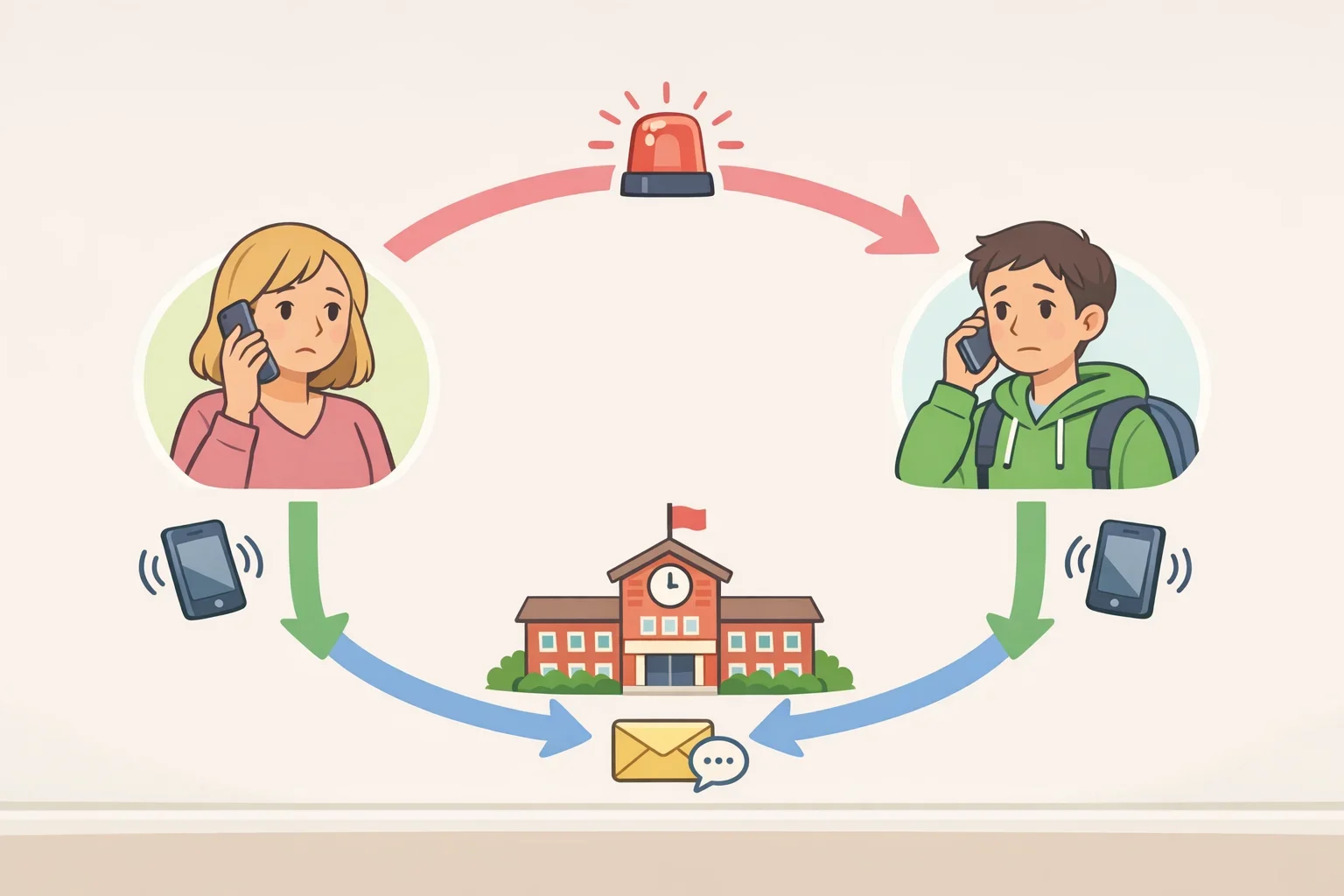
A ban that only says "no phones" leaves out the questions that matter for daily life: how do you reach a parent, and what happens if you rely on a phone for something beyond texting.
Research published early last year starts to fill that gap. The Institute of Education Sciences outlined a list of design questions school leaders should answer before rolling out a policy: how the school supports students who use phones to manage social anxiety, how it accommodates students who rely on assistive technology, what exemptions exist, and how a family reaches a student during an emergency, according to IES. That same research found that phones can give students access to supportive networks of friends, family, and online communities, a benefit especially noted for students who have experienced trauma, per IES.
NYCPS answers several of these questions in writing. The policy requires at least one method for parents to contact students, including a direct phone number, and requires schools to establish procedures, such as providing access to a school phone line, that allow students to make emergency calls, according to NYCPS. It also names specific categories where personal device use is still allowed: students managing a medical condition such as diabetes who need a glucose monitor, students who need translation support the school doesn't otherwise provide, and students whose IEP or 504 plan requires a device the school hasn't yet supplied, per NYCPS. The policy doesn't spell out one universal application process for these exceptions, so students and families who think they qualify should ask their principal, school nurse, or IEP/504 team directly how the school documents that accommodation.
The Massachusetts toolkit takes a different approach to discipline, recommending that schools stay cautious about using suspension as a first response to a phone violation and instead build "Action Plans" that bring in the student, family, and a school counselor or social worker when noncompliance repeats. One toolkit example shows a school directing students to a front-office phone to contact a parent during the day, though that's presented as a sample policy rather than a rule every Massachusetts school follows. It's worth confirming whether your own school offers that same option, and where it's located.
What the Florida evidence shows, and what it doesn't
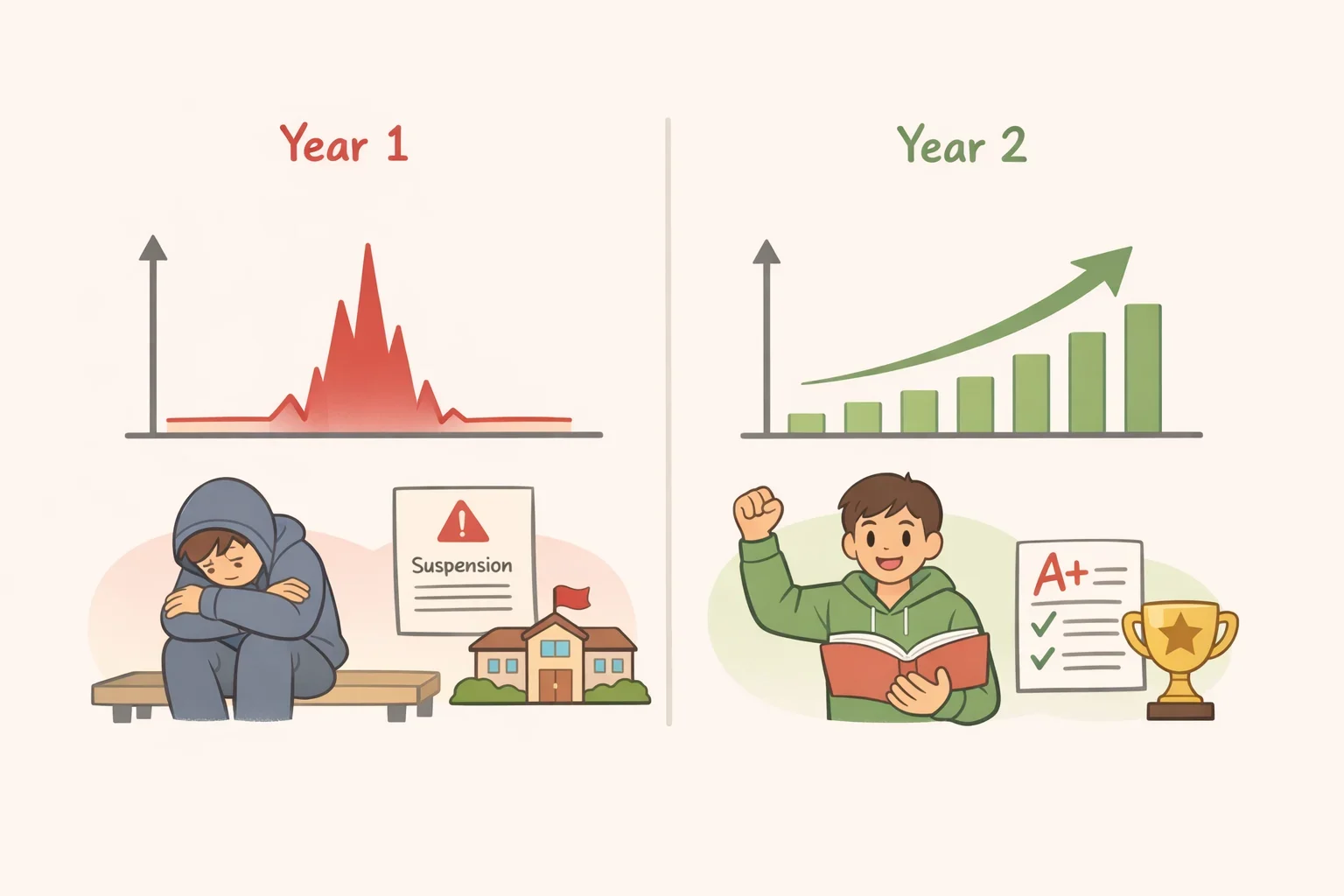
That Florida study drew on detailed student-level data to track what happened after bans took effect, and the findings are worth walking through precisely.
The researchers reported a significant short-term rise in student suspensions after bans were enforced, with the increase especially pronounced among Black students, according to the Annenberg Institute. Disciplinary actions eased after the first year, which the study's authors describe as a possible new steady state following an initial adjustment period, per the same paper. In year two, the study found meaningful gains in test scores, an effect the researchers say reduced unexcused absences may explain in large part, according to the Annenberg Institute. The effects were more pronounced in middle and high schools, where smartphone ownership is more common, per the study.
The paper is a working paper based on Florida's own student data, not a nationwide guarantee. It doesn't establish that every ban elsewhere will produce the same suspension spike or the same academic rebound. The first-year suspension pattern, concentrated among Black students, is also part of why a policy's discipline plan matters as much as its storage rules. Massachusetts' recommendation to use Action Plans instead of suspension for repeated noncompliance is aimed at addressing that exact concern, though the Florida research itself doesn't test whether such plans change the outcome.
NYCPS draws its own line on this question. The policy explicitly prohibits suspending a student solely for accessing a personal device in violation of policy, though repeated refusal to hand it over or store it can still lead to a suspension, according to NYCPS. Schools are also barred from docking a student's grade for a phone violation, under the same policy. Whether your own school draws the line in the same place is something to confirm directly, rather than assume from a news story about a different district or state.
A Congressional Research Service report published late last year says schools may be a logical place to identify and support student mental health, according to the Congressional Research Service. That observation applies broadly to schools in general, not to any single school's phone-ban rollout, which is why it helps to translate it into specifics for your own school's policy.
What to do when your school bans phones
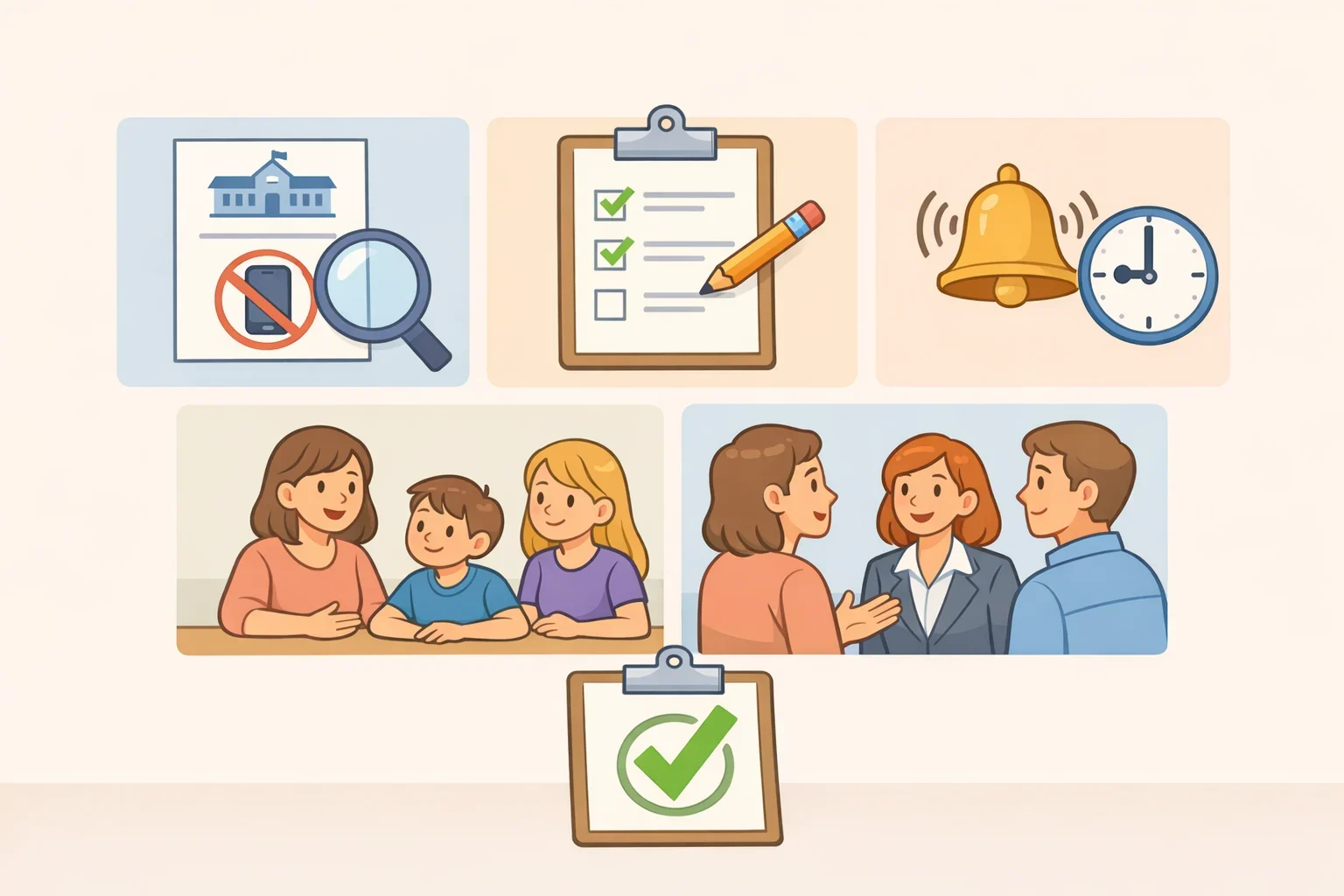
Knowing what to do when your school bans phones starts with reading the actual policy, not assuming it matches a story about a different district or state. Five checks turn a policy you've only heard about into one you can plan around.
- Find the exact model. Ask whether your school uses bell-to-bell, off-and-away, or limited use, since that determines whether you'll have zero access, stored-but-owned access, or scheduled windows, per the Massachusetts toolkit.
- Save the emergency-contact process. Ask the school how a parent reaches a student, and how a student reaches a parent, during the school day, since NYCPS requires at least one direct-contact method plus a way for students to place emergency calls.
- Ask about accommodations in writing. If a phone supports a medical condition, translation need, or an IEP/504 plan, contact the school nurse, counselor, or IEP/504 team and ask how the school documents that approved use, since NYCPS lists these as recognized categories without one universal application form.
- Learn the discipline sequence. Find out whether a first violation means confiscation, a parent call, or something more, and whether the school uses a non-punitive step, like the Massachusetts Action Plan model, before suspension becomes possible.
- Identify a school-based support person. Name one counselor, social worker, or advisor who can help if the policy creates a genuine hardship, before a conflict happens rather than after.
Worth flagging clearly: if a phone genuinely helps with a medical condition, anxiety, or an accessibility need, the responsible next step is asking the school to document and approve that use, not deciding independently to keep the phone out. A school that has approved an accommodation is expected to honor it; a student who keeps a phone accessible without that approval is the one who risks the discipline described above.
Locate your school's written device policy this week, whether it's in the student handbook, a district website, or an email from the principal. Save the emergency-contact number somewhere both a student and a parent or guardian can find quickly, and if a medical condition, language need, or IEP/504 plan makes a phone necessary during the day, contact the school nurse or IEP/504 coordinator now, before the policy gets tested by an actual emergency.