
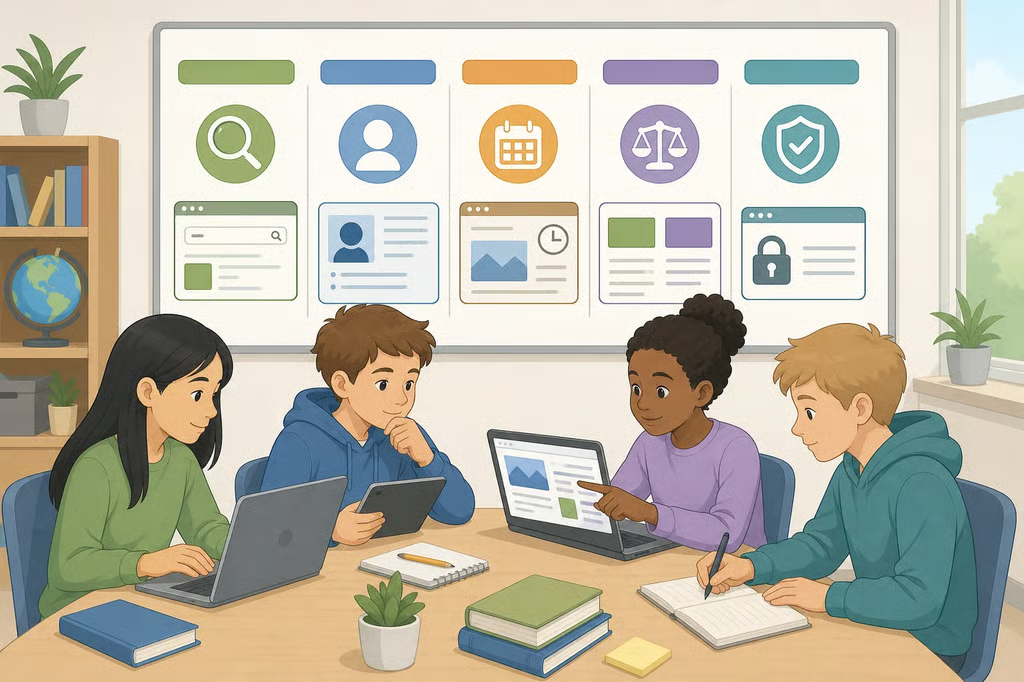
- Digital Citizenship Week Activities: 5-Day Evaluation Plan
- What Stanford COR, iCivics, and the News Literacy Project released
- What the ICILS data shows, and what it doesn't
- A proposed 5-day sequence for online information evaluation activities
- Testing AI answers and images: media literacy lessons for students
- What to verify before using this plan
Digital Citizenship Week Activities: 5-Day Evaluation Plan
Stanford's Civic Online Reasoning program, working with iCivics, released 15 new lessons and 16 videos for civics and government classrooms on June 11, 2025, building the pool of digital citizenship lessons teachers can pull from for Digital Citizenship Week activities (Stanford COR). The News Literacy Project has built out a parallel library of AI and algorithm resources, including an "AI or not?" activity and an "Introduction to Algorithms" lesson (News Literacy Project).
The resources arrive as federal assessment results show a need for stronger digital-information skills. U.S. eighth-graders' computer and information literacy score fell from 519 in 2018 to 482 in 2023, according to assessment results released in 2024, and NCES Commissioner Peggy Carr said many students still struggle to judge whether news and information found online is credible (IES/NCES).
About one-quarter of U.S. eighth-graders didn't reach even the lowest proficiency level on that test, a larger share than in 19 of the other 33 education systems tested (IES/NCES).
Together, the lesson releases and the assessment data give teachers material they could organize into a focused week instead of a scattered set of internet-safety talks. What follows is a proposed five-day sequence that arranges eight lesson concepts from Stanford COR/iCivics and the News Literacy Project into a single week. It's this article's own way of ordering existing materials, not an official curriculum from either organization, so confirm current lesson content before building a unit around it.
What Stanford COR, iCivics, and the News Literacy Project released
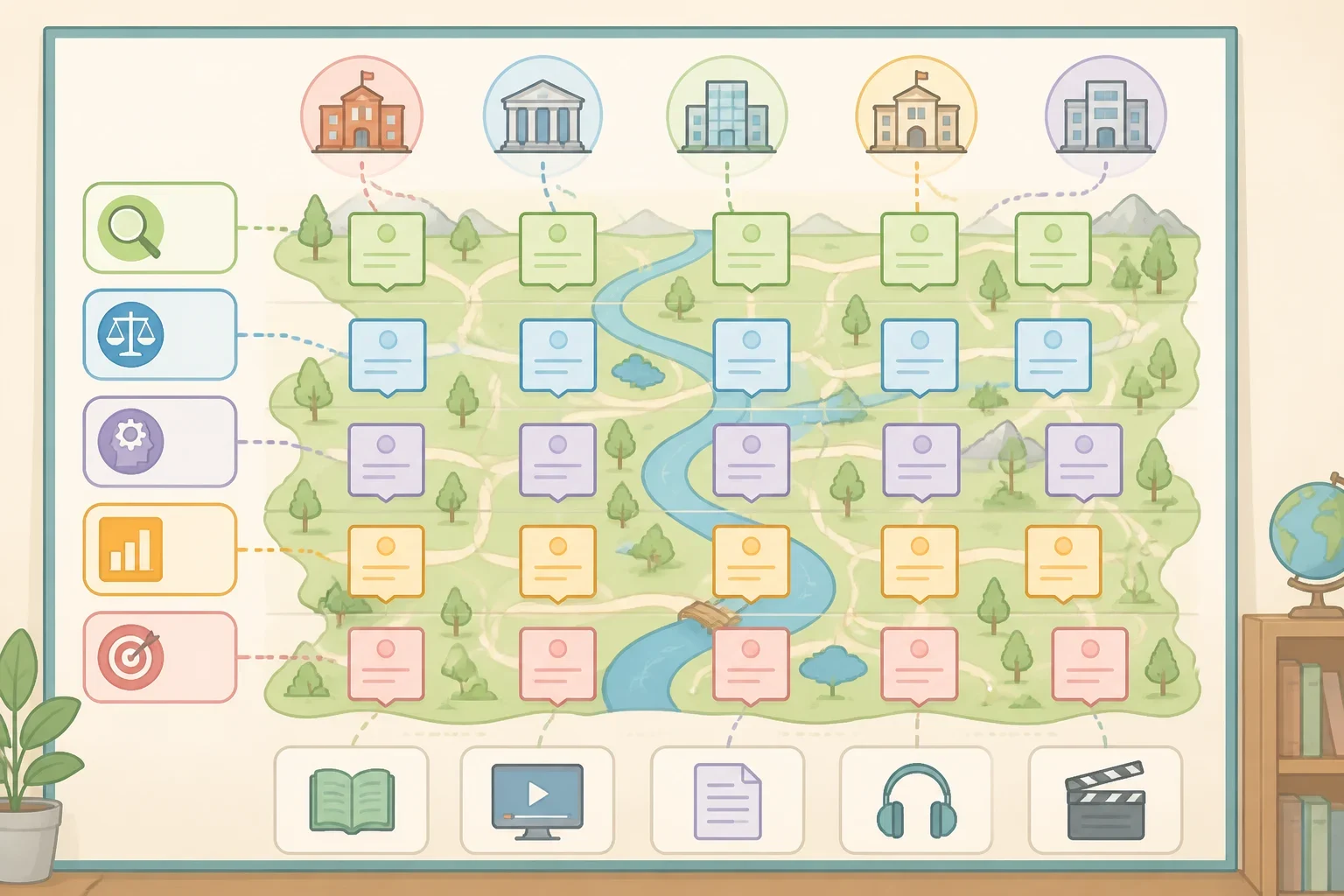
The Stanford COR/iCivics release covers 15 lessons total, spanning topics like evaluating Wikipedia articles, state-controlled media, video influence, and political photos, alongside three "Verifying Social Media Posts" lessons split by branch of government (Stanford COR). Five of those titles anchor the plan below: "Think Before You Click!," "Lateral Reading with Fact-Checking Websites," "Sponsored Content: Who's Paying?," "What URLs Do and Don't Tell Us," and "Verifying Social Media Posts," plus "AI Chatbot Claims" for the AI portion of the week.
The News Literacy Project's page adds two more building blocks: the "AI or not?" lesson plan, which includes activity slides and extension ideas, and "Introduction to Algorithms," a Checkology lesson revamped in 2024 that uses two characters, Algo and Gen, to walk students through how algorithmic and generative-AI systems shape a social feed (News Literacy Project). Eight lesson concepts across the two organizations make up the sequence outlined here.
What the ICILS data shows, and what it doesn't
The International Computer and Information Literacy Study (ICILS) tests whether students can use computers "to investigate, create, participate, and communicate," and 2023 marked only the second time the U.S. took part (IES/NCES). Only 3% of U.S. eighth-graders reached the highest proficiency level, compared with 6% in the Republic of Korea, the only system that outperformed the U.S. at that top tier (IES/NCES).
None of these sources claim that a five-day sequence, or this particular grouping of lessons, will move ICILS scores. The cited pages describe instructional resources, not evidence that a five-day arrangement improves outcomes. Because ICILS measures a broad skill rather than one narrow task, the plan below spreads practice across several formats, plain text, images, social posts, and AI-generated answers, and opens each day with a question for students to investigate rather than a warning about what to avoid. That grouping and framing reflect this article's own instructional judgment based on what ICILS measures, not a specific recommendation from NCES.
A proposed 5-day sequence for online information evaluation activities
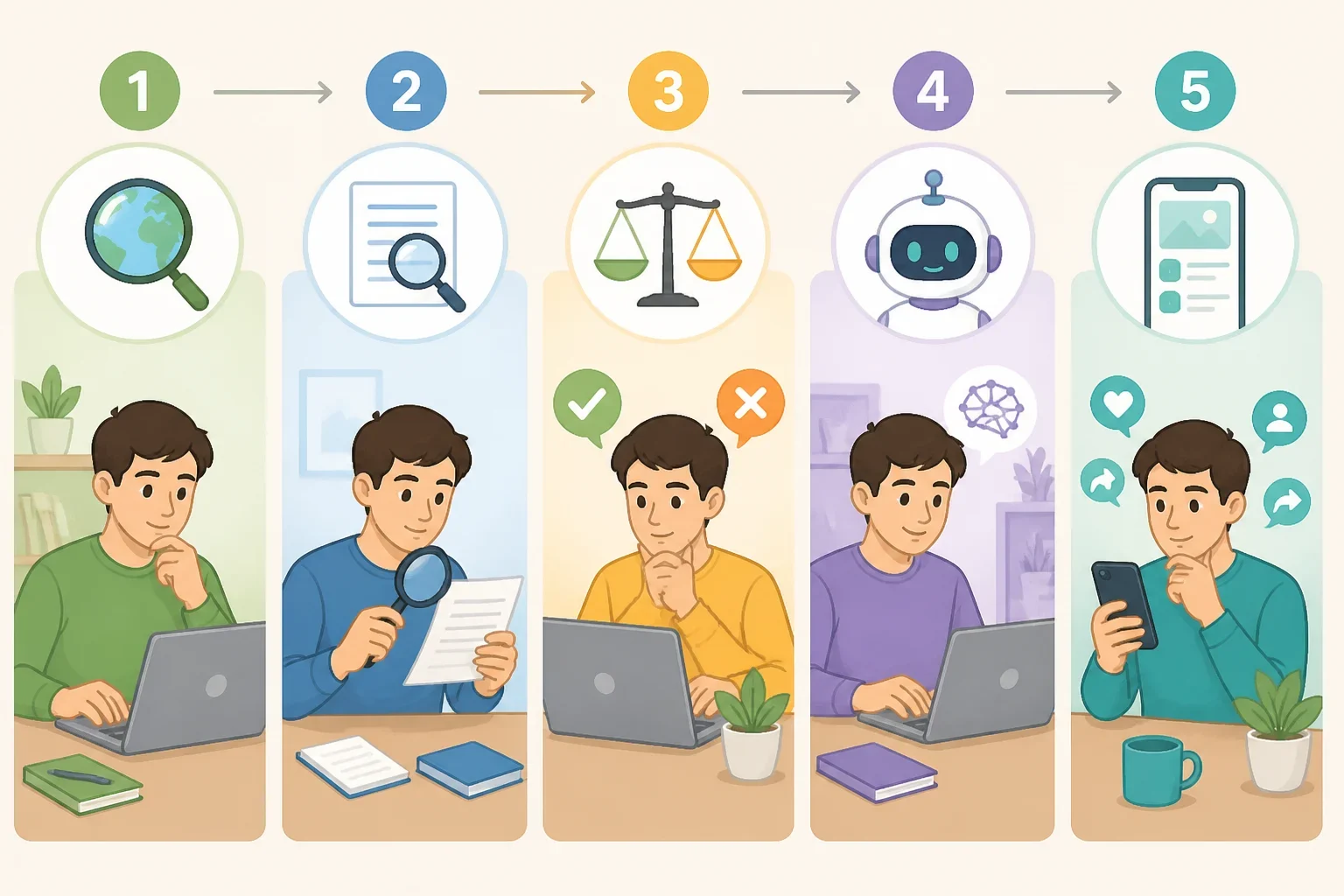
The first three days build a repeatable investigation habit around text and sourcing before the sequence moves into images, AI, and algorithmic feeds.
Day one, modeled on Stanford COR's "Think Before You Click!" lesson concept, asks students to name what makes a headline or post designed to trigger a fast reaction (Stanford COR). Show three or four sample headlines or posts, have students name the emotional hook (outrage, urgency, humor) and what's still unknown, then close with each student writing one sentence naming the technique used. Choosing examples with no partisan charge keeps the discussion on technique rather than politics.
Day two, based on Stanford COR's "Lateral Reading with Fact-Checking Websites" lesson, has students verify an unfamiliar source by leaving the page instead of judging it by appearance (Stanford COR). Students open new tabs to check who else is reporting a claim, then log their confidence with a short note on what they found and where. In districts with restricted platform access, a printed packet of pre-pulled search results can substitute for live browsing.
Day three combines three Stanford COR concepts: "Sponsored Content: Who's Paying?," "What URLs Do and Don't Tell Us," and "Verifying Social Media Posts" (Stanford COR). Small groups identify who paid for or published a sponsored-content example, break down a URL for ownership clues, then test one real claim against a government or agency primary source. Students end with a written verdict, "supported," "not supported," or "can't confirm," citing one piece of evidence. Picking a claim with an accessible, plain-language primary source keeps verification from stalling on reading level.
Testing AI answers and images: media literacy lessons for students
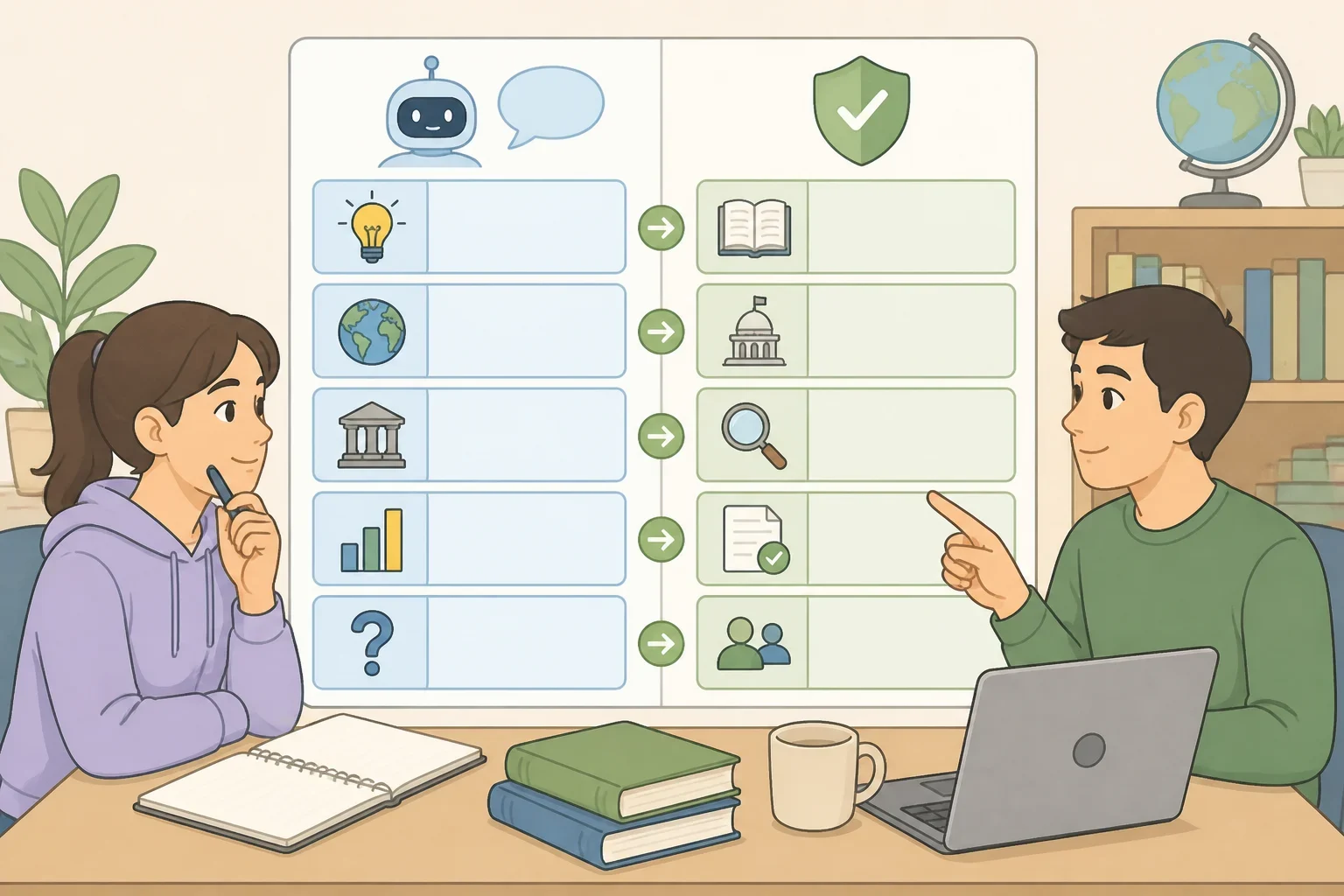
Day four pairs the News Literacy Project's "AI or not?" activity slides with Stanford COR's "AI Chatbot Claims" lesson (News Literacy Project; Stanford COR). Students check an image's context, original source, and any cropping or date mismatch, then take a sample AI-generated claim and try to verify it against an authoritative source, noting where the answer was vague or unsupported. NLP's page also lists tips for spotting AI-generated images, but those tips work as a secondary check, not a validated detection method, so the main task stays focused on verifying context and sourcing rather than trusting a visual read. Students log two columns: what the AI or image claimed, and what they could confirm.
Day five opens with NLP's "Introduction to Algorithms" lesson, where the characters Algo and Gen walk students through how algorithmic and generative-AI systems shape what shows up in a social feed (News Literacy Project). After the lesson, give each student one new claim, post, or image to verify independently, applying the pattern from the week: stop, ask, search, check, explain. That five-step label is this article's own summary, not a named framework from either source. Score the result against a short checklist: Did the student identify the original source, find independent corroboration, cite specific evidence, and explain what remains uncertain? For a bell-ringer supplement, NLP's RumorGuard posts, shared weekly through The Sift, covered viral rumors during the 2025-26 school year (News Literacy Project).
What to verify before using this plan
ICILS data covers eighth-graders specifically, and Stanford's new lesson concepts are built for civics and government classrooms (IES/NCES; Stanford COR). Where those courses sit on a school's schedule varies by state and district, so check local scope-and-sequence documents rather than assuming a grade fit.
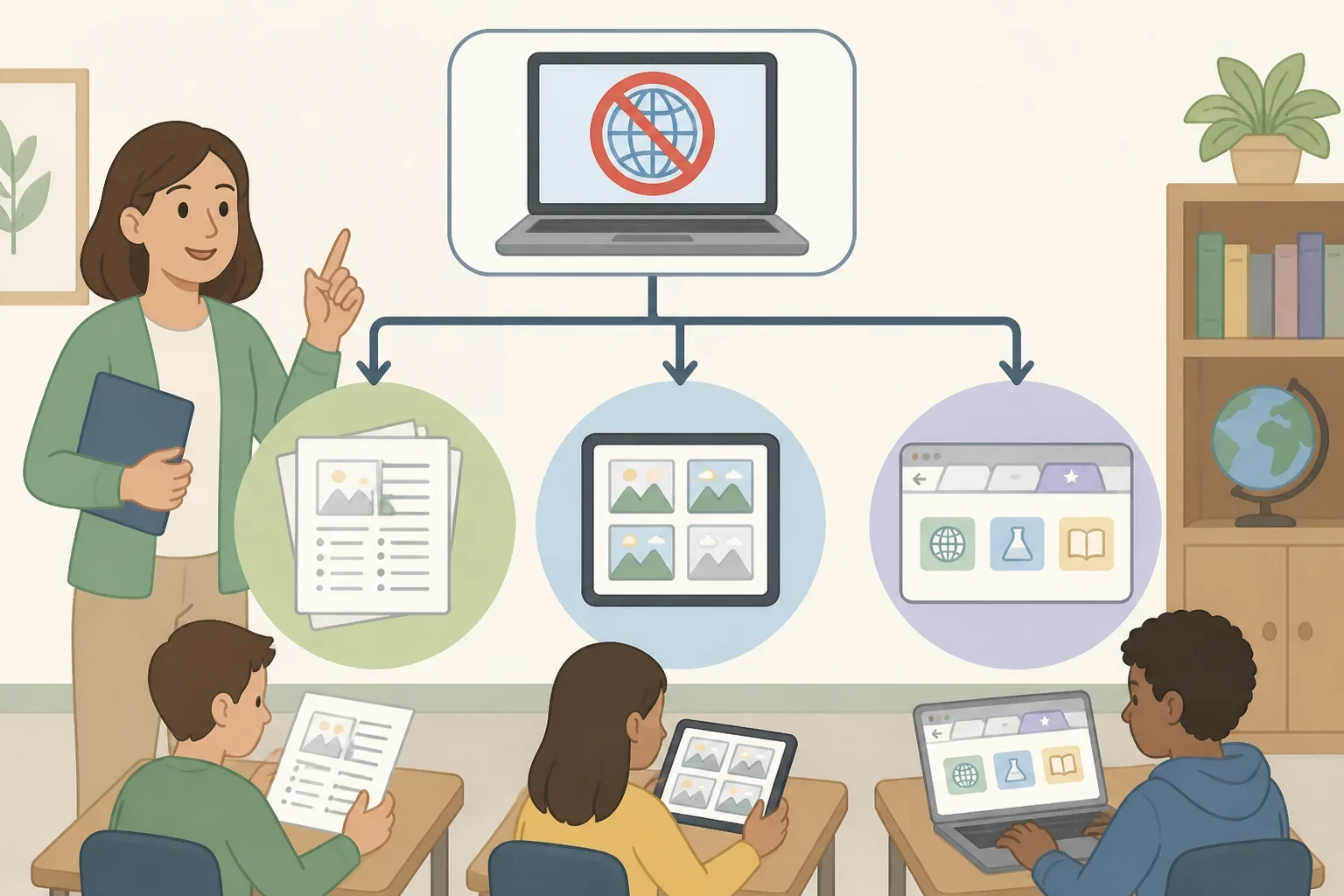
If a district blocks social platforms or open search, teacher-provided screenshots, printed source packets, or a short list of preselected tabs can stand in for Days 2 through 4 instead of skipping the activity.
These are lesson concepts from named university and nonprofit providers, not district-mandated curriculum. Check whether a school or state has its own digital citizenship requirements, and preview reading levels, before finalizing the week.
Pairing evaluation skills with reflection, not just detection, is one reason this plan adds a short written response to each day rather than stopping at a single right-or-wrong answer. A quick exit ticket does more for retention than a lesson that ends the moment students spot the "gotcha."
Confirm current lesson content on both organizations' sites, then pick the three days that fit an existing schedule and check platform access with school IT before printing the Day 5 task for students.