
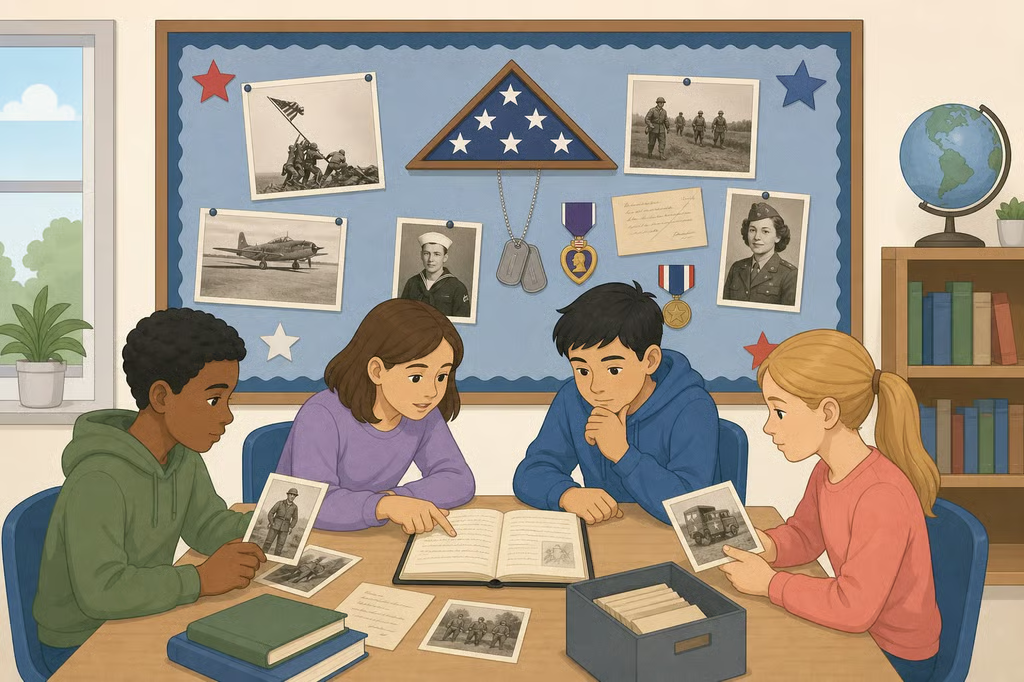
- Veterans Day activities for students: 3 lesson ideas
- The shared skill behind every activity
- Choose a Veterans Day classroom activity by goal, time, and tech
- Three Veterans Day primary source activity ideas
- More Veterans History Project lesson ideas: two optional extensions
- Before you assign a source
- What to do next
Veterans Day activities for students: 3 lesson ideas
Veterans Day falls on November 11, and this year's Veterans Day activities for students can pull from something more specific than a general history lesson. The Library of Congress's Veterans History Project (VHP) is marking 25 years of collecting veterans' diaries, photographs, and oral histories (Library of Congress Magazine). Several of the collections the Library highlighted for that anniversary can be adapted into classroom activities built around visual analysis, close reading, and evidence limits, the focus of this guide for middle and high school teachers, homeschool educators, and tutors.
Veterans Day itself began as Armistice Day in 1919, marking the one-year anniversary of the end of World War I (National Archives).
VHP collections aren't uniform, though. Most contain only recorded oral histories, and many also include letters, diaries, or photographs (Library of Congress Magazine). Confirm what a specific collection actually offers, and whether a transcript or caption exists, before building a lesson around it; the notes under each activity below flag what's confirmed and what still needs checking.
The shared skill behind every activity
Apply the same five questions to any of the activities below: What do you notice? What's the evidence? Whose perspective is represented? What's missing? What would you research next?
Using this question set across all three activities keeps the focus on gathering evidence of how someone served, not just on marking the occasion, regardless of which source format ends up in front of students.
Choose a Veterans Day classroom activity by goal, time, and tech
The time ranges below are suggested planning estimates based on the activity design, not figures drawn from the cited sources.
- Visual analysis, no internet needed during class: Activity 1, Photo Detective. Roughly 30 to 40 minutes, with one printed or projected image.
- Close reading of a personal reflection, useful in low-bandwidth classrooms: Activity 2, Diary Close Read. Roughly 40 to 45 minutes, plus time to locate and verify a printable excerpt.
- Weighing what an archive does and doesn't reveal, using two contrasting photo collections: Activity 3, Reading the Gaps. Roughly 45 to 50 minutes, with printed or projected images from both.
- A synthesis product after any core activity: Extension A, a mini exhibit caption. Roughly 20 to 25 minutes, no new technology.
- Independent research practice as a follow-up, not a requirement: Extension B, a public collection research question, which needs internet access and teacher supervision.
Three Veterans Day primary source activity ideas
Activity 1: Photo detective
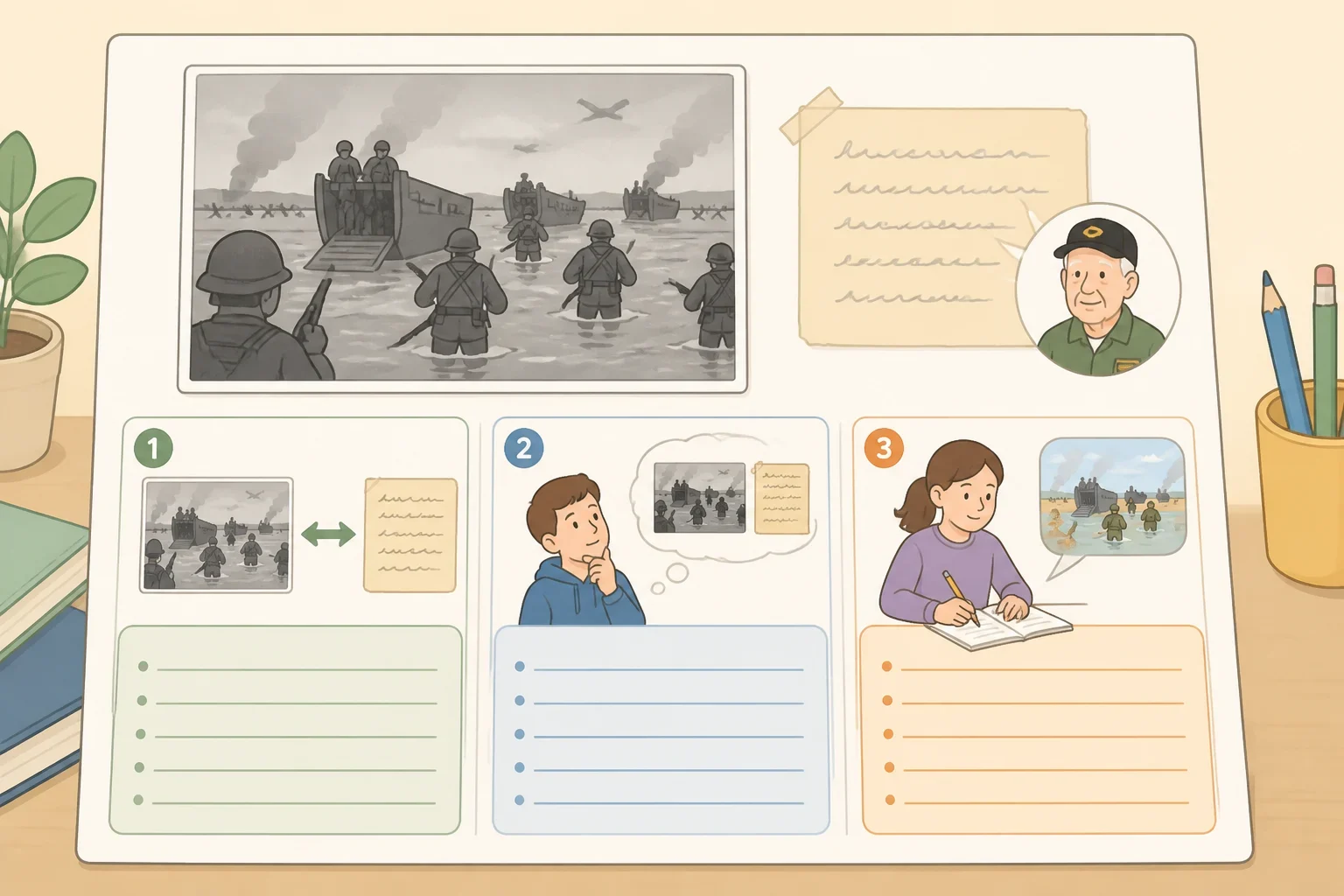
Ross, a West Virginia native drafted into the Army in 1940, recorded his World War II service in the Quartermaster Corps largely through snapshots. His VHP collection contains 278 photographs, many captioned by hand, showing off-duty life during training and overseas (Library of Congress Magazine). The magazine feature includes several photographs from his collection directly; before class, verify the reuse and access terms for whichever image is used, whether it's pulled from the feature or the VHP catalog.
Materials: one image with its caption, printed or projected, plus the notice-evidence-perspective questions above.
Task: students record what they notice, compare their observations to the veteran's own caption, then write a caption in their own words along with one question the photo doesn't answer.
Grade-band note: Off-duty, training-camp images like Ross's may offer a less graphic starting point for younger students, though that's a judgment call for the teacher previewing the specific image beforehand. For grades 9 through 12, Frisby's collection is another option: she deployed to Iraq in January 2005 with the California National Guard as a vehicle mechanic trained to operate recovery vehicles, and her photographs document the aftermath of retrieving vehicles damaged by improvised explosive devices, including one image of a shot-out truck headlight (Library of Congress Magazine). Preview this set before class; it documents combat aftermath.
Look for: a caption that cites specific visible evidence, an object, a setting, an expression, rather than a general claim like "this shows bravery," and a student question that points to something the image genuinely leaves out.
Activity 2: Diary close read
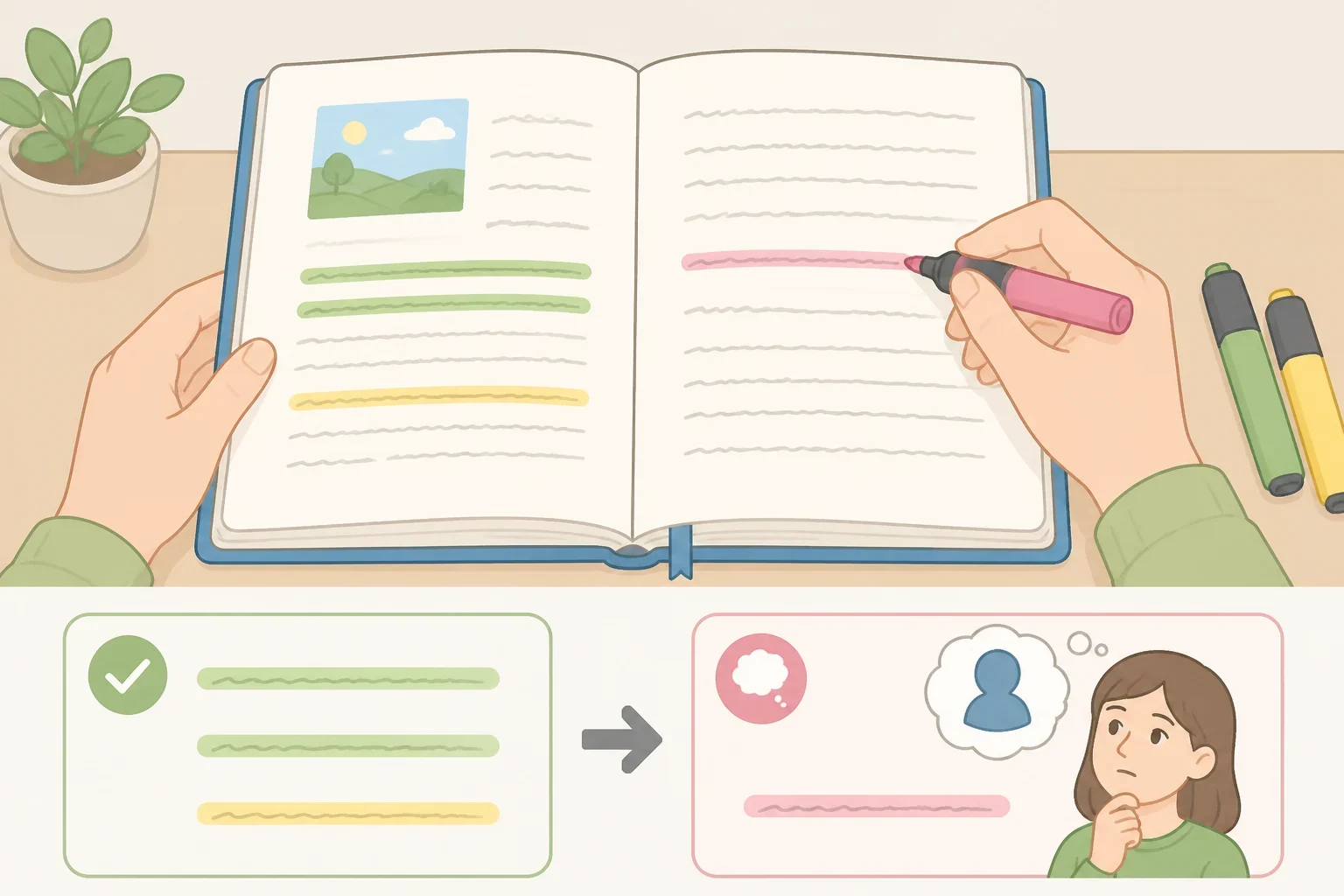
Rosenblum was drafted into the Army in 1918 and served stateside with the field artillery. His VHP collection includes a portrait and a diary in which he interpreted his experience through references to literature, art, and music (Library of Congress Magazine). The magazine feature shows the portrait but not the diary text itself, so treat this as a lesson framework rather than a ready-made source packet: search his collection in the VHP catalog, confirm the diary displays as readable text rather than an audio-only summary, and select a passage before building the activity around it.
Materials: a short excerpt, 150 to 250 words once located, and an annotation key for tone, assumption, and evidence.
Task: students annotate the excerpt, identify one assumption the writer made about his reader, then write a short response quoting one line as evidence and naming one open question about his experience.
Grade-band note: for grades 7 and 8, a shorter excerpt with vocabulary support may work better. Grades 9 through 12 can read a longer passage and add a sentence connecting it to broader World War I conditions.
Look for: at least one direct quotation used as evidence, not paraphrase, and a clear line between what the diary states and what the student is inferring.
Activity 3: Reading the gaps
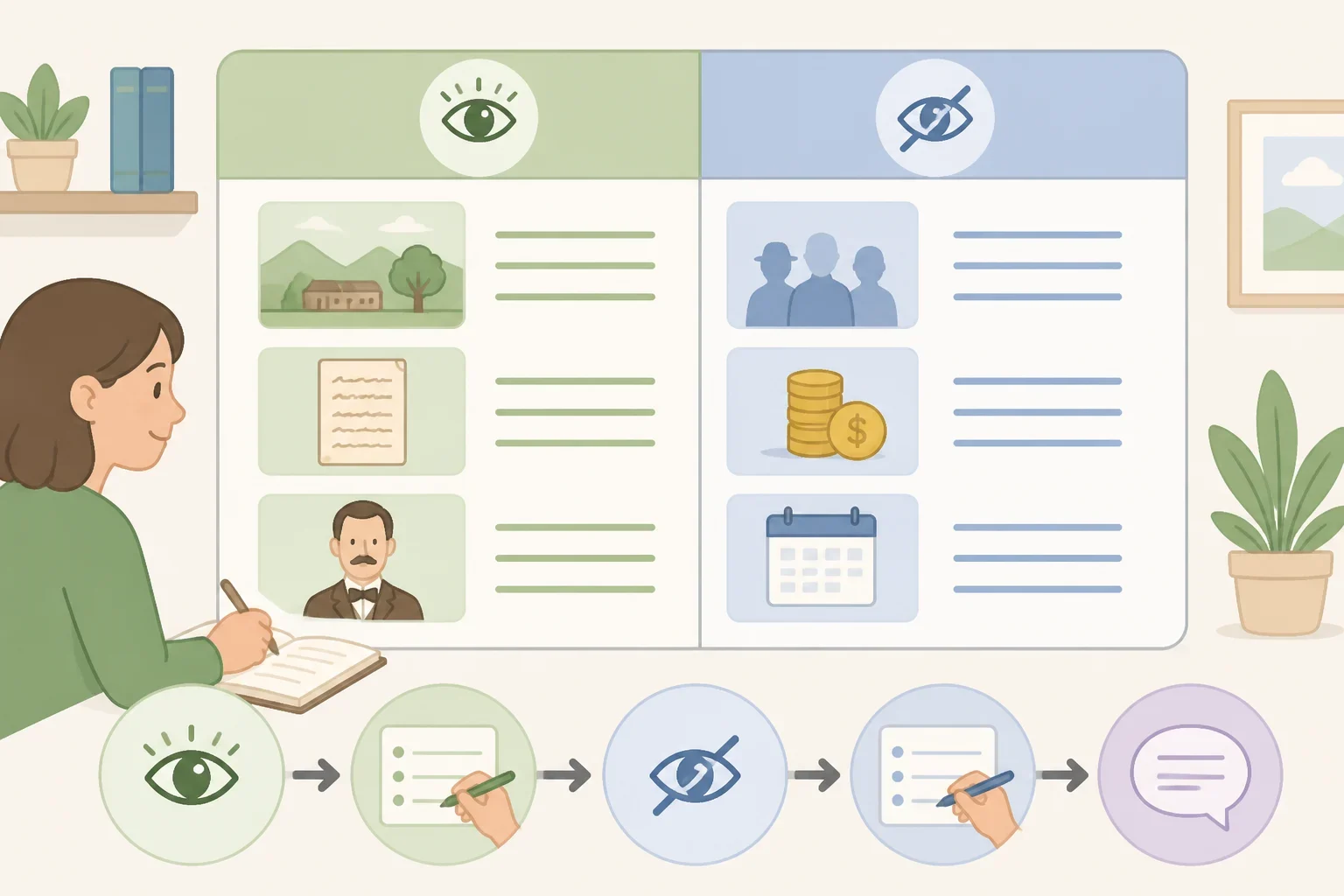
Not every archived source comes with the same amount of surrounding context, and that gap in the record is worth teaching directly rather than smoothing over.
Capt. Leff served as a nurse aboard the USS Repose, a hospital ship off the coast of Vietnam. Her VHP collection includes an image connected to a patient she treated, Pvt. Jim Davis, who had been wounded in the abdomen (Library of Congress Magazine). Search her collection by name and ship in the VHP catalog, and confirm whether a caption or transcript accompanies the image before class.
Phillips's collection stands out for a different reason: rare color photographs from the Korean War (Library of Congress Magazine). The magazine feature says little else about him, which makes his collection a useful stand-in for the "thin file" side of this activity. Search his collection in the VHP catalog and see how much, if any, additional context accompanies the images before deciding whether it fits this lesson.
Materials: the Leff image and caption, whatever image can be located from Phillips's collection, and a two-column chart for each source: What We Know / What We Don't Know.
Task: students fill in the chart separately for each source, then write two sentences on how a source's format and level of surrounding detail change what a historian, or a student, can responsibly claim about it.
Grade-band note: this works as a discussion-based option for grades 8 through 12, with depth adjusted to the group. Adding a third source through a free DOCSTeach educator account is possible, since the platform provides access to thousands of documents and lets registered users save sources and build activities (National Archives), but treat that as optional enrichment: those holdings haven't been checked against this list, so search the platform directly rather than assuming a match exists.
Look for: claims that stick to stated evidence, gaps labeled as gaps rather than filled in with assumptions, and a final sentence that acknowledges what's still unknown instead of resolving it.
More Veterans History Project lesson ideas: two optional extensions
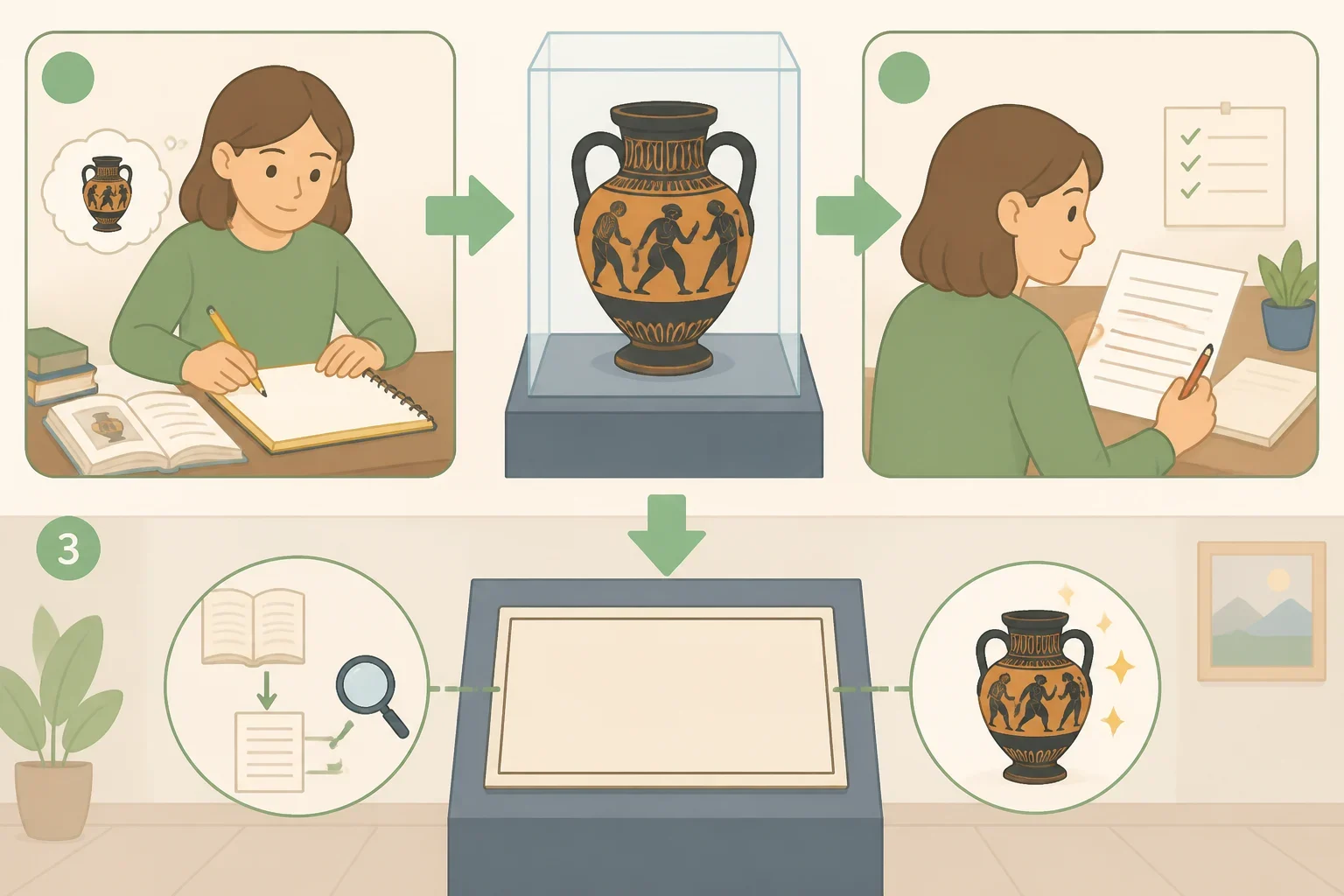
Extension A: Build a mini exhibit caption. Students take an artifact already studied in Activities 1 through 3 and write a three- to four-sentence museum-style caption naming what it is, who appears in it, what specific evidence it shows about service, and one open question, citing the source collection. Assess the caption for evidence and reasoning, not for a general expression of appreciation; a line like "this shows sacrifice" should get pushed toward something more specific and source-cited. Preview any image involving injury or combat damage, such as Frisby's photographs or the Leff and Davis image, and offer a non-combat alternative for younger or sensitive audiences.
Extension B: Public collection research question. History Hub, a free crowdsourced research platform hosted by the National Archives, lets students search existing threads in its Military Records community before posting a new question (National Archives). Treat this as an optional next step, not a required continuation. Because it's a public platform where anyone can ask or answer questions, teachers of younger students may choose to supervise posting directly, and a school's own policy on sharing details about living relatives is worth checking before students post, since the platform itself sets no such rule.
Before you assign a source
Preview every photograph, diary excerpt, or quotation for grade-level appropriateness before class, especially anything involving wounds or combat aftermath.
Check for a more current edition of the VA's Veterans Day Teacher's Resource Guide before assigning any recognition project alongside these activities. The version referenced here was last updated in 2024, and the VA says schools can reproduce and share it in schools and communities (VA News); confirm on the VA's page whether a newer edition has replaced it.
Set up a free DOCSTeach account only if pursuing the optional third-source enrichment step described under Activity 3.
What to do next
Pick one activity that matches available time and technology, then locate the specific source record it depends on, whether that's Ross's photographs in the magazine feature, Rosenblum's diary in the VHP catalog, or the Leff and Phillips items described above. What the anniversary collection really adds to Veterans Day teaching isn't a shortcut past that verification step; it's a way to ask students what an artifact actually shows, what it leaves out, and what evidence they'd still need before drawing a conclusion about someone's service.