
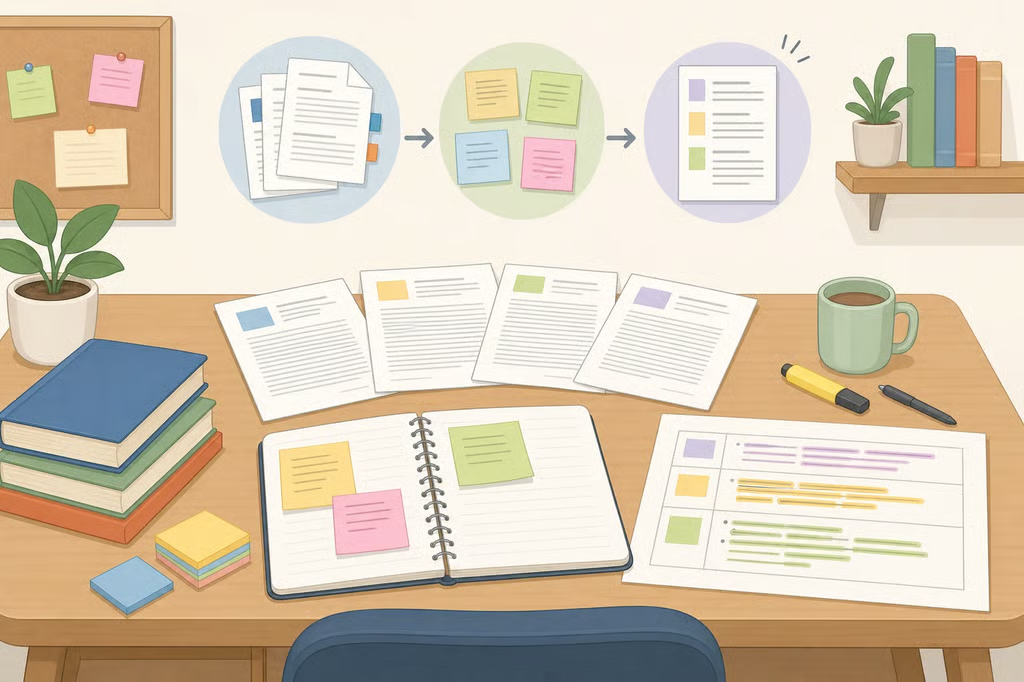
- How to write an annotated bibliography that analyzes
- Who writes an annotated bibliography, and what the assignment actually wants
- How to write an annotated bibliography annotation: a four-part method
- Annotated bibliography example: turning a summary into source analysis
- Annotated bibliography critical evaluation: skip the vague praise
- Connecting sources: putting source analysis in conversation with the rest of the list
- Checking the rules that vary before you submit
- What to do next
How to write an annotated bibliography that analyzes
A paragraph that only restates what a source already says isn't doing the job an annotated bibliography is built for. Writing-center guidance describes the format differently: a citation followed by a short paragraph that shows a source's relevance, accuracy, and quality, not a replay of its contents (Cornell University Library). Learning how to write an annotated bibliography starts with that distinction, treating each entry as a tool for testing an argument before it's drafted, rather than a stack of mini book reports stapled together.
One writing center calls the format a "process tool" for larger projects, useful because it breaks a source into its main parts and ties those parts back to the writer's own paper (Boise State Writing Center, updated in 2024). Putting one together draws on a real mix of skills, tight summary writing, sharp analysis, and solid library research, according to Cornell's library guide, which updated its page on the topic earlier this year (Cornell University Library). That combination is what separates the format from a plain reading log.
This guide works through a four-part method for drafting an annotation, a real worked example pulled from a university writing guide, how to write a critical evaluation that names specifics instead of offering vague praise, and the formatting details that shift from one assignment to the next. Not every entry needs all four elements in equal depth. The right mix depends on the assignment sheet in front of a student, not on this guide.
Who writes an annotated bibliography, and what the assignment actually wants
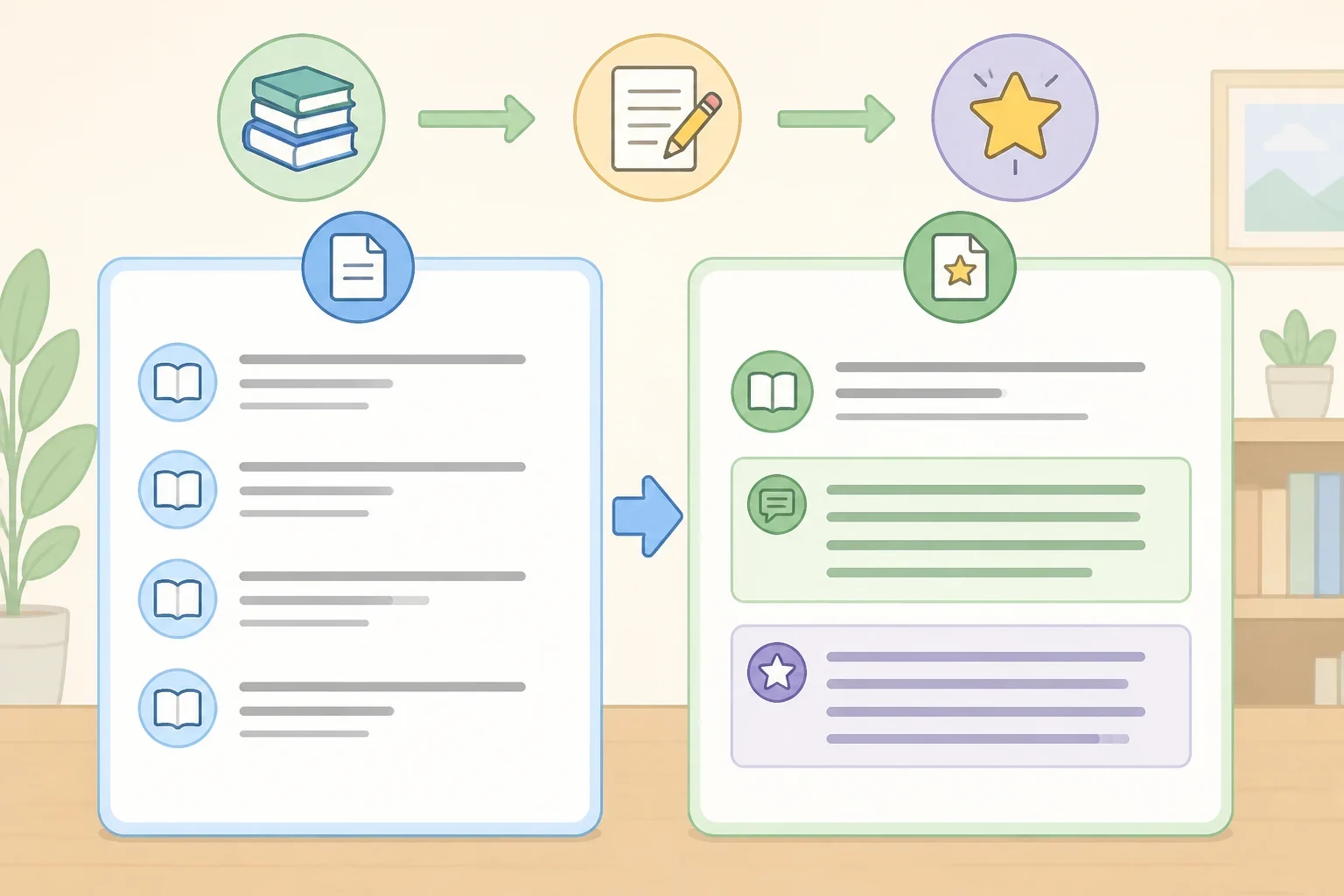
High school and college students drafting research papers, graduate students building literature reviews, and anyone handed a "source list with notes" assignment are the usual audience for this format. The task looks simple on paper: find sources, write a paragraph about each one. The thinking behind it is less simple.
An annotated bibliography is a list of citations followed by a descriptive and evaluative paragraph, different from an abstract, the purely descriptive summary often found at the start of a scholarly article or in a periodical index (Cornell University Library). The University of Tennessee's writing center describes the format more simply, as a collection of research sources on a topic meant to walk a writer through a project step by step, in guidance it published in 2025 (University of Tennessee Writing Center). Boise State's writing center adds that annotating is meant to encourage more critical reading than simply collecting sources does (Boise State Writing Center).
How to write an annotated bibliography annotation: a four-part method
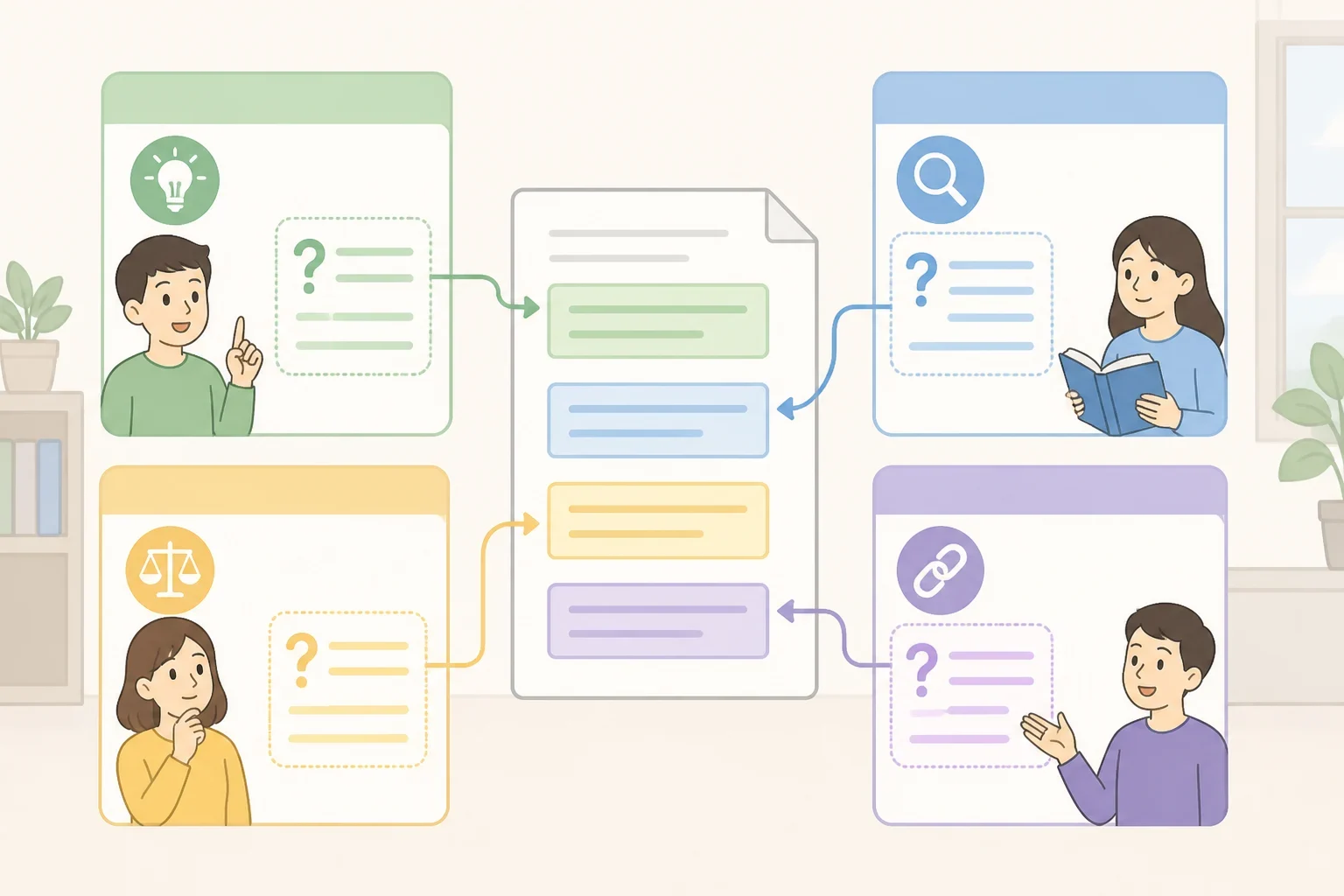
Different schools phrase their requirements differently, and no single source in this guide lays out one universal four-part standard. Grouping the recurring themes together, though, four moves show up often enough to use as a working method: state the claim, summarize the evidence behind it, evaluate the source, and connect it to the rest of the research. Treat the four parts below as this article's synthesis, not as a checklist every instructor grades identically.
Before writing a single sentence, it helps to work through a source in roughly this order: identify its central claim or main argument, note the type of evidence or support it relies on, record any limitation worth flagging, then set it next to at least one other source on the list. That sequence is what the four labeled parts below are built from.
Claim. A claim is not the same as a topic. "This source covers teen screen time" describes a topic. "This source argues that screen time above a certain threshold correlates with a specific outcome" states a claim. Boise State's writing center frames finding it as answering a plain question: what is the primary argument, and what main points support it (Boise State Writing Center)? If someone asked what the source is about, the claim is the answer that goes beyond the topic.
Evidence and reasoning. Cornell's model treats a concise summary of the source's central theme and scope as the descriptive core of an annotation (Cornell University Library). In practice that might mean naming the kind of evidence behind the claim, survey data, case studies, historical documents, or expert interviews, for example, and noting in a sentence how well that evidence actually supports the argument.
Evaluation. Boise State frames this part as evaluating how a source applies to the paper, not just restating its content (Boise State Writing Center).
Connection and use. The University of Tennessee Writing Center's assignment planner asks students to state a source's primary contribution within the scholarly conversation it's speaking to (University of Tennessee Writing Center).
An assignment sheet may ask for only two or three of these elements, or combine them into one paragraph instead of three separate ones (Boise State Writing Center). Check the prompt before assuming all four carry equal weight.
Annotated bibliography example: turning a summary into source analysis
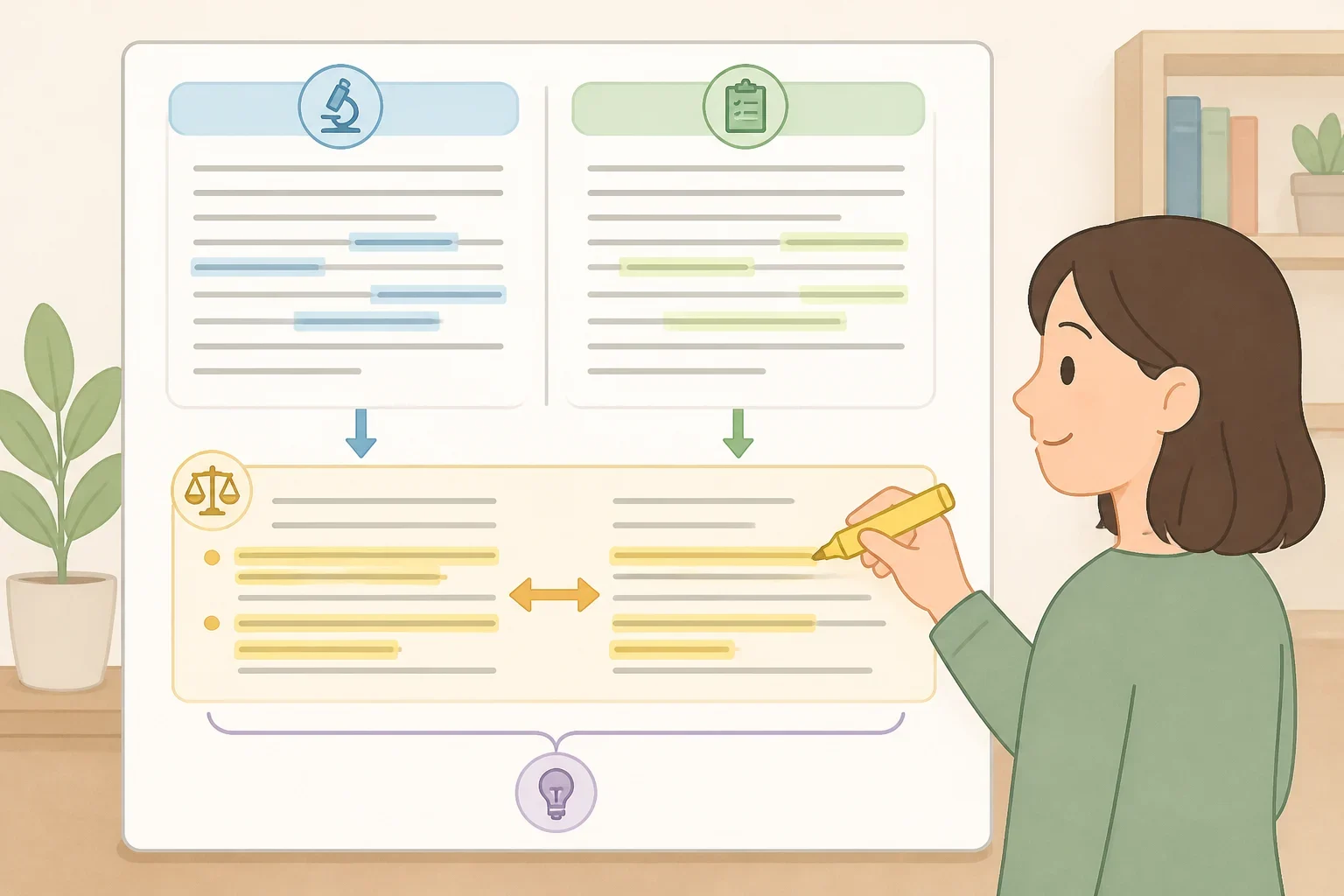
Cornell's library guide includes a real worked annotation that shows these moves in action, built around this citation: Waite, L., Goldschneider, F., & Witsberger, C. (1986). Nonfamily living and the erosion of traditional family orientations among young adults. American Sociological Review, 51(4), 541-554 (Cornell University Library).
The annotation opens by summarizing the central finding: young adults who spent more time living away from parents before marrying showed greater individualism, self-sufficiency, and shifts in attitudes about family life, a pattern that held more strongly for young women than for young men (summary of evidence and findings). It closes by placing the study in conversation with another entry on the list, noting that an earlier study by Williams found no significant gender difference in attitudes resulting from nonfamily living (connection and use) (Cornell University Library). That contrast is what turns a one-source summary into actual source analysis: it tells a reader where the research agrees, where it splits, and why that split matters for the paper being built.
Annotated bibliography critical evaluation: skip the vague praise
A line like "this source is credible" tells a reader almost nothing. Evaluation works better when it names specific, checkable qualities, an author's authority, point of view, or clarity of expression, rather than offering a general endorsement (Cornell University Library).
Boise State's guidance suggests working through concrete questions on paper: Is the information reliable? What demonstrates that reliability? What might undermine it? What is the source's goal (Boise State Writing Center)? The University of Tennessee Writing Center lists evaluating credibility and reliability as a research step that happens before drafting, not an edit tacked on afterward (University of Tennessee Writing Center).
A few sentence starters make this easier to apply:
- "The author's background in [field or credential] supports the claim that..."
- "This source relies on [type of evidence], which is strong/limited because..."
- "One limitation is that the study does not address..."
Naming specific evidence, reasoning, and limits is what separates a real evaluation from a summary with an opinion dropped on the end.
Connecting sources: putting source analysis in conversation with the rest of the list

Cornell's model recommends comparing or contrasting a source directly with another entry already in the bibliography instead of treating each one as standalone (Cornell University Library). Boise State lists "how does it compare with other sources in your bibliography?" as one of the questions worth answering in the annotation itself (Boise State Writing Center).
A few prompts help this feel less abstract to write:
- "This finding aligns with [Author]'s study, which also found..."
- "Unlike [Author], who argues..., this source suggests..."
- "Taken together, these sources point to [a pattern, disagreement, or gap] in the research."
Checking the rules that vary before you submit
The four-part method above applies broadly across the guidance reviewed here, but formatting rules belong to the individual instructor or program, and they rarely match from one class to the next.
- Word count. Boise State describes most annotations as 150 to 200 words including the citation, though the summary and evaluation are sometimes split into two paragraphs that run closer to 200 to 300 words (Boise State Writing Center). Confirm which length and format an instructor expects before trimming or padding an entry.
- Source mix. One assignment rubric asks students to analyze five sources that reflect a supporting or opposing stance on a chosen topic, a structure specific to that course rather than a universal rule (OERTX, 2024). Other instructors set their own count and split between source types, so check the prompt before assuming a number.
- Paragraph format. Boise State notes that some professors want one combined paragraph per entry, while English courses there often require a three-paragraph structure covering the topic and argument, the author and context, and the project contribution (Boise State Writing Center).
- Citation style and layout. APA format indents the whole annotation by half an inch, like a block quote, without indenting the first line; MLA indents the whole annotation by a full inch instead (Boise State Writing Center). The University of Tennessee Writing Center recommends reviewing a sample in whichever style, MLA, APA, or Chicago, an instructor requires before drafting (University of Tennessee Writing Center). Check the instructor's formatting instructions and the relevant style guide before finalizing margins and indentation.
What to do next
Pull up the actual assignment sheet and confirm four things before drafting a single entry:
- Citation style required (MLA, APA, or Chicago)
- Word count, and whether it includes the citation entry
- Number and type of sources expected
- Paragraph format: one combined paragraph or a multi-paragraph structure
Draft one entry in full, check it against the four-part method, claim, evidence and reasoning, evaluation, connection, and use that entry as the template for the rest of the list. Drafting one entry first can help catch problems before they repeat across an entire bibliography.
Before submitting, read each annotation aloud and check three things the University of Tennessee Writing Center recommends confirming: that citations are correct, that summaries are accurate, and that each source's major findings are represented fairly (University of Tennessee Writing Center).