
Beowulf historical context: new Lichfield manuscript theory
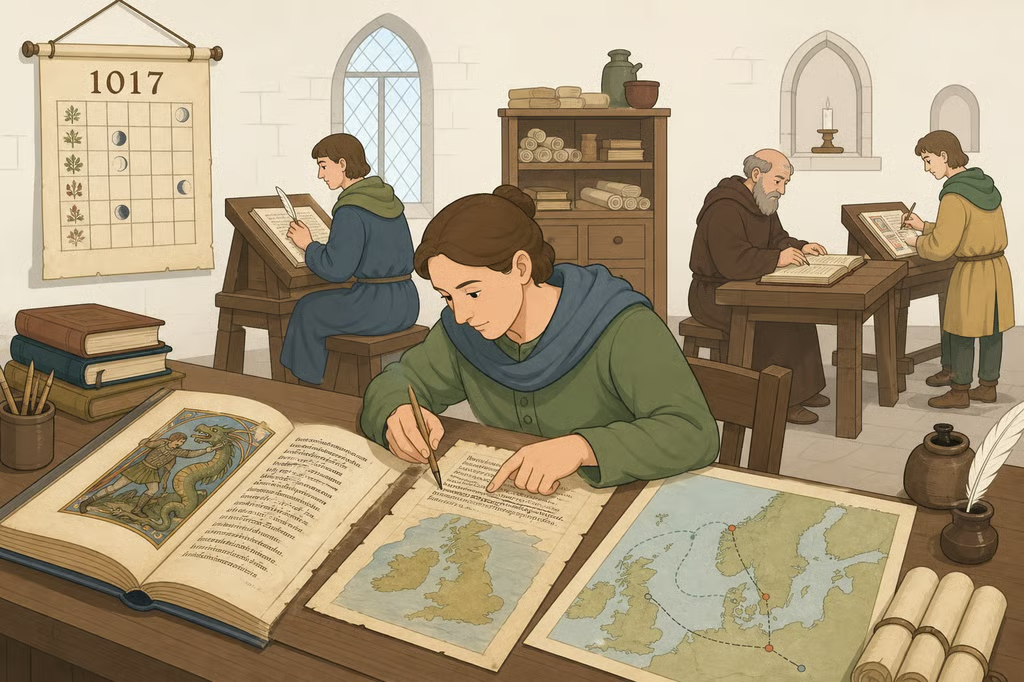
A recent study argues that the only surviving manuscript of Beowulf was copied in Lichfield in the year 1017, possibly for one of King Cnut's commanders, according to The Beowulf manuscript and Lichfield in 1017, published earlier this year. The materials reviewed here don't identify the study's author, publication venue, or whether it went through peer review, so the proposal is best read as one researcher's argument rather than a confirmed academic finding.
That caveat matters for anyone researching Beowulf historical context. The poem's manuscript has long been dated only to a broad range, roughly 975 to 1025. This new proposal tries to narrow that window to a single year and a single location. Whether it holds up is an open question, and this article treats it as one, while also walking through what reference sources currently establish about the poem's manuscript and its pagan Scandinavian setting.
A new proposal: manuscript possibly copied in Lichfield in 1017
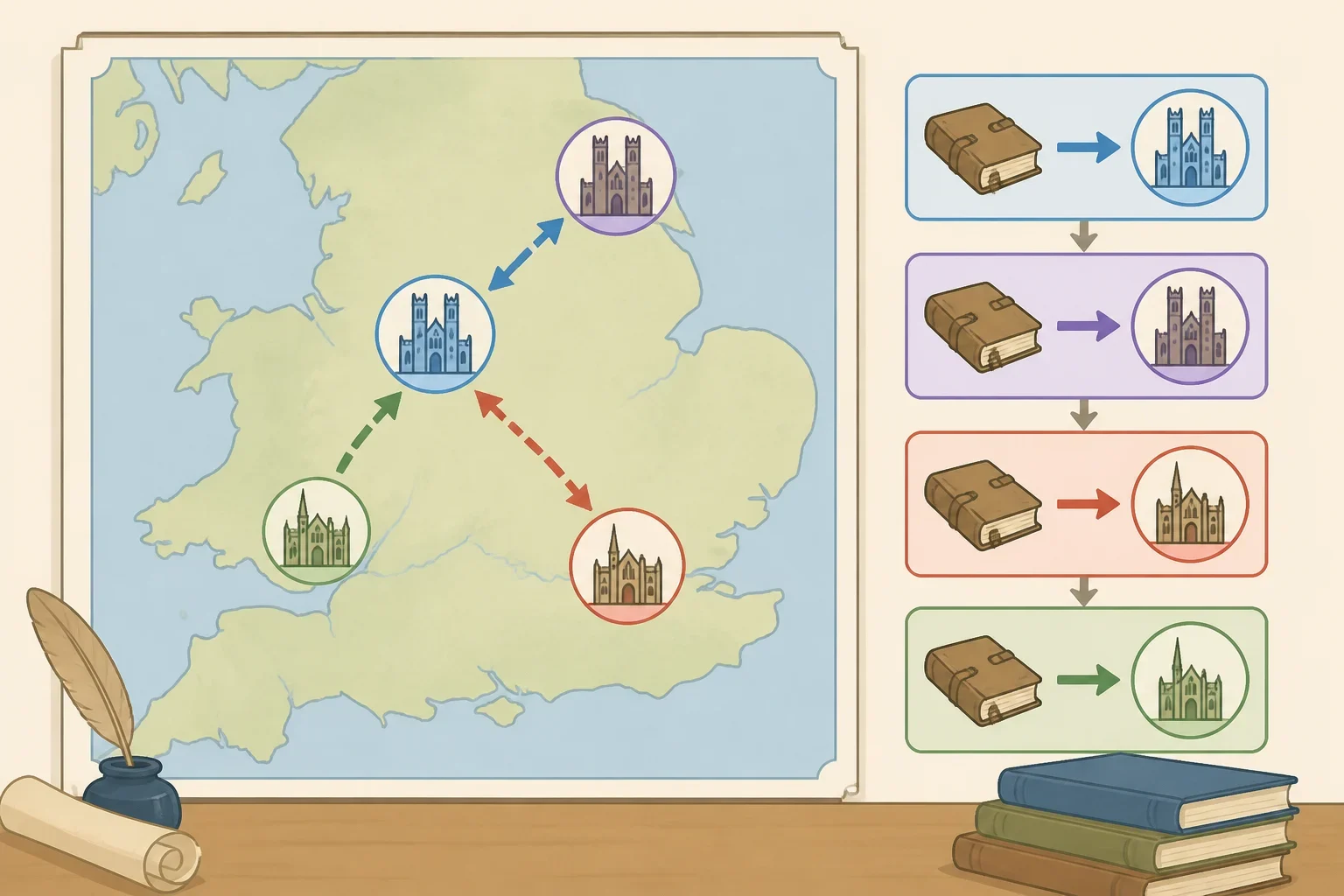
The study builds its case on as many as five surviving literary allusions to Beowulf, which it uses to trace the poem's circulation through Winchester and York, with a further allusion suggesting the leading characters were known in Durham, according to the study. From that pattern, the study deduces that the poem existed in more than one copy by the early eleventh century, with one copy possibly held in a Winchester archive dating back to the reign of King Æthelwulf, who ruled from 839 to 858, according to the study.
The study's corollary, again presented as argument rather than settled fact, is that King Cnut, who took England from Æthelred II and Edmund II Ironside in 1016, was introduced to Beowulf in Winchester early in his reign, according to the study. From there the argument reaches its central claim: that the poem's sole surviving copy, held today as British Library manuscript Cotton MS Vitellius A XV, was copied in Lichfield the year after Cnut's 1016 victory, according to the study.
The study also revisits who owned the manuscript in the 16th century. Following an earlier conclusion by manuscript scholar Kevin Kiernan, it argues that the "Laurence Nowell" whose name is inscribed on the manuscript in 1563 was not the well-known antiquarian of that name but his cousin, who served as dean of Lichfield from 1560 to 1576, according to the study. The study uses that identification as part of building its Lichfield argument, reading the texts bound with Beowulf in the manuscript as evidence that the volume was commissioned for one of Cnut's commanders, according to the study.
The study's own wording keeps its status visible. Phrases such as "may be deduced" and "I shall argue" signal a case being built, not a fact being reported, according to the study.
Beowulf manuscript history: what the evidence establishes
Against that proposal, a narrower set of facts about the manuscript has held steady in reference sources for years. Beowulf survives in exactly one copy, contained in the Nowell Codex, itself bound into the composite volume Cotton MS Vitellius A XV at the British Library, according to Wikipedia.
The bound volume combines two originally separate manuscripts. The older one, which holds Beowulf, opens with a life of Saint Christopher, then Wonders of the East, then a translation of a letter from Alexander to Aristotle, followed by Beowulf itself and then Judith, a poetic retelling of part of the Book of Judith, according to Wikipedia. The separate, earlier-dated manuscript bound alongside it contains four unrelated works of Old English prose, according to Wikipedia. The two books weren't bound together until the 17th century.
The Nowell Codex is generally dated to around the turn of the first millennium, with recent scholarly editions narrowing that to the decade after 1000, according to Wikipedia and Wikipedia. Two scribes copied the text, changing hands partway through line 1939 of Beowulf. Philologist Elliott Van Kirk Dobbie observed that the second scribe's handwriting appears to belong to an older style of insular writing than the first's, even though both worked around the same time, according to Wikipedia.
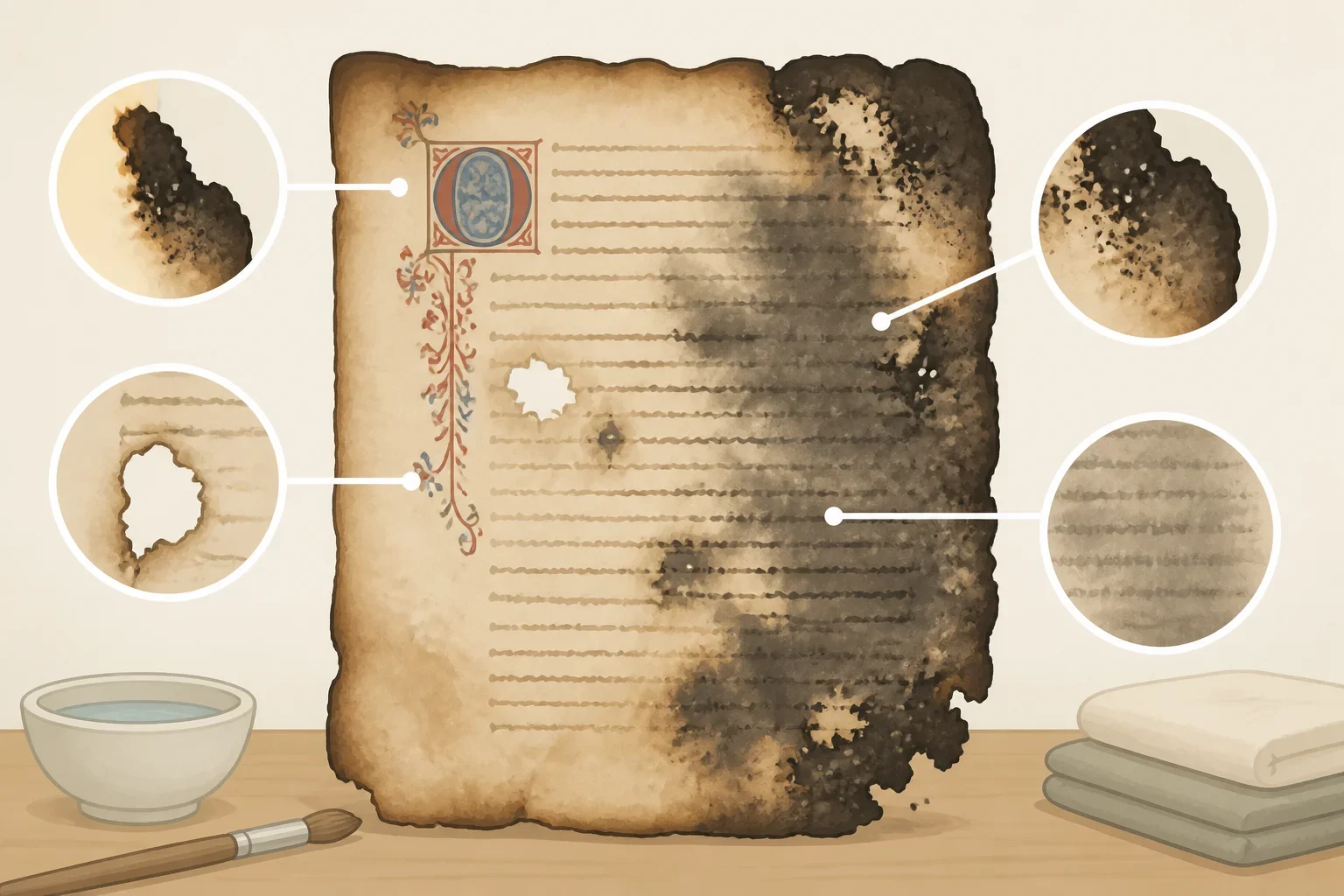
A 1731 fire at Ashburnham House damaged Sir Robert Cotton's manuscript collection, this volume included. The book survived, but its margins were scorched, and no serious restoration was attempted until the 19th century, by which point the crumbling edges had made portions of the text permanently illegible, according to Wikipedia. Three pages show damage beyond what the fire alone explains, and scholars have examined them under ultraviolet light, according to Wikipedia.
Two transcripts made under Grimur Jonsson Thorkelin's direction in 1786 and 1787, after the fire but before further deterioration set in, preserve some of the poem's text as it stood shortly after the damage. A separate transcript, made by Franciscus Junius sometime between 1621 and 1651, preserves the text of Judith from before the fire happened at all, according to Wikipedia.
Separately from any of that physical history, scholars have long debated whether the poem's unknown author wrote as a Christian working with older pagan Scandinavian material, or as someone whose largely pagan outlook had only lightly absorbed Christian ideas. An anthology of Beowulf criticism includes J.R.R. Tolkien's landmark British Academy lecture on the subject among its essays, according to University of Notre Dame Press. That debate remains unsettled, and the manuscript's date doesn't resolve it either way.
The Scandinavian setting behind the poem
Beowulf is set among pagan warriors in Scandinavia in the fifth and sixth centuries, generations before the manuscript that preserves it was written, according to Wikipedia. Hygelac, the Geatish king Beowulf serves, ties the poem to real history: his raid into Frisia is independently recorded by the sixth-century historian Gregory of Tours in History of the Franks, an event datable to around 521, according to Wikipedia.
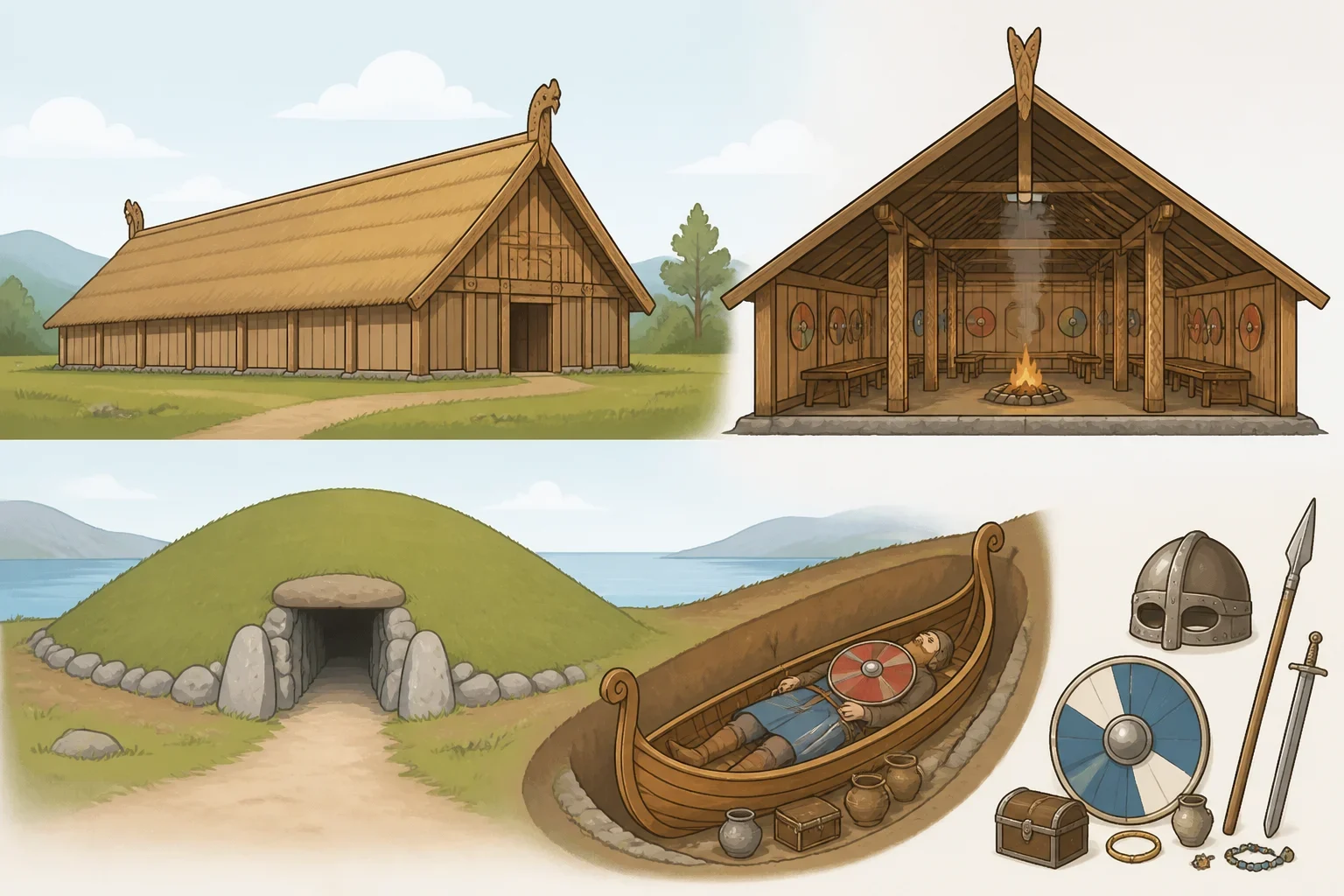
Archaeology offers points of comparison for the poem's setting without confirming specific plot points. Excavations at Lejre, Denmark, a site Scandinavian tradition connects to the Scylding dynasty and the hall Heorot, uncovered a hall built in the mid-sixth century, a timeframe that overlaps with the period the poem describes, along with three halls each roughly 50 meters long, according to Wikipedia. That overlap makes the poem's hall culture plausible against the archaeological record; it doesn't identify any excavated hall as the literal Heorot. A separate 1874 excavation at Gamla Uppsala found a powerful man buried around 575 with rich grave goods, a bear skin, and two dogs, a comparable reference point for elite burial custom in the region rather than confirmation of the poem's specific account, according to Wikipedia.
The poem also uses that same setting to frame ideas about rule and duty. Because a hall was where a king secured loyalty and offered protection to his people, the hall culture uncovered at Lejre gives real-world texture to the poem's portrait of lordship, even though the poem itself is a literary construction rather than a record of any specific reign. Anglo-Saxon kingship in Beowulf is best read as that literary picture, a portrait of what a king owed his people, not a documentary account of any real sixth-century court.
Where the proposal stands

The Lichfield theory is not built on newly found physical evidence inside the manuscript. It rests on patterns across other surviving texts, and its central new claim concerns the provenance and possible commissioning context of the surviving manuscript, not a discovery about the poem's composition or its Scandinavian setting. This reporting didn't turn up a response from named manuscript specialists, so whether the proposal gains wider acceptance remains an open question.
Confirming or challenging the 1017 date would likely require paleographers examining the manuscript's script and materials directly, along with other scholars weighing in on how convincingly the study's literary allusions actually connect Winchester, York, and Durham. Until that happens, the manuscript remains generally dated to the range of 975 to 1025 in reference sources, and the Lichfield year is one scholar's proposal sitting alongside that range, not a replacement for it.
For students citing this material in an essay or discussion, check whether an assignment is asking about the poem's setting, its unknown composition, or the manuscript's own production history, since those are different claims with different levels of evidence behind them. Pull any specific date from a scholarly edition or your course's assigned reading rather than a single new study, and if a source hedges with words like "may" or "possibly," keep that hedge in your own writing rather than smoothing it into a flat statement.