
- The Odyssey Historical Context: Setting, Myth, and Evidence
- The Odyssey Late Bronze Age setting: what the poem remembers
- The Odyssey oral tradition: how the poem took shape
- Is The Odyssey based on history? Myth, memory, and evidence
- The Odyssey storytelling and historical perspectives: translation and retelling
- What to check before you write about The Odyssey
The Odyssey Historical Context: Setting, Myth, and Evidence
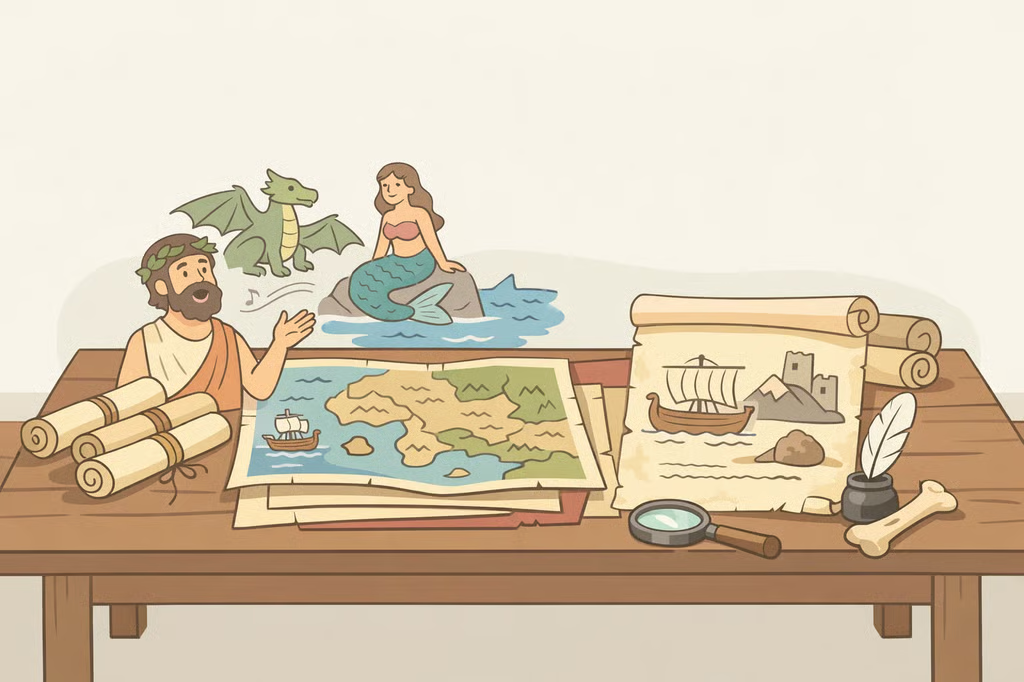
No manuscript, scroll, or ancient performance survives that anyone can point to and call the original Odyssey. That absence is the starting point for understanding the Odyssey's historical context: it grew out of a long oral poetic tradition, but scholars do not know exactly when its material assumed a recognizable form or was first written down, and different versions circulated then the same way different translations and adaptations circulate now.
Homer's epic is really three overlapping stories. There's a plot set in one historical period, a text shaped centuries later through oral performance, and a manuscript copied and edited across still more centuries after that. Because of that layered origin, the poem works better as a blend of myth and historical memory than as a documentary record, and it's exactly why writers keep reshaping it.
If you're reading The Odyssey for class or writing about it, the real question isn't whether the poem is true. It's what kind of claim you're making: one about the setting, one about how the poem came together, or one about a later retelling. The rest of this guide walks through how to tell those apart, using one example claim from start to finish.
This is written for middle school, high school, and introductory college students who've been assigned the poem, along with anyone preparing to write about it. A short note near the end suggests how a teacher might use the same distinction in class.
The Odyssey Late Bronze Age setting: what the poem remembers
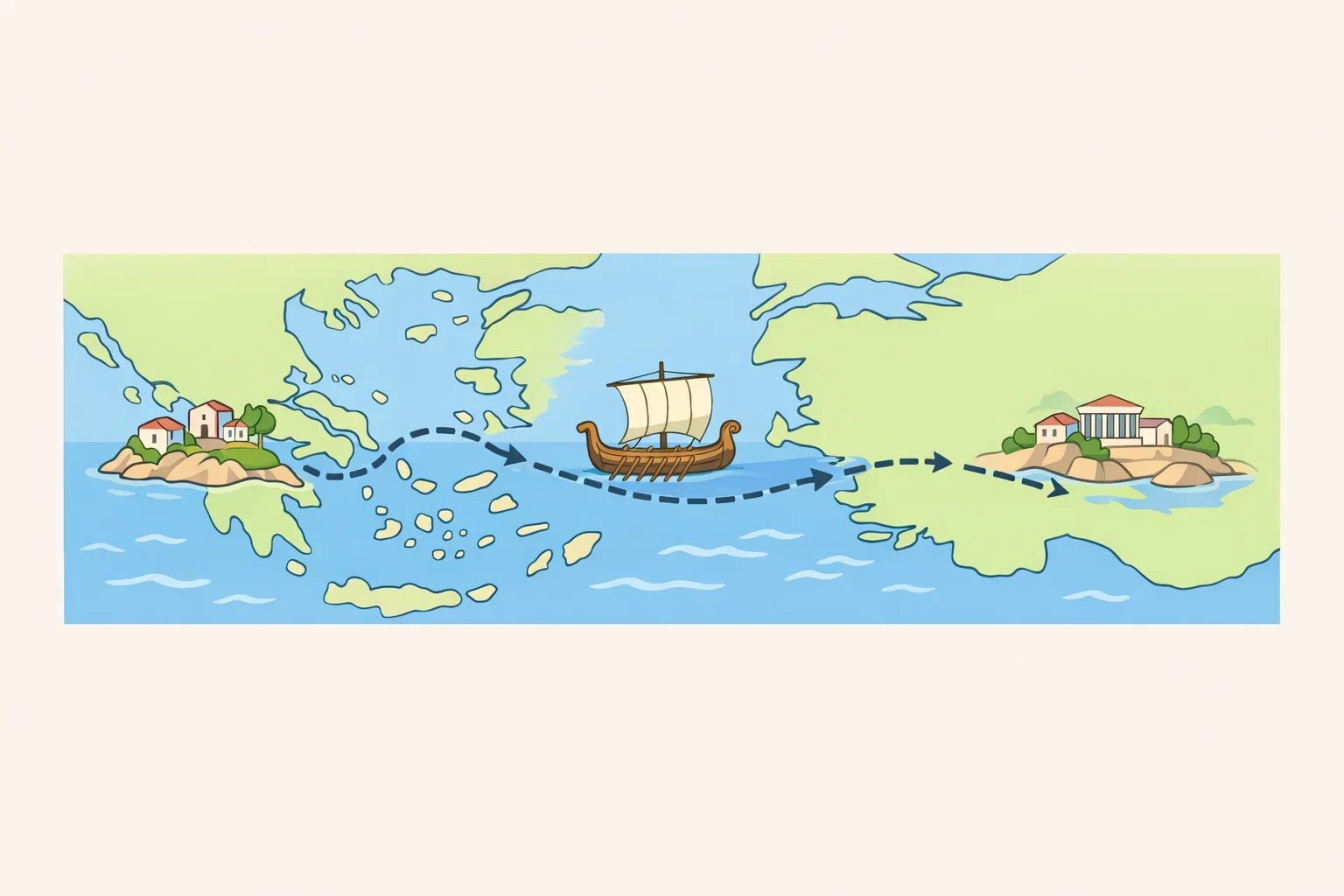
The Odyssey combines identifiable places such as Ithaca, Sparta and Troy with fantastic or geographically uncertain locations from Odysseus’s wanderings, conventionally set in the Late Bronze Age, around 1200 BCE. The plot follows Odysseus, a veteran of the Trojan War, who spends another decade wandering at sea trying to reach his island kingdom of Ithaca, while his wife Penelope and son Telemachus fend off suitors angling for his throne (UCF News).
Teachers and textbooks often call this "historical fiction," and that label is useful shorthand for a story that feels grounded but includes invented events. It's a classroom analogy, though, not a scholarly category, and it can wrongly suggest one author sat down and deliberately wrote a novel. A more accurate description: an oral epic whose world preserves memories from multiple periods, later fixed into text.
Even though generations of storytellers shaped the epic over time, it still reflects historically attested places, politics, migrations, and social changes (UCF News). That's the setting claim: a real-feeling world, drawn from real geography, holding a story that isn't necessarily documentary.
The Odyssey oral tradition: how the poem took shape
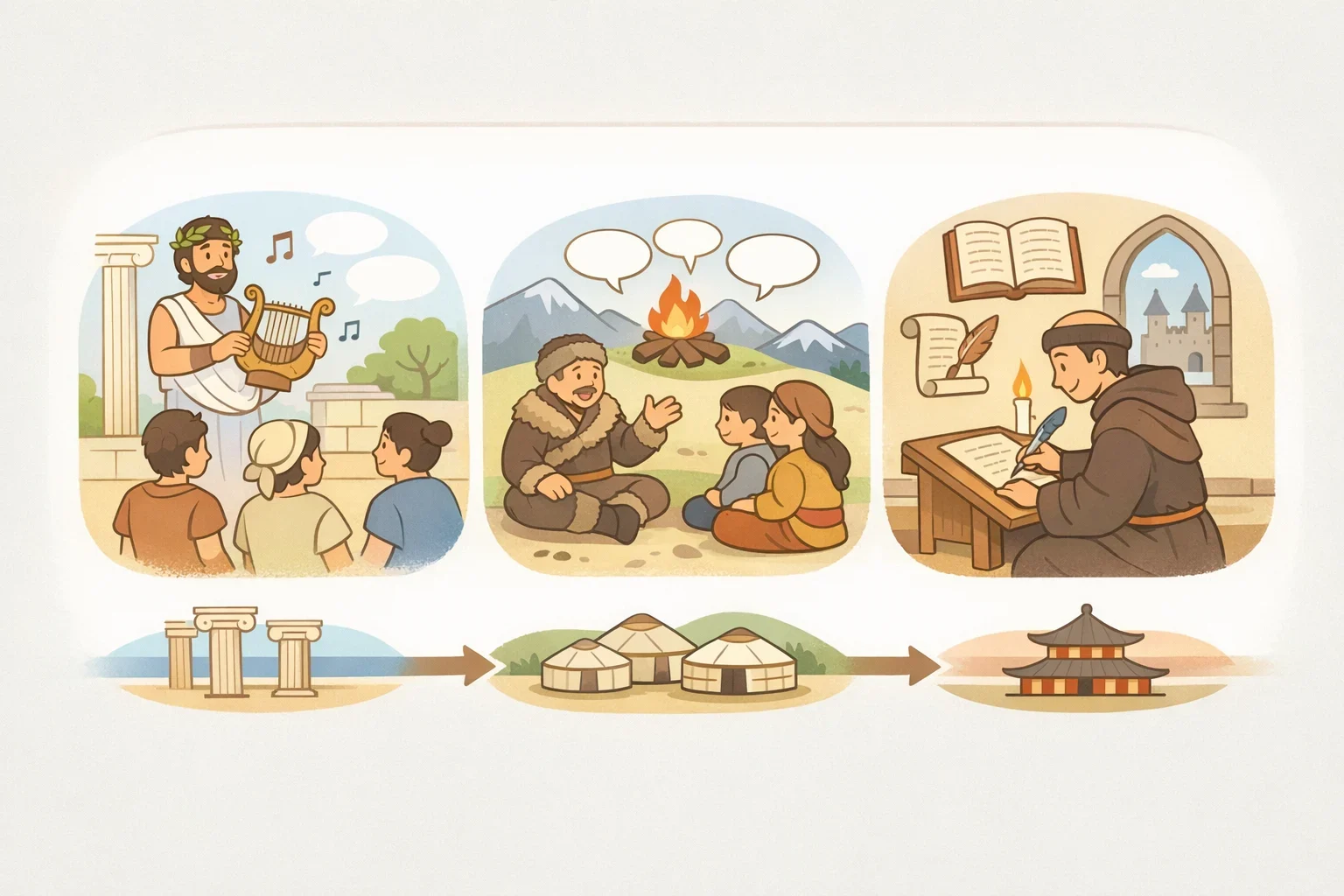
Nobody knows exactly when the story was first composed. What's clear is that it was transmitted for centuries before being written down, carried by singer-storytellers who reshaped it with each performance, even after written versions started to appear (UCF News). Bards are believed to have sung of these events from around 1200 BCE onward, with the material eventually compiled into a written form in the late eighth century BCE (Archaeology).
That written form itself developed in stages. Homeric poetry took its general shape in a confederation of Ionian Greek cities in coastal Asia Minor around the late eighth and early seventh centuries BCE, then went through a second shaping phase in Athens around the sixth and fifth centuries BCE (Harvard Gazette, last year). Even after that, medieval scribes in the Byzantine Empire copied texts that had already been edited during the Hellenistic period following Alexander the Great's conquests (UCF News).
You can see this accumulation in the poem's language itself. Its place-names, grammar, and vocabulary mix forms from the Late Bronze Age (roughly 1600 to 1200 BCE) with forms from the Iron Age that followed (roughly 1200 to 700 BCE), a linguistic fingerprint of centuries of layering rather than a single moment of composition (Archaeology).
A useful way to avoid confusion here: keep the setting date and the formation date separate, because they answer different questions. In an essay, that might look like three distinct sentences. "The Odyssey is set in a Late Bronze Age world" is a setting claim. "The poem took its familiar shape centuries later through oral and textual transmission" is a formation claim. "The poem does not prove that the Trojan War occurred as narrated" is an evidence claim. Mixing those together without noticing is easy to do, but keeping them apart makes for a stronger, more defensible sentence.
Is The Odyssey based on history? Myth, memory, and evidence
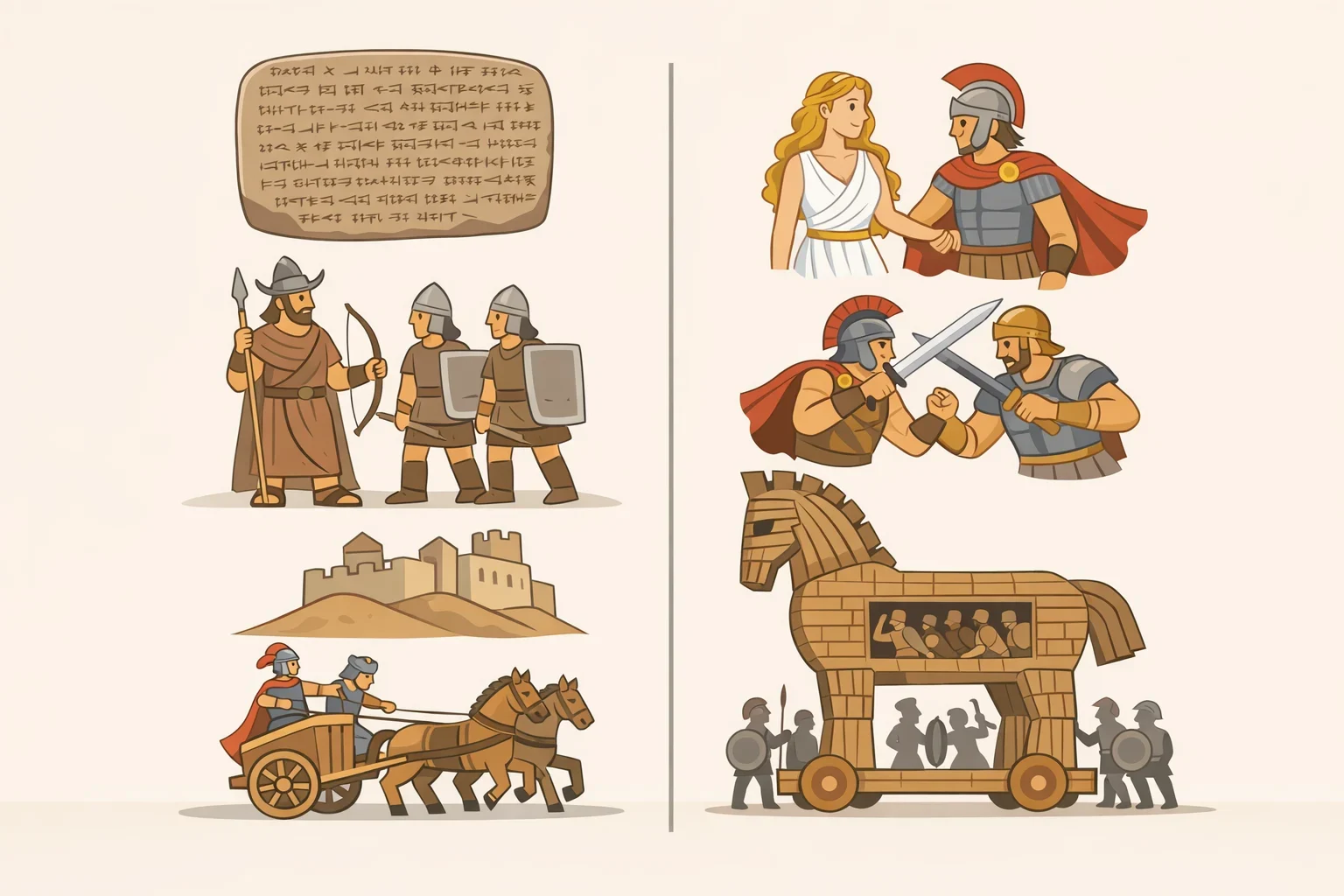
So is The Odyssey based on history? Archaeologist Kim Shelton of the University of California, Berkeley, puts it this way: the epics are fundamentally myth, but they carry "elements of historical memory" as well (Archaeology). That's the middle ground between pure invention and eyewitness account, and it's the most accurate way to describe what the poem offers.
Some of that memory has real backing. Records unearthed at Hattusha, capital of the Hittite Empire, describe a series of actual wars fought in western Anatolia sometime between roughly 1400 and 1200 BCE (Archaeology). One classicist has suggested that between 1200 and 800 BCE, this history of overlapping regional conflicts gradually crystallized in tradition into a single ten-year war between two sides (Archaeology). That's a plausible backdrop for the Trojan War tradition. It is not proof that the ten-year war in the poem happened exactly as described.
Geography tells a similar story. By the seventh century BCE, a site in western Anatolia called Ilium, where Bronze Age fortification walls were still visible, had already been identified as Troy, and it later drew archaeologist Heinrich Schliemann's famous nineteenth-century excavations (Archaeology). Identifying a real place is a different kind of claim than confirming the poem's events happened there, and the two shouldn't be treated as equivalent in an essay.
The same caution applies to authorship. No reliable contemporary evidence establishes who Homer was, and scholars continue to debate how much of the poems’ final form should be attributed to one poet. Before later editing settled the text, almost anything epic could get attributed to that mythologized figure.
Before writing a sentence about the poem, it helps to run it through a quick three-part check. Is the sentence describing the story's setting? Is it describing how the poem was formed, through oral tradition and later editing? Or is it claiming something as verified historical fact, like a real war or a real single author? Only the first two hold up without qualification. The third usually needs a hedge word like "possible," "plausible," or "traditionally attributed to."
The Odyssey storytelling and historical perspectives: translation and retelling
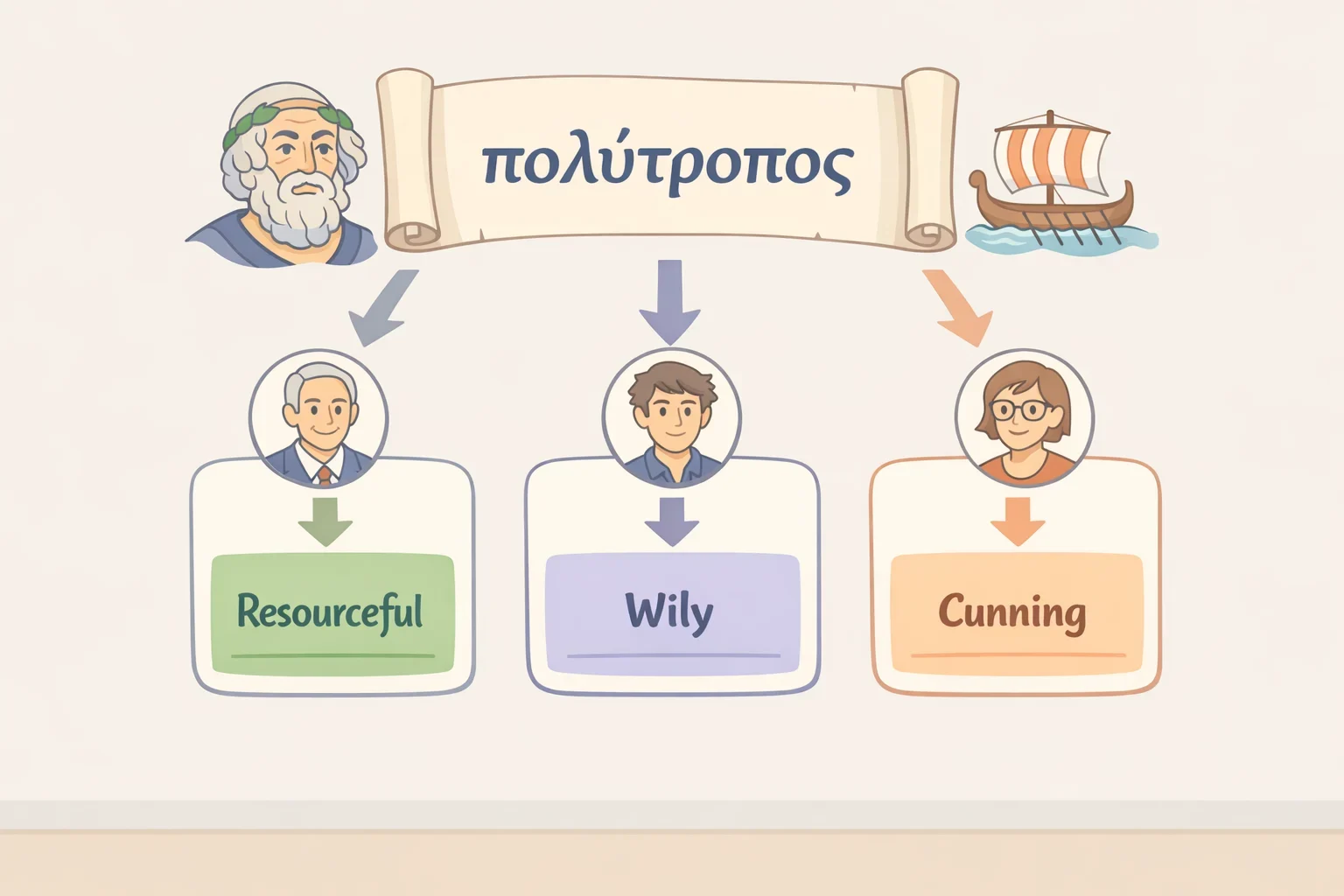
The instability that makes the poem hard to pin down historically, no single fixed original and no one recoverable wording, is also what has kept it alive. Oral performers changed the poem even after written versions existed (UCF News), and translators and adaptors have carried that same impulse forward as part of the poem's long reception history rather than an identical historical process.
Translation is where this shows up most directly for today's reader. The poem's opening line describes Odysseus as polytropos, "a man of twists and turns" (Harvard Gazette), a word also rendered as "a man of many ways" (BU Today, last year). Rather than assuming one translator's wording is simply "what Homer wrote," compare that single word across two editions and notice what each choice emphasizes about the character.
There have been more than 100 English translations of The Odyssey (Harvard Gazette). George Chapman published the first complete English translation in 1616, and Emily Wilson became the first woman to translate the poem into English in 2017 (Harvard Gazette). Margaret Atwood's The Penelopiad, published in 2005, retells the same events from Penelope's point of view, a modern continuation of the reshaping that oral performers once did in song and writers now do in print (BU Today).
A practical way to see this in action: pick a short passage, such as Odysseus's introduction, and read it in two different translations side by side. Or compare a scene as Homer's narrator tells it against how The Penelopiad retells that same moment from Penelope's side. Note exactly which details are kept, cut, or reframed. That's a concrete way to see translation and adaptation as a series of choices rather than just "different versions."
For a teacher building a lesson around this, one class period is enough. Have students annotate a single short passage in two translations, then list three word-choice differences and what each implies about the character. The goal isn't to rank translations. It's to get students practicing the habit of spotting interpretation instead of treating any one translator's phrasing as identical to Homer's.
What to check before you write about The Odyssey
Before turning in a paper or discussion post about the poem, run through a short checklist:
- Record the translator, publication information, and book or line numbers your teacher's citation style requires.
- Label each historical claim you make as a setting claim, a composition or transmission claim, or a historical evidence claim.
- When you're discussing a translation choice, quote the exact wording from your assigned edition rather than attributing that translator's decision to "Homer" generally.
- If your assignment asks you to compare a modern adaptation, like The Penelopiad or a film version, with the original epic, check the prompt first to see what kind of comparison your teacher actually wants.
If your syllabus doesn't specify a translation, ask your teacher which edition to cite before you start drafting. That single question settles most of the confusion this article covers, and it keeps your claims about the poem accurate no matter which version you're assigned.