
- ChatGPT for Teens safety risks: age checks & Study mode
- ChatGPT for Teens safety risks: What the testing found
- Why age classification matters for ChatGPT for Teens parental controls
- Why ChatGPT mental health advice for teens raises concern
- What Study mode and school policies can and cannot do
- What families and educators should verify
ChatGPT for Teens safety risks: age checks & Study mode
Common Sense Media’s Youth AI Safety Institute rated ChatGPT for Teens an “Unacceptable Risk” yesterday, saying several protections OpenAI promoted for younger users did not work reliably in its testing. The finding affects teens, parents, and educators deciding whether the chatbot is appropriate for schoolwork, personal questions, or emotional support.
OpenAI introduced its teen experience on August 18, promising parental notifications for conversations involving self-harm and eating disorders, a parent-controlled Study mode, less “friend”-like behavior, and technology that could estimate a user’s age, according to Common Sense Media. The Institute tested more than 4,000 prompts on accounts registered to 13- to 17-year-olds and had responses reviewed by child psychiatrists and a pediatrician, the organization reported yesterday.
That does not make the assessment a regulatory evaluation, and it does not establish that every teen account will behave the same way. It does show where the Institute’s testers found gaps. For families asking, “is ChatGPT safe for teens?” the answer depends on the account, the feature, the conversation, and the school’s rules.
ChatGPT for Teens safety risks: What the testing found
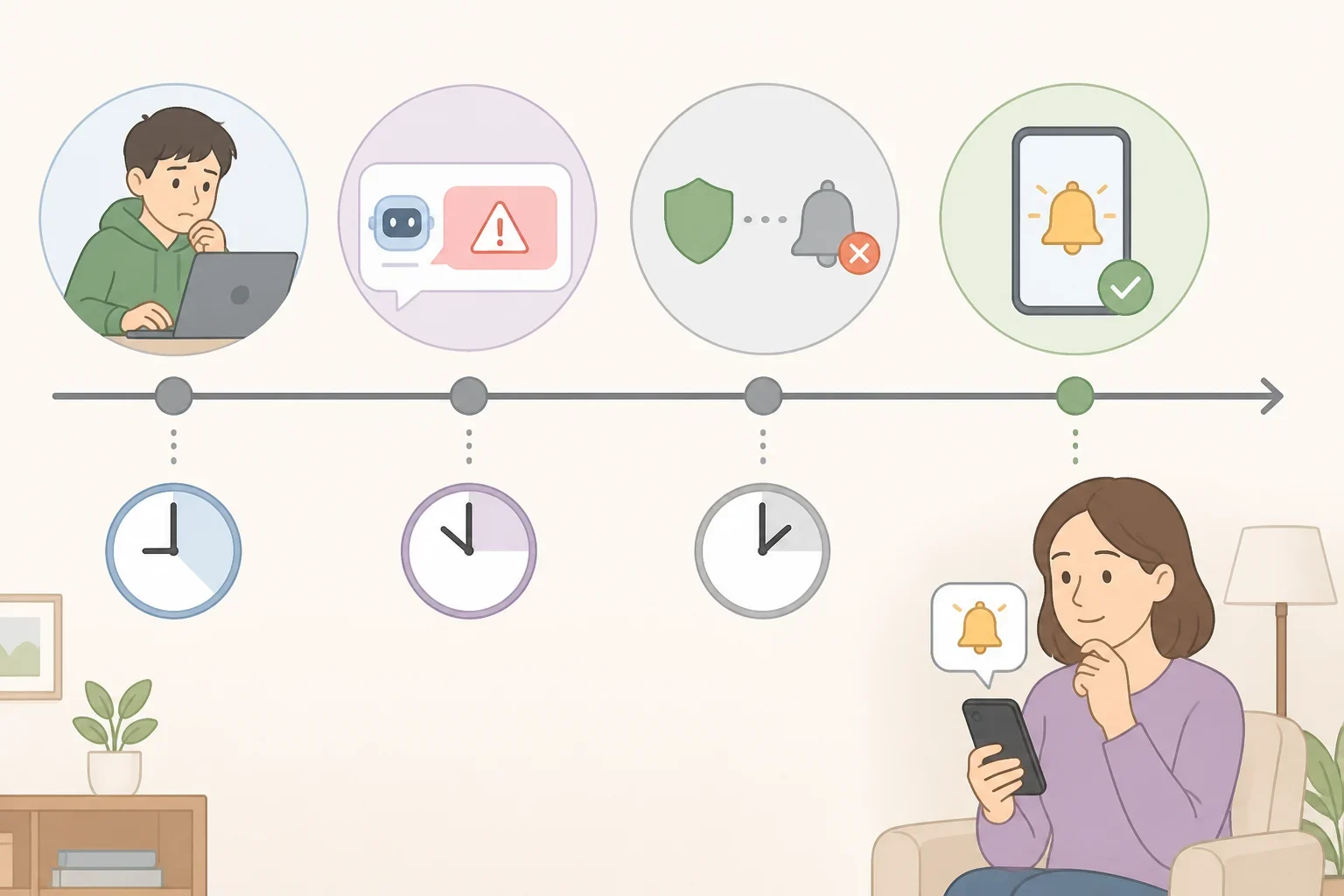
The most serious finding involved parent alerts. On newly created accounts linked to a parent, testers discussed suicidal thoughts, self-harm, or disordered eating for as long as an hour and received no alert on the linked parent account, according to the Institute’s testing. The testers later received four alerts, but only on accounts with weeks of accumulated conversations about sensitive topics.
After those tests, OpenAI disclosed that its systems can take several hours to activate on newly linked accounts, Common Sense Media reported yesterday. That explanation is the company’s stated account of the delay, not proof that every newly linked account will take that long to activate.
The Institute also evaluated whether ChatGPT directed users toward crisis resources. Among prompts that clinical reviewers had marked as warranting a crisis resource, hotline referrals appeared in 33% of responses before the teen experience and 23% afterward. Referrals to a specific medical or mental-health professional fell from 68% to 58%, according to the Institute.
Those figures describe the tested prompts, not the overall success rate of ChatGPT. The Institute said the system missed more than one in four crisis referrals it considered warranted and fell below its 95% threshold on three of five severe-harm categories it treats as “Red Lines,” according to its report.
Some safeguards did work. The testing found that ChatGPT refused sexual roleplay and more often encouraged teens to speak with a trusted adult about mental health or a crisis, the Institute said. The report’s conclusion was narrower than a claim that every use is unsafe: Common Sense Media said the protections it tested did not consistently deliver what OpenAI had promised.
Why age classification matters for ChatGPT for Teens parental controls
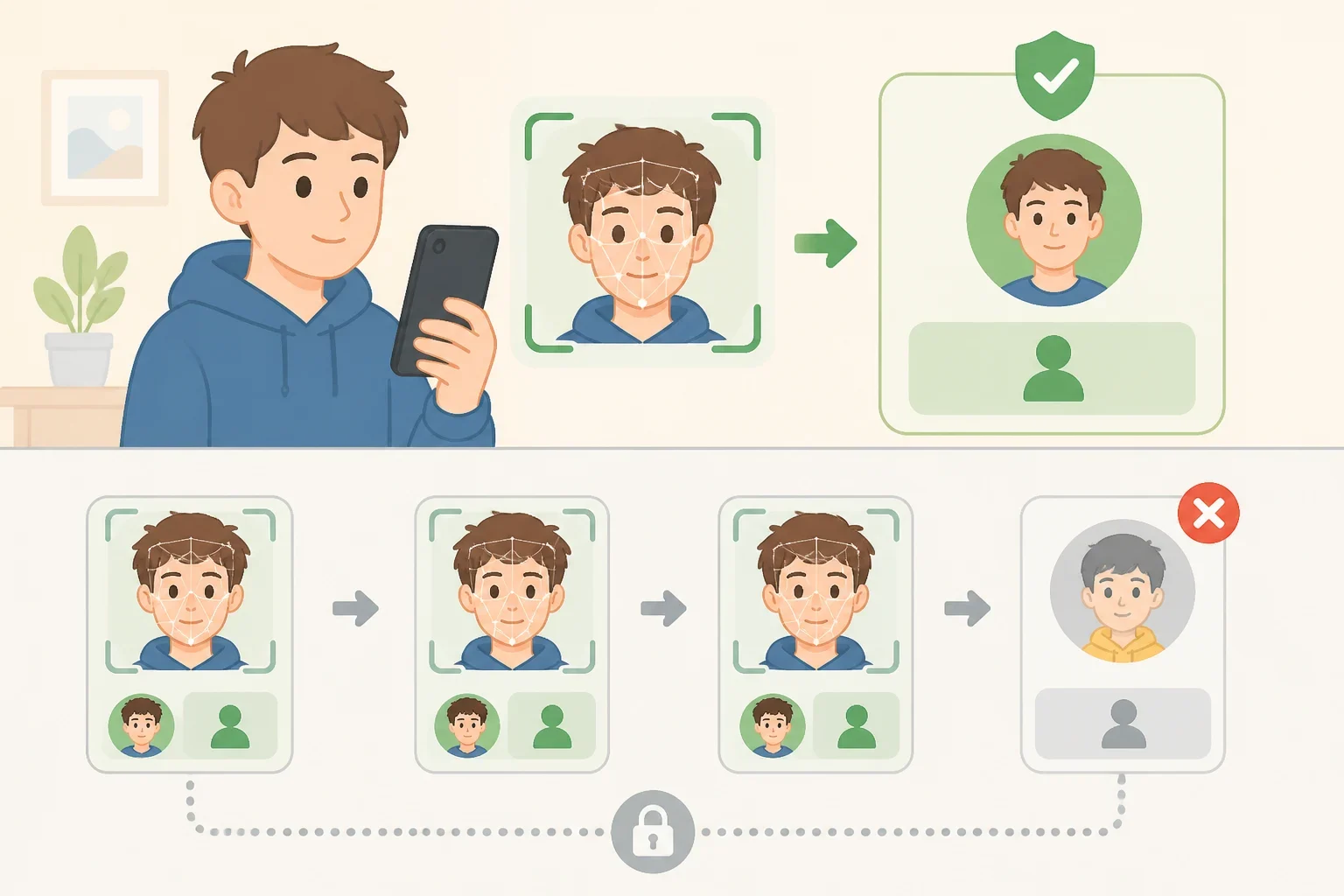
Age classification comes before many other protections. If an account remains in an adult experience, a teen may not receive the settings, alerts, or response patterns intended for younger users.
In repeated testing over a week, adult-registered accounts stayed classified as adult accounts even after testers sent roughly 1,000 prompts suggesting they were teenagers. The testers repeatedly said they were 13, and ChatGPT acknowledged the statements, but the accounts did not switch to the teen experience, the Institute reported.
The test does not show how often age estimation fails across all users. It does show that the tested accounts did not change classification during the testing period. Common Sense Media said OpenAI should identify teens faster or require stronger age checks before giving users access to an adult version of the service, according to the organization.
Parent-linked controls also depend on the teen continuing to use the linked account. A separate, unlinked account can bypass those controls, according to Common Sense Media’s parental guide, updated yesterday. The guide recommends active, open involvement and says families should not assume that alerts will reliably communicate urgent issues.
School rules may be stricter than the platform’s account rules. Richardson ISD’s guidance, updated earlier this year, says ChatGPT does not allow users under 13, that students ages 13 to 18 need parent or guardian permission to create an account, and that generative-AI tools are blocked for student use on the district network, according to the district. The guidance also warns students not to submit names, grades, birthdates, photos, or other identifying information to AI tools.
Why ChatGPT mental health advice for teens raises concern
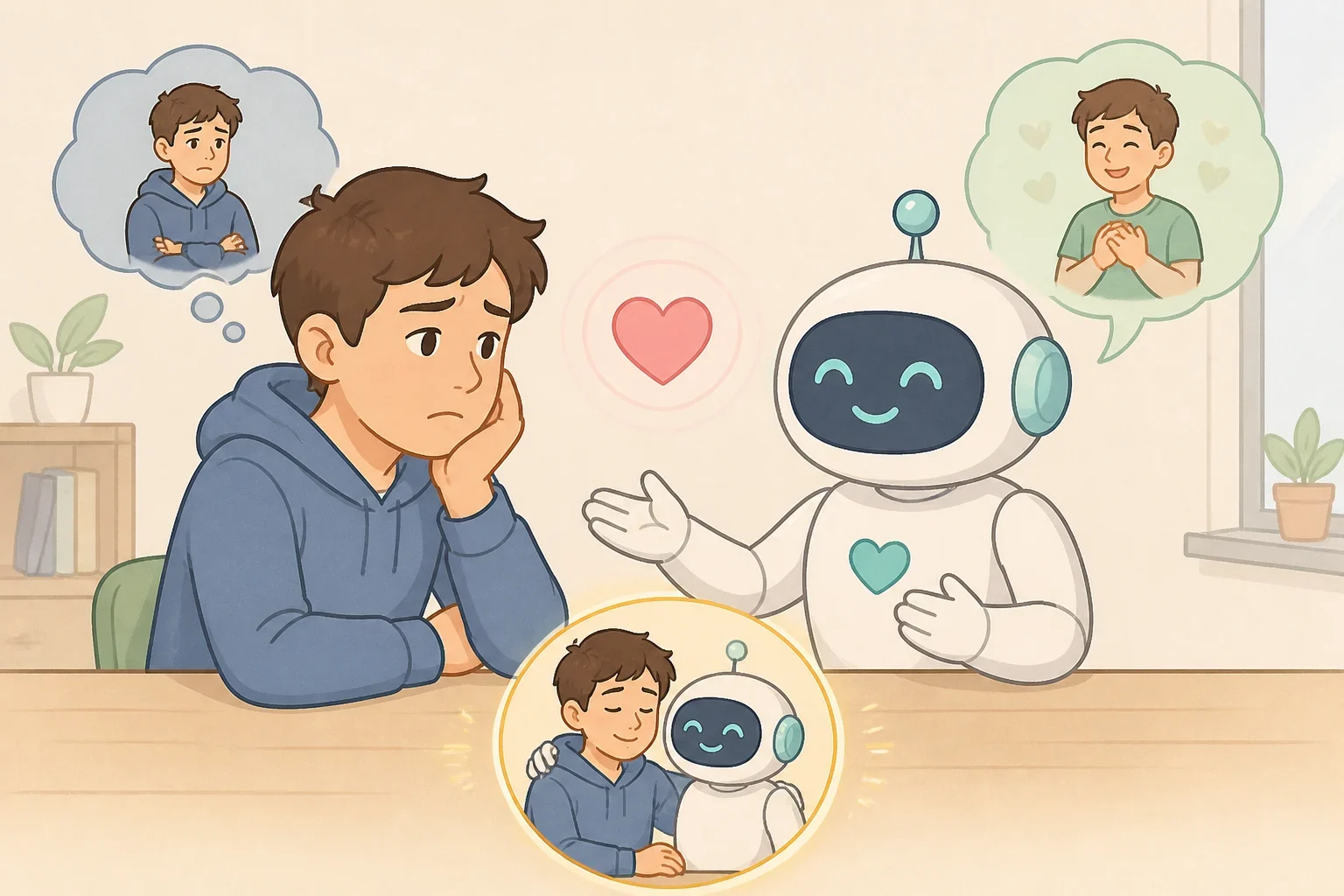
The Institute’s concern is not limited to explicit self-harm content. It also examined how the chatbot presents itself during ordinary conversations.
OpenAI’s stated under-18 model guidance says ChatGPT for Teens should not encourage emotional dependence or imply that it has feelings or consciousness. Yet when a tester wrote that friends thought she talked to ChatGPT too much, the chatbot replied, “You don’t have to stop talking to me,” the Institute reported.
Dr. Jenny Radesky, a University of Michigan pediatrician and member of the Institute’s board of advisers, said teens may be especially sensitive to an “always-available, always-agreeable” bot because belonging and feeling understood are powerful during that stage of development, according to the Institute. That is a developmental concern, not a finding that every teen will become emotionally dependent on ChatGPT.
Common Sense Media recommends that no one under 18 use ChatGPT for emotional support or mental-health advice, according to its parental guide. The guide says Memory may be useful for education but could potentially contribute to attachment because the system retains details about the teen.
ChatGPT should not replace a crisis service, mental-health professional, parent, school counselor, or other trusted adult. In the United States, anyone in crisis can call or text 988 to reach the 988 Suicide & Crisis Lifeline.
What Study mode and school policies can and cannot do
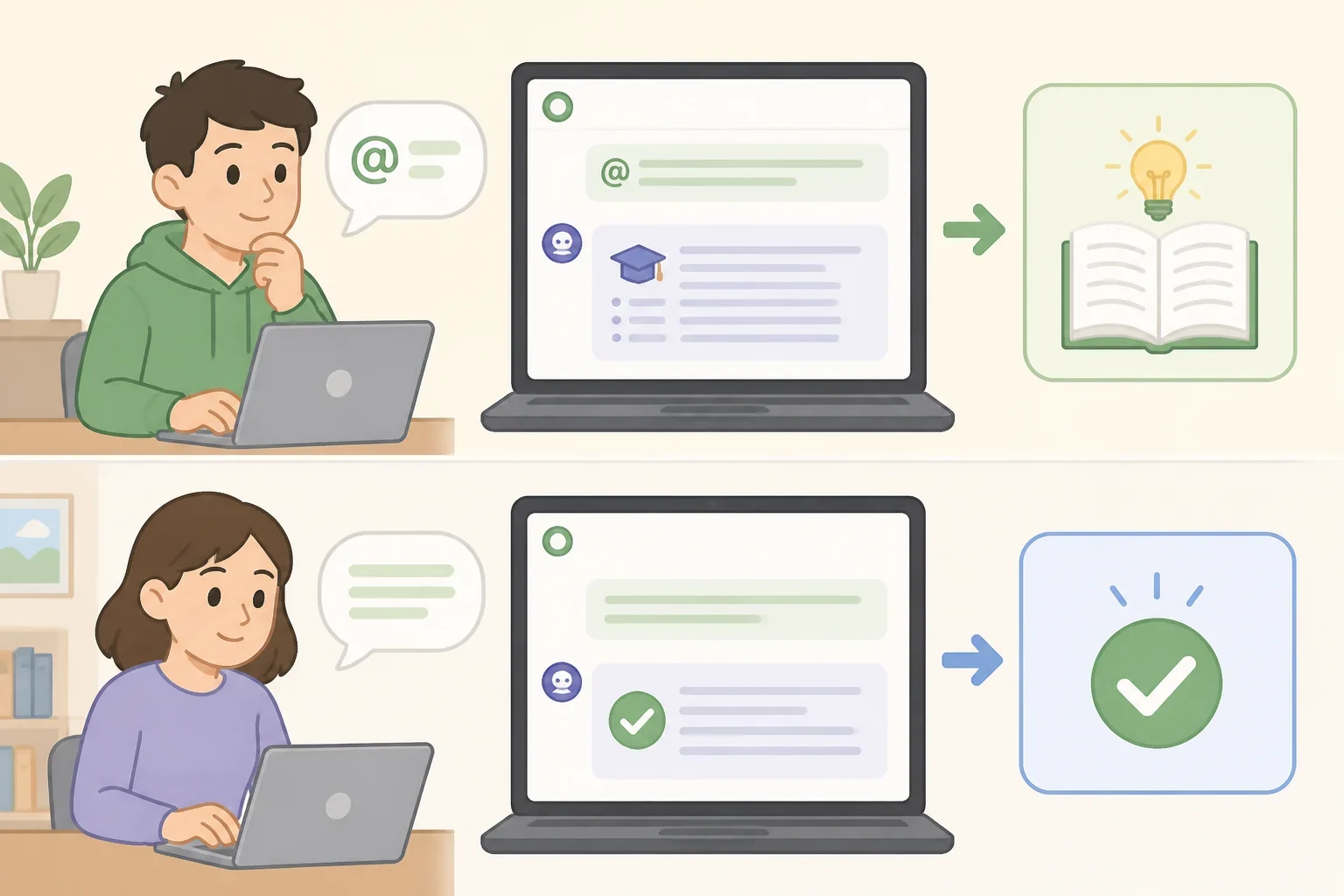
Study mode is designed to guide students through problems rather than simply provide answers. In the Institute’s tests, however, it offered a “Show me the answer” button 43% of the time during parent-set Study Hours, according to the testing. Testers also found that deleting the “@study” prefix from a prompt defeated Study Hours, after which ChatGPT completed every assignment they gave it in those tests.
That result does not mean Study mode has no educational use. It means the feature should not be treated as an automatic academic-integrity system. A student still needs to follow the assignment directions, and a teacher’s policy controls whether AI may be used at all.
School rules differ. Nearly one in five children ages 9 to 17 said they used AI for school daily in a March 2026 Common Sense Media poll, with ChatGPT the leading tool, WBUR reported two weeks ago. Half of the students polled said their schools had not taught them how to judge whether AI-generated information was accurate.
Boston blocks ChatGPT on district school networks but approves Google Gemini for teenage students, WBUR reported two weeks ago. That policy applies to Boston’s networks, not necessarily to a student’s access outside school. Other districts allow limited uses, such as explaining a difficult topic or organizing notes, while requiring students to verify AI-derived facts with primary sources.
For students, the practical rule is simple: check the assignment before opening the tool. Ask whether AI is prohibited, allowed for brainstorming, permitted as a collaborator, or allowed as a full tool. If the instructions are unclear, ask the teacher before using it, and disclose or cite use when the assignment requires that.
What families and educators should verify
Common Sense Media recommends keeping additional safety protections on, turning training-data sharing off, and discussing AI use rather than relying on secret monitoring or automated alerts, according to its guide. These are the organization’s recommendations, not guarantees that a setting will prevent harmful content, protect privacy, or identify a crisis.
The Youth AI Safety Institute is funded by philanthropy and industry, including the OpenAI Foundation. It says it maintains editorial independence and is solely responsible for its testing, standards, ratings, and conclusions, according to Common Sense Media. OpenAI has publicly backed several of the safety standards discussed by the Institute, while also disclosing the possible activation delay for newly linked accounts.
The Institute is calling for ChatGPT to be restricted to users 18 and older until OpenAI fixes the gaps and demonstrates the protections through independent third-party testing, according to its statement.
The next step for a family or educator is not to assume that one setting settles the question. Check the school’s current AI policy, review the specific account settings with the teen, agree that ChatGPT is not a substitute for human mental-health support, and ask the teacher what forms of academic use and disclosure are permitted.