
- 2026 Nobel Prize in Chemistry explained: what Kagan and Soai discovered
- Chiral, enantiomer, racemic: the vocabulary behind the prize
- Molecular chirality explained: why life sticks to one hand
- Kagan's breakthrough and the 50-50 problem
- Soai's reaction: from potential to complete dominance
- What each laureate actually proved
- Why controlling molecular handedness matters in medicine
- What the award does not explain
2026 Nobel Prize in Chemistry explained: what Kagan and Soai discovered
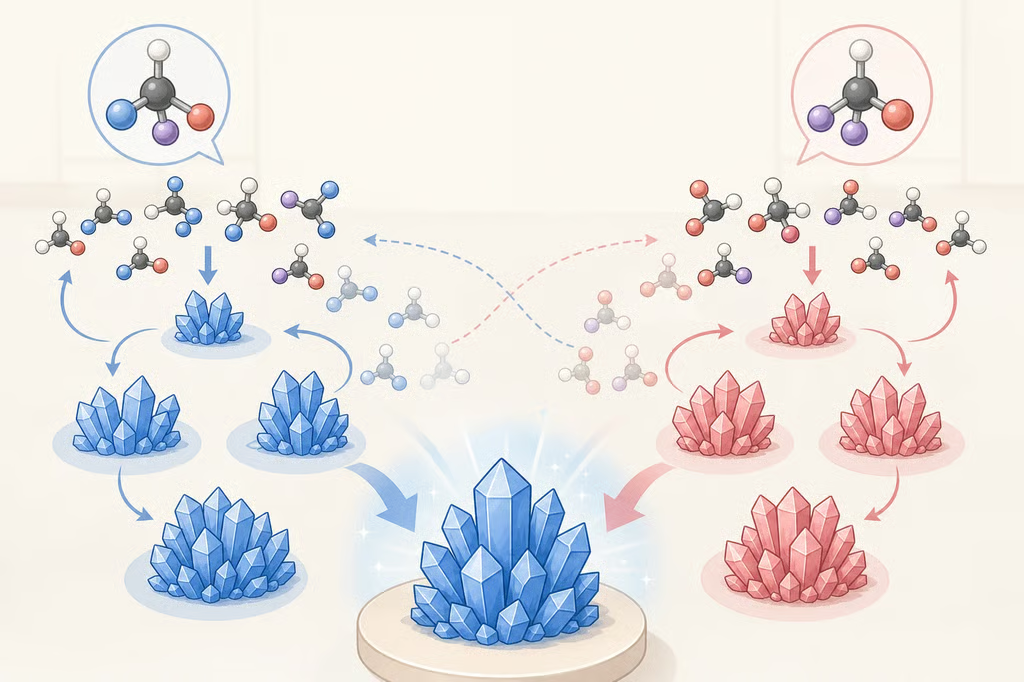
Henri B. Kagan and Kenso Soai share the 2026 Nobel Prize in Chemistry, awarded "for the discovery of non-linear effects and autocatalysis in asymmetric organic synthesis," the Royal Swedish Academy of Sciences announced yesterday (NobelPrize.org). The Nobel Committee for Chemistry frames their work as a solution to a problem that puzzled chemists for more than a century: how to steer a reaction toward making mostly one enantiomer, rather than an even split between two mirror-image forms (NobelPrize.org).
Three terms unlock what that means: chiral, enantiomer, and racemic. A molecule is chiral if its mirror image cannot be laid on top of it. Two such mirror-image molecules are enantiomers, and chemists call an equal mixture of both a racemic mixture. Kagan and Soai are honored for finding ways to push past that racemic default toward a single, dominant enantiomer.
This explainer builds those terms from scratch for any student, teacher, or lifelong learner running into the announcement this week, whether or not they've taken a stereochemistry unit yet.
Chiral, enantiomer, racemic: the vocabulary behind the prize
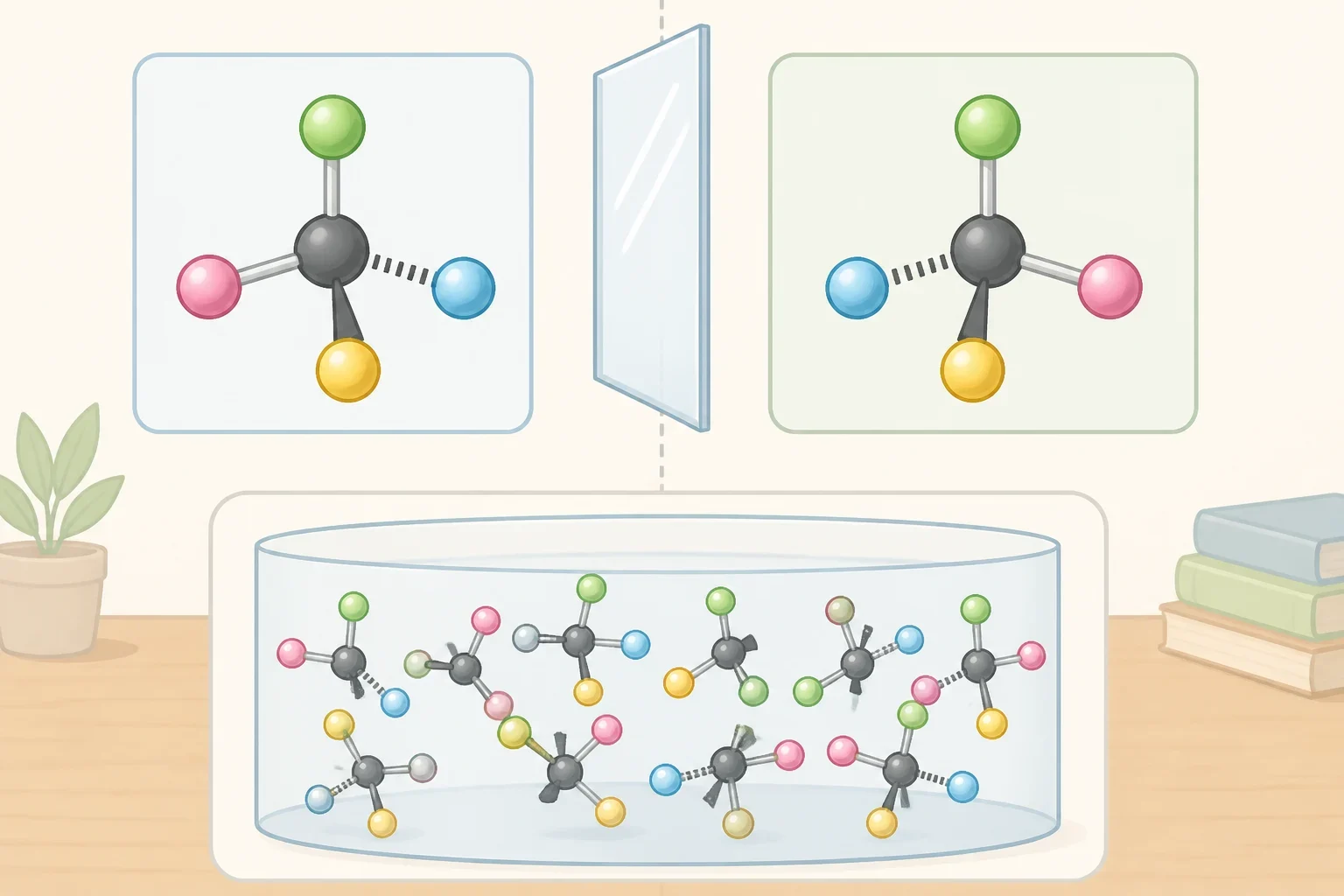
At the molecular level, handedness almost always comes down to a single carbon atom bonded to four different groups, known as a chiral center (Chemistry LibreTexts/04%3A_Conformations_and_Stereochemistry/4.03%3A_Chirality_and_stereoisomers)). 2-butanol fits that description: its central carbon holds a hydrogen, a methyl group, an ethyl group, and a hydroxyl group, four different substituents (Chemistry LibreTexts/04%3A_Conformations_and_Stereochemistry/4.03%3A_Chirality_and_stereoisomers)). 2-propanol is not chiral, because two of the four groups attached to its central carbon are identical methyl groups (Chemistry LibreTexts/04%3A_Conformations_and_Stereochemistry/4.03%3A_Chirality_and_stereoisomers)).
Two molecules that mirror each other across a chiral center are enantiomers. They share an identical formula, identical bonds, even identical melting and boiling points, but they rotate polarized light in opposite directions (Chemistry LibreTexts/04%3A_Conformations_and_Stereochemistry/4.03%3A_Chirality_and_stereoisomers)). In medicines, that structural difference between mirror images can affect a drug's safety and effectiveness (NIH/PMC review).
That last distinction is central to the prize. When a reaction forms a chiral molecule with no outside influence pushing it one way or the other, it tends to generate both enantiomers in roughly equal amounts, a racemic mixture. When one enantiomer outnumbers the other, chemists call the surplus an enantiomeric excess. Kagan and Soai discovered how to turn a racemic default into something closer to total dominance of one hand.
Molecular chirality explained: why life sticks to one hand
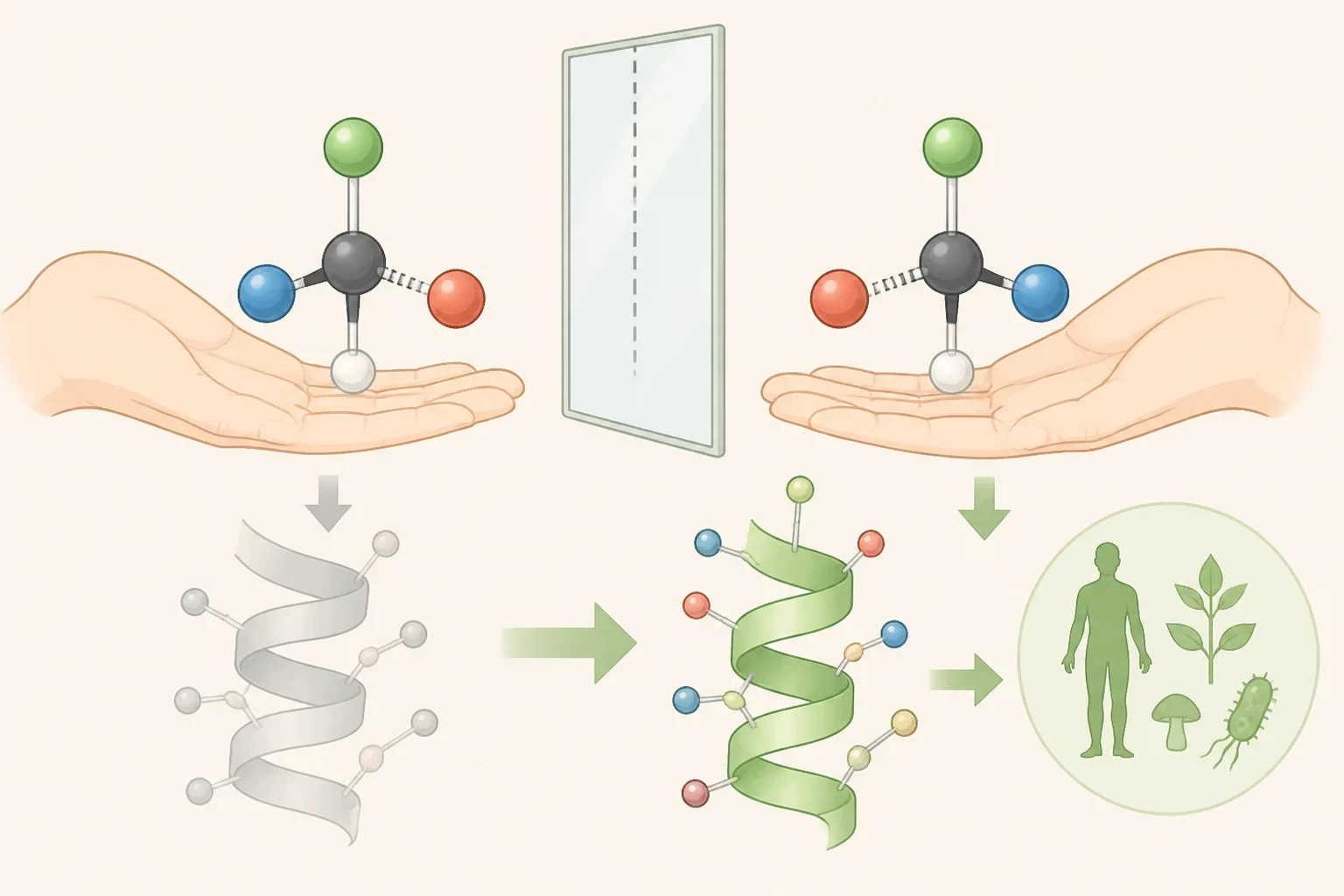
Some molecules, amino acids among them, exist as two mirror-image variants, but living organisms contain only one of them (NobelPrize.org). Chemists call this trait homochirality, from Greek words meaning "same" and "hand" (NobelPrize.org). The mirror-image form that doesn't appear in human proteins is rarely found in nature at all (NobelPrize.org).
That consistency across all known life sat unexplained for a long time. "Henri Kagan and Kenso Soai have provided a solution to a chemical mystery that is over a century old: how homochirality can emerge spontaneously. The chemical reactions they have developed are spectacular," said Heiner Linke, chair of the Nobel Committee for Chemistry (NobelPrize.org).
Kagan's breakthrough and the 50-50 problem
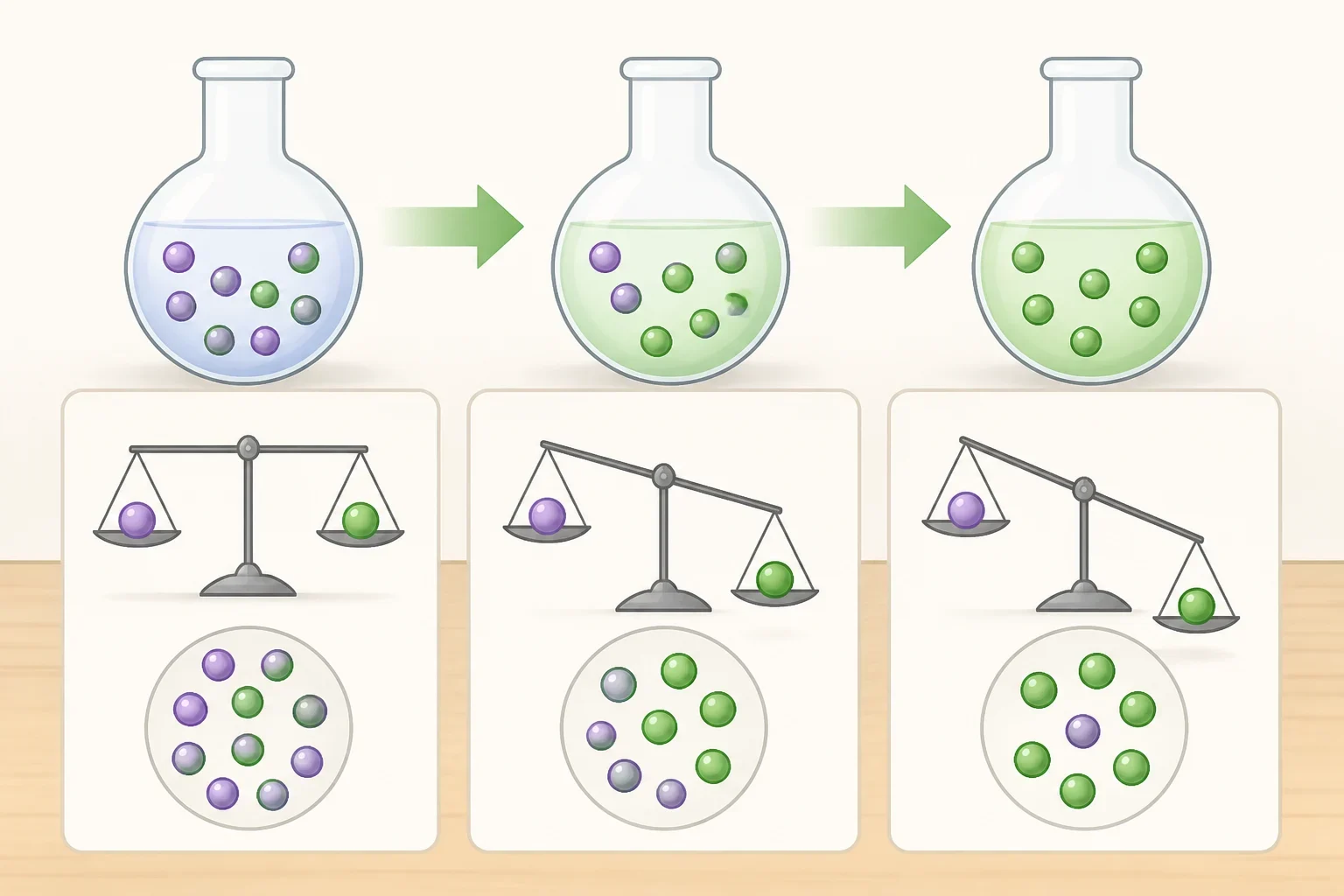
When chemists experimented with reactions capable of forming two mirror-image molecules, the Nobel committee notes they always obtained equal proportions of both in their test tubes (NobelPrize.org). That even split was a genuine obstacle for drug design, since only one mirror image of a molecule meant to interact with a living system produces the desired effect (NobelPrize.org).
Kagan took the first decisive step in 1986, discovering a new way of manipulating chemical reactions that let him create a far greater excess of one mirror image than chemists had previously thought possible (NobelPrize.org). The award recognizes this work under the broader category of non-linear effects in asymmetric synthesis.
Soai's reaction: from potential to complete dominance
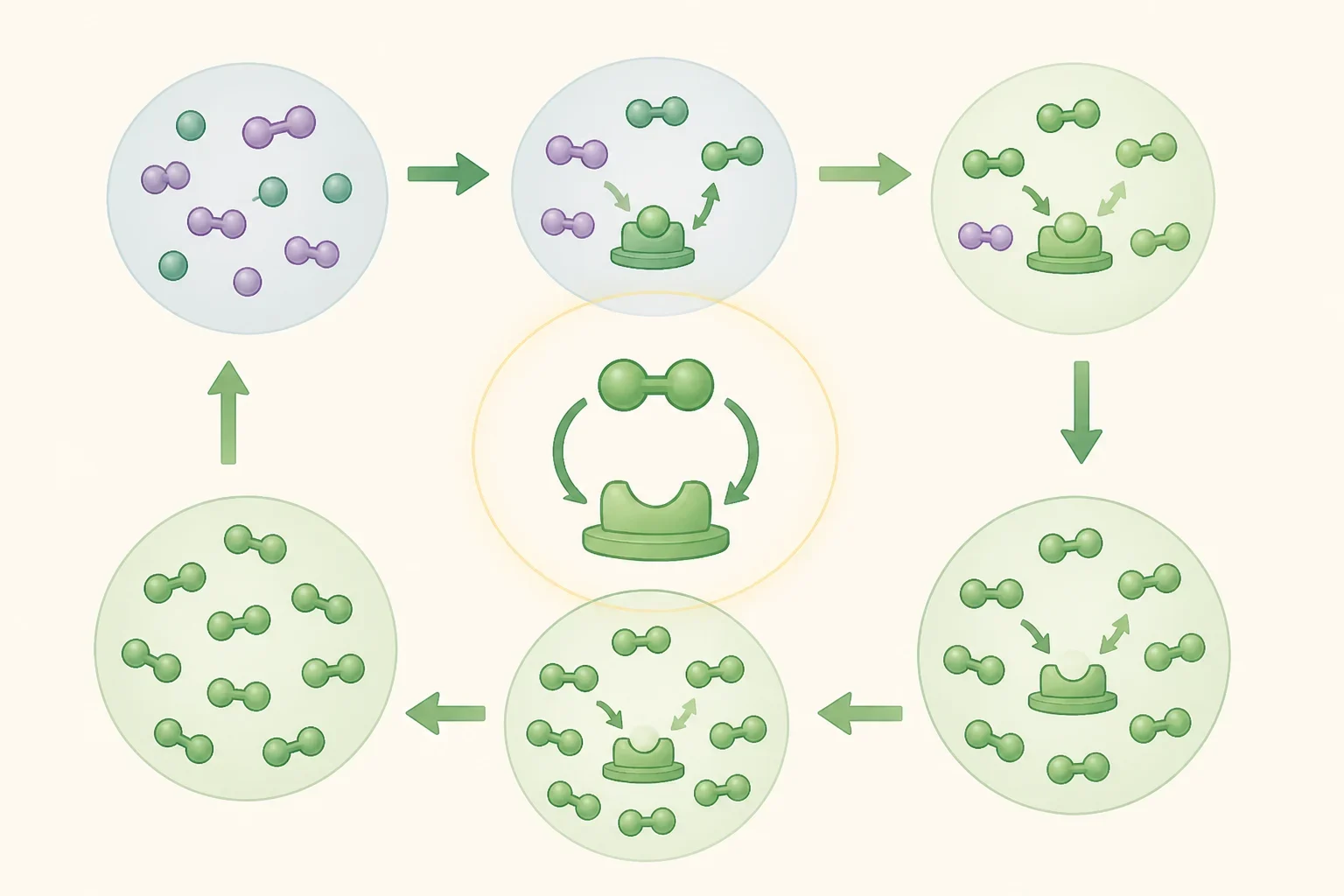
Kenso Soai took the next step, in the Nobel committee's own description of the sequence (NobelPrize.org). A 1995 publication describes a reaction he designed as the first ever chemical reaction with the potential to become fully homochiral (NobelPrize.org). By 2003, he had gone further, presenting a reaction that produced only one of the two possible mirror images. Other than life itself, no one had previously achieved that (NobelPrize.org).
The citation covers both achievements under two linked terms, non-linear effects and autocatalysis in asymmetric organic synthesis, without specifying which laureate's result corresponds to which term (NobelPrize.org). The release does not spell out the reaction's internal chemistry, and it does not identify either reaction as an explanation for how life itself began (NobelPrize.org).
What each laureate actually proved
- Kagan, 1986: manipulating reaction conditions produced a far greater excess of one mirror image than previously thought achievable (NobelPrize.org).
- Soai, 1995: a published reaction carried the potential to become fully homochiral (NobelPrize.org).
- Soai, 2003: a reaction finally yielded only one of the two possible mirror images, a feat previously unique to life itself (NobelPrize.org).
The committee describes Soai's work as "the next step" after Kagan's, but it credits the two chemists jointly, splitting the prize's 12 million Swedish kronor equally between them (NobelPrize.org).
Why controlling molecular handedness matters in medicine
Many drugs are chiral, and that handedness shapes how they interact with biological systems, including their safety and effectiveness (NIH/PMC review). Regulators have leaned toward approving single-enantiomer drugs since the 1980s (NIH/PMC review). A review counted 10 racemates among 278 small-molecule drug approvals from 2013 to 2022, about 3.6% of the total, and reported a three-fold decline in the racemic share of approvals, from 11% to 3.6% (NIH/PMC review).
Single-enantiomer isn't automatically the better design, though. A 2024 analysis in ACS Medicinal Chemistry Letters points to nebivolol, an approved blood pressure medication, as a case where the two mirror-image forms may work together rather than one simply outperforming the other (ACS Medicinal Chemistry Letters).
The Nobel committee credits Kagan and Soai's discoveries as decisive for chemists who design reactions used for the manufacture of pharmaceuticals, without identifying either laureate's specific reaction as a routine production method (NobelPrize.org).
What the award does not explain
The prize recognizes discoveries that let chemists drive a reaction toward homochirality on demand (NobelPrize.org). It does not explain why living systems settled on one molecular hand instead of the other in the first place, a question the Nobel committee itself still frames as a long-standing mystery (NobelPrize.org).
Students covering this topic for class can start by explaining three terms in their own words: chiral, enantiomer, and autocatalysis. Check with a teacher or the assignment prompt on whether a conceptual explanation is enough, or whether formal R/S naming and worked examples are expected, since that bar varies by course level. Readers who want the full citation and the committee's scientific background can read the official Nobel press release directly.