
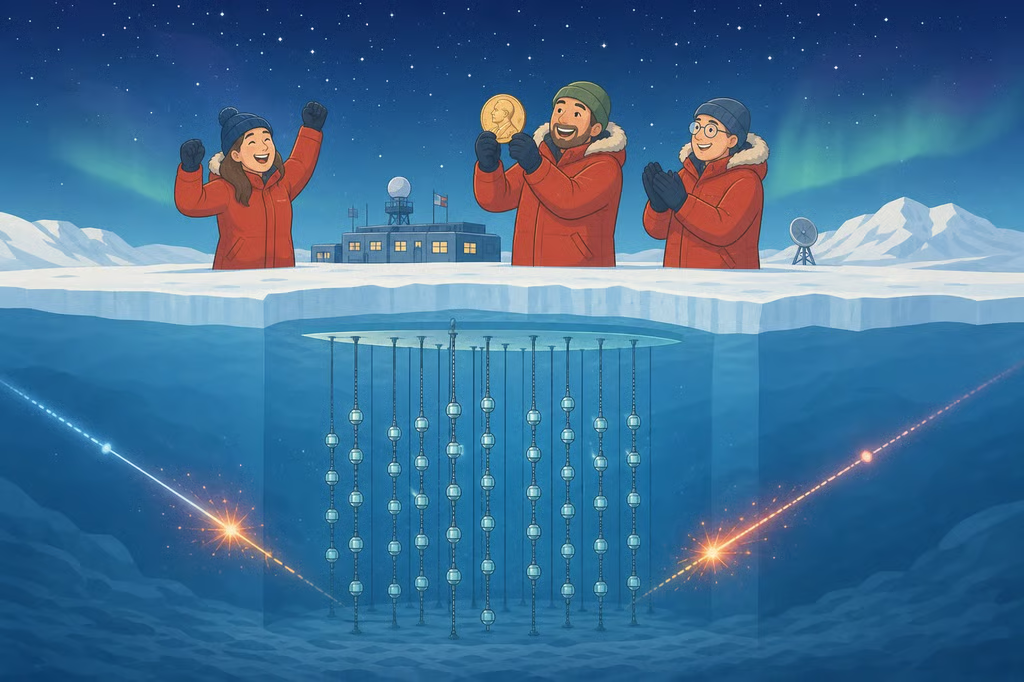
IceCube Nobel Prize in Physics 2026: Why Halzen Won
The Royal Swedish Academy of Sciences awarded the Nobel Prize in Physics 2026 to Francis Halzen, a physicist at the University of Wisconsin–Madison, "for decisive contributions to the IceCube Neutrino Observatory and the discovery of high-energy neutrinos of astrophysical origin," according to the Nobel Prize press release. The IceCube Nobel Prize in Physics 2026 announcement, made Tuesday, credits one scientist, but the instrument behind it is a collaboration of about 450 researchers from 58 institutions in 14 countries, according to IceCube.
The award recognizes a way of studying the universe through neutrinos rather than light, built on the faint flashes those particles leave behind when they rarely collide with atoms buried in Antarctic ice.
What the IceCube Nobel Prize in Physics 2026 recognizes
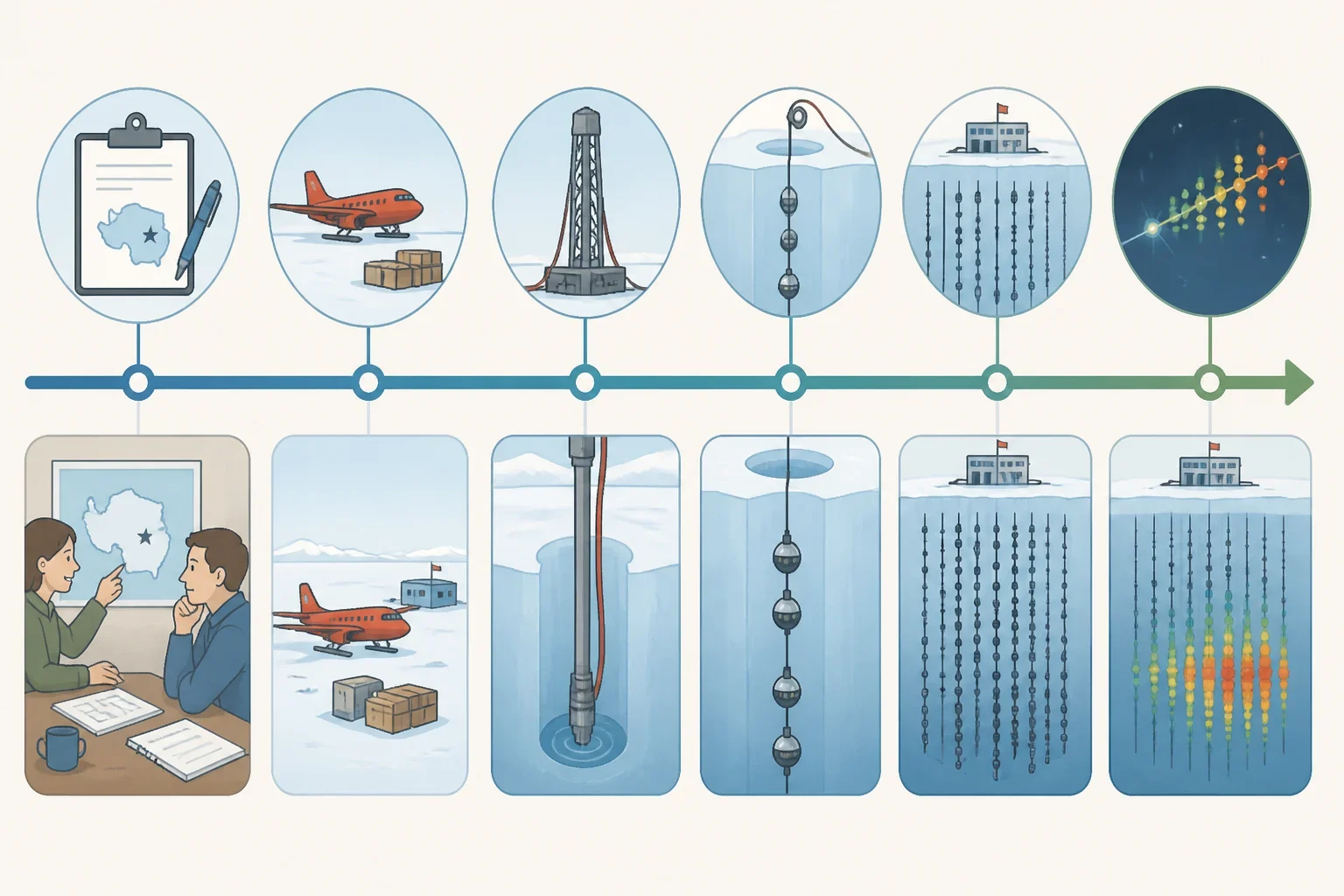
Halzen first proposed using ice at the South Pole to track neutrinos in 1988. The observatory built around that idea, a cubic kilometer of instrumented ice, was not completed until 2011, per the Nobel press release. Construction began in 2004 at the National Science Foundation's Amundsen-Scott South Pole Station, with support from the NSF-managed U.S. Antarctic Program, according to the National Science Foundation.
Mark Pearce, chair of the Nobel Committee for Physics, credited Halzen with leading "an international team of researchers and engineers who have provided us with a fantastic instrument," adding that his persistence "paved the way for a new kind of astronomy," according to the Nobel press release. IceCube's own account of Halzen's role is similarly specific: he proposed and proved that ice could serve as a detection medium for high-energy neutrinos, and he was "a driving force behind forming the collaboration and establishing the observatory," rather than its sole builder, according to IceCube.
Halzen framed the award as overdue recognition for the people who built it alongside him. "It's a great relief for me to finally deliver the recognition that this great collaboration deserves," he said, per the same IceCube announcement.
How IceCube detects neutrinos in Antarctic ice
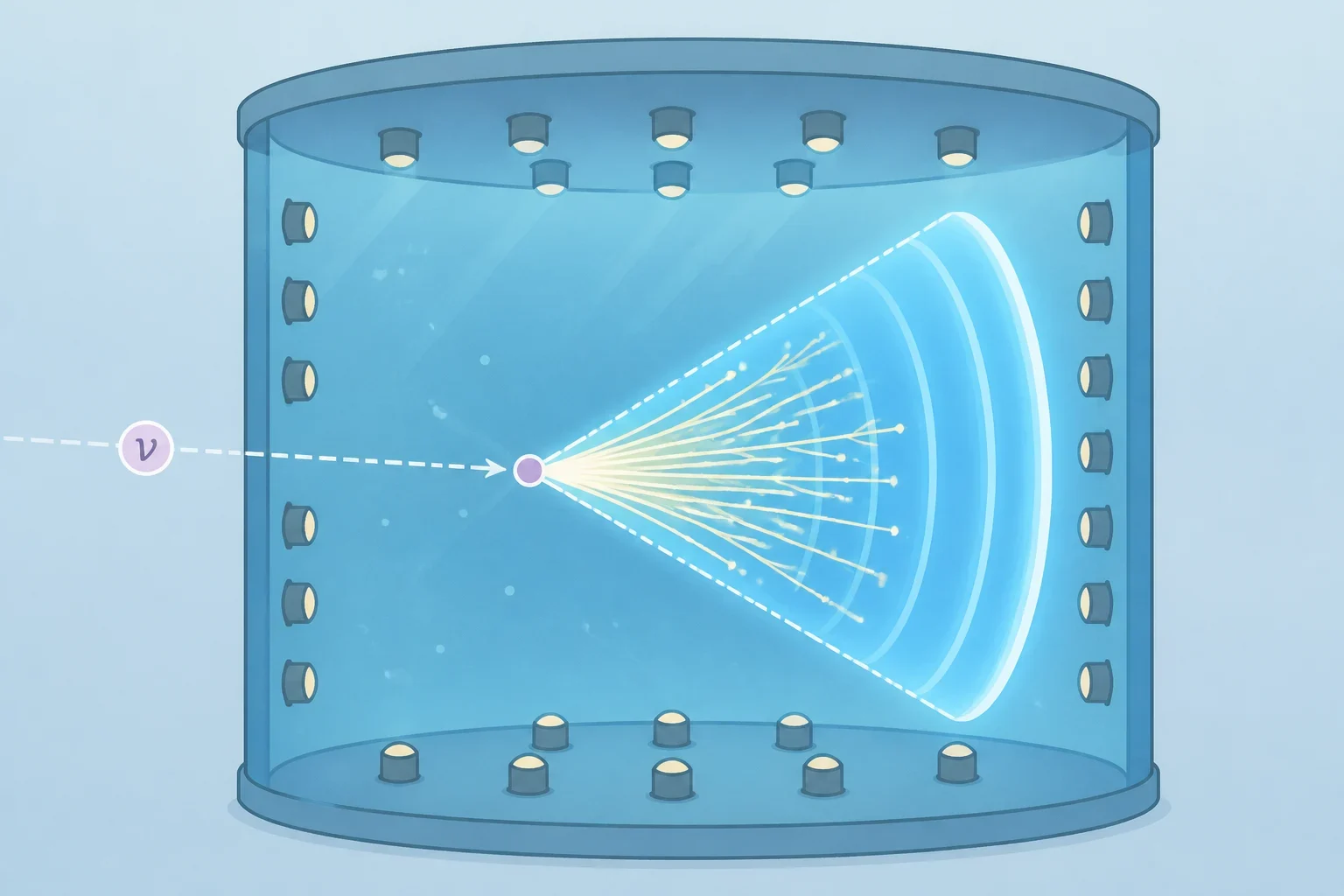
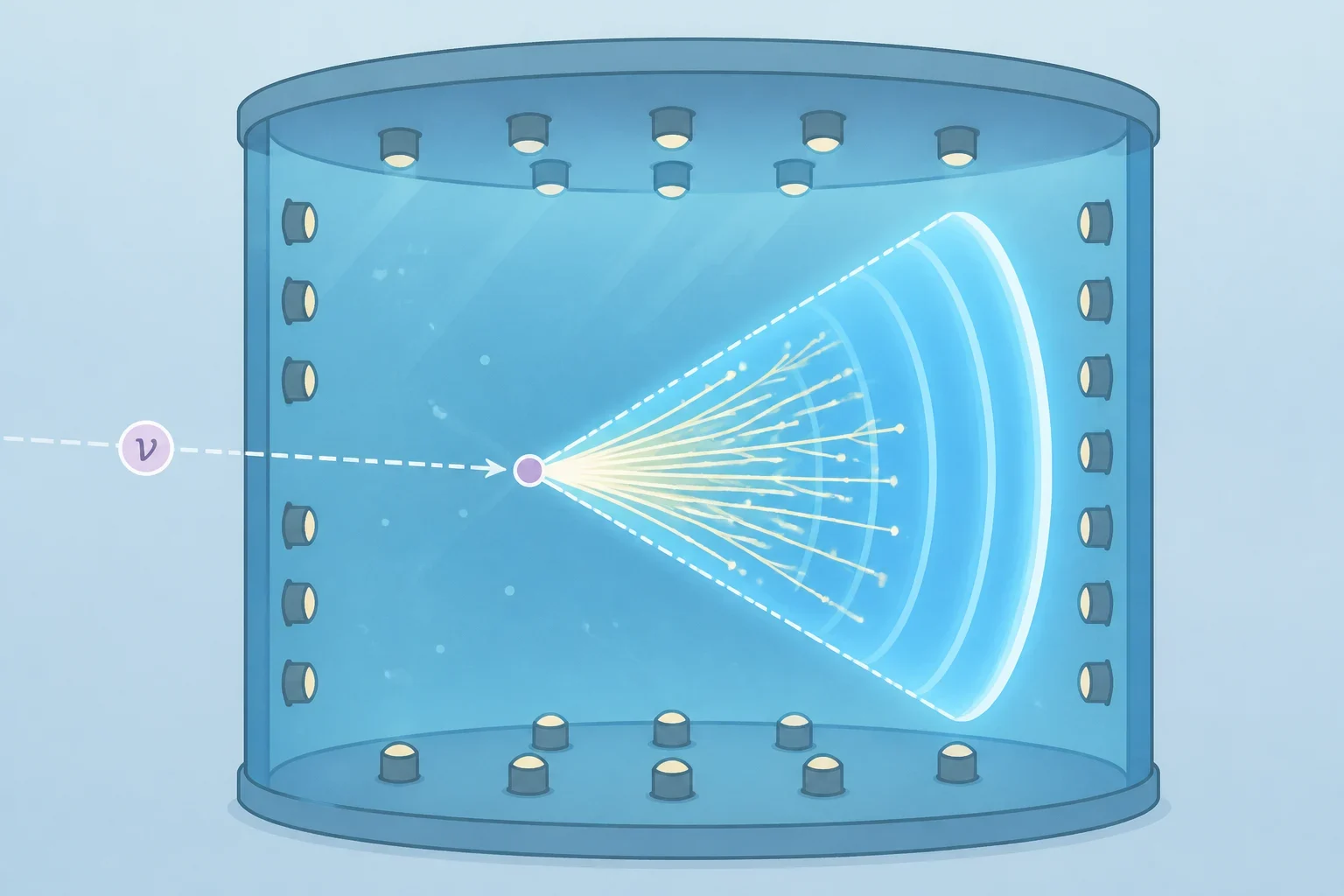
Neutrinos are sometimes called ghost particles because they pass through the Earth and through human bodies constantly without interacting with anything, according to the National Science Foundation. On rare occasions, one collides with an atomic nucleus, and that kind of collision can make a neutrino detectable, per the Nobel press release.
That collision produces a shower of secondary charged particles, which emit a flash of ultraviolet light through a process called Cherenkov radiation, according to IceCube. An array of 5,160 optical sensors buried in the ice picks up that light, letting researchers reconstruct roughly where the neutrino came from and how much energy it carried, per the same IceCube source. Those sensors sit more than two kilometers deep in ice that NSF describes as crystal clear and ideal for spotting such faint signals, according to NSF.
The South Pole was chosen deliberately. Its ice is unusually free of interference, and the region is geologically stable, with no earthquakes to disturb buried equipment, according to the Nobel press release.
The detector's size solves one problem: catching rare collisions at all. The ice itself creates another. The shape of the light an event produces tells researchers what they caught. A high-energy muon crossing the array leaves a narrow trail of light, a strongly directional signal that can point back toward a specific patch of sky, the basis for a 2022 finding that traced neutrinos to a galaxy roughly 47 million light-years away, according to NSF. A cascade event, produced by a different kind of neutrino interaction, instead lights up as a round blob spread unevenly across the sensor array, which makes its direction far harder to pin down, per IceCube. A single cascade reveals little about where it came from. Tens of thousands of them, sorted by a computer algorithm, can still trace patterns across the sky.
Getting that direction right required fixing the ice model itself. A 2024 study submitted to the Journal of Instrumentation accounted for anisotropy, birefringence, and layering effects in the ice, improving the median angular resolution for in-ice particle showers by more than a factor of three on a simulated dataset, compared with the older model, according to IceCube. Tianlu Yuan, the scientist who led that work, said the team initially set out just to understand flaws in the old model before realizing how much the detector's understanding of the ice had changed, per the same IceCube report.
IceCube never sees a neutrino directly. It detects the light left behind by a collision, then works backward to infer where the particle came from and which direction it was heading, the mechanism behind everything the Nobel committee cited.
Why high-energy astrophysical neutrinos matter
The universe contains natural particle accelerators, environments extreme enough to fire particles with energies up to a million times greater than anything built on Earth, according to the Nobel press release. Neutrinos created in those environments are useful for astronomy specifically because, unlike other particles, they travel toward Earth without changing direction or losing energy along the way, per the same source.
IceCube began operations in 2011, and two years later published findings showing it had detected the highest-energy neutrinos observed up to that point, carrying more than a million times the energy of previously detected particles, according to NSF. That gave scientists their first evidence that neutrinos might be regularly arriving from distant, high-energy sources outside the solar system, per the same NSF account. At the time, though, where exactly those neutrinos came from was still unknown, according to IceCube. Detecting the particles and identifying their cosmic sources turned out to be two separate milestones, years apart.
What IceCube has found since then
NSF describes a 2018 result as definitive evidence of neutrinos coming from a supermassive black hole in another galaxy, per NSF. IceCube's own announcement this week uses more cautious language for its galaxy-specific results, describing "evidence for neutrino emission" from two galaxies, TXS 0506+056 and NGC 1068, rather than calling the finding definitive, according to IceCube. The two accounts describe related findings at different levels of certainty, one from the funding agency, one from the collaboration that ran the experiment.
In 2023, the collaboration produced the first neutrino-based image of the Milky Way, and it is a statistical map rather than a photograph. Drexel University physicist Naoko Kurahashi Neilson proposed the computational approach, and fellow collaboration members Steve Sclafani and Mirco Hünnefeld built a machine-learning algorithm that compared the position, size, and energy of more than 60,000 cascade events IceCube had recorded over 10 years, according to NSF. The team spent roughly two years testing the algorithm on simulated data before running it on real detections, and the result was a picture showing bright spots that matched locations already suspected of emitting neutrinos based on observed gamma rays, per the same NSF report. Kurahashi Neilson described the moment she first saw it this way: "At this point in human history, we're the first ones to see our galaxy in anything other than light," she said, according to NSF.
What comes next for the Antarctic neutrino observatory
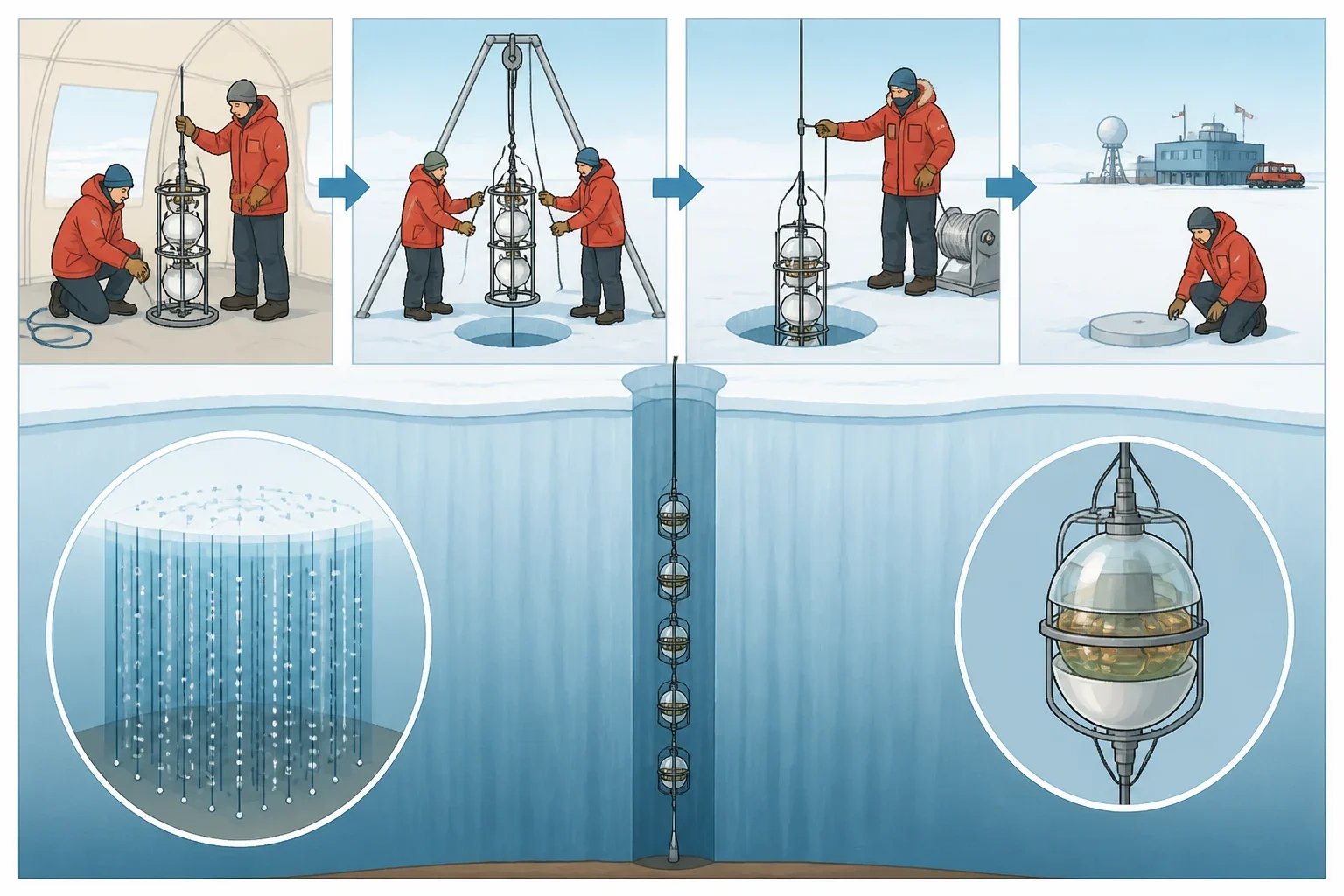
Between 2025 and 2026, the collaboration installed the IceCube Upgrade, designed to lower the detector's energy threshold and improve ice calibration so researchers can pin down a neutrino's direction more precisely, according to IceCube. The collaboration expects the first science data from the Upgrade later this year, per the same announcement, which means that result is still pending as of this Nobel announcement. NSF approved funding for the Upgrade in 2019, and IceCube describes its deployment as the first major expansion of the observatory since the original detector was completed 15 years ago, according to the IceCube announcement.
Beyond that, IceCube has proposed a far larger successor called IceCube-Gen2, which would expand the optical detector array to eight times its current volume and add a radio-detection system designed to measure even higher-energy neutrinos, according to IceCube. Gen2 remains a proposal rather than a funded or operating instrument.
Erin O'Sullivan, spokesperson for the IceCube collaboration, said the field is moving "from the first discoveries to strong detections," according to IceCube. The Nobel citation credits IceCube with establishing high-energy astrophysical neutrinos as a real, detectable phenomenon. Whether the upgraded detector, and eventually Gen2, can turn that into routine, source-by-source neutrino astronomy is the question the collaboration is still working to answer, with the Upgrade's first results not yet in and Gen2 still unbuilt.