
- World Space Week 2026 Rocket Revolution: Smithsonian Guide
- What the World Space Week 2026 Rocket Revolution theme means for classrooms
- Smithsonian's rocket design challenge for students
- Model rockets: a supervised extension from NASA
- What a rocket-growth study projects for the atmosphere
- Resources for educators
World Space Week 2026 Rocket Revolution: Smithsonian Guide
World Space Week 2026 is underway this week, running globally from October 4 through October 10 under the theme "Rocket Revolution," according to the United Nations. For teachers, parents, and homeschool educators, the observance lands at a useful moment: a dated, globally recognized reason to bring a hands-on rocket lesson into class before the week is out.
The dates aren't arbitrary. They mark two anniversaries: the October 4, 1957 launch of Sputnik 1, the first human-made satellite, and the October 10, 1967 entry into force of the Outer Space Treaty, according to the United Nations. The UN General Assembly proclaimed World Space Week by resolution in 1999 to recognize what space science and technology have contributed to daily life, the UN says.
UNOOSA, the UN Office for Outer Space Affairs, promotes international cooperation on the peaceful use of outer space and serves as secretariat for the UN committee that handles that work, according to the United Nations. The office also maintains the UN Register of Objects Launched into Outer Space, a tracking role worth remembering later when older students discuss how rocket activity gets monitored.
The observance applies broadly: elementary teachers and parents running a short classroom or at-home activity, and middle or high school teachers who want to push the same design-tradeoff question into a science and policy discussion.
What the World Space Week 2026 Rocket Revolution theme means for classrooms
The United Nations describes World Space Week as the largest annual space event in the world, according to its observance page, though that description isn't paired with a published attendance or participation figure. A review of the UN's site this week turned up the 2026 theme name but no event-specific toolkit or calendar spelling out exactly what "Rocket Revolution" covers, whether that means reusable vehicles, new propulsion methods, or commercial launch growth.
Schools hoping to register for an organized event should check UNOOSA's site directly rather than assume a theme-specific classroom kit already exists. That gap leaves room for teachers to build their own activity around the theme, and two existing resources, one from the Smithsonian and one from NASA, cover most of what a classroom needs without extra planning.
Smithsonian's rocket design challenge for students
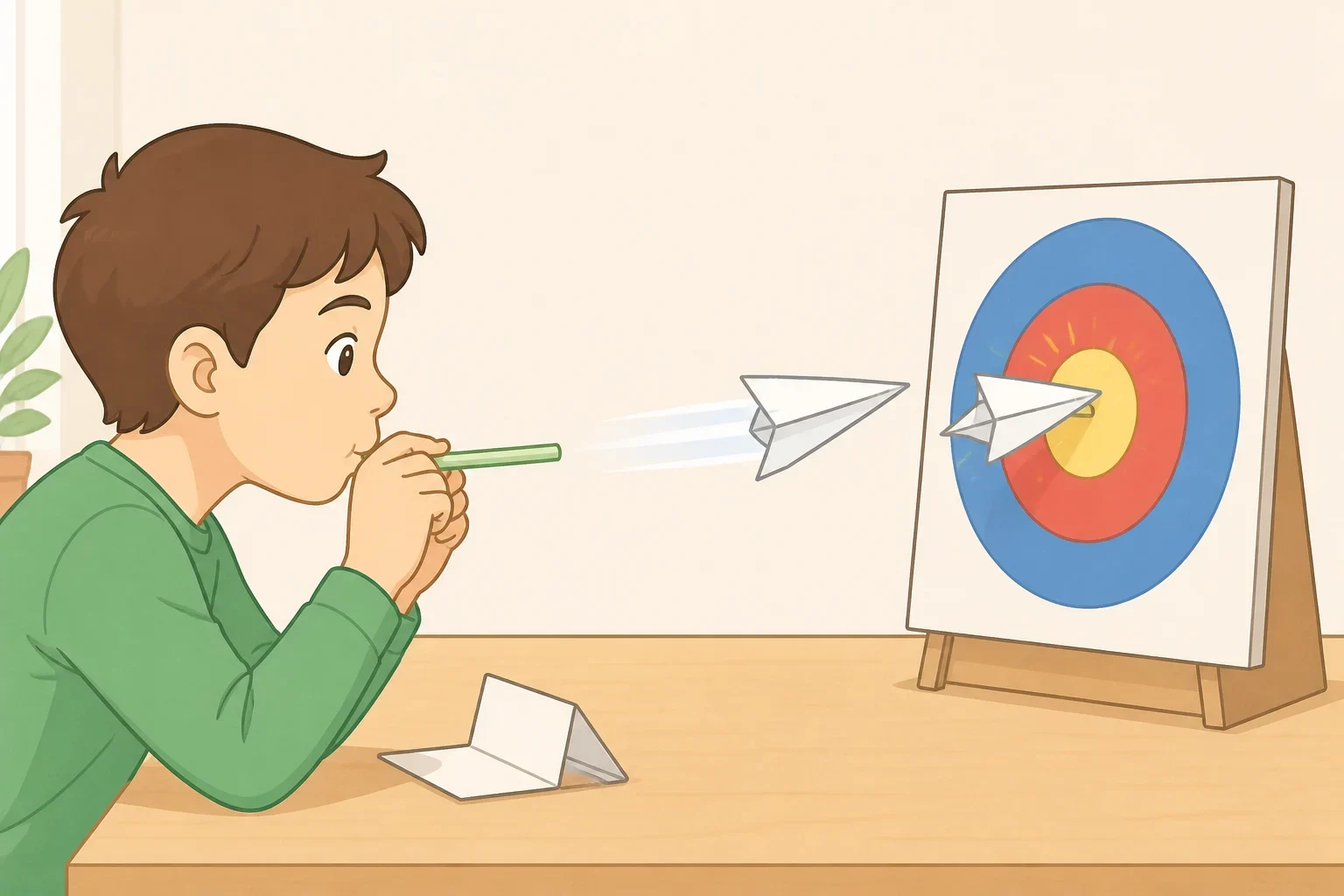
The Smithsonian's National Air and Space Museum publishes a rocket design challenge built for grades 3 through 5, ages 8 to 10, the museum says. Students build a paper rocket, launch it by blowing through a straw, then try to hit a target.
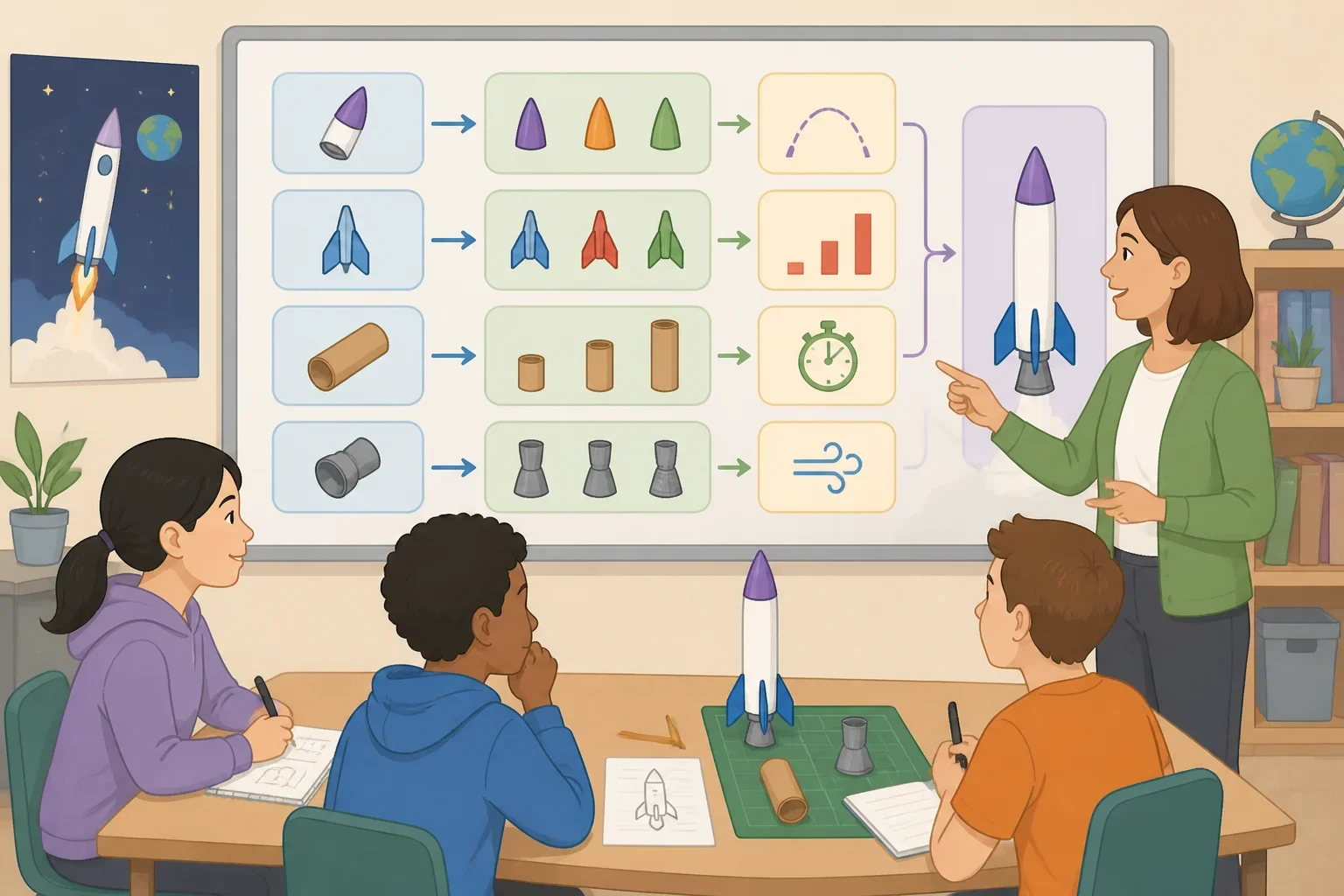
The activity's own follow-up questions push past a one-time craft project: did the rocket hit the target, can it fly farther, and what happens if it gets longer or shorter, gains or loses fins, or carries added weight in the nose cone, the museum's instructions ask. Students then change one variable and launch again, comparing how the second flight differed from the first.
Two specific parts explain why those changes matter. The nose cone moves air smoothly around the rocket, while the fins keep it stable and steer its direction, the museum notes. Those explanations give younger students a reason for whatever the comparison shows, instead of leaving a faster or slower flight unexplained.
Model rockets: a supervised extension from NASA
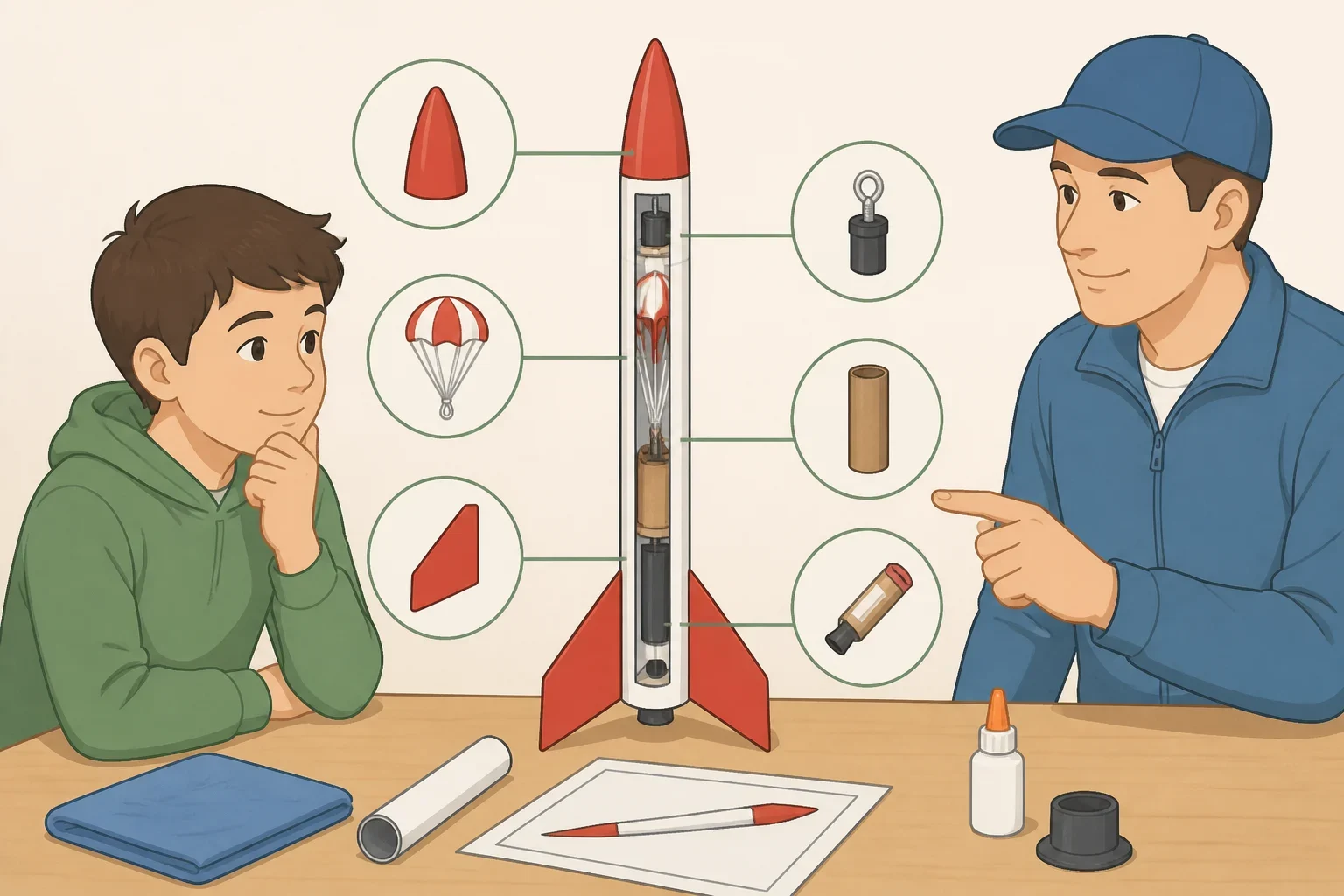
For classrooms or programs already equipped to go further, NASA's Glenn Research Center describes flying engine-powered model rockets as a relatively safe and inexpensive way to teach the forces of weight, thrust, and aerodynamics, according to NASA. These rockets use small, single-use solid-fuel engines that get replaced after each flight and are sold at hobby stores and some toy stores, NASA notes.
NASA's page details the rocket's parts, from the nose cone and recovery parachute to the fins that provide stability in flight, but it doesn't spell out supervision rules or launch-site requirements. Programs considering an engine-powered extension should treat it as a separate project and confirm their own safety procedures first, since those specifics sit outside what NASA's material addresses.
What a rocket-growth study projects for the atmosphere
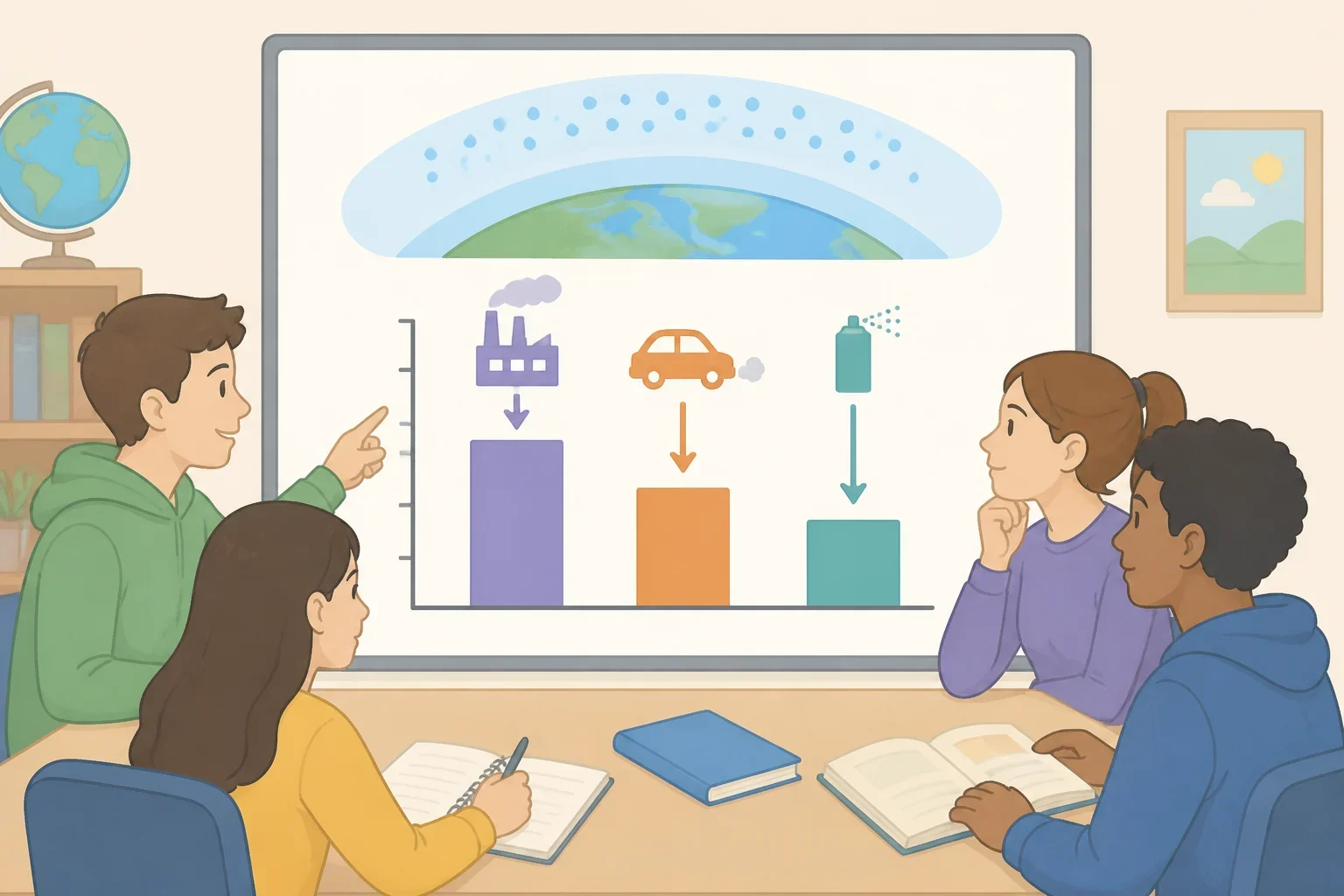
Middle and high school classes can extend the same design-tradeoff question into atmospheric science, using a modeling study available through PMC. Researchers built an inventory of air pollutant emissions from the 103 documented rocket launches in 2019, then ran that data through a global atmospheric chemistry model paired with a radiative transfer model to estimate effects on stratospheric ozone and climate, according to the study. The study didn't measure these effects directly; it modeled them from compiled emissions data.
Context for why researchers bothered: global revenue from the space industry is forecast to grow from $350 million in 2019 to more than $1 trillion by 2040, a projection the study cites in describing the sector as one of the world's fastest-growing industries, per the study. Launch activity itself grew from 58 launches in 2003 to over 100 in 2018 and 2019, an average increase of about 5.6% a year, the researchers found.
Projected forward over a decade at that growth rate, the model estimated global stratospheric ozone would decline by 0.010%, reaching a 0.15% loss in the upper stratosphere over the northern polar region. That decline was attributed roughly equally to nitrogen oxides from re-entry heating (51%) and chlorine from solid rocket fuel (49%), according to the study.
A separate, speculative scenario in the same research modeled three years of hypothetical space-tourism flights and projected that black carbon emissions from those flights could add warming equal to about 6% of the warming produced by all other black carbon sources worldwide, despite representing just 0.02% of global black carbon emissions, researchers found. They describe this as a projection about a hypothetical future industry, not a measurement of current tourism flights.
Those numbers give older students a real dataset to interrogate: what the study modeled, what assumptions it relied on, and what additional evidence they'd want before trusting a projection like this one. The study's authors write that the ozone and climate effects they estimate should motivate regulation of an industry positioned for rapid growth. That stance opens a classroom discussion: who, if anyone, should weigh in before rocket activity scales up further, and how that connects to UNOOSA's role in tracking launches internationally.
Resources for educators
The straw-rocket challenge comes from the Smithsonian's National Air and Space Museum, and current World Space Week observance details are available on the UN's page. Classes extending the lesson into atmospheric science can find the full dataset and methodology in the PMC study, which reads better as the basis for a claim-evidence-reasoning discussion than as a worksheet of settled facts, given how clearly the authors flag their numbers as projections rather than measurements.
Teachers looking to bridge the elementary activity into a middle school lesson can also check the museum's On Air: Rockets program, built for grades 6 through 8 and ages 9 to 15, which covers the history of rocketry and Robert Goddard's early experiments.
Programs considering engine-powered model rockets should review NASA's model rocket overview and check in with their own school or program about safety procedures before scheduling a launch, since supervision and site rules aren't covered in that material.
Run the straw-rocket trials first, keeping a shared data table for distance and the one variable changed each round. Bring older students into the atmospheric-science discussion once that's done, using the PMC study to practice telling a model's projections apart from actual measurements. If an engine-powered launch sounds like the right next step for the group, confirm supervision and site requirements with the school or program before scheduling anything.