
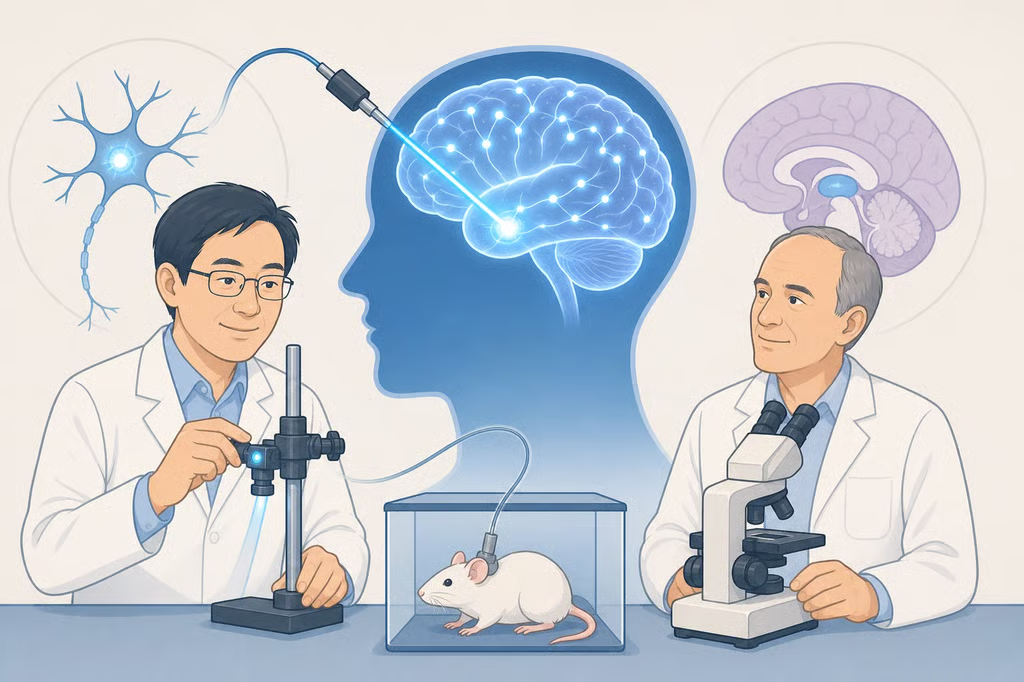
- 2026 Nobel Prize in Physiology or Medicine winners revealed
- What the 2026 Nobel Prize in medicine recognizes
- From a swimming alga to a light-gated ion channel
- How Deisseroth turned the protein into a brain switch
- What optogenetics has revealed, and what remains experimental
- Laureate backgrounds
- What to do next
2026 Nobel Prize in Physiology or Medicine winners revealed
Peter Hegemann, Georg Nagel, and Karl Deisseroth are the 2026 Nobel Prize in Physiology or Medicine winners, honored for discoveries concerning light-gated ion channels and optogenetics, according to a Nobel Prize press release published Monday by the Nobel Assembly at Karolinska Institutet.
Hegemann and Nagel found a light-sensitive protein in a single-celled alga. Deisseroth turned that protein into a method for switching nerve cells on with light, a technique now called optogenetics that makes it possible to show how nerve cells shape memories, feelings, and behaviors in the living brain (Nobel Prize press release).
The medicine prize is the first of six 2026 Nobel Prizes. Physics follows Tuesday, chemistry Wednesday, literature Thursday, and the peace prize Friday, with economic sciences closing out the announcements the following Monday, October 12 (Nobel Prize announcement schedule). This article covers only the medicine award.
What the 2026 Nobel Prize in medicine recognizes
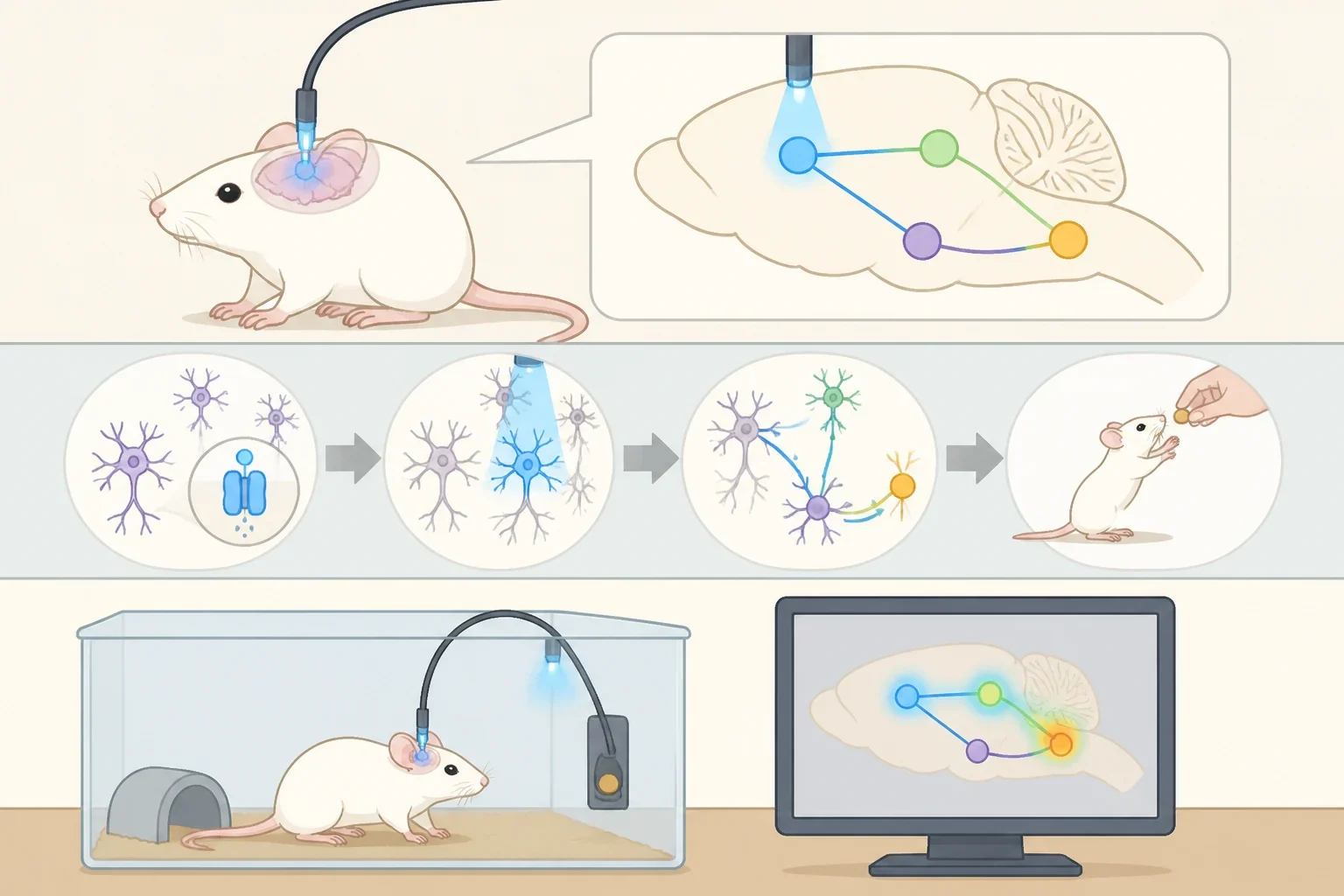
The official citation names "light-gated ion channels and optogenetics" as the discovery being honored (Nobel Prize press release). Per Svenningsson, chair of the Nobel Committee for Physiology or Medicine, said optogenetics "provides opportunities for mapping the brain in a way that we could once only dream of" (Nobel Prize press release).
The Nobel Assembly says researchers have used the method to reveal neural circuits tied to specific memories, feelings, and behaviors relevant to neurological and psychiatric disorders (Nobel Prize press release). The press release goes further, stating that optogenetics has fundamentally altered scientific understanding of the brain (Nobel Prize press release).
From a swimming alga to a light-gated ion channel
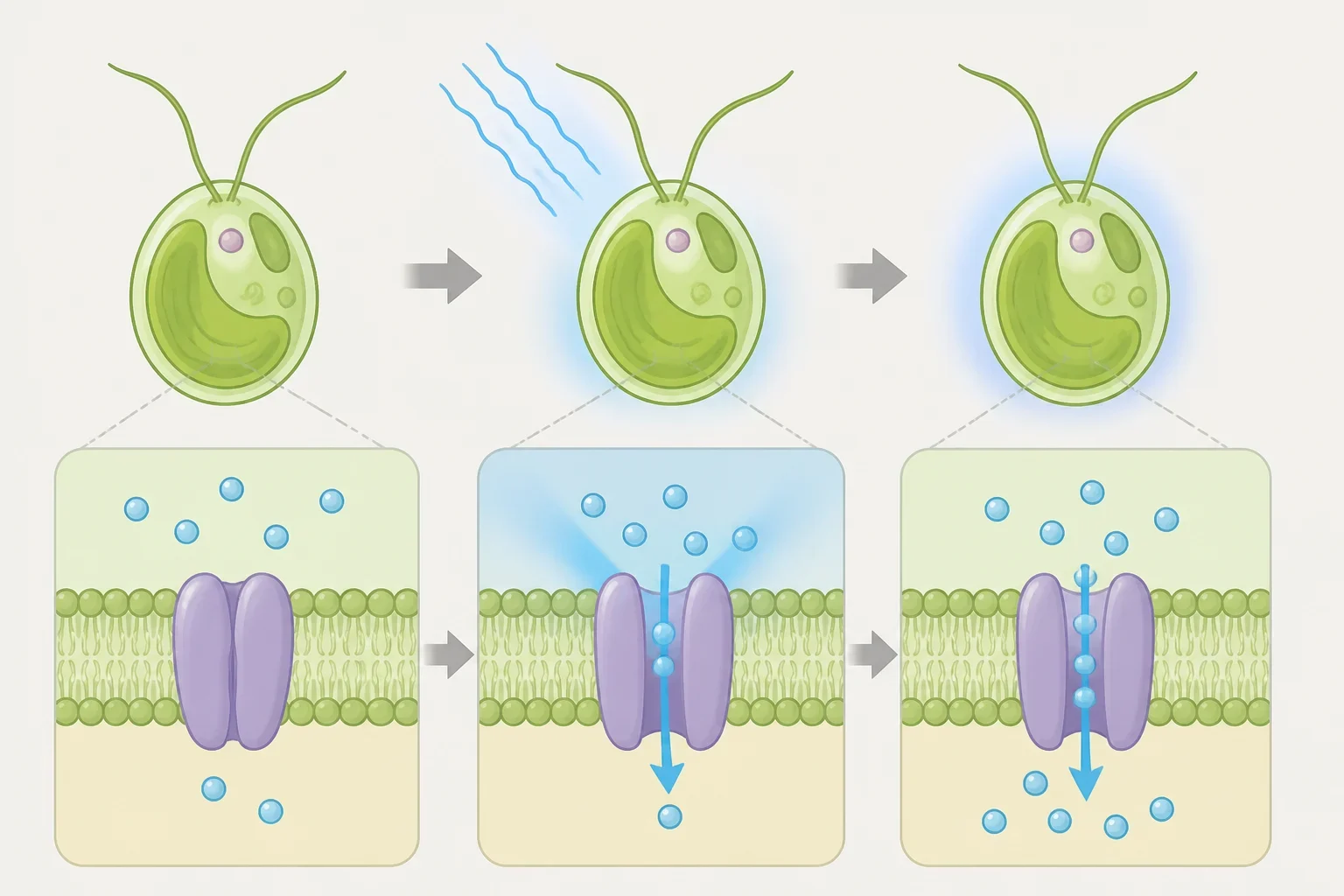
The research started with a question Hegemann wanted answered: how does Chlamydomonas, a single-celled alga, manage to swim toward a light source (Nobel Prize press release)?
Working with Nagel in the early 2000s, he identified channelrhodopsin, a protein sitting on the alga's cell surface (Nobel Prize press release; Karolinska Institutet). The "light-gated" part of the Nobel citation describes exactly what makes this protein unusual: it works as a channel built into the cell's outer membrane, and that channel only opens when light hits it.
Blue light striking the protein opens a channel through it, letting charged ions flow into the cell and generate an electrical impulse (Nobel Prize press release). That sequence, light in, channel opens, ions flow, impulse out, is the entire mechanism the rest of this story depends on.
The detail that made the discovery useful far beyond algae: cells into which researchers placed the protein became light-sensitive, regardless of what kind of cell it was (Nobel Prize press release).
How Deisseroth turned the protein into a brain switch
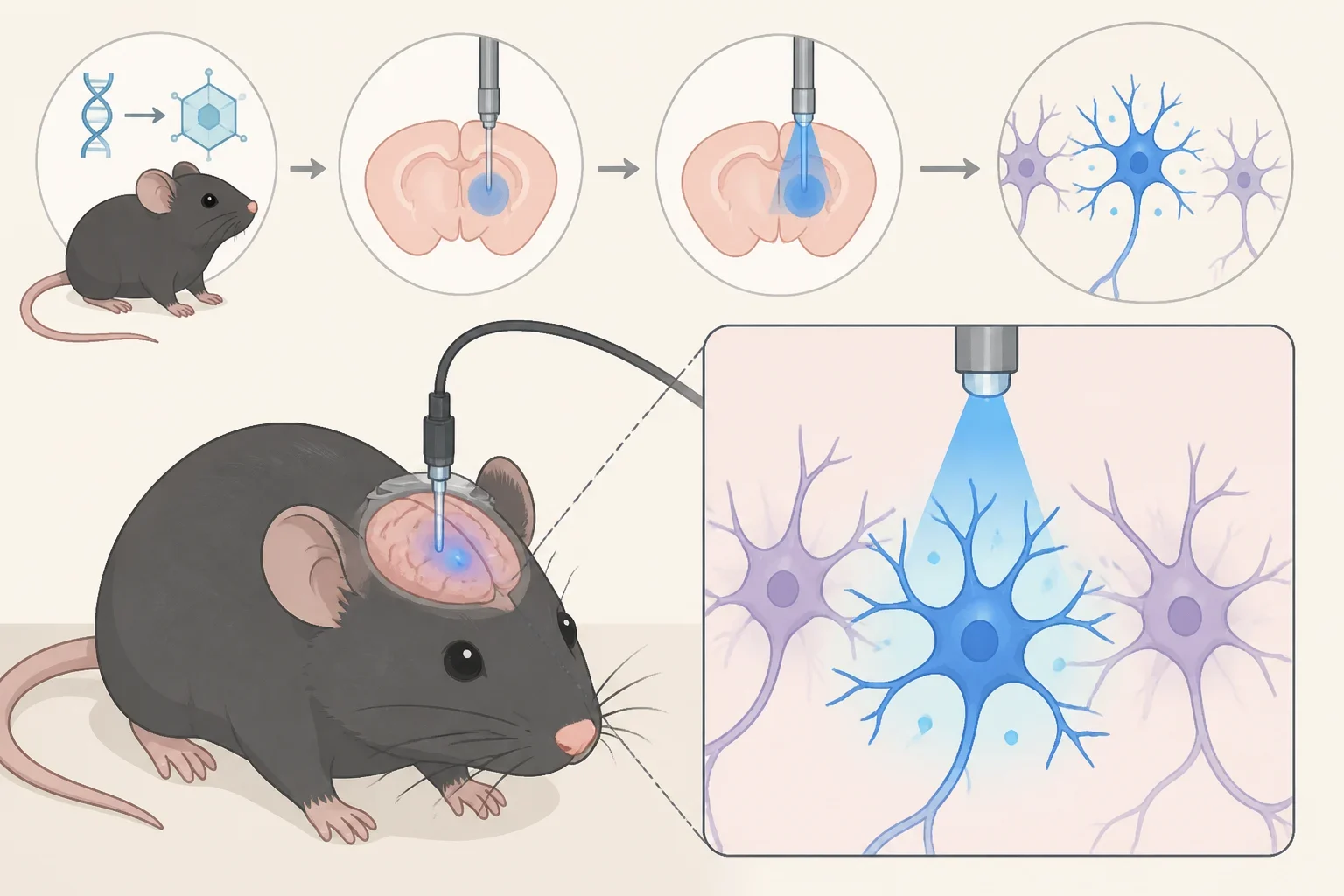
Deisseroth took the channelrhodopsin gene and inserted it into nerve cells taken from rats. Shining blue light on those engineered cells triggered a nerve signal, a result he published in 2005 (Karolinska Institutet).
Two years later, he made the light-controlled switch work inside the brains of living mice, moving the technique from isolated cells in a dish to a functioning animal brain (Nobel Prize press release). The method for controlling nerve signals with light is now called optogenetics, and it has rapidly gained global impact, according to the Karolinska Institutet's announcement (Karolinska Institutet).
For a student trying to keep the timeline straight: algae first, in the early 2000s; rat neurons in a dish next, in 2005; living mouse brains two years after that. Each step answered a different question, whether the protein existed, whether it worked outside algae, and whether it worked inside a functioning brain.
What optogenetics has revealed, and what remains experimental
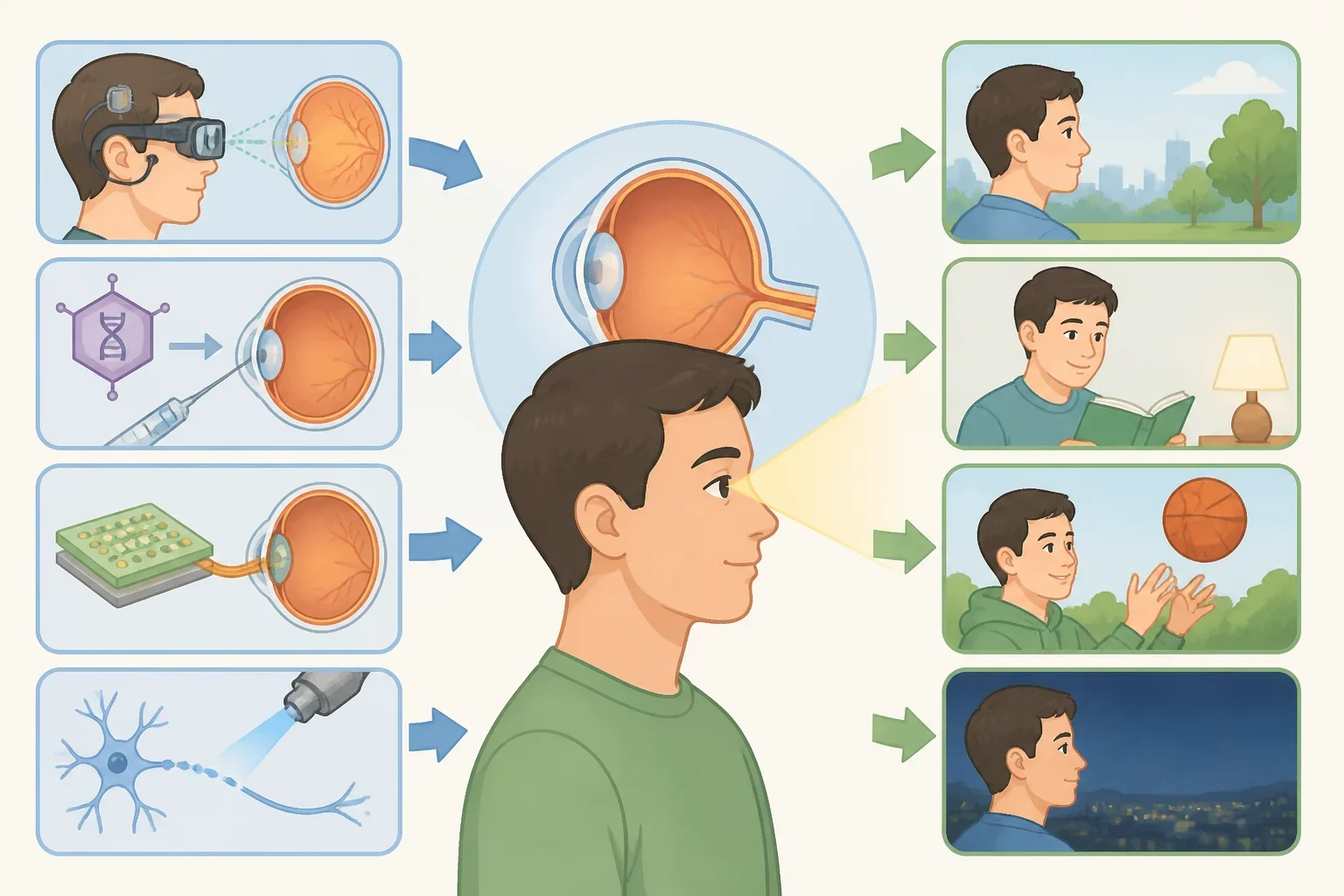
Beyond mapping circuits, the Nobel Assembly points to one clinical application in progress: researchers are using optogenetics in attempts to restore sight in people with visual impairment (Nobel Prize press release).
The release describes attempts to restore sight, but does not provide treatment outcomes. That distinction matters for anyone writing about this prize: a research attempt and a proven treatment are not the same claim, and the available source material only supports the first one.
Laureate backgrounds
- Peter Hegemann, born 1954, earned his Ph.D. in 1984 at the Max Planck Institute for Biochemistry in Martinsried, Germany, where part of the prize-winning research took place (Karolinska Institutet).
- Georg Nagel, born 1953, earned his Ph.D. in 1988 at the University of Frankfurt. The announcement says the prize-awarded discoveries were also made at the Max Planck Institute for Biophysics in Frankfurt (Karolinska Institutet).
- Karl Deisseroth, born 1971, holds a Ph.D. from 1998 and an M.D. from 2000, both from Stanford University (Karolinska Institutet).
The three share a 12-million-Swedish-krona prize, split equally, awarded by the Nobel Assembly, a body at Karolinska Institutet founded in 1977 (Nobel Prize press release).
What to do next
Anyone writing about this prize for a class assignment should keep three things separate: the discovery itself (channelrhodopsin, a protein found in an alga), the method built from it (optogenetics, the broader technique of controlling engineered cells with light), and the evidence that it worked (rat neurons in 2005, living mouse brains two years later). Circuit-mapping research and the vision-restoration attempt belong in separate sentences too, since only one of them has been tested in a living brain and reported in the official record.
NobelPrize.org plans to publish its official 2026 Nobel Prize Lessons on October 13, including slideshows, videos, student texts, and assignments built for a 20-minute class period aimed at students ages 14 to 18 (Nobel Prize Lessons). Until then, check any claim beyond the basic mechanism, especially anything involving clinical use, directly against the Nobel Prize press release before including it in written work.