
- Education Department SJSU Title IX Enforcement Action
- The SJSU women's volleyball Title IX case: from investigation to enforcement notice
- What the notice says about possible funding consequences
- OCR's broader shift toward transgender-athlete and race-eligibility cases
- What students can check at their own school
Education Department SJSU Title IX Enforcement Action
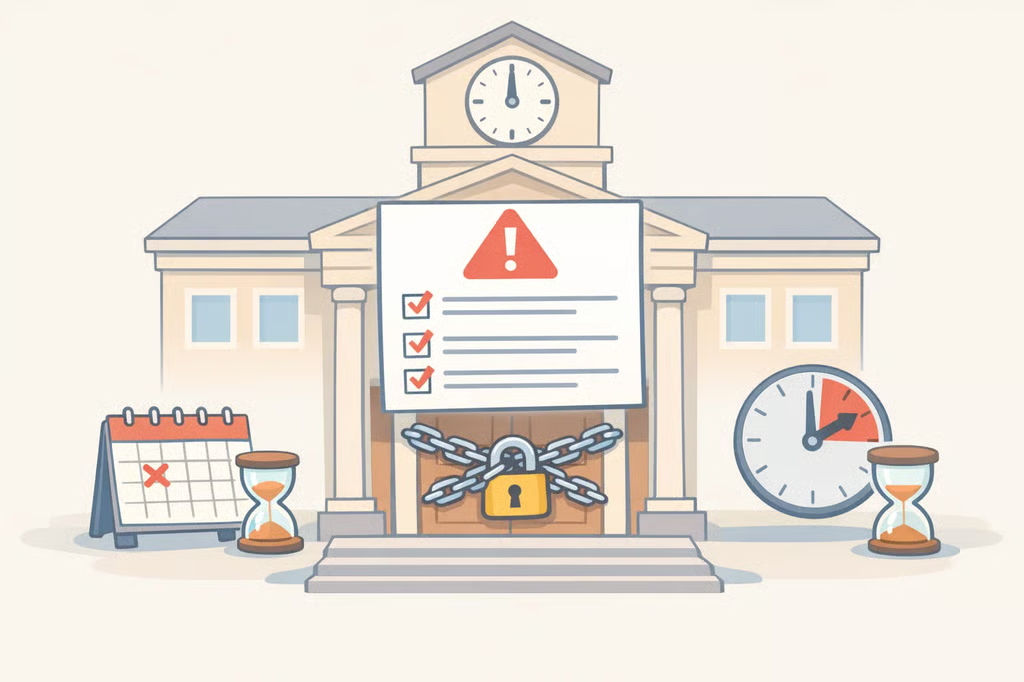
The Education Department SJSU Title IX enforcement action gave San José State University 10 calendar days to comply with Title IX after the Office for Civil Rights issued a Letter of Impending Enforcement Action on March 24, or face possible enforcement, including referral to the Justice Department and risk of losing federal funding, according to the notice. "With today's action, the Department is putting the university on notice: comply with the law or risk losing its federal funding," the release stated.
That window closed months ago. The department press releases and the Brookings analysis reviewed for this article did not identify any public statement from OCR, the Justice Department, or SJSU describing what happened once the 10-day period ran out. This notice is best read as a Title IX enforcement action against a college with an expired compliance window and no confirmed public update, not as a resolved case.
The case still provides a documented example of the sequence OCR describes: a directed investigation, a finding of violation, a proposed resolution agreement, a refusal to sign, and an enforcement warning that raises the possibility of funding consequences. It sits inside a wider pattern, too. An analysis published earlier this year by Brookings found that the Department of Education OCR investigation record for 2025 concentrated almost entirely on transgender-athlete policies, alleged reverse racial discrimination, and antisemitism.
Athletes, students in programs named in similar resolution agreements, and anyone weighing a Title IX complaint at their own school can use this sequence to distinguish an investigation, a finding, a proposed agreement, and an enforcement notice, four stages that carry different consequences.
The SJSU women's volleyball Title IX case: from investigation to enforcement notice

OCR opened a directed investigation into SJSU in February 2025 over allegations that, starting in 2022, the university allowed a male athlete to compete on its women's indoor and beach volleyball teams, according to the department's January finding. OCR said its investigation found that coaching staff were instructed not to disclose the athlete's sex to teammates, and that as a result, players shared locker rooms and hotel rooms with him without being told he was male.
The same release said OCR's investigation found that seven opposing teams forfeited matches rather than compete, and that SJSU failed to promptly investigate complaints filed by its own athletes. OCR also said the university later pursued a Title IX complaint against a player for discussing the situation publicly. These are OCR's stated findings; a response from SJSU does not appear in the department releases reviewed for this article.
OCR concluded in January that SJSU's policies violated Title IX and sent the university a proposed resolution agreement asking it to adopt biology-based sex definitions, separate sports and facilities by sex, restore misappropriated athletic records, and send personalized apology letters to affected players, according to the January release. "SJSU remains obstinate, choosing a radical ideology over safety, dignity, and fairness for its own students," Assistant Secretary for Civil Rights Kimberly Richey said, according to the department's March notice.
The March notice states that SJSU refused to sign or negotiate that agreement, which is what triggered the enforcement letter. The University of Pennsylvania took a different route in July 2025, signing a comparable agreement that restored swimming records, adopted biology-based sex definitions, and apologized to affected swimmers, according to the Education Department. A resolution agreement closed Penn's reported Title IX matter; SJSU's refusal shows what happens when a school does not sign one.
What the notice says about possible funding consequences
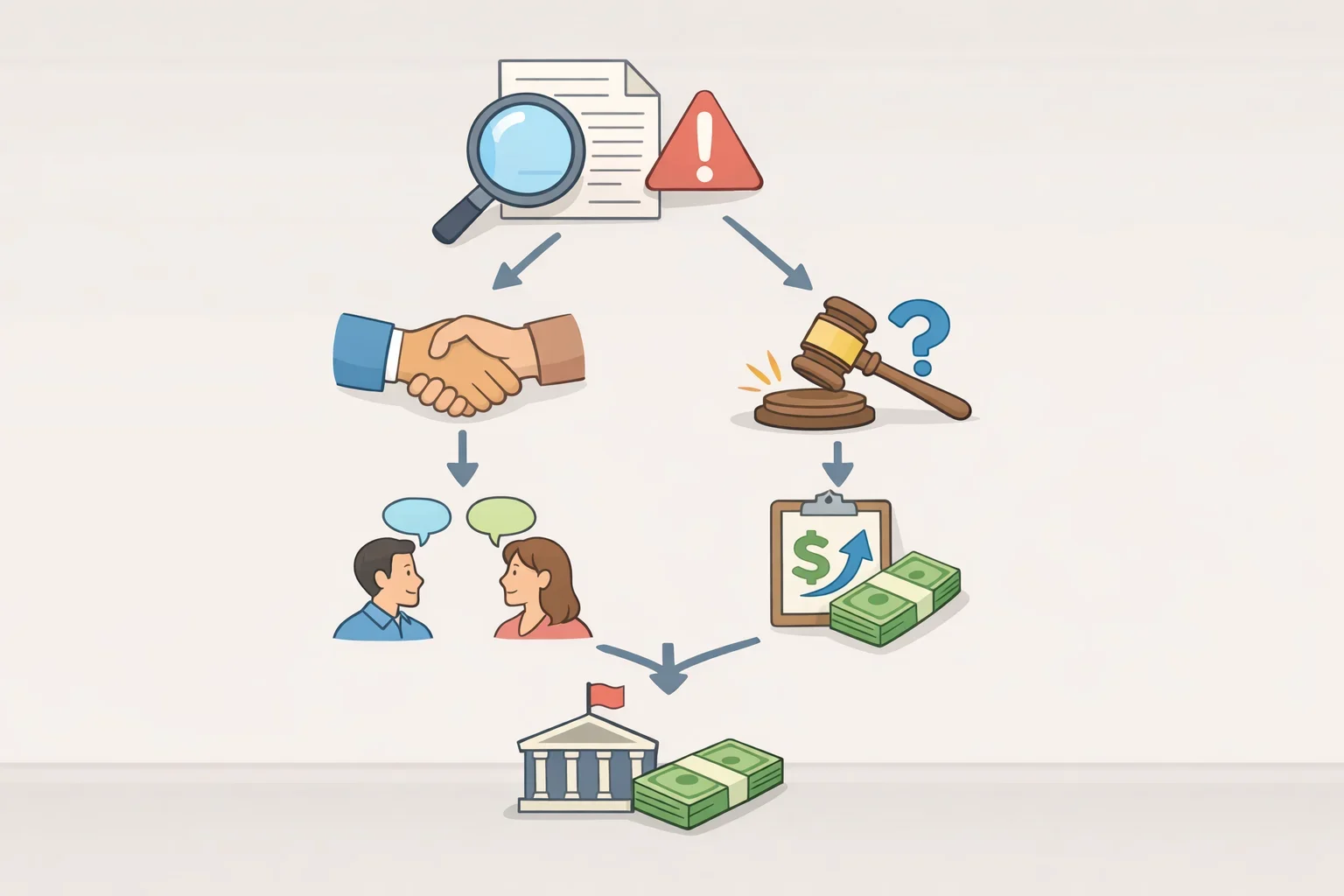
Brookings describes OCR's general process in Title IX and Title VI cases as a complaint or directed investigation, documented findings, a proposed resolution agreement, negotiation or refusal, and then possible referral to the Justice Department or an administrative hearing before funding is affected, according to Brookings. That is Brookings' characterization of the process, not a complete legal accounting of every statutory step.
The same analysis lists due-process steps Brookings says are required before funding can be terminated: documenting violations through an investigation, giving the school a summary of findings and notice of pending termination, and offering the school a chance to settle or challenge the findings before an administrative judge. SJSU's March letter reflects an earlier point in that sequence, not a completed funding cutoff.
Brookings also points to a case where that process was tested elsewhere. A federal judge found the administration's earlier termination of Harvard's research funding unlawful, and that funding was later restored, Brookings reported. Harvard's dispute involved a different funding program and a different legal posture than SJSU's Title IX notice, so it does not preview how SJSU's case will end.
OCR's own database of pending investigations had not been updated since the start of the administration in January 2025, Brookings reported in February, so it is not a reliable place to check current status. Resolution agreements and press releases posted on ed.gov, along with a school's own compliance pages, each tend to show a different stage of a case, whether that's an investigation opened, a finding issued, or an agreement signed, and are worth checking directly.
OCR's broader shift toward transgender-athlete and race-eligibility cases
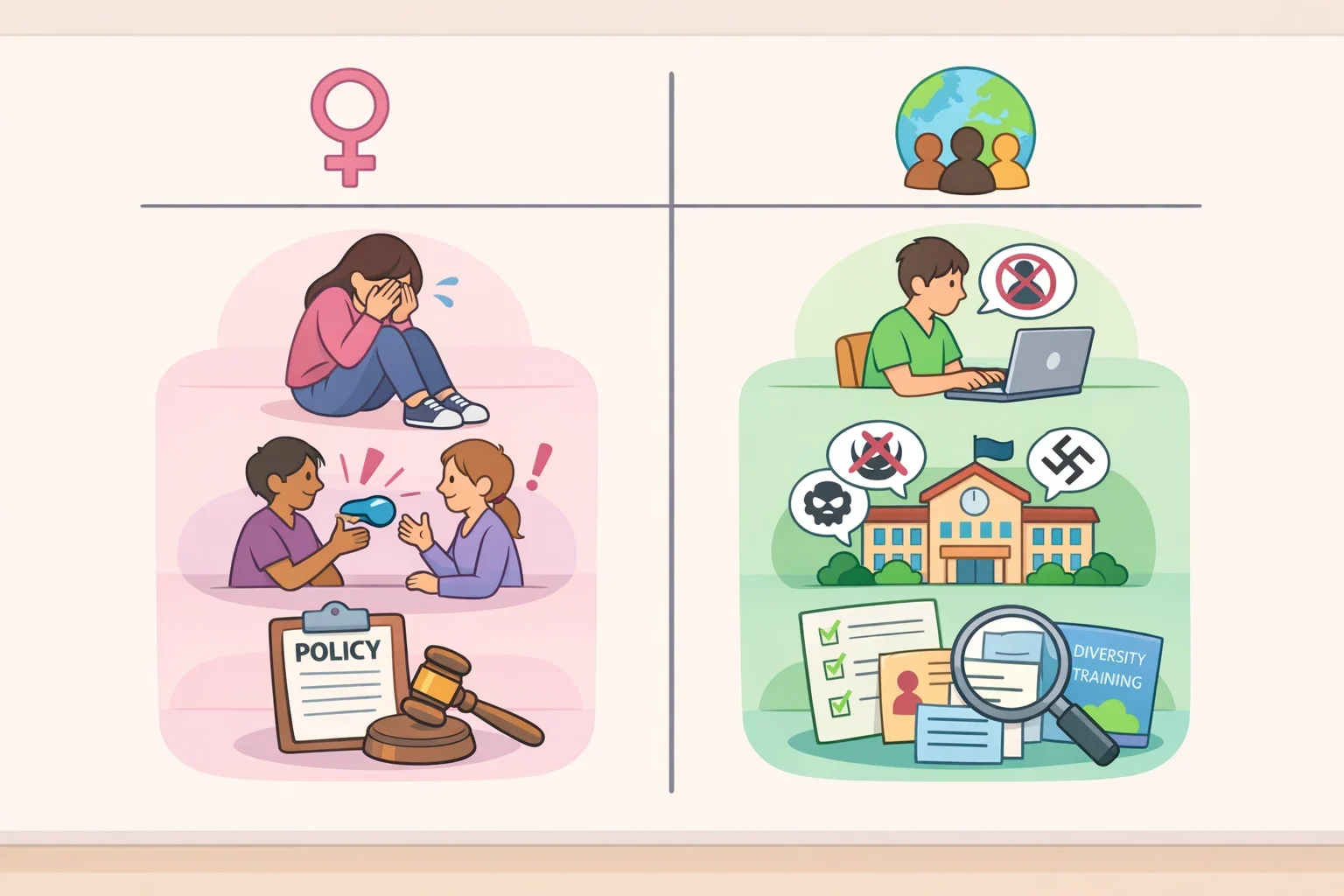
Brookings' analysis found that in 2025, OCR's only Title IX enforcement work involved challenges to transgender-athlete policies, with no cases addressing sexual harassment or assault unrelated to those policies, according to Brookings. That figure comes from Brookings' own dataset of that year's investigations, not an official OCR tally, and describes a single year rather than a fixed rule about what future Title IX cases will cover.
The department separately said it had opened Title VI investigations into institutions "where widespread antisemitic harassment has been reported," Secretary Linda McMahon said when announcing a related round of actions, according to the Education Department. In a distinct group of cases, OCR investigated 45 universities over partnerships with The Ph.D. Project, an organization the department said restricted eligibility by race, according to the same March 2025 release. By mid-February, 31 of those schools had signed or already completed agreements to end the partnerships, while 14 remained in negotiations, according to the Education Department.
Brookings attributes part of the narrowing to decisions made inside the agency. About half of OCR's staff received termination notices and seven of its 12 regional offices closed last year, with remaining lawyers' caseloads reportedly quadrupling, Brookings reported. The analysis says OCR shifted from responding mainly to complaints filed by students and families toward "proactive, administration-directed investigations" and complaints from advocacy groups such as America First Legal Foundation and Parents Defending Education. New Assistant Secretary for Civil Rights Kimberly Richey rescinded the termination notices in January to work through the resulting case backlog, Brookings reported, a detail not identified in the department releases reviewed for this article.
What students can check at their own school

Students affected by this pattern generally fall into three groups: SJSU students and athletes, students at schools named in a Title VI resolution agreement or still negotiating one, and students elsewhere weighing a Title IX complaint.
Athletes at SJSU or a school facing a similar proceeding can ask their athletics department for the current written eligibility and facility-access policy, since SJSU's proposed agreement specifically addressed sports eligibility, facility separation by sex, and athletic records, according to the Education Department.
Students in a program that partnered with The Ph.D. Project or a similar organization can check that program's page for updated eligibility criteria and ask the program administrator whether it was named in the February resolution announcement or remains under negotiation, according to the Education Department.
Anyone weighing a Title IX complaint, or named in one, can request the written complaint timeline and anti-retaliation policy directly from a campus Title IX office. Whether additional support, such as a student ombuds office, exists varies by school, so it is worth confirming rather than assuming one is available.
A federal notice to a school does not, by itself, establish that an individual student's financial aid will change. Students with aid questions tied to a pending federal action can ask their financial-aid office for written confirmation of whether the notice affects their specific award.
The next step for anyone following the SJSU case is to locate the most recent OCR or SJSU notice on ed.gov or the university's own compliance page and check what stage it names: a proposed agreement, a Justice Department referral, an administrative proceeding, or a funding termination. Those are four different outcomes, and only one of them, termination, would actually affect the university's federal funding.