

Dictionary Day activities for students: trace how a word's meaning changed
Dictionary Day activities for students work best when they ask for more than copying down a definition. One option asks students to trace how a single word's meaning shifted over time, then explain, carefully, what might have caused that shift. It turns a dictionary into a historical record instead of a spelling check.
Take the word awful. According to InstructorWeb, it once meant "full of awe," nothing like the unpleasant, bad-news word students reach for today. Swapping an old meaning for a new one is exactly what the activity below asks students to document, with sources attached at every step.
By the end, a student will have a two-part comparison of current and earlier meanings, a labeled category of change, a named source for each meaning, and a carefully hedged note about what might have influenced the shift. This guide walks through one repeatable research method and three classroom formats for running it: a whole-class model, partner research, and a gallery walk. The warm-up worksheet below is built for grades 6 through 8; the open-ended investigation that follows can work with older students too, with adjustments noted in each format.
One distinction matters before starting. The warm-up classification exercise has a correct answer. The open-ended word investigation does not. Students should present any explanation of why a word changed as a reasoned guess, not a proven fact, unless their source states the cause directly.
A semantic change lesson for students: three common types of change
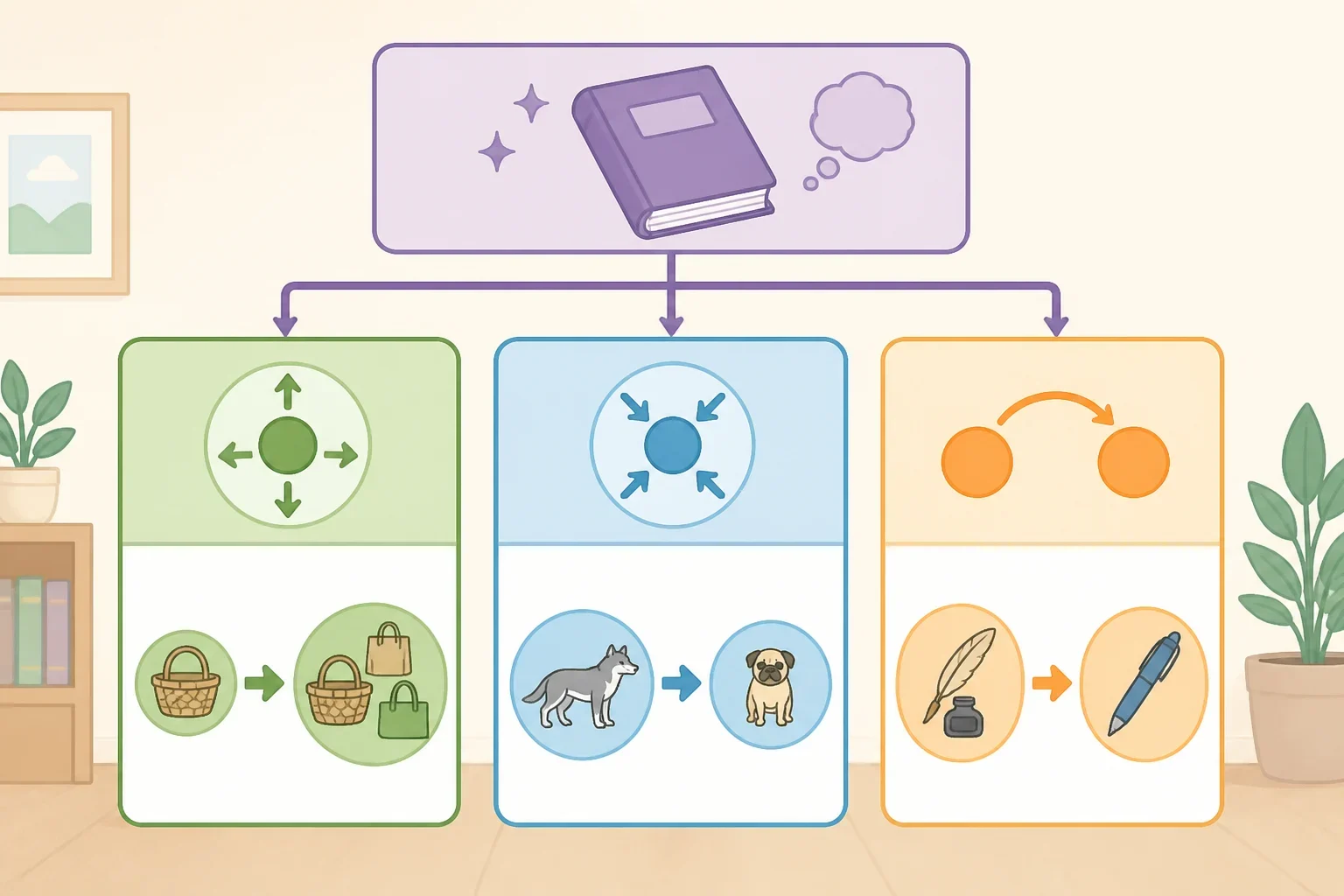
Semantic change describes the way a word's meaning shifts over time, according to InstructorWeb. Before researching a word on their own, students need language for naming what kind of shift they're looking at. Three common types, per InstructorWeb:
- Broadening: the meaning widens to cover more than it used to.
- Narrowing: the meaning shrinks to cover less than it used to.
- Shift: the meaning moves away from its original sense toward something new. InstructorWeb gives awful as its example here, since the word once meant "full of awe."
This framework comes from a published vocabulary worksheet built for grades 6 through 8. Students classify eight words this way, work through four short responses, and finish in about 20 minutes, according to InstructorWeb. A complete answer key is included, which makes it one reasonable starting point: students practice the vocabulary of broadening, narrowing, and shift on words where the answer is already settled, before taking on a word where it isn't.
Use awful as the worked example during this warm-up. Walk through why it counts as a shift rather than a broadening or narrowing, since its earlier sense points in a different direction than how the word gets used now. Then let students classify the remaining words on their own or in pairs. This step builds the vocabulary they'll need once the investigation turns open-ended.
How word meanings change over time: a step-by-step research method
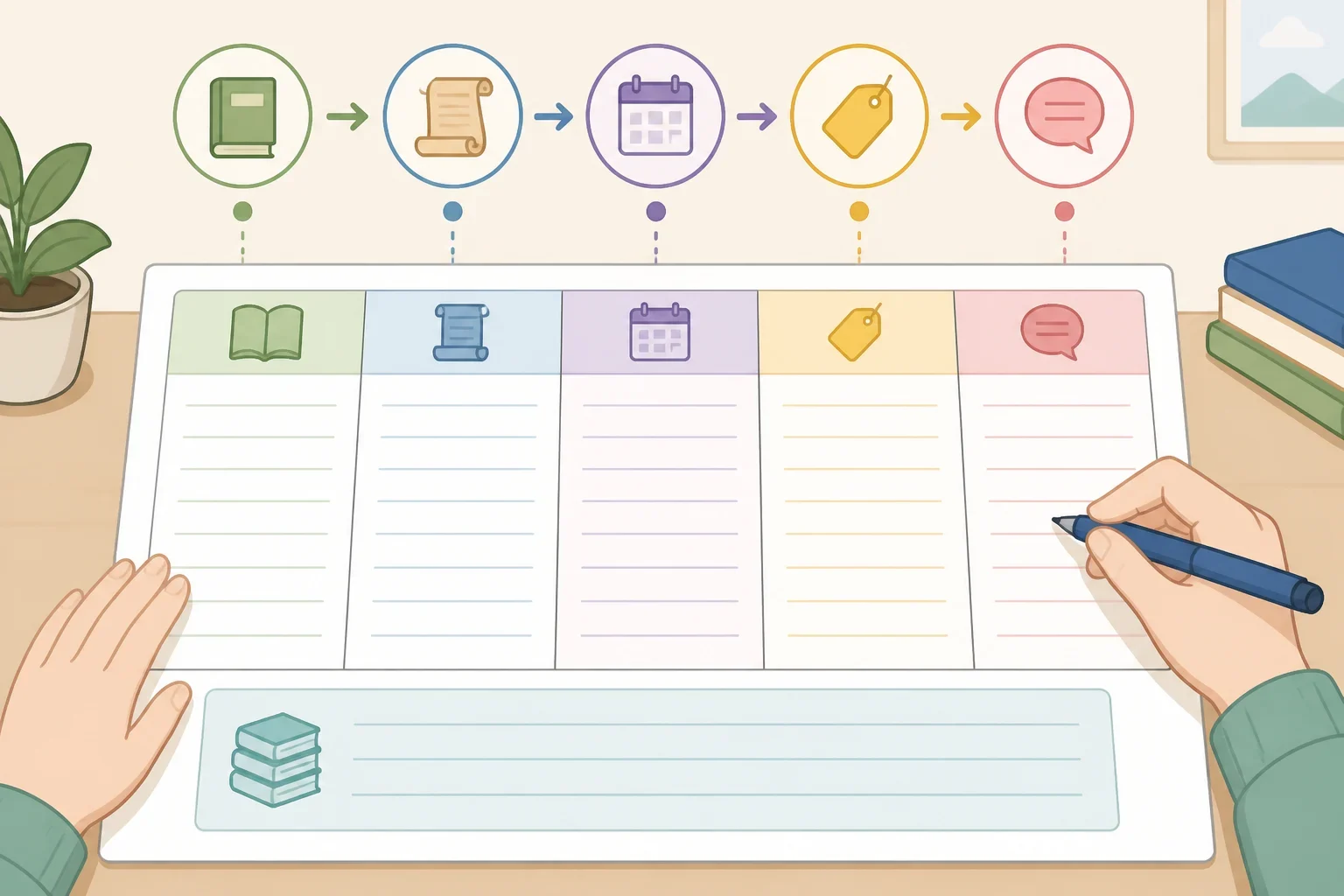
Once students know the three categories, they can take on a word of their own. The method below checks sources before students interpret the change, rather than treating sourcing as an afterthought.
- Choose a familiar word. Pick one that shows up in a reputable word-history collection, since that makes an earlier sense easier to confirm.
- Record the current definition. Use a standard dictionary and write down the dictionary name, entry title, URL, and access date, if the class's citation rules call for one.
- Find an earlier sense in a separate source. Look for a dictionary's word-history page, etymology note, or another resource that names its own source, not an unsourced list or blog post, and record that source the same way. Most standard dictionary entries don't carry historical senses, so the current and earlier meanings typically come from two different pages, not one.
- Write the two meanings side by side. Include a date or century for the earlier sense only if the source gives one. If it doesn't, write "date not specified" instead of guessing.
- Label the change. Use broadening, narrowing, or shift from the warm-up.
- Propose one possible influence (optional). Suggest a broad factor, such as new technology, contact between cultures, or shifting social attitudes, that might explain the change. These are general categories of language-change drivers drawn from a classroom presentation on language change, not documented causes tied to any single word, according to SlideServe. Students should write "cause not established by this source" unless their research names a specific cause for their specific word.
A worked example shows how the finished format should look, reusing awful from the warm-up so the focus stays on the format rather than a new word search:
Model entry: awful
- Current meaning: extremely unpleasant or very bad (record the dictionary name, entry title, URL, and access date from whichever standard dictionary a student checks)
- Earlier meaning: "full of awe," according to InstructorWeb
- Date: not specified by this source
- Category: shift, since the meaning moved away from its earlier recorded sense rather than simply widening or narrowing
- Influence note: cause not established by this source
When researching an original word rather than this shared example, students should look for the earlier sense on a dictionary's word-history page or etymology note, following step 3 above.
Two things need checking before a student presents or turns this in: that the earlier-meaning source names where it got the earlier sense, and that any date claim only appears when the source actually states one. A meaning without a named source is a guess dressed up as research.
Dictionary Day classroom activities: three ways to run this
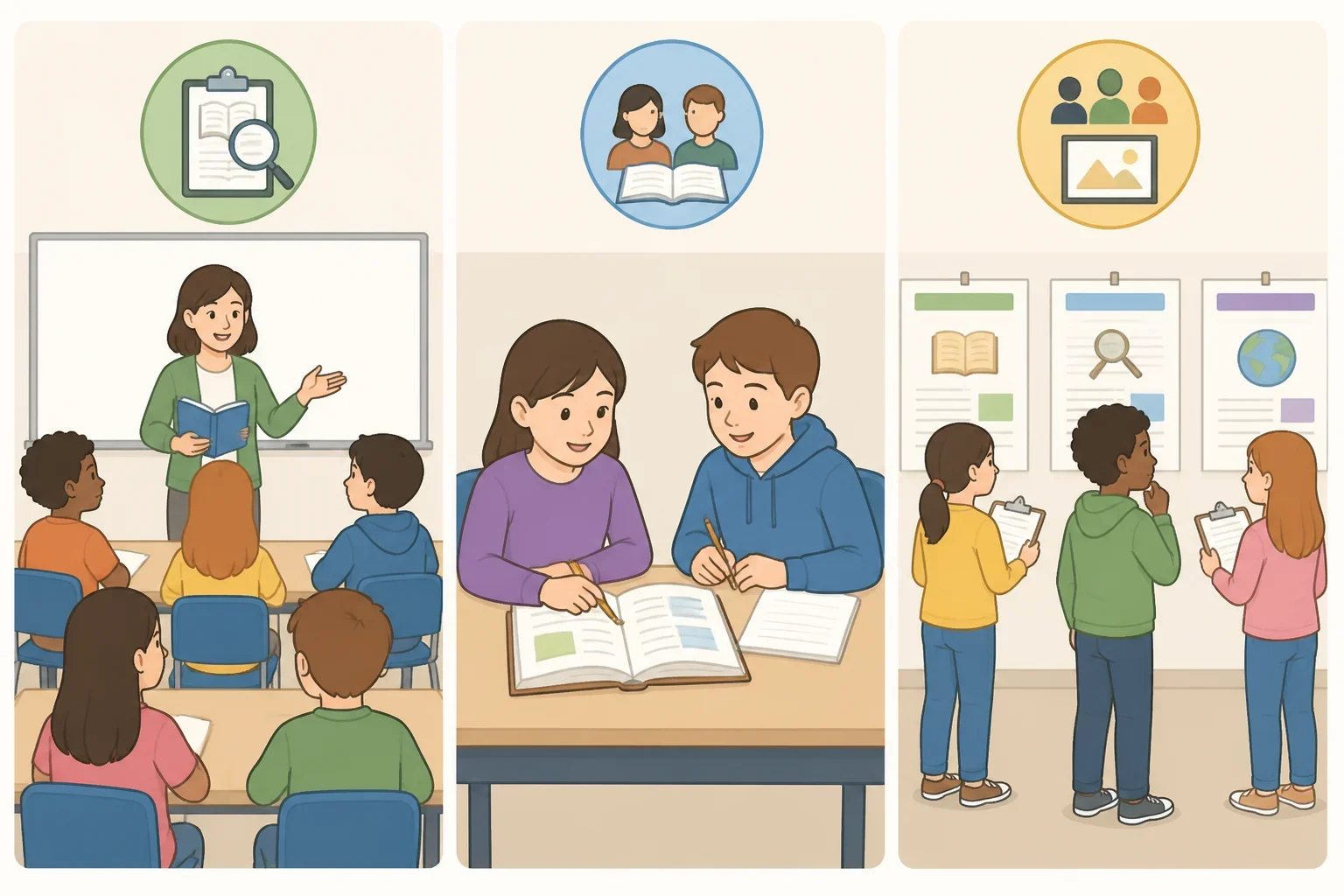
These word meaning change activities can run as a single lesson or stretch across a longer period, depending on the format a teacher picks. Each version below lists what's needed, what students produce, and what to check before the work gets shared.
Whole-class model
- Materials: a dictionary site or classroom dictionary, board or projected document for the running example
- Student product: a shared class example built on the board, plus each student's own second word attempted independently
- Teacher check: confirm the earlier-meaning source names where it got the earlier sense before writing it up
- One option: use this format when introducing the method for the first time, since mistakes in sourcing can get caught and corrected as a group.
Partner research
- Materials: a class-approved word list, dictionary access for each pair, a shared note-taking sheet
- Student product: one written entry per pair, following the five-field format from the model above
- Teacher check: review each pair's two source citations before they share their comparison
- One option: use this format when every student needs practice finding and citing sources, not just classifying words someone else already researched.
Gallery walk
- Materials: chart paper or wall space per group, markers
- Student product: a full six-step entry, including the influence note, posted for classmates to review
- Teacher check: spot-check posted sources before students begin circulating
- Discussion prompt for the walk: which source establishes the earlier meaning, and is the proposed influence documented or just a hypothesis?
- One option: use this format when the period runs long enough for groups to defend their sourcing to peers, not just to a teacher.
Grade level mostly affects how far a class takes step 6. For middle school, one approach is to stop at step 5 and treat the influence note as a guided discussion rather than individual writing. High school students may be able to complete step 6 on their own, provided the written explanation keeps the "cause not established" hedging intact. These are suggested adjustments, not fixed requirements, so a teacher should weigh them against how the specific group handles source evaluation.
What to do next
Students working through this alone should pick one word, confirm its current and earlier meanings in two separate dictionary sources, and fill in five fields:
- current meaning and its source
- earlier meaning and its source
- date, only if a source provides one
- category (broadening, narrowing, or shift) with a brief reason for the label
- an influence note marked as documented or hypothetical, never stated as settled fact
Teachers and tutors planning Dictionary Day activities should pick one of the three formats based on class size and how much time the period allows, then decide in advance whether the influence note is a written requirement or stays discussion-only. Either choice works, but students should know which one applies before they start researching.
Once a format is chosen, hand students a short list of approved words, point them to a reputable word-history source, and set a deadline for the five-field entry above. A finished comparison without a named source for each meaning isn't done yet; it's still a guess.