
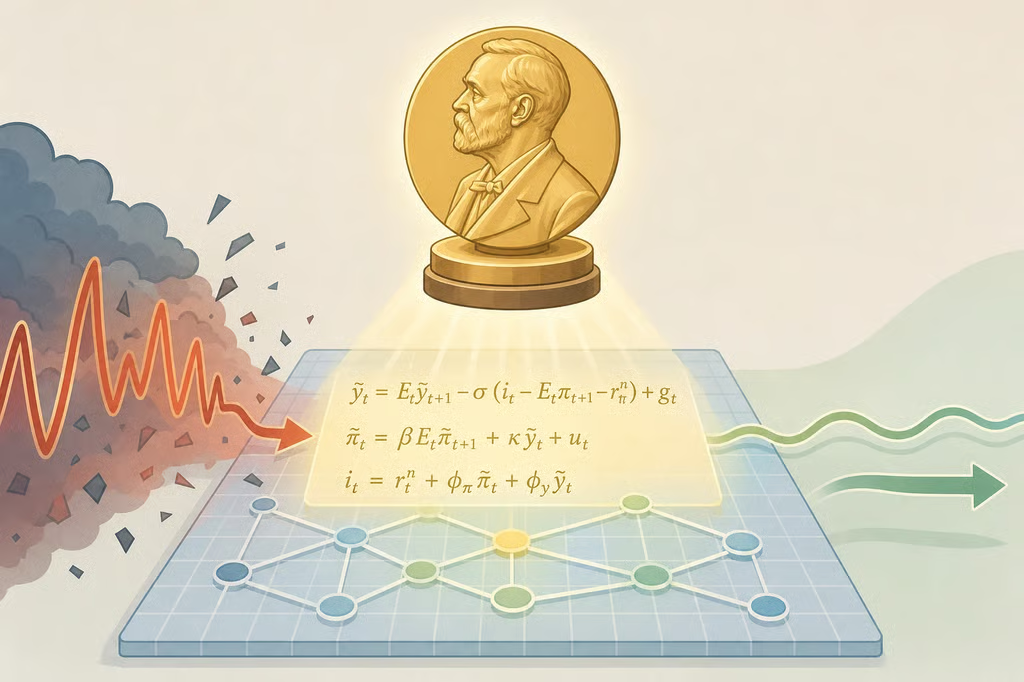
2026 Nobel Prize in economics: Hall and Woodford explained
Robert E. Hall and Michael Woodford won the 2026 Nobel Prize in Economics today, honored for rebuilding the models that help governments and central banks manage shocks like inflation spikes and energy crises (PBS News). The Royal Swedish Academy of Sciences cited the pair "for microeconomic foundations of macroeconomic stabilisation" (Royal Swedish Academy of Sciences). If a classroom discussion or textbook has left you stuck on what that phrase actually means, this explainer breaks down what each economist studied and why it changed how officials read the economy.
Formally, the honor is the Sveriges Riksbank Prize in Economic Sciences in Memory of Alfred Nobel, a separate award Sweden's central bank established in 1968 and presents alongside the original Nobel Prizes (PBS News). Reached by phone in New York, Woodford called the news "a tremendous honor" and "a surprise" (PBS News). The economics prize capped a week of Nobel announcements that opened with medicine, physics, chemistry, literature and peace last week (PBS News).
Hall teaches at Stanford University and Woodford at Columbia University; the two will split the prize money, 12 million Swedish kronor, about $1.2 million total, equally between them (PBS News; Royal Swedish Academy of Sciences). The win also marked the second Nobel this year for a Stanford professor (PBS News). Both laureates earned their economics doctorates from MIT, Hall in 1967 and Woodford in 1983, decades before the work honored this week took shape (Royal Swedish Academy of Sciences).
Why the old economic playbook stopped working
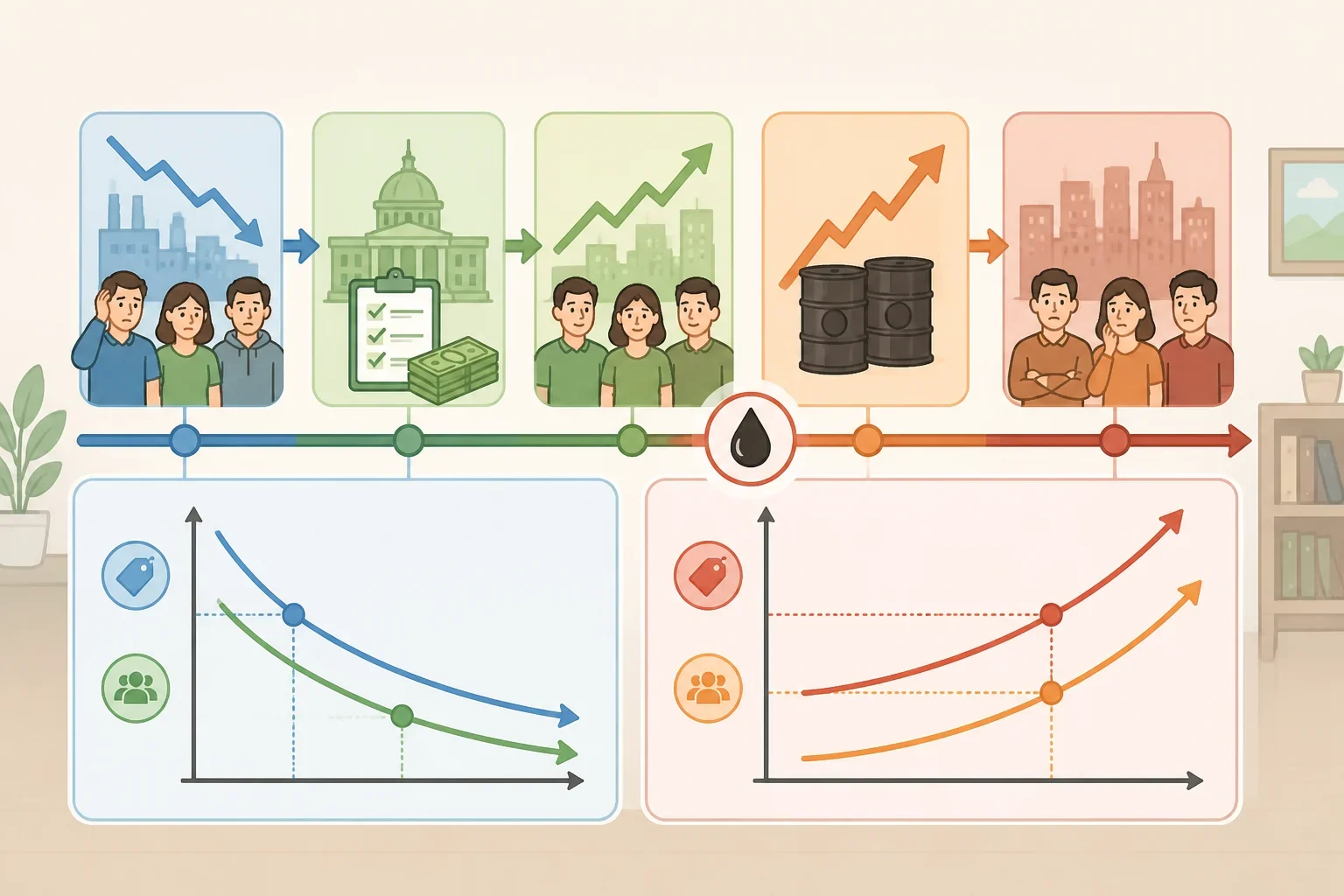
For decades, governments leaned on a Depression-era prescription from economist John Maynard Keynes: cut taxes, raise spending, and get households and businesses investing again until growth returned (PBS News). The Academy lays out the mechanics plainly: lower interest rates and widen the budget deficit during a recession, then reverse course once the economy overheats (Royal Swedish Academy of Sciences).
Built into that approach was an assumption that inflation and unemployment traded off predictably, one falling as the other rose (PBS News). The oil shocks of the 1970s broke that assumption. Western economies got high inflation and high unemployment at once, stretched across a decade of weak growth, instead of trading one problem for the other (Royal Swedish Academy of Sciences). Nobel committee member Timo Boppart summed it up this way: "This is the Keynesian recipe and it worked well, until it didn't" (PBS News).
The breakdown ran deep enough that many economists at the time argued stabilization policy had done more harm than good and should be retired altogether (Royal Swedish Academy of Sciences). Hall and Woodford, working separately, rebuilt the model from what households and firms actually decide, rather than from statistical patterns linking inflation and output (PBS News; Royal Swedish Academy of Sciences). That shift is what the prize citation means by "microeconomic foundations."
The contrast is concrete. An aggregate model might note that inflation and output moved together in a given quarter without explaining why. A micro-founded model instead starts with the spending decisions of individual households and the pricing decisions of individual firms and builds upward from there, which is what the Academy means when it describes models based on "the total mass of individual households and businesses" rather than statistical links between inflation, production and consumption (Royal Swedish Academy of Sciences). That distinction carries straight into policy: when officials can model why people are spending or firms are pricing the way they are, communicating about future plans can shift the thinking behind those decisions instead of just reacting to aggregate numbers after the fact (Royal Swedish Academy of Sciences).
How Hall and Woodford model booms and busts
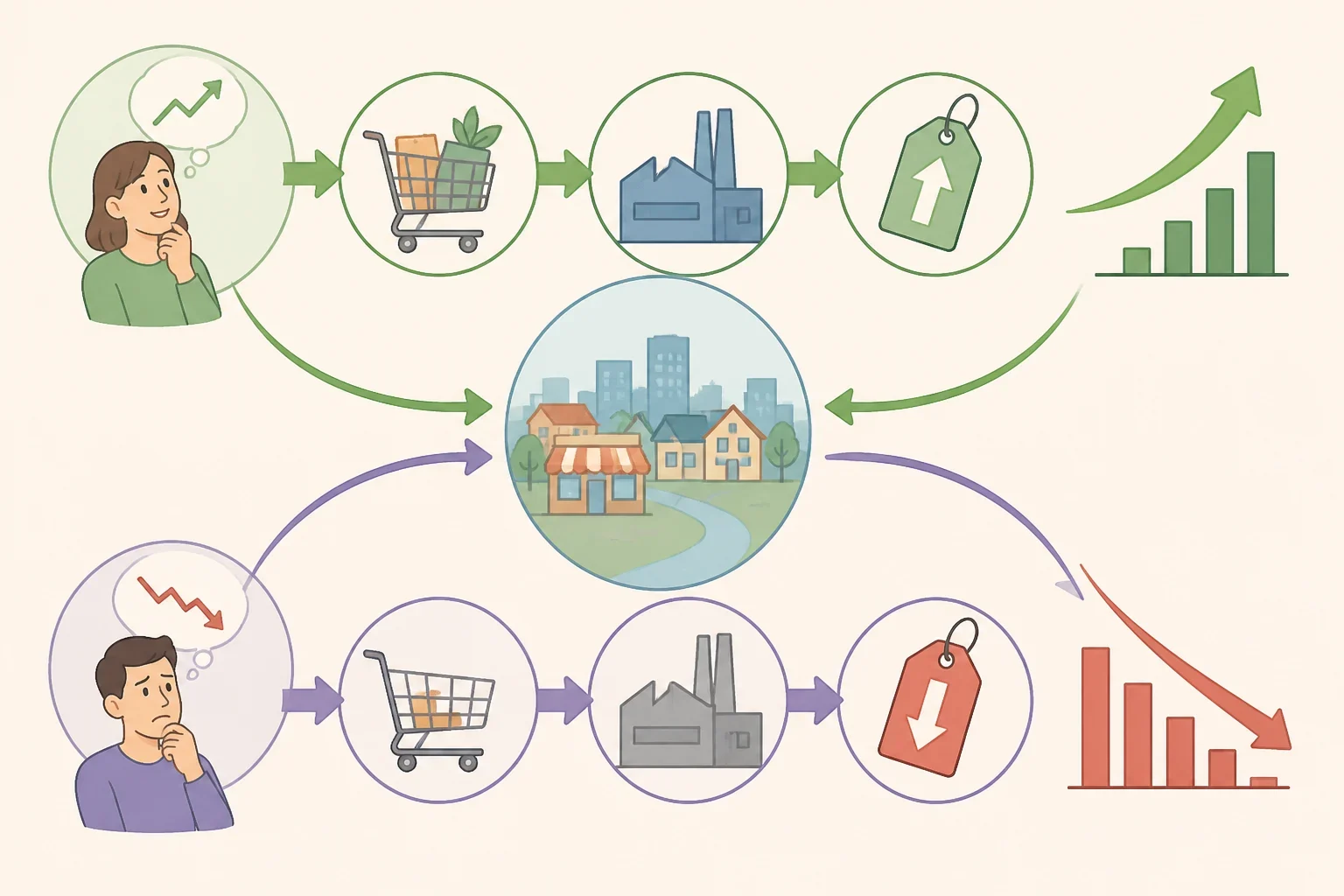
Hall's piece of the puzzle concerns household spending. His research found that how much a family spends depends partly on what it expects to earn later, not just on current income; optimistic households consume more, pessimistic ones hold back (PBS News).
In a 1982 paper with economist Fredric Mishkin, Hall found that roughly 80% of households in that study's sample based spending on expected future income, while the rest spent closer to what they earned in the moment, a pattern the committee calls living "hand to mouth" (PBS News). That figure comes from one specific, decades-old sample, worth keeping in mind before treating it as a current statistic about households in general.
Woodford's piece concerns how businesses set prices. His research showed that firms base pricing decisions on where they expect interest rates to move, alongside their own anticipated costs and competitors' prices (PBS News). The committee describes the mechanism in terms of expected costs, competitor prices and interest rates; it does not describe pricing as a reaction to current demand alone. As the committee put it, a business expecting competitors' prices and its own costs to rise will set a higher price now than one holding the opposite expectation (PBS News).
The two contributions address different channels. Hall's work explains the demand side through household expectations; Woodford's explains the supply and pricing side through business expectations. Together they gave policymakers a model built on real decisions instead of aggregate statistics alone.
Tracing expectations through a hypothetical boom and slowdown
One idea underlies all of this: a policy decision doesn't have to take effect before it starts changing behavior. A central bank's signal about future policy can change how households and firms view the conditions shaping their decisions, well before any rate actually moves, because the Academy's models treat both groups as forward-looking by design (Royal Swedish Academy of Sciences).
What follows is an illustration built from that logic, not a documented event. Picture households feeling optimistic about future income while firms expect costs and competitors' prices to keep climbing. Under Hall's model, that optimism alone could push households to spend more today; under Woodford's model, firms anticipating higher costs could raise their own prices in advance (Royal Swedish Academy of Sciences). These would be two separate decisions happening at the same time, not one automatic chain.
If a central bank or government saw spending and prices accelerating, it might signal a future shift, hinting at a coming rate increase or smaller deficits, before making any actual change. Clear communication of that kind is how the Academy says policymakers can influence expectations and steer the economy toward a steadier path (Royal Swedish Academy of Sciences).
In this hypothetical, the response would not be uniform. A household still confident about its income growth might keep spending as before, while one bracing for weaker income might cut back and save more instead. Firms could split along similar lines: one expecting costs to ease might hold off on further price hikes, while another still bracing for strain might not.
If enough households and firms adjusted this way, spending and price pressure could cool before a policy change fully took effect, though the actual outcome would depend on how many responded and how strongly. That kind of adjustment is why the Academy says well-timed fiscal and monetary measures, built on these models, can reduce the economy's peaks and troughs (Royal Swedish Academy of Sciences).
Reading a real policy announcement works the same way. Separate the actual action from the future path being signaled, then ask what behavior policymakers hope to see, and which households or firms are positioned to respond differently.
What the framework explains, and what it doesn't
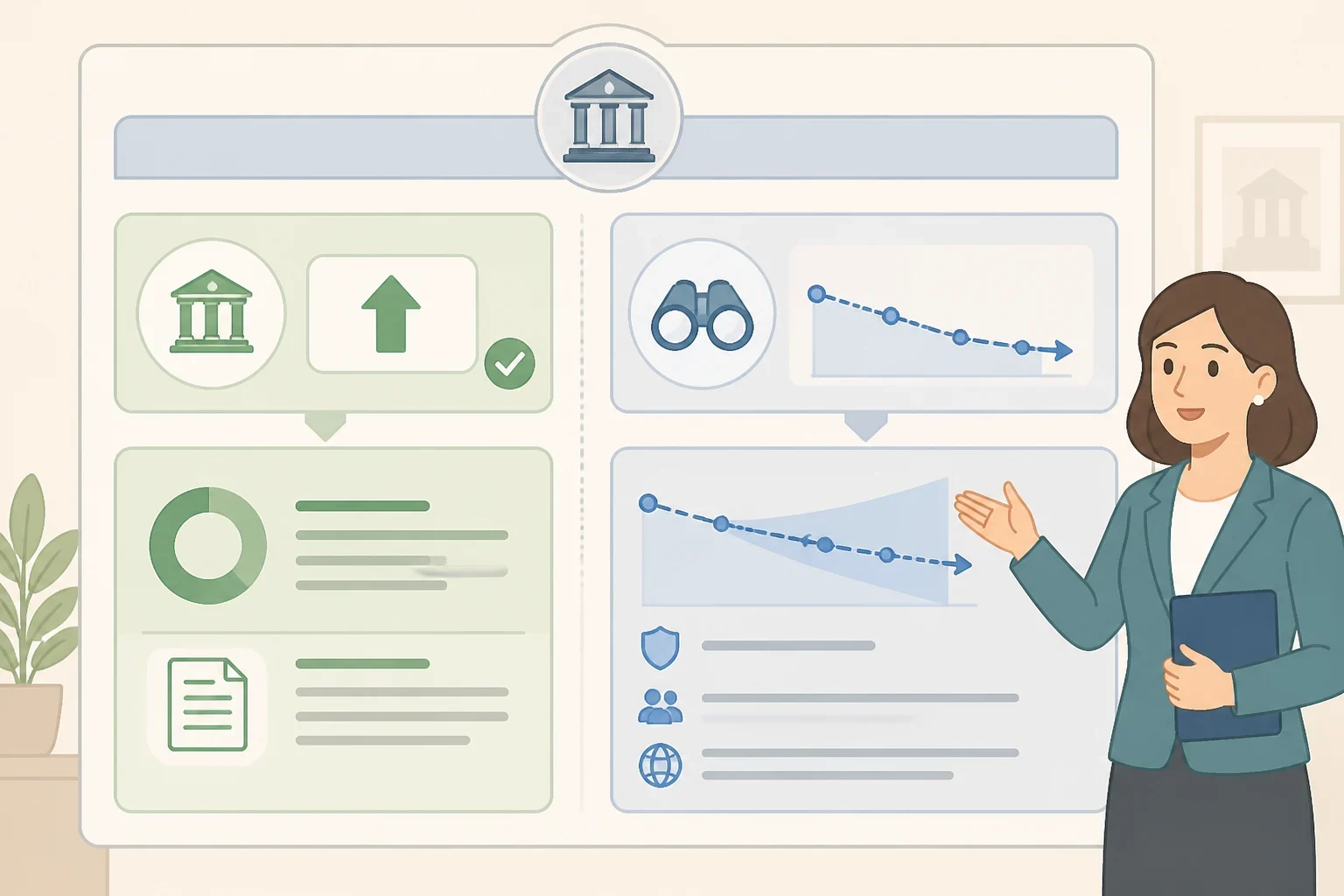
The committee's practical takeaway centers on communication. Because expectations do so much of the work, central banks like the Federal Reserve should offer "clear and credible communication about how they reason and what they plan to do," the committee wrote (PBS News). Committee chair John Hassler said the laureates' work gives central banks and governments worldwide a stable theoretical foundation for handling shocks such as energy crises or sudden shifts in household spending, an assessment from the committee itself rather than a separately measured outcome (Royal Swedish Academy of Sciences).
The Academy credited the research with making it possible to manage major macroeconomic crises "far more effectively than before," adding that it has "been hugely beneficial during the pandemic and the energy crises of recent years" (PBS News). Those two episodes give the framework something more concrete than theory to point to.
The framework still has edges. An oil-price shock can still create the combination of inflation and weak growth that made stabilization difficult in the 1970s, and that would make it difficult again (Royal Swedish Academy of Sciences). Better expectations-based models improve policy design; they do not guarantee full control over the economy.
Within those edges, this year's prize reframes how policymakers think about timing. Expectations shift before a policy change actually takes effect, which is part of why the committee treats clear communication as a tool in its own right, not just a courtesy.
Students working through a central-bank announcement in class can borrow that same method: identify the actual policy action, the future path being signaled, the behavior officials want to see, and which households or firms are likely to respond differently. Before citing the 80% figure from Hall's 1982 study in a paper or discussion, check the original source for its date, sample and method rather than treating it as a current statistic about households generally.