
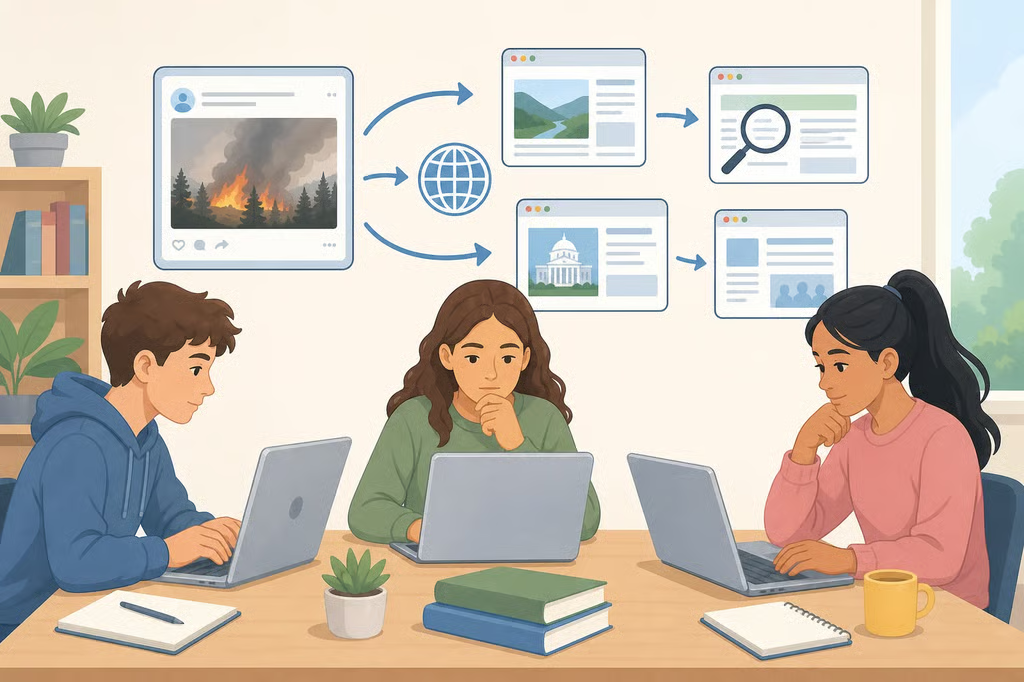
How to teach students to verify TikTok claims: 6 steps
A pretest and posttest study of 109 students, published in 2024, found that evidence of attempts to leave a webpage and independently investigate its source jumped from 7% to 61% after five one-hour lessons taught over a school year (HKS Misinformation Review). Students in that study were evaluating websites, not TikTok videos, but the result still matters for how to teach students to verify TikTok claims: it shows that stopping to check who is behind information is a habit students can build, not a trait some students simply lack.
Teenagers spend close to nine hours online most days, according to AFT, which is part of why verification needs to work as a repeatable routine rather than a lesson taught once and checked off. Researchers describe the underlying strategy as lateral reading: professional fact checkers evaluate unfamiliar sources by leaving them, opening new browser tabs, and searching for outside information instead of studying the page or video itself (HKS Misinformation Review). In the same 2024 classroom study, open-ended responses revealed not just whether students landed on a correct answer, but which strategies they used to get there, giving teachers a way to see a student's reasoning instead of just a final guess (HKS Misinformation Review).
Most of the research behind this method involves students evaluating websites and search results, not TikTok specifically. Teaching students to fact-check TikTok videos means adapting a skill tested on static web pages to a platform researchers haven't studied in quite the same way yet. The core move stays the same: leave the app, verify the creator, and trace the evidence independently instead of judging a video by how it sounds or looks.
This guide is built for middle and high school teachers who want a classroom-ready routine. A section near the end adapts it for tutors, homeschool educators, and older students working with less supervision.
Why viral TikTok claims are hard for students to evaluate
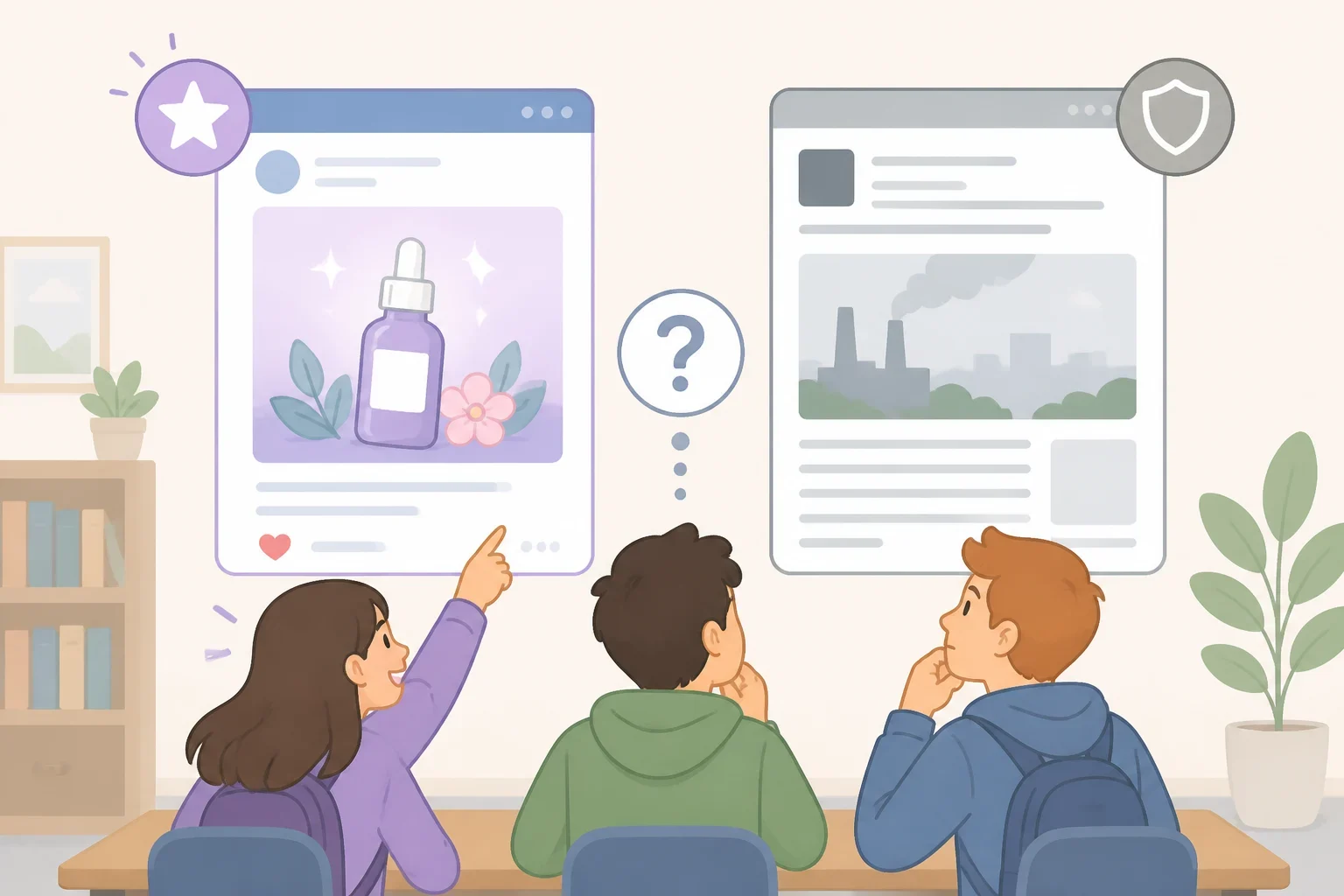
Researchers cited by the AFT article identify three testable skills students need before they can judge a claim: identifying who is behind it, evaluating the evidence offered, and checking what independent sources say. Deciding whether something deserves trust isn't a simple true-or-false sort (AFT).
Surface polish is a poor guide to any of that. In one assessment, nearly 70% of more than 200 high schoolers rated an oil-industry-sponsored post containing a chart as more trustworthy than an actual news article, and only 15% picked the article instead (AFT).
The same pattern showed up in a study of one climate-related website built to look credible. Students needed to leave the site entirely to learn it was funded by the fossil fuel industry; its .org domain, cited studies, and staff credentials gave no honest signal on their own (HKS Misinformation Review).
Checklists that ask students to count citations or check for a professional-looking layout "hardly establish" credibility, according to researchers cited by the AFT article, because they underestimate how sophisticated manipulated content has become (AFT). A well-edited TikTok video can pass that same checklist test just as easily, which is why the routine below asks a different question: not whether a video looks credible, but what happens when a student leaves it to check.
A TikTok misinformation lesson for students: six verification steps
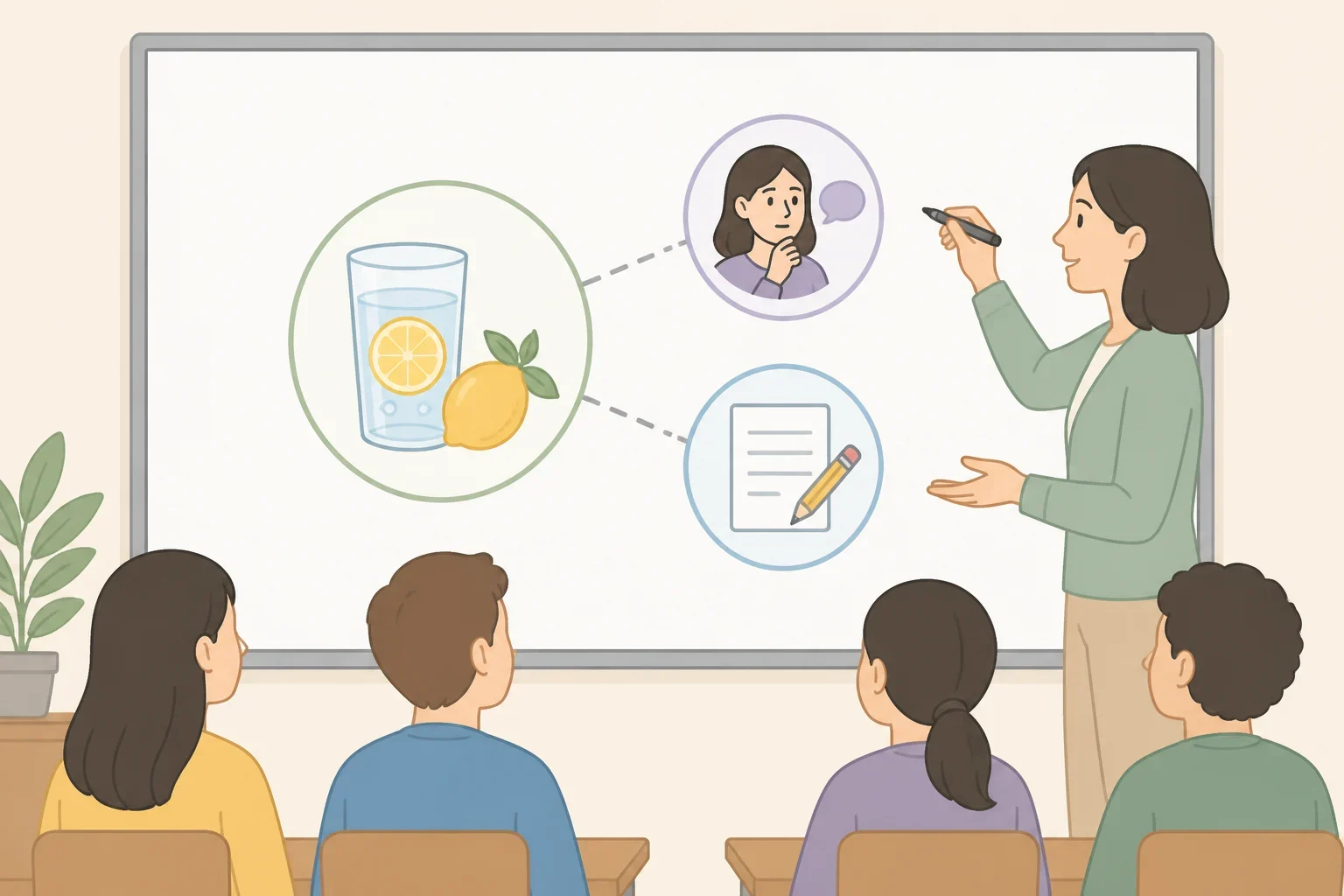
The six steps below are a teacher-designed adaptation, not a routine that has itself been tested on TikTok. The studies cited above examined lateral reading on websites and, separately, how correction videos affect belief in a single claim; neither tested a six-step classroom sequence on the platform. What follows applies the same underlying skills, identifying who is behind a claim and checking independent sources, to short-form video.
Introduce this as a live modeling activity built around one current, low-stakes viral claim relevant to a subject area, such as a nutrition or fitness claim. Run one claim through every step as a whole class before pairs take on a second claim of their own.
For a working example, imagine a teacher builds a sample claim for this purpose: that drinking lemon water every morning burns fat while a person sleeps. This is not a documented viral trend, just a plausible stand-in written on the board to model the process.
- Isolate the claim. Write the exact assertion, separated from the music, editing, and the creator's tone or confidence: "Lemon water consumed each morning increases fat burning overnight."
- Ask who is behind it. Search the creator's account and any brand or organization tagged in the post, and check whether the video is a paid partnership. This is the "who is behind this information" question at the center of the lateral reading research (HKS Misinformation Review).
- Leave the app and choose search results carefully. This is where many students go wrong: in one task, only 6% of college students and 9% of AP high schoolers identified a site's true corporate backers; most instead pointed to the site's own links, cited studies, and parent organization as reasons to trust it (AFT). For the lemon water example, that means searching something like "lemon water metabolism study" instead of repeating the creator's caption, and weighing a university nutrition source or peer-reviewed database above a supplement brand's own blog. Treat a Wikipedia entry as a fast orientation stop, then follow its citations or search independently instead of stopping there (HKS Misinformation Review).
- Trace the evidence to its source. Find the actual study, dataset, or footage the video points to, rather than trusting a repost, screenshot, or citation-free claim.
- Check context. Confirm the date, the population studied, the sample size, and whether the evidence actually supports the conclusion the video draws, not a related or looser one.
- Reach a calibrated judgment. Use categories such as supported, unsupported, misleading or out of context, and unresolved, and have students name the specific source that changed their thinking, not just their final answer.
What a completed investigation looks like
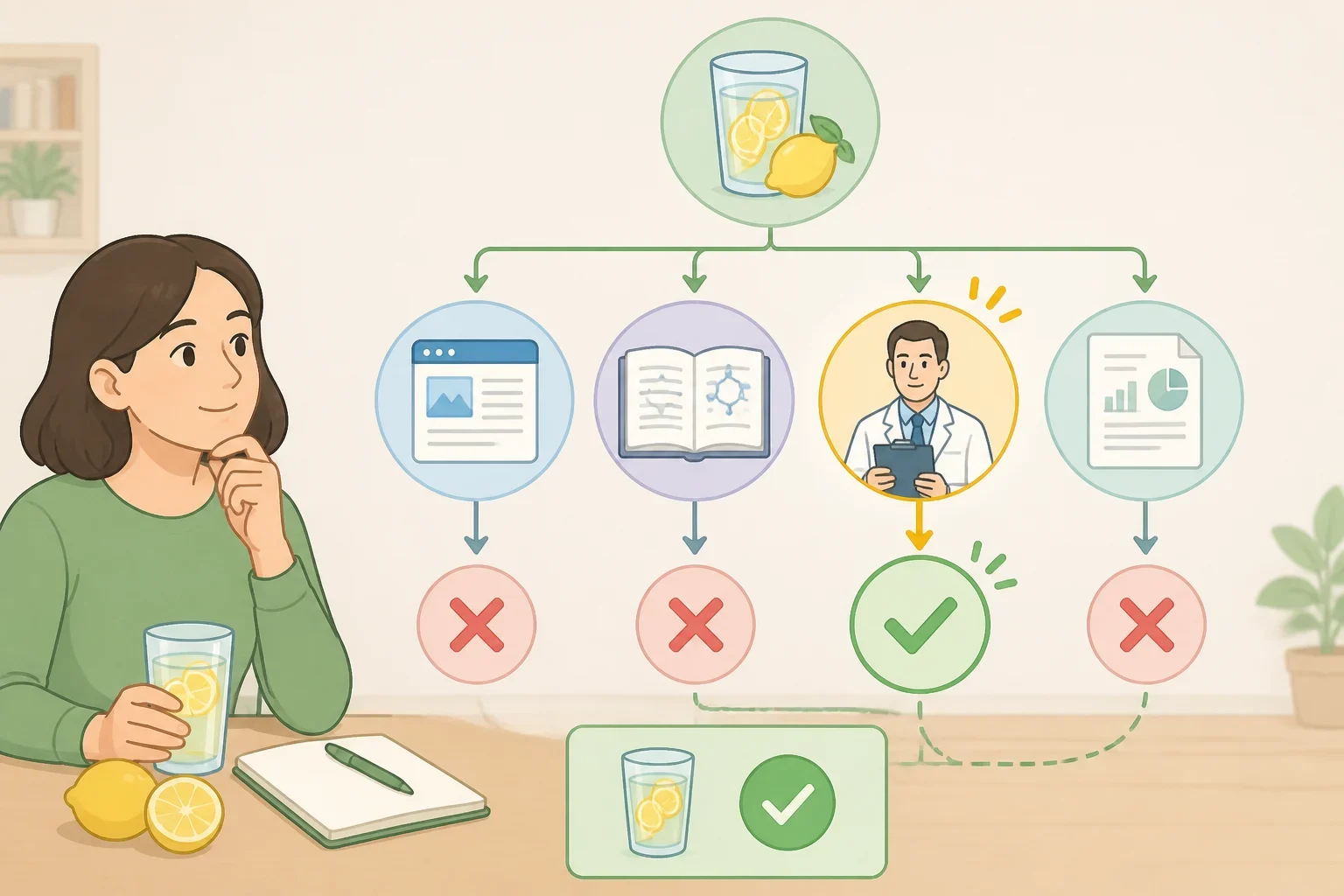
The following is a simulated classroom walkthrough built for teaching purposes, not a record of real search results. It shows what a completed source trail can look like for the lemon water example.
A search for "lemon water metabolism study" could turn up several kinds of sources: a blog post from a company that sells lemon-infused water bottles, a short item from a university nutrition office, and a peer-reviewed study on citrus and appetite. A teacher walking students through this should point out what to check in each one: does the study's title match the specific claim in the video, overnight fat burning, or a broader claim, like general hydration and metabolism? Who was studied, and how many people? Does the outcome the researchers actually measured match what the video claims, or something adjacent to it?
In this simulation, none of the three source types confirm the original claim as stated. A university source might describe hydration's general role in metabolism without endorsing lemon water specifically, and that gap is worth naming directly to students: evidence doesn't have to contradict a claim to fail to support it. The honest verdict is often unresolved, not because a student searched poorly, but because the evidence available doesn't match the specific claim being made. Modeling that outcome matters as much as modeling a clean supported or unsupported verdict, since real searches often end without a tidy answer.
A typical lesson arc runs in three parts: a teacher think-aloud on the sample claim, paired student investigation of a second claim, and a short source-trail debrief. This exit ticket can capture that debrief in a few lines:
- Claim:
- Who is behind it:
- Source that changed your thinking:
- Verdict: supported / unsupported / misleading / unresolved
Use corrections as examples, not substitutes
TikTok's duet and stitch features let users respond directly to another video, one way misinformation gets challenged on the platform itself (HKS Misinformation Review). In a study of 1,169 participants with a mean age of 34.7, watching a misinformation video followed by a correction reduced belief in that specific false claim more than watching the misinformation alone (HKS Misinformation Review).
The same correction produced only a marginal improvement in viewers' ability to judge later true-versus-false videos on the same topic (d = 0.06, p = .073) (HKS Misinformation Review). That distinction matters for the classroom: a correction video can weaken belief in one claim, but it isn't a substitute for students running the six steps themselves on the next video they encounter. This finding comes from an adult sample, not a tested classroom group, so treat it as a caution about correction videos generally rather than a guide to teaching lateral reading directly.
Adjusting the routine for different classrooms and learners
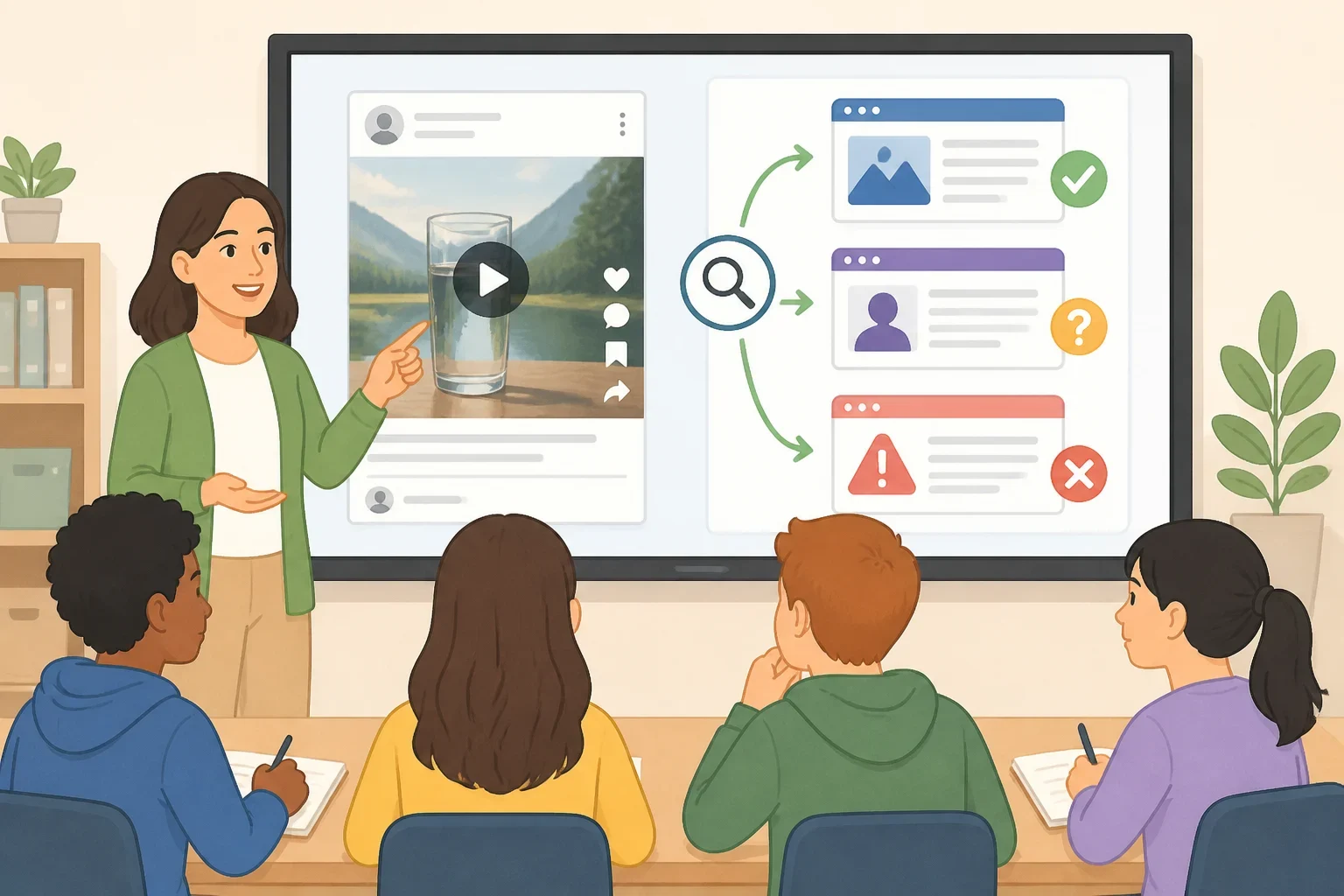
No live TikTok access? Use a screenshot, transcript, or archived link of a preselected claim instead of live browsing. Students can still practice steps two through five without needing personal accounts or unfiltered devices, which matters where school technology policy restricts social media access.
Middle school versus high school. Middle school students also struggled with sponsorship recognition: 82% failed to identify content clearly labeled "sponsored" as an advertisement in one task (AFT). Since asking "who is behind this" depends on first recognizing that content is sponsored at all, middle school lessons may need an added step confirming students can spot sponsorship markers before moving into full lateral reading.
Older or independent learners. College students and adult learners still benefit from the routine, but self-directed learners should be reminded that even strong students misjudge sourcing. In one task, most college students accepted a sponsored site as trustworthy because of its own "nonprofit" framing, rather than checking who actually funded it (AFT).
Tutors and homeschool educators. The same six steps work in one-on-one settings. Replace the paired-practice step with a shared-screen walkthrough, and keep the debrief focused on which specific search or source changed the student's mind.
Beyond a dedicated media-literacy unit, curriculum-embedded lessons built around one core strategy, real online content, teacher modeling, and short formative check-ins produced statistically significant gains in a 2022 study of 574 ninth-grade biology and world geography students (Stanford Digital Repository). That result suggests curriculum-embedded instruction in evaluating online sources, not the TikTok-specific routine described here, can work inside a regular subject-area class rather than only within a dedicated media-literacy unit.
What to do next
Before the next lesson, check the school or district's technology and social media policy to confirm whether students can browse TikTok directly or should work from a preselected claim packet instead. Then pick one current, low-stakes claim, model the six steps aloud as a class, and have students practice in pairs.
When reviewing the exit tickets, look for five things:
- Did students name the creator or sponsor behind the claim?
- Did they locate an independent source, not just the creator's own description of themselves?
- Did they trace the evidence to something more specific than a repost or screenshot?
- Did they check context, such as date, location, or the population studied?
- Does their final verdict actually match what they found, rather than their first impression?
A single exit ticket won't prove a student has mastered the skill. The classroom gains described earlier took a full school year of repeated lessons, not one sitting (HKS Misinformation Review), so plan to run this routine with new claims across the term rather than treating one lesson as the finish line.