
Science of reading instruction: What research supports beyond phonics
When a school says it uses the “science of reading,” the phrase may refer to much more than phonics. It generally points to research about how children develop foundational reading skills, read fluently, build vocabulary, and understand text.
That distinction matters to parents, tutors, and teachers supporting reading instruction for kindergarten through third grade. Phonics is an important part of evidence-based reading instruction, but it is not a complete definition of how to teach children to read. The most useful questions are practical: What does the research address? What might a child experience in a lesson? What can a policy label tell a family about classroom practice?
A report published today by The Hechinger Report describes how reading researcher Zig Engelmann and his colleagues began developing a teaching method at an experimental preschool in Illinois. Their guiding statement was, “If the student hasn’t learned, the teacher hasn’t taught.” That idea can prompt a productive question about instruction, but it should not be treated as proof that teaching alone explains every reading difficulty.
What the science of reading includes
“Science of reading” is best understood as a research base, not a brand-name curriculum, a single lesson format, or a promise attached to one set of materials. Schools, states, publishers, and educators may use the phrase in different ways, so the label itself does not explain what happens during a reading lesson.
The National Reading Panel provides an important reference point. It was established to assess research-based knowledge about teaching children to read and to consider how ready that research was for classroom application. The panel included 14 people with expertise in reading research, education, and teaching practice, according to the National Reading Panel.
The panel’s work is commonly discussed through five areas:
- Phonemic awareness: noticing and working with individual sounds in spoken words.
- Phonics: connecting speech sounds to written letters and letter combinations.
- Fluency: reading accurately and smoothly enough to focus on meaning.
- Vocabulary: knowing what words mean and how they are used.
- Comprehension: understanding, interpreting, and thinking about text.
These areas are useful shorthand for discussing reading instruction. They are not a five-step script in which one skill disappears as soon as the next begins. A child may need continued support with decoding while also learning new vocabulary and discussing increasingly complex ideas.
The phrase also should not be treated as the name of a single program. A curriculum might include systematic phonics, reading practice, vocabulary lessons, and comprehension activities, but the name on the materials cannot show whether those parts are being taught clearly or consistently. That is why families and educators need to look at observable instruction, not only at a program label.
How phonemic awareness and systematic phonics work together
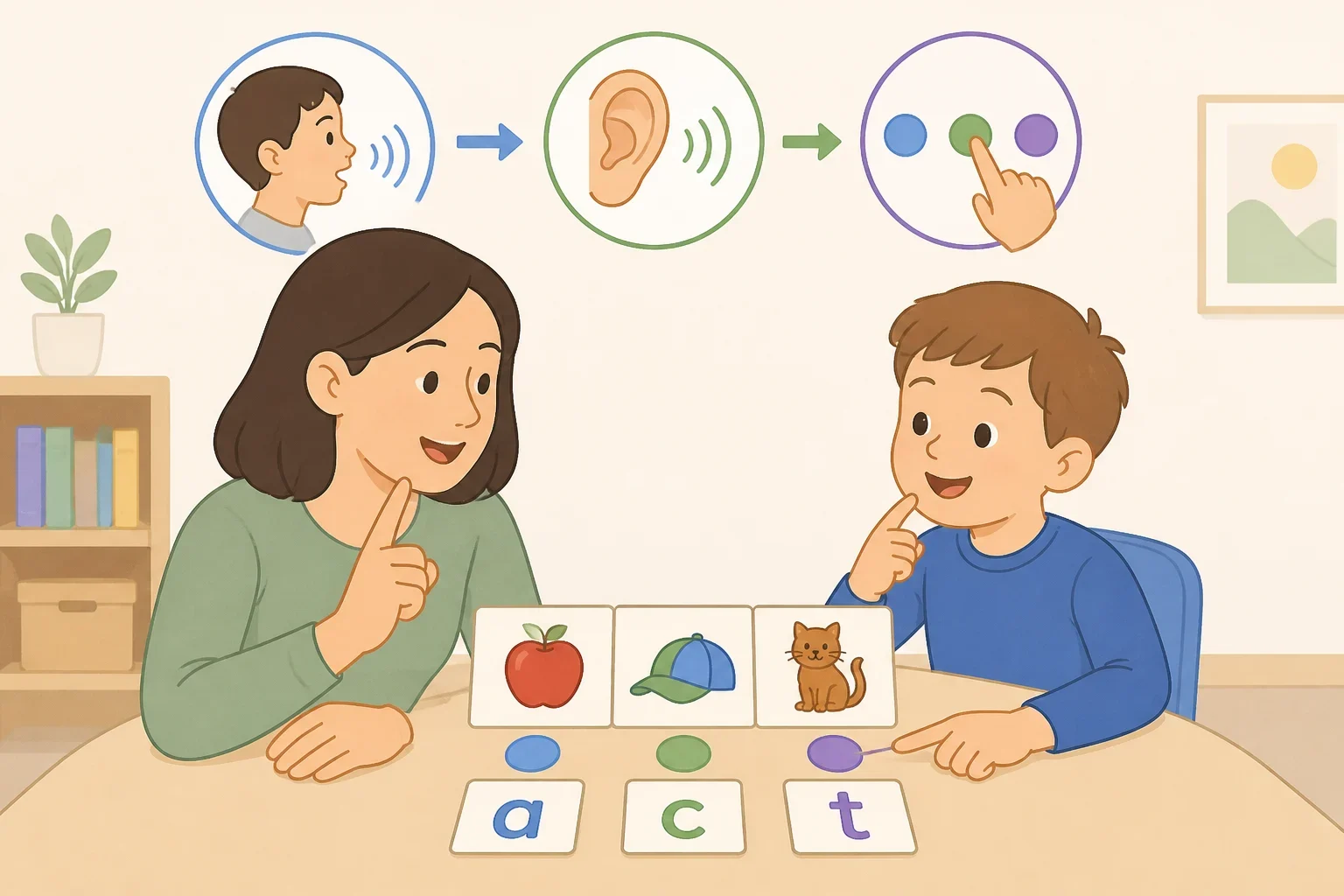
Phonemic awareness and phonics are related, but they are not the same skill.
Phonemic awareness takes place in spoken language. A child might listen to the word map and identify its three individual sounds: /m/, /a/, and /p/. The child is working with sounds without looking at letters.
Phonics connects those sounds to print. The child learns that the sounds in map can be represented by m, a, and p. Systematic phonics instruction teaches letter-sound relationships in a planned sequence rather than expecting children to pick them up incidentally.
A lesson may begin with spoken sounds. A teacher could ask students to identify the first sound in several words, combine separate sounds into a word, or change one sound to make a new word. The lesson can then connect those sounds to letters and give students practice blending them to read words.
That sequence gives the teacher several things to observe. Is the child hearing the sounds accurately? Can the child connect a sound to the letter or letter combination that represents it? Can the child blend the parts rather than guessing from a picture or the first letter?
A tutor might listen as a child reads words with a pattern already taught, correct an error, and provide another example using the same pattern. The goal is not to turn every reading moment into a drill. It is to make the relationship between speech and print clear enough for the child to use it.
Phonics has become central to many literacy policies because it addresses a basic challenge for beginning readers: written words must be connected to the sounds of spoken language. A 2022 National Education Policy Center analysis quoted Virginia Gov. Glenn Youngkin describing the Virginia Literacy Act as bringing “the science of reading, otherwise known as phonics” into K-3 classrooms.
That quotation shows one political framing of the phrase. It does not establish phonics as the full meaning of the research base. Decoding helps a child identify a word, but identifying the word is not the same as understanding it.
What students need beyond phonics
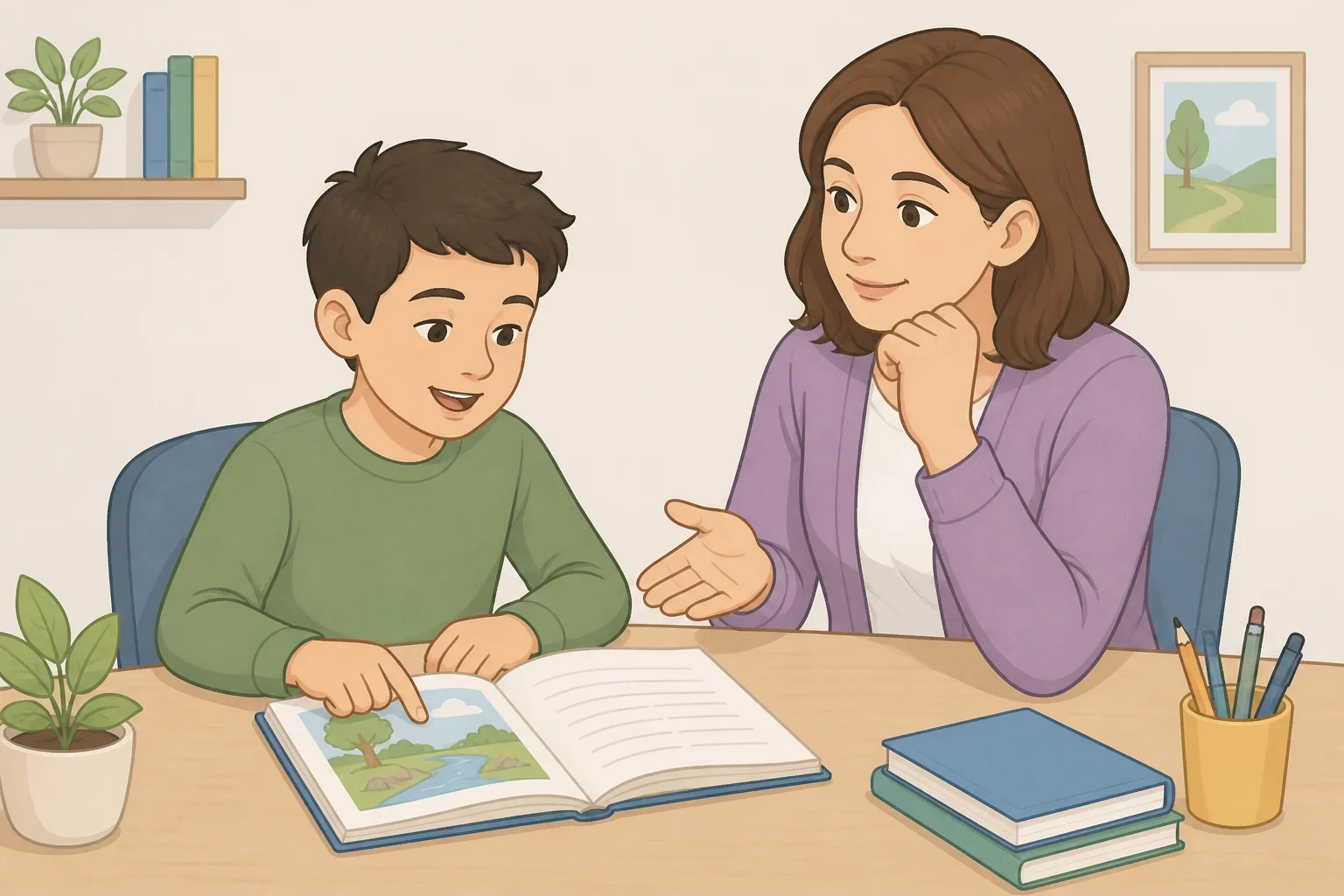
A child can pronounce a word accurately without knowing what it means. A child can understand a story read aloud but struggle to decode the same story independently. Reading instruction needs to address both parts of that problem: working out the words and making meaning from them.
For beginning readers, that means moving from isolated sound-spelling practice into connected text. An Institute of Education Sciences practice guide recommends that each student read connected text every day to support accuracy, fluency, and comprehension, according to the National Center on Improving Literacy.
Connected text gives students a chance to use what they have practiced. A teacher might listen as students read, prompt them to use sound-letter knowledge, and discuss an unfamiliar word in the passage. The teacher could then ask what happened, why a character acted a certain way, or what evidence supports an answer.
The lesson still includes decoding, but it also gives students a reason to read accurately. It connects word recognition to meaning, and it allows the teacher to notice where the child needs support.
Vocabulary and comprehension need direct attention, too. A student may decode enormous correctly and still need to learn that it means “very large.” Understanding a passage may also depend on knowing what its words refer to, how its ideas fit together, and what information matters most.
Comprehension instruction can involve teacher modeling and active student participation. For example, a teacher might think aloud while identifying an important detail, show how to use context to consider a word’s meaning, or ask students to explain how they reached an answer. Simply assigning a passage does not show whether students understand how to think through it.
For a parent or tutor observing instruction, useful signs may include:
- The child works with spoken sounds, not only letter names.
- The teacher explicitly models a letter-sound relationship.
- The child practices blending and reading words with patterns already taught.
- Students read connected text regularly.
- The teacher discusses vocabulary and asks questions about meaning.
- Students receive prompts or feedback while reading aloud.
- Progress is checked in a way that goes beyond worksheet completion.
No single lesson needs to contain every element. A phonemic-awareness lesson may focus mainly on spoken sounds. A read-aloud may emphasize vocabulary and comprehension. Looking across lessons over time is more useful than judging an entire program from one activity.
Why a policy label does not show the whole classroom picture
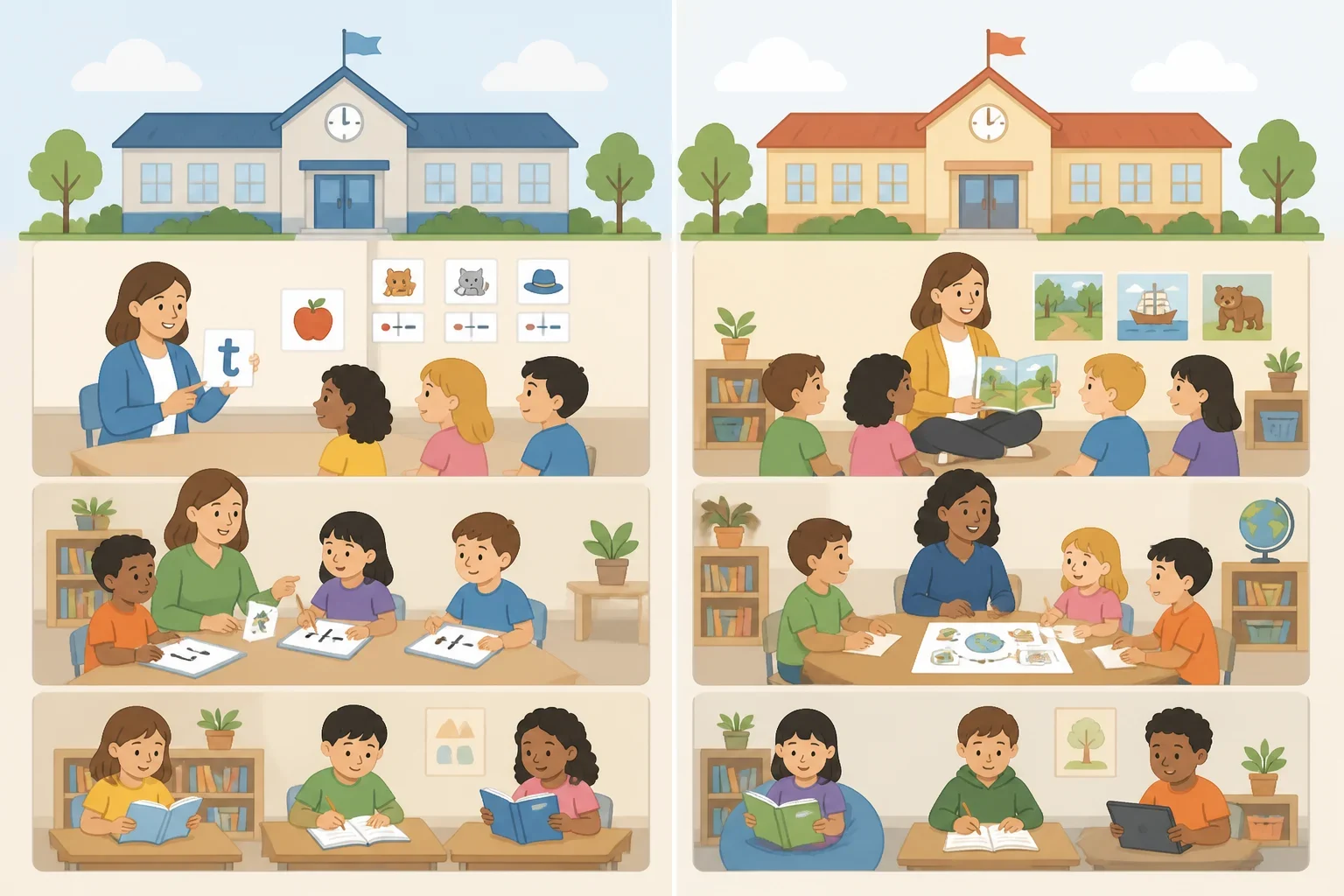
A state law or district initiative can identify goals, materials, or preferred practices. It cannot, by itself, show how consistently those practices appear in classrooms or how teachers were prepared to use them.
Two schools may both say they use the science of reading while giving teachers different materials, schedules, training, and support. The phrase may tell families something about a school’s stated direction, but it does not answer every question about daily instruction.
That distinction matters when a student struggles. It is reasonable to ask what instruction has looked like, including which skills were taught, how practice was supported, and how progress was checked. It is also important not to assume that an instructional question explains every reading difficulty. Language background, disability, attendance, and other factors specific to a child and learning setting may matter.
The practical questions are concrete:
- What sound and letter relationships has the student been taught?
- How does the teacher model decoding when a student gets stuck?
- What kind of connected text does the student read during the week?
- How are vocabulary and background knowledge developed?
- How does the teacher check comprehension?
- What progress information can the family or tutor review?
Useful answers should describe observable routines, not only repeat a program name. “The school uses the science of reading” is a starting point. “Students practice the sound pattern introduced that week, read connected text using those patterns, discuss new vocabulary, and receive progress checks” gives a clearer picture.
What to ask and check next
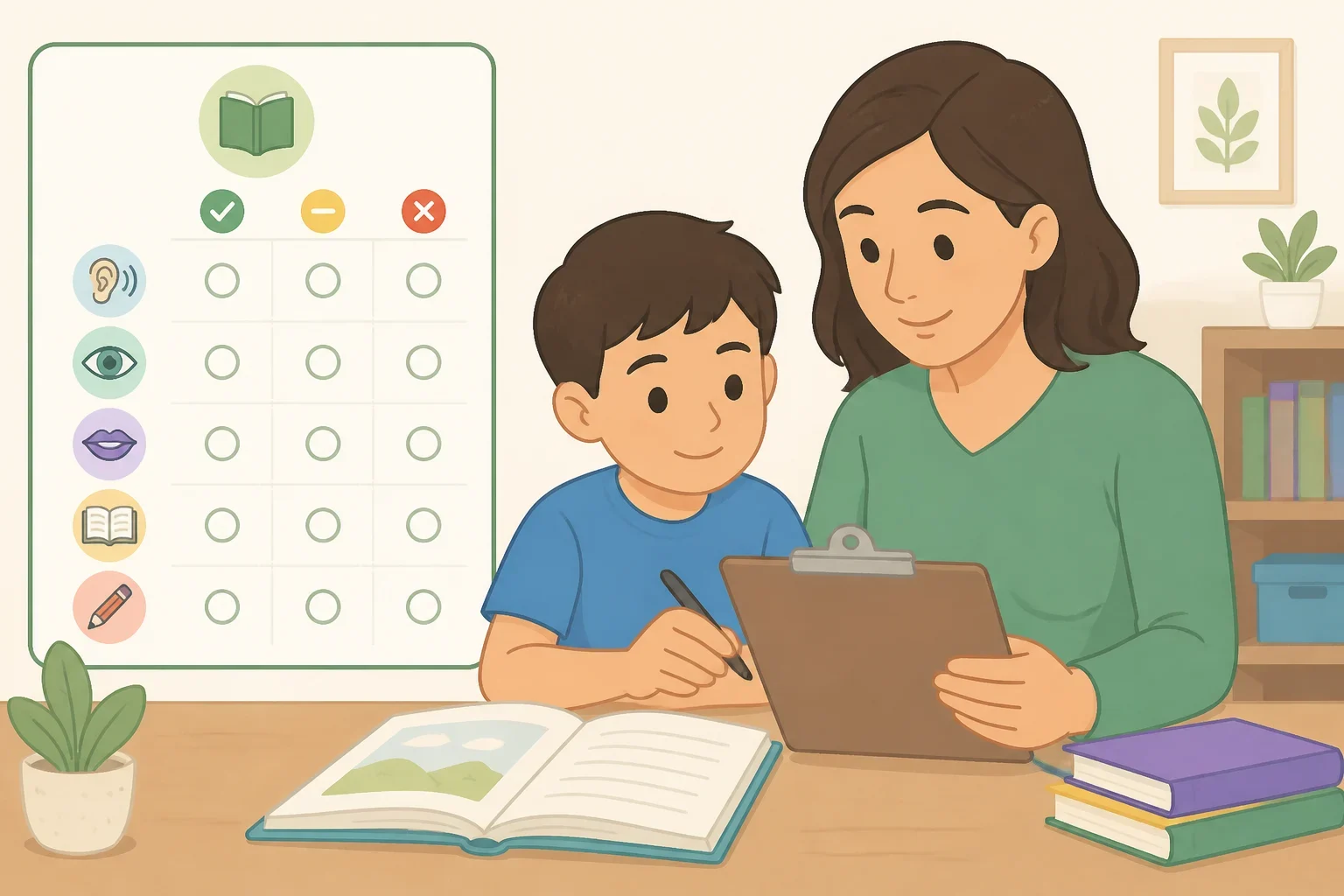
The research commonly associated with the National Reading Panel covers phonemic awareness, phonics, fluency, vocabulary, and comprehension, according to the National Reading Panel. The National Center on Improving Literacy also identifies daily connected-text reading as part of foundational reading instruction for kindergarten through third grade.
That evidence is broader than phonics alone. It also does not answer every question about older struggling readers, multilingual learners, or students with disabilities. Guidance for those learners may need to be more specific to their language, age, disability, assessment information, and learning setting.
Parents, tutors, and teachers can use this distinction without turning it into a scorecard for judging individual educators. Ask whether children work with spoken sounds, receive explicit letter-sound instruction, practice decoding, read connected text, discuss word meanings, answer comprehension questions, and have their progress monitored.
Then compare the answers with the school’s assessment information and, when available, input from a reading specialist. A policy label may open the conversation, but observable instruction and student progress provide the more useful information.