

- Average college costs for families 2025-26: what's included
- How families paid for college costs in 2025-26
- Three ways to measure "college cost," and why they don't match
- What net price calculators and award letters actually tell you
- What the new Parent PLUS and Grad PLUS loan limits could mean for families
- What to check before you accept an aid offer
Average college costs for families 2025-26: what's included
Families spent an average of $34,019 on tuition, fees, housing, and other college costs during the 2025-26 academic year, a 10% jump from the year before, according to a Sallie Mae and Ipsos survey Higher Ed Dive reported today. The figure, sometimes shorthanded as the Sallie Mae college cost report, comes from an online survey of 1,000 undergraduates ages 18 to 24 and 1,000 parents of traditional-age undergraduates, fielded between late April and late May of this year, Higher Ed Dive reported.
That number describes what families actually spent, not what colleges charge or what a typical student pays after aid. Two other 2026 reports on college affordability measure something different: IHEP tracks net tuition and fees as a share of published price, and Brookings models net price at a fixed sample of colleges. None of the three should be read as confirming or contradicting the other.
Here's what the $34,019 figure covers, how it compares to those other measures, and what to check before treating any single average as a stand-in for your own family's bill.
How families paid for college costs in 2025-26
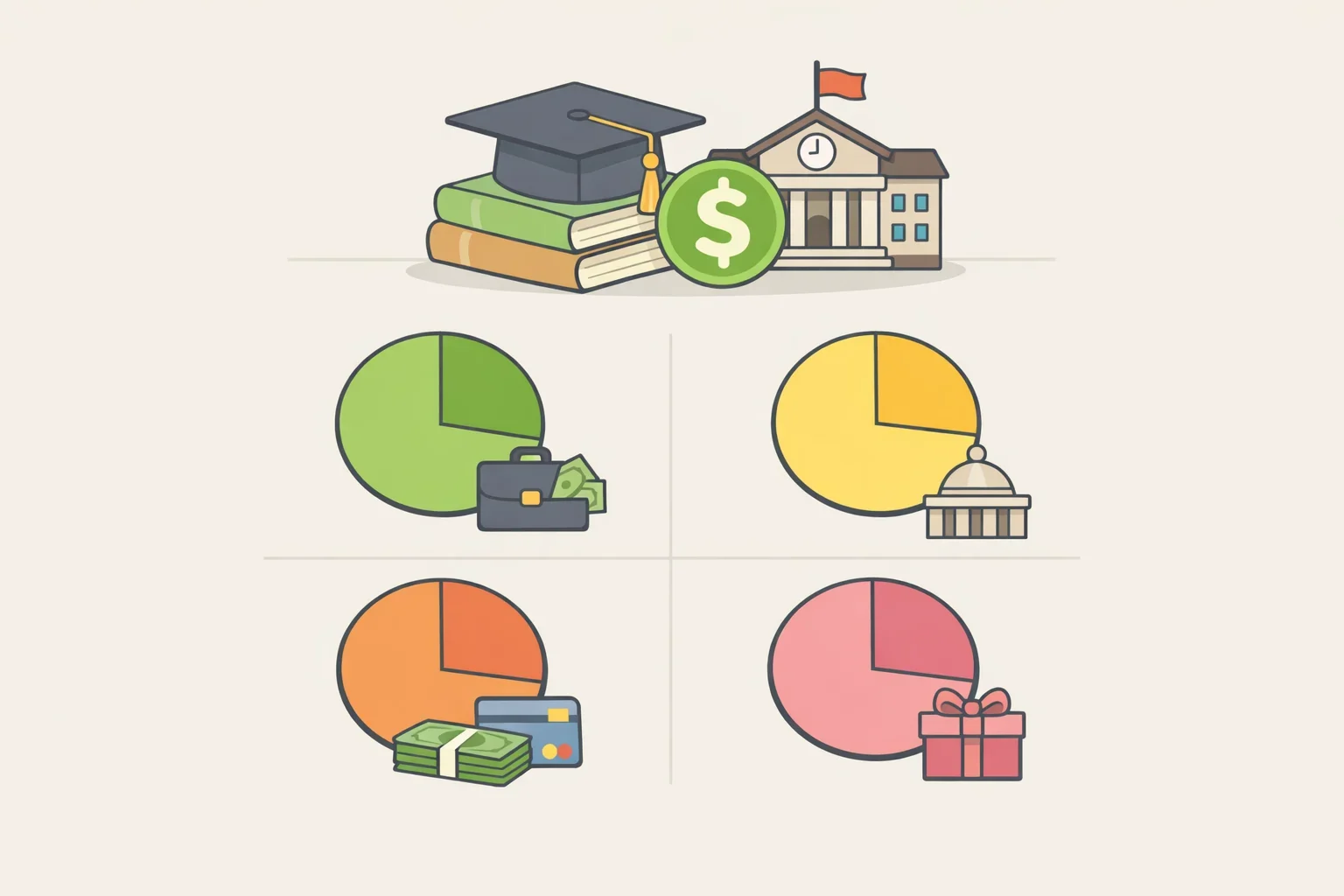
Of that $34,019 average, families covered 49% through student and parent income and savings, 27% through scholarships and grants, 22% through borrowing, and 2% through gifts from friends and family, Higher Ed Dive reported. Nearly half of surveyed families, 47%, borrowed something to cover 2025-26 costs.
Price pressure is already shaping where students enroll. About 79% of surveyed families said they eliminated at least one college "at multiple stages" of the decision process specifically because of cost, Higher Ed Dive reported. Two-thirds of families said they support federal limits on how much students and parents can borrow, and 53% said colleges should respond to those limits by lowering tuition rather than shifting costs elsewhere.
Because this figure bundles tuition, fees, housing, and other expenses into one number, it isn't built for line-by-line comparison against a specific school's bill. A financial aid office's itemized cost-of-attendance breakdown, covering tuition, fees, housing, food, books, and transportation separately, gives a more useful basis for comparing offers than the survey average alone.
Three ways to measure "college cost," and why they don't match
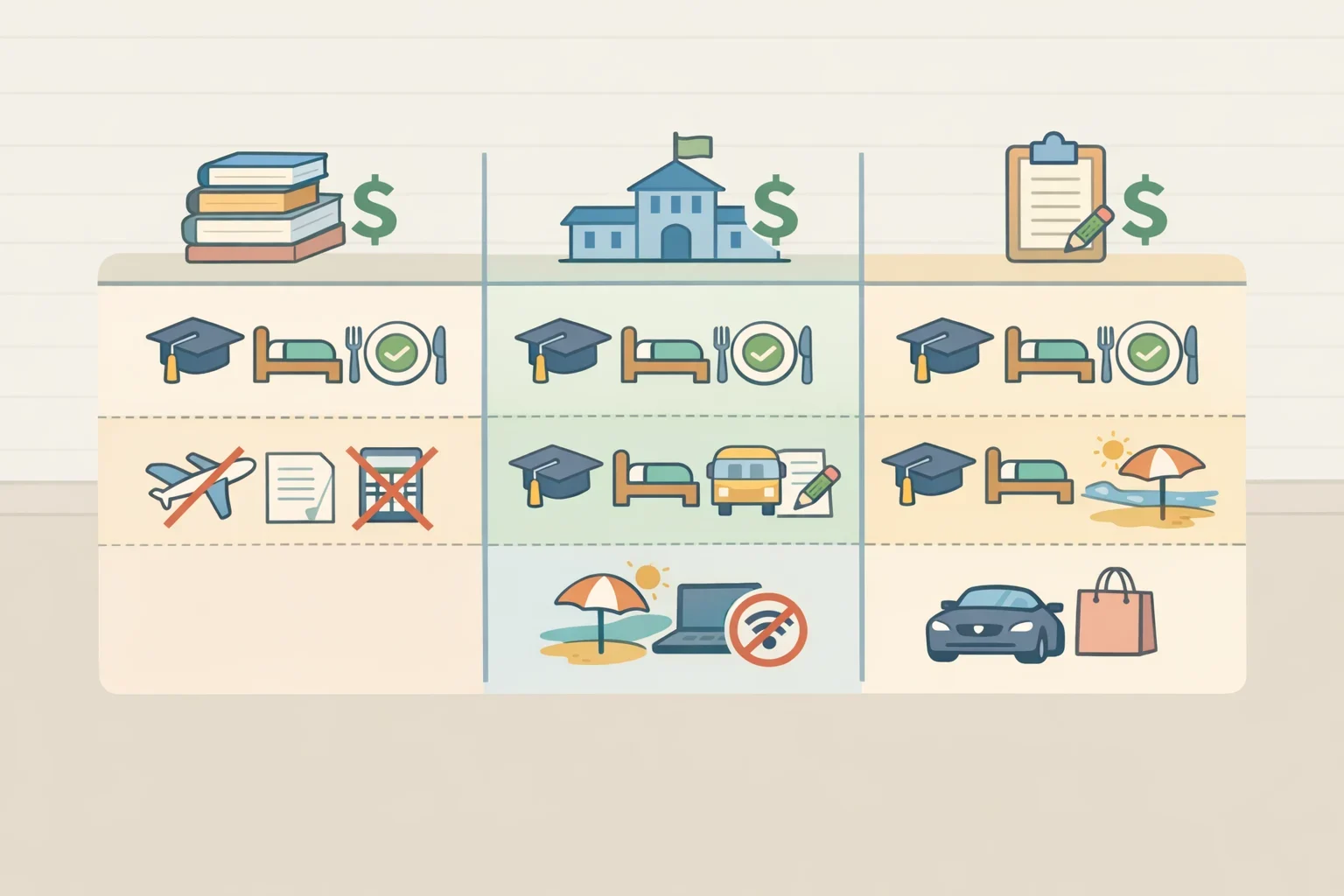
The word "cost" gets used loosely in college affordability coverage, and three 2025-26 reports illustrate why the same word can point to three different numbers.
Measure What it covers Who it represents How it's calculated What it can't tell you Sallie Mae's $34,019 Tuition, fees, housing, and other costs combined Surveyed undergraduates and parents Self-reported total spending from an online survey Whether a specific family's spending is typical, or how much reflects sticker price versus discounts IHEP's net tuition and fees Tuition and fees only, no housing or food Students at four-year public and private nonprofit colleges nationally Net tuition and fees as a percentage of published tuition and fees Actual dollar costs or anything about living expenses Brookings' modeled net price Sticker price minus grants and scholarships Hypothetical families at set income levels, modeled at a fixed sample of 200 four-year schools Net price calculators applied to modeled income and asset profiles What a real student would pay at a specific school, since it isn't based on actual bills
IHEP's data show net tuition and fees fell from 44% of the published rate at public four-year colleges in 2010-11 to 19% in 2025-26, and from 56% to 38% at private nonprofits, according to IHEP research published two months ago. That's a widening discount relative to sticker price; it doesn't by itself say whether actual dollar costs rose or fell, since published prices have also shifted over that span.
Brookings' modeled figures point more directly at falling prices. For families at roughly $45,000, $85,000, and $140,000 in income, inflation-adjusted net prices at the sampled schools dropped 35%, 43%, and 23%, respectively, over the past decade, according to Brookings research published earlier this year.
None of these measures share a population, a cost category, or a method, so a rise in Sallie Mae's all-in spending figure doesn't undercut IHEP's or Brookings' numbers. They're answering different questions. Among high school families considering higher education, only 37% know that families often pay less than a school's advertised sticker price, according to a separate Sallie Mae/Ipsos study published earlier this year, a separate misunderstanding worth clearing up before comparing any of these figures to your own numbers.
What net price calculators and award letters actually tell you
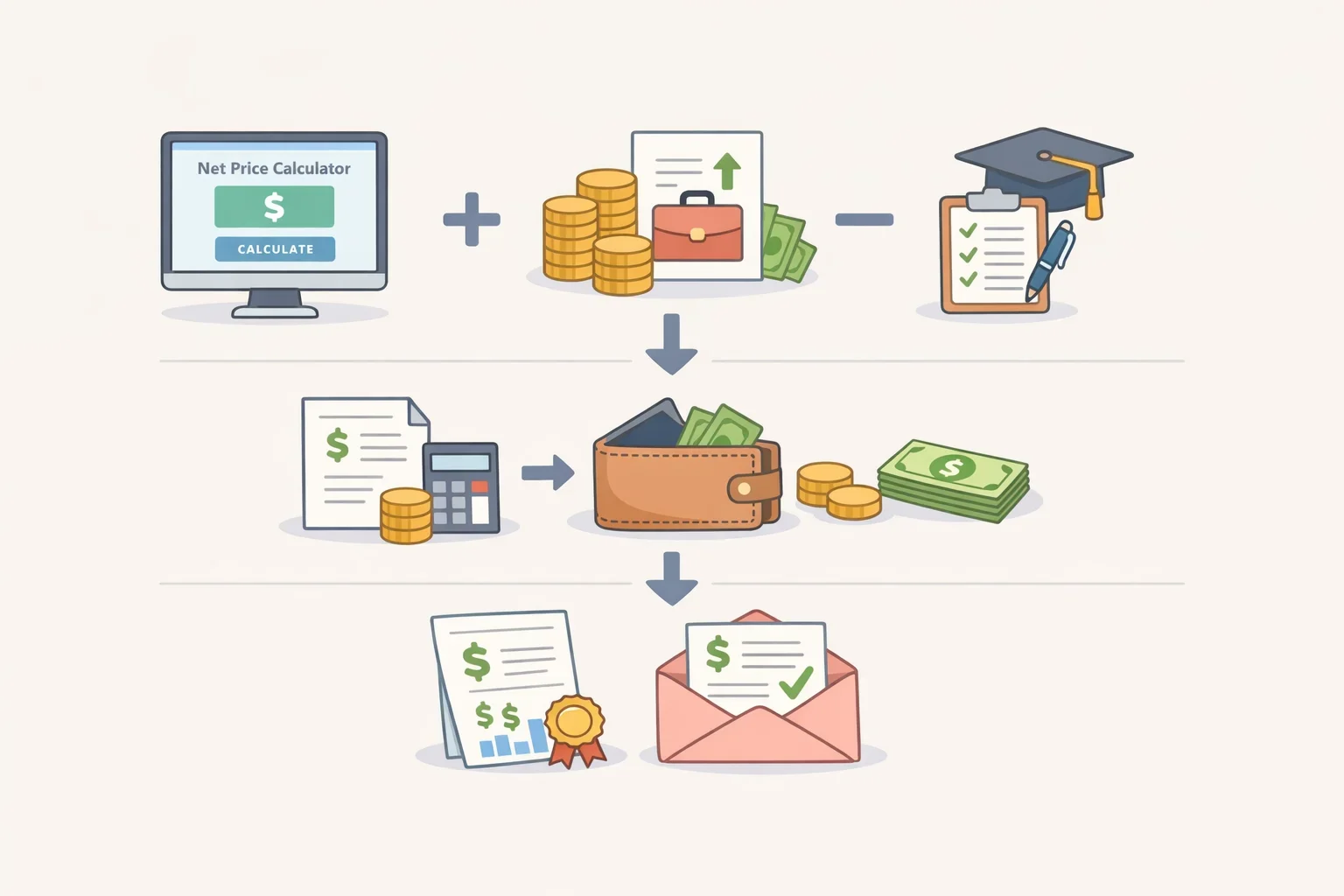
Every college that participates in federal student aid programs has been required to publish a net price calculator since 2011, per Brookings. It's a useful early estimate for narrowing a college list, but the numbers that matter for a real decision arrive later, in an official award letter.
Two separate figures are worth calculating from that letter rather than one blended "gap." Net price is cost of attendance minus grants and scholarships only. The amount left to finance is net price minus your family's planned cash contribution and any work-study earnings you can realistically expect to collect, since work-study is a wage opportunity tied to actually getting hours, not aid credited up front.
A short checklist helps before accepting any offer:
- Is the scholarship renewable, and under what conditions?
- Does the aid package typically change after the first year?
- Is work-study guaranteed, or merely available?
- What loan types and amounts are built into the package?
- Are the housing and food figures billed charges, or the school's estimate?
Among high school families considering higher education, fewer than four in 10 have discussed expected salaries in a student's intended field (38%), earnings compared with cost (28%), or career placement rates (28%), according to the same Sallie Mae/Ipsos study. Weighing the amount left to finance against a program's reported earnings outcomes on the Department of Education's College Scorecard is a more grounded comparison than relying on a school's own marketing about graduate salaries.
Two years ago, only 40% of families who borrowed for college had discussed who was responsible for repaying the loan, according to Sallie Mae's 2024 survey. Settling that question in writing, student or parent or both, before accepting a loan avoids a conversation that's much harder to have after money has already changed hands.
What the new Parent PLUS and Grad PLUS loan limits could mean for families
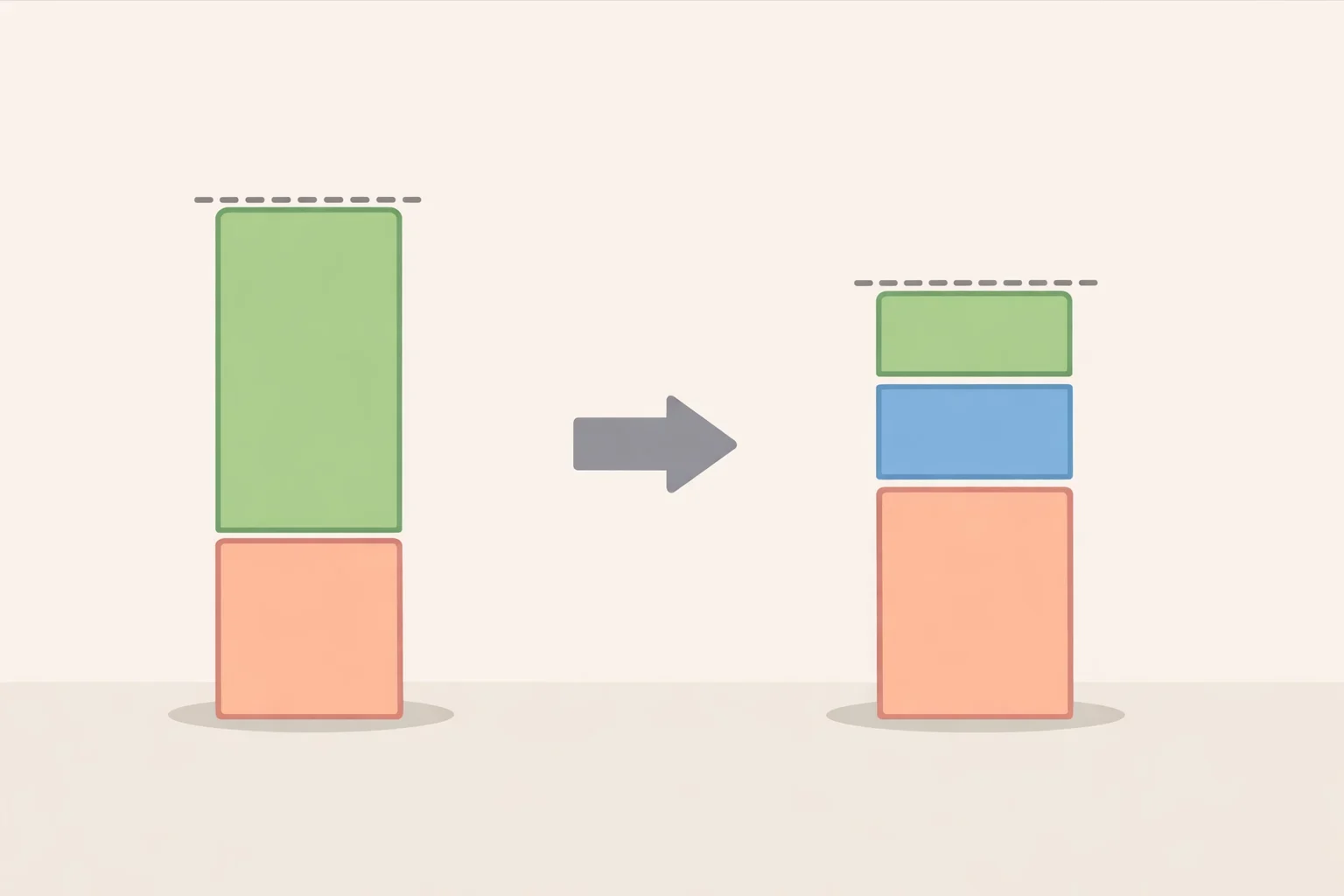
A separate policy shift is layered on top of these cost figures. Parent PLUS loans, previously available up to a student's full cost of attendance, are now capped at $20,000 per student per year and $65,000 in aggregate, and Grad PLUS loans are being phased out under the reconciliation law Congress enacted last year. Lawmakers who wrote the caps said the goal was to push down college prices and slow the growth of student debt, according to Inside Higher Ed.
Whether that's happening is contested. Preston Cooper, a senior fellow at the American Enterprise Institute, a right-leaning think tank, published an analysis identifying 10 graduate programs that adjusted pricing in apparent response to the caps, though seven of those added scholarships rather than cutting tuition directly, per Inside Higher Ed. Emory University, for example, announced a $25,000 tuition scholarship for students applying to three public health and health administration programs. Cooper called the pattern "early signs that the loan limits seem to be working."
Clare McCann, managing director of the Postsecondary Education and Economics Research Center at American University, disagrees that the evidence supports that conclusion yet. Even if every identified example held up, she told Inside Higher Ed, "it would still be a fraction of the colleges in the country. So it's way too early to argue that costs have gone down." She also cautioned that a scholarship lowers the price some students pay without necessarily changing the underlying cost, and that cutting costs without regard to instructional quality carries its own trade-offs.
The scale of the problem those caps are meant to address is larger than 10 programs suggests. About 28% of graduate borrowers would need to borrow above the new federal limits to cover their costs, facing an average financing gap of $21,700, according to a study the PEER Center and the Federal Reserve Bank of Philadelphia published last December, cited by Inside Higher Ed. Of those borrowers, 38% have poor or no credit, which could make filling that gap with private loans difficult or even impossible.
What to check before you accept an aid offer
The $34,019 figure, IHEP's net tuition ratios, and Brookings' modeled net prices are all accurate descriptions of different things. None of them replaces the number that matters most for your family: the actual net price and amount left to finance on your own award letter.
Run a school's net price calculator as an early estimate, then recalculate both figures once the real offer arrives, using the checklist above rather than the sticker price or a national average. If Parent PLUS or Grad PLUS borrowing is part of your plan, confirm the current caps and any grandfathering rules directly with studentaid.gov or your school's financial aid office before accepting an aid offer for an upcoming term, since implementation details can vary by program and by when a student first borrowed.