
The younger generation should be made aware of Remembrance Day. This occasion honors all veterans who have fallen in conflicts since World War I. It takes place on Nov. 11, as at 11 a.m. on this day in 1918, the armistice was signed to end World War I. This day became known as Remembrance Day in the British Commonwealth and Veteran's Day in the United States.
Message
Decide on the message of your assembly. You may want to simply acknowledge Remembrance Day and explain why it exists. You could personalize the assembly for your school by considering soldiers that came from your area. Students could reflect on wars that still take place today or contrast the lives of soldiers at war with a typical student at your school.
Images
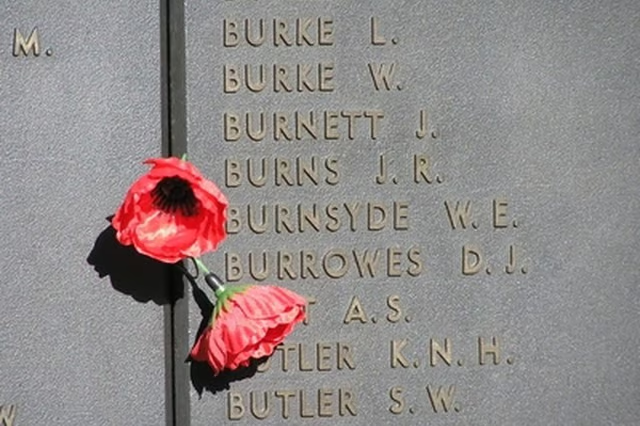
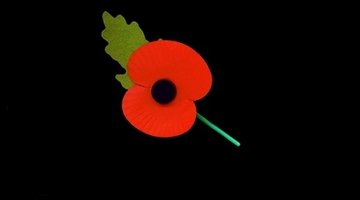
Display the image of a poppy and explain the significance of this symbol. Poppies grew in some of the worst battlefields of World War I and this in conjunction with their blood-red color has resulted in them becoming the symbol of Remembrance Day. Use a photograph of a local war memorial and ask students what it represents. Photographs of war cemeteries and a wall of engraved names of fallen soldiers will help to illustrate the sheer numbers involved.
Accounts
Use first hand accounts of war to illustrate what it was like for troops. You could read letters sent home from the trenches during World War I or poems such as "In Flanders Field" by John McCrae. Show video footage of war.
Connect to the Present
Invite a local war veteran to the assembly to share his experiences. A current soldier could come in and talk about the importance of Remembrance Day to them. Inviting a former student of the school would be a particularly good way to make the experience real to students. Alternatively, contrast accounts of World Wars I and II with accounts of war today.
Reflection
Allow students time to reflect on the message of the assembly. This could involve projecting a series of images onto a screen whilst suitable music is played or a reading is heard. The assembly might end with a question for students to consider. If appropriate to your school you may want to include a prayer.