
How schools address chronic absenteeism: Barriers and supports
A student can miss school for many reasons. Illness, unreliable transportation, caregiving, housing instability, a difficult class, or feeling disconnected can all appear in an attendance record as the same thing: an absence.
The response depends on what is getting in the way. A bus-route problem calls for a different conversation from recurring health needs, and a student avoiding one class may need a different kind of support from a student who cannot get to school reliably. This article focuses on U.S. public schools and the questions teachers, tutors, parents, and guardians can ask when attendance becomes a concern.
National attendance estimates are difficult to compare because states and school systems may use different definitions, reporting years, and collection methods. The NCES School Pulse Panel provides broader context, but its figures should not automatically be treated as interchangeable with a school’s student-level attendance record. The practical question is local: What pattern is the school seeing, and what support fits that pattern?
What chronic absenteeism measures
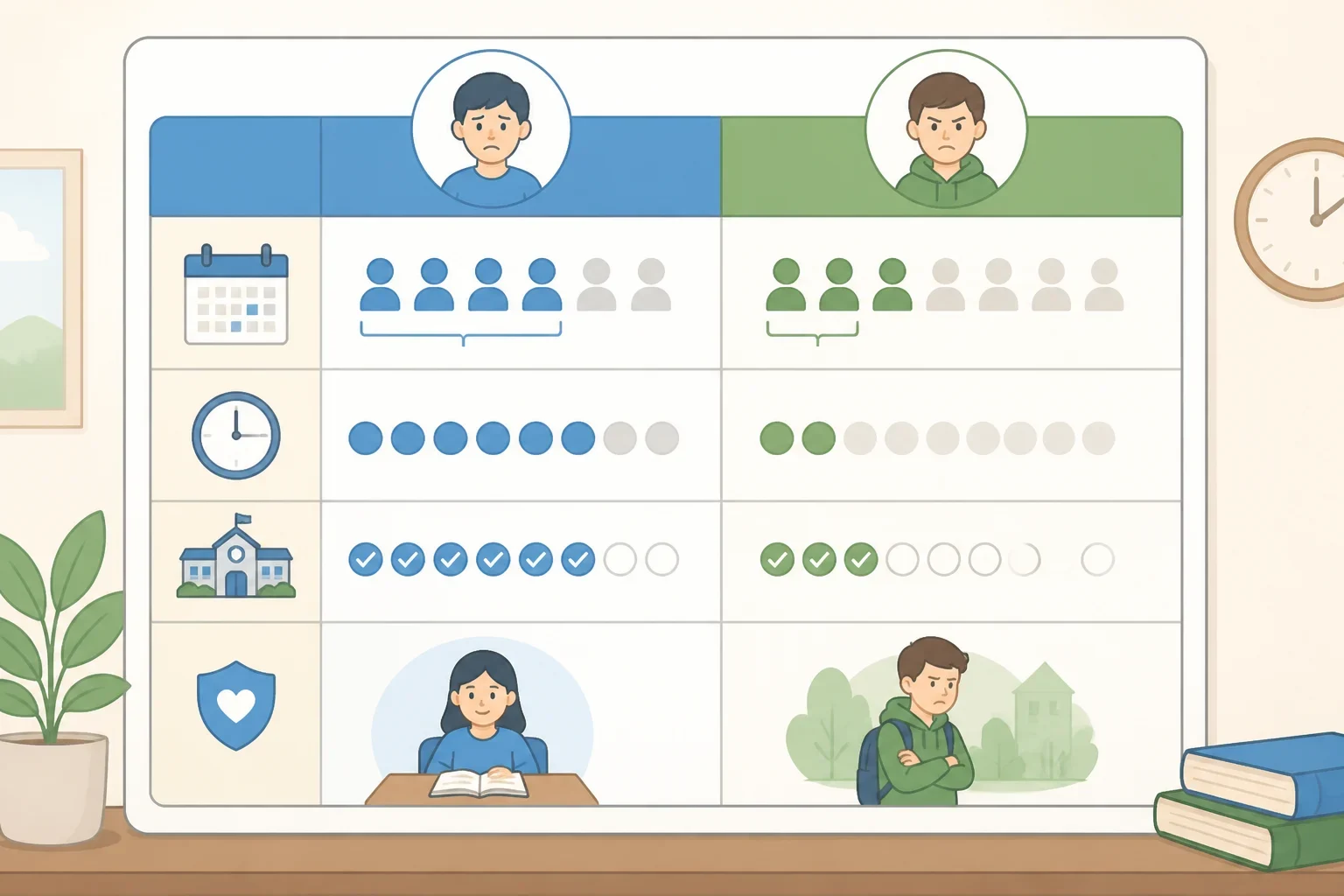
Chronic absenteeism commonly means missing at least 10% of enrolled school days, whether the absences are excused or unexcused, according to Attendance Works. That measure differs from truancy, which generally focuses on unexcused absences. Schools and states may define or report these terms differently, so families should check the language used by their school or state education agency.
The distinction matters. A student who misses school because of recurring illness is experiencing an attendance problem even when every absence is excused. The same can be true when a family member needs care, transportation fails, or a housing change makes getting to school difficult. Treating every absence as intentional misconduct can draw attention away from the obstacle that needs to be addressed, a distinction emphasized by Attendance Works.
Attendance is a signal, not a diagnosis. A record can show when a student was absent, late, or dismissed early, but it cannot explain the reason by itself.
Attendance research and early-warning practices support paying attention before a pattern becomes more difficult to change. That does not mean absences alone prove why a student is struggling, or that one intervention will work for every student. For educators, an attendance alert should begin a conversation. For families, school outreach should include questions about circumstances, not only warnings about totals.
Start with the pattern, not an assumption
Before choosing a support, school staff need to understand what is happening without asking teachers or families to diagnose health, financial, housing, or relationship issues. A pattern can guide a respectful conversation, but it should not be treated as proof of a cause.
Useful observations include:
- Do absences cluster on particular days?
- Are they full-day absences, late arrivals, early departures, or missed periods?
- Did the pattern begin after a schedule, transportation, housing, health, or family change?
- Do absences appear around a particular class, setting, activity, or social situation?
- Has the student described a practical obstacle, academic frustration, health concern, or discomfort at school?
- What has already been tried, and who followed up?
A Monday pattern might reflect transportation, caregiving, scheduling, or something else. Absences connected to one class might involve academic difficulty, conflict, anxiety, bullying, or a timetable problem. Adults should record what they observe and ask open questions rather than assign a label.
A simple sequence can keep the conversation focused:
- Observation: “The student has missed first period several times.”
- Question: “Is there a morning transportation or scheduling problem?”
- Possible support: “Can the school review arrival options or connect the family with the attendance office?”
- Review point: “When will the adults check whether attendance changed?”
This approach separates information from interpretation. It also gives the school a way to test whether a proposed response is helping.
Match the support to the barrier
Logistics and attendance alerts
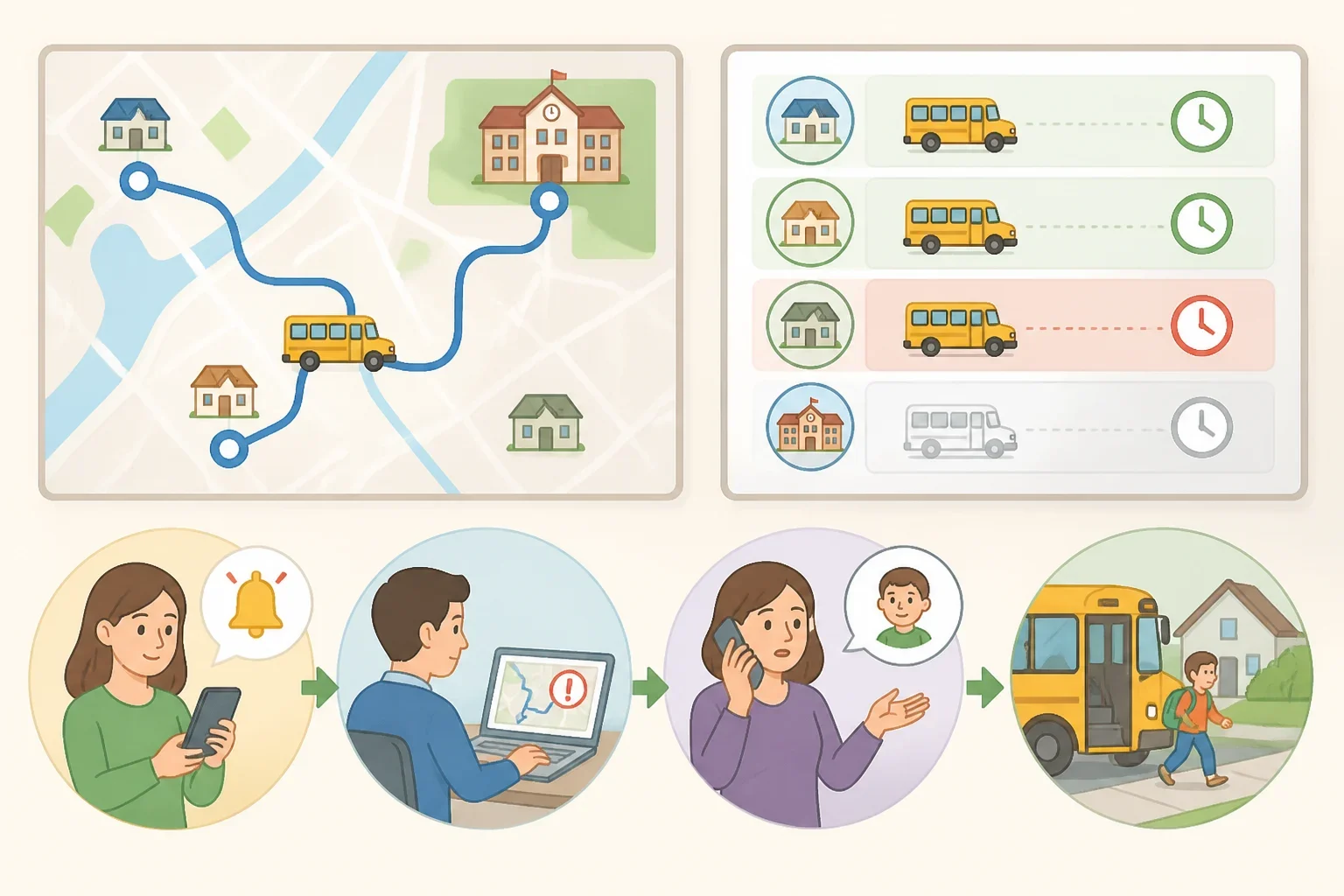
When transportation or another daily logistics problem is involved, the first response may need to be practical rather than disciplinary. District examples compiled by Attendance Works include bus-route changes, rideshare partnerships, and walking-school-bus programs in communities without stable transportation service.
Those examples are options, not services every district provides. Families can ask whether the assigned route is operating as scheduled, whether the stop is reachable, and whether the problem involves a late bus, a long walk, a change in family transportation, or a schedule conflict. The school may also be able to identify an attendance contact who can coordinate with transportation staff.
An attendance alert can help staff notice a problem early. Attendance Works describes early attention as part of an attendance-support approach, but a threshold or automated notice does not explain the barrier or guarantee meaningful follow-up. Thresholds may be based on absences, consecutive absences, tardies, or missed periods, depending on the school or district.
Families can ask:
- What triggers outreach at this school?
- Who reviews the alert?
- Will someone contact the family directly?
- What transportation or arrival support is actually available?
A teacher or tutor may not be able to change a route, but can document the pattern and connect the family with the person who can review it.
Health and family circumstances
Recurring health needs can affect attendance even when a student and family are following school requirements. Attendance Works has referenced school-health partnerships, including school-based care and telehealth arrangements, as examples of how some districts respond to conditions such as asthma or dental pain.
These are documented examples, not a guarantee that treatment will be available at a particular school. Availability depends on the school, district, provider, and student’s circumstances. Families can ask which health services are available and which office handles attendance-related coordination. Teachers and tutors should not press students for medical details. A more appropriate question is whether the student needs help connecting with the school nurse, counselor, attendance office, or another designated contact.
Family responsibility and housing instability can create different attendance barriers. A student may be caring for a family member, moving between housing arrangements, managing childcare responsibilities, or dealing with limited access to food and other basic resources. The appropriate school response will vary.
Some districts use family liaisons or social workers to connect families with housing, childcare, or food resources, according to examples described by Attendance Works. Not every school has those positions. A parent or guardian can ask whether a family liaison, social worker, counselor, or community partner handles attendance concerns.
The purpose of that conversation is not to require a family to prove hardship. It is to find out what the school can provide, what it cannot provide, and who else may be able to help. Teachers should use the school’s established process rather than trying to solve a housing or family-services issue alone.
Disengagement and belonging

Some students can get to school but do not feel connected to it. Academic frustration, conflict with peers or adults, discomfort in a particular setting, or a lack of trusted relationships may contribute to absences. These possibilities call for a different first question from “Why are you skipping?”
A school might consider a designated mentor, an advisory period, a check-in arrangement, or another relationship-based support. These should not be treated as one proven package. The available evidence, the local program design, and the student’s circumstances all matter. An advisory period or restorative practice should not automatically be described as an attendance intervention unless the school has evidence that it is addressing the student’s attendance pattern.
A relationship-based approach also needs consistency. A student who is assigned a mentor but rarely meets with that person may not receive the intended support. Staff need time to listen, follow up, and connect the student with a different service when the problem is transportation, health, housing, or scheduling rather than belonging.
Mentoring is not a substitute for transportation help, health care, housing support, or a schedule change. A teacher or tutor can ask what part of the school day feels hardest and whether the student has a trusted adult to contact. “What makes attending difficult?” leaves more room for an academic, social, health, or logistical answer than a question that assumes the student chose to miss school.
Outreach should lead to a specific next step

Automated calls can notify a family that a student was absent. Direct outreach can ask what happened and what the school should understand. Some district profiles documented by Attendance Works describe trained staff or community partners having more focused conversations with families, including home visits in some settings.
A home visit, where a district uses one, should not be treated as a default response or as proof that a family has done something wrong. Families can ask who is contacting them, the purpose of the meeting, what information is being requested, and whether another meeting format is available. School procedures and information-sharing rules vary.
The useful question is whether outreach identifies a practical next step. If a contact only repeats the attendance total, it has not yet addressed the barrier. A support plan should identify who will act, what will be tried, and when the school and family will review the result.
Why promising plans may still fall short
Attendance support requires time, coordination, and follow-up. Staff may identify a problem but lack the authority or resources to solve it. A counselor can learn that transportation is unreliable without being able to add a route. A teacher can notice that a student is struggling without being able to provide health or housing services.
A program can also look different from one school to another. One building may have an attendance team, a family liaison, or a regular mentoring process. Another may rely on one counselor handling several responsibilities. Families should ask whether a support is active now, who manages it, and what happens after the first referral.
The evidence needs careful reading, too. A school may report that outreach helped a particular student, but that experience does not establish that the same approach will work for every student. A district can identify a promising strategy without having enough staff to use it consistently. The quality of follow-up matters as much as the name of the intervention.
That limitation does not make attendance planning pointless. It makes the plan more concrete. A family should leave a conversation knowing what will happen next, who is responsible, and when the adults will check whether the response addressed the problem.
Four steps for the next school conversation
Families, teachers, and tutors do not need to identify the cause alone. They can prepare for a focused conversation by:
- Recording the pattern. Note dates, missed periods, late arrivals, early departures, and any visible context without guessing at the cause.
- Identifying the decision-maker. Ask who reviews attendance concerns and who will follow up with the student or family.
- Matching the response. Ask what support is available for the suspected barrier, whether that involves transportation coordination, a school contact for health needs, family-resource outreach, or a relationship-based check-in.
- Setting a review date. Agree on when the school and family will examine whether the response changed attendance and whether it needs to be adjusted.
Five questions can keep the meeting practical:
- What attendance pattern are you seeing?
- What information does the school need, and who will have access to it?
- What support matches the barrier being considered?
- Who is responsible for the next step?
- When will the plan be reviewed?
Parents and guardians can share timing and context without disclosing private health or family details that are not needed. Tutors can report an observed pattern through the school’s approved contact rather than speculate about its cause. Teachers can document what they know and ask the attendance team to investigate what they do not.
The immediate goal is not to explain every absence in one meeting. It is to describe the pattern, connect the student with an appropriate school contact, and agree on a follow-up point. Attendance data can start that process, but the next useful action comes from asking what the student needs and checking whether the response helped.