

- How to Make Professional Development Stick: 6 Steps
- Why one-time training does not transfer automatically
- Six steps for sustained professional learning
- Professional development follow-up and coaching: Steps 3 and 4
- Step 5: Revisit implementation through a professional learning community
- Step 6: Resource the conditions that keep the cycle going
- A practical planning check
How to Make Professional Development Stick: 6 Steps
A training day can introduce a useful teaching strategy without creating a plan for using it, observing it, or improving it. To learn how to make professional development stick, school leaders need to design the follow-up before scheduling the training. This guide provides a six-step model for principals, instructional coaches, professional development coordinators, and district leaders planning professional learning for the current school year.
The research base is strongest in specific contexts. STIR, for example, is a K–2 literacy model. Other evidence concerns teacher evaluation, feedback, professional learning communities, or teacher residency programs. These sources do not prove that one sequence works identically across every subject, grade, or school. They do, however, offer a practical framework leaders can adapt: introduce a focused practice, rehearse it, observe implementation, provide useful feedback, and return to evidence.
Why one-time training does not transfer automatically
A workshop can build awareness. Awareness alone does not show whether teachers can use a new routine during an actual lesson, fit it into existing curriculum, or adjust it when students respond in unexpected ways.
The STIR model illustrates the value of a sequence. It introduces instructional strategies, creates opportunities for educators to practice them, and then provides constructive feedback and ongoing coaching. The model was designed to help schools translate research into K–2 literacy practices, so leaders should treat it as an implementation example rather than universal proof for every professional development program. IES describes the model as a flexible structure that connects professional learning with classroom use.
Teacher evaluation research points to the same implementation gap from another direction. Observation data and scores are unlikely to be useful or lead to improved practice without constructive feedback that explains what needs to change. A research synthesis found gains from growth supports in settings that committed time and funding to regular observation, post-observation conferences, written and verbal feedback, and specific skill development. IES also reports that teachers in a qualitative case study viewed actionable feedback, guidance they could apply immediately, as especially useful.
The practical question is not simply, “What training should staff attend?” It is, “What will teachers do with the practice after the session, and how will the school help them improve it?”
Six steps for sustained professional learning
Step 1: Choose one focused practice and connect it to existing curriculum
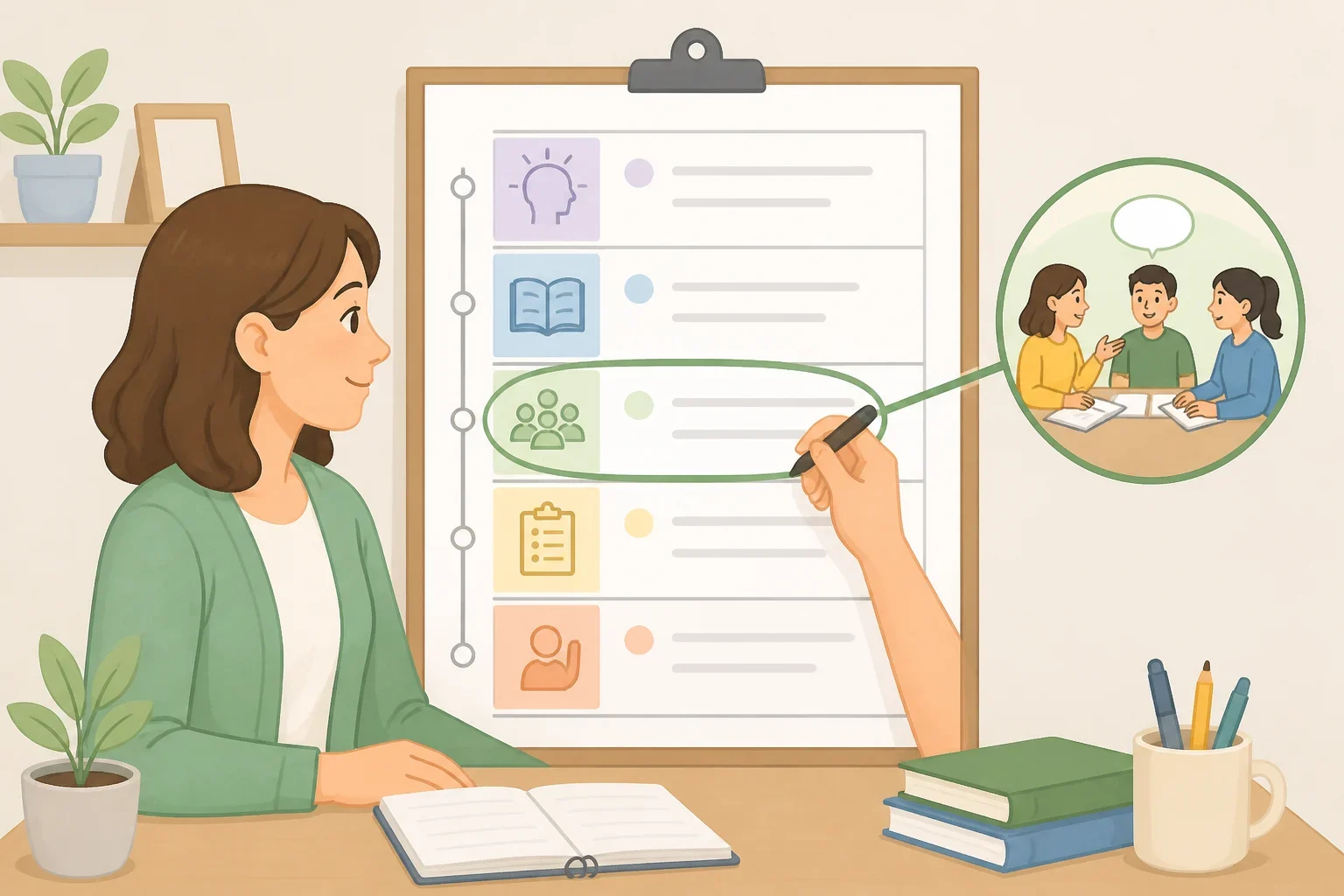
Start with a practice narrow enough to observe. “Improve literacy instruction” is too broad for a follow-up cycle. “Increase opportunities for students to respond during phonics instruction” gives teachers and coaches something concrete to plan, practice, and revisit.
STIR connects instructional routines and strategies to district-supported curricula rather than presenting a separate program that competes with existing materials. Its objectives include using response opportunities, productive wait time, corrective and affirmative feedback, and reduced teacher talk within current instructional routines. IES provides this literacy example.
For a broader school initiative, a leader might choose a practice such as:
- prompting every student to respond during a planned lesson section;
- using a consistent routine for checking understanding;
- giving immediate corrective feedback;
- explicitly teaching a step in the writing process.
Leader action: Select one observable practice and name the lesson or curriculum materials where it will be used.
Teacher action: Mark the relevant lesson section and write a brief implementation plan. The plan should state what the teacher will say or do, when the move will occur, and what students will be asked to do.
Evidence to collect: The selected lesson, a short teacher plan, and a walkthrough look-for connected to the practice.
Timeline: Complete this planning before the training session or during its closing activity.
Decision point: If the practice cannot be identified in existing materials, narrow it further or reconsider whether the initiative fits the curriculum. Professional development should reinforce the work teachers are expected to do daily.
Leaders looking for ready-made materials can adapt research-based tools rather than building every resource from scratch. An IES overview describes the REL Southeast Professional Learning Communities Facilitator’s Guide, which connects professional learning sessions to a What Works Clearinghouse, or WWC, practice guide. The same resource includes more than 30 classroom videos modeling literacy strategies, a quantitative detail documented by IES. Those videos are literacy-specific, but the design principle transfers: show the practice in context.
Step 2: Model and rehearse before asking teachers to implement

A description of a teaching move is not the same as seeing it performed. Build time for leaders, coaches, or experienced teachers to model the practice. Then let teachers rehearse it without the pressure of a live classroom.
STIR’s professional learning activities include practice with multiple opportunities to respond and immediate corrective feedback. Participants also script and deliver teacher talk, then receive feedback on execution. These details matter because a teacher may understand the goal while still needing practice with timing, wording, or transitions. IES documents these objectives within the literacy model.
Leader action: Demonstrate the practice using a lesson or task already familiar to staff. Make the teacher language visible, either in a script, shared document, or annotated lesson.
Teacher action: Rehearse with a colleague. One person plays the teacher, another plays students, and the group switches roles. The rehearsal should include a predictable student response, an incorrect response, and a moment when the teacher must adjust.
Evidence to collect: A revised lesson plan, a brief rehearsal reflection, or notes showing the teacher’s planned wording and likely student responses.
Timeline: Rehearse during the training and revisit the plan before the first classroom attempt.
Decision point: If teachers cannot explain when the practice belongs in the lesson or what students will do, postpone implementation and model the move again. Moving directly from presentation to classroom expectation leaves too much of the work unstated.
Professional development follow-up and coaching: Steps 3 and 4
Step 3: Observe the practice and give actionable feedback
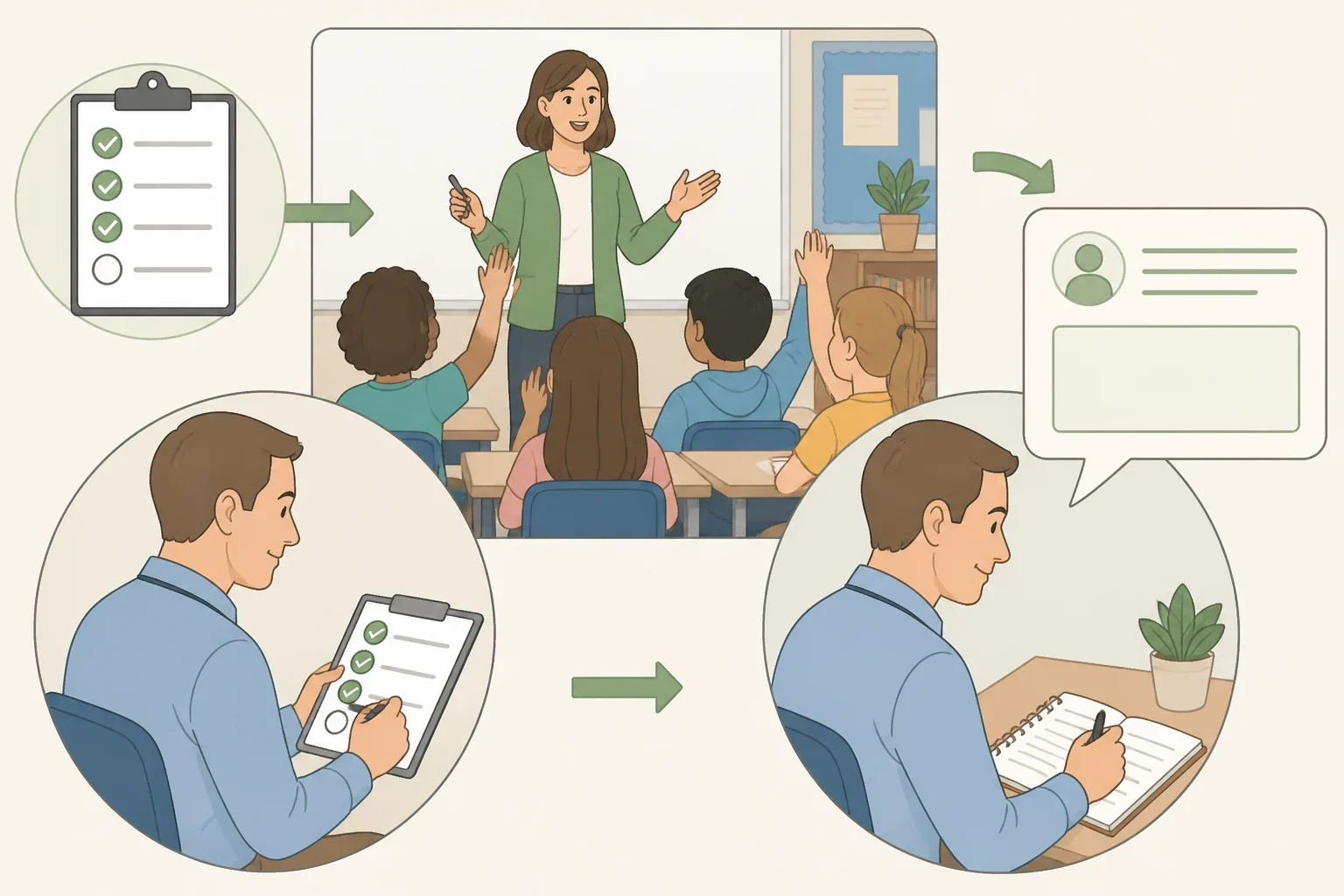
Walkthroughs are most useful when they collect evidence about the selected practice, not when they produce another general score. A focused observation can be brief, but it should lead to a specific conversation and a planned return visit.
A practical feedback cycle looks like this:
- Observe the defined practice in the lesson.
- Name the behavior that was visible.
- Describe its effect on the lesson or student response without overstating the evidence.
- Suggest one next move.
- Schedule a re-observation.
- Review the evidence with the teacher and PLC.
For example, a coach might say: “During the word-reading routine, students had a chance to respond during the first prompt. The next prompts were answered by volunteers. For the next lesson, try a signal that allows every student to respond before calling on anyone. A return visit can focus only on that part of the routine.”
That conversation is different from “The lesson needs more engagement.” The first statement identifies an observable behavior and a next action. It also limits the feedback to one improvement area.
Leader action: Use a walkthrough checklist aligned to the selected practice. Keep coaching notes separate from formal evaluation records when the purposes differ, and explain the distinction to staff.
Teacher action: Identify what happened, compare it with the intended practice, and choose a manageable adjustment.
Evidence to collect: The walkthrough notes, the teacher’s response, and the next lesson or routine showing the planned adjustment.
Timeline: Observe during the first implementation period, conference soon afterward, and schedule the return visit while the feedback is still connected to the lesson.
Decision point: If feedback is too general to guide a next lesson, rewrite it before sharing it. If the same issue appears across classrooms, the school may need another modeling or rehearsal session rather than individual correction.
REL tools offer one example of how to make this manageable. A literacy implementation resource includes checklists aligned to five WWC practice guides for frequent, brief walkthroughs that support coaching and professional growth. The checklists are not formal evaluation requirements for every school, but they show how a leader can connect observation evidence to a coaching conversation. IES
Step 4: Match coaching to the teacher’s growth area
General encouragement has a place in professional learning, but it cannot replace targeted support. Match the teacher with a coach, mentor, or colleague who can demonstrate the specific practice under discussion.
The evidence here includes more than one type of study. A randomized controlled trial found that individualized coaching provided in response to formative teacher observations led to improvements in classroom practice. Separately, an experimental study and an analysis of teacher questionnaire and observation data suggested that students of low-performing teachers saw greater academic gains when their teachers worked with mentors who had expertise in the identified improvement areas. IES describes these findings separately.
Leader action: Identify who has the expertise to support each growth area. That person might be an instructional coach, department colleague, mentor, or trained administrator.
Teacher action: Watch a model, practice the move, try it in class, and bring a question or piece of evidence to the next coaching conversation.
Evidence to collect: A coaching plan naming the practice, the support provider, the classroom application, and the next review date.
Timeline: Begin coaching after the first observation and continue through at least the next review cycle.
Decision point: If the teacher is receiving advice but not modeling, rehearsal, or follow-up, change the support plan. If the practice does not fit the teacher’s subject or students, adapt the example while keeping the instructional goal clear.
Research on teacher residencies offers a related design lesson, although it concerns preparation rather than ordinary in-service professional development. Studied programs emphasized full-year clinical experience alongside expert mentors, coteaching, frequent feedback, clear roles, and ongoing mentor development. Those features can inform school-based PD, but residency evidence should not be presented as proof of a particular outcome for veteran teachers. Learning Policy Institute identifies these practices as characteristics of the programs studied.
Step 5: Revisit implementation through a professional learning community
A professional learning community, or PLC, should be a working session, not another presentation about the initiative. Give teachers a shared question, a small amount of relevant evidence, and time to decide what to try next.
The STIR PLC model uses screening data at the beginning, middle, and end of the year to examine student proficiency, identify an instructional focus, select strategies, and decide whether adjustments are needed. That schedule belongs to the STIR literacy model. It is not a universal requirement for every subject or PD initiative. IES documents the model’s data cycle.
A PLC agenda adapted for another context might include:
- Review the selected practice and its intended use.
- Examine a lesson plan, student work sample, observation note, or other available evidence.
- Identify what teachers tried and what students did.
- Discuss one barrier without turning the meeting into a general complaint session.
- Choose the next adjustment.
- Record who will try it and when the group will review it.
A separate REL Mid-Atlantic writing toolkit includes eight discussion-based PLC sessions, independent reflection activities, and sample lesson plans for elementary writing instruction. Those eight sessions belong to that toolkit, not automatically to STIR or to every school’s professional learning plan. IES provides the source for that structure.
Leader action: Schedule recurring PLC time and provide a shared protocol.
Teacher action: Bring evidence from implementation, not only opinions about the training.
Evidence to collect: A short meeting record naming the practice attempted, evidence reviewed, adjustment selected, and next review date.
Timeline: Hold the first follow-up after teachers have had an opportunity to try the practice, then continue according to the school’s planning cycle.
Decision point: Continue if the evidence suggests the practice is usable and worth refining. Re-model or narrow it if implementation is inconsistent. Stop or replace it if the practice does not fit the curriculum or the problem the school intended to address.
Step 6: Resource the conditions that keep the cycle going
The six-step model will fail if all available time and funding end with the training session. Leaders need to account for coaching, walkthroughs, PLC meetings, substitute coverage or scheduling needs, and development for the people providing feedback.
A research synthesis on teacher evaluation found that schools are unlikely to promote teacher development through evaluation when they do not invest in the systems and conditions that support high-quality feedback. That does not mean observation and coaching guarantee improvement. It means the design must connect the stated goal, the observation process, the professional learning, and the resources available. IES
Working conditions also shape sustained professional learning. On average, teachers continue to improve into the second decade of teaching, although more gradually than earlier in their careers. The Learning Policy Institute reports that teachers are especially likely to improve in supportive schools where they can collaborate with experienced colleagues and have stable teaching assignments. These conditions are associated with continued improvement; they do not determine the outcome in every school. Learning Policy Institute
Before committing to a new initiative, leaders should answer:
- Who owns the follow-up?
- When will teachers rehearse the practice?
- Who will conduct the walkthrough?
- What evidence will the PLC review?
- What time and funding support coaching?
- What will cause the school to revise, continue, or stop the initiative?
Leader learning belongs in the plan as well. A California study found positive associations between principals’ access to professional development and student achievement gains in English language arts and mathematics, with particularly large associated gains in schools led by novice principals. The study examined approximately 462 schools and principals, 14,000 teachers, and 314,000 students, according to Learning Policy Institute. Those figures describe the study sample, not a universal effect, and the authors caution that the relationships do not prove causation.
A practical planning check
Before the next training day, put the full cycle on one page:
- Practice: What single behavior will teachers learn?
- Model: Who will demonstrate it?
- Rehearsal: Where will teachers practice and receive feedback?
- Observation: What will the walkthrough record?
- Coaching: Who will help each teacher adjust?
- PLC review: What evidence will the group examine?
- Decision: What will continue, change, or stop?
If the plan names only the training date, it is not yet a professional learning system. Add the person responsible for follow-up, the evidence to collect, and the next conversation before the session begins. That is the practical path from professional development to classroom use.