
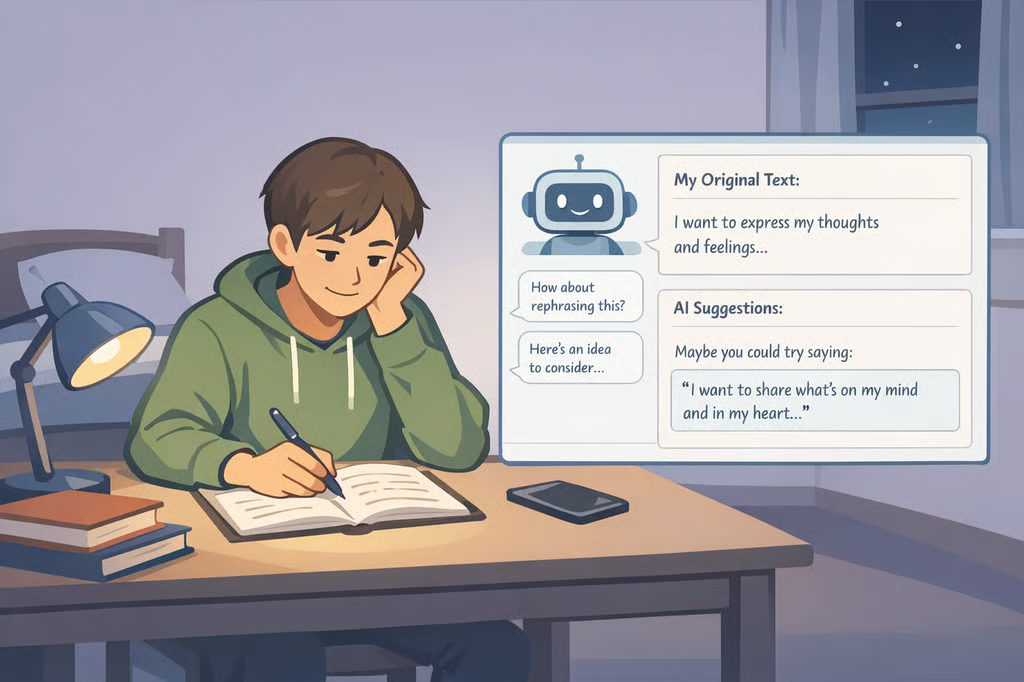
AI can ask a useful question, flag an unclear passage or help sort notes a student has already written. Whether it belongs anywhere in a college application, however, depends on the rules of the application platform and the colleges receiving the essay.
Students should never assume that AI assistance is allowed. Some colleges permit limited uses, while others may impose stricter boundaries or address AI through broader authorship and integrity rules. When a policy is unclear, the safest choice is not to use AI until the admissions office provides an answer.
Even when limited assistance is permitted, the student should remain responsible for every meaningful decision. The experience, interpretation, structure and final wording should come from the applicant—not a chatbot.
A February 2026 research preprint examined 81,663 applications submitted to one selective, engineering-focused university from 2020 through 2024. Researchers found that essays became more similar in certain surface-level language features after generative AI became widely available. Their model also estimated a sharp rise in AI-assisted writing during the 2023–2024 admissions cycle.
The study does not show that AI use caused applicants to be rejected. It examined one university, estimated rather than confirmed AI involvement and identified associations rather than cause and effect. Its findings still raise a practical concern: Heavy AI assistance may make personal essays sound more standardized and less revealing of the individual applicant.
Check the rules before using AI
Start with the application platform’s terms, each college’s admissions pages and any authorship or honesty statement presented during submission. A general campus policy about classroom AI use may not apply to admissions essays.
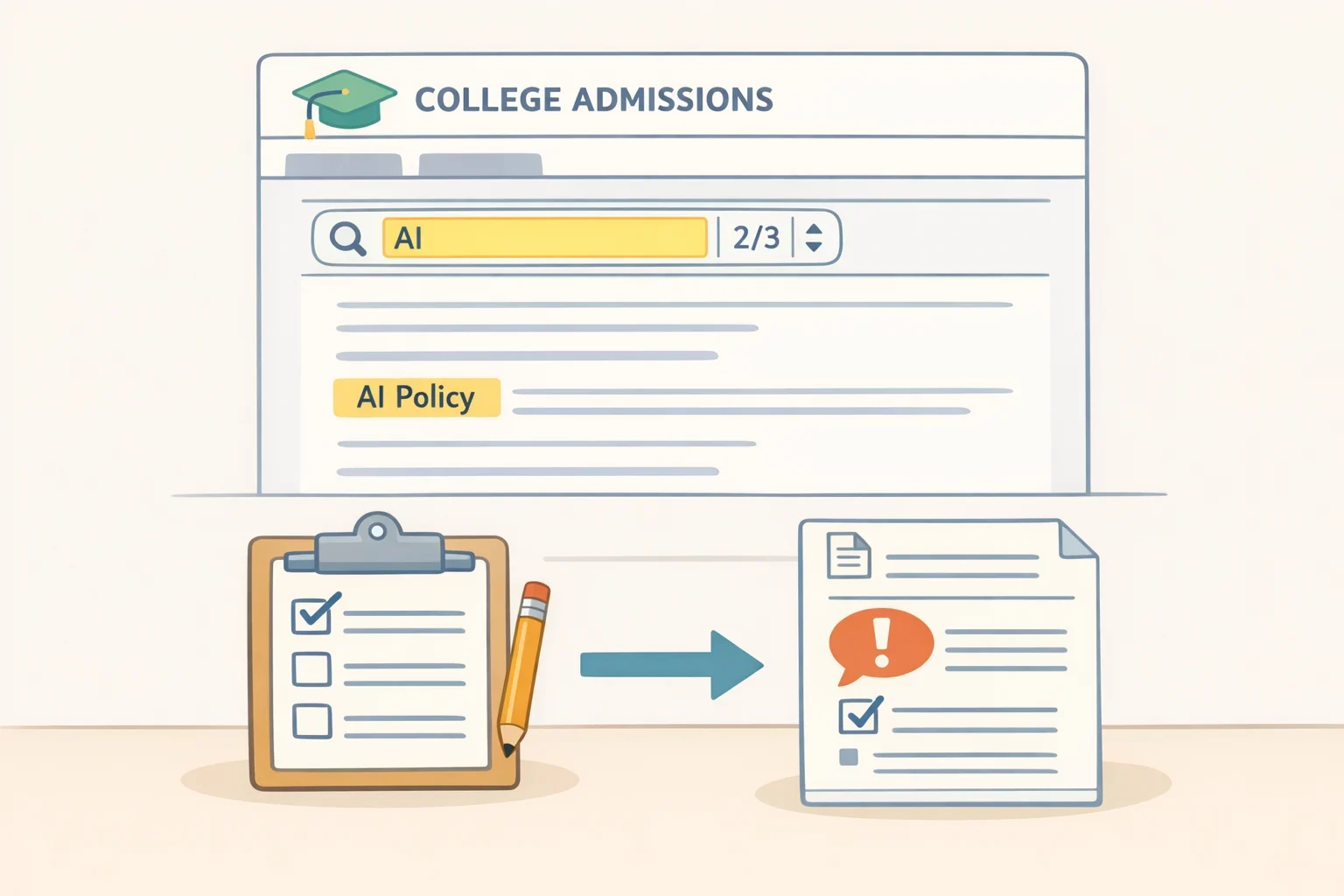
Search for terms including:
- AI
- Artificial intelligence
- Essay
- Authorship
- Application integrity
- Academic honesty
When the rules remain unclear, contact the admissions office with a narrow question:
Does your application policy permit AI-assisted brainstorming, proofreading or feedback on admissions essays? Must applicants disclose any permitted use?
Do not rely on another college’s policy as a substitute. Washington and Lee University, for example, permits limited AI assistance for activities such as brainstorming, organizing existing thoughts and considering different ways to communicate an idea. Its policy does not permit applicants to turn over the essay’s wording, reasoning or intended message.
That boundary applies to Washington and Lee. Another institution may draw it differently.
When disclosure is required, follow the instructions exactly and describe the assistance accurately. Earlier drafts and notes may document how the essay developed, but they do not replace a required disclosure or make prohibited use acceptable.
Parents, teachers, counselors and tutors can help students locate and understand the rules. Students should personally answer questions about authorship and AI use.
When AI assistance goes too far
AI stops being a limited support tool when it begins making the choices that define the essay.
Students should not ask AI to:
- Choose the personal experience they should discuss
- Invent events, dialogue, quotations or descriptive details
- Decide what lesson an experience taught them
- Develop the essay’s main argument or narrative arc
- Write an opening, transition or conclusion
- Rewrite paragraphs for the student to lightly edit
- Make the essay sound more impressive, mature or sophisticated
These are not routine mechanical tasks. They determine how the applicant appears on the page.
When a college permits limited support, AI might be used to generate reflection questions, place student-written notes into broad categories, identify a confusing passage or flag a possible grammar problem. The student should still evaluate the feedback, reject suggestions that do not fit and write every replacement sentence independently.
The National Association for College Admission Counseling addressed responsible AI use in a college-essay webinar recorded September 10, 2025 for counseling professionals. The program paired AI integrity with authentic storytelling, student experiences and constructive feedback. That combination reflects an important distinction: Technology may support reflection, but it should not perform the reflection for the student.
A cautious brainstorming process

1. Begin without AI
Write down experiences that affected you before opening an AI tool. Include specific memories: what happened, what you noticed, how you reacted, what you misunderstood and what changed afterward.
A student writing about not making the soccer team might record:
- Cried in the car after tryouts
- Coach said to work on my left foot
- Practiced alone for six months
- Made the team the following year
- Stopped treating criticism as a personal attack
Starting alone protects the student’s memories and natural language from outside suggestions.
2. Ask questions only when permitted
When a college allows AI-assisted brainstorming, keep the request narrow:
Ask me five questions that could help me reflect on this experience. Do not suggest a theme, lesson, outline or wording.
Answer those questions away from the tool. AI may prompt the student to think further, but it should not supply the insight.
3. Decide what the experience means
The soccer essay may not ultimately be about earning a place on the team. The student may decide it is about learning to treat criticism as useful information.
That interpretation is the essay’s core. Asking AI to identify the “best lesson” would transfer an important act of judgment to the tool.
4. Draft independently
Close the AI tool and write from the original notes. Do not work from an AI-generated outline or copy suggested topic sentences, transitions or conclusions.
A rough first draft gives the student authentic material to improve. A polished AI draft leaves the student revising someone else’s decisions.
5. Seek human feedback first
When possible, ask a teacher, counselor, tutor or trusted adult to answer three questions:
- Where do you want more detail?
- Which part sounds most like me?
- What is unclear?
A useful reader identifies problems without taking ownership of the essay. Parents and tutors should resist rewriting sentences or making the story more dramatic.
When human feedback is unavailable and AI review is permitted, ask the tool only to identify unclear or overly general passages. Do not request replacement wording.
6. Review every change yourself
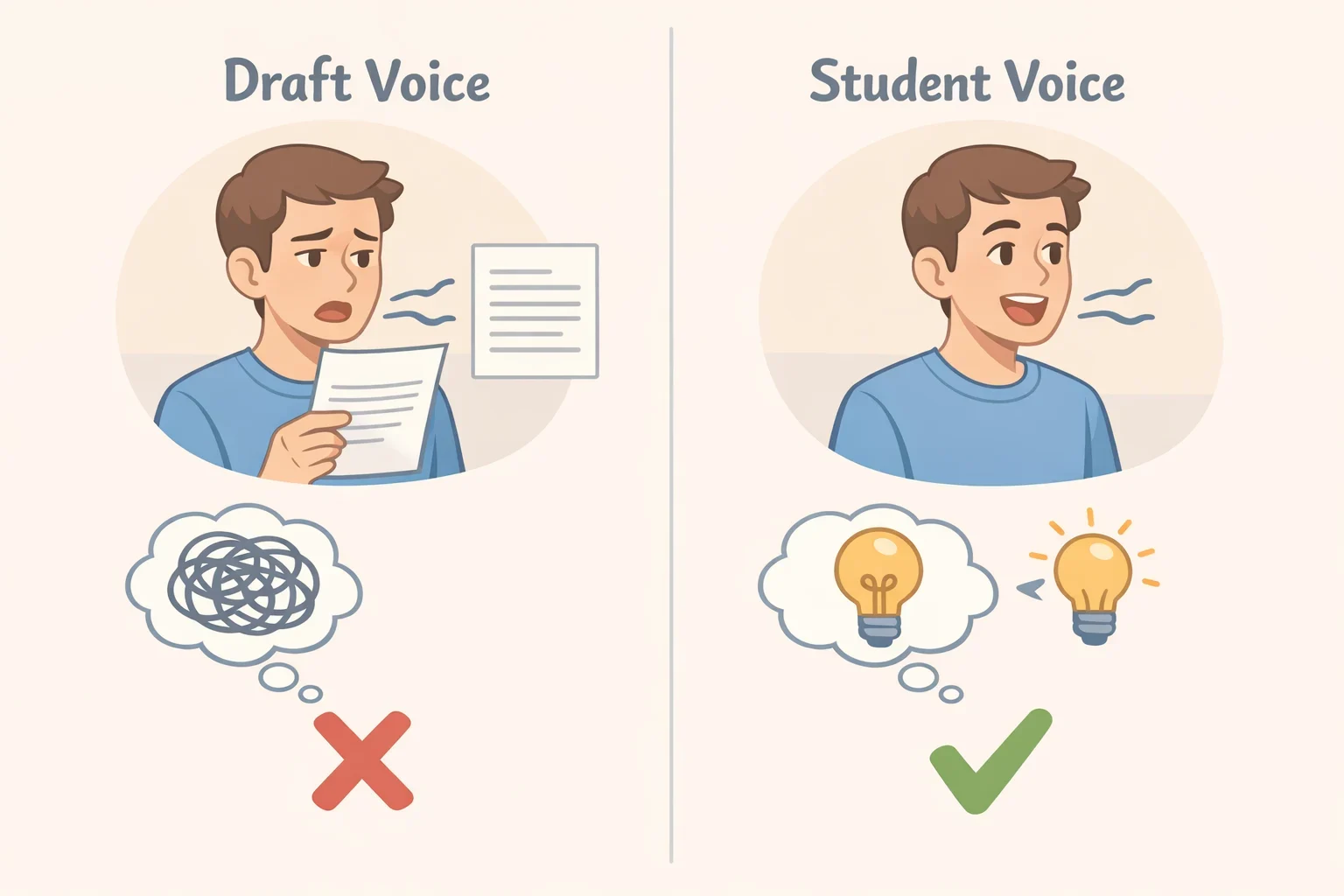
Read the essay aloud. Replace any language you would not naturally use or could not explain in conversation.
Grammar tools can alter meaning, tone and rhythm—not just punctuation. Review suggestions separately instead of accepting a complete automatic rewrite.
What to do if AI shaped too much of the draft
When AI changed only a few phrases, remove them and rewrite those sentences without looking at the generated version.
When the tool supplied the essay’s focus, structure, interpretation or narrative arc, return to the original memories and begin a new draft. Replacing individual words in an AI-built essay usually leaves the tool’s larger choices intact.
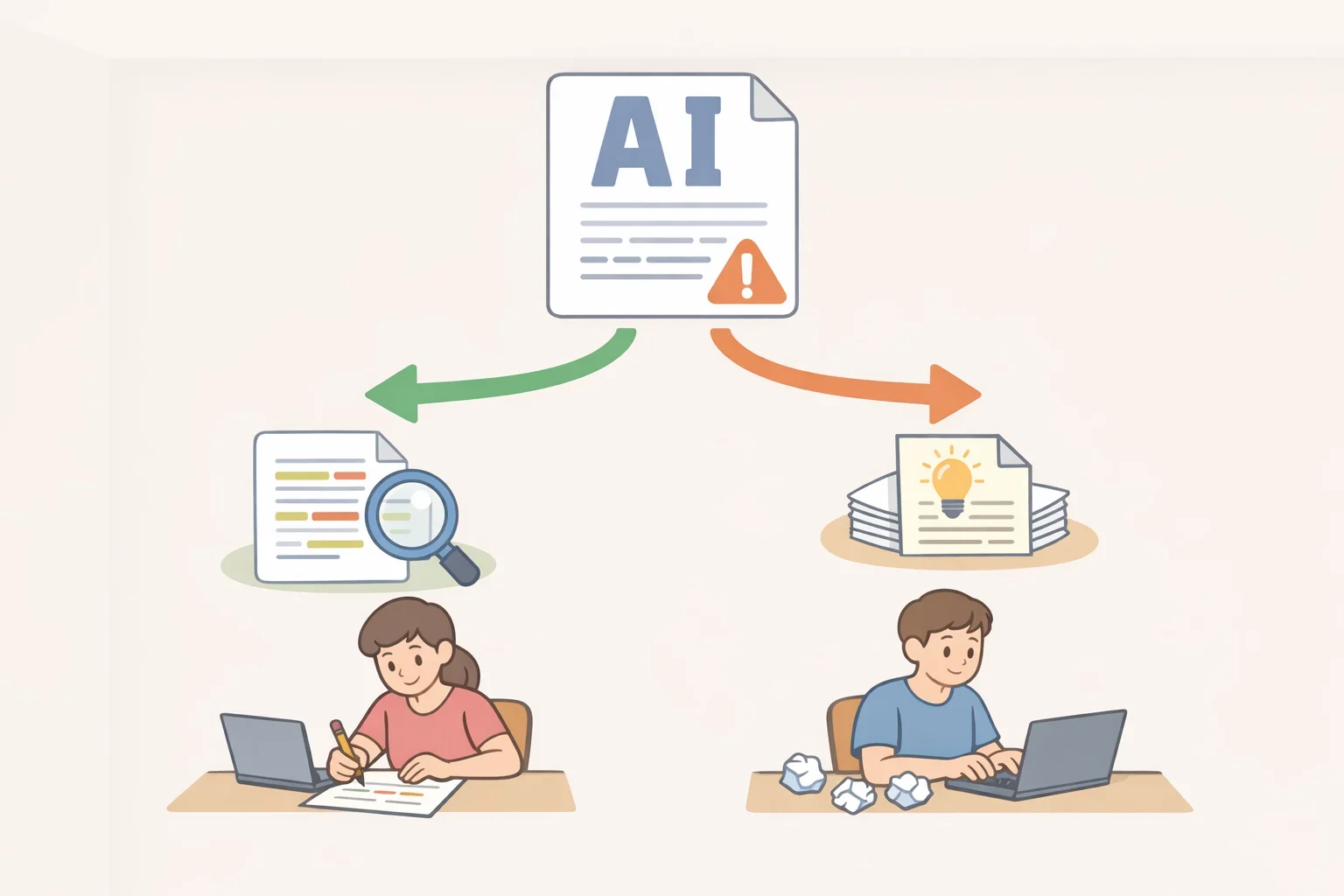
Save notes and earlier drafts when possible. They can help students retrace their thinking and show how the work developed, but they cannot override an admissions policy.
Protect your privacy before sharing a draft
College essays may contain medical information, financial hardship, family conflict or other sensitive experiences. Do not paste identifying or confidential information into a consumer AI tool.
Remove full names, contact details, student identification numbers and private information about other people. Review the tool’s current privacy, data-retention and model-training settings before sharing any draft.
Before submitting, confirm that:
- You checked the application platform’s and college’s current rules
- You followed any disclosure requirements
- The experience, focus, structure, interpretation and wording are yours
- AI did not invent facts, dialogue or personal details
- You reviewed every grammar and clarity suggestion
- You can explain every sentence naturally in your own words
Students do not need AI to write an effective college essay. When limited assistance is permitted and genuinely useful, it should remain secondary to the student’s own judgment. The safest standard is also the clearest: AI may point to a question or a problem, but the thinking and writing must remain the student’s.