
- What to study in college for AI: Choose skills, not a “safe” major
- Why the best college majors for AI are difficult to name
- Are liberal arts majors valuable in the age of AI?
- Match your coursework to the AI-related path you want
- Why question-asking is not the same as skipping technical skills
- What to compare before choosing a major
- The better question to ask
What to study in college for AI: Choose skills, not a “safe” major
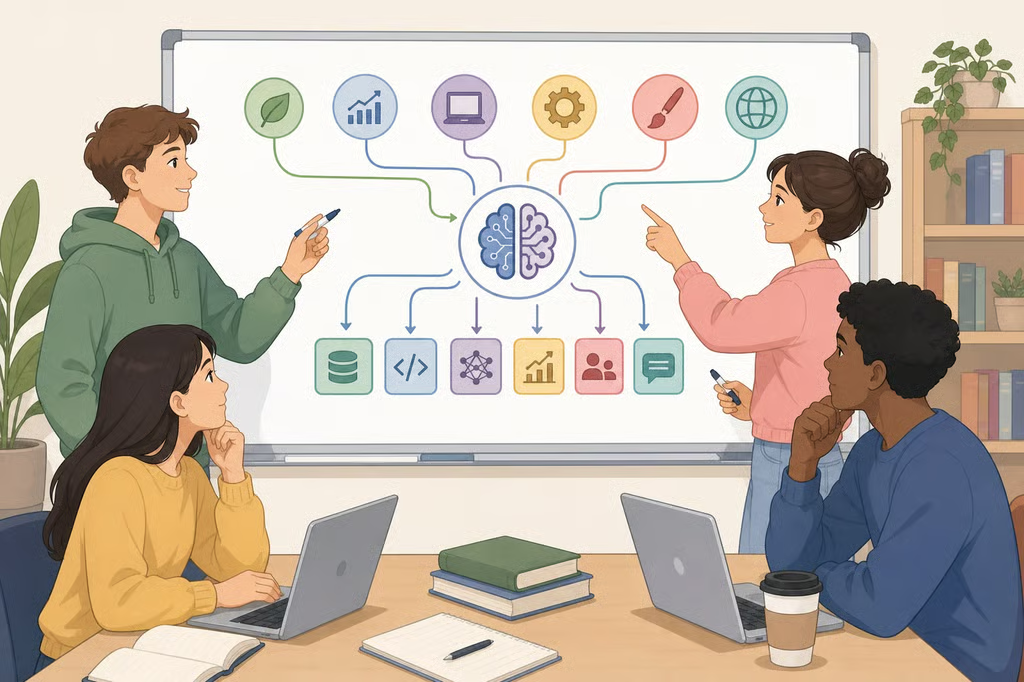
Students searching for what to study in college for AI are often looking for a short list of “safe” majors. That list does not exist. A better approach is to compare what a program asks students to practice, what technical and quantitative options it provides, and whether it leaves room to connect ideas across fields.
Jack Clark’s education offers an example, not a formula. Clark studied literature at the University of East Anglia, worked as a journalist, and later became a cofounder of Anthropic, according to Business Insider six months ago.
The position is straightforward: Chasing an AI-proof major is the wrong goal. Students should choose a field that develops strong reasoning and useful subject knowledge, then add technical skills, research practice, writing experience, or coursework outside the department where those additions fit their plans.
Why the best college majors for AI are difficult to name
The available reporting does not provide a ranking of majors students should choose. It does, however, describe Clark’s view that areas of study with overlap among subjects and a strong analytical component may become more valuable, according to Business Insider six months ago.
That is useful as a challenge to false certainty. It is not proof that every degree offers the same preparation. A computer science program, a history program, and an engineering program may involve very different coursework, projects, and expectations. The major’s name provides one clue, but it does not tell a student how the degree will actually be experienced.
A student comparing programs should ask:
- Will the coursework involve interpreting evidence and explaining ideas?
- Does it include research, experimentation, problem-solving, or quantitative reasoning?
- Can students study a subject area deeply?
- Are technical electives available?
- Is there room for a minor, a project, or coursework outside the department?
- Do the required courses match the student’s intended direction?
These questions do not identify a guaranteed winning major. They reveal whether a program builds the habits and knowledge a student wants to use.

Are liberal arts majors valuable in the age of AI?
Clark has described his literature education as useful because it exposed him to history and to the stories people tell about the future. He said that background became unexpectedly relevant to his work in AI, Business Insider reported six months ago.
That supports a careful conclusion: liberal arts majors in the age of AI should not be dismissed simply because their course titles do not mention programming or machine learning. A literature, history, philosophy, or communication program may give students repeated practice interpreting context, examining assumptions, comparing perspectives, and presenting complicated ideas.
Those are potential benefits of the coursework, not guaranteed career outcomes. Clark’s path shows what became useful to one person. It does not establish that every literature graduate will enter technology, work in AI, or follow the same route.
Students considering a liberal arts major should connect the degree to a specific plan where possible. That might mean taking statistics, programming, research methods, data analysis, or an applied project. Whether those options fit will depend on the college, the program, course availability, and the student’s schedule.
The same caution applies in the other direction. A technical major is not automatically the right choice simply because it sounds closer to AI. Students still need to examine the program’s required courses, learning environment, project opportunities, and fit with the work they hope to do.
Match your coursework to the AI-related path you want
“Working in AI” can mean very different things. A student interested in building models needs a different academic plan from a student interested in explaining AI policy, creating educational products, or writing about technology.
The following framework is for planning, not a universal list of requirements. Program and employer expectations vary, so students should verify them before committing.
- AI research or engineering: Place the relevant technical and mathematical coursework near the center of the plan. Programming, data work, and structured problem-solving may need to be more than occasional electives. Check prerequisite chains early.
- AI policy, ethics, or governance: Consider a field that develops research, argument, history, philosophy, or public-policy knowledge. Add enough technical literacy to understand the systems being discussed.
- AI product management or entrepreneurship: Look for ways to combine technical understanding with communication, research, design, organizational, or business coursework. Projects involving more than one department may be especially useful.
- AI communications, writing, or media: Writing-intensive study can support this direction, but students should also build familiarity with data, digital tools, research methods, and the audience or industry they want to serve.
- AI in education or another applied field: Begin with the subject area in which the student wants to work, then add technical or research coursework that supports applying AI there.
These categories are not promises about hiring. They are a way to avoid treating every AI-related goal as if it required the same major.
Why question-asking is not the same as skipping technical skills
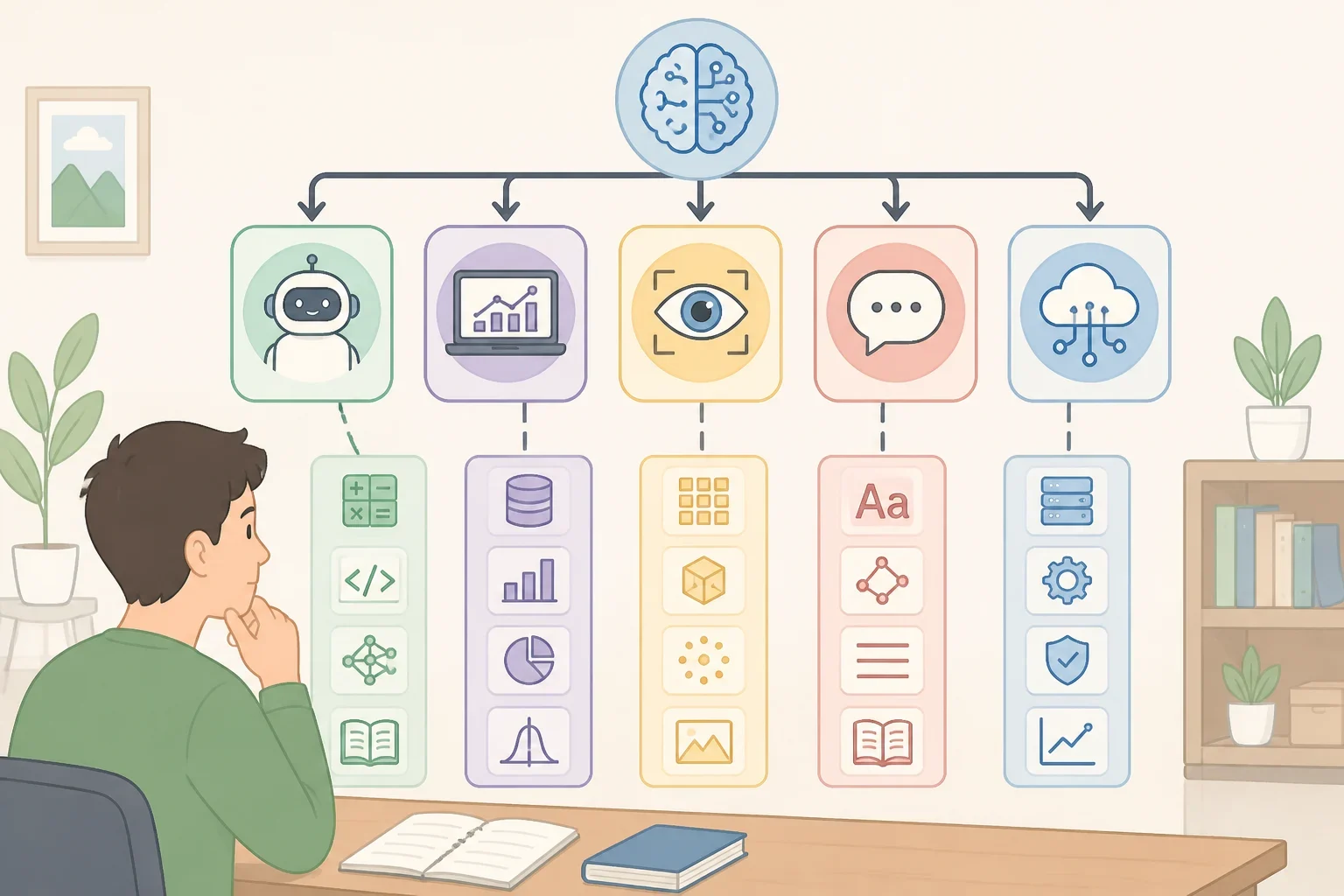
Clark’s advice emphasizes overlap among subjects and analytical thinking, as Business Insider reported six months ago. The practical interpretation is not “do not learn to code.” It is that coding mechanics should not be treated as an entire education plan.
Technical literacy can support a student’s main discipline. It may help a student understand how systems work, test an idea, communicate with specialists, or evaluate the limits of a tool. A computer science student might add writing, ethics, history, or social science. A literature student might add statistics or research methods.
Those combinations are examples, not requirements for every learner. A student who dislikes programming should not assume that a technical course will automatically solve an uncertain career plan. A student who enjoys humanities should not assume that technical literacy is unnecessary. The right balance depends on the intended direction and the opportunities available at the institution.
What to compare before choosing a major
The most useful part of the decision happens before declaring a major. Read the actual catalog and degree requirements instead of relying on a department slogan or a general ranking.
Compare required courses
Identify what students will practice repeatedly. Look for analytical reasoning, writing and revision, research, evidence evaluation, quantitative work, experimentation, interpretation, and subject-specific knowledge. A strong plan does not need every item, but students should understand which abilities the program emphasizes.
Check technical options and prerequisite gaps
Find out whether statistics, programming, data analysis, research methods, or digital tools are required, permitted, or difficult to access. An elective listed in the catalog may not fit a student’s schedule or count toward the degree.
Check prerequisites before planning a minor or a second field. Several introductory courses may leave less room than expected, particularly if adding them changes the length or cost of the degree plan. Ask the department which courses are regularly offered rather than assuming every catalog option runs each term.
Review projects and applied opportunities

Look for research, portfolios, internships, or projects that connect coursework to a field of interest. Do not assume every program offers the same opportunities or that participation is guaranteed. Ask what students complete, how they qualify, and when planning begins.
Compare possible combinations
Interdisciplinary majors for the future are not the only way to study across subjects. Depending on the college, students may be able to use a minor, electives, cross-listed courses, a double major, or a project involving more than one department.
Possible combinations include:
- a history major with statistics coursework
- a computer science student taking philosophy or writing
- a literature major adding data methods
- an education major adding research or technology coursework
These examples show ways to combine interests. They do not establish that any combination leads to a particular job.
Before choosing, ask an academic adviser:
- Which courses teach statistics, programming, or data analysis?
- Can courses outside the department count as electives?
- Are cross-listed or interdisciplinary courses available?
- What projects or research opportunities do students commonly complete?
- Do prerequisite gaps make the plan longer?
- How much room remains for a minor or second field?
- Which requirements come from the college, and which are specific to the department?
The better question to ask
Jack Clark’s path challenges the assumption that an AI-related career must begin with a computer science degree. It does not prove that a literature degree, or any other liberal arts degree, will produce the same outcome. His comments are one founder’s public perspective, not a study of typical graduate results.
The strongest version of Jack Clark’s advice on college majors is not “choose the humanities over technology.” It is to pay attention to synthesis, analysis, subject knowledge, and the questions a student learns to ask. That advice becomes useful only when translated into a concrete degree plan.
Before declaring or changing a major, compare the required courses, technical electives, project opportunities, prerequisite gaps, and time-to-degree implications. Then bring that comparison to an academic adviser. The right choice is not the major with the most reassuring label. It is the plan that matches the student’s intended direction and provides a realistic way to build knowledge across the fields that direction requires.