

- College career outcomes in the age of AI: what Dartmouth's data shows
- What Dartmouth's money is actually buying
- The job market behind the investment
- What the 96.1% success rate does, and doesn't, show
- What Dartmouth's campaign says about college career services for an AI job market
- What to ask your own career office
College career outcomes in the age of AI: what Dartmouth's data shows
Dartmouth College says it has completed a $30 million endowment for paid internships, one piece of a larger $94 million fundraising campaign to rebuild its career center. The college has raised $61 million of that goal from 127 alumni and parents, according to its announcement three months ago (Dartmouth, 3 months ago). It's a striking bet on career support at a moment when college career outcomes in the age of AI have become a genuine source of worry for graduates and their families.
The campaign comes as recent-graduate unemployment has risen to 5.6% in early 2026, up 1.6 percentage points from three years earlier, according to a Stanford Institute for Economic Policy Research brief published last month (SIEPR, 1 month ago). Whether AI is the reason for that shift is a separate question from whether Dartmouth's spending will move the number for its own graduates, and the two get blurred easily.
This is one story about one private university, not proof that college career offices broadly can offset a tougher hiring market. Here's what Dartmouth's money buys, what labor-market research does and doesn't support about AI's impact on college graduates' careers, and what students at any type of school should ask their own career office before assuming similar support awaits them.
What Dartmouth's money is actually buying
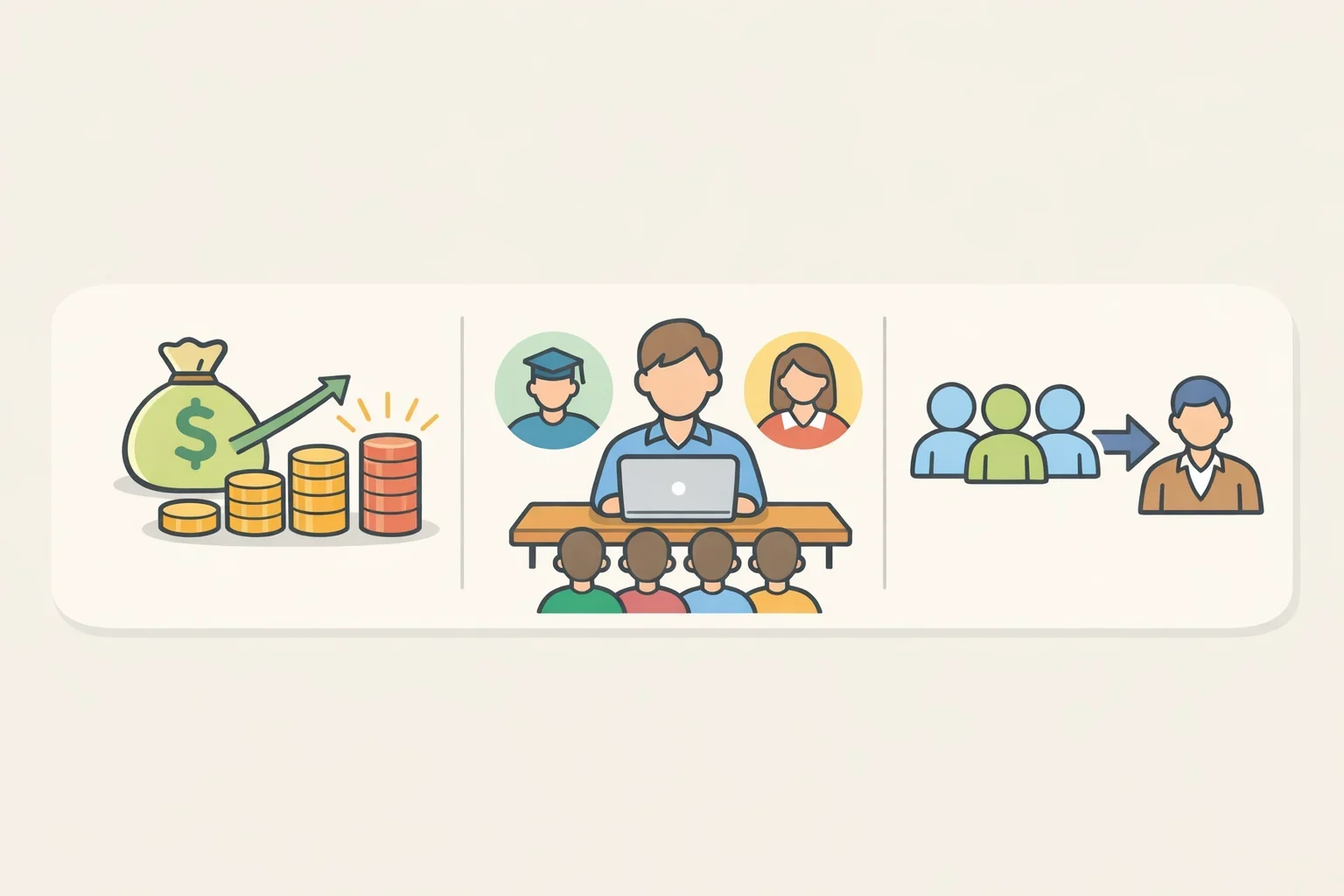
The $30 million internship endowment now funds roughly 250 undergraduates a year in fields such as the arts, public service, research and nonprofits that typically don't pay interns, about five times Dartmouth's prior capacity (Dartmouth, 3 months ago). The share of applicants who receive funding rose from 56% to 82% year over year, and the maximum award grew from $5,000 to $6,500 (Dartmouth, 3 months ago). Dartmouth separately announced earlier this year that it had raised the $30 million endowment, and about half of Dartmouth undergraduates receive financial aid, a population the college says the funding is meant to reach (Dartmouth, 4 months ago).
Staffing tells a similar story. The center's staff doubled from 11 to 22 over the past year, including seven full-time coaches, separate from the internship endowment timeline (Dartmouth, 4 months ago). Dartmouth aims to eventually bring its student-to-coach ratio down from 414-to-1 in 2023 to a target of 207-to-1 once the $94 million campaign is fully funded, a goal President Sian Leah Beilock has said she hopes to reach by June 2027 (Dartmouth, 3 months ago).
Beyond staffing and internships, Dartmouth reports rising use of the center's other services. In fall 2025, 1,740 undergraduates attended its events, a 337% increase from the previous year, and coaching appointments rose 73% over the same period (Dartmouth, 3 months ago). The center also launched six Career Communities open to all undergraduates regardless of major, along with AI-powered tools meant to help students explore career paths, refine résumés and weigh job offers. Dartmouth describes those tools as extending, rather than replacing, human coaching (Dartmouth, 3 months ago). The center says it also now offers coaching to alumni of any class year, not just current students (Dartmouth, 4 months ago). Those figures describe engagement and staff capacity, not whether the added services change graduates' job outcomes.
Dartmouth also says peer Ivy-plus career centers typically fund internships for only 1% to 2% of undergraduates annually, a comparison it uses to argue its program is unusually generous (Dartmouth, 3 months ago). That figure comes from Dartmouth itself; the supplied Dartmouth material doesn't describe an independent survey of peer institutions, so it's worth treating as the college's own characterization rather than a verified benchmark.
The job market behind the investment
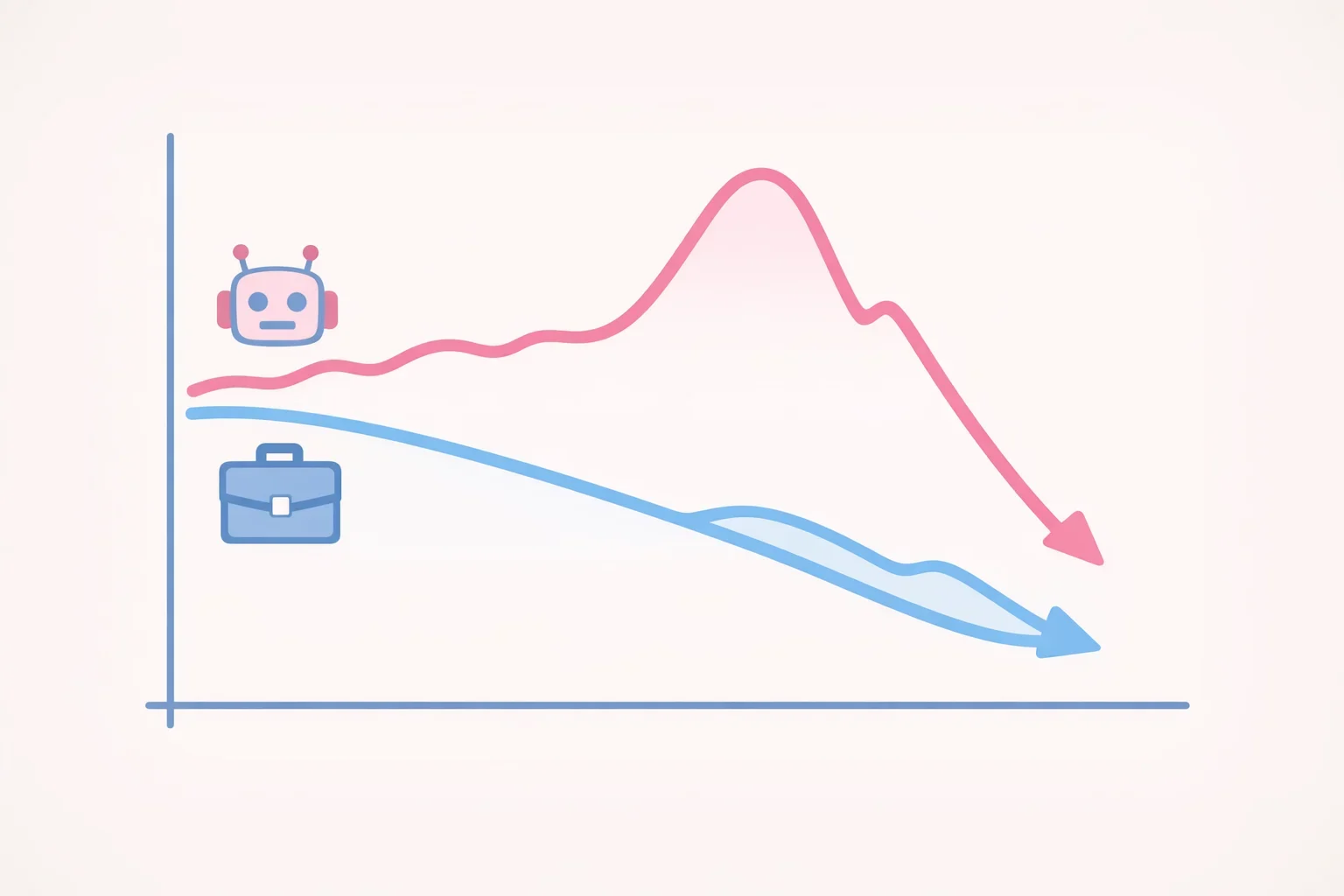
Dartmouth's expansion responds to a harder transition from college to work than graduates faced a few years ago. But the research on why is more tangled than a fundraising campaign might suggest.
SIEPR's brief found "little evidence" that AI is causing broad job losses right now. Unemployment among the most AI-exposed workers has risen 0.77 percentage points since 2022, slightly less than the 0.85-point rise among the least-exposed workers over the same period (SIEPR, 1 month ago).
Entry-level hiring is where the concern gets more specific. Research cited in the brief documents falling early-career employment in software development and customer service since 2022. But the same brief notes that hiring declines in AI-exposed occupations began after the Federal Reserve's March 2022 rate hikes, months before ChatGPT's public release that November, and that entry-level declines weren't notable until 2024 (SIEPR, 1 month ago).
The picture isn't uniformly bad, either. Online job postings for software developers, a highly AI-exposed occupation, have grown faster over the past year than postings in other fields, a reminder that early-career employment, overall occupational demand and job postings can move in different directions at once (SIEPR, 1 month ago).
Human resources executives report that AI's effects show up more clearly in role consolidation and hiring avoidance for automatable tasks than in outright layoffs. Eighty percent of executives surveyed by the Federal Reserve Bank of Atlanta said AI investments have yet to alter their headcount or improve productivity (SIEPR, 1 month ago). SIEPR's brief describes AI as one plausible factor in the tougher new-graduate job market, alongside broader forces such as 2022's interest-rate increases, and stops short of naming AI as the primary cause.
What the 96.1% success rate does, and doesn't, show
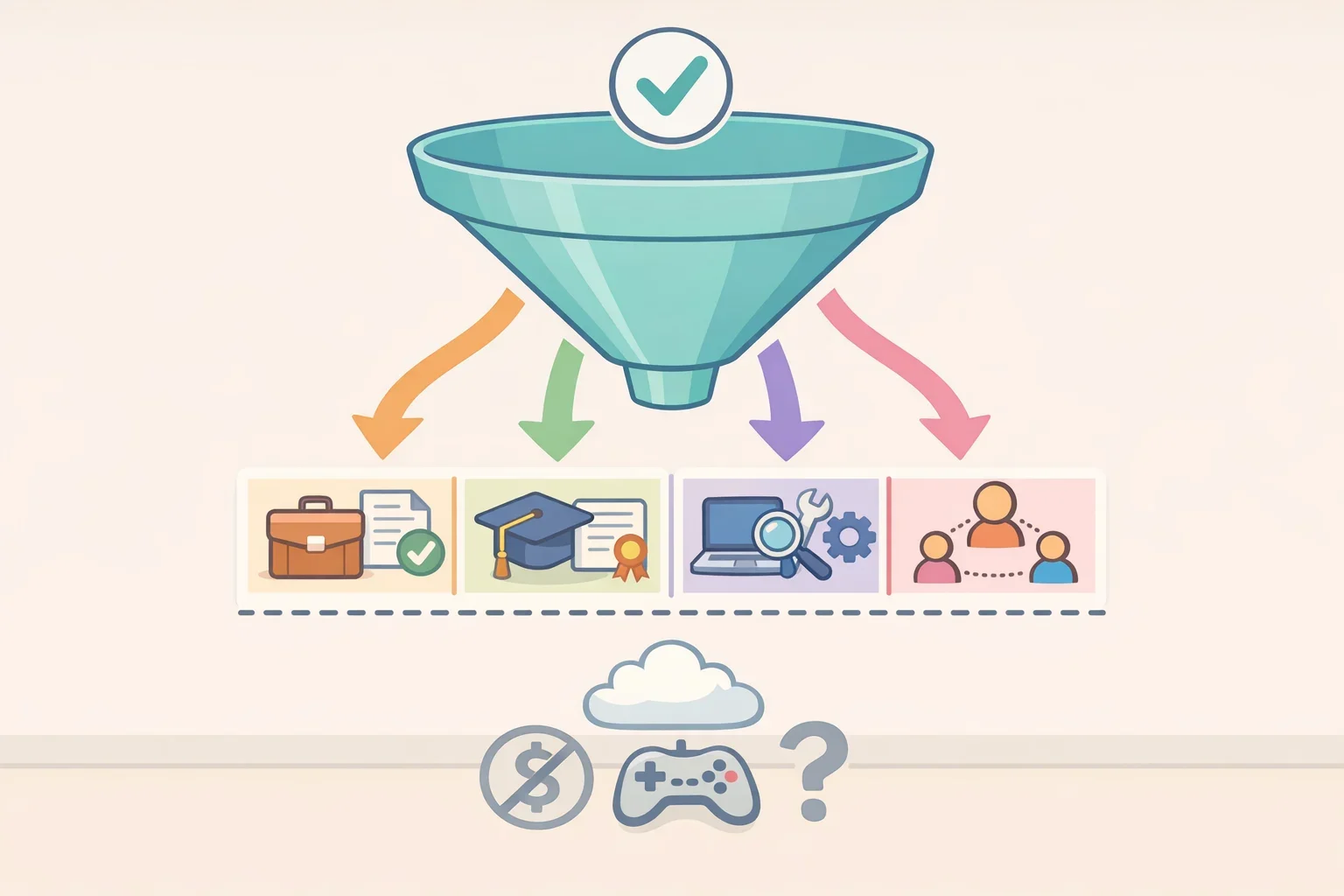
Dartmouth's strongest outcome claim is that 96.1% of the Class of 2025 had launched a career, enrolled in further education, or begun a fellowship or military service within six months of graduation, based on tracking data covering 86% of the class (Dartmouth, 4 months ago).
That figure bundles several outcomes into a single number. A graduate who accepted a job offer and one who started a funded fellowship both count toward the same 96.1%, and the available material doesn't break the categories out separately. Dartmouth is the source of the figure, and the material describing it does not describe an independent evaluation.
Dartmouth's own reporting credits some of the outcome to the center's expanded approach. But staffing at the center only doubled over the past year, which limits how much of a class's six-month outcomes can reasonably be attributed to an expansion that was still ramping up. The source does not establish that the expanded center caused the result, only that the two happened around the same time.
What Dartmouth's campaign says about college career services for an AI job market
Broadening paid-internship access for lower-income students and increasing coaching availability are reasonable ways to try to improve early-career outcomes. Separate experimental research on AI tools used in workplace settings, not career coaching, has found that less experienced or lower-skilled workers often gain the most from structured support. One AI customer-service assistant raised overall productivity by 15%, with a 30% gain concentrated among less-skilled workers (SIEPR, 1 month ago). That's evidence about workplace AI tools, not internship stipends or career-center staffing, and the supplied sources don't identify a study connecting Dartmouth's specific programs to improved job placement, salary or job quality.
Arizona State University offers a point of contrast. ASU reported two years ago that it was launching a portfolio of AI upskilling courses, starting at $49, aimed at professionals across business, health care and the public sector (ASU Learning Enterprise, 2 years ago). That price applied at the 2024 launch and may not reflect current tuition, so anyone considering the courses should confirm costs directly with ASU. ASU's materials describe general professional upskilling, not undergraduate career outcomes specifically, and a figure the university cites, 190% global growth in demand for AI-related skills, comes from LinkedIn data cited by ASU rather than an ASU finding.
Dartmouth's model combines a large alumni network, donor funding and expanded staffing. The available sources don't establish how comparable that combination is across other colleges, including community colleges, public universities or online programs, so prospective students shouldn't assume a similarly funded career center awaits them elsewhere.
What to ask your own career office
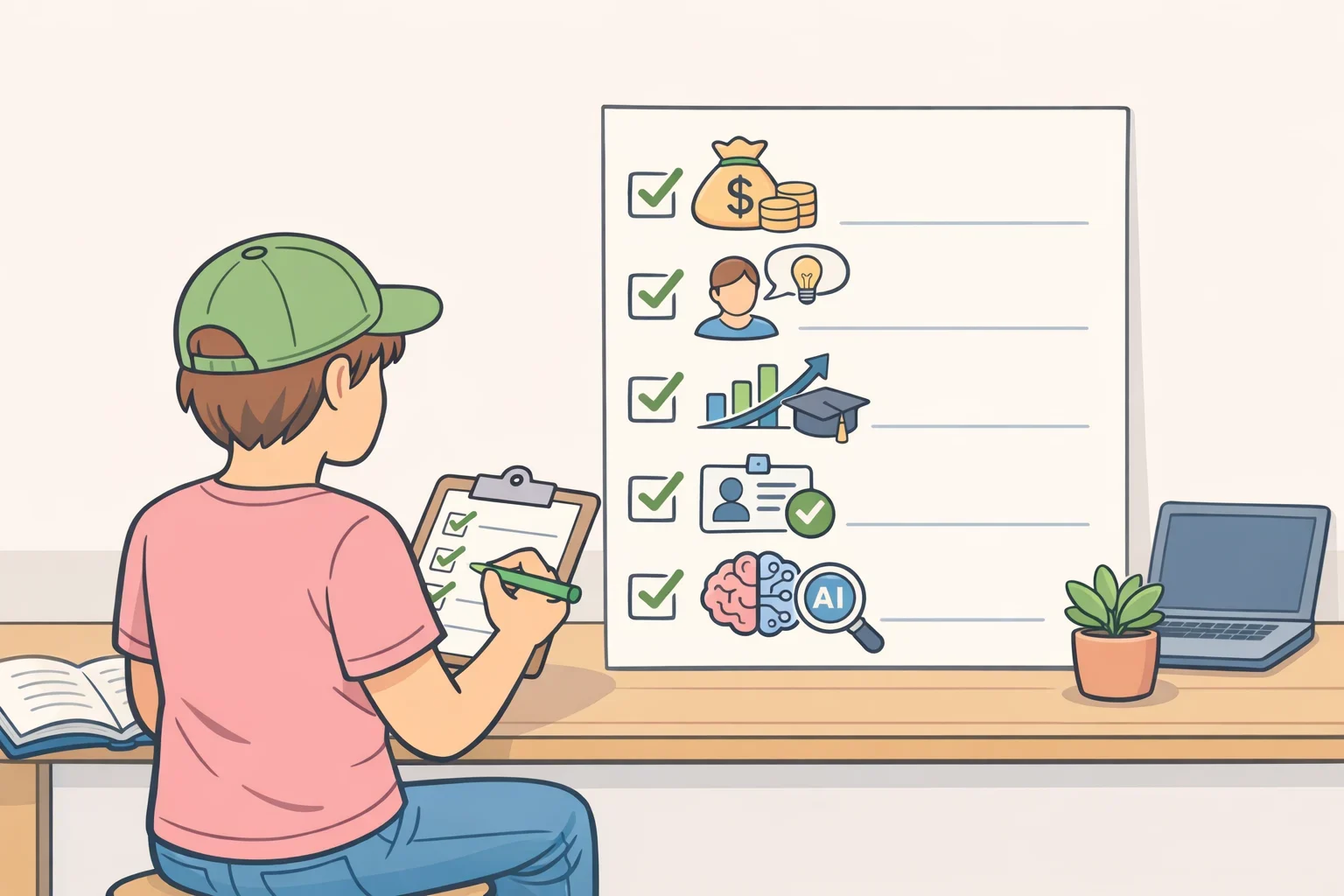
Comparing schools by fundraising totals or coach ratios isn't especially useful if you don't attend, or can't afford, an institution with Dartmouth's resources. A more useful comparison starts with specific questions for your own school's career office:
- What percentage of internship applicants receive funding, and what does the average award actually cover?
- How far in advance can you book a coaching appointment, and does that timeline change during peak recruiting seasons?
- Does the school's published outcomes report separate employment from graduate school, fellowships and military service, and does it state a response rate?
- Is internship or career funding available to part-time, commuter, transfer or working students, not just full-time residential undergraduates?
- If the office uses AI career tools, does a staff member review the guidance before you act on it?
Write down the answers before deciding how much weight to put on any single school's career-outcome claims, Dartmouth's included. That comparison can give you a clearer picture of the support your school currently provides, which is more useful than any single fundraising headline.