
- PwC CEO career advice for college students: the hiring gap
- The advice: say yes, and do the work nobody sees
- Advisory hiring narrowed. Other tracks may look different.
- PwC hiring and AI jobs: what students should verify
- Master's degree advice for college students considering PwC
- A decision checklist before acting on this advice
PwC CEO career advice for college students: the hiring gap
Paul Griggs, PwC's US CEO, has career advice worth hearing if you're a college student weighing accounting or consulting: say yes often, put in the extra hour nobody's asking for, and don't rule out graduate school. He didn't deliver that message to a room full of students. He shared it while talking about his own three kids: two still in college who might pursue accounting careers, and a third who's spent about a year in the workforce (Business Insider, yesterday). Griggs told Fast Company yesterday that he's supportive of his kids' interest in accounting.
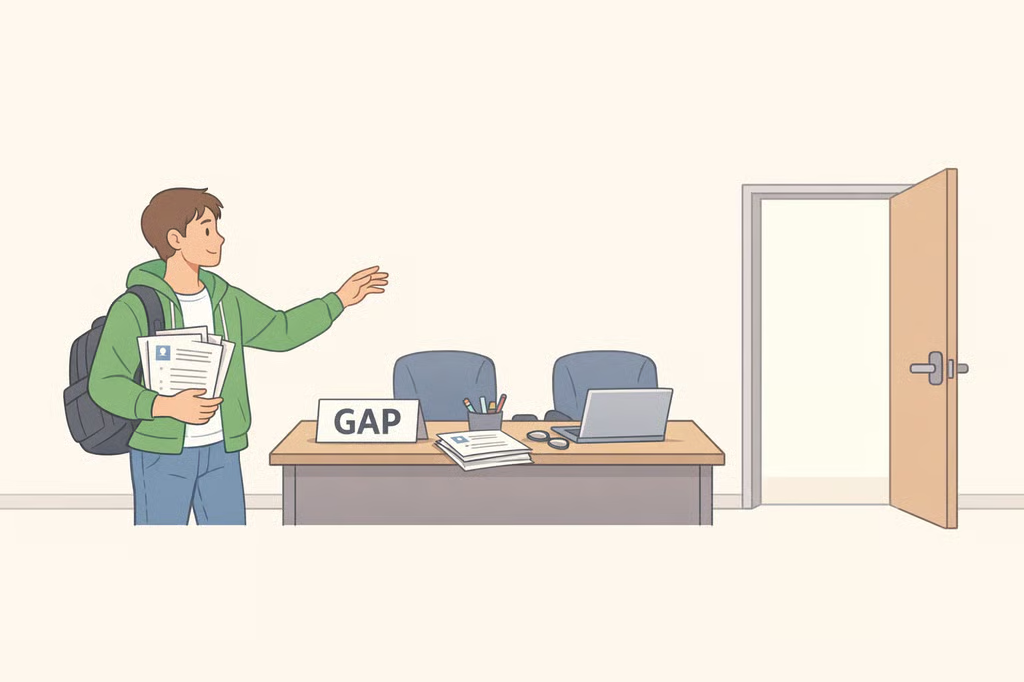
That advice comes from the leader of a firm that, according to Griggs, hired fewer accountants and consultants this year than it did two years earlier (Business Insider, yesterday). His guidance about initiative and curiosity is reasonable for a student who already has an opportunity in front of them. It says nothing about how a student gets that opportunity at PwC in the first place, which is the part of the equation the firm largely controls. That's the gap in this advice: it treats performance after access as though it were access itself.
Students weighing Big Four recruiting, an accounting or consulting-adjacent major, or a master's program aimed at professional services should separate those two questions. Career advice for college students in the AI age looks different when the employer offering it has also reported changes to its hiring mix and plans fewer new-graduate hires by 2028.
The advice: say yes, and do the work nobody sees
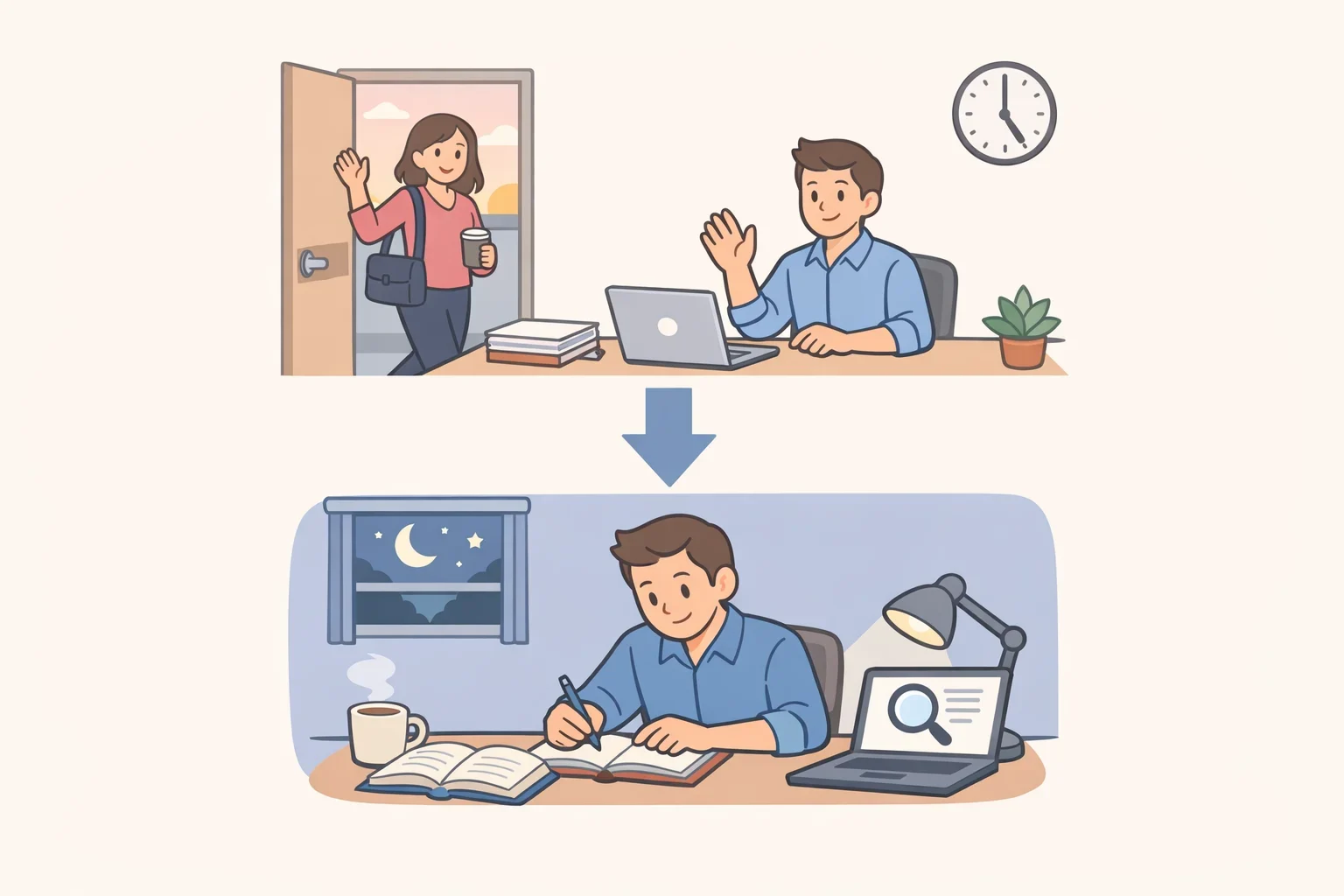
Griggs frames his guidance around one line: "What you put into it is what you get out of it" (Fortune, yesterday). His illustration involves two coworkers leaving the office on a Friday. One of them spends part of the weekend following up on questions left unanswered from the week, doing a bit of research before the gym or dinner. That's the person, Griggs says, who "climbs into the next role" (Fortune, yesterday).
It's the same advice he'd give early-career workers now that he would have given decades ago. Griggs started as a PwC intern about 30 years ago (Business Insider, last week).
Notice what the advice assumes, though: a student already has a seat at the table, an internship, a rotation, a first-year role where follow-through actually gets noticed (Fortune, yesterday). It says nothing about how a student lands that seat, which is exactly where PwC's own recruiting changes complicate the picture.
Students can practice the habit underneath Griggs's story without the unpaid overtime attached to it. Keep a running list of unresolved questions from class projects, internships, or case competitions, and bring findings to the next meeting without being asked. That's the transferable skill, not the specific hours logged on a Saturday.
Advisory hiring narrowed. Other tracks may look different.
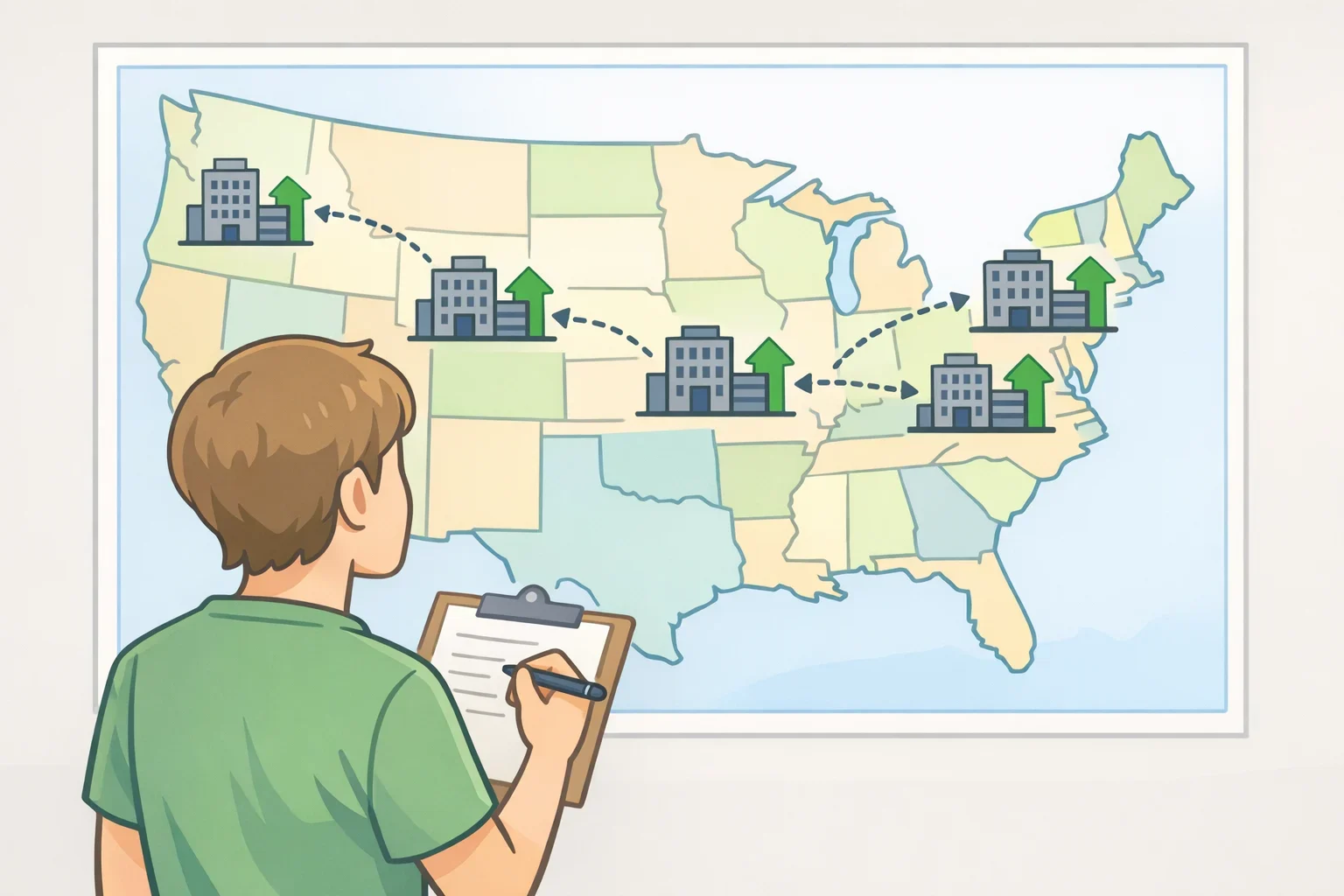
Before applying any of this to a specific role, students need to know which change actually touches their target track. Earlier this year, PwC concentrated entry-level advisory associate hiring into 13 offices, down from 72 (Fast Company, yesterday). That change applies to entry-level advisory associate hiring specifically. Nothing in this reporting establishes that audit, tax, or technical recruiting has been narrowed the same way.
A student aiming for an advisory associate role should verify whether the target role and office fall within that consolidation before applying, rather than assuming it. Anyone weighing a different track should confirm requirements and openings by business line and office directly with PwC, since one division's hiring news doesn't automatically apply firm-wide.
PwC hiring and AI jobs: what students should verify

Griggs told Business Insider that PwC hired fewer accountants and consultants this year than it did two years ago, and he expects that trend to continue as the firm hires more data scientists, engineers, and machine-learning specialists (Business Insider, yesterday). Separately, PwC announced last year that it plans to recruit a third fewer new graduates by 2028, a target that's still two years from its deadline (Fast Company, yesterday). Those are two different figures. One is Griggs's account of hiring in specific roles this year. The other is a company-wide target announced last year that hasn't fully played out. Treating them as the same statistic overstates how much is actually confirmed.
Griggs frames the shift as a net positive, at least in his own read of the market. He calls it "the biggest opportunity we've ever had," arguing that AI is generating enough value and growth to create demand for new talent, and that the core work of accounting, consulting, and finance "hasn't fundamentally changed" (Fast Company, yesterday). The hiring changes come with reported figures attached: the 13-office consolidation and the stated one-third reduction by 2028. The claim that AI will create broader opportunity for new hires doesn't come with independent supporting data in this reporting. It's Griggs's interpretation, not a documented breakdown of how much of the hiring shift traces to AI specifically versus demand conditions or restructuring.
So, should college students pursue accounting careers right now? Nothing in this reporting answers that broad question, and no single CEO interview could. Use it as a prompt to check current postings and campus recruiting, not as proof that accounting is a safe or unsafe bet. Before assuming a target office or role track is affected, ask a PwC campus recruiter directly:
- Which PwC business line is actually recruiting for this role: advisory, audit, tax, or a technical track?
- Is the opening for juniors, graduating seniors, or master's students specifically?
- Which offices recruited for that role during the current cycle, not a prior one?
- Does the role require a particular accounting credential, coursework, or technical skill before applying?
- What's the application deadline and hiring timeline for this cycle?
Don't assume extra unpaid hours as a student or intern will offset the fact that a target office simply isn't hiring for that role track right now. Confirm hiring status first, and apply the initiative afterward.
Master's degree advice for college students considering PwC
Griggs calls himself a "big believer" in master's degrees and says he'd support any of his three kids pursuing further education if they're genuinely interested (Fast Company, yesterday). He argues MBA programs "create the space for the student to go figure out how to research and discover," rather than just completing required coursework (Fast Company, yesterday).
PwC says it plans to recruit from MBA and other master's programs, and it runs university partnerships including Harvard Business School's RevUp leadership program and an AI-training program co-developed with Wharton (Fast Company, yesterday). Griggs also said PwC is increasingly hiring people from nontraditional backgrounds, including liberal arts majors, citing a need for "broad knowledge" in the AI age (Fast Company, yesterday). That's Griggs's stated reasoning for the shift, not an independently verified explanation of the firm's hiring mix.
What's documented here is a personal endorsement and a stated recruiting plan. This reporting doesn't include tuition cost, debt load, admissions selectivity, or job-placement data for any specific program Griggs mentions, though those programs likely publish some of that information elsewhere. A CEO's enthusiasm for curiosity isn't evidence of return on investment.
That leaves an open question worth investigating rather than answering by assumption: does entering PwC directly after undergrad, versus enrolling in a master's or MBA program first, lead to a different entry point at the firm? Neither source here provides placement data comparing the two paths. Raise that with a program's career-services office, not with a CEO interview.
Before treating a master's degree as the next step, weigh four things:
- The timing of enrolling right after undergrad versus after gaining work experience first.
- Total cost and expected debt against a program's published starting salaries, where comparable, current data are available.
- Whether the target role is one PwC or a comparable employer is currently recruiting for, not one it plans to recruit for later.
- Whether the specific program has a verified, current relationship with that employer, rather than just a general partnership announcement.
A decision checklist before acting on this advice
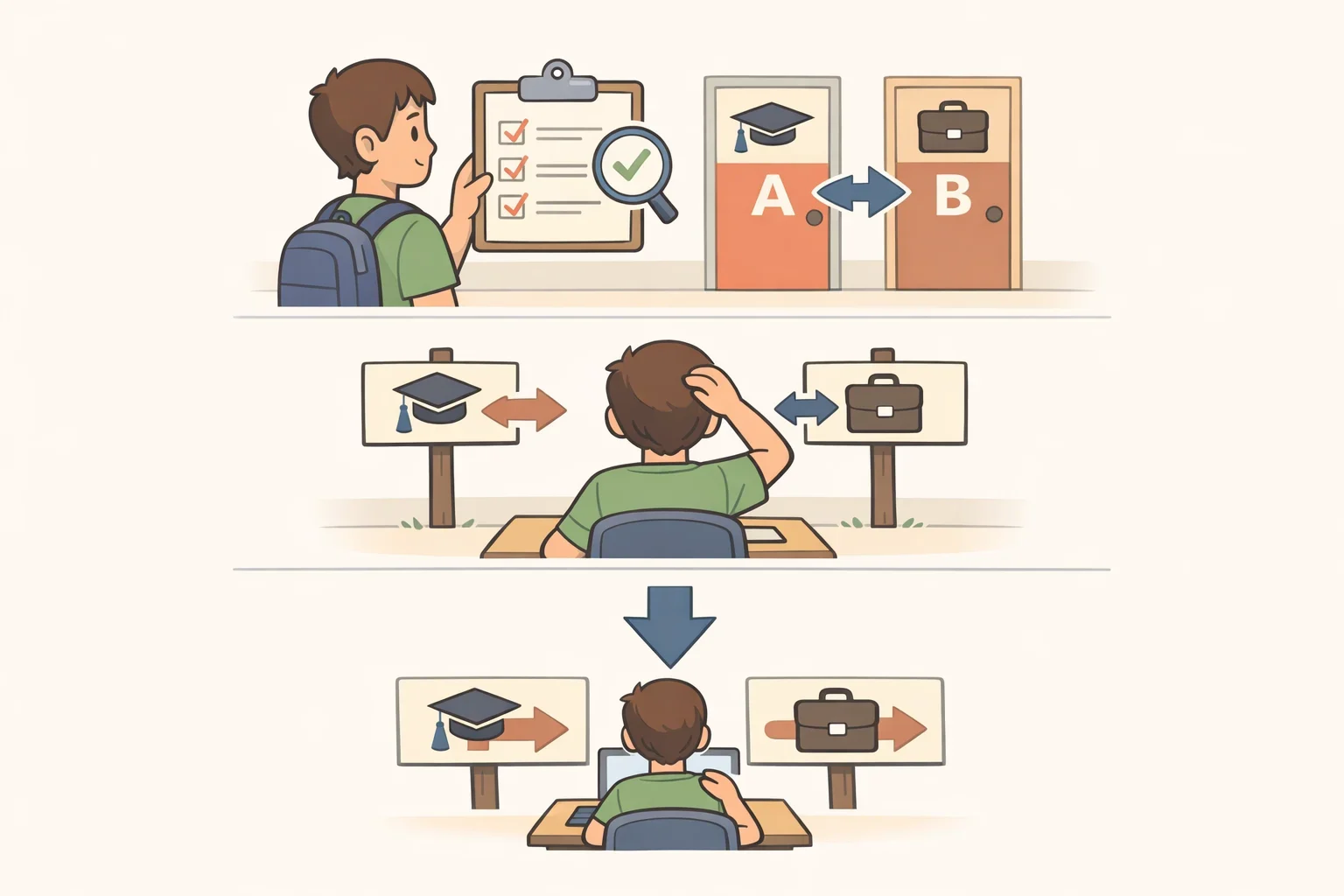
Griggs's guidance rests on two separate claims. Individual initiative helps a student advance once they already have an opportunity, an idea his own account and comparisons to other executives support (Fortune, yesterday). Separately, PwC's CEO reported fewer consultant and accountant hires this year, while the firm has a stated plan to recruit a third fewer new graduates by 2028 (Business Insider, yesterday; Fast Company, yesterday). The first claim is about behavior inside a role. The second mixes a company hiring plan with Griggs's own optimism about where AI is taking the business. Don't blend the two. Individual effort can't fix a hiring plan a firm sets at the corporate level.
Work through a short checklist before acting on any of this:
- Confirm which business line is recruiting for a target role: advisory, audit, tax, consulting, or a technical track.
- Check current campus recruiting, not stated future plans, directly with PwC's recruiting page or a school's career services office.
- Compare a specific target role's undergraduate entry point against its graduate entry point before assuming a master's degree is the next step.
- Verify program-specific cost, debt, and placement data with the admissions or career-services office of any master's or MBA program under consideration.
Contact a school's career services office this week and ask exactly which PwC business lines and offices recruited on campus during the current cycle. Then confirm the specific posting and eligibility directly with PwC before building a timeline around any advice in this article.