

Khanmigo’s no-answer rule: when questions help or fail
Does Khanmigo give students answers? Khan Academy designed the Khanmigo AI tutor to do the opposite. Its original prompt directs the tool to ask questions that lead students through what they already know, offering support and potentially a next step rather than the answer itself, according to Khan Academy two years ago.
That approach can be useful when a student needs help getting started without handing over a finished response. It also raises a practical question for teachers, tutors, parents, and students comparing AI tutoring tools: What happens when another question is not enough?
Khan Academy’s own reporting provides part of the answer. The company describes the no-answer rule as an early guardrail, then says classroom students showed that the rule “needed more nuance,” according to Khan Academy three months ago. The available student comments, meanwhile, focus mainly on organization and motivation. They do not establish that Khanmigo’s questioning style improves learning.
That distinction matters. A tool can have a thoughtful instructional design and still lack public evidence showing how well that design works for students.
What Khanmigo’s no-answer rule means
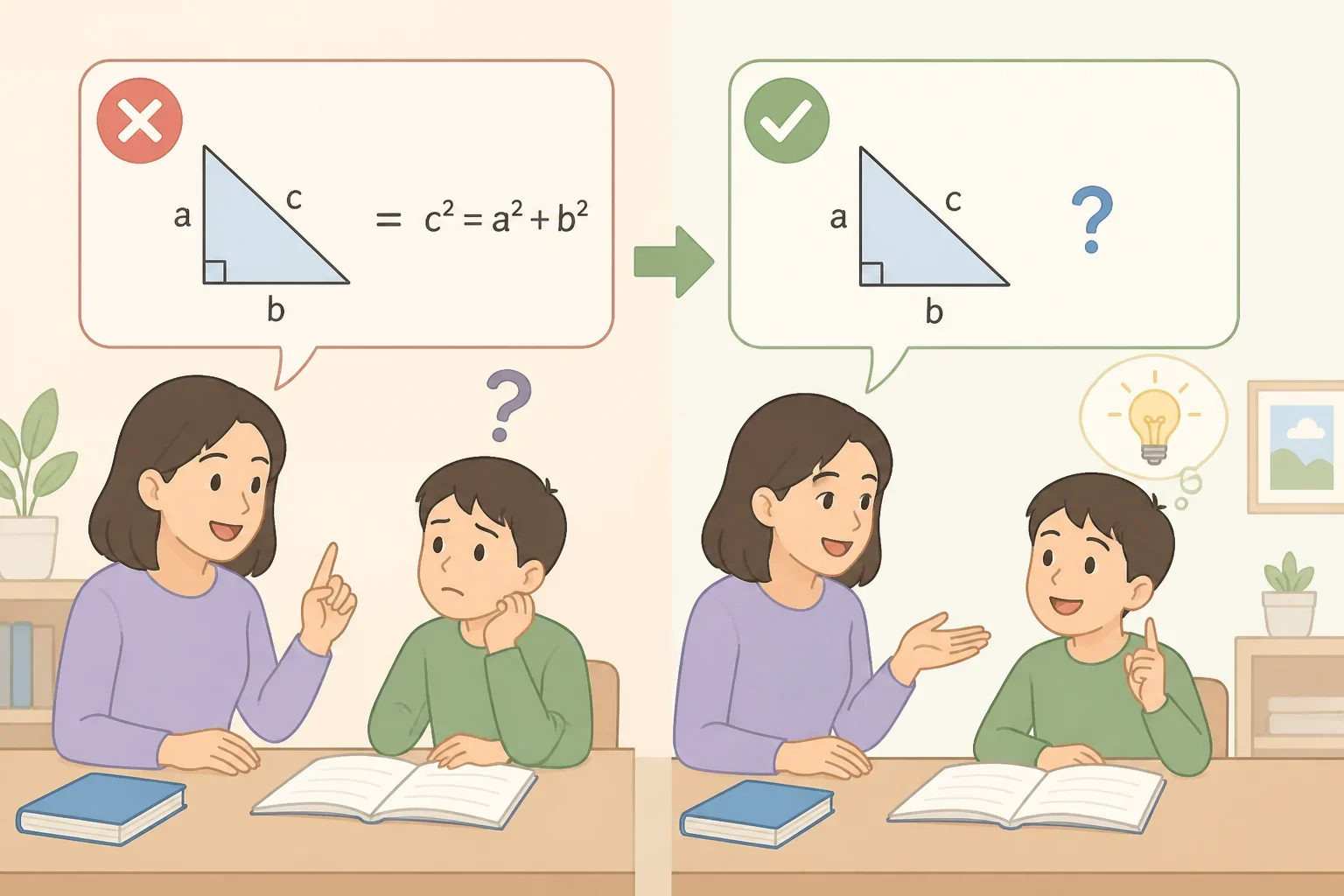
Khan Academy describes the refusal to give students an answer as one of the earliest guardrails used when creating Khanmigo. The stated aim was to shape the AI’s responses so students would work through their own understanding of a problem instead of receiving a completed solution.
The company’s description is narrower than a general claim about learning science. The supplied material does not establish that withholding answers protects productive struggle, improves retention, or leads to better grades. It establishes a product decision: Khanmigo was instructed to guide students with questions.
According to Khan Academy two years ago, the prompt tells the model to ask questions that try to lead a student through what the student already knows about the problem. The tool may provide support and “potentially a step to take,” but not the answer itself.
For a student, that could look different from asking an AI to solve a problem. Instead of receiving a completed equation, paragraph, or explanation, the student may be asked to identify a known value, describe the first step, explain a claim, or reconsider an assumption. The important point is that these examples describe the intended interaction model, not a guarantee about every exchange or every current version of the product.
This model also changes what counts as a successful response. A direct-answer tool can appear helpful because it produces something immediately usable. Khanmigo’s original design treats a question or hint as the response. The student has to do more of the work of connecting the information to the assignment.
That may be appropriate when the student has some understanding but is stuck on the next move. It may be less useful when the student does not understand the underlying concept, has already tried several approaches, or needs to check whether an answer is correct. Those are practical situations for educators to investigate, not findings established by the cited Khan Academy posts.
How Khanmigo guided learning questions work
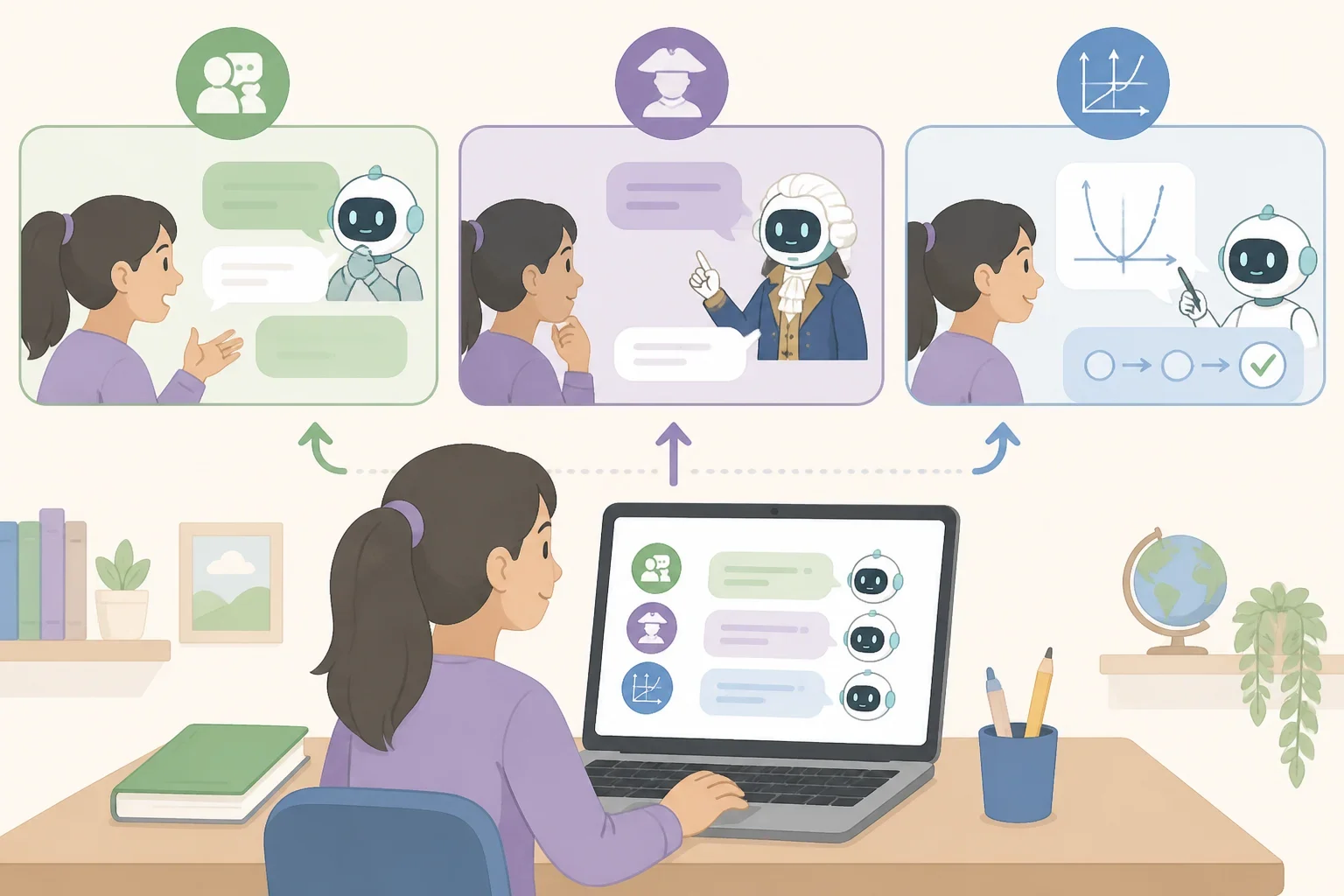
Khanmigo’s question-based design is not limited to ordinary homework prompts. Khan Academy says the tool can support debates with the AI, conversations with simulated historical figures, and co-constructed explanations for math problems. The company describes the added interaction as something that was not possible before the AI layer was introduced, according to Khan Academy two years ago.
Those features point to several different uses:
- In a debate, the student may have to state a position and respond to a challenge.
- With a simulated historical figure, the student can ask questions within a role-based exchange.
- In a math explanation, the student and tool can build an explanation together instead of treating the solution as a single finished output.
These activities are different from simply typing a question into a search box. They are designed to keep the student in an exchange, with the AI responding to what the student says. That creates room for follow-up questions and explanations tied to the student’s reasoning.
But the feature description is still a description of intended capability. It is not an independent evaluation of accuracy, instructional quality, or learning outcomes. Khan Academy’s post does not, by itself, show whether students retain more after using the tool, explain concepts more accurately, or complete later work more independently.
That is a useful boundary for families and schools. When a vendor describes what an AI tutor can do, the description helps explain the product. It does not answer whether the product is effective for a particular student, subject, grade level, assignment, or classroom routine.
A teacher considering the Khanmigo AI tutoring tool should therefore separate two questions:
- Can the tool carry out a guided conversation?
- Does the available evidence show that the conversation helps students learn the target skill?
The first question is addressed by Khan Academy’s product description. The second remains open in the supplied evidence.
Why the no-answer rule needed more nuance

The most revealing part of Khan Academy’s later account is not a claim that the original policy succeeded or failed. It is the company’s acknowledgment that classroom use exposed a limit in the original rule.
In a post published three months ago, Khan Academy says that “students in classrooms helped us see that the rule needed more nuance.” The same account presents pilot districts as informing a reimagined version of the Khan Academy platform.
That wording supports a careful conclusion: classroom feedback affected how Khan Academy thought about the rule. It does not explain which Khanmigo behaviors changed. The cited post does not say whether the tool gives a more direct explanation after repeated attempts, changes the level of its hints, confirms an answer in some situations, or distinguishes practice from assessment.
Those details matter because “do not give the answer” can describe several different experiences. A tool might refuse to provide a final response but offer increasingly detailed steps. It might ask a question first and give an explanation later. It might maintain the same rule even when a student is confused. Without the product rules or examples of the revised behavior, readers cannot tell which approach Khanmigo now uses.
There are reasonable arguments on both sides of the original guardrail. A question can require a student to explain a thought instead of copying a response. It can also reveal what the student already understands, giving a tutor a place to begin. Those are potential benefits of a guided exchange, but the supplied research does not measure them.
The classroom concern runs in the other direction. A student may need confirmation, an example, or a direct explanation after working through a problem. Repeating questions at that point could add frustration rather than clarity. That concern is an instructional scenario, not evidence that Khanmigo routinely mishandles such moments.
Khan Academy’s own wording leaves the issue unresolved. The organization has identified a need for nuance, but the available post does not provide enough information to evaluate the revised policy. A school should not assume that a “reimagined” platform means the original answer rule was removed or replaced.
What students responded to in the available feedback
The student feedback in Khan Academy’s account is useful, but it answers a different question. It shows what some students valued in the broader learning experience. It does not specifically evaluate Khanmigo’s questions, explanations, accuracy, or effect on academic understanding.
One Taft student praised the learning path because it was easy to use, placed steps in order, and showed weekly assignments. The student said, “I like the fact that [the learning path] is pretty easy to use. It gives you steps in order to complete a weekly assignment and it shows all the assignments. It’s so organized.” The comment supports a conclusion about workflow and visibility. It does not tell readers whether the AI tutor’s questioning helped the student solve a problem.
Another student focused on the platform’s completion response: “I like the confetti at the end and that it says ‘complete.’ It makes me feel special. It makes me excited to use it. It’s encouraging.” This is evidence of a positive reaction to a motivational feature. It is not evidence of improved comprehension, stronger recall, or better independent performance.
Khan Academy also reports that students were practicing, tracking their progress, and encouraging one another to continue, according to Khan Academy three months ago. Those details describe activity and participation. They do not isolate the contribution of Khanmigo’s question-based tutoring.
The post reports one more striking comparison: district students using Khan Academy were “six times more likely” to reach recommended practice levels than independent learners, according to Khan Academy three months ago. The cited post does not provide the methodology behind that figure, including the sample size, comparison controls, time period, or whether the result was independently audited. The figure should therefore be read as a vendor-reported engagement comparison, not as proof that Khanmigo improved learning.
This distinction is easy to lose because engagement is visible. A student logs in, follows an organized path, completes an activity, or returns after seeing a positive message. Learning quality is harder to observe. It requires evidence about whether the student can explain the concept, apply it in a new problem, correct a misconception, or work without the tool.
The student quotations in the cited post do not address Khanmigo’s questioning style. In the limited feedback available here, the clearest positive responses concern the structure of the platform and the encouragement built into completing work. That is valuable information for someone assessing usability, but it should not be presented as an evaluation of the Khan Academy AI tutor’s instructional method.
A practical way to evaluate an AI tutor
Teachers, parents, tutors, and students can use a simple four-part check before relying on Khanmigo or a similar tool.
1. Identify what the tool actually does
Ask whether the tool provides:
- a question
- a hint
- a worked step
- a conceptual explanation
- answer confirmation
- a complete answer
Khan Academy’s original description supports the first several forms of guidance while emphasizing that the answer itself should not be given. The current behavior in every situation should be verified rather than assumed.
2. Separate design claims from evidence
A product page or company post can explain how a tool was designed. It cannot automatically establish that students learn more from that design. Look for evidence tied to the outcome that matters, such as independent problem solving, accurate explanations, or performance after the AI is no longer available.
Usage figures and student enthusiasm can help assess whether a tool is usable and engaging. They do not replace learning-outcome evidence.
3. Ask what happens when a student is stuck

A teacher or parent can ask the platform or district:
- How does the tool respond after a student gives several incorrect answers?
- When does it move from a question to an explanation?
- Can it confirm whether a student’s answer is correct?
- Does it behave differently during practice and graded work?
- What classroom or district evidence is available beyond usage numbers?
The cited Khan Academy post confirms that classroom feedback showed the original rule needed more nuance. It does not answer these operational questions.
4. Protect the student’s responsibility for the work
Students using Khanmigo should state their reasoning before accepting the next hint. They can write down what they know, identify the step that is confusing, and compare the tool’s guidance with class notes or the teacher’s instructions. This keeps the exchange focused on understanding rather than collecting a response to submit.
School and teacher policies also control whether an AI tool may be used for a particular assignment. A tool’s ability to provide help does not make that help acceptable for every class or assessment.
What the evidence supports
Khanmigo was originally built around a clear product principle: ask questions and guide students toward their own reasoning instead of handing over an answer. Khan Academy also describes broader interactive features, including debates, simulated historical conversations, and co-constructed math explanations.
The later classroom account complicates that principle without fully explaining the solution. Khan Academy says students showed that the no-answer rule needed more nuance, but the cited material does not identify the revised behaviors. The available student feedback is strongest on organization, completion, and participation. It does not independently demonstrate that Khanmigo’s questions improve learning.
That leaves a useful, honest evaluation point. Khanmigo’s design intent is documented. Its engagement signals are vendor-reported. Evidence about the instructional results of its questioning approach remains limited in the material reviewed here.
Before adopting the tool, ask how it handles hints, explanations, answer checks, and repeated confusion. Check the school’s AI policy. Then look for evidence about what students can do after the conversation ends, because that is the test that matters most for a tutoring tool.