
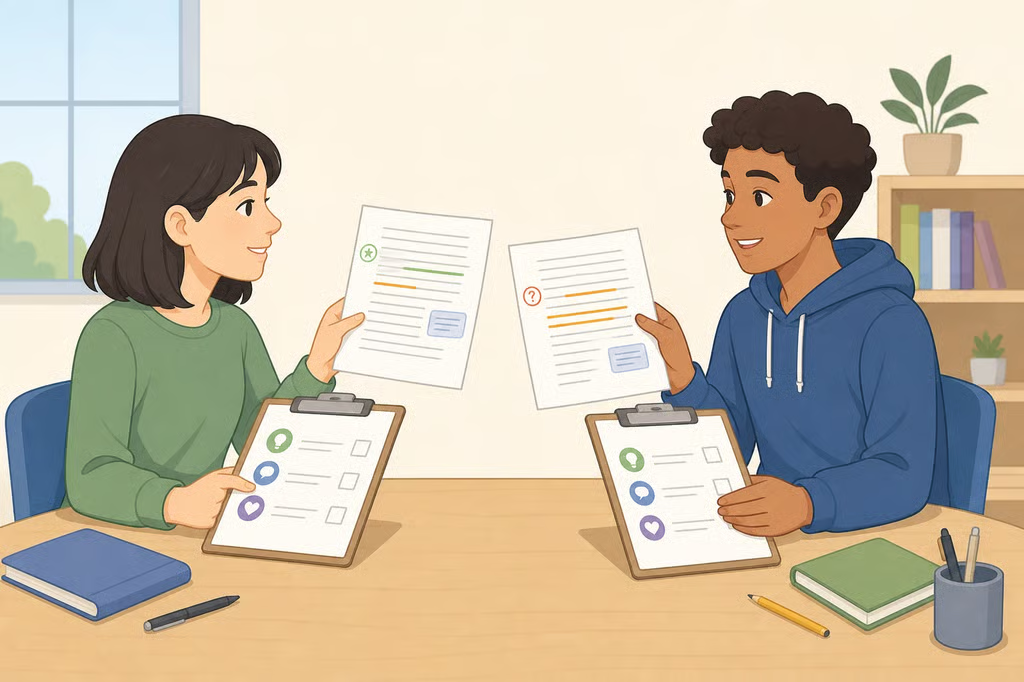
- Peer review questions for students: a 15-minute workshop
- Why vague peer-review prompts fall short
- Ground rules before students swap papers
- Peer review questions for students: paragraph checklist
- Peer review worksheet for paragraphs
- A worked example: from vague comment to specific feedback
- Running the 15 minutes, step by step
- Adjusting the activity by grade level or experience
- What to check before you run this
- What to do next
Peer review questions for students: a 15-minute workshop
"Swap papers and give each other feedback" sounds simple, but the exchange rarely plays out evenly. Some students write something as thin as "good job," while others circle every misplaced comma without ever touching whether the paragraph makes sense. Writing-center research backs up that pattern: less experienced reviewers often get bogged down in grammar and punctuation, while more experienced responders read for ideas and organization first (UNC Writing Center, 2021). A more useful approach is to give students a specific task: a short set of peer review questions for students that point their attention toward meaning before mechanics.
This guide is for teachers, tutors, and homeschool educators who want to run a focused 15-minute peer-review session on a single paragraph, not a full essay. It includes a set of student peer review questions, a printable worksheet, a worked example, minute-by-minute timing, and adjustments for younger or less experienced writers.
Why vague peer-review prompts fall short
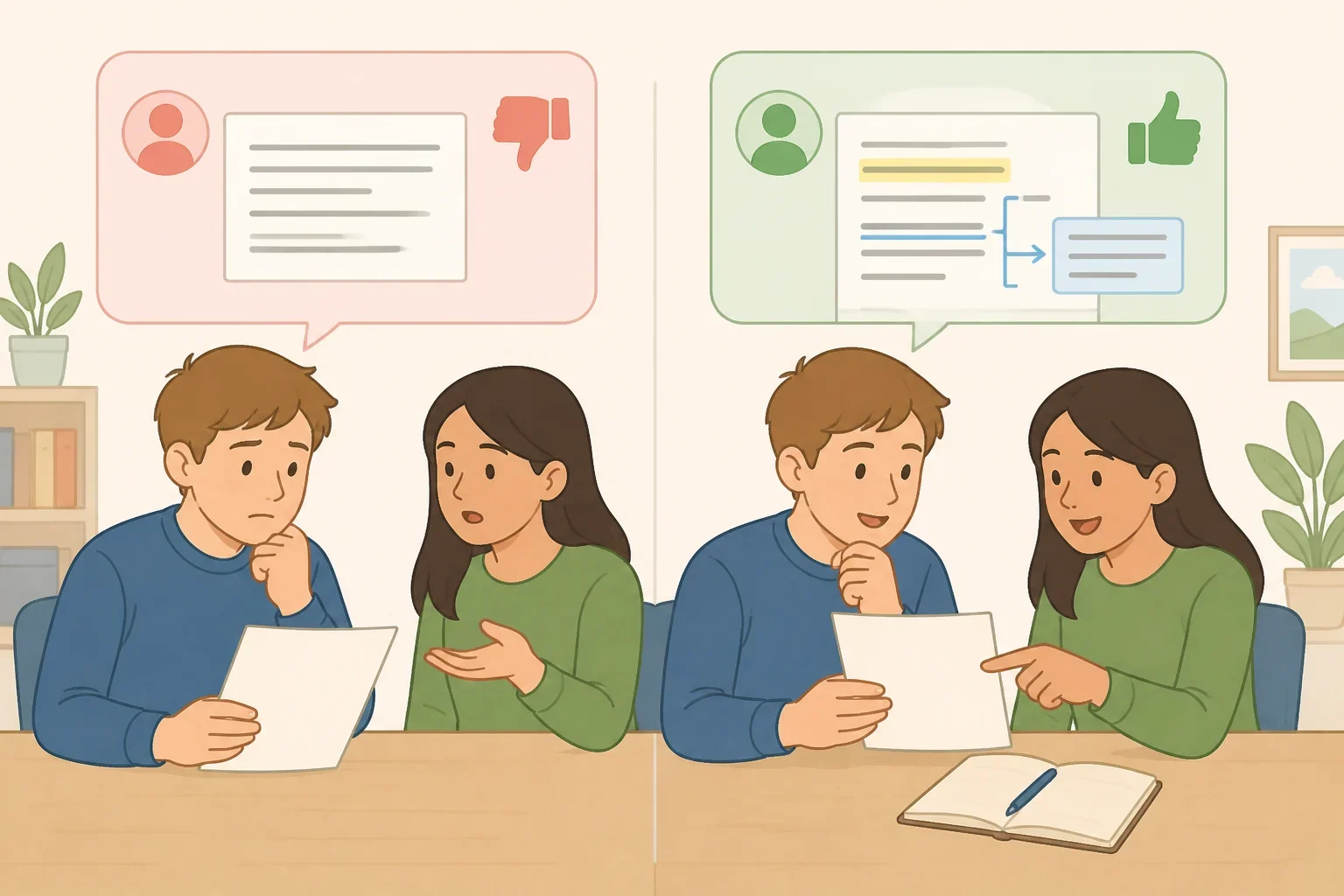
A prompt like "Is this good?" or "Check for errors" doesn't give a reviewer a clear job. Without a clear basis for deciding what to comment on, students default to whatever's easiest to spot, a missing comma, a stray capital letter, instead of whether the paragraph actually works. UNC's writing-center guidance points to a better approach: swap vague labels for direct, specific language. Instead of writing "clarify," ask something concrete, like "What happens when hormone levels become elevated?" (UNC Writing Center, 2021).
Related research suggests structured prompts can shape peer-support outcomes, though it doesn't test this specific checklist. A 2024 meta-analysis of 26 studies on peer tutoring, a structured form of cooperative learning, for second-language (L2) writing found a large average effect across 190 effect sizes (Hedges' g = 0.84), though the result varied substantially from study to study, with high heterogeneity (I² = 94.8%), meaning the average shouldn't be treated as a guaranteed classroom outcome (International Journal of Educational Research Open, nearly two years ago). In one of those studies, pairing peer tutoring with metacognitive prompts, questions that push reviewers to think about their own thinking, was associated with a larger measured effect, though the researchers caution that finding rests on a single study with an unreliable outcome measure and shouldn't be treated as settled (IJERO meta-analysis, nearly two years ago).
That research doesn't prove this exact question set works. It offers a reason to try something more structured than "swap and comment," though: the checklist below is built to do what those metacognitive prompts do, pushing students to explain what they understand rather than just react to a draft.
Ground rules before students swap papers
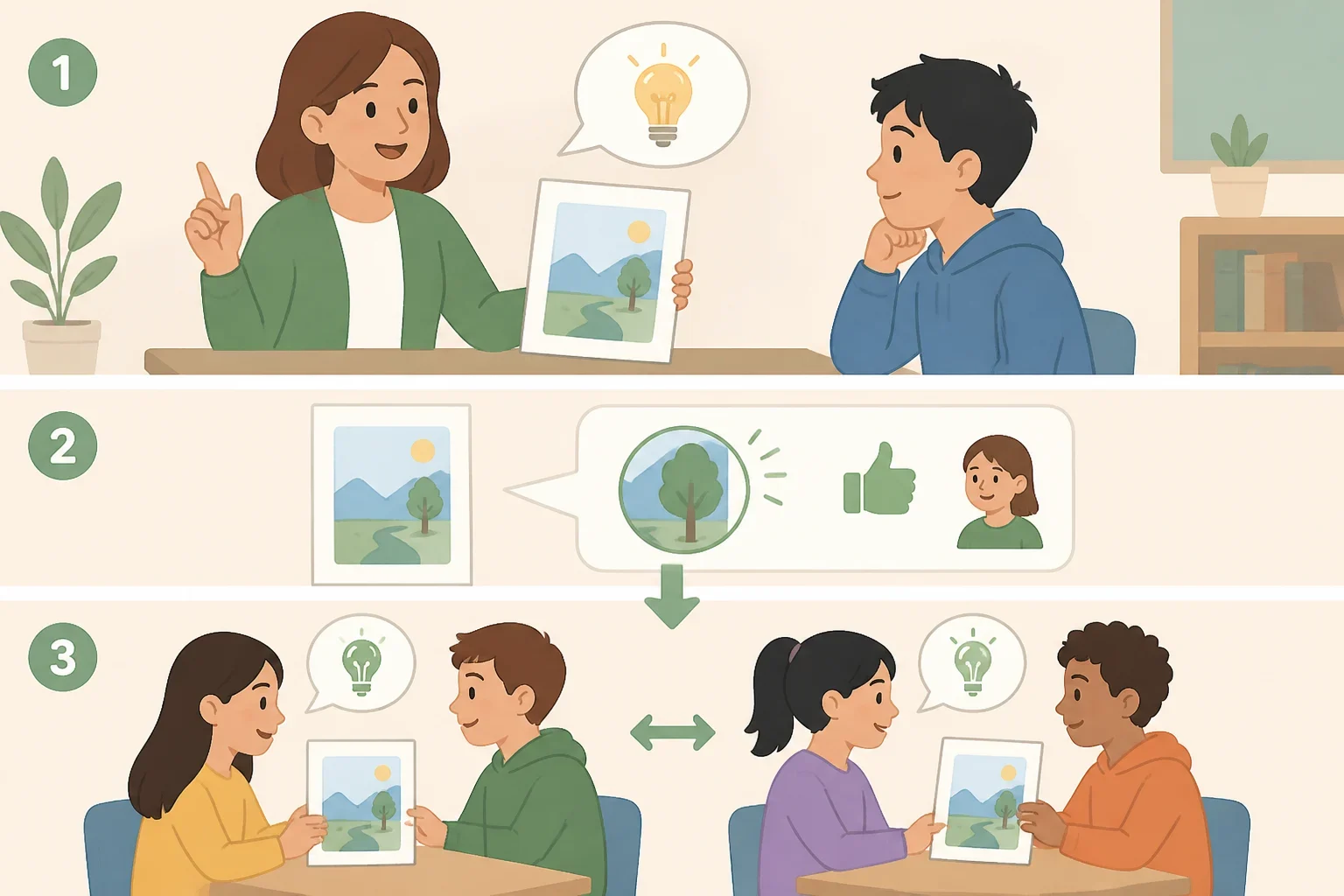
Set these expectations before any papers change hands, not after.
- Comment on ideas before sentences. UNC notes that experienced responders focus on organization and substance, while less experienced ones get stuck on surface-level corrections that don't meaningfully improve a draft (UNC Writing Center, 2021).
- Model one comment first. Cornell's teaching materials present a low-stakes in-class peer-review activity as an example for setting expectations and standards before students work independently (Cornell Center for Teaching Innovation, nearly five years ago). This workshop borrows that idea: show one example comment before releasing students to work on their own, so they have a template to copy.
- Use a shared, short rubric. Cornell's teaching center recommends giving students a rubric to keep peer evaluations of group work consistent (Cornell Center for Teaching Innovation, two years ago). That source addresses group-work evaluation; here, the idea gets adapted to paragraph feedback, giving every student the same short list so they're evaluating for the same things.
Peer review questions for students: paragraph checklist
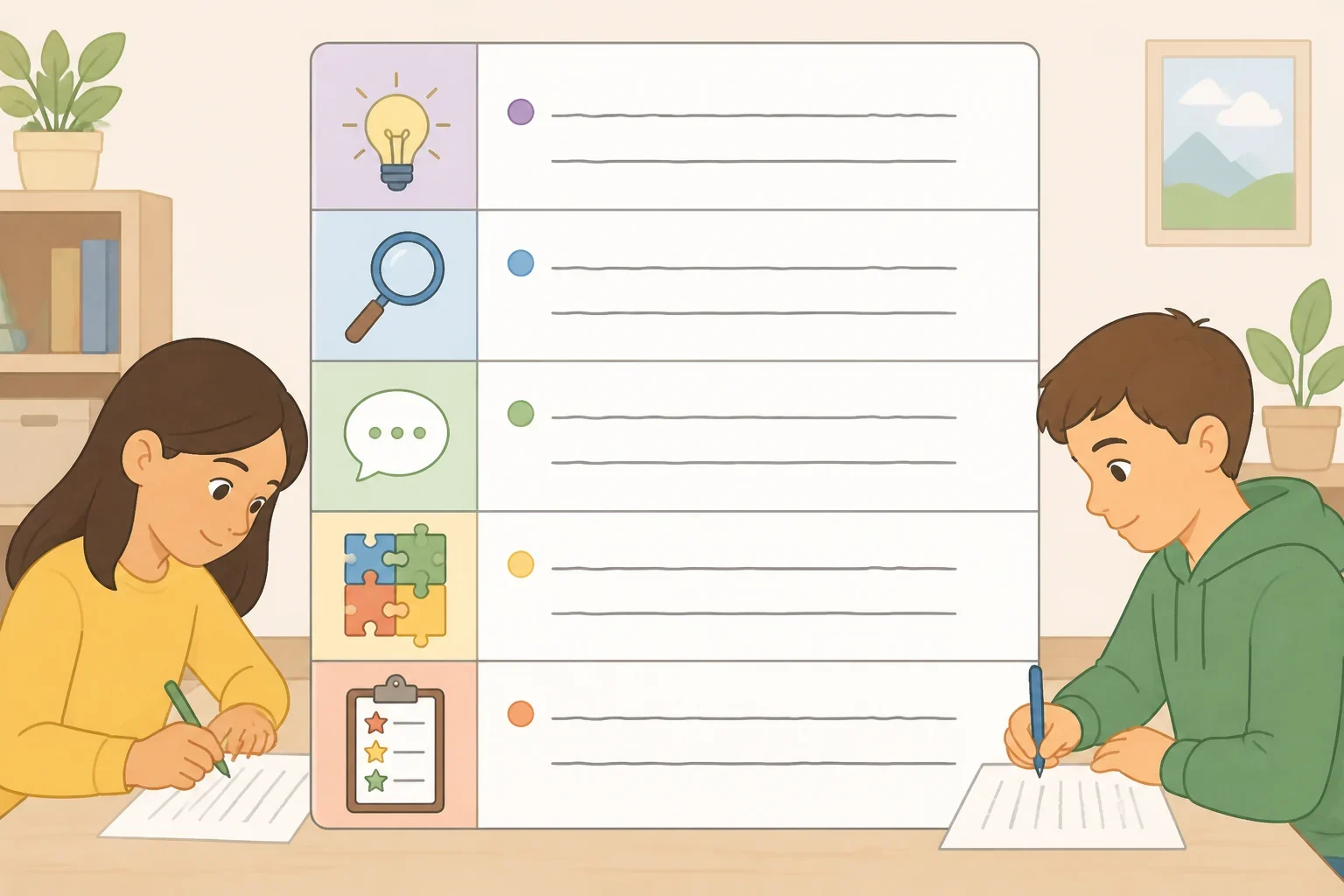
What follows is a practical synthesis built from writing-center and instructional guidance, not a single research-validated instrument. Treat it as a paragraph peer review checklist to adapt, not a formula with guaranteed results. These are meaning-first questions, meant to come before any check for commas or spelling. If an assignment also requires a mechanics pass, save that for a separate round after the ideas have been addressed.
- Main point: "What is this paragraph's main idea, in your own words?" This checks whether the point actually lands with an outside reader, following UNC's advice to respond to what a reader understands rather than what the writer intended (UNC Writing Center, 2021).
- Evidence: "Where do you want more evidence, detail, or explanation?" The U.S. Institute of Education Sciences' Secondary Writing Toolkit, published last year, lists a related resource called "Teaching the Evidence and Commentary T-Chart" (IES/REL Toolkit, last year).
- Explanation: "Why does this evidence matter to the point being made?"
- Organization: "Where did you get confused or lose the thread while reading?"
- One revision priority: "What is the single change that would most improve this paragraph?"
Five questions in a short block of time can be a lot to ask of younger writers. If four minutes of writing feels rushed for a given class, trim to three questions or let students jot short phrases instead of full sentences, saving fuller explanation for the discussion step.
Peer review worksheet for paragraphs
Copy this block for students to fill out as they read a partner's paragraph. Answer each question in one or two sentences, then circle the one revision priority before handing the paper back.
- Main idea, in your own words: ___________________________
- Where I want more evidence, detail, or explanation: ___________________________
- Why that evidence matters to the point: ___________________________
- Where I got confused or lost the thread: ___________________________
- One revision priority (circle this one): ___________________________
A worked example: from vague comment to specific feedback
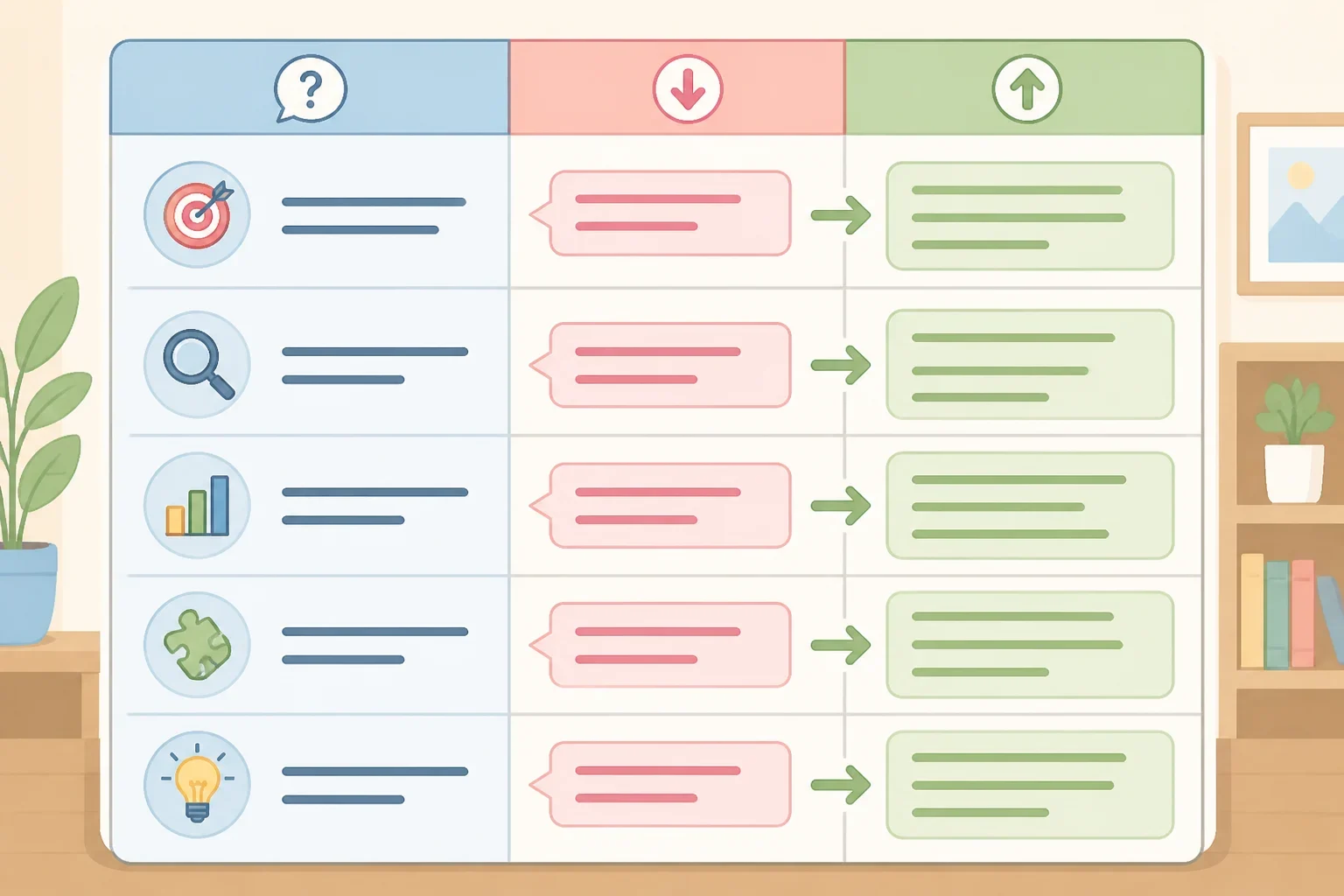
Picture a student paragraph like this: "Many teenagers check their phones constantly during the school day. This shows that technology is a big problem in schools." The claim is there, but the connection between the observation and the conclusion never gets explained.
The table below walks through three of the five questions for this paragraph. A full worksheet response would also cover organization.
Question Example response Revision decision What is the main point, in your own words? The paragraph argues that frequent phone-checking may create a problem at school. None yet; this just confirms the reader's understanding before moving to evidence. Where do you want more evidence or explanation? The paragraph never explains why phone-checking counts as a "problem" instead of just a habit. Add a sentence connecting the observation to the claim. Why does this evidence matter to the point? Right now the reader has to guess the writer's reasoning. Spell out the reasoning in one added sentence.
A vague comment, "needs more support," doesn't tell the writer what to do next. A specific comment, modeled on UNC's guidance to swap vague labels for direct feedback, does: "Adding one sentence explaining why constant phone-checking counts as a 'big problem,' rather than just a habit, would help a reader see your reasoning" (UNC Writing Center, 2021).
The difference matters for the writer's next step. Instead of a vague impression of "good" or "needs work," the writer leaves with something to act on: "I will add a sentence explaining why phone use counts as a problem, not just a habit." UNC also recommends responding selectively, with a few substantive comments instead of marking everything, noting that this approach can result in better drafts and helps students learn to tell major issues from minor ones (UNC Writing Center, 2021).
Running the 15 minutes, step by step
The schedule below is a practical adaptation of the guidance above, not a tested 15-minute intervention in its own right. It borrows the Model-Practice-Reflect cycle that IES recommends for teaching students to evaluate and revise writing (IES/REL Toolkit, last year). This sequence assumes each pair focuses on one partner's paragraph during the 15 minutes; if both students need feedback on their own writing, plan a second round or move the second review to homework.
- Minutes 0-2, model: Read a sample paragraph aloud and think aloud through one of the five questions. Show one vague comment next to one specific fix so students see the contrast directly.
- Minutes 2-4, read: Students read their partner's paragraph once without marking anything. UNC notes this first-pass approach can make responding more efficient (UNC Writing Center, 2021).
- Minutes 4-8, answer in writing: Students fill out the worksheet above. For students who need more processing or writing time, assign three questions instead of five, or let them finish writing during the discussion step rather than before it.
- Minutes 8-12, discuss aloud: Partners talk through their answers, spending the most time on the one revision priority.
- Minutes 12-15, select and record a revision: Each writer records one specific, actionable revision goal before class ends.
Because the peer-tutoring research above found such different results from study to study, treat this timed structure as promising rather than guaranteed. Watch how the comments and revisions turn out the first time before deciding to repeat it as-is.
Adjusting the activity by grade level or experience
For younger or less experienced writers, trim the list to three questions: main point, one evidence question, and the revision question. Add sentence stems like "I think the main point is ___" or "I want to know more about ___" so students aren't staring at a blank line.
For older or more experienced writers, keep the full five-question version and let responses stay open-ended rather than scripted.
What to check before you run this
Before using this protocol with a specific class, check the actual assignment rubric and any peer-feedback instructions already in place for that teacher or course. Ask whether participation is graded, because that requirement may affect how much structure students need and how seriously they treat the exchange.
What to do next
Before running the full workshop, pilot the five questions on one sample paragraph as a whole class first. Decide whether the three-question or five-question version fits the grade level in front of you, and compare a few sample student responses against the actual assignment rubric to see where the questions and the rubric line up or diverge.
After the first run, revise the checklist based on where students got stuck, whether that means adding a sentence stem, cutting a question, or adjusting the timing. Each student should leave with one written revision goal in their own words, something concrete enough to act on before the next draft.