
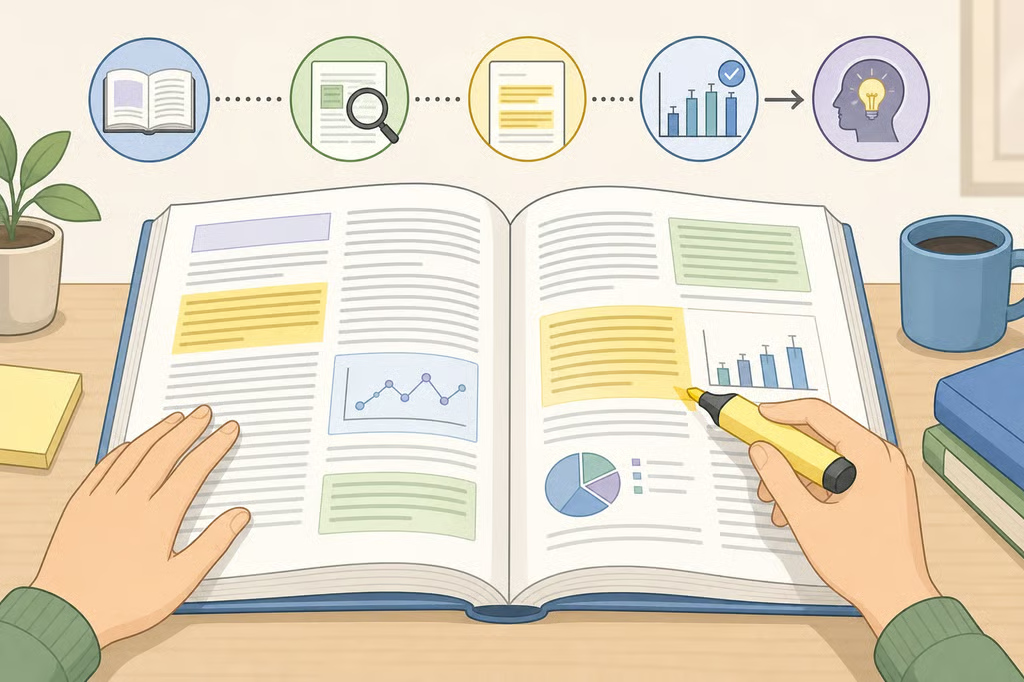
How to Read a Scientific Paper Without Starting at Page One
Many readers open a scientific paper the way they'd open a novel: start on page one, read straight through, hope it makes sense by the end. That approach usually takes longer than it needs to. Learning how to read a scientific paper starts with recognizing that these articles are built from separate sections that each do a different job, not from a story meant to be read start to finish.
Reading a journal article start to finish is often not the most efficient approach, according to a University of Michigan research-training guide from ICPSR, published last year. A journal article is made up of interrelated parts and generally follows a standardized format, and once a reader understands that structure, finding the information that actually matters gets easier, the guide notes.
Before opening any paper, it helps to name a specific goal: checking whether a source is worth citing, learning background on an unfamiliar topic, verifying a number, or judging whether a study's evidence actually supports its conclusions. That goal should decide what gets read closely and what gets skimmed, not the order the sections appear on the page, according to a clinical-education guide on reading scientific manuscripts hosted by StatPearls/NCBI and updated in 2024.
This guide walks through a practical reading workflow: how to size up a paper quickly, which sections to read in what order depending on the goal, how to handle results and discussion when the advice on order conflicts, and what to check before trusting a paper's conclusions. It's written for middle school through college students, tutors, and independent learners working through assigned readings, literature reviews, or their own research.
What is the best order to read a scientific paper?
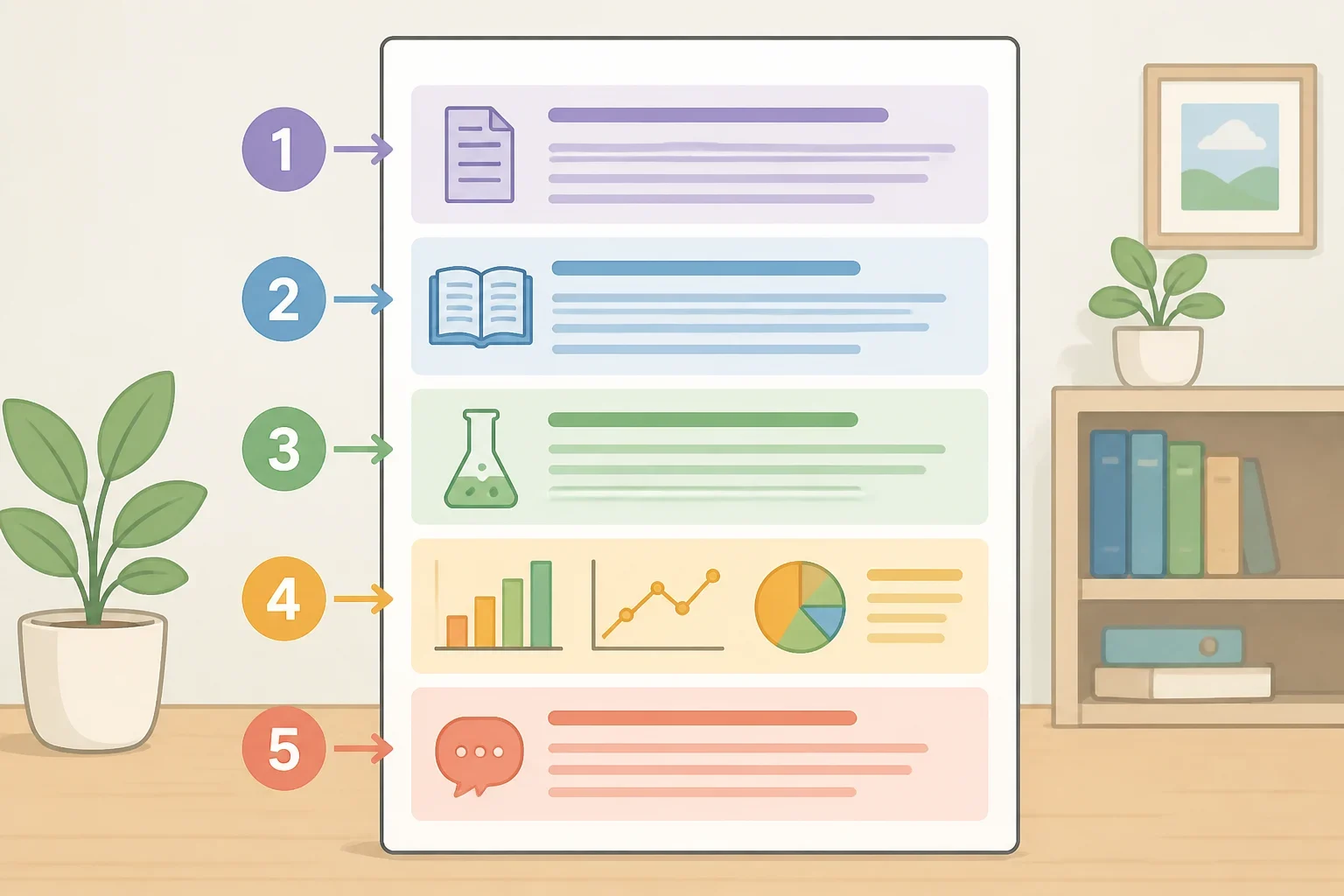
Most primary research papers are organized the same way: abstract, introduction, methods, results, and discussion or conclusion, according to both ICPSR and the Duke Academic Resource Center. Section names and order can shift a little by journal or field, but that basic structure holds across most primary research, which makes it worth learning before opening any specific paper.
The title states the paper's central takeaway, and the abstract summarizes the purpose, methods, results, and conclusions in miniature, per StatPearls. Both are useful first stops for deciding whether a paper deserves more time at all.
Readers who already know a topic well can often skip straight to the final paragraph of the introduction, where researchers typically state their objective, hypotheses, and study design, StatPearls explains. Readers newer to the subject are usually better off reading the full introduction, since it also lays out the background on why the study was done.
There's no single reading order required for every paper or every reader. The right route depends on the reader's goal and background, not the table of contents, and the rest of this guide walks through how to choose one.
A step-by-step way to choose your reading route
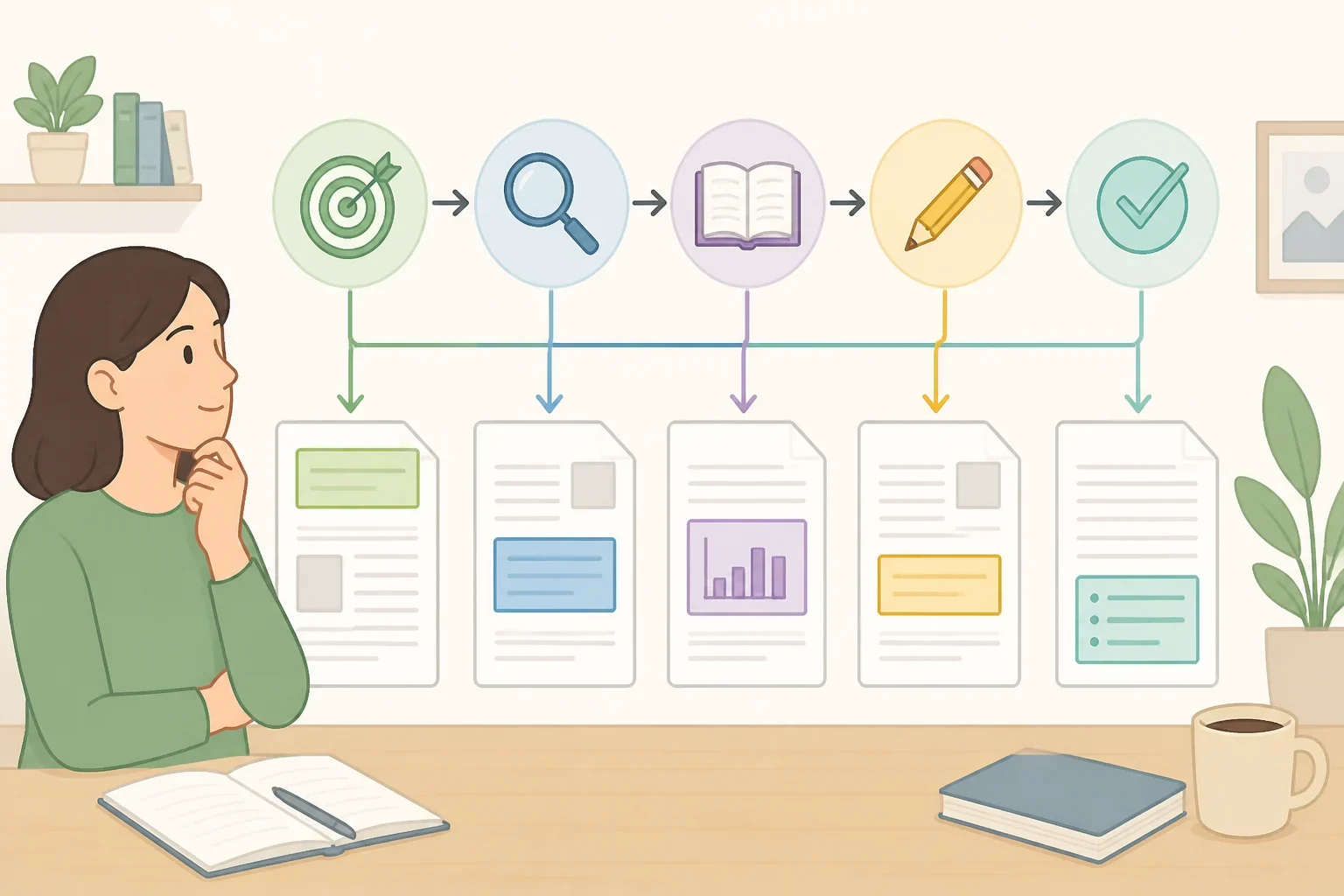
Reading a journal article efficiently means matching the route to the task instead of defaulting to a full read every time. The steps below work as a general workflow; skip ahead or double back depending on what the paper is being used for.
- State the question. Decide what the paper needs to answer before reading anything: Is it relevant to a project? What does it say about a topic? Does a specific number or claim check out? Should the evidence hold up to scrutiny?
- Scan the title, abstract, headings, and figures or tables first. This is a legitimate scan, not a shortcut to feel guilty about: very few individual articles in a field are so important that every word demands close reading, and it's fine to skim and move on once that's clear, according to ICPSR. If the scan shows the paper doesn't match the question from step one, that's often enough to move on.
- Read the introduction fully, or jump to its final paragraph, based on background knowledge. Readers new to a topic benefit from the full introduction; readers who already know the field can go straight to the final paragraph, where the objective and hypotheses usually appear, per StatPearls. For learning an unfamiliar topic specifically, one widely cited approach saves the abstract for last: in a guide reposted by Duke's Academic Resource Center, University of Kansas anthropologist Jennifer Raff recommends reading the introduction before the abstract, to avoid getting anchored to the authors' own summary of the results before working through the evidence firsthand. That same approach can help with figuring out how to read a research paper when the terminology itself is still unfamiliar.
- Choose discussion-first or results-first, depending on the goal. More on this tension in the next section, since the two approaches serve different purposes.
- Return to the methods section if a design question comes up. Any point in the discussion that raises a question about how the study was run is a signal to check the methods directly, StatPearls notes.
- Check limitations, disclosures, supplementary files, and what other researchers have said. These checks belong near the end of a careful read and are covered in full later in this guide.
One more distinction matters throughout this workflow. A primary research paper reports new findings on a specific question and generally needs a thorough read to judge methodology and validity. A review article doesn't present new data; it summarizes multiple primary studies to show where a field agrees, disagrees, or still has open questions, and can usually be read more selectively for the parts relevant to a reader's question, according to Duke's Academic Resource Center.
Example: checking whether a study is relevant
Say an assignment asks whether a new study on sleep and memory is relevant to a paper about teen sleep habits. Step one: the question is relevance, not comprehension or critique. Step two: scanning the abstract shows the study population is adult shift workers, not teenagers. That mismatch is visible in the abstract alone, so steps three through six don't need to happen at all.
That's the payoff of working through a workflow in order: a five-minute scan can rule a paper out before any time goes into the introduction, methods, or results. If the population had matched instead, the next move would be step three, reading the introduction to understand what's already known, then deciding whether results-first or discussion-first fits the assignment before reading further.
How to evaluate results and discussion
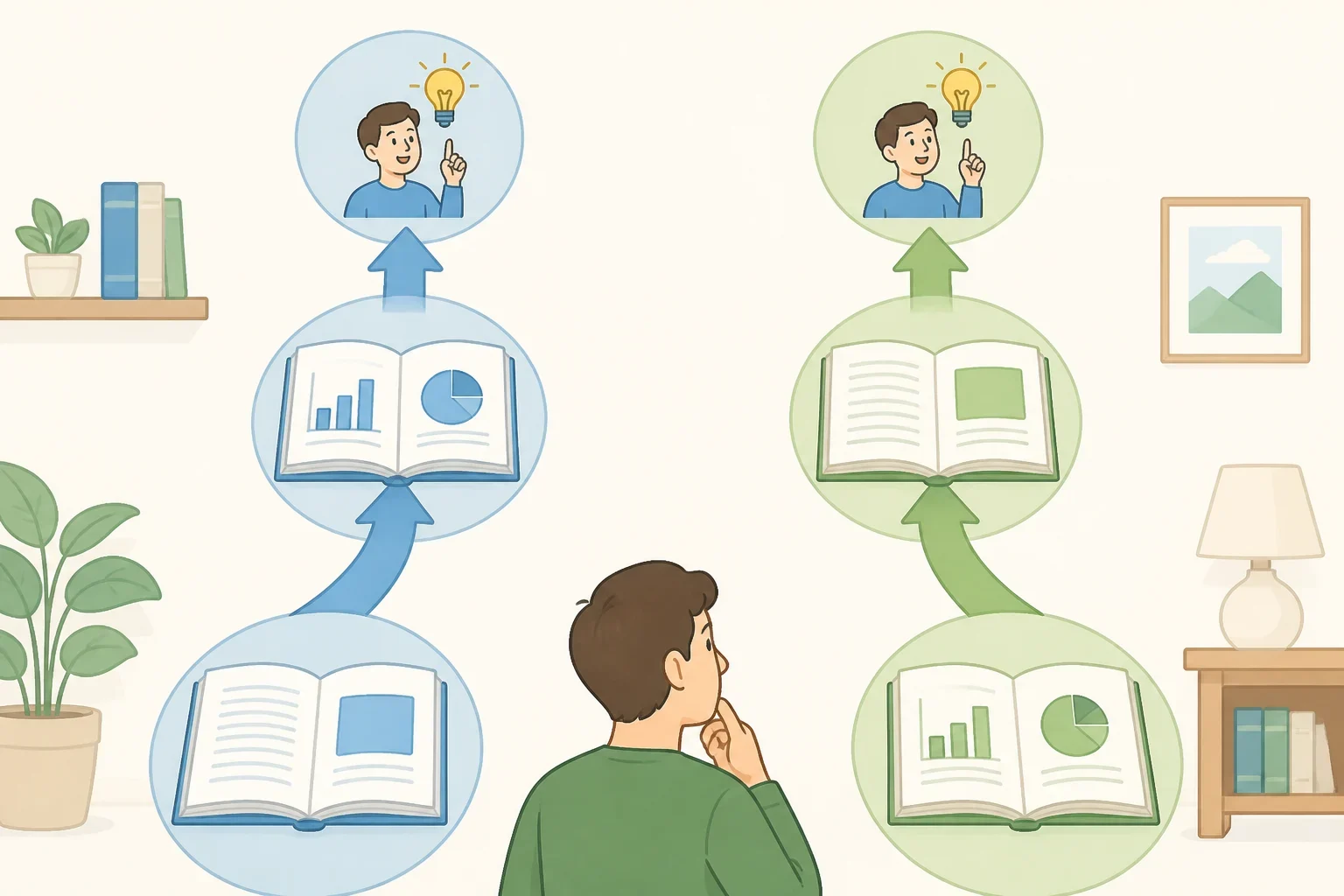
Two reasonable approaches to reading results and discussion conflict, and it helps to know both, since they serve different goals.
One approach: skip the technical results section at first and read the discussion, where authors summarize their findings and explain how the study addressed the question it set out to answer, then go back to the results with that context in mind, according to Duke's Quick Tips guide, published earlier this year. This route may help when the immediate goal is figuring out how to understand a scientific paper that feels confusing on a first pass.
The more cautious approach runs in reverse: review the tables, figures, and results and form an independent interpretation before reading the discussion, so the authors' framing doesn't shape a reader's judgment of what the data actually show, per StatPearls. This route fits situations that call for evaluating evidence critically, such as forming an independent judgment for a literature review or methods critique.
Whichever order gets used, a short set of prompts keeps the reading focused once methods and results are open:
- What question or hypothesis is being tested?
- Who or what was studied?
- What comparison, measurement, or intervention was used?
- What do the figures and tables actually show?
- Which limitations affect how broadly the findings can be applied?
- Does the conclusion stay within what the evidence actually supports?
Those questions track the same ground StatPearls recommends covering during critical appraisal: whether the study addressed its stated hypothesis, whether the methods were appropriate, and what the results actually reveal, independent of how the authors frame them.
Pausing on an unfamiliar chart or plot type instead of skimming past it also pays off. Figures often carry more of a paper's information than the surrounding prose, according to Princeton Correspondents on Undergraduate Research, a student-written guide from Princeton's undergraduate research office published last year.
One detail worth recording either way: the sample size. Consider that number alongside the study's design, population, and analysis rather than treating it as a pass-fail test, according to Duke's Academic Resource Center.
What to check before trusting a paper's conclusions
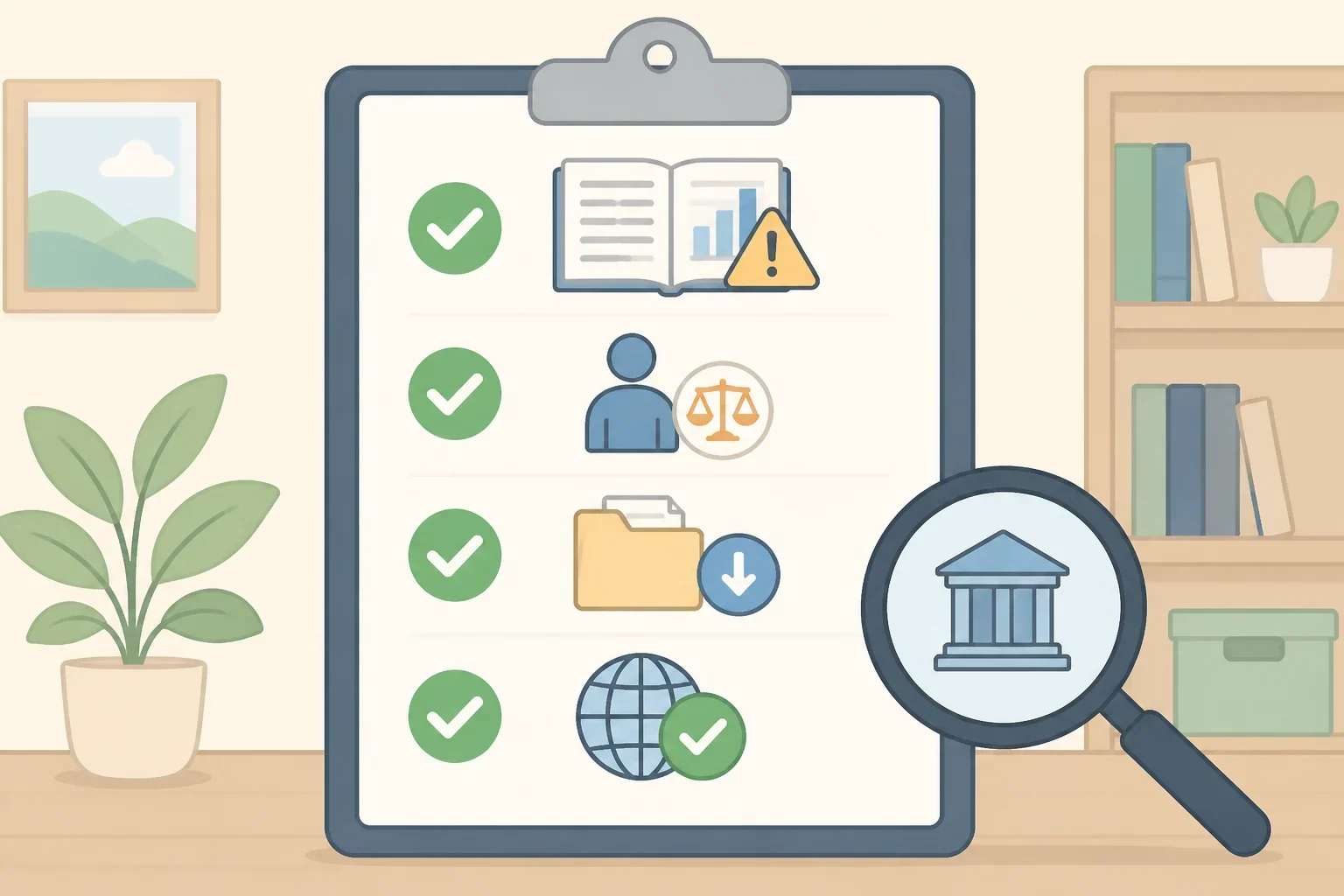
Before relying on a paper's conclusions, check the limitations section, any conflicts-of-interest disclosure, and supplementary online files, which sometimes contain details left out of the main text, according to both StatPearls and Duke's Academic Resource Center.
Checking what other researchers have said about the paper matters too. That may surface later criticism, follow-up studies, or ongoing debate, per Duke's guide. It doesn't guarantee a finding is settled, but it shows whether a paper exists in a vacuum or in an active scholarly conversation.
One more check worth knowing about: reputable biomedical journals are indexed in PubMed, and Duke's guide separately advises watching out for questionable journals. That's a useful flag for biomedical research specifically, not a universal quality test for every field, so it belongs alongside the other checks here rather than standing in for all of them.
What to do next
Before the next reading assignment, name the goal in one sentence and pick a starting point from the workflow above: a relevance scan, a full introduction read, or a results-first critique. That decision shapes everything that follows.
If a paper is central to an argument, project, or paper being built, run it through the full checklist first: limitations, conflicts of interest, supplementary files, and what other researchers have said, before treating its conclusions as settled.
If it's unclear which sections an assignment expects, ask the instructor directly. Some assignments call for a full read of every section; others only require the parts relevant to a specific question, according to Duke's Quick Tips guide. Clarifying that up front can prevent time spent reading sections the assignment never asked for.