
Indigenous Peoples' Day Activities for Students: 6 Lessons
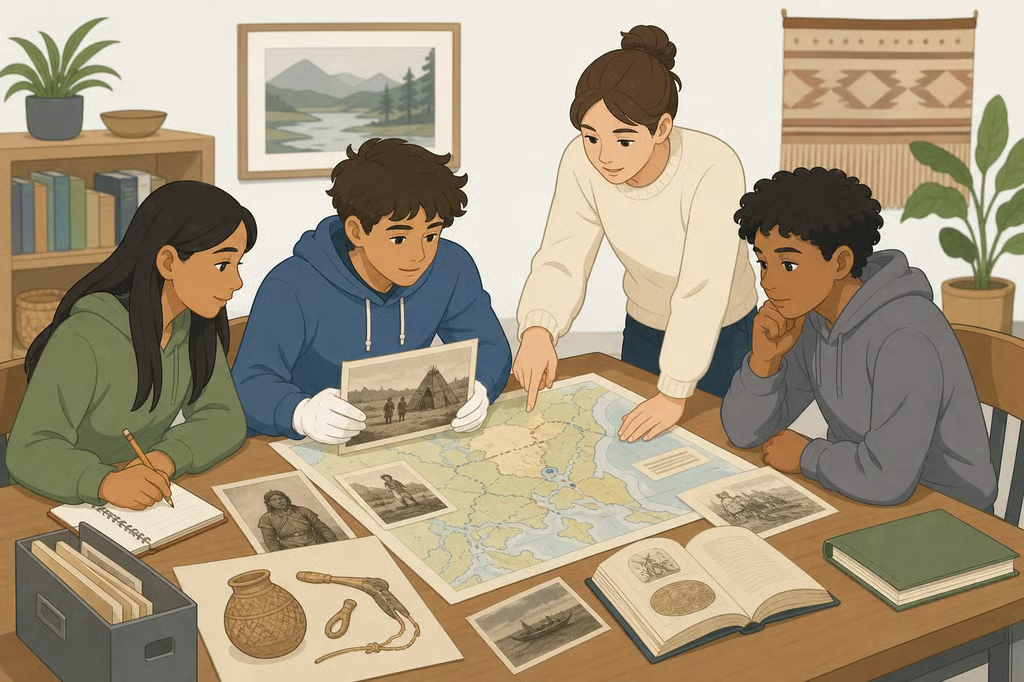
Indigenous Peoples' Day activities for students don't have to mean a construction-paper headdress or a rushed compare-and-contrast with Columbus Day. In 2022, National Archives and Records Administration (NARA) educators ran a pilot lesson series with 64 K-5 students at Aneth Community School on the Navajo Nation in southeast Utah. The series included lessons on a ratified treaty and an archival photograph, taught through discussion rather than staff interpreting each record for students (National Archives, 2022).
NARA's collections go further than that pilot did. Digitized maps and federal enrollment records sit alongside the treaties and photographs the Aneth students worked with, and other teachers can build lessons from those collections too, though NARA's own 2022 sessions used only treaties and photographs directly (National Archives, 2022). The six lessons below adapt that inquiry-based method to those additional collections; NARA field-tested the treaty and photo work, not the map or enrollment-record exercises.
The holiday itself falls on the second Monday of October, alongside Columbus Day. Gale reported in September 2025 that Berkeley, California, first formally recognized Indigenous Peoples' Day in 1992 (Gale). The United States recognizes roughly 574 federally recognized American Indian and Alaska Native groups, each with distinct languages, belief systems, and economies (Gale, September 2025), which is why one record, or one Navajo community's pilot lesson, shouldn't stand in for all Indigenous nations.
Who these lessons are for
These Indigenous Peoples' Day lesson plans work for elementary teachers, middle and high school social studies teachers, and homeschool educators looking for something more substantial than a craft table. NARA's 2022 pilot worked with K-5 students at a Bureau of Indian Education (BIE) school. At the time, NARA said it planned to run the same webinar format at other Navajo Nation schools through grade 12 that fall, and adapt it for additional BIE schools the following spring, though the report doesn't document how those later sessions went (National Archives, 2022).
Aneth Community School is one of 183 BIE schools serving roughly 46,000 students nationwide (National Archives, 2022). That scale is a reminder that the pilot was built around one Navajo community's own priorities, not a template for teaching Indigenous peoples as a single group.
These are Indigenous Peoples' Day classroom activities centered on document analysis and civic literacy, not a Native American history survey and not a cultural performance unit. Indigenous Peoples' Day activities for elementary students should stay simple: guided looking, short discussion, one document at a time. Older students can handle closer reading of treaty language or a Dawes enrollment card.
Where to find primary source lessons for Indigenous Peoples' Day
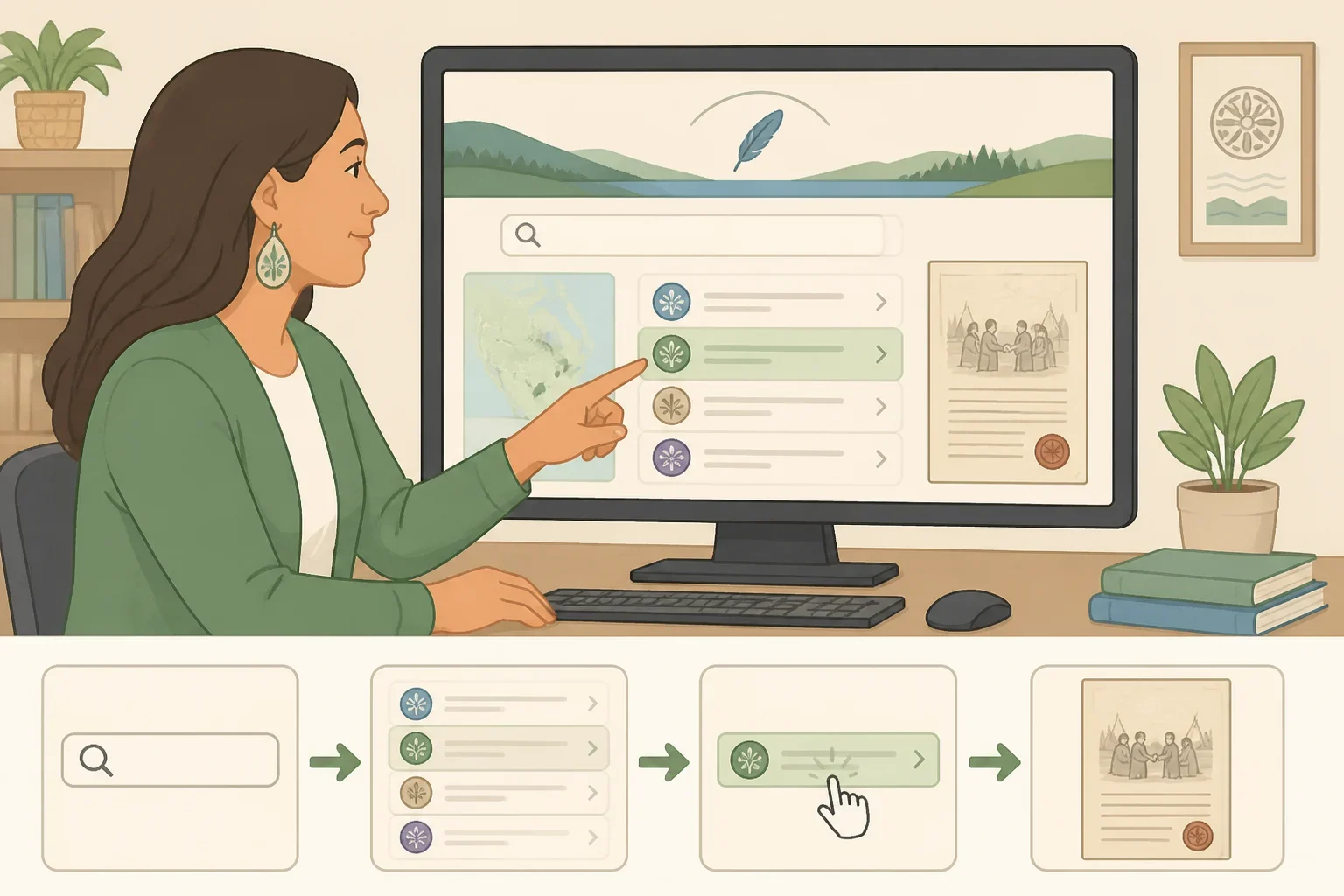
The Indigenous Digital Archive (IDA) Treaties Explorer hosts digitized copies of NARA's collection of 374 ratified Indian treaties, along with related historical documents, teacher curriculum units, and instructional videos (National Archives, 2022).
A NARA page updated in February 2026 gives a slightly different figure: approximately 370 treaties approved by the Senate between 1789 and 1871, with several dozen more considered but never ratified (National Archives). The two counts don't quite match, so treat either one as an approximation rather than a fact worth quizzing students on.
For photo-analysis activities, the Bureau of Indian Affairs Photographs Finding Aid is a crowdsourced tool covering more than 18,000 digitized images sorted into 28 categories, including portraits, agriculture, and art (National Archives, 2022).
Oklahoma State University digitized Charles Kappler's seven-volume compilation of American Indian treaties, laws, and executive orders, and built a searchable Tribal Treaties Database that the same February 2026 update lists as still in public beta (National Archives). Check whether the database has come out of beta before assigning it as a student research tool; beta tools can change or go offline with little warning.
Indigenous Peoples' Day activities for students: six primary-source lessons
Grade bands and time estimates below are editorial suggestions for classroom planning, not findings from NARA's own research.
Lesson 1: What makes a treaty binding? Grade band: elementary through high school, adjusting text complexity by age. Source: a short excerpt from a ratified treaty, such as the Treaty of 1868, which Aneth Community School leaders told NARA was "the document that is most important to us" (National Archives, 2022). Goal: understand a treaty as a promise between two governments, not a one-sided historical event. Student task: identify who is making the promise, what is being promised, and why the relationship is described as government-to-government. NARA's subject matter expert for Native American records, Cody White, described the treaties made through 1871 as agreements that "are not merely historical footnotes but, as the Supreme Court has repeatedly ruled, legally bind our country still today" (National Archives, 2022); present that line as White's professional assessment rather than a legal conclusion the lesson itself is drawing. Suggested time (editorial estimate): one class period. Caution: full ratified treaties run several pages of formal legal language; the Aneth lesson worked from a single excerpt read aloud together, not assigned as independent reading.
**Lesson 2: Treaty detectives.
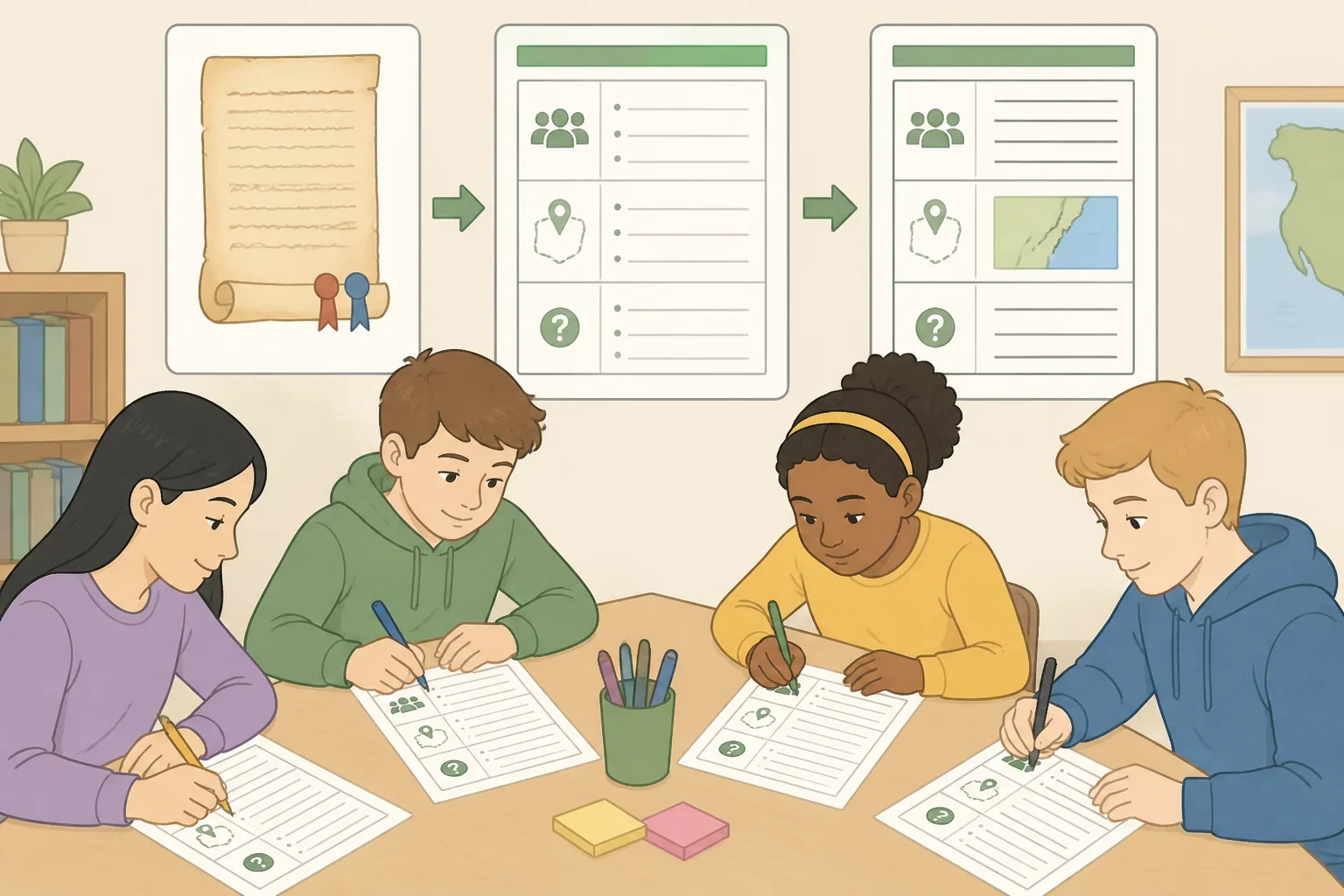
** Grade band: middle and high school. Source: the IDA Treaties Explorer. Goal: practice document sourcing, separate from the promise-based reading in Lesson 1. Student task: list the signers, note the boundaries or land described, record the date, and write two or three questions the document doesn't answer. NARA education specialist Sara Lyons Davis described the underlying method this way: "We're not there to interpret the document for the students... we work with them in an inquiry-based way so they can interpret the documents for themselves" (National Archives, 2022). Suggested time (editorial estimate): 30 to 45 minutes. Caution: pick a treaty tied to your own region if the database has one, rather than defaulting to the first search result.
**Lesson 3: Photo detectives.
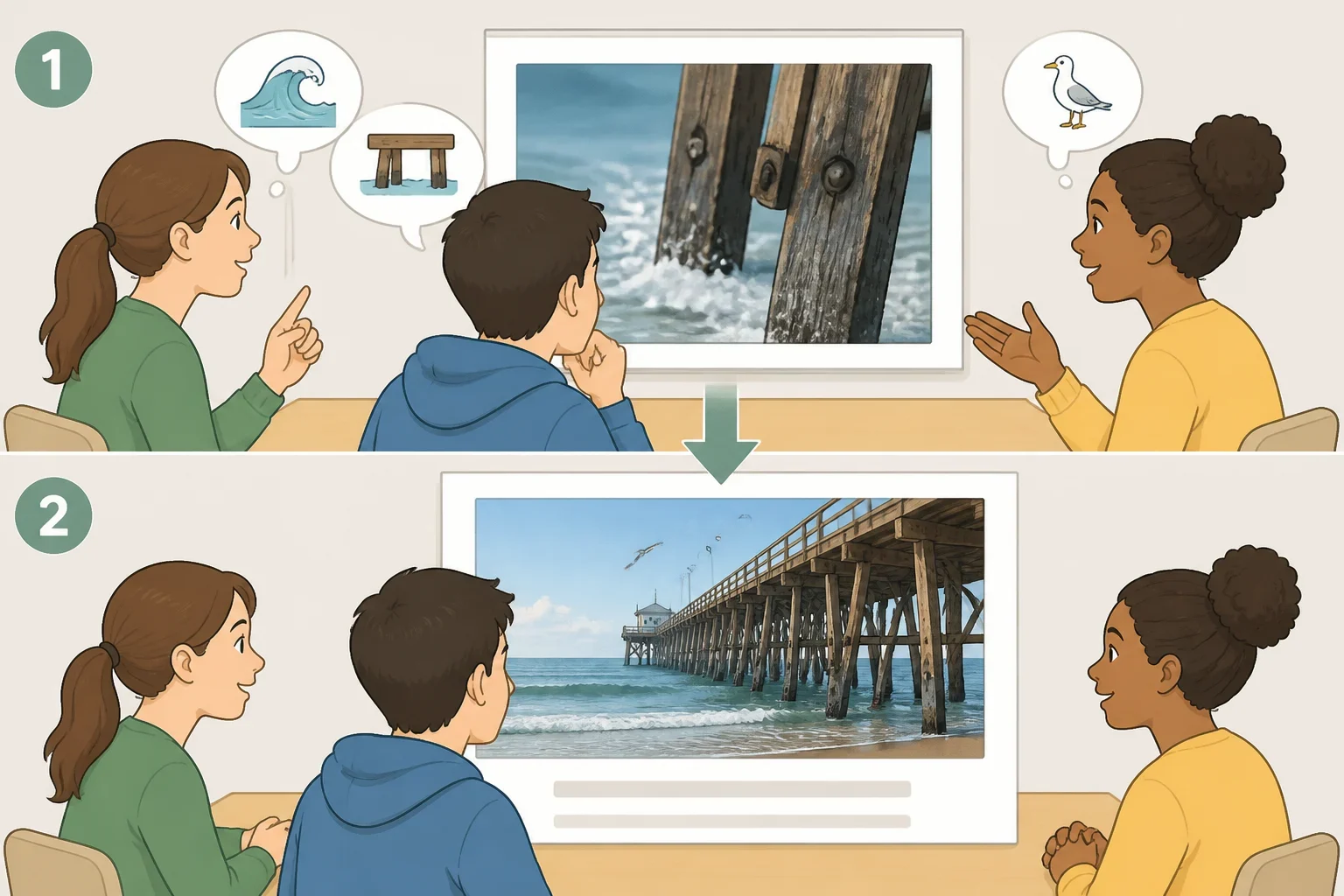
** Grade band: elementary. Source: the Bureau of Indian Affairs Photographs Finding Aid. Goal: build visual-evidence skills by describing a photograph before its full context is revealed. Student task: view a cropped detail, describe what's visible, then discuss what changes once the full image and caption appear. NARA staff used this technique with a Navajo Code Talkers photograph: kindergarten-through-second-grade students noticed a man holding a radio, and older students called out "Code Talkers!" once more of the image came into view (National Archives, 2022). Suggested time (editorial estimate): 15 to 20 minutes. Caution: reveal the caption only after students have discussed what they see.
Lesson 4: What maps show, and leave out. Grade band: middle and high school. Source: a digitized Dawes allotment map. Goal: analyze how a federal map represents land, and what it omits. Student task: compare a Dawes-era map to a present-day map of the same area. The Dawes Commission annotated printed plat maps to show individual land parcels, townsites, and railway rights-of-way for the Cherokee, Choctaw, Chickasaw, Creek, and Seminole Nations in Indian Territory, present-day Oklahoma (National Archives, reviewed in July 2025). The map series dates to approximately 1896 to 1906; related land-allotment applications run from 1899 to 1907 (National Archives, reviewed in July 2025). Suggested time (editorial estimate): one class period. Caution: name the specific nations and years involved rather than generalizing to "Native land."
**Lesson 5: Who decided belonging?
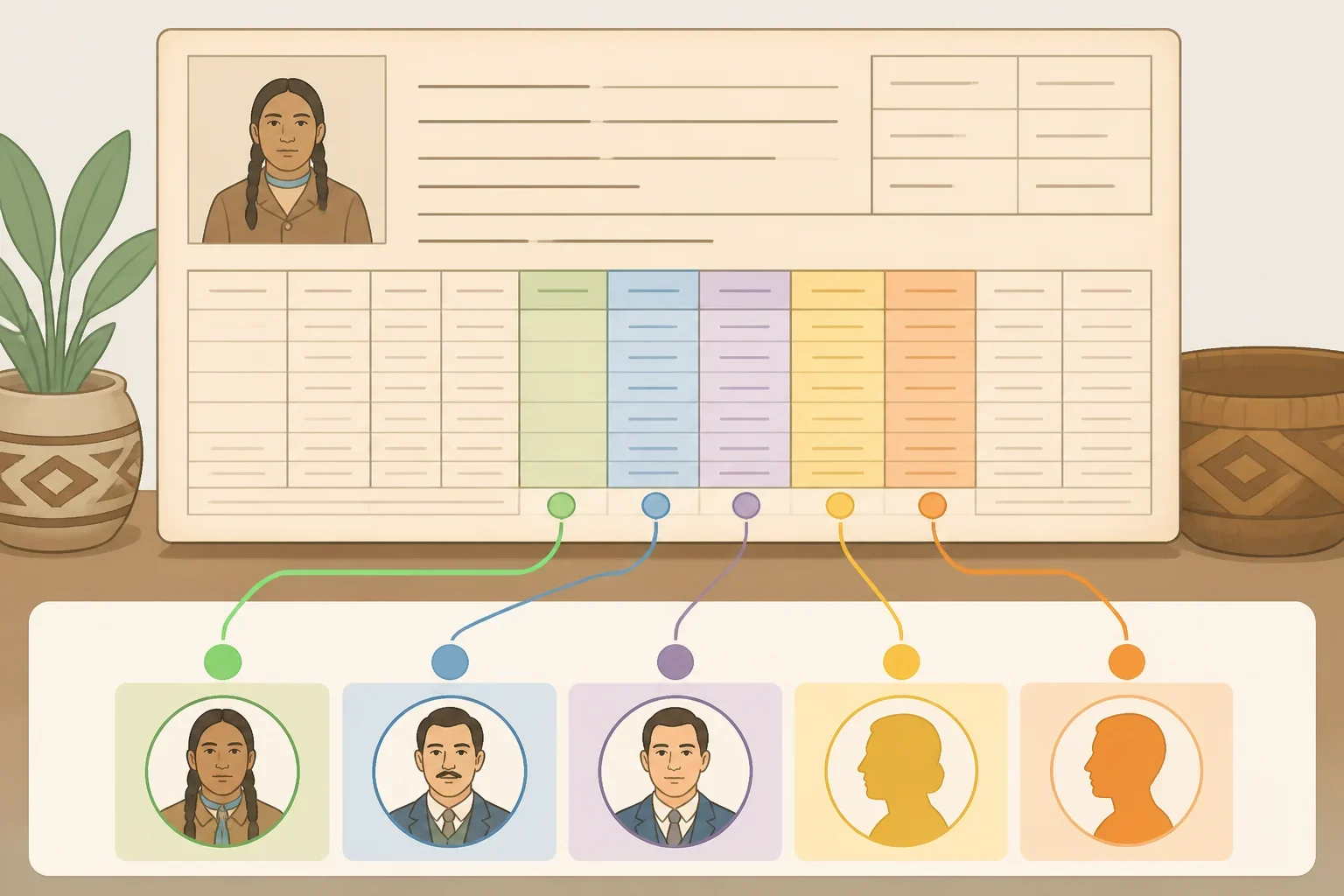
** Grade band: high school. Source: a Dawes census card or enrollment application. Goal: examine federal classification power over identity, not genealogy. Student task: these records apply specifically to the Cherokee, Choctaw, Chickasaw, Creek, and Seminole Nations, with enrollment running from 1898 through 1907 and a handful of cases accepted as late as 1914 (National Archives, reviewed in July 2025). The records include categories such as "citizens by blood," "Freedmen," "denied/doubtful," and "rejected" (National Archives, reviewed in July 2025). Ask who created these categories and what power that gave the federal government over a person's identity. Suggested time (editorial estimate): one class period. Caution: frame this as a study of federal classification power, not an identity exercise. A Dawes-era enrollment record documents a specific federal process from more than a century ago; it is not a current determination of Tribal citizenship, and questions about present-day enrollment belong with a Tribal nation's own government.
Lesson 6: From archive to community. Grade band: any, adjusting the reflection's length for age. Source: a record connected to a Tribal nation local to your region. Goal: connect the archive to a specific nation rather than a generic "Native history" theme. Student task: research a source tied to a Tribal nation near your school, a treaty, photograph, or historical marker, and write a short reflection on what you found. Where possible, point students toward a Tribal government, Tribal museum, or Tribal cultural center in addition to the federal record; these records were created or preserved through federal enrollment and allotment processes, so they don't provide a complete Tribal perspective on their own. This mirrors NARA's stated goal of helping communities "see themselves and their history through our records" (National Archives, 2022). Suggested time (editorial estimate): research and write-up spread across one or two class periods. Caution: if no local Tribal-specific record turns up, use that gap as the discussion itself: why might that history be harder to find in a federal archive?
What to check before teaching these lessons
Match the topic to the grade. NARA's own model used K-5 students for treaty and photo work; land dispossession and Dawes classification hold up better with upper-elementary or secondary students under guided discussion.
Verify that tools are still live. The Tribal Treaties Database was in public beta as of the February 2026 update to NARA's treaty records page, and NARA's school-partnership expansion plans dated to 2022 (National Archives; National Archives, 2022). Confirm access before building a lesson around either one.
Explain historical terminology as historical, not current. Terms like "Freedmen," "blood degree," and "citizens by blood" are categories the Dawes Commission created more than a century ago; they describe how the federal enrollment process sorted applicants, not how people describe themselves today (National Archives, reviewed in July 2025).
Reach out before teaching region-specific material. A local Tribal education office, cultural center, or Tribal government may be able to share context these federal records leave out, since the records were created or preserved through federal processes rather than written from a Tribal nation's own point of view.
What to do next
Pick one or two lessons that fit your students' grade level and the class time available, rather than running all six in a single unit. Introduce treaty or photo analysis first, then add Dawes records for older students once they've practiced reading documents closely.
From there, work through a short checklist before class:
- Choose a source tied to the grade level and, when possible, a Tribal nation local to your own region.
- Verify the archive's caption, date, and historical scope before presenting it as fact.
- Prepare two or three open-ended sourcing questions instead of pre-interpreting the document for students.
- Identify what the federal record leaves out, and say so out loud in class.
- Check whether your school or state has its own guidance for teaching Indigenous history, and confirm it before finalizing the lesson.
If your school or district already has a relationship with a local Tribal nation, education department, or cultural office, contact them before the unit starts to ask what materials or context they'd recommend.