
- How to Tell if Something Is an Ad or Information: A Guide
- Why spotting sponsored content isn't one skill
- How to tell if something is an ad or information: check the relationship first
- Then test whether the claim holds up
- Four examples that test the relationship question
- Two examples that test the claim itself
- What to do next
How to Tell if Something Is an Ad or Information: A Guide
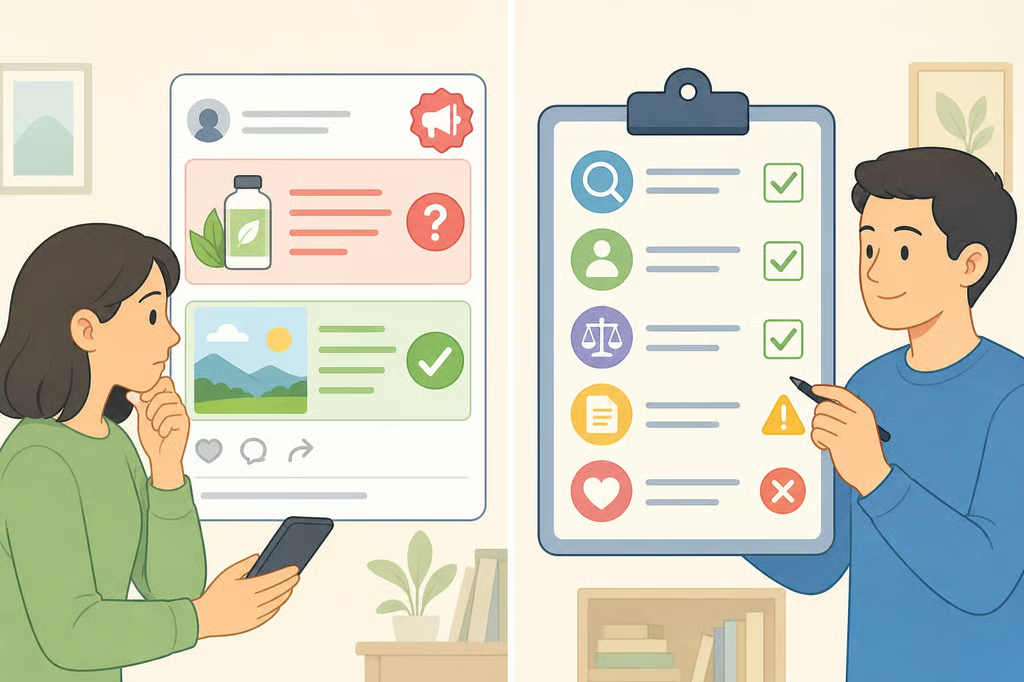
How to tell if something is an ad or information comes down to two separate questions. The first: did someone get paid, gifted something, or otherwise incentivized to create this content? The second, and completely separate, question is whether the claim itself holds up. A sponsored post can disclose its relationship clearly and still make a shaky claim. An unpaid post can skip disclosure entirely and still be accurate. Confusing the two is an easy mistake, and it's why a disclosed ad gets dismissed as automatically untrustworthy, or an undisclosed recommendation gets treated as automatically true.
Two federal actions set the current rules for how that disclosure is supposed to work, and they cover different ground. The Federal Trade Commission finalized an updated version of its Endorsement Guides in June 2023, adding guidance on incentivized reviews, employee reviews, fake negative reviews of competitors, and a definition of "clear and conspicuous" disclosure that warns a platform's built-in disclosure tool might not be enough on its own (FTC, 2023). More than a year later, the separate Consumer Reviews and Testimonials Rule took effect in October 2024, authorizing courts to impose civil penalties for knowing violations involving fake reviews, fake testimonials, and fake indicators of social media influence (FTC, 2024).
How good are people at actually catching these cues? A 2025 mixed-methods study of 19 college students, ages 18 to 24, offers one data point worth sitting with. Sixteen of the 19 correctly identified a sponsored Instagram video as an ad, but only 11 correctly identified a second, unsponsored video as genuine word-of-mouth, according to Burton, 2025. Among the participants who discussed their confidence afterward, all 16 remained confident in their own media literacy skills, even when their answers were incorrect (Burton, 2025).
This routine is designed to be adaptable for middle school, high school, and adult learners, though it's worth being upfront about where the research comes from. The study involved college-age participants, not younger students, and the legal examples below describe obligations that fall on businesses and influencers, not rules that bind a student reader personally. What follows is the two-part check, six everyday examples, and a classroom activity for teachers and parents working with either age group. Sorting advertising vs informational content reliably means applying both questions, not stopping at whichever one is easier to answer.
Why spotting sponsored content isn't one skill
Learning how to identify native advertising starts with a definition. Native advertising is content built to match the look and format of whatever platform carries it, instead of standing apart as a labeled ad, as described by Burton, 2025, citing Amazeen & Wojdynski; Campbell & Grimm. A reel that looks exactly like a friend's casual recommendation counts as native advertising when it's paid or otherwise commercial and built to match its surroundings; a disclosed banner ad, by contrast, is a more conventional format that doesn't try to blend in.
One 2023 industry estimate cited in Burton's study found that 65% of advertisements published on social media align with that definition, a figure worth treating as directional rather than a precise current count, since ad spending and formats shift quickly (Burton, 2025, citing eMarketer, 2023).
The same study's interviews point to something more specific than general confusion. Burton concluded that platform- and format-specific media literacy skills may not transfer automatically from one piece of content to the next (Burton, 2025). That conclusion comes from six short video clips shown to 19 people, not a demonstrated result across every platform, so it reads as suggestive rather than settled. It's also why this guide practices the same check across several formats instead of treating "ad or information" as one quiz question.
How to tell if something is an ad or information: check the relationship first
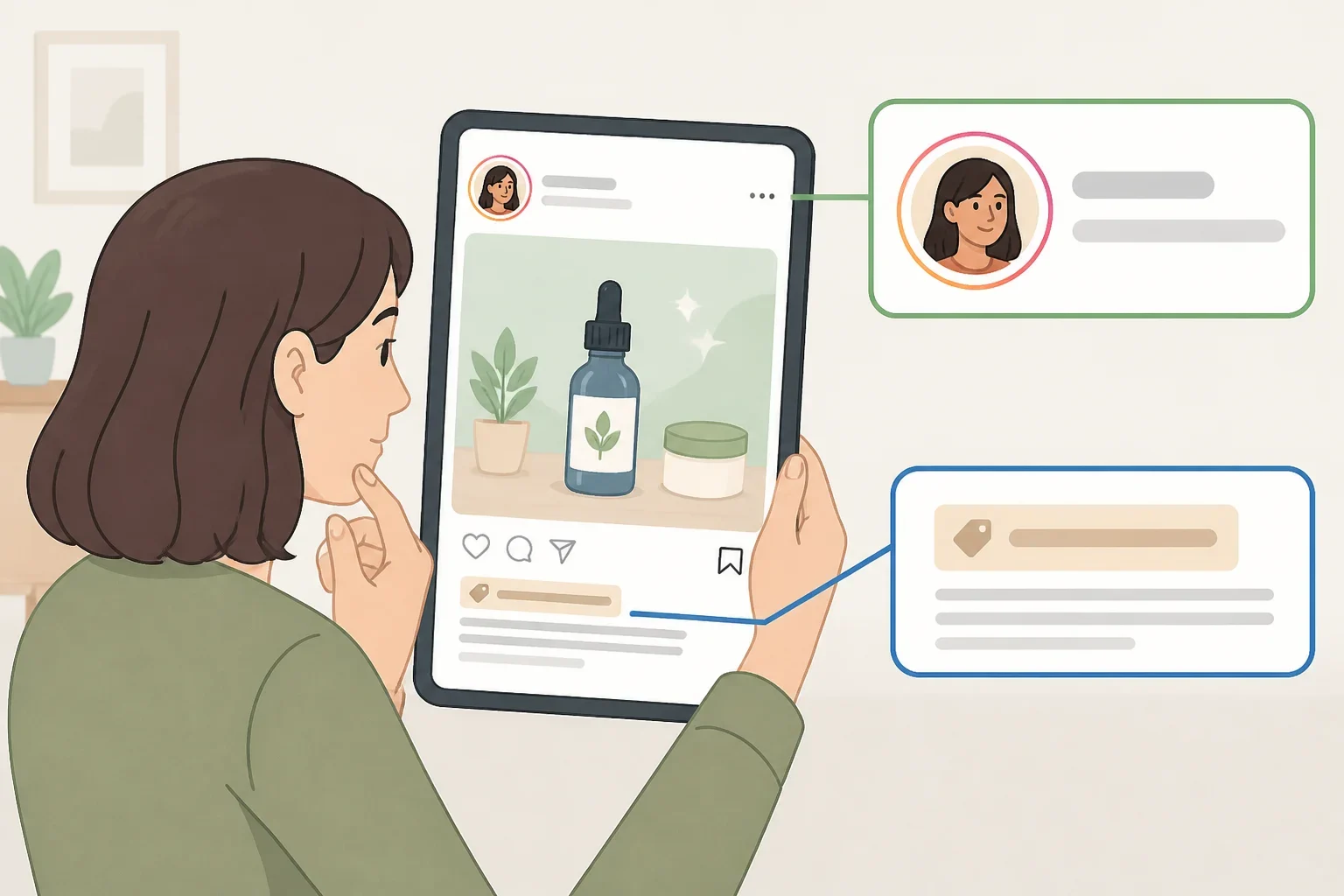
The first question is a relationship check, not a trust check. Three things are worth asking of almost anything in a feed:
- Who made this, and do they have any relationship, paid, gifted, or affiliate, with what's being featured? Under FTC guidance, disclosing that relationship clearly and without misleading readers is the advertiser's responsibility, not something a reader has to dig for (FTC guidance cited in Burton, 2025).
- Is the relationship disclosed somewhere that doesn't require clicking or hovering to find? Under the FTC's 2024 rule, a disclosure that requires clicking a hyperlink or hovering over an icon counts as "avoidable" and doesn't meet the clear-and-conspicuous standard. A hashtag like #ad can qualify, but only depending on its wording and placement, not automatically (FTC, 2024).
- Does getting something free mean no disclosure is required? The FTC's updated Endorsement Guides address when and how to disclose a material connection, including a free product, which signals that gifted items are something businesses and influencers are expected to flag (FTC, 2023). That expectation falls on the business or influencer making the claim, not on the person reading it.
Then test whether the claim holds up
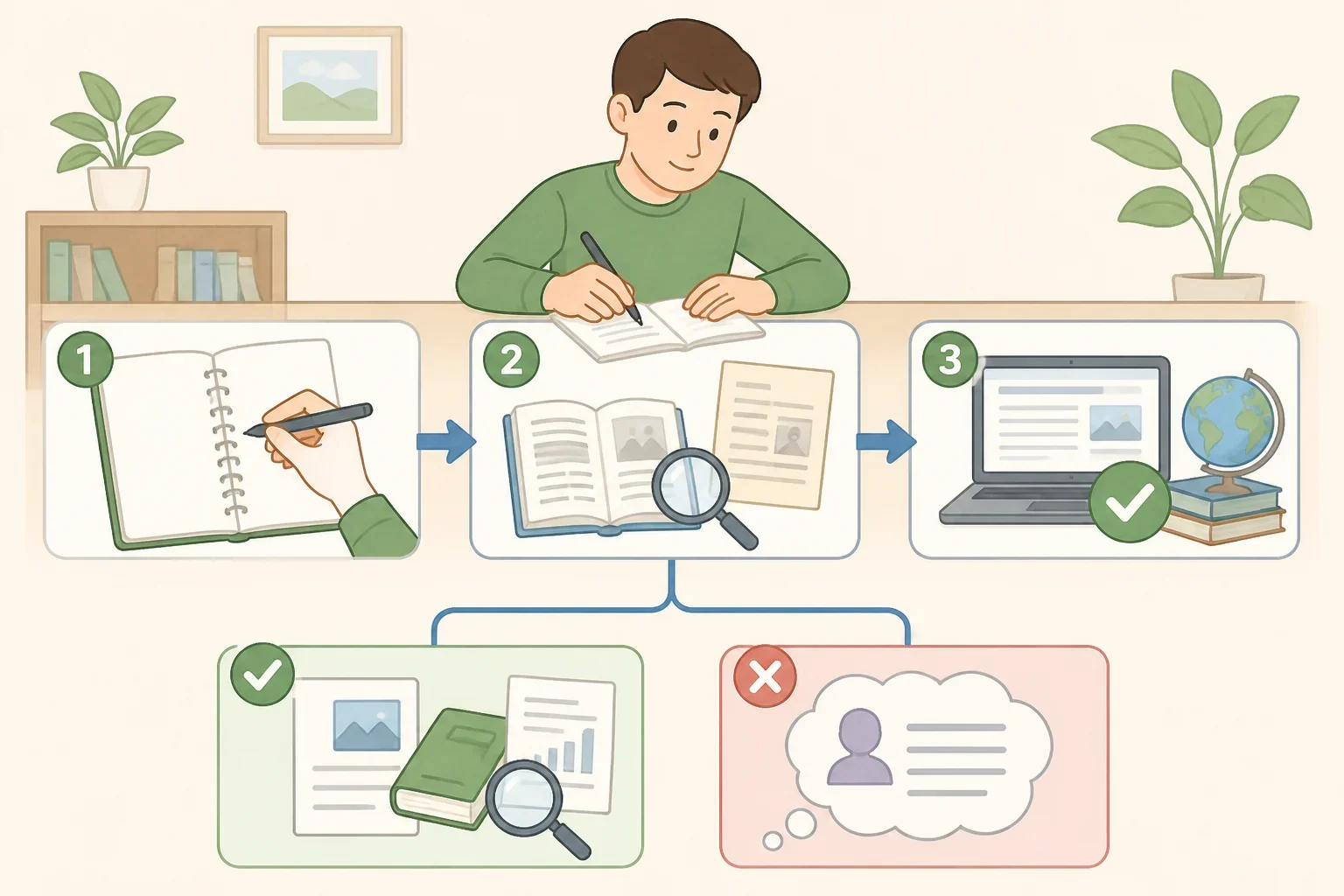
The second question applies whether or not the first turned up a sponsor. Start by sorting out what kind of statement is being made. "This creator received a free phone case" is a relationship question, already covered above. "This phone case doubles charge time" is a factual claim, something checkable against a manufacturer's spec sheet, a library database, or a review outlet with no relationship to the seller. "This phone case is worth buying" is a recommendation, a judgment call that disclosure alone can't settle no matter how clearly it's labeled.
Once a claim is identified as factual rather than a recommendation, a short routine applies:
- Write the exact claim down in one sentence, separate from the creator's tone or enthusiasm.
- Look for the original source: a manufacturer spec sheet, a study, or an official product page.
- Check at least one independent source with no relationship to the seller, such as a library database or a review outlet that doesn't accept free products.
- Separate evidence, a measurement, a test result, a quoted spec, from opinion, how the creator felt about it.
- If none of that settles it, record "not enough information" instead of guessing.
It's tempting to assume that once someone is flagged as sponsored, their claims deserve less attention by default. In its eye-tracking analysis, Burton found no statistically significant correlation between participants' visual attention and whether they correctly recognized native advertising (Burton, 2025). That result doesn't show recognizing an ad makes someone more or less attentive to it; spotting a sponsor is a starting point for the verification routine above, not proof the claim is weak.
Four examples that test the relationship question
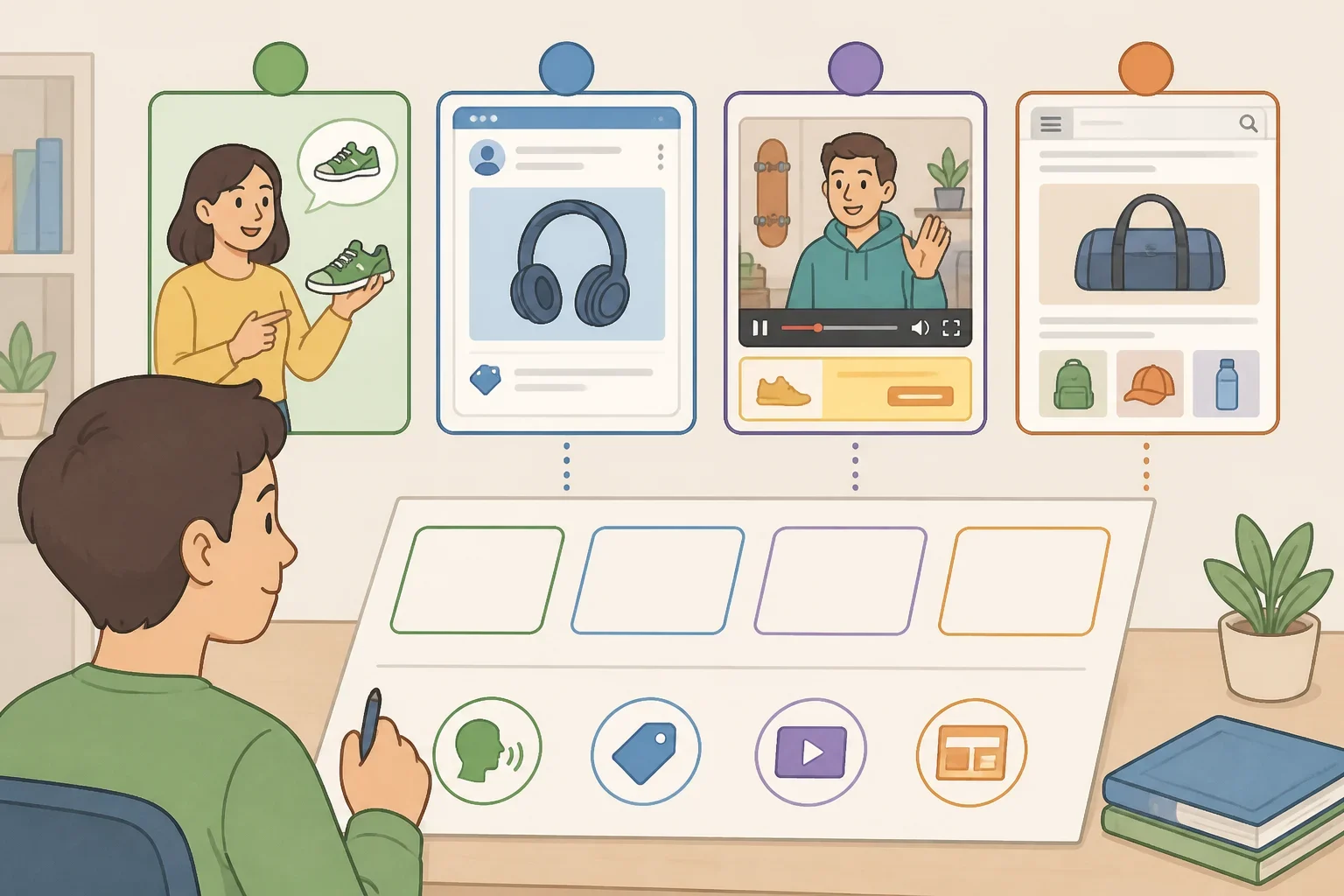
The influencer's favorite product video. This leans toward an ad or native ad when only one brand is mentioned throughout, a cue Burton's participants pointed to when they correctly identified a sponsored video (Burton, 2025). That cue alone isn't proof of payment; without a disclosure, there's no way to tell whether payment, a free product, or no compensation at all sits behind the mention.
The toy unboxing video. An unboxing video can combine genuine play with paid promotion. The FTC names unboxing videos as a format where a company may be behind what looks like spontaneous enthusiasm (FTC Consumer Advice, 2023). Without a label, a viewer can't easily separate authentic excitement from a paid script.
The article that matches a site's usual tone. Matching style doesn't mean editorial independence. A "sponsored" or "paid partner" tag near the headline or byline is the signal to look for, since native advertising is built specifically to blend into its surroundings (Burton, 2025). Without that tag, the relationship may remain unclear, though a caption, a creator's profile, or an affiliate link elsewhere on the page can sometimes fill in what the tag doesn't.
The branded item inside a game or virtual world. The FTC describes these as ads woven into the gameplay itself rather than shown as a separate commercial break (FTC Consumer Advice, 2023). The agency has said platforms should consider policies, tools, and controls to address this kind of blurred advertising, but that's a recommendation aimed at platforms, not a guarantee that any single game includes them (FTC Consumer Advice, 2023).
Two examples that test the claim itself
The five-star review. Classification depends on the platform. The FTC separates a "consumer review," an evaluation posted to a platform dedicated to collecting them, from a "testimonial," an ad built around someone's personal experience; most reviews are not testimonials (FTC, 2024). Checking whether the reviewer discloses an incentive or an employee relationship matters here, since the updated Endorsement Guides specifically address incentivized reviews, employee reviews, and fake negative reviews of competitors (FTC, 2023). Running the verification routine above on a review's factual claims, rather than stopping at whether it's disclosed, catches more: even a disclosed, honest review doesn't confirm a product works for a different reader's situation, which calls for checking a second, independent source.
The product with a huge follower count. This isn't really an ad-identification question at all; it's a credibility check. The FTC's 2024 rule defines "fake indicators of social media influence" as engagement generated by bots, fake accounts, or hijacked accounts that doesn't reflect a real person's genuine activity (FTC, 2024). A high follower count isn't proof of a paid promotion, and it isn't proof of authentic enthusiasm either; as a recommended credibility check, it's worth verifying independently before it counts as evidence in either direction.
What to do next
Pick one influencer post, one review, and one article from a feed this week. Check the relationship first, then run the claim through the verification steps above, keeping notes on each separately. Noticing where something fails the relationship check but passes the claim check, or the reverse, is what makes the two-part process stick.
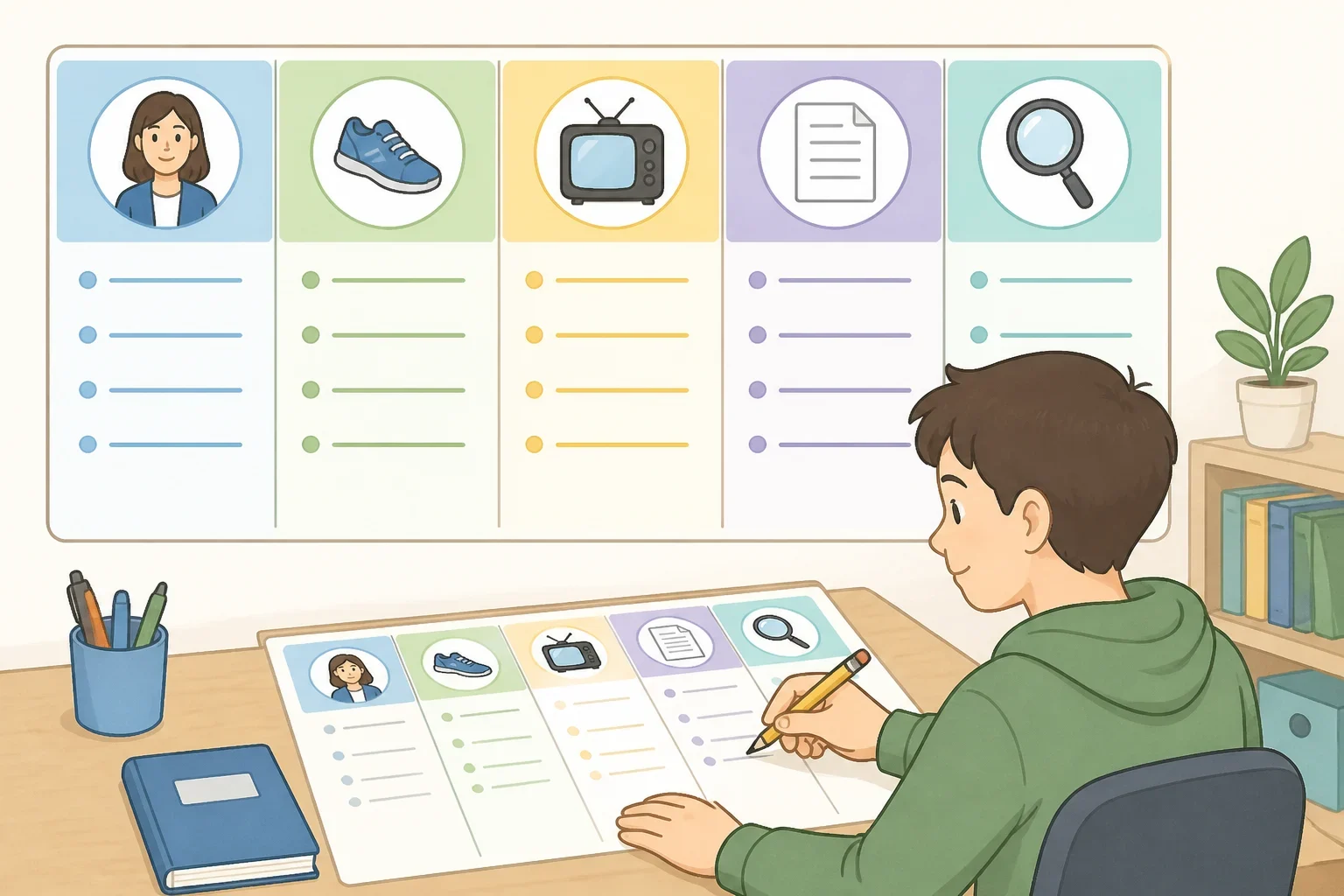
For a classroom or homeschool version, build a five-column chart with these headers: creator, product or claim, possible commercial connection, disclosure, and what additional evidence would change the judgment. Require at least one "not enough information" answer among the six examples above, so students practice admitting when a scenario can't be forced into a clean yes-or-no call.
Before treating any example above as settled, check the platform's current disclosure policy directly, since labeling tools and FTC guidance both continue to change. The distinction that holds up over time isn't a list of examples; it's the habit of asking who made this and what they gain, then separately asking whether the claim stands up on its own evidence.