

Microcredentials and College Credit: 3 Key Questions
Imagine completing a short “data analytics” badge through a workforce platform promoted by your college. An employer accepts it as evidence that you developed a skill. Later, you ask whether the badge counts toward your associate degree and learn that it does not appear in the college’s academic records system.
That example is illustrative, not a documented case. It captures the question to ask before enrolling: What, exactly, will this credential count for?
A microcredential may document focused learning, appear in a school record, qualify for academic credit, transfer to another institution, or help with an employer’s hiring decision. Those are separate outcomes. Earning the credential does not automatically produce all of them.
The term microcredential generally refers to a short certificate, badge, or other record of demonstrated learning. Noncredit means the learning does not automatically produce credits that apply to a degree or certificate. A transcripted credential is one recorded on an official academic transcript. These terms may appear together in a program description, but they do not mean the same thing.
Resources from UPCEA, an association for professional and continuing education, address noncredit and stackable programming. “Stackable” means that smaller learning experiences may be arranged into a larger certificate or degree pathway. Whether that pathway exists for a particular credential depends on the institution and program.
Before paying for a microcredential, evaluate three decisions:
- Will it be recorded, and where?
- Will it carry credit for my specific program?
- Will another school or employer recognize it, and how can I prove it?
The answers should come from the institution or organization responsible for each decision, not from a general promotional phrase such as “college recognized” or “industry aligned.”
Start with the credential’s status
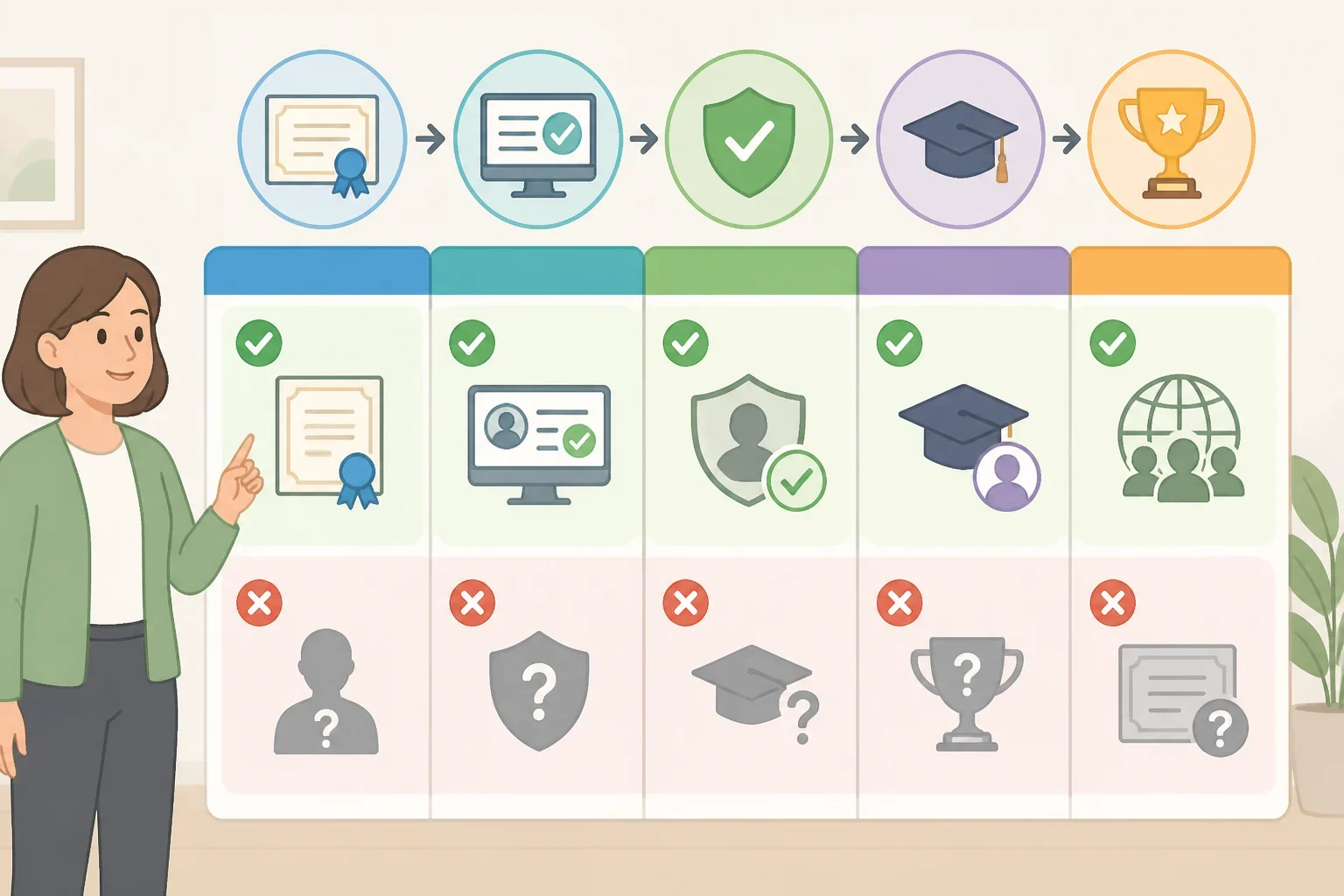
A credential can move through several separate stages. This is an explanatory framework for checking a program, not an official industry model.
Status What it shows What it does not prove Issued A provider says the learner completed its requirements That the credential carries college credit or transfers Recorded An institution or platform has stored the achievement That it satisfies a degree requirement Verified Another party can confirm that the record is genuine That the recipient will accept it Credited A school applies the learning to an academic requirement That another school will transfer it Recognized A school, employer, or organization chooses to use it That every other organization will use it the same way
The first stage is issuing. A provider decides that a learner has met its requirements and provides a badge, certificate, or similar record. The provider could be a college department, continuing-education unit, workforce partner, or another organization.
At this stage, the credential answers one narrow question: Did the issuing organization decide that the learner completed its requirements? It does not answer whether a college will record the credential, award credit, or accept it as equivalent to a course.
Read the requirements closely. A program may describe a final assessment, project, attendance requirement, series of short courses, or another form of evidence. The description should not be treated as a promise of college credit unless an academic policy, agreement, or other official document says so.
The next stage is recording. A school may place a credential on an academic transcript, maintain it in a separate noncredit record, display it through a digital-badge platform, or leave the record with an outside provider. Which option applies is institution-specific.
Guidance from AACRAO, the American association for registrars and admissions officers, is relevant when asking how an institution handles academic records and credentials. Do not infer transcript status from words such as “certificate,” “recognized,” or “college-sponsored.”
Verification is different again. Verification asks whether another person or organization can confirm that the credential is genuine and belongs to the learner. A provider certificate, registrar-issued document, and digital badge may all provide evidence, but they may show different information about the learning.
The 1EdTech Consortium describes the thorough Learner Record, or CLR, as a structured digital format for representing learning achievements and related information. A format designed for sharing records may make information easier for another system to read. It does not guarantee that every school or employer will accept the credential for its own purpose.
Credit requires a separate academic decision. A college may record a credential without applying it to a degree. It may award elective credit, but not credit for a named course. It may also require a petition, portfolio review, assessment, or approval from an academic department.
Recognition by another organization comes last in this framework. A receiving college may compare the credential with its own curriculum and degree requirements. An employer may focus on the skills demonstrated, the issuing organization, or the evidence a candidate can provide. Neither decision is automatic.
Question 1: Will it be recorded, and where?

If the goal is to build an academic record, ask exactly where the credential will appear.
Possible answers may include:
- an official academic transcript
- a separate noncredit record
- a digital-badge platform
- a provider’s own account or certificate system
- more than one of these
These records serve different purposes. An academic transcript connects coursework or other academic achievements to an institution’s official record. A digital badge may provide a title, description, issuer, or evidence link. A noncredit record may document completion without showing degree credit.
The program’s use of a college name does not settle the question. A college can offer a noncredit program without treating its credential as a transcripted academic achievement.
If already enrolled, start with the registrar or academic advisor. A continuing-education office or department representative may also know how the credential is recorded, but ask which office maintains the official record.
Use the exact program name and credential title. General answers about the college’s certificates may not apply to one badge or short course.
Ask:
- Will this credential appear on my official academic transcript?
- If not, where will it be recorded?
- Which office maintains that record?
- When will the record become available?
- Can I receive a document or digital record showing what I completed?
A clear answer should identify the record type, not simply repeat that the credential is “recognized.”
Question 2: Will it carry credit for my specific program?

Credit is not the same as completion, recording, or verification. The relevant question is not only whether the credential comes from a college. It is whether the credential satisfies a requirement in the degree or certificate being considered.
Ask whether the credential:
- automatically awards academic credit
- may qualify for a petition or review
- satisfies a named course
- counts as elective credit
- meets a prerequisite
- applies only to a particular certificate or pathway
- carries no academic credit
A credential that fits one program may not satisfy a requirement in another. A skill-based badge may document learning without replacing a course that has a prerequisite, laboratory, writing, or other program requirement.
If a review is required, find out who makes the decision and when. The responsible office could be a registrar, academic department, faculty committee, or another institutional authority. Ask whether the review is guaranteed, possible, or unavailable.
Also ask whether there is a cost or additional requirement for the review. The program should identify any petition, portfolio, examination, or other process in an official policy or agreement if one exists.
If comparing programs, look for a catalog entry, pathway map, articulation agreement, or published academic policy. The document should identify the credential, the applicable program, and the requirement it may satisfy. A broad statement that a credential is “eligible for credit” may mean only that someone can request a review.
For professional development, academic credit may not be necessary. A learner who wants to practice a focused skill or show evidence of training may value the credential for a different reason. A learner trying to complete a degree needs a more specific answer: Which requirement, if any, will it satisfy?
Question 3: Will another school or employer recognize it?
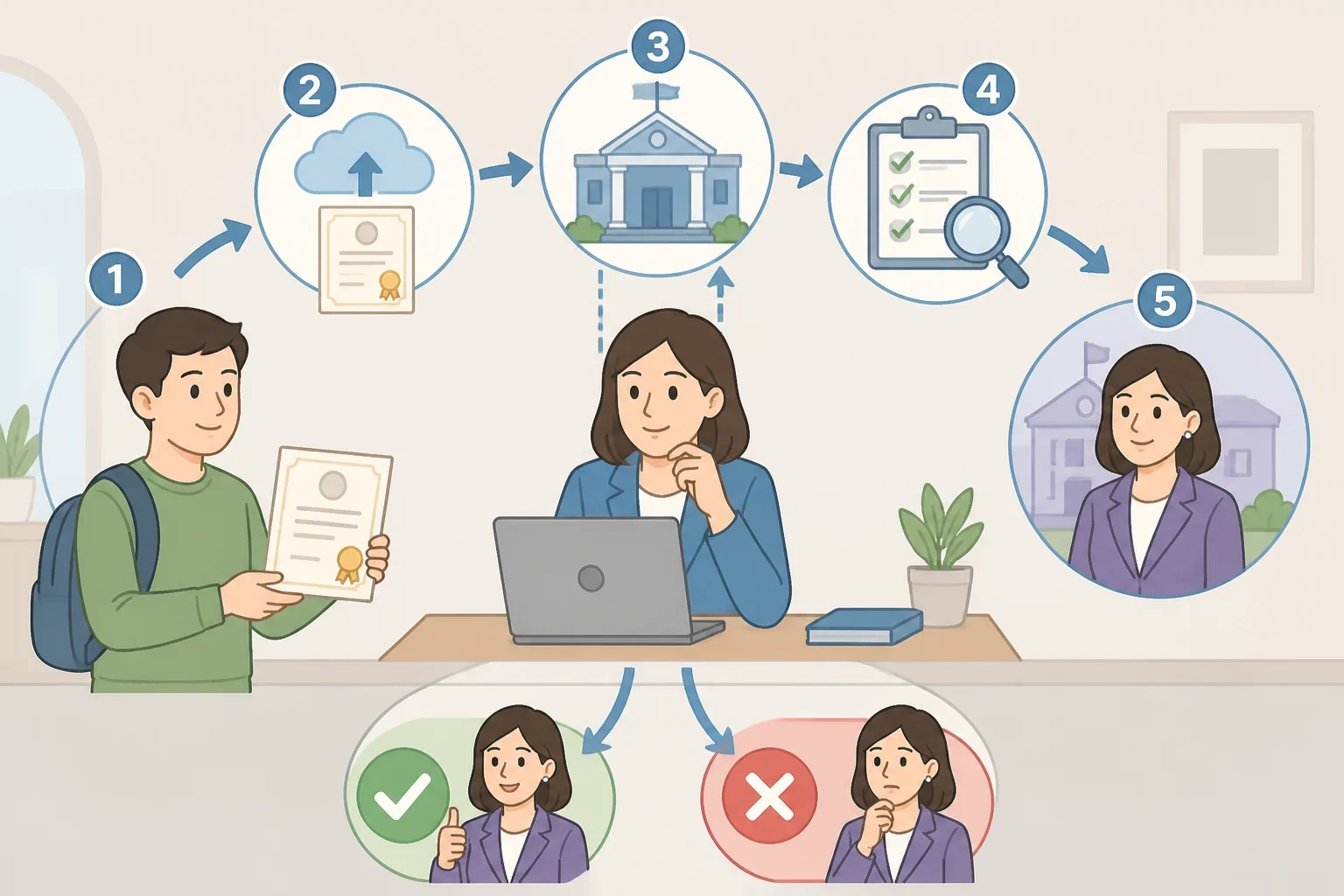
Transfer credit and employer recognition are separate decisions.
If the goal is transferring, ask the receiving college or program before enrolling. The issuing institution can explain its own record, but the receiving institution decides how it evaluates learning for its programs.
Ask whether the credential could satisfy:
- a named course
- an elective
- a prerequisite
- a general education requirement
- no requirement
Do not assume that a credential accepted by the issuing college will transfer elsewhere. A receiving school may require additional evidence, compare the credential with its own curriculum, or decline to apply it.
If the goal is employment, ask what the employer recognizes. The employer may focus on the issuer, the assessment, the skills demonstrated, or a work sample. A credential may help document focused learning without replacing a degree, license, work sample, or other stated requirement.
The phrase “industry recognized” needs a specific follow-up question: Recognized by whom, for what purpose, and based on what evidence?
Ask how an outside organization can verify the credential. The method might be a digital badge, provider certificate, registrar-issued document, or another record. Find out what the verification shows:
- the learner’s name
- the issuing organization
- completion requirements
- assessment or project information
- the date of completion
- any expiration or renewal information
A CLR-related format may be one way to structure learning information, as described by 1EdTech. It should not be treated as a guarantee of transfer or employer acceptance. Confirm what the receiving organization actually accepts.
Credential comparability creates another issue. A record is easier to evaluate when it explains what the learner did, what skills were assessed, how long the learning took, and what it cost. Those details may not be presented in the same way across providers. Credential Engine maintains resources about the broader U.S. credential system, which includes more than microcredentials. Its materials can help readers examine how credentials are described and compared, but they do not make every credential universally accepted.
Check the pathway before paying
The technical ability to share a record does not create academic equivalency. A credential can be issued and verified while still carrying no credit for a particular degree. A college must decide how the learning relates to its curriculum, and a receiving organization must make its own decision.
National efforts are working on the connection between noncredit learning and larger education pathways. The “Credential As You Go” initiative is associated with work on documenting learning so smaller credentials can be understood in relation to certificates and degrees. Materials from the Lumina Foundation describe the foundation’s role and the initiative’s work. That effort signals that documentation and pathway design require continued development, not that every college already has a complete system.
Before enrolling, save the credential description and look for an official policy or agreement. Ask the three primary questions in writing:
- Will the credential be recorded, and where?
- Will it carry credit for my specific program?
- Will the receiving school or employer recognize it, and how can I prove it?
Keep the answers with the program materials. If two offices disagree, ask which office has final authority and request clarification before paying.
A microcredential can be useful for documenting focused learning, but its value depends on the purpose. For a current degree, confirm the exact academic requirement. For transfer, contact the receiving institution. For employment, ask the employer what evidence it uses. For professional development, decide whether a record of learning is enough without academic credit.
Check the pathway, not just the badge.