
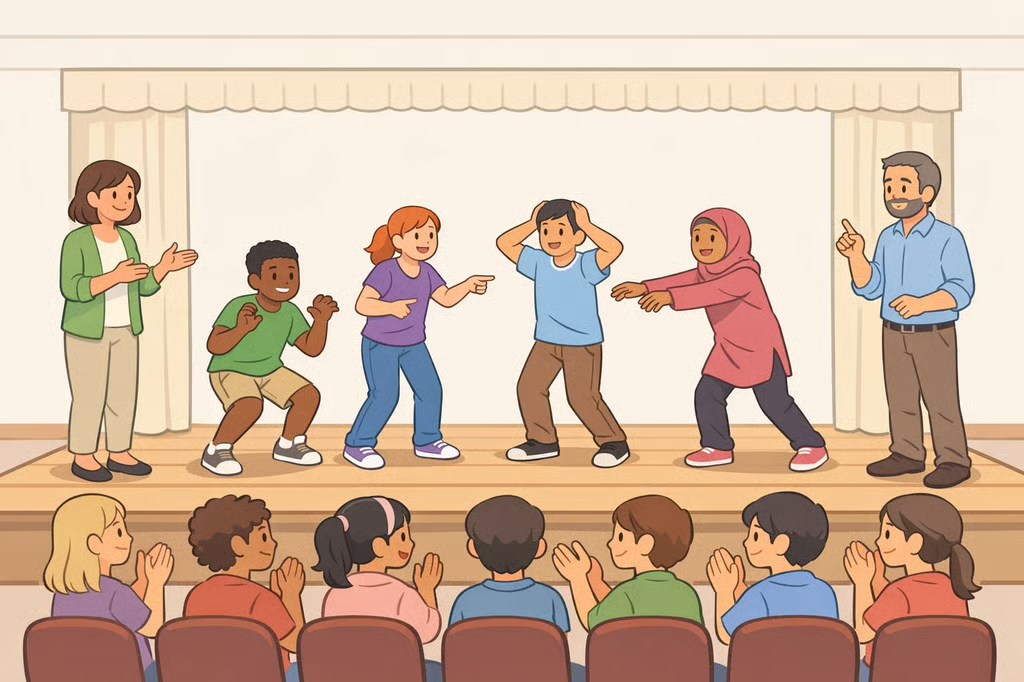
- Improv games for students: lowering the pressure to perform
- What the research on using improv in the classroom actually shows
- Build the safety net before you run your first game
- Deciding whether a game belongs in the lesson
- Four improv games for students to try this week
- Watching for equity gaps in classroom improv exercises
- What to do before your next class
Improv games for students: lowering the pressure to perform
In some classrooms, the same handful of students answer every question while everyone else stays quiet. That's not always about knowing the material. Some students may simply find it uncomfortable to speak up in front of a full room, and that discomfort can look a lot like disengagement from the front of the class.
Structured improv games for students can create more entry points for discussion, but only when the activity comes with real scaffolding built in. Run it as an unstructured free-for-all, and it may reward the same confident, quick-talking students who were already comfortable raising a hand, leaving everyone else exactly where they started.
This guide is for middle and high school teachers who want to bring improv activities into the classroom without running a dedicated drama program. That includes English, social studies, and science teachers looking for a way to get more voices into discussion. Use the group sizes and vocabulary demands below as a starting point, then test how much setup a scene needs with the specific class in front of you rather than assuming age alone determines readiness.
Edutopia reported earlier this year that improv can help draw high school English students "out of their seats and shells" (Edutopia). A university-focused mini-review associates applied improvisation with empathy, communication, error management, and teaching flexibility, though that research comes from university settings rather than K-12 classrooms (Frontiers in Psychology, earlier this year). Students in a drama-method study said they valued not having to "sit in the lesson," linking movement directly to enjoyment and understanding in their own words (ERIC).
The throughline across all three sources: spontaneity works best when structure surrounds it. A visible routine, a way to opt in gradually, and a nonverbal alternative may give a hesitant student room to take a small first step instead of shutting down entirely. This guide covers how to build that structure, a way to decide which game fits a given lesson, four activities to try this week, and how to watch for students the format might still be leaving out.
What the research on using improv in the classroom actually shows
A drama-method study reported a large effect (d = 1.157) favoring drama-based instruction over traditional teaching on academic achievement measures (ERIC). That's a meaningful number, but the study examined sustained drama-method instruction, not brief improv games specifically, so it shouldn't be treated as evidence for a single five-minute activity. The research data supplied for this review does not identify the study's sample size or setting, so treat this finding as context rather than a blueprint for one class period.
The same research found a moderate effect (d = 0.680) on student attitudes toward learning (ERIC). Students quoted in the study described gains in confidence and friendship after drama-based lessons; those are the students' own reported impressions, not an independently measured outcome. One student said their confidence improved enough that they started talking "more everywhere," not just in that class.
The Frontiers mini-review's findings on empathy, communication, error management, and teaching flexibility come specifically from university-level applied improvisation programs, not secondary classrooms (Frontiers in Psychology, earlier this year). A ninth-grade classroom carries different social stakes than a university workshop, so those results shouldn't be assumed to transfer automatically.
Edutopia's classroom-facing framing, improv as a tool to get students "out of their seats and shells," is the source that speaks most directly to secondary classroom use (Edutopia). It's education journalism rather than a controlled study, which is worth weighing when deciding how much confidence to place in it compared to the other two sources.
None of this proves that a specific 10-minute game raises grades or confidence on its own. Treat the research as a reason to try structured, low-stakes improv, then judge the results in the classroom using the decision steps and debrief questions below rather than the effect sizes above.
Build the safety net before you run your first game
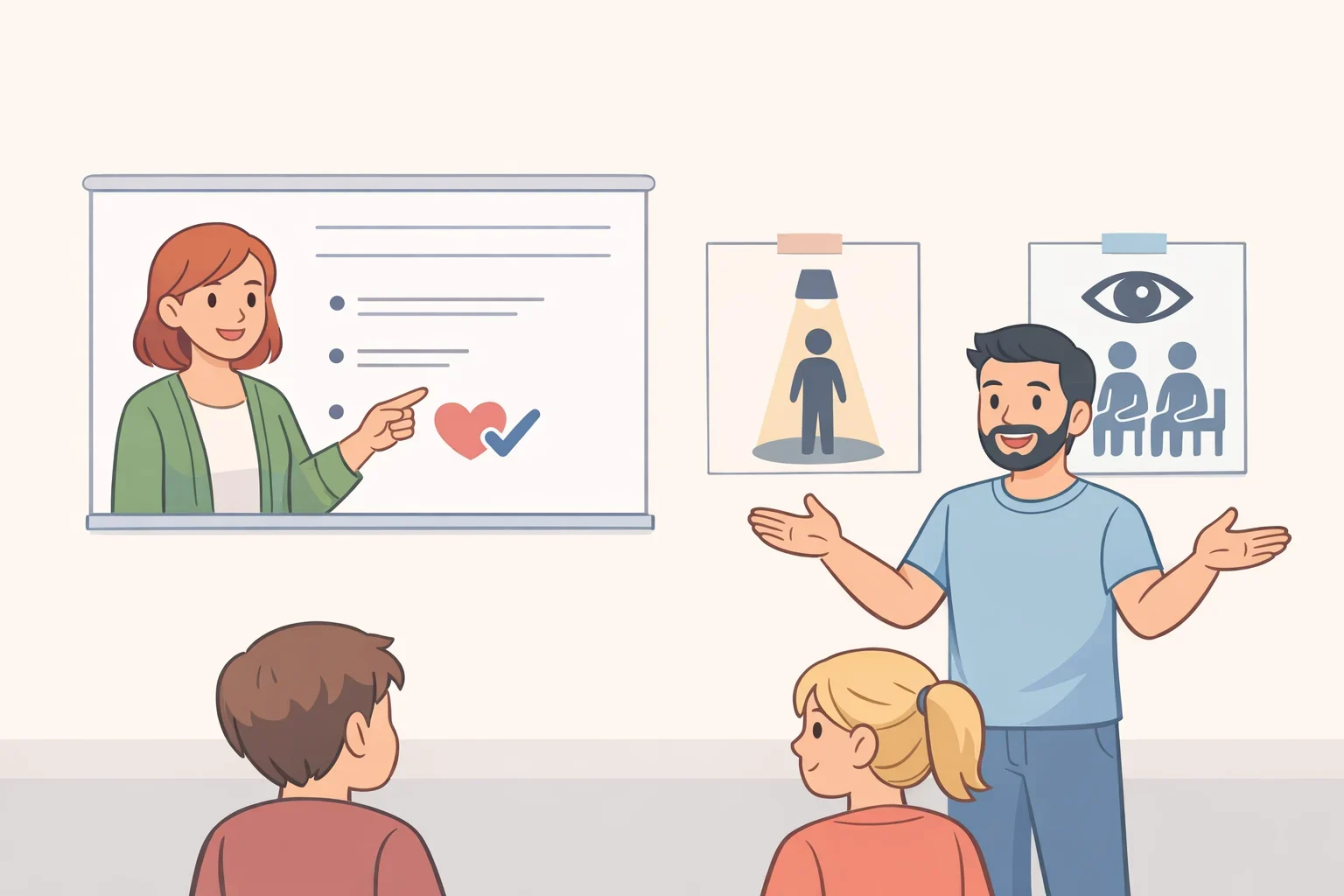
Before you begin, settle three things: whether participation is optional or required for this activity, which game from the list below to run first, and what the nonverbal or observer option will look like for a student who isn't ready to speak. If participation affects grades, decide whether choosing the observer or nonverbal path still counts, and say so before assigning the activity, not after.
A few routines make the unpredictable parts of improv feel more attemptable:
- Post a visible daily outline. Write the day's plan on the board before students arrive, even in rough form. Knowing what's coming cuts down on "what are we doing today?" questions and gives an anxious student something to prepare for mentally.
- Open with the same short check-in every time. A quick verbal or written check-in at the start of each session gives a hesitant student a predictable entry point instead of a cold start.
- Set expectations out loud before the first game. Tell students that mistakes and awkward pauses are normal, and that the group's job is to support each other, not judge. Say this before anyone is embarrassed, not after.
- Decide on your opt-in language. Calling a turn "sharing" or "contributing" rather than "performing" can lower the stakes for a student who's on the fence about speaking.
- Close with the same ritual every session. A short, consistent closing signal, a countdown, a phrase, a specific cue, tells students clearly that performance time is over.
The mistake to avoid: skipping this structure because it's just a five-minute game. Cutting it removes the thing that makes participation possible for a hesitant student, predictability around an activity that otherwise feels unpredictable.
Deciding whether a game belongs in the lesson
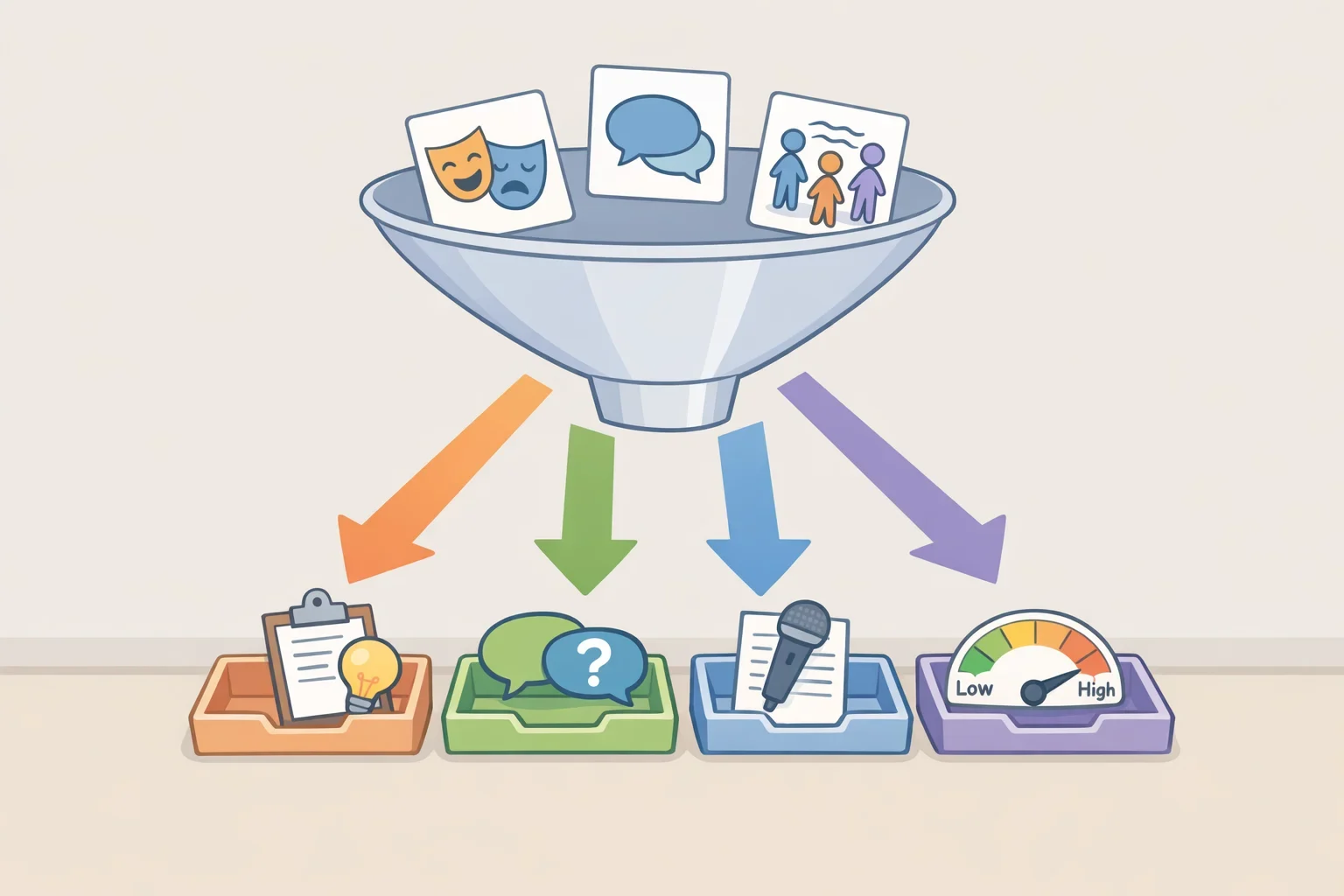
An engaging activity isn't automatically a useful one. Before slotting any improv game into a lesson plan, run it through four questions:
- What content do students need to rehearse? Name the specific skill or concept, not just "participation."
- What response does that content call for? Sequencing events, representing an idea visually, resolving a conflict, or extending a chain of related claims each point to a different game.
- What will students produce afterward? A written line, a labeled sketch, or a spoken claim gives evidence of learning beyond visible enthusiasm.
- Is the activity creating more performance pressure than learning? If a student is more focused on being watched than on the content, stop, modify the format, or switch to the nonverbal option before continuing.
That sequence turns each game below from a stand-alone icebreaker into something tied to what the class is actually studying.
Four improv games for students to try this week
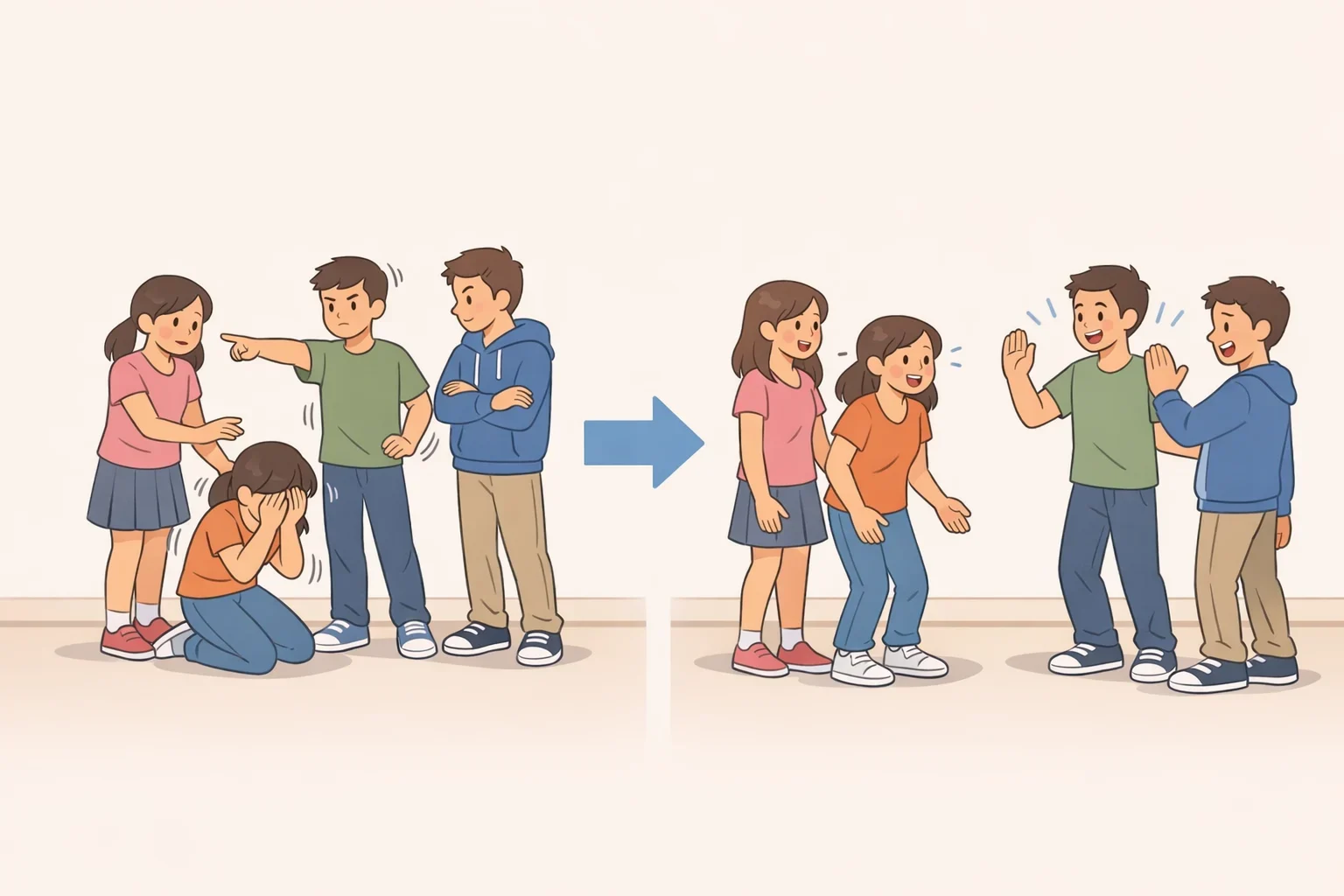
The timings and group sizes below are practical starting points, not findings from the cited research. Adjust them to fit period length, class size, and what happens once the game is running. For each activity, tie the content prompt to the objective identified in the decision steps above, so the game reads as practice, not just a break from the lesson.
1. One-Word Story (roughly 5 minutes, whole class in a circle)
Students build a story one word at a time, going around the circle. Say: "We're writing one story. Each person adds exactly one word." A student who wants to pass can hold up a "pass" card instead of speaking, then rejoin the next round.
- Content objective: sequence events or steps in the correct order.
- Content prompt: build a one-word timeline of causes leading to a historical event, or a one-word description of stages in a process, such as a food web.
- Check for: whether the sequence holds up logically when the class hears it back, or whether a student can point out where it breaks down.
- Modify it: offer a small set of vocabulary cards tied to the unit to the whole class, so any student who wants more planning time or language support can choose a word instead of generating one live.
- Follow-up: have students write one sentence identifying an inaccurate step in the sequence and explain the correct order.
2. Two-Line Scene (roughly 8-10 minutes, pairs)
Partners act out a tiny scene using only two lines each, based on a prompt card such as "returning a broken item." Give pairs about a minute to plan before performing to just their table group, not the full class. A student who'd rather not speak can act the scene using gestures only while a partner reads the prompt aloud. Once the routine is familiar, this is one of the easier improvisation games for high school students to extend into a three-line version.
- Content objective: identify or resolve a conflict tied to assigned content.
- Content prompt: in English class, base the scene on a conflict from an assigned text; in science, have two characters work through a lab problem together.
- Check for: whether the dialogue reflects accurate understanding of the conflict or concept, not just a joke. In a science scene, the fix the characters land on should be scientifically plausible.
- Modify it: for a student uncomfortable performing even in front of a small group, let them write both lines and hand the script to a partner to read aloud.
- Follow-up: ask each pair to name the conflict and the resolution in one written sentence.
3. Freeze Frame Tableau (roughly 6 minutes, groups of 3-4)
Groups create a silent, frozen "photograph" pose representing a concept, word, or historical moment. Call "freeze," hold the pose briefly, then call "unfreeze." This game is fully nonverbal by design, which makes it a possible starting point when students aren't ready for verbal participation.
- Content objective: represent a concept or moment visually to check comprehension.
- Content prompt: pose a turning point from a novel, a historical event, or a stage in a scientific process.
- Check for: whether the pose reflects the key details of the moment being represented.
- Modify it: a student who can't participate physically can direct where group members stand, sketch the tableau on paper, or describe it in writing instead of posing.
- Follow-up: have the group label their tableau with one written sentence describing what's happening and why it matters.
4. Yes, And Circle (roughly 5-8 minutes, whole class or half-class circle; watch how long your group can sustain a chain and adjust from there)
One student offers a simple statement, such as "I found a strange rock." The next person responds "Yes, and..." and adds to it. Model the first two rounds before turning it over to students. Set up an observer seat where a student can watch a full round before deciding whether to join, rather than being required to contribute right away.
- Content objective: build a chain of claims that follow logically from each other.
- Content prompt: for a science unit, require each addition to state a defensible cause-and-effect relationship; for a reading unit, build a chain of plot events in order.
- Check for: whether each addition actually follows from the one before it, or just changes the subject.
- Modify it: let any student who wants more planning time or language support write a contribution ahead of time and have a peer or the teacher read it aloud on their turn.
- Follow-up: have students write one claim from the chain and identify what evidence would be needed to verify it.
After any game, ask "What felt easy or hard about that?" instead of critiquing performance quality. That question keeps the activity about participation and content, not about who performed best.
Watching for equity gaps in classroom improv exercises
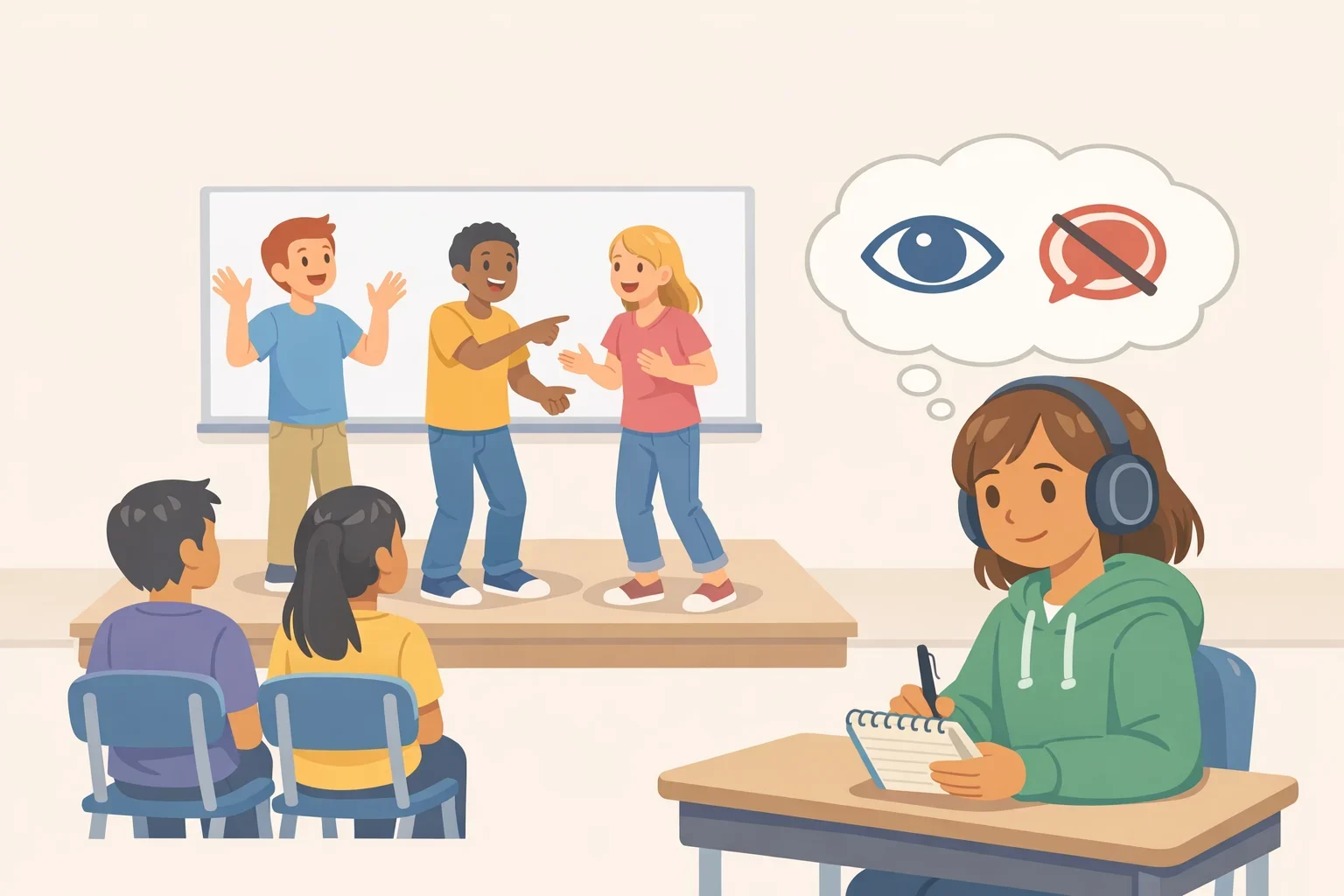
Accessibility isn't automatic just because an activity involves movement instead of sitting still. Whether a game invites every student in or quietly excludes some of them depends on how it's designed and run, not on the fact that it's "active."
A systematic review of educational improv research covering 1970 to 2020 found that White hegemonic norms have historically shaped how improvisation gets used in classrooms (University of Iowa, 2022). That review also points to what it calls an "improvisational turn": using improv deliberately to resist standardized, exclusionary norms rather than reinforce them (University of Iowa, 2022). One classroom implication is that fast, confident verbal responses shouldn't be treated as the only sign a student is engaged.
A few things worth tracking as improv becomes a regular part of class:
- Notice which students consistently choose the observer or nonverbal option over several sessions, and ask whether the format, not the student, is the barrier.
- Don't equate loud delivery or a quick response with engagement. A student who contributes through a Freeze Frame pose or a written prompt card is participating.
- Offer these choices to everyone without asking students to justify which one they use, and follow any existing accommodation plan or school guidance for students who have one.
Before making improv a weekly routine, write down three things: the specific learning objective the game supports, whether participation is optional or required for this unit, and what evidence of learning gets collected beyond visible enthusiasm, such as a debrief note, a short written reflection, or a follow-up question tied to the content. That checklist matters more for building improv games that support student confidence over time than any single activity does on its own.
What to do before your next class
Pick one game from the list above, write the day's outline on the board, and decide the opt-in language and observer option before students walk in. Run it once, use the debrief question, and note which students used the nonverbal or observer path.
Come back to that note after a few sessions. That timing is a suggested review point based on classroom practice, not a research-backed interval. Check whether each student had a real way to participate and whether the activity produced something tied to the learning objective: a written line, a labeled tableau, a claim with supporting evidence. Adjust the format based on what's found, and leave the option to opt out in place for any student who still needs it.