
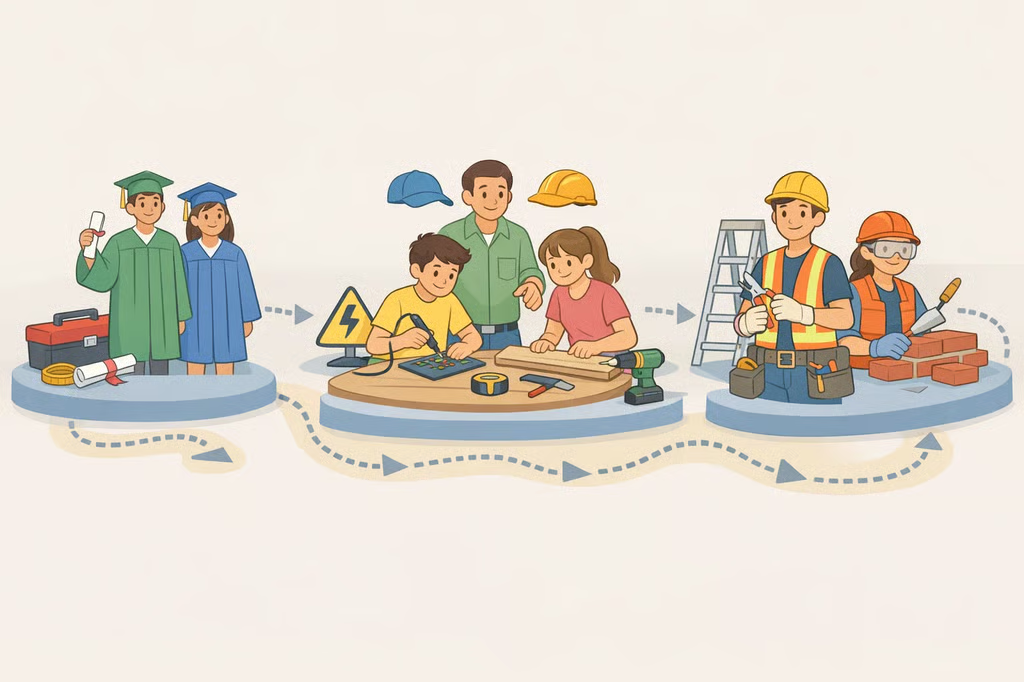
- How skilled trades programs in high school lead to real careers
- What the job growth numbers mean for a student deciding this year
- Federal funding is flowing to apprenticeships, but not directly to schools
- The fairness question schools have to answer first
- What students actually do in a strong trades program
- How to evaluate high school trade programs
- What to do next
How skilled trades programs in high school lead to real careers
Ask a high school counselor how a student interested in electrical work should get started, and the answer often stops at a flyer for career day or the name of a guest speaker who visited last semester. That's a real gap. A strong high school program should connect students to construction, plumbing, and electrical careers that pay well and don't require a four-year degree, but too many programs offer exposure without a documented route into an apprenticeship.
Skilled trades programs in high school need to do more than raise awareness. They need to show students how a diploma actually turns into a wage. Students and parents deciding this year whether a school's trades track is worth building a plan around need more than good intentions. They need to know what a real pathway actually requires.
The labor numbers back up the interest, even without guaranteeing anything. Construction trades occupations are projected to grow 5.8% between 2024 and 2034, almost double the 3.1% growth expected across all U.S. occupations, with a 2024 median wage of $56,490, about $7,000 above the median for all jobs, according to BLS projections updated last year.
Electrician jobs are projected to grow even faster, 9.5% over that decade, reaching 896,100 positions, with a median wage of $62,350, the same BLS data shows. Plumbers, pipefitters, and steamfitters are projected to grow 4.5% over the same period, reaching 527,200 jobs, with a median wage of $62,970. Both occupations list a high school diploma or equivalent as the typical entry education, with an apprenticeship as the typical on-the-job training path.
Federal funding announcements have started grouping building trades alongside emerging fields such as artificial intelligence, semiconductors, and nuclear energy within the same grant priorities. That's a meaningful signal about where federal attention is going. It isn't evidence that AI companies are hiring electricians directly, and it doesn't substitute for a documented agreement between a school and a local apprenticeship sponsor. High schools that want students ready to use either kind of opportunity should start building that agreement now.
What the job growth numbers mean for a student deciding this year
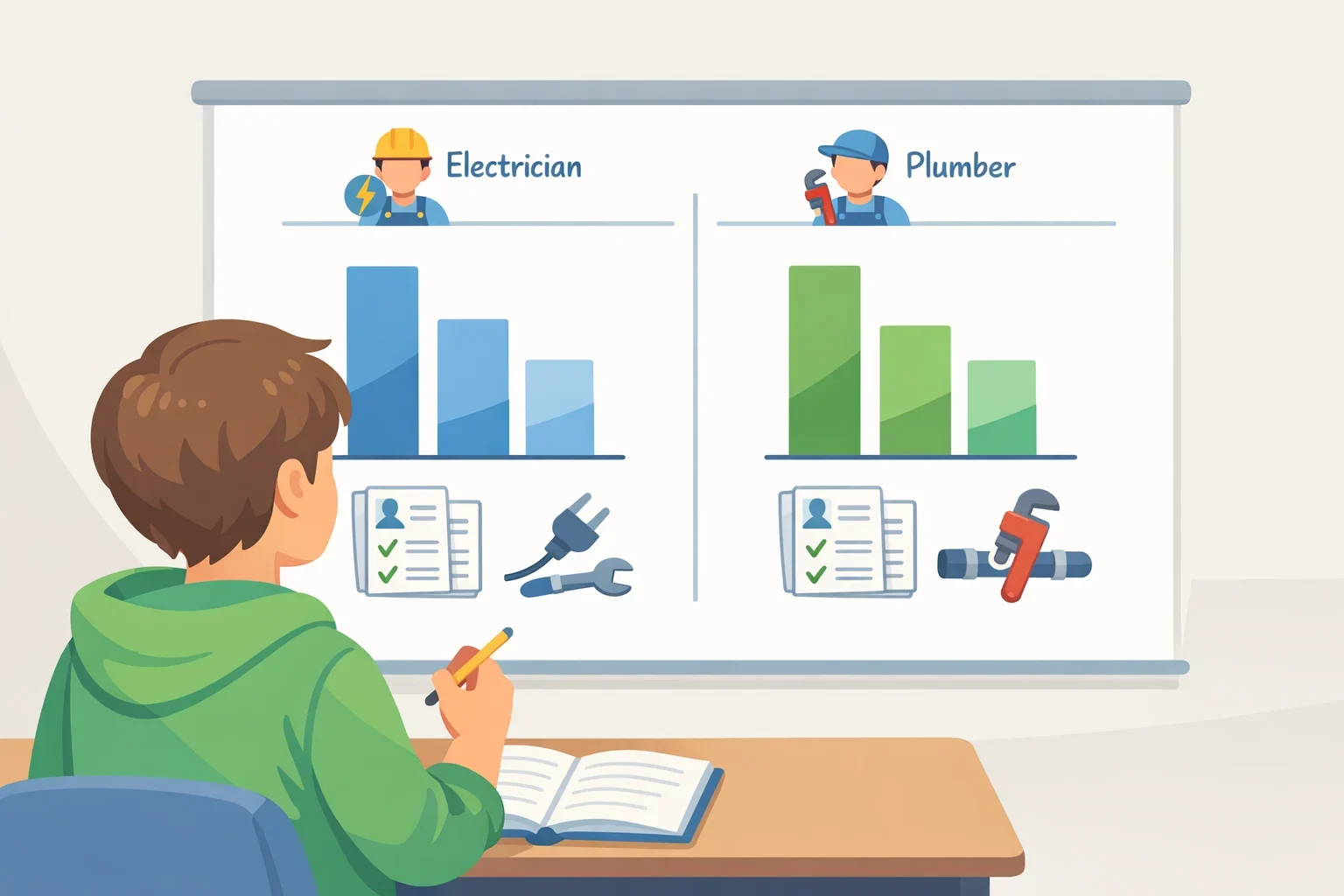
Growth rates and median wages describe an occupation over a full decade, not what one graduate can expect the month after commencement. The more useful figure for a student weighing this year's course selections is annual openings.
BLS projects about 81,000 average annual electrician openings and 44,000 for plumbers, pipefitters, and steamfitters through 2034, a count that includes both new growth and the need to replace workers who retire or leave the trade, according to BLS projections. Construction trades workers overall show roughly 491,200 average annual openings nationally, the same data shows.
Those national numbers don't reveal how many spots a specific local program accepts each year or how competitive admission is for a particular trade in a particular region. Admission rules, program length, and licensing requirements vary by sponsor, trade, and state. Students should ask a counselor or CTE coordinator which local apprenticeship sponsors the school actually works with and how many recent graduates were placed into an apprenticeship in the past year.
Federal funding is flowing to apprenticeships, but not directly to schools
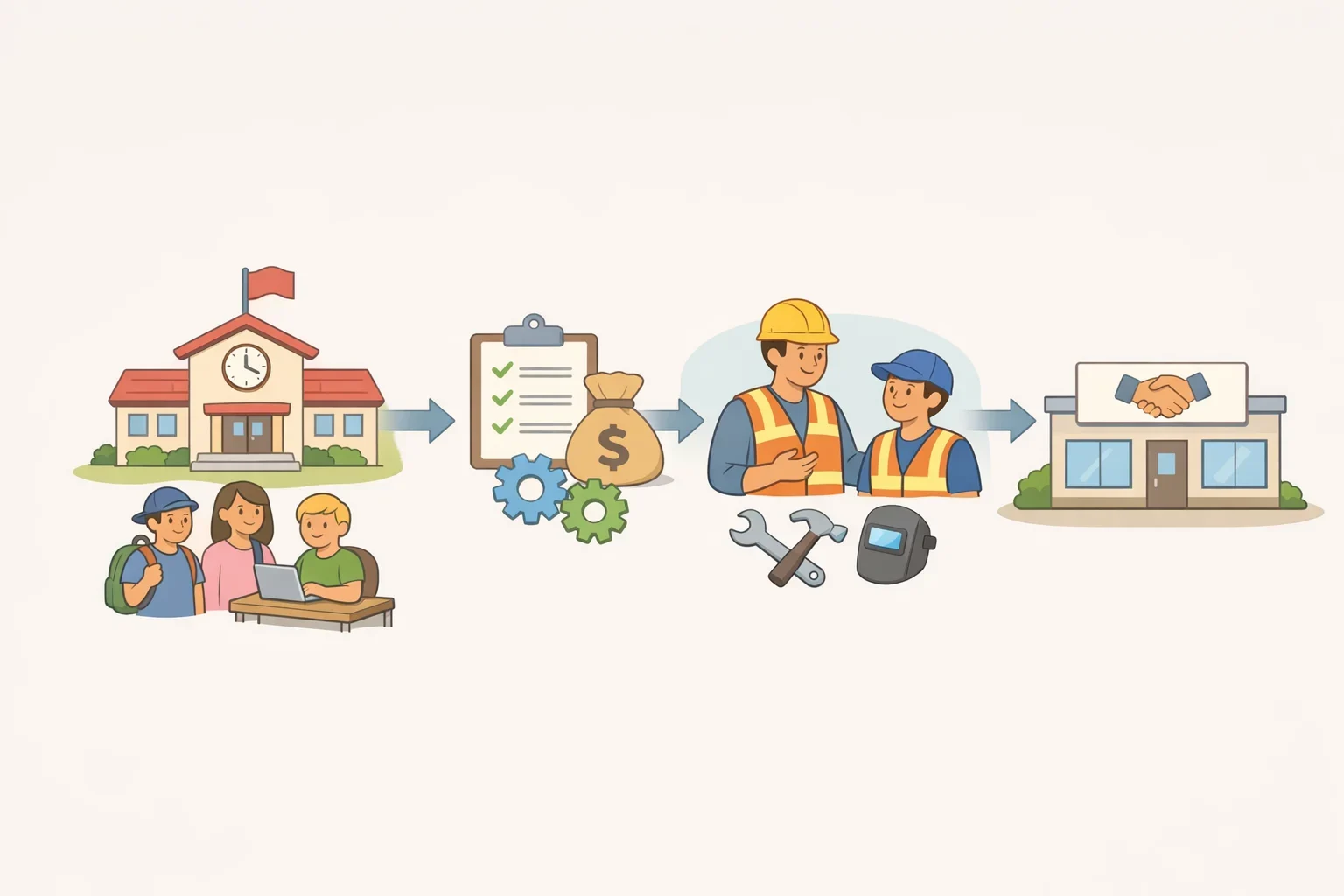
Both administrations made major apprenticeship investments, though their programs and priorities differed. In 2024, the Biden administration awarded more than $244 million to modernize and expand Registered Apprenticeships in growing fields including K-12 education, clean energy, IT and cybersecurity, advanced manufacturing, supply chain, hospitality, and the care economy, according to a Department of Labor announcement.
Last year, the Trump administration awarded nearly $84 million in apprenticeship-capacity grants tied to executive orders on skilled trades and AI education, explicitly grouping technology, artificial intelligence, advanced manufacturing, building trades, and construction as connected priorities, per a Labor Department release. Earlier this year, the department announced a competitive funding opportunity of up to $145 million for organizations to run apprenticeship incentive programs in fields including shipbuilding, artificial intelligence, semiconductor manufacturing, and nuclear energy infrastructure, per a separate DOL announcement. That announcement is a proposed opportunity, not money already distributed to states or school districts.
None of these releases put a check in a local high school's hands. Registered Apprenticeships are run by local sponsors, and admission requirements, application windows, and program length vary by sponsor, trade, and state. A high school's role in that system usually comes through pre-apprenticeship coursework, dual-credit agreements, or referral relationships, but the details differ by district.
Families should ask a narrower question: does this school connect students to a named local sponsor, and can that sponsor confirm the arrangement directly?
The fairness question schools have to answer first
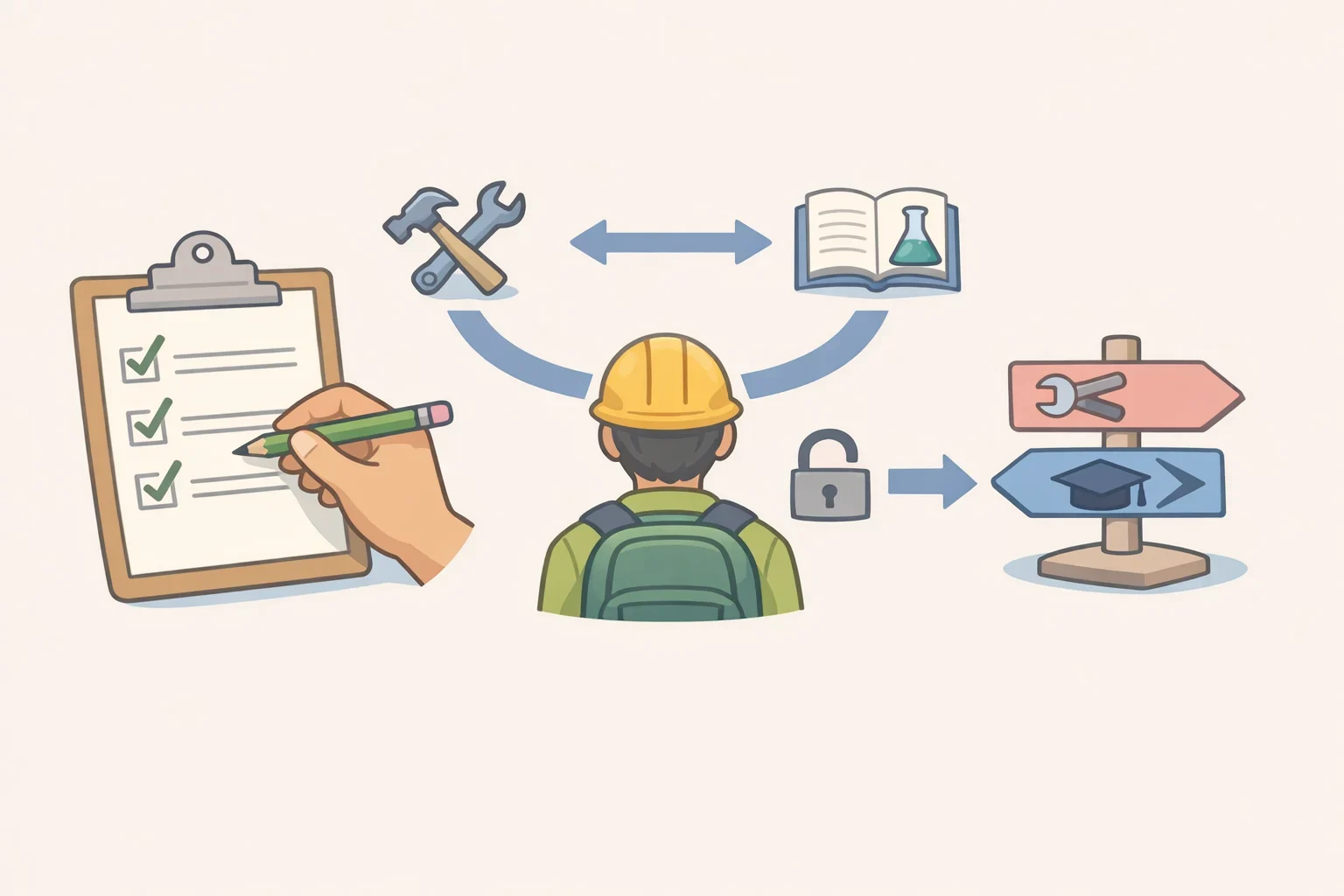
The strongest concern about pushing trades pathways into high school is that it can sort students early, particularly those with fewer resources to change direction later if a trade doesn't fit. That concern is worth taking seriously before describing what a good pathway looks like.
Illinois' latest statewide CTE report, released earlier this year and covering the 2024-25 school year, references ongoing work by the state's Gender Equity Advisory Committee (Illinois State Board of Education). The report doesn't settle the equity question. It shows that Illinois, a state with an established CTE system, is still actively working on access and representation rather than treating trades tracking as settled. Readers elsewhere should check their own state education agency for a comparable report, since reporting requirements and formats differ.
Federal YouthBuild grants illustrate one way to structure occupational training so it doesn't close off other options, even though the program serves a different population than a typical high school. Grants issued in 2024, ranging from $700,000 to $1.5 million each, combined a high school diploma or equivalency track with workplace training in construction and other industries for 16- to 24-year-olds who are out of school and not in the labor market, according to a Department of Labor announcement. The same grants also fund training in healthcare, information technology, and manufacturing alongside construction, per the same release. Pairing academic completion with occupational training, rather than substituting one for the other, is a reasonable design principle to borrow, even where the schedule and population look different.
Schools can address the sorting risk with specific practices rather than vague fairness language. Worth asking a school about:
- keeping introductory trades courses open to any interested student instead of using early grades or teacher recommendations to screen entry
- preserving access to college-preparatory math and science for students enrolled in a trades pathway
- publishing prerequisites, costs, and transportation requirements for each stage of the program
- tracking participation and completion by gender and other relevant groups, similar to what Illinois' Gender Equity Advisory Committee is doing at the state level
- allowing a student to switch out of a trades pathway without losing progress toward graduation
These are recommendations, not practices confirmed by the sources above. No single source in this article verifies that any specific school follows all five. Families should ask directly which of these a school actually has in place.
What students actually do in a strong trades program
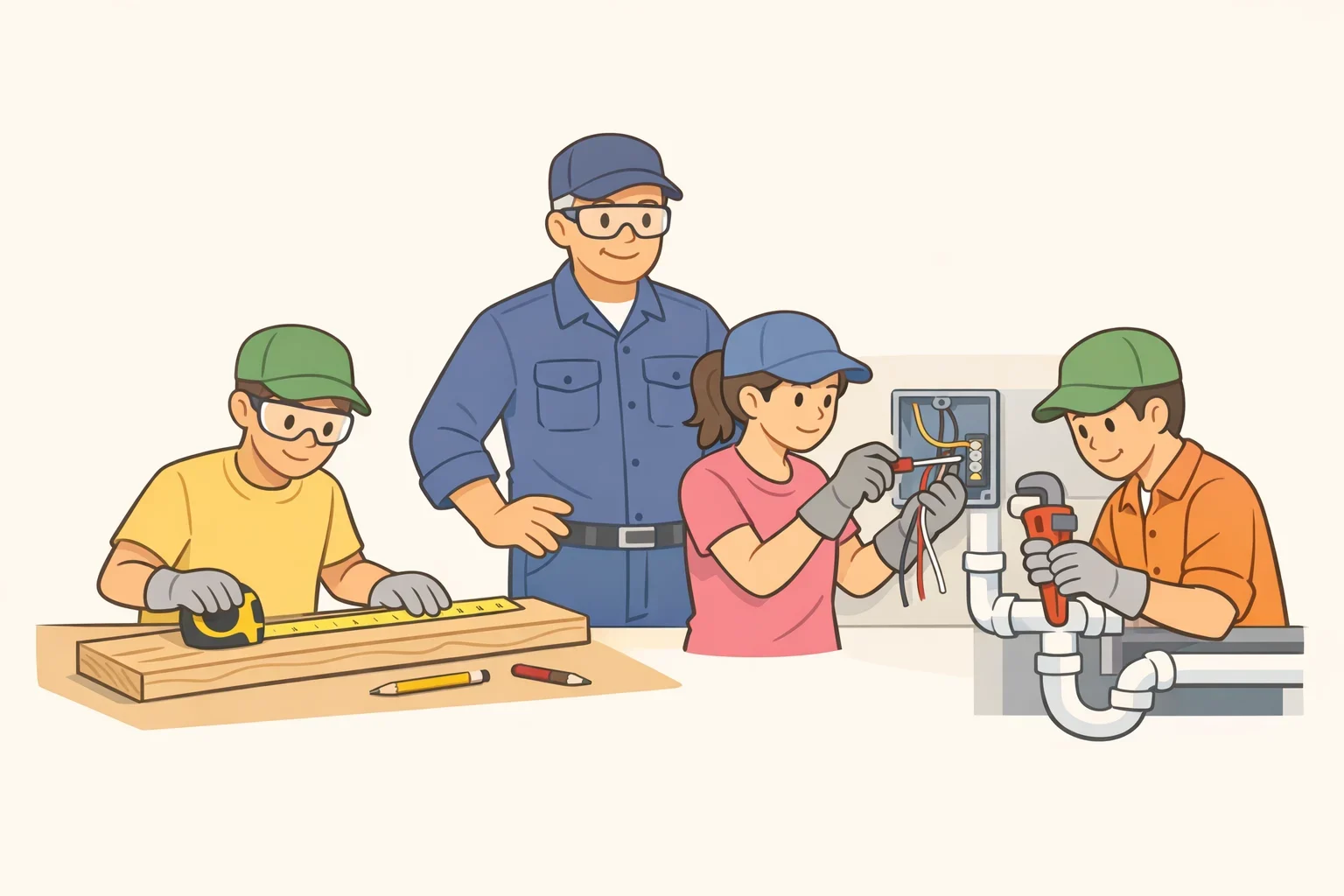
Paperwork and partnerships matter, but so does the daily coursework. A trades pathway worth choosing should include applied math for measurement and estimating, blueprint or schematic reading, tool and equipment safety, basic wiring or plumbing systems, technical writing for work orders and inspection reports, and supervised shop or lab practice. It should also cover workplace expectations and any safety certifications students need, alongside the standard coursework required to graduate on schedule.
That coursework should lead somewhere other than one narrow door. A strong pathway may end in a union or employer apprenticeship, a community-college certificate, a state-approved pre-apprenticeship program, or direct entry-level employment with the option to pursue an apprenticeship or further training later. Treating a Registered Apprenticeship as the only acceptable outcome shrinks the pathway unnecessarily.
How to evaluate high school trade programs
Families often assume "trades program" describes one consistent thing. It doesn't, and the distinction below is a useful standard for sorting through what a school actually offers, even though no source treats these categories as official terms.
A single elective, a guest speaker, or a career fair booth counts as exposure. That's useful for building awareness, but it doesn't carry credit toward a credential or an apprenticeship on its own.
CTE coursework that leads to a named, industry-recognized credential or a dual-credit agreement with a community college is a step beyond exposure. Illinois compiles a statewide CTE report each year under state law (Illinois State Board of Education), which shows one way a state can track program activity, though the specific credentials and course sequences differ from district to district. Ask the school which credential its coursework leads to and which organization issues it.
Pre-apprenticeship programs, the model YouthBuild uses, combine training with academic work, but that design doesn't include automatic placement into a Registered Apprenticeship afterward, per DOL's YouthBuild announcement. Participants generally still apply to a sponsor separately. Registered Apprenticeship itself, the entry path BLS lists for electricians and for plumbers, pipefitters, and steamfitters, is run by local sponsors whose admission rules, hours, wage schedules, and licensing requirements vary by state and by trade.
Before assuming a school's program leads anywhere, ask for specifics in writing:
- the exact name of any credential the program awards and which organization issues it
- whether the coursework carries dual credit, and with which community college or institution
- the name of at least one local apprenticeship sponsor the school has a referral or partnership arrangement with
- age, transportation, schedule, and cost requirements at each stage
- whether completing the coursework provides direct eligibility for a sponsor's program, preferred consideration, an interview, or only preparation to apply like any other candidate
A program that can answer all five with specific names and documents is offering a pathway. A program that answers with general encouragement is offering exposure, and that difference should shape how a family plans the next couple of years.
What to do next
Given the projected job growth and pay for electricians and for plumbers, pipefitters, and steamfitters, treating these trades as a core option in high school career planning makes sense, but only when a program is backed by named partnerships and clear credentials instead of general encouragement.
Schedule time with a school counselor or CTE coordinator this term and ask the five questions above, in writing, and request confirmation from whichever office can verify them officially, whether that's the district CTE office, a local union training center, or the state apprenticeship agency. Those five answers, not a general interest in the trades, determine whether a school's program is a real pathway or just an introduction.