
- Career advice for college students in an uncertain job market: NC data
- Why a statewide unemployment number hides more than it reveals
- What AI is actually doing to entry-level hiring, and what it isn't
- How college students can prepare for the job market: a five-question comparison checklist
- Comparing two North Carolina programs: a worked example
- Testing a path before you commit years to it
- What to check before this term ends
Career advice for college students in an uncertain job market: NC data
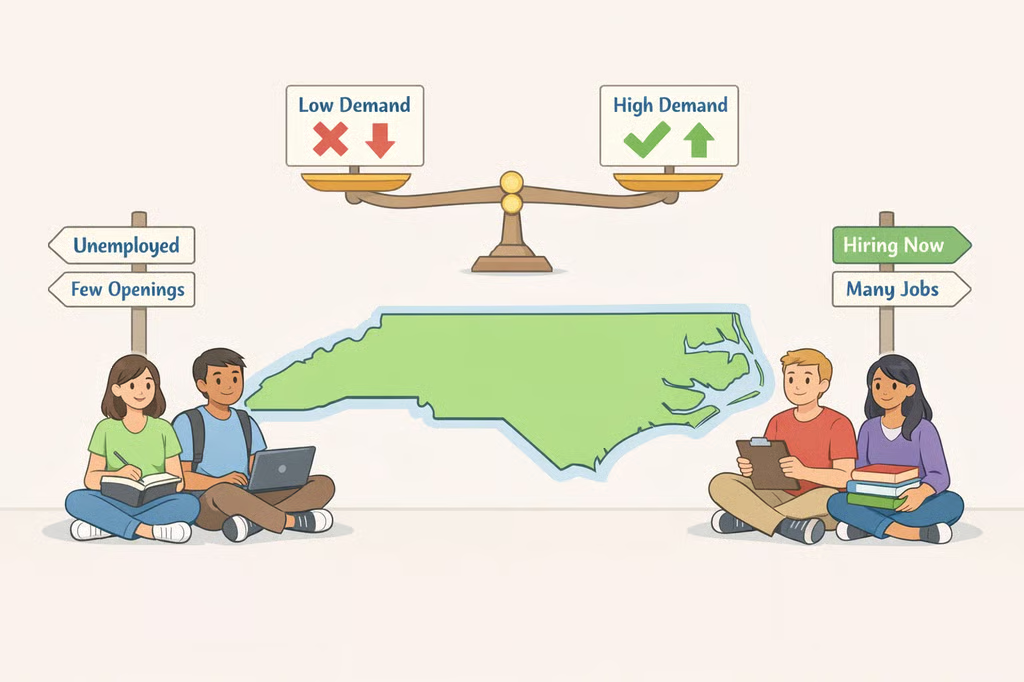
North Carolina's unemployment rate held at 3.7% in May 2026, well below the 4.3% national rate (NC Department of Commerce, 2 months ago). At the same time, unemployment among recent college graduates nationally climbed to 5.6%, up 1.6 percentage points from three years earlier (Stanford SIEPR, last month). Those two figures describe different groups, an entire state's workforce versus a national slice of new graduates, so they aren't a clean apples-to-apples comparison. Put them side by side anyway, and you get the confusing signal at the center of career advice for college students in an uncertain job market: the broader economy can look solid while one specific group, new graduates, is having a noticeably rougher time than usual.
North Carolina added 61,800 jobs in the year through May 2026 (NC Commerce, 2 months ago). State economists still describe this as the fifth consecutive year of a hiring slowdown, pointing to declining wage growth, job openings, hires, and voluntary quits since the labor market peaked in early 2022 (NC Commerce, 7 months ago). Researchers tracking AI's effect on the labor market call the overall impact "likely small" so far, while flagging early-career workers as a group worth watching closely (Stanford SIEPR, last month).
This piece is written for an incoming or current North Carolina college student trying to decide what to study or how to plan a career path this year. No major currently qualifies as "AI-proof" or "recession-proof," at least based on the evidence available right now. What actually helps is learning to read local labor data instead of national headlines, testing a field before committing years to it, and building skills that hold up across more than one economic scenario. That's the framework this article walks through.
Why a statewide unemployment number hides more than it reveals
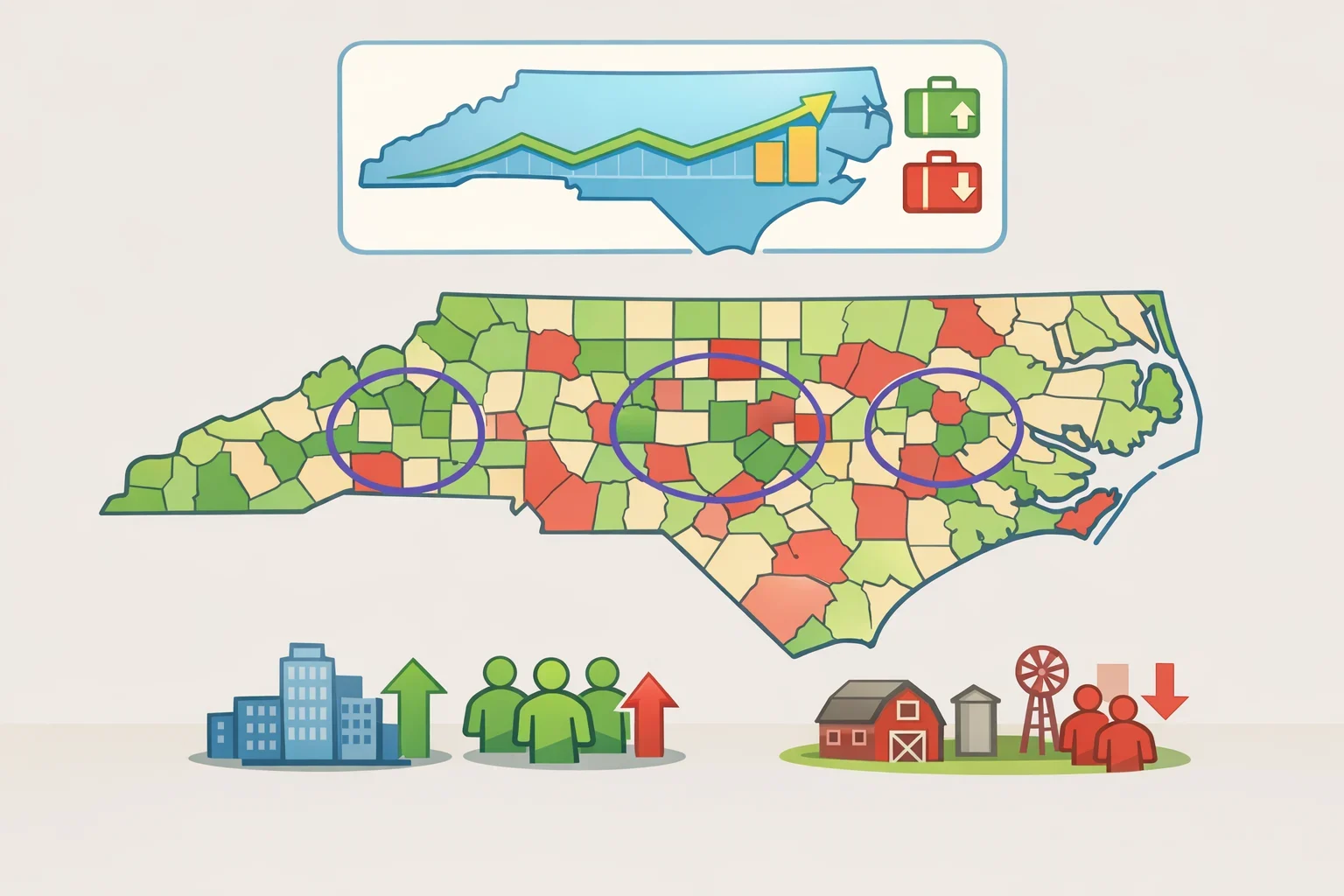
North Carolina's job growth isn't spread evenly across the state. As of mid-2025, 10 of the state's 15 metro areas and 50 of its 100 counties had fewer jobs than they did a year earlier, even as the statewide total kept climbing (NC Commerce, 7 months ago). A student choosing between two in-state campuses, or deciding whether to commute or relocate after graduation, is really choosing between different regional labor markets. One statewide figure won't tell you which one you're stepping into.
Industry performance splits just as sharply. Private education and health services added 23,000 jobs over the past year, leisure and hospitality added 17,000, construction added 13,600, and professional and business services added 10,400. Manufacturing lost 12,600 jobs and information lost 2,200 over the same period (NC Commerce, 2 months ago). A field can be growing statewide while shrinking in the county where a student's family lives, or the reverse.
There's also a re-employment figure worth knowing, though it needs a careful read. Among North Carolina workers who filed unemployment claims after losing a job, only 72% found new work within a year, the weakest rate since 2014 outside the pandemic (NC Commerce, 7 months ago). That statistic describes laid-off workers broadly, not new college graduates specifically, and shouldn't be confused with the separate 5.6% graduate unemployment figure cited above, which comes from different national research (Stanford SIEPR, last month).
Before assuming a statewide statistic applies to a specific campus, program, or hometown, check county- and metro-level employment trends through NC Commerce's Labor Market Information division. National data from the Bureau of Labor Statistics can add useful context too, but treat it as a national baseline, not a substitute for what's actually happening in the county where you'll be living and job hunting.
What AI is actually doing to entry-level hiring, and what it isn't
Broad evidence doesn't support a story of AI causing mass job losses. Unemployment among the occupations most exposed to AI has risen 0.77 percentage points since 2022, actually a touch less than the 0.85-point rise among the least-exposed occupations (Stanford SIEPR, last month).
A narrower concern applies specifically to young workers. One widely cited study found employment declines among early-career workers in AI-exposed roles like software development and customer service since ChatGPT's 2022 launch, while older workers in those same occupations held steady or grew. Researchers described these younger workers as "canaries in the coal mine," the first group likely to feel labor-market disruption from AI, if the disruption is happening at all (Stanford SIEPR, last month).
Adoption also remains uneven and, for most companies, hasn't yet reached hiring decisions. Only 5% of firms in Census data report any AI-related employment effect, split evenly between gains and losses, and 80% of executives surveyed by the Atlanta Fed said AI investment hasn't changed their headcount or productivity yet (Stanford SIEPR, last month). Other research in the same brief finds AI is mostly reshuffling how workers spend their time on the job, not yet changing overall employment, hours, or pay.
Put together, these findings raise the possibility that AI is reshaping which entry-level tasks get assigned in specific roles, which in turn could affect how many beginner positions a company creates, even in fields with strong long-term demand. That's a reason to learn how AI is used in a target field before graduating, not a reason to rule the field out. Stanford's researchers are explicit that this is "early evidence," not a settled conclusion, and NC Commerce economists point to broader hiring caution, not AI specifically, as a driver of the state's slowdown, citing declines in job openings, hires, and voluntary quits across the board (NC Commerce, 7 months ago).
One concrete question is worth asking anyone already working in a target field: which entry-level tasks have changed most in the last two years because of AI tools, and which ones still require a person to check the output before it goes out the door?
How college students can prepare for the job market: a five-question comparison checklist

National headlines about which fields are hot don't always match what's happening on the ground, and that gap matters more than any single growth projection. Online job postings for software developers, one of the occupations most exposed to AI, grew faster than postings for most other occupations over the past year (Stanford SIEPR, last month). That runs against the assumption that high AI exposure automatically means fewer entry points.
North Carolina's own numbers complicate the picture further. The state's information sector, which includes many tech and software roles, lost 2,200 jobs over the past year even as national demand for developers was climbing elsewhere (NC Commerce, 2 months ago). A nationally reported trend and a state-level trend can move in opposite directions at the same time, which is exactly why local data deserves the same scrutiny as anything in a national headline.
Construction makes a similar point from the other direction. North Carolina added 13,600 construction jobs over the past year, a real and current signal (NC Commerce, 2 months ago). It describes this year, though, not a guarantee about the several years it takes to finish a program and land a first job.
Given how differently local and national numbers can move, ranking majors as "safe" or "risky" isn't the most useful frame for how to choose a college major for career prospects. Running any field through the same five questions gets closer to a real answer:
- Local demand. What do the last 12 months of NC Commerce data show for this industry in the region where you plan to live or attend school? Look at both the industry-level and occupation-level numbers, since they don't always move together.
- Entry route and credential. Does this field typically require a four-year degree, an associate degree, a certificate, a license, or an apprenticeship? Ask whether more than one route exists, and verify licensing prerequisites directly with the program or the relevant state licensing board rather than assuming.
- Experience access. Are internships, co-ops, clinical rotations, or apprenticeships available to students in this program within the first two years? If an unpaid internship isn't realistic because of finances, relocation, or full-time enrollment, ask specifically about paid work-based learning, campus employment, or applied class projects that build a similar work sample.
- Work location. Does the job typically require relocation or a daily commute, or does it support remote or hybrid arrangements? This matters more for students who can't easily move or who are attending as commuters.
- Published outcomes. What does the college's career-services office report for graduate employment in this specific program? Ask for the graduating class size, survey response rate, actual job titles, median pay if it's tracked, where graduates ended up geographically, and whether the outcome numbers include people who went on to more school rather than jobs.
In fields like health care and skilled trades, several entry routes often exist side by side: community college programs, technical certificates, and registered apprenticeships alongside a four-year degree. None of these should be treated as a fallback; ask the specific program, the North Carolina Community College System, or NCWorks which routes apply to the job you're targeting, since this varies by occupation.
To compare programs on the same terms, request program-level graduate outcome data from a college's career-services office and check it against current NC Commerce industry data for the region, rather than relying on a single national growth percentage.
Comparing two North Carolina programs: a worked example
Picture a student weighing a four-year information technology degree against a two-year health information technology program at a community college, both in the same region. Running the local-demand question first: North Carolina's information sector lost 2,200 jobs over the past year, while private education and health services gained 23,000 over the same period (NC Commerce, 2 months ago). That doesn't settle the decision, but it tells the student which direction the local wind is currently blowing.
Next comes credential and entry route. The four-year IT degree is one path among several into tech work, while the health information program may lead to a specific certification exam, something the student should confirm directly with the program rather than assume. On experience access, the student should ask each program's career-services office how many students complete a clinical placement, internship, or applied project before finishing, and how that's arranged for commuter or working students who can't relocate for an unpaid placement.
Finally, the student compares published outcomes side by side using the same criteria for both programs: class size, response rate, actual job titles, and geography. A four-year degree with vague outcome reporting and no local hiring signal isn't automatically the safer choice over a two-year credential with strong local placement data. The checklist exists to make that comparison possible instead of guessing.
Testing a path before you commit years to it
AI tools currently show their largest measured gains for less-experienced workers, not experts. One customer-service study found a 30% improvement in issues resolved per hour for novice workers, with no improvement for highly skilled agents. GitHub Copilot helped less-experienced programmers complete coding tasks up to 56% faster (Stanford SIEPR, last month).
That advantage doesn't apply evenly across every task. Researchers describe AI's capabilities as "jagged," strong on some tasks and weak on others; medical AI scribes speed up documentation but still produce occasional errors that require a physician's review (Stanford SIEPR, last month). Firms that adopted enterprise AI saw employment grow 10% in the following two years, an effect concentrated among the highest-spending adopters, which is evidence that AI adoption and hiring aren't automatically at odds (Stanford SIEPR, last month).
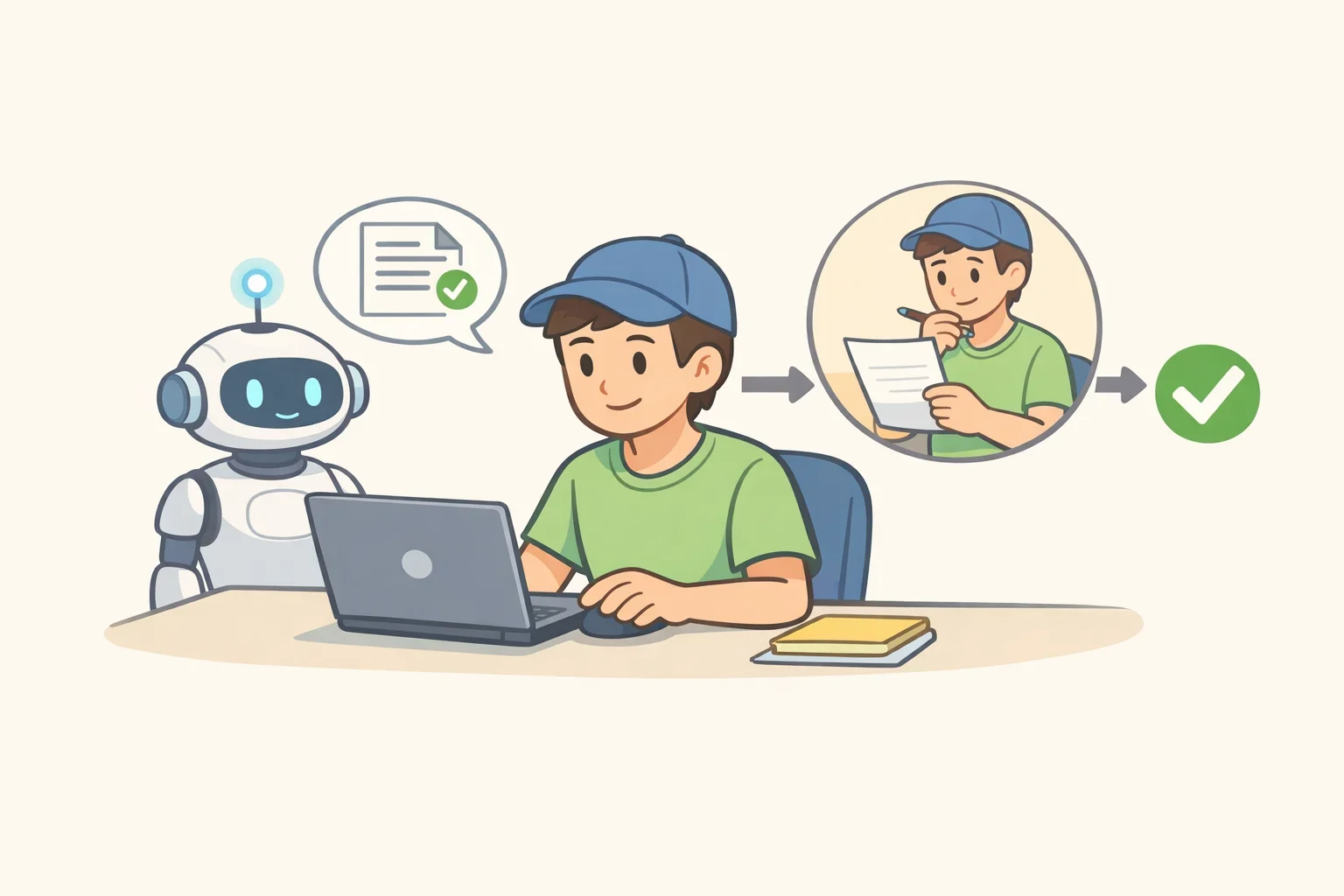
The advantage AI offers a beginner appears to depend on whether that beginner can also catch a wrong answer. Practical experience, tool fluency specific to a field, and the habit of checking AI output before relying on it are what the current, still-developing evidence points to for entry-level readiness, not a guarantee tied to any particular major.
A few concrete steps make this workable:
- Complete at least one internship, co-op, clinical placement, or applied class project before graduation to build a real work sample.
- Learn the specific AI tools used in a target field, and practice checking their output for errors rather than only learning to use them quickly.
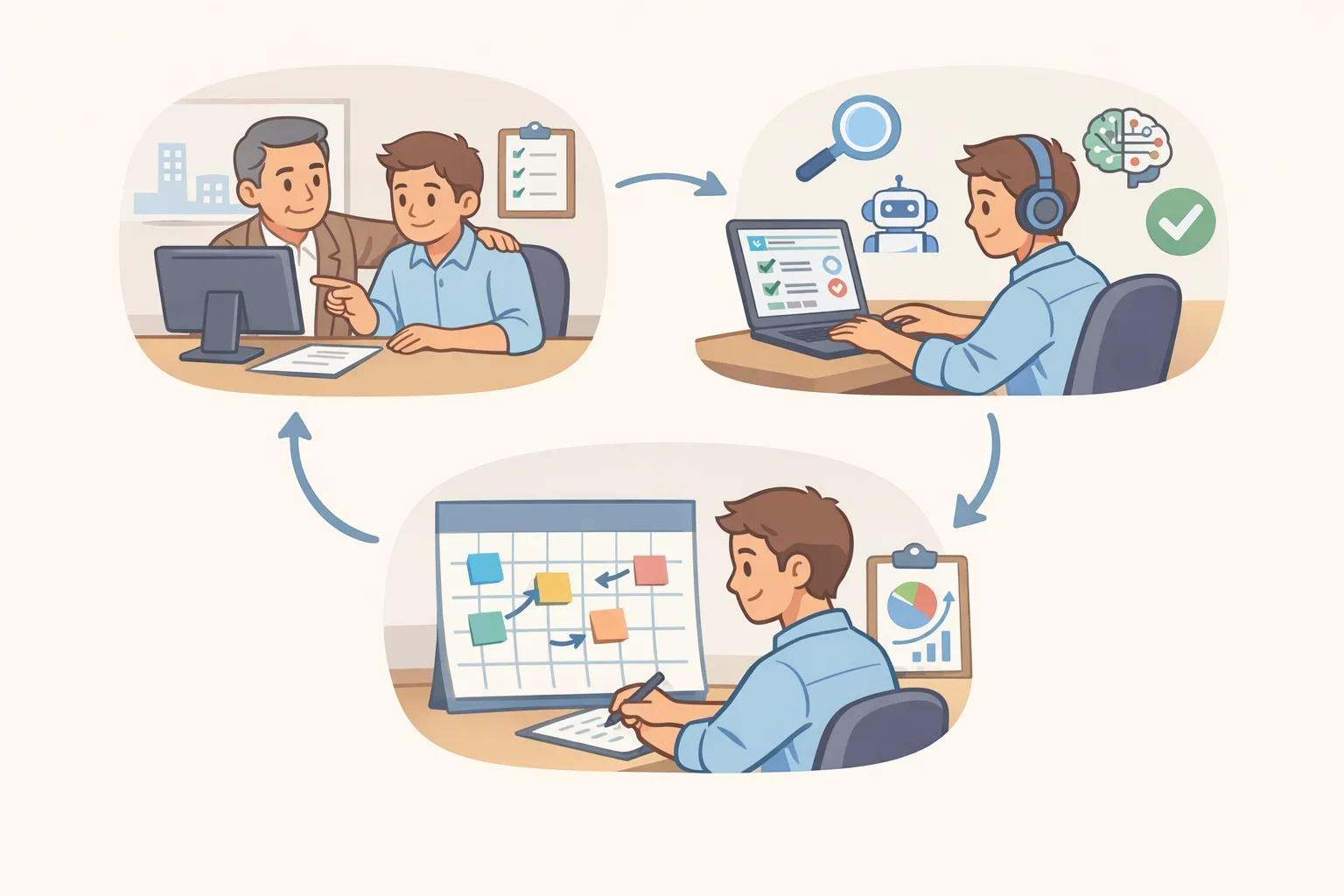
- Ask someone currently working in the field which tasks have changed most in the past two years.
- Revisit the plan every year. Labor-market and AI research is moving fast enough that first-year conclusions may need updating by senior year.
Before finalizing a major, meet with a professor, academic adviser, or working professional in the field and ask directly what's changed about entry-level work there over the past two years.
What to check before this term ends
North Carolina's forecasters don't fully agree with themselves on what's coming next, which is instructive on its own. UNC Charlotte's Belk College projects 80,800 new NC jobs in 2026, alongside a rise in the state's unemployment rate to 4.1% by December, citing uncertainty around Federal Reserve policy and AI investment as reasons growth and rising unemployment can occur at the same time (UNC Charlotte Belk College, 8 months ago). That single forecast shows how much uncertainty is baked into even the most current projections.
Because the data points in more than one direction at once, the useful response isn't identifying a single "safe" field. It's building the habit of checking local data before national headlines, testing a path through real experience, and developing the judgment to verify AI-assisted work, skills that hold up regardless of which economic scenario actually plays out over the next few years.
Before committing to a major or finalizing a class schedule this term, schedule a meeting with the college's career-services or academic advising office. Bring two specific questions: what recent graduate employment data exists for this program, and what internship, apprenticeship, or applied-project opportunities are available within the first two years. Bring the five-question checklist from this article to that meeting and use it to compare programs on the same terms, rather than relying on a major's reputation alone.