

Finding a first job after college has become more difficult, particularly for graduates pursuing entry-level roles in technology and other fields exposed to artificial intelligence. Dartmouth College is responding with an unusually large investment in internships, coaching and career-planning tools — but its early results require careful interpretation.
The college has completed a $30 million endowment for paid internships as part of a $94 million campaign to expand its career center. As of April 2026, Dartmouth had raised $61 million from 127 alumni and parents to support internships, career coaching, alumni connections and AI-assisted tools.
The investment comes during a difficult labor market for new graduates. The unemployment rate for recent college graduates was about 5.7% in the first quarter of 2026, while 41.5% were underemployed, according to the Federal Reserve Bank of New York. Underemployment generally refers to graduates working in jobs that typically do not require a college degree.
Dartmouth reports strong outcomes for its Class of 2025, but the figures do not prove that its career-center expansion caused those results. They also do not show that colleges with fewer financial and alumni resources can reproduce Dartmouth’s approach.
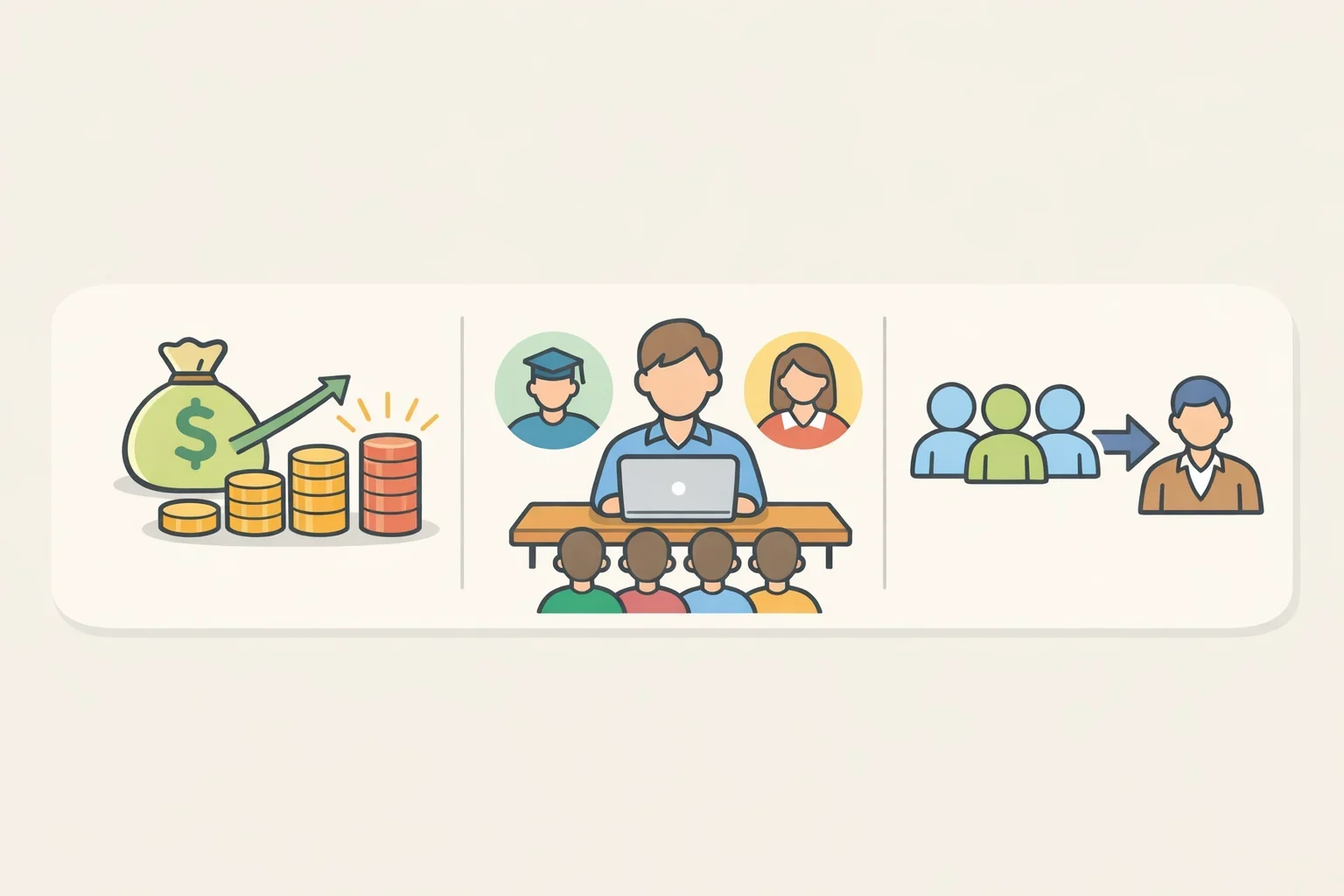
Where Dartmouth’s $94 million is going
The $30 million internship endowment will allow Dartmouth to support about 250 undergraduates each year in fields that often offer unpaid or underpaid positions, including the arts, media, government, public service, global health and conservation. That is five times the number of students the college could previously support.
The average internship award increased by more than 20% to $4,675, with up to $6,500 available for a single academic term. The funding may be especially important for students receiving financial aid, who might otherwise be unable to accept an unpaid position while paying for housing, transportation and other living expenses.
Dartmouth has also doubled its career-center staff from 11 to 22, including seven full-time career coaches. If the campaign is fully funded, the college plans to reduce its student-to-coach ratio from 414-to-1 in 2023 to 207-to-1. Dartmouth President Sian Leah Beilock has set June 2027 as the campaign’s fundraising target.
Student participation has risen alongside the expansion. In fall 2025, 1,740 undergraduates attended career-center events, up 337% from the previous year, while coaching appointments increased 73%. The center also created six career communities open to students in any major and introduced AI tools for exploring careers, reviewing résumés and evaluating job offers.
Dartmouth says the technology is intended to supplement human coaching rather than replace it. Still, attendance, staffing and appointment figures measure participation and capacity — not whether those services improved graduates’ employment outcomes.
The college also says comparable Ivy League and other highly selective universities typically fund internships for 1% to 2% of undergraduates each year. Dartmouth has not publicly identified the institutions or methodology behind that comparison, so readers should treat it as the college’s own benchmark rather than an independently verified industry figure.
Why new graduates face a tougher job market
Researchers have not identified a single cause for the weaker transition from college to full-time work. Higher interest rates, slower hiring after pandemic-era expansion, remote-work practices and AI adoption may all be contributing.
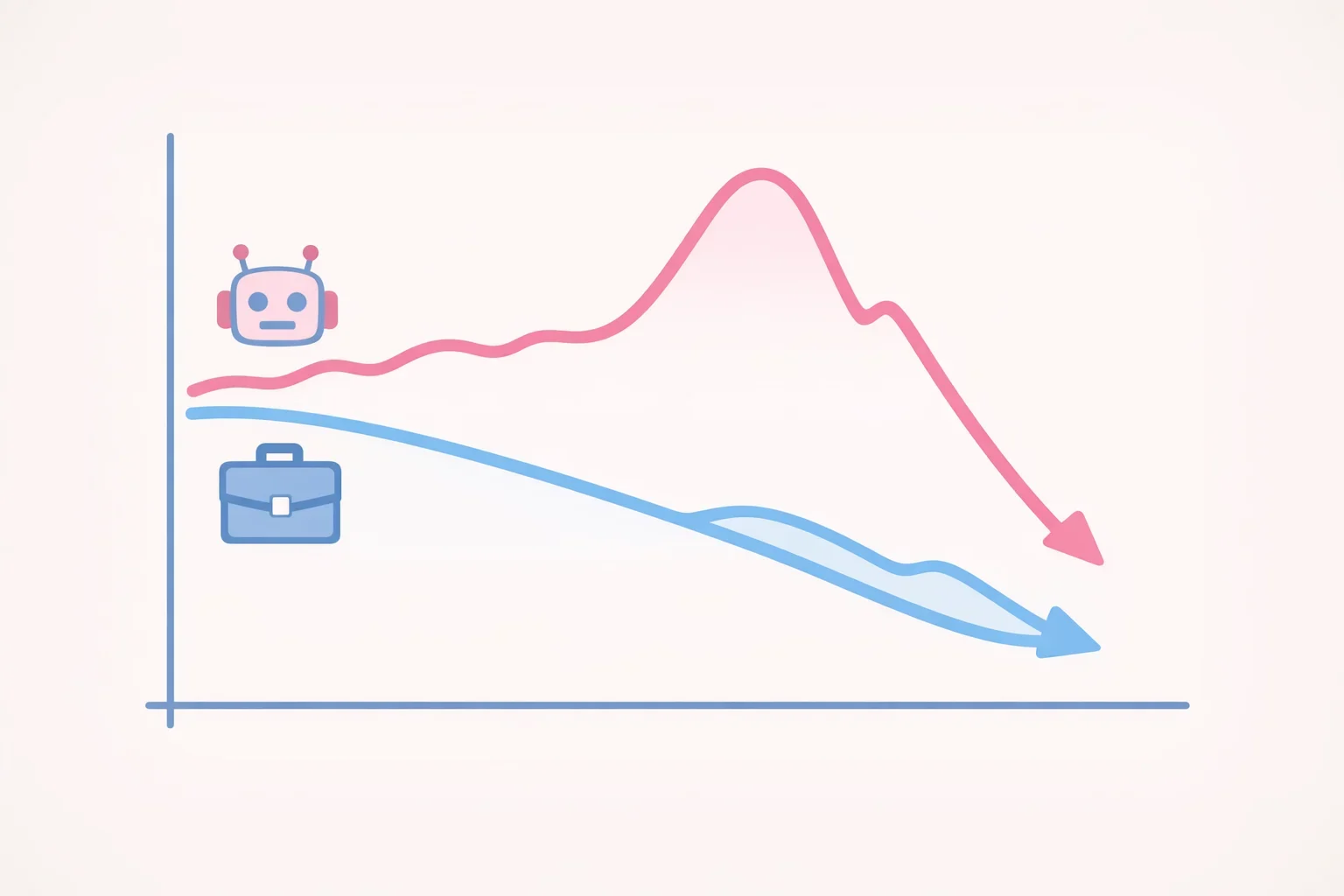
A July 2026 Stanford review found little evidence that AI has caused broad job losses so far. Since 2022, unemployment among workers in the most AI-exposed occupations rose 0.77 percentage points, compared with a slightly larger 0.85-point increase among workers in the least-exposed occupations. Those figures suggest an overall weakening of the labor market rather than a broad wave of AI-driven displacement.
The evidence is more concerning for some early-career workers. Research summarized by Stanford found falling employment among younger workers in AI-exposed occupations such as software development and customer service. Junior jobs in those fields often include routine research, writing, analysis or support tasks that generative AI can perform or accelerate.
The timing complicates claims that AI is solely responsible. Hiring declines in several AI-exposed occupations began after interest-rate increases in March 2022, before ChatGPT’s public release in November 2022. The most pronounced weakness in entry-level employment did not emerge until 2024. AI may be one contributor, but the available evidence does not support treating it as the only cause.
Firm surveys also point to limited employment effects so far. A 2026 Federal Reserve Bank of Atlanta working paper covering nearly 6,000 CEOs, chief financial officers and other executives in four countries found that more than 80% of firms had not experienced an AI-related change in employment or productivity during the previous three years. Respondents nevertheless expected AI to produce modest employment declines and stronger productivity gains over the following three years.
What Dartmouth’s 96.1% outcomes rate measures
Dartmouth reports a 96.1% career outcomes rate for the Class of 2025 within six months of graduation. The college knew the destinations of 86% of the class, a figure known as the knowledge rate.
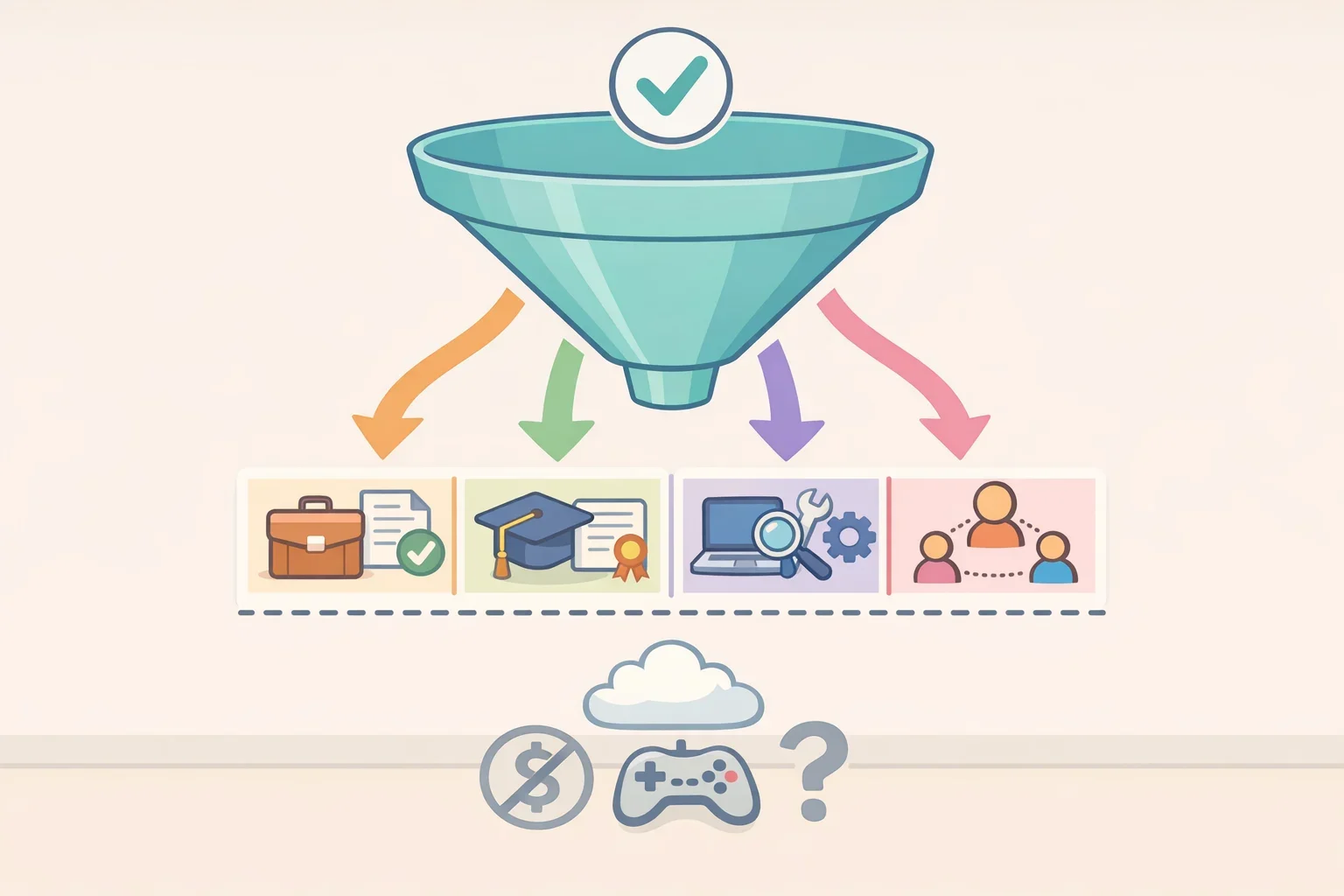
Under national first-destination reporting standards, a career outcomes rate includes more than full-time employment. It can count graduates who are employed part time, continuing their education, completing fellowships or internships, serving in the military or participating in qualifying service programs.
Data supplied by Dartmouth’s Center for Career Design provide a fuller breakdown. Among graduates with known outcomes, 71.7% had accepted full-time jobs, 21.9% were continuing their education, 2.5% had fellowships, 2.5% had part-time jobs or internships and 0.4% entered military service. Another 1% were still seeking an opportunity.
Dartmouth’s 96.1% figure therefore should not be presented as a full-time employment rate.
The published data also do not show starting salaries, job satisfaction, whether positions required a college degree or how outcomes differed by major or student background. Outcomes were unknown for 14% of the class. Those gaps do not invalidate Dartmouth’s result, but they limit what students and families can infer from it.
The college has connected the result to its expanded career-services approach, but the available evidence does not establish cause and effect. The expansion was still underway while members of the Class of 2025 were entering the job market, and Dartmouth has not published a controlled comparison showing that the additional coaching, internships or AI tools produced the reported outcomes.
Five questions to ask a college career center
Dartmouth’s most practical investment may be its paid-internship fund. Students who cannot afford to work without pay can be excluded from public-service, research, nonprofit and arts opportunities. More coaching may also help students identify options and prepare applications, but access varies widely among institutions.

Before judging a college by its headline outcomes rate, ask its career center or student-support office:
- What percentage of students who request internship funding receive it, and what expenses does the average award cover?
- How long does it take to book a coaching appointment during peak recruiting periods?
- Does the school report full-time employment separately from graduate school, fellowships, internships and military service?
- What percentage of the graduating class has a known outcome?
- Are career services available to part-time, online, transfer, commuter and working students?
- When the center uses AI tools, can a staff member review the guidance before a student acts on it?
Dartmouth’s results are encouraging: Most tracked graduates had entered full-time work or further education within six months, and the college is investing heavily in practical experience and individual guidance. The numbers are not proof that the career-center expansion produced those outcomes, nor do they establish that Dartmouth’s model can be replicated everywhere. For students comparing colleges, the most useful measures are not fundraising totals alone, but the services they can access, the outcomes those services track and the limits disclosed alongside the headline rate.