


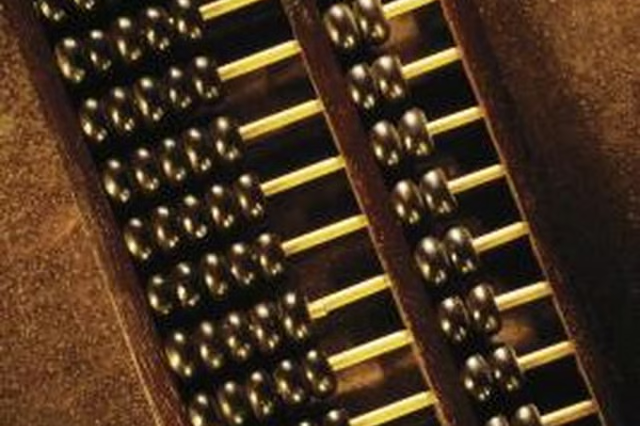
The abacus is an ancient calculator consisting of a series of pegs with beads on them. The beads are divided into two sections by a bar. Each bead in the upper section represents five, while each bead in the lower section represents one. You can use an abacus to perform addition, subtraction, multiplication and division. You can think of multiplication on the abacus as a series of additions. The abacus helps you keep track of these additions until you reach the final product.
Step 1
Count out the multiplier on the farthest left column of the abacus. If your number is greater than five, use a bead from above the rail to represent five. For example, to represent a multiplier of six, use one bead from above the rail and one bead from below the rail. Move beads close to the rail to count them and distinguish them from unused beads.
Step 2
Count out the multiplicand four columns from the right. If you are multiplying six times seven, for example, use one bead from above the rail and two from below it. The three empty columns right of the multiplicand are reserved for the product. The product of two single-digit numbers will not exceed two digits; the third empty column is an unused divider so that you don't mix up the product with the multiplicand.
Step 3
Count off one of your multiplicands on the rightmost column. For example, if your multiplicand is seven, count off one bead above the rail and two beads below the rail in the rightmost column.
Step 4
Decrease the leftmost column by one. This helps you keep track of the multiplication and also lets you visualize the process of multiplication as a series of additions. For example, in six times seven, decrease the six to five once you have counted a seven in the rightmost column. You therefore have five more sevens to add to the rightmost column.
Step 5
Add the multiplicand to the rightmost column until your leftmost multiplier is zero. If the product exceeds nine in the units digit, use the second column from the right as the tens digit. The two columns on the far right of the abacus represent the product when the leftmost column is zero. Once the leftmost column is zero in the case of six times seven, the rightmost column should be two and the second column from the right should be four. This is the product of six times seven: 42.
Tip
Lay the abacus on a flat surface so that the beads don't slide without your touch.