
5 ready-to-run Halloween inference activities for grades 4-6
Finding solid Halloween inference activities for grades 4-6 usually means more than printing a spooky worksheet and calling it comprehension practice. The five activities below come complete, with an original short passage, the exact question to ask, the clues students need to find, a sample acceptable answer, and a way to adjust the challenge level. Nothing here is left for a teacher to build from scratch.
Inference is also worth the class time it takes. Released test analyses suggest that 50% to 90% of questions on major reading assessments, including the NAEP, the Gates-MacGinitie, and the State of Texas Assessment of Academic Readiness (STAAR), require students to infer an answer rather than find it stated directly in the text, according to Rice and colleagues. A 2024 study of 152 sixth graders found that stronger background knowledge was associated with faster and more accurate answers to inference questions, according to Wiley and colleagues.
What follows is one short instructional routine, then five activities arranged in a model, guide, partner, independent, and extension sequence. Run them across a week of October reading blocks, or pull individual tasks based on what a class needs. Teachers short on source texts can also draw from ReadWorks' collection of more than 25 free Halloween articles, published last year, which the provider says include pre-reading vocabulary and comprehension questions targeting skills such as inference. A printable passage is only a starting point, though. Students build inference skill when a passage is paired with modeling, clue identification, and feedback, not when it's handed out as a standalone sheet, per Rice and colleagues.
The routine behind these Halloween inference activities
Inference means combining what the text actually says with what the reader already knows to reach a conclusion the author never states outright, per Rice and colleagues. Three instructional moves show up across the tasks below: teaching students to identify and link clue words, activating background knowledge before reading, and eventually having students write their own inference questions.
Each activity follows the same release pattern: a teacher think-aloud first, then guided practice with scaffolding, then independent practice with feedback. One check stays constant across all five: ask students to name two clues from the text and explain how those clues support their answer. That isn't a formal research requirement. It's a practical way to tell whether a student reasoned through the passage or guessed well, and it's the step most worth protecting if time runs short.
One more habit matters more than it sounds like it should: let students finish reading before asking the inference question. Interrupting a passage midway to quiz students can disrupt comprehension rather than build it, according to the same review.
Five Halloween reading comprehension activities for grades 4-6
These inferencing activities for upper elementary readers deliberately alternate genres. A review of one popular textbook found narrative selections outnumbered expository ones two to one, which may have limited how often students in that sample practiced inference with informational text. Researchers recommend mixing narrative, expository, and poetry instead.
Task 1: Spooky scene, what happened? (Day 1, teacher-modeled)
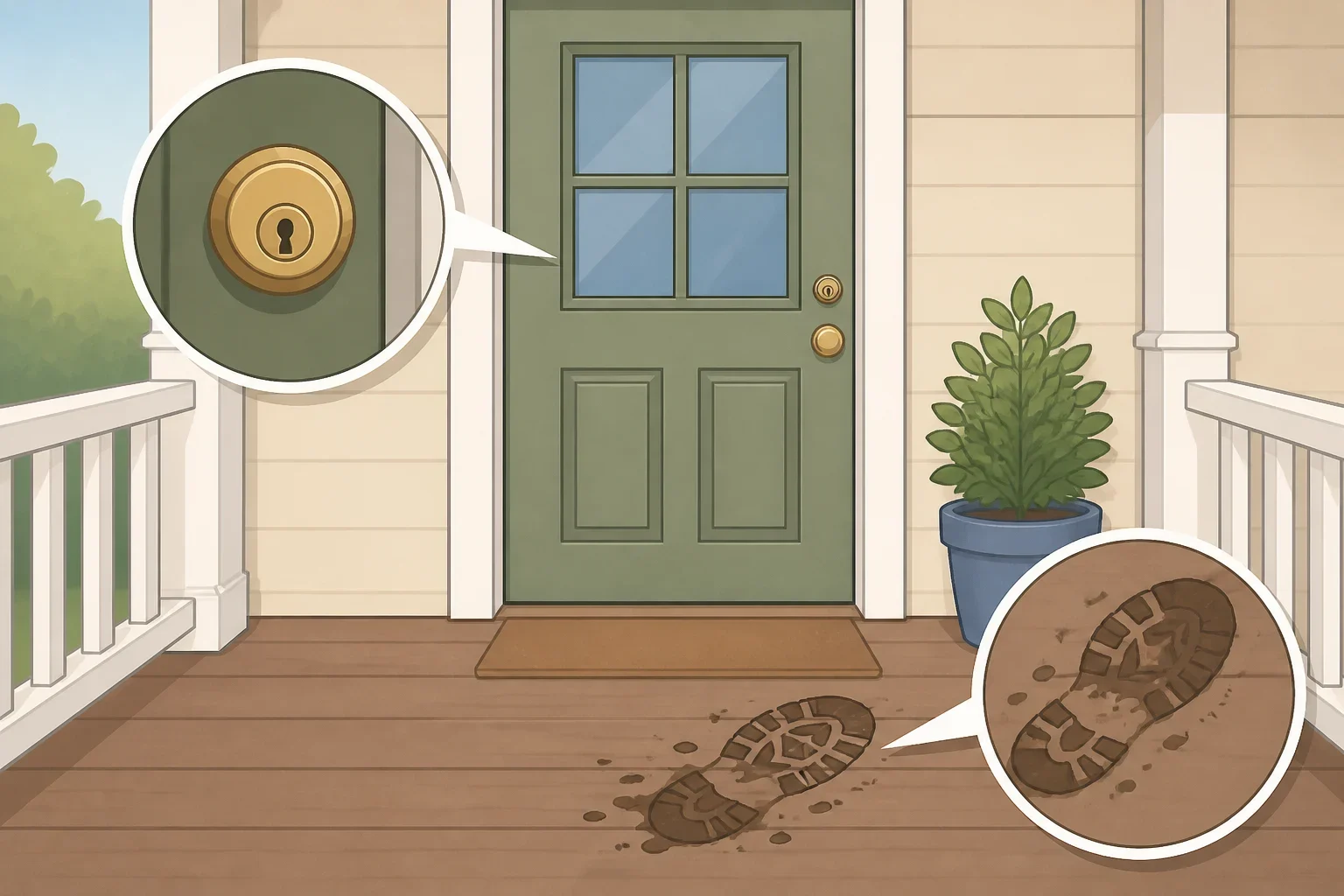
Goal: a text-connecting inference, where both clues sit inside the passage. Among the sixth graders Wiley and colleagues studied, narrative texts produced higher accuracy than informational texts, which is one reason narrative makes a reasonable starting point for a think-aloud. That's a single study with one grade level, not a guarantee for every class.
Estimated time: about 15 minutes.
Maya stood at the bottom of the porch steps, her flashlight beam shaking in her hand. She was sure she had locked the front door before trick-or-treating, yet it now hung open two inches, swinging slightly in the wind. Maya took one step forward, and a muddy footprint, far too large to be her own, appeared on the top stair.
Question: Why is Maya afraid to go inside her house?
Clues to point to aloud: the locked door now standing open, and the oversized muddy footprint on the stairs.
Sample modeled answer: "Maya is afraid because two details suggest someone else has been near her house: the door she locked is now open, and a footprint too big to be hers appears on the stairs."
Support: Start with the version above. For students ready for more challenge, rewrite the passage so the two clues sit a sentence or two apart, and ask them to find both without a prompt.
Extension: Have students add one detail that sounds scary but isn't actual evidence, then explain why it doesn't count toward the answer.
Task 2: Creature clues, bat, owl, or spider? (Day 2, guided practice)
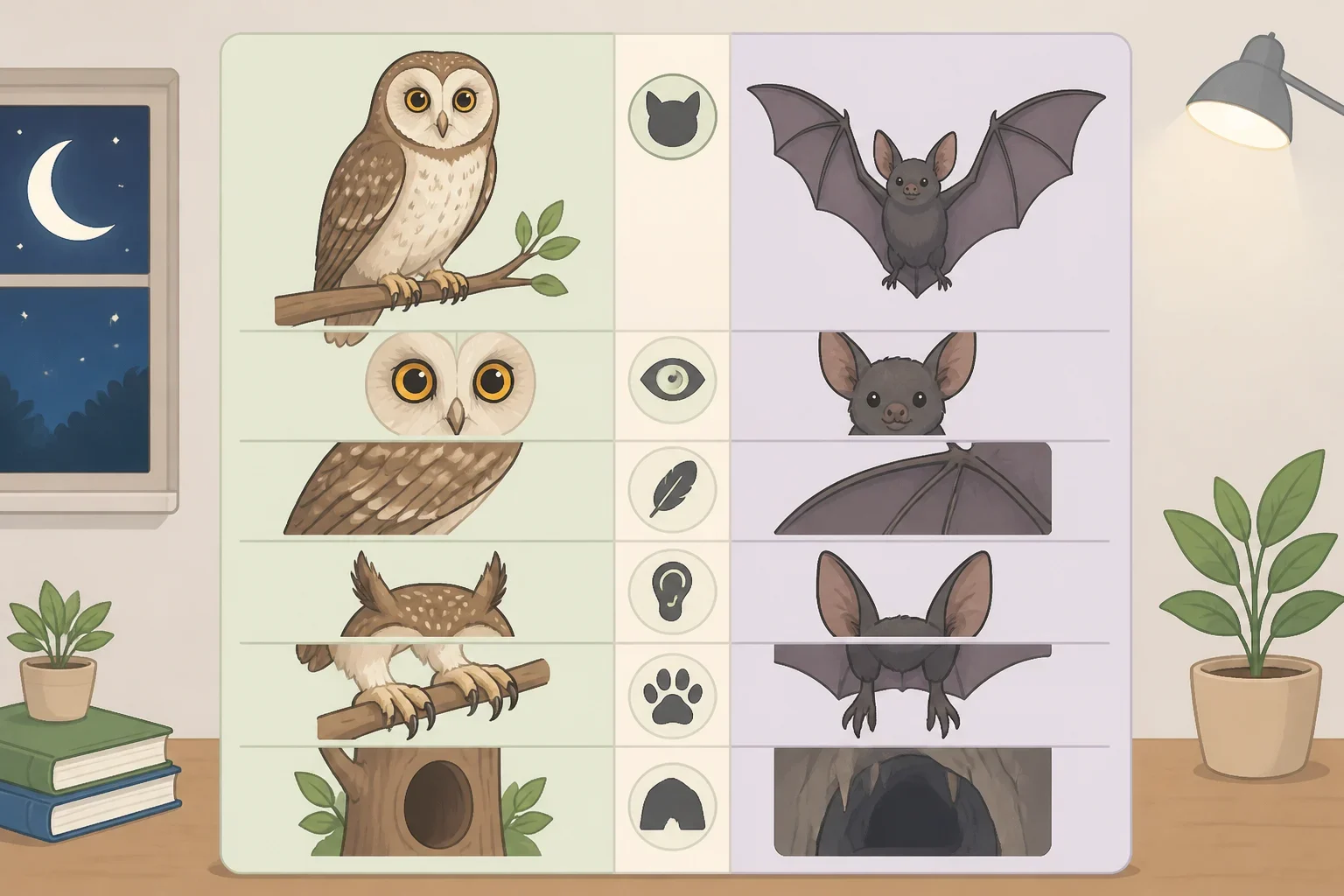
Goal: a knowledge-based inference, where students need outside knowledge, not just the text, to reach the answer. The fact file below is a simplified teaching passage written for inference practice, not a verified science resource; check specifics against a natural history museum or wildlife agency before using it for content instruction.
Estimated time: about 15 minutes, including the vocabulary preview.
This animal is most active after the sun goes down. It sends out high-pitched sounds and listens for the echo to find its way in the dark. Its wings are made of thin skin stretched between long finger bones, not feathers. During the day, it often rests upside down inside caves, attics, or hollow trees.
Pre-reading vocabulary: echo, nocturnal.
Question: Which creature does this fact file describe, a bat, an owl, or a spider? Use one clue from the text and one thing you already know to explain your answer.
Sample response: "The text says the animal has wings made of skin, not feathers, and finds its way by listening for echoes. I know owls have feathered wings and spiders have no wings at all, so this has to be a bat."
Vocabulary and background-knowledge scores were strongly correlated (above .7) in the sixth-grade inference study, per Wiley and colleagues. That correlation makes a brief vocabulary preview a reasonable instructional choice, not a guaranteed accuracy boost.
Support: Give a sentence frame ("I know ___, and the text says ___, so I can infer ___") to students who need it; have others write the justification without one.
Extension: Ask students to add one more clue the passage doesn't mention, drawn from something they already know, and explain where that knowledge came from.
Task 3: Character case file, motive and mood (Day 3, partner practice)
Goal: an elaborative inference about a character's feeling or intention, matching the "Author and Me" question type, which requires connecting text details with information a reader already knows, according to IES/WWC.
Student directions: Read the scene with a partner. Find the two clues together, then each write your own answer.
Estimated time: 15-20 minutes.
"I wasn't anywhere near the kitchen," Jordan said quickly, not looking up from his shoes. His little sister Reese crossed her arms. "Then why do you have frosting on your sleeve?" Jordan shoved his hands into his pockets. "Can we talk about something else? Did you hear that weird knocking at the door earlier?"
Question: How does Jordan feel, and why might he be trying to change the subject?
Clues: frosting on his sleeve despite his denial, and the abrupt subject change.
Sample answer: "Jordan probably feels guilty and nervous. He denies going near the kitchen but has frosting on his sleeve, and he quickly changes the subject, which suggests he's hiding that he ate something he wasn't supposed to."
Support: Give pairs a starter line: "Jordan feels ___ because ___." ReadWorks notes that many of its passages work well for paired discussion, which is general resource guidance rather than a finding about this specific routine.
Extension: Ask students to rewrite Jordan's line to make his guilt less obvious, then explain which clue they removed.
Task 4: Halloween then and now (Day 4, independent)
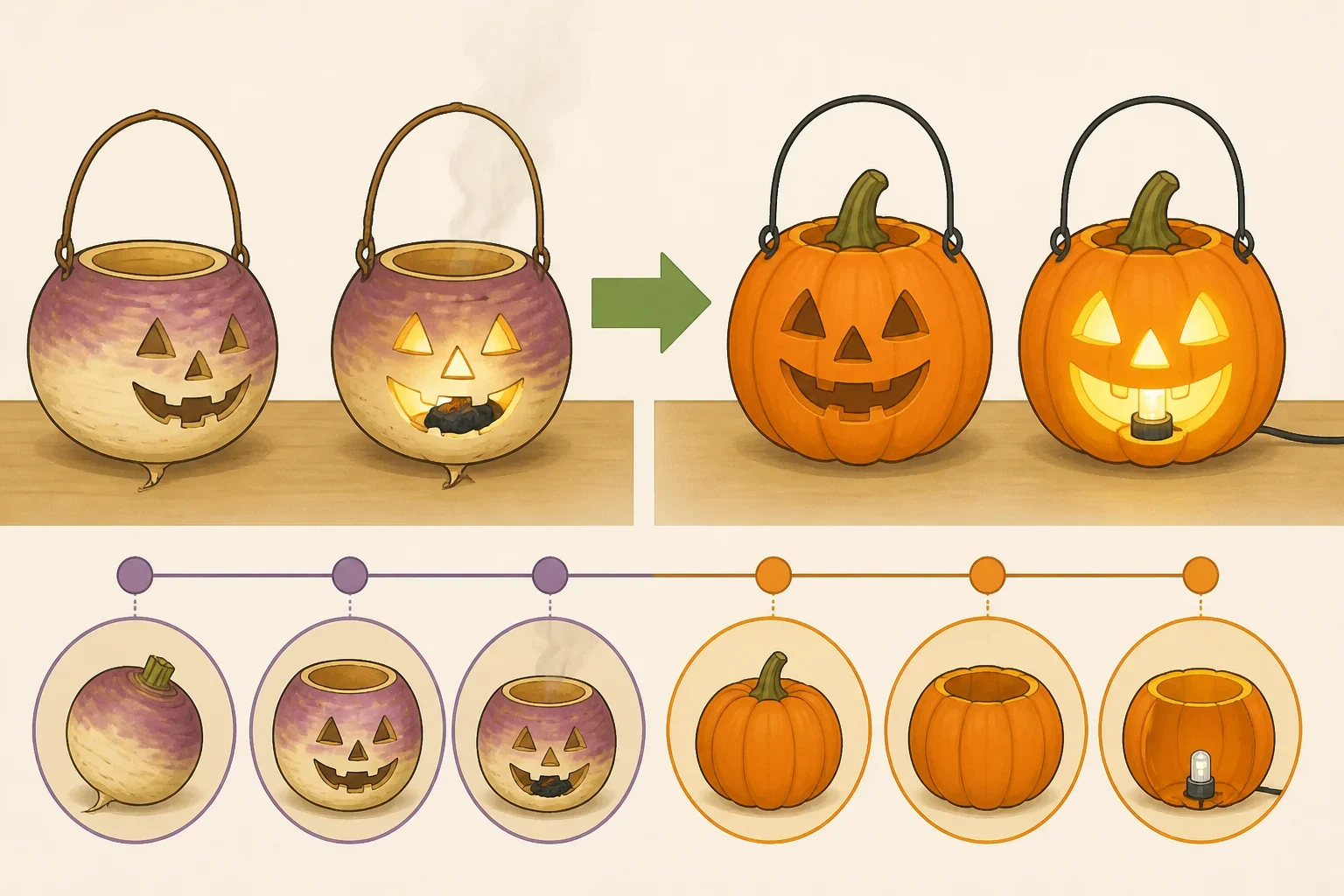
Goal: a cross-text inference about why something changed over time. This lines up loosely with the Common Core anchor standard on analyzing how two texts address a similar topic, though meeting a specific grade-level standard depends on wording set by a state or district. The passages below are simplified narratives written for inference practice; verify historical details against a reliable history or folklore source before teaching them as settled fact.
Estimated time: about 20 minutes.
Passage A: Long ago in Ireland and Scotland, people carved faces into turnips and potatoes, not pumpkins. They hollowed out the vegetable, cut a face into one side, and placed a small piece of burning coal inside to light it. Families set these lanterns near doors and windows on the night they believed spirits could cross into the living world.
Passage B: Today, many families in the United States carve pumpkins instead of turnips. Pumpkins are larger and softer, and grew well once the tradition crossed the Atlantic. Many households now place an electric light inside instead of a flame.
Directions: Read both passages. Explain one reason pumpkins replaced turnips as the traditional Halloween lantern, citing one detail from each passage.
Sample answer: "Passage A shows turnips were the original choice. Passage B explains that pumpkins are larger, softer, and grew well once the tradition reached a new place. Based on both, pumpkins likely replaced turnips because they were easier to work with and grew well where the tradition took hold."
Support: Younger students can answer in one or two sentences, spoken or written; older students write a short paragraph and note which sentence in each passage they used as evidence.
Extension: Have students name a current Halloween tradition not mentioned here and infer what detail about it a future reader might find surprising.
Task 5: Write the missing question (Day 5, extension)
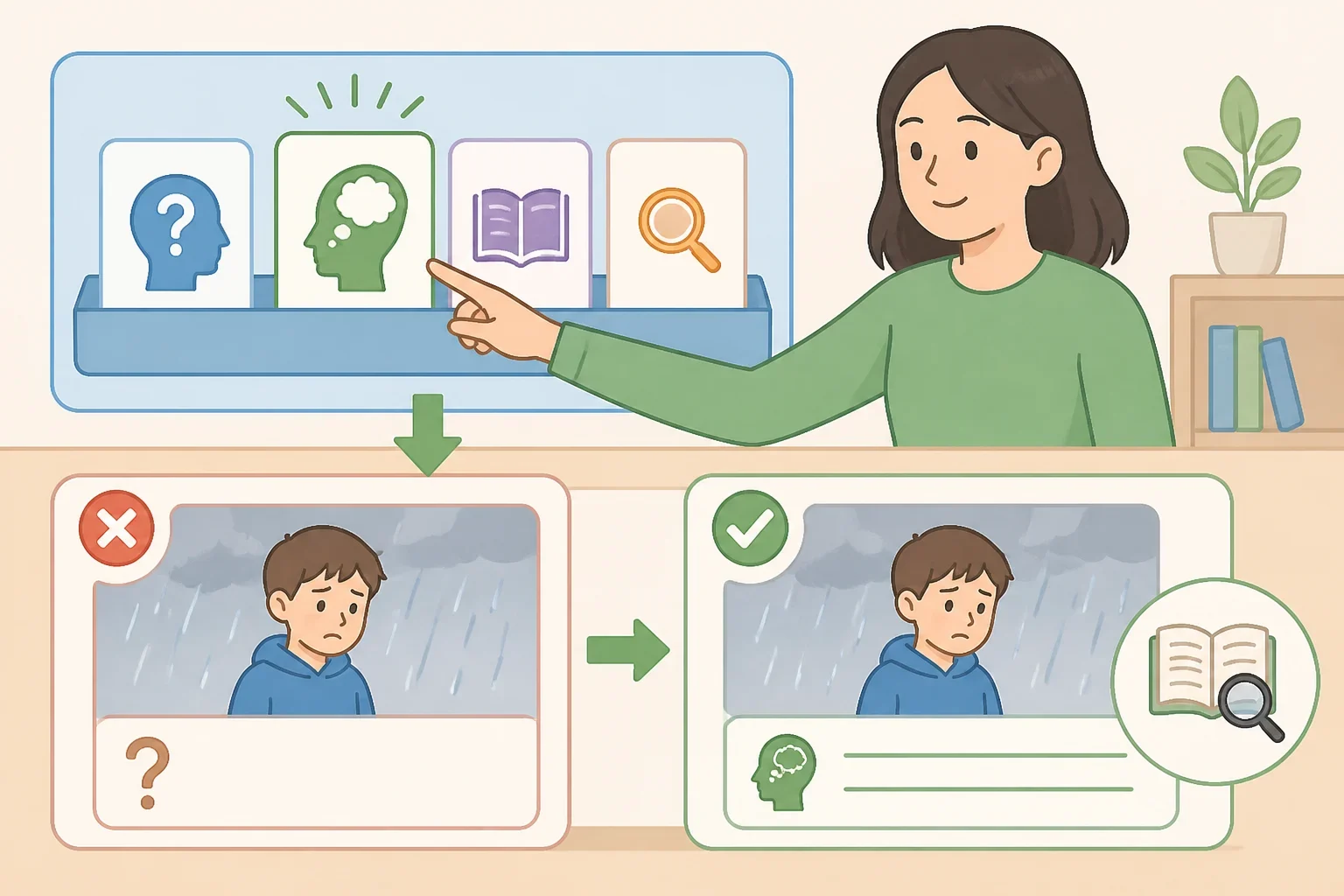
Goal: have students generate their own inference question instead of answering one, which can support both answer accuracy and awareness of their own understanding, per Rice and colleagues.
Student directions: Choose any passage used earlier this week. Using the stem bank below, write one inference question about it. Trade questions with a partner and answer each other's question using two clues from the text.
Stem bank: "Why did ___?" "How does ___ explain ___?" "What might happen if ___?"
Contrast example: a too-literal question such as "What did the character say?" versus a real inference question such as "Why did the character lie about the noise?"
Evidence check: a question passes this activity's bar if answering it requires combining two pieces of information rather than lifting a single sentence from the text.
Estimated time: about 20 minutes.
Support: Students who need more structure can complete a partial stem, such as "Why did ___ feel nervous?"
Extension: Students ready for more challenge write two questions, one text-connecting and one knowledge-based, and label which is which.
Adjusting the sequence by grade and finding more Halloween reading worksheets
Begin by placing clues close together and offering a sentence frame, then drop the frame once students handle that comfortably. For students ready for more challenge, space clues farther apart and ask for a written justification without a frame. This near-versus-far idea borrows from how Wiley and colleagues manipulated clue distance to study sixth graders' inference-making, but that study measured outcomes for one grade level rather than testing a classroom teaching sequence. Treat it as a scaffold to try, not a developmental rule.
All five activities above work with the included passages, but any short text of similar length will do. ReadWorks' collection of 25+ Halloween articles for grades 3-6 comes with pre-reading vocabulary and comprehension questions already built in, according to ReadWorks, though not every article is guaranteed to include an inference question specifically.
Before swapping in a new text, check it against your students' independent reading level. Texts above that level, sometimes called stretch text, can still work well in class, but they need extra teacher support to be usable, per IES/WWC. ReadWorks also suggests alternating fiction and nonfiction across the week, a spooky story one day and a factual animal article the next. That's provider sequencing advice rather than a tested instructional claim, but it lines up with the genre-mixing recommendation above.
What to do next
Start with Task 1 this week. Read the passage aloud, point to the two target clues, and walk through the sample answer before students try one independently.
Before running the rest of the sequence, make a few quick decisions:
- Sort a handful of recent student responses to spot where the class struggles most: locating clues in the text, pulling in background knowledge, or explaining how a clue supports an answer. That tells you which task to prioritize.
- Decide whether students will respond orally, through partner discussion, or in writing for each task.
- Sketch a simple two-column organizer, labeled clue and inference, for students who need a visual anchor for the "name two clues" step.
Teachers following a district or state reading program should check how inference is already assessed there, so this sequence reinforces that instruction instead of duplicating it.